

创作上传
VIP
收藏下载
登录 | 注册有礼
查看完整案例

收藏

下载

分享
Somerville Pollinator Action Plan | Offshoots, Inc.
项目陈述
PROJECT STATEMENT
萨默维尔授粉生物行动计划(SPAP)是一项开创性的城市授粉生物研究与政策框架,勾勒出一个生物多样性与社区共同成长的城市愿景。未来20年内,昆虫数量可能减少30%,授粉生物的持续衰退亟需紧急应对。项目通过iNaturalist与社区观测数据制图,建立本地已知授粉生物的基础数据库。该计划在科学性与审美性并重的前提下,系统提出授粉生物支持策略,内容包括原创生态研究、植物清单、更新后的市政政策与养护实践,以及由40余张区域化“种植配方卡”组成的“授粉生物储藏库”。其方法论与开源框架具备高度可复制性,可在美国各地推广以支持城市生物多样性。
The Somerville Pollinator Action Plan is a first-of-its-kind urban pollinator research and policy framework, envisioning a city where biodiversity grows alongside community. Pollinator decline—projected at 30% insect loss over the next 20 years—demands urgent attention. iNaturalist and community observation data was mapped to create a baseline of known local pollinators. The plan details pollinator support strategies with both science and aesthetics in mind, including original ecological research, plant lists, revamped municipal policy and maintenance practices, and a ‘Pollinator Pantry’ of 40+ regionally specific planting ‘recipe cards.’ The methodology and open-source framework is replicable across the US to support urban biodiversity.

▲清晰易读的图例传达了行动号召。授粉生物被分为六大类:蜜蜂、蝴蝶/飞蛾、黄蜂、蝇类、甲虫及鸟类。A call to action is communicated with easy-to-read graphics. Pollinators are grouped into 6: bees, butterflies/moths, wasps, flies, beetles and birds. © Nicholas Dorian
项目说明
PROJECT NARRATIVE
萨默维尔授粉生物行动计划(SPAP)为马萨诸塞州萨默维尔市构建支持授粉生物的城市环境提供行动指引。授粉生物对粮食生产、生物多样性与生态系统稳定至关重要,但其数量正在急剧下降——过去十年中,大黄蜂减少28%,蝴蝶减少19%。研究与行动迫在眉睫,且需覆盖所有授粉者类型,包括甲虫、食蚜蝇、黄蜂及鸟类。若不加干预,昆虫数量在不足20年内或将下降30%。
改变传统景观养护方式,是打造对授粉生物与居民更友好的城市环境的关键。萨默维尔是新英格兰地区人口密度最高的城市,公共所有的可渗透土地仅0.17平方英里,因此干预必须同时发生在住宅尺度与公共用地层面。SPAP由科学家、公共部门、景观设计师与社区领袖共同制定,提供原创的城市授粉生物研究成果,并提出可在大小尺度上立即实施的干预路径。城市在重新连接景观与授粉生物、以及人与授粉生物之间关系方面,具有不可替代的作用。
研究团队利用iNaturalist、eBird、塔夫茨授粉生物倡议以及EwA Buggy等公民科学平台的数据,对物种分布与季节性进行制图,为保护与持续监测奠定基础。项目共记录到299种萨默维尔本地授粉生物,累计观测9397次。保护生物学家通过分析1万余张照片,识别本地授粉生物与植物之间的相互作用,形成优先植物清单(包含非本土物种与园艺品种)。在此基础上,结合同行评审文献,整合形成一份“综合植物清单”,涵盖400余种特定生态区的取食植物与寄主植物。该清单进一步转化为一个由40余张区域化“种植配方卡”组成的“授粉生物储藏库”,适用于不同尺度的场景,包括关键的乔木与灌木配置,以及从草坪向野花草甸的简易转化方案。GIS制图通过识别现有授粉花园、水资源与低观测区域之间的空缺,确定生境营造的优先区域。
SPAP提供了针对不同使用群体的简明养护清单,包括市政公共工程部门、景观承包商与居民,明确更新后的管理实践。项目还为支持授粉生物的种植与养护方式开发了统一识别的现场标识。
公共政策涵盖照明、养护、本土植物及绿色屋顶等相关法规的修订,这些看似微小的调整却能对城市授粉生物健康产生显著影响。
该行动计划提供了一种可扩展的城市授粉生物规划范式,以研究与公众参与为核心,通过无数微小而协同的行动,持续拓展城市生态网络。

▲基于公民科学观测数据,对萨默维尔市各行政分区内的授粉生物分布进行制图,按月份与分类单元呈现,并指出未来20年内昆虫数量或将减少30%。Citizen science observations in Somerville mapped across city wards, by month, and taxonomic group. 30% insect loss projected over the next 20 years. © n/a

▲原创研究记录了萨默维尔地区蜜蜂、黄蜂等授粉生物的季节性变化(左),以及植物与昆虫之间的相互作用关系(右)。Original research documents seasonality of pollinators like bees and wasps in Somerville (left) and plant and insect interactions (right). © n/a

▲全市仅拥有0.17平方英里的公共可渗透用地,因此私人层面的行动尤为关键,尤其是在记录到授粉生物数量较少的环境正义(EJ)分区。The city only has .17 sq mi of public permeable space. Private actions are critical, especially in EJ wards where fewer pollinators are documented. © n/a

▲环境正义分区内的乔木数量较少,且外来入侵树种在全市范围内占据主导;SPAP针对物种多样性与花源增强提出了明确指导原则。EJ wards have fewer trees and invasive trees currently dominate city-wide. SPAP sets guidelines for species diversity and amplified floral resources. © n/a

▲在规划授粉生物廊道连通性时,综合考虑其典型飞行距离、现有资源的空间邻近性以及环境正义投资目标。Connectivity of pollinator corridors is prioritized considering typical flight ranges, proximity to existing resources, and EJ investment goals. © n/a

▲“微小行动,汇聚成效”:种植与养护建议以清晰的示意图和色彩编码呈现,使各类人群都能轻松理解和实施。Small actions add up: planting and maintenance recommendations are clearly diagramed and color-coded to make them approachable to all. © n/a

▲图示与策略针对不同使用群体进行了定向设计,包括居民、开发商、教育工作者、市政公共工程部门(DPW)员工及景观承包商。Diagrams and strategies are targeted to specific user-groups: residents, developers, educators, DPW staff and landscape contractors. © n/a

▲剖面与图例详细说明了具体的干预措施,如最大化本土植物使用,以及在关键物种下营造“柔性落地”生境。Sections and diagrams detail specific intervention strategies, like maximizing native plant use and creating soft landings under keystone species. © n/a

▲原创研究收录了1万多张区域植物与授粉生物的互动照片,为“授粉生物友好”的植物配置方案提供了依据。Original research documenting 10,000+ photos of regional plant-pollinator interactions guided the creation of pollinator-friendly plant palettes. © n/a
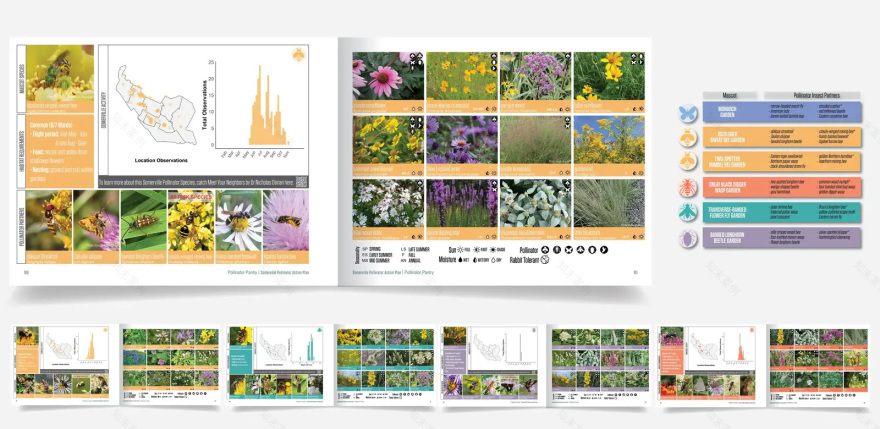
▲六个“形象物种”作为沟通媒介,将居民与昆虫建立联系;围绕不同形象物种制定的种植设计,使居民能够直观评估自身行动带来的生态成效。Six ‘mascots’ species connect residents to insects; mascot-specific planting designs empower residents to evaluate the impact of actions first-hand. © n/a

▲“选择你的色彩冒险!”预先规划的花园设计,与基于数据的植物搭配方案在美学上相协调。Choose your own color adventure! Pre-planned garden designs, aesthetically composed with data-backed plant choices. © n/a

▲需要适用于向阳、背阴、湿润、干燥、耐盐或防兔害环境,还是用于草坪改造的种植方案?只需布置网格,即可灵活组合!乔木与灌木也没问题!Need a planting for sun, shade, wet, dry, salt and rabbit tolerance or lawn conversions? Layout a grid and plug and play! Yes to trees and shrubs! © n/a
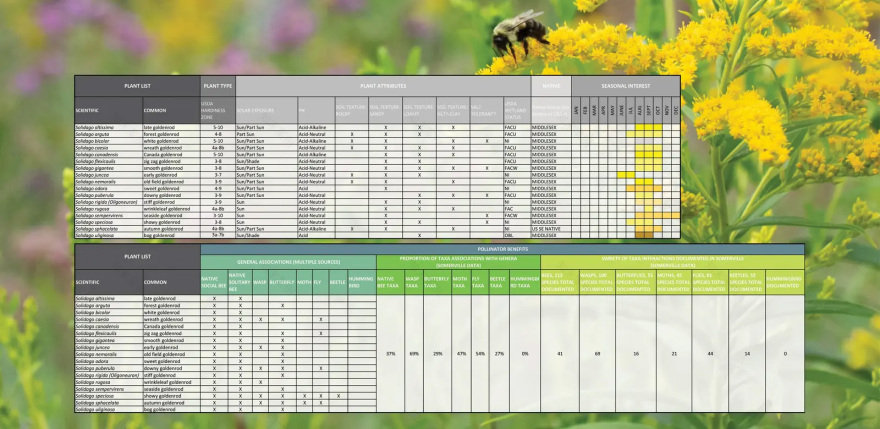
▲一份开源Excel清单收录了400余种支持本土授粉生物的植物,此外还包括植物与授粉生物的互动研究成果。An open-source Excel list of 400+ species that support native pollinators. Includes original research on plant/ pollinator interactions. © Nicholas Dorian

▲市政厅示范花园由志愿者种植,展示了四种“配方卡”设计方案,现场标识清晰说明了有利于授粉生物的种植与养护方式。Demonstration gardens at City Hall planted by volunteers showcase 4 recipe card designs. Signs identify pollinator-forward plantings and maintenance. © Cristian Umaña

© Tufts Pollinator Initiative
PROJECT NARRATIVE
The Somerville Pollinator Action Plan (SPAP) guides efforts to create an urban environment to support pollinators in Somerville, MA. With pollinators essential to food production, biodiversity, and ecosystem stability, their decline—marked by a 28% drop in bumble bees and 19% of butterflies in the last decade—demands urgent research and action. This requires considering all pollinators, such as beetles, hover flies, wasps, and birds. Without intervention, insect populations could decline 30% in less than 20 years.
Modifying conventional landscape practices is critical to making cities more pollinator- and people- friendly. Somerville, MA is the most densely populated city in New England, with only .17 sq miles of publicly owned pervious land. Interventions must occur both at the residential scale and on public lands. The SPAP, developed with scientists, public officials, landscape architects, and community leaders, delivers original urban pollinator research and a format for intervening immediately at both small and large scales. Cities have a critical role to play in reconnecting landscapes to pollinators and people to pollinators.
Using data from citizen science platforms iNaturalist, Ebird, Tufts Pollinator Initiative, and EwA Buggy, researchers mapped species presence and seasonality, setting a foundation for conservation and ongoing monitoring. 299 unique pollinators in Somerville were documented in 9397 observations. The project conservation biologist used over 10,000+ photographs to identify local pollinator and plant interactions, creating priority plant lists (including non-natives and cultivars!). Peer-reviewed literature was layered into the hyper-local findings to create a prioritized ‘Comprehensive Plant List’ (over 400 ecoregion- specific species) of both foraging and host plants. The list was used to create a ‘Pollinator Pantry’ of 40+ ‘Recipe Cards’ for garden designs at different scales, including critical trees and shrubs and easy lawn-to-forb conversions. GIS mapping sets priority areas for habitat creation by identifying gaps between existing pollinator gardens, water resources, and areas with minimal pollinator sightings.
SPAP provides easy-to-follow checklists of revamped maintenance practices that target specific user groups, such as public DPW, landscape contractors, and residents. Branded signs were developed for pollinator-forward plantings and maintenance practices in the field.
Public policy recommendations include revisions to lighting, maintenance, native plant and green roof ordinances. These small modifications have a big impact on urban pollinator health.
This plan provides a scalable model to create urban pollinator plans that prioritize research and public participation, expanding ecological networks with collective tiny actions.
南京喵熊网络科技有限公司 苏ICP备18050492号-4知末 © 2018—2020 . All photos and trademark graphics are copyrighted by their owners.增值电信业务经营许可证(ICP)苏B2-20201444 苏公网安备 32011302321234号
苏公网安备 32011302321234号客服
消息
收藏
下载
最近