

创作上传
VIP
收藏下载
登录 | 注册有礼
查看完整案例

收藏

下载

分享

翻译


If you know me well, you’ll know I’ve had a soft spot for Madrid-based studio Plutarco for a long time now. We’ve published many of their projects over the years, and each one has only deepened my appreciation for how Ana and Enrique approach design—with rigour, invention, and an eye for material combinations that surprise and delight. So when they told us they’d been working on Ana’s own home—a 1934 modernist villa—and that it had never been published anywhere, I was thrilled to be the first to bring it to the world.
This is the kind of project that only happens when a designer has full creative licence. No client brief, no compromises—just a direct line between idea and execution. And there’s something incredibly revealing about that. Designers will always use their own homes to push further, test ideas, and express themselves freely. This project is Ana’s design manifesto made physical.


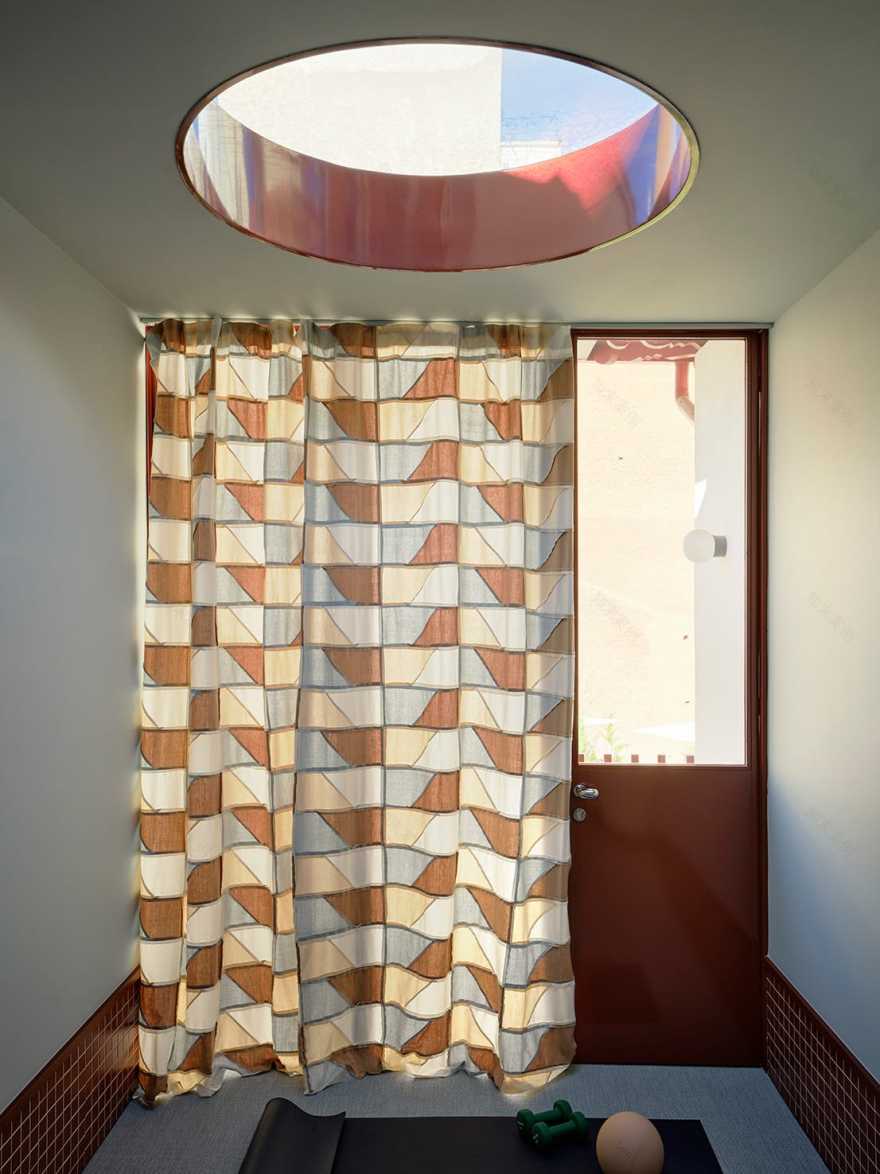

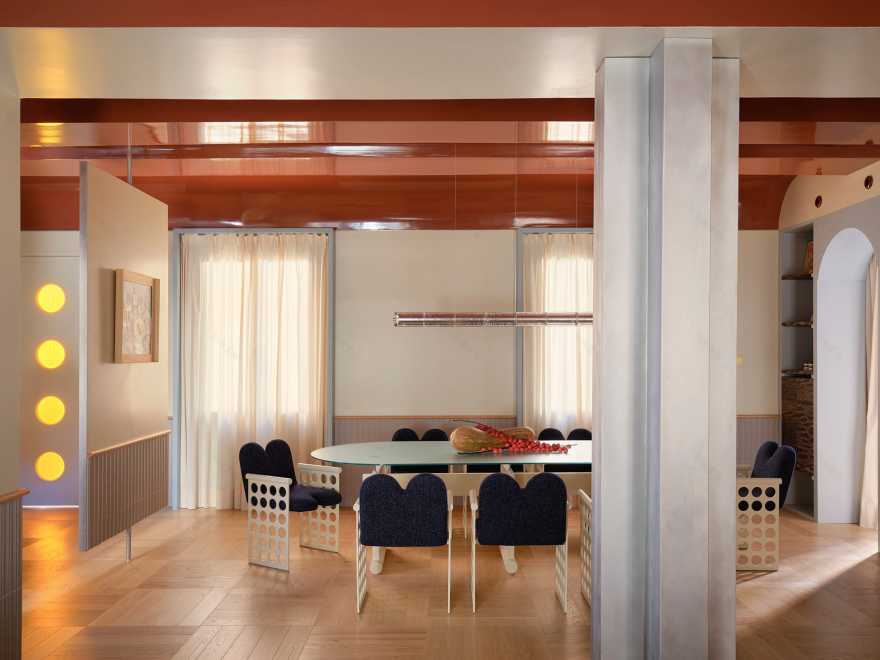
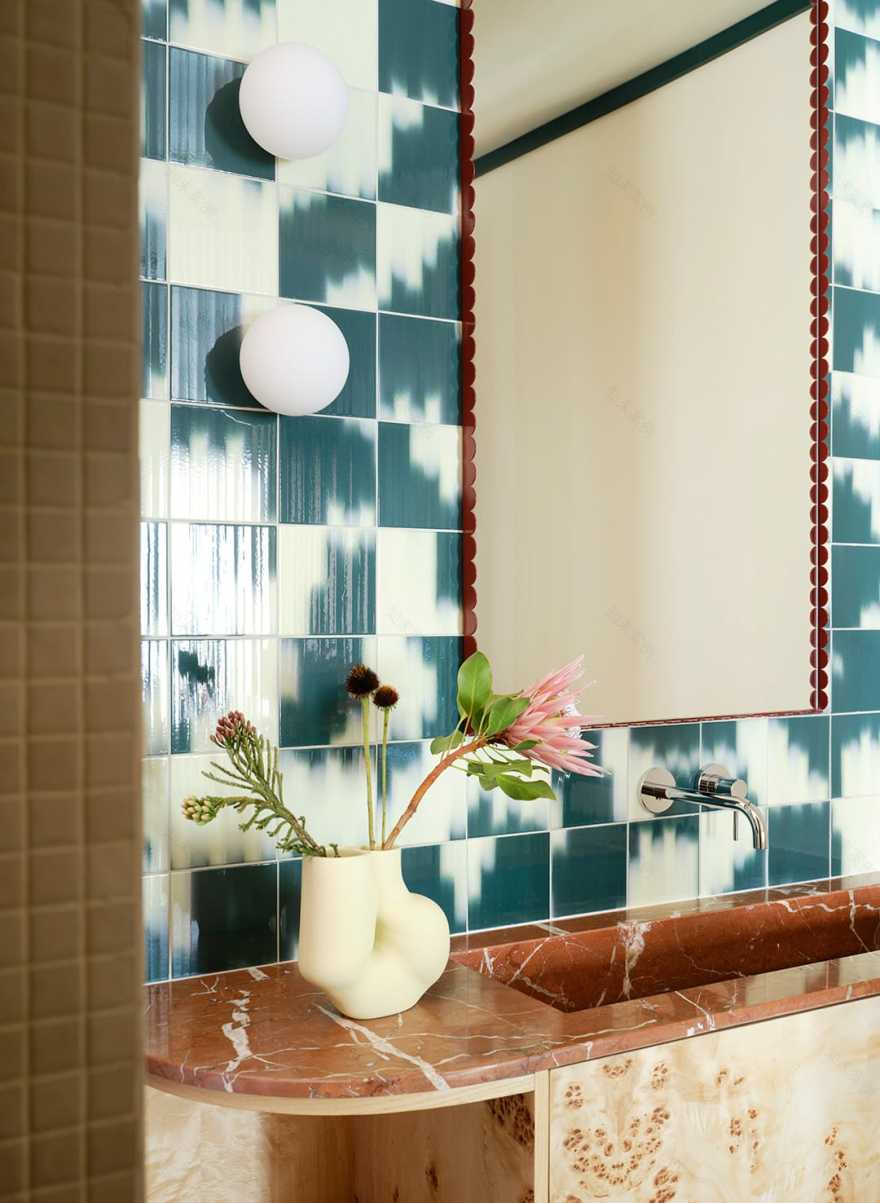
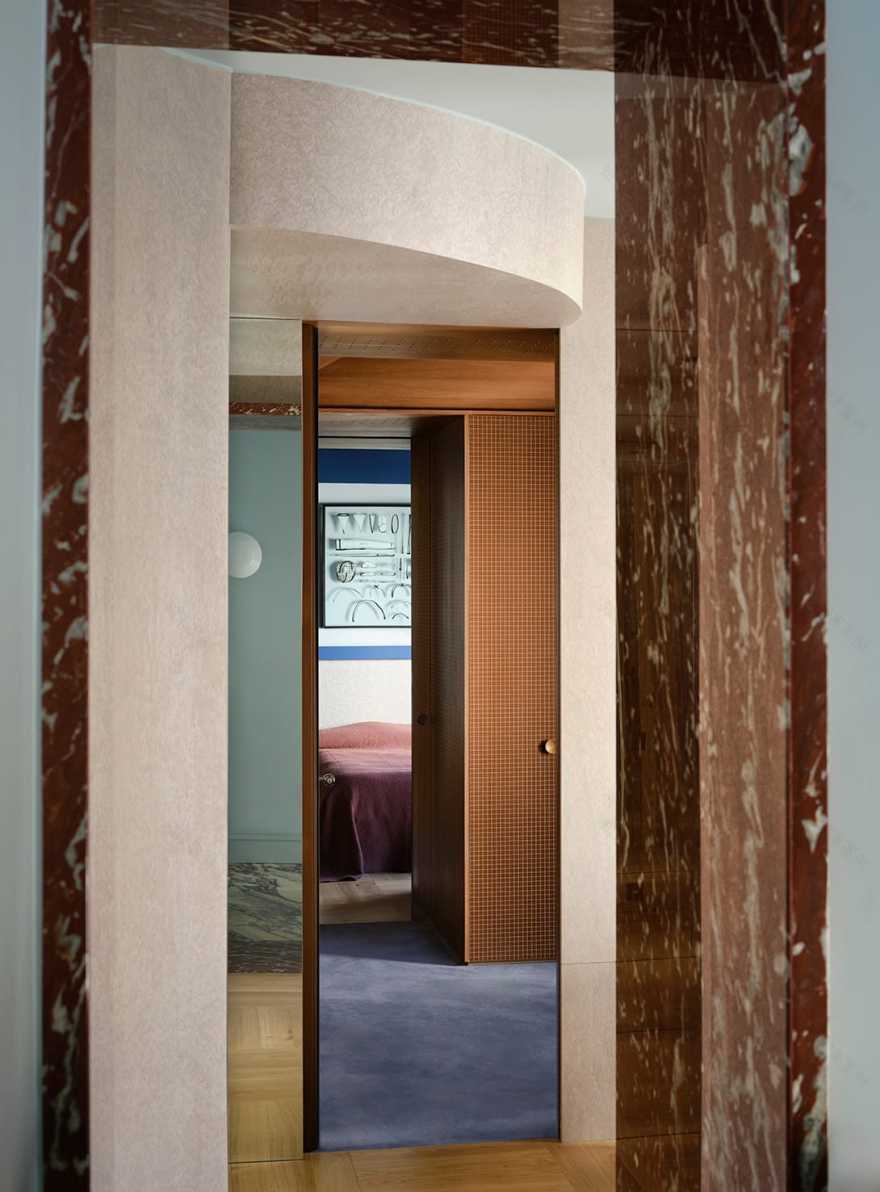
The villa was discovered in a dire state—abandoned for years, floors built halfway up the windows. “We found the building in a deplorable state,” Ana explains. “It was very important for us to treat it as a blank canvas where we could build and reimagine the spaces from scratch.” Rather than being daunted, Plutarco researched what other modernist villas were being built globally in 1934, drawing connections to the era and grounding the renovation in its original architectural moment. That historical awareness runs through the entire project—vaulted ceilings reference Robert Mallet-Stevens’ Villa Cavrois, while mixed marble staircases and banisters with oculi nod to Piero Portaluppi’s 1930s Italian villas.
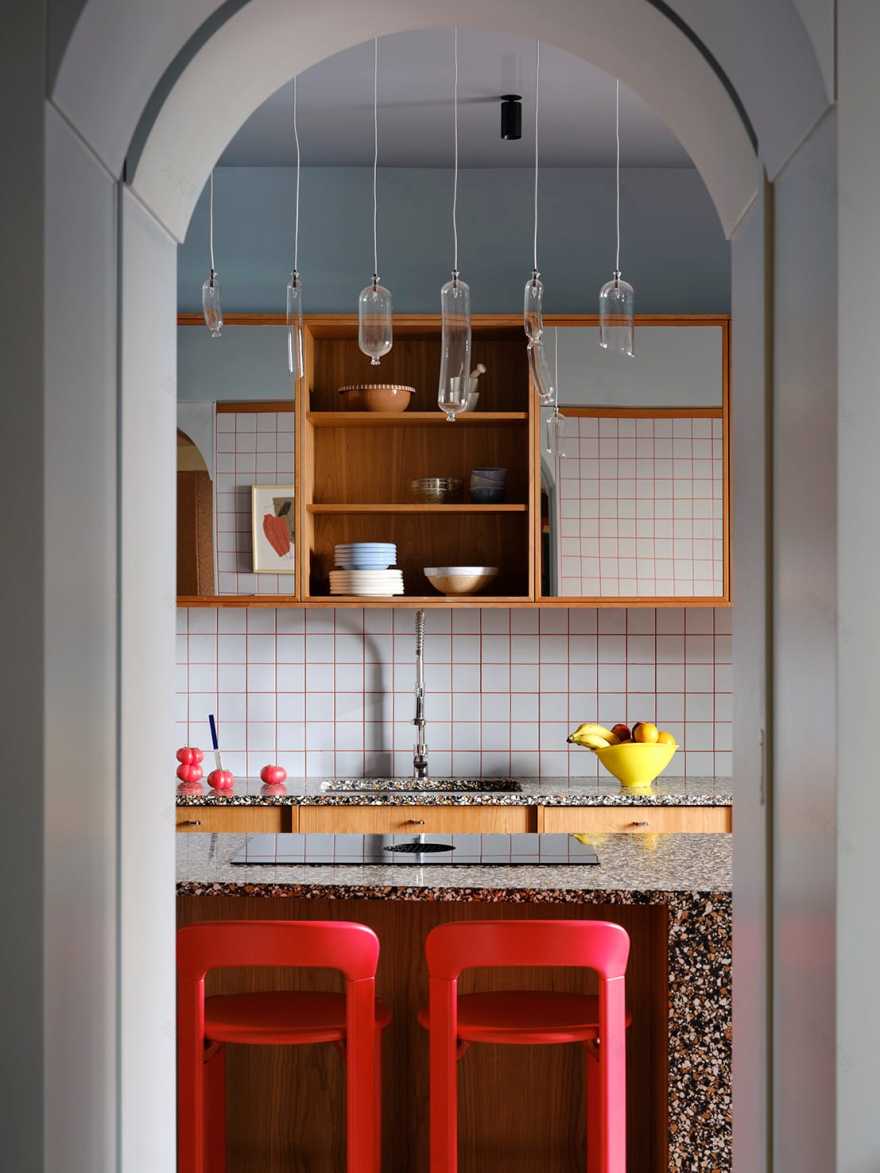
But this home is far from a period recreation. The material palette is ambitious and experimental. In the kitchen alone, five primary materials collide: cherry wood for its reddish warmth, pine stained dark blue using a new Danish material, a custom terrazzo island, a Milanese-inspired terrazzo floor, and blue tiles with red grouting. “We really like red, but always in controlled touches—what is called Unexpected Red,” Ana notes. I love that.


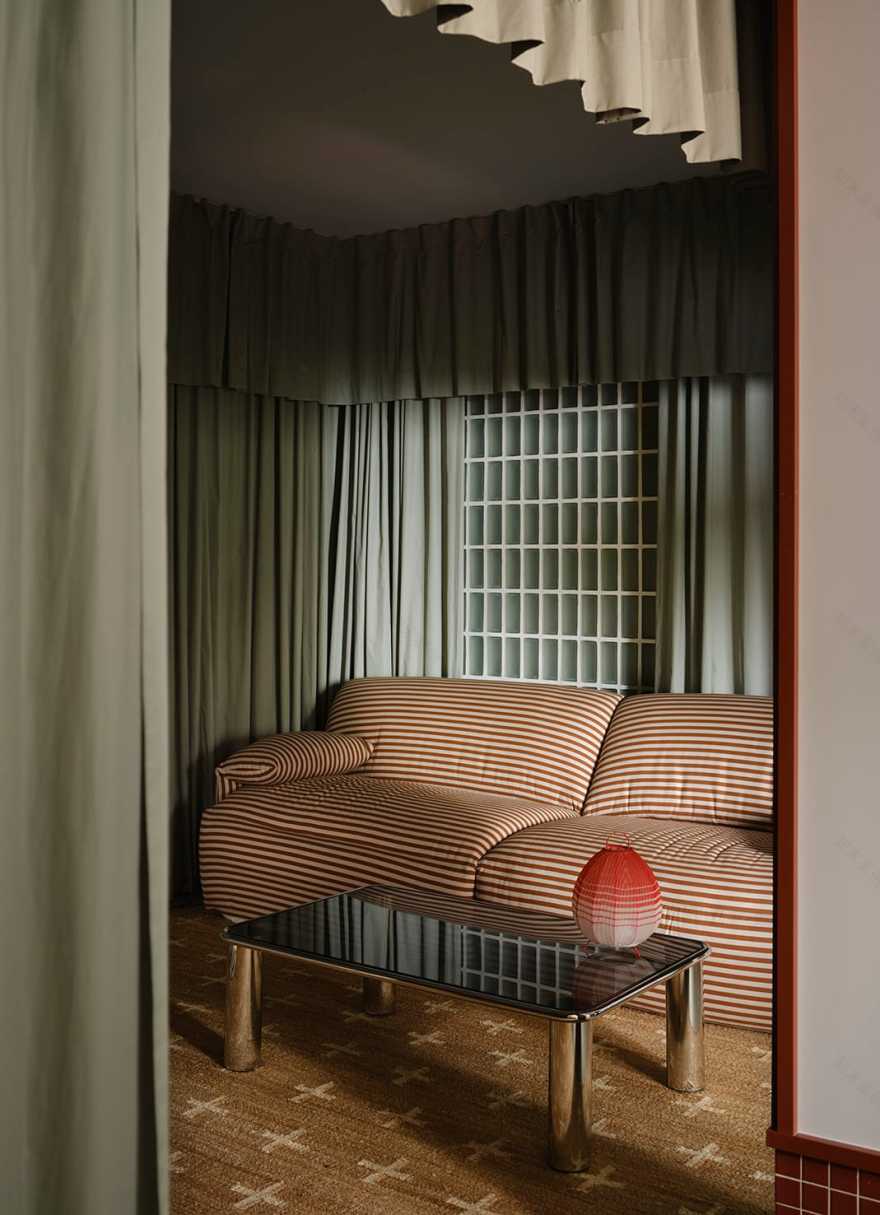
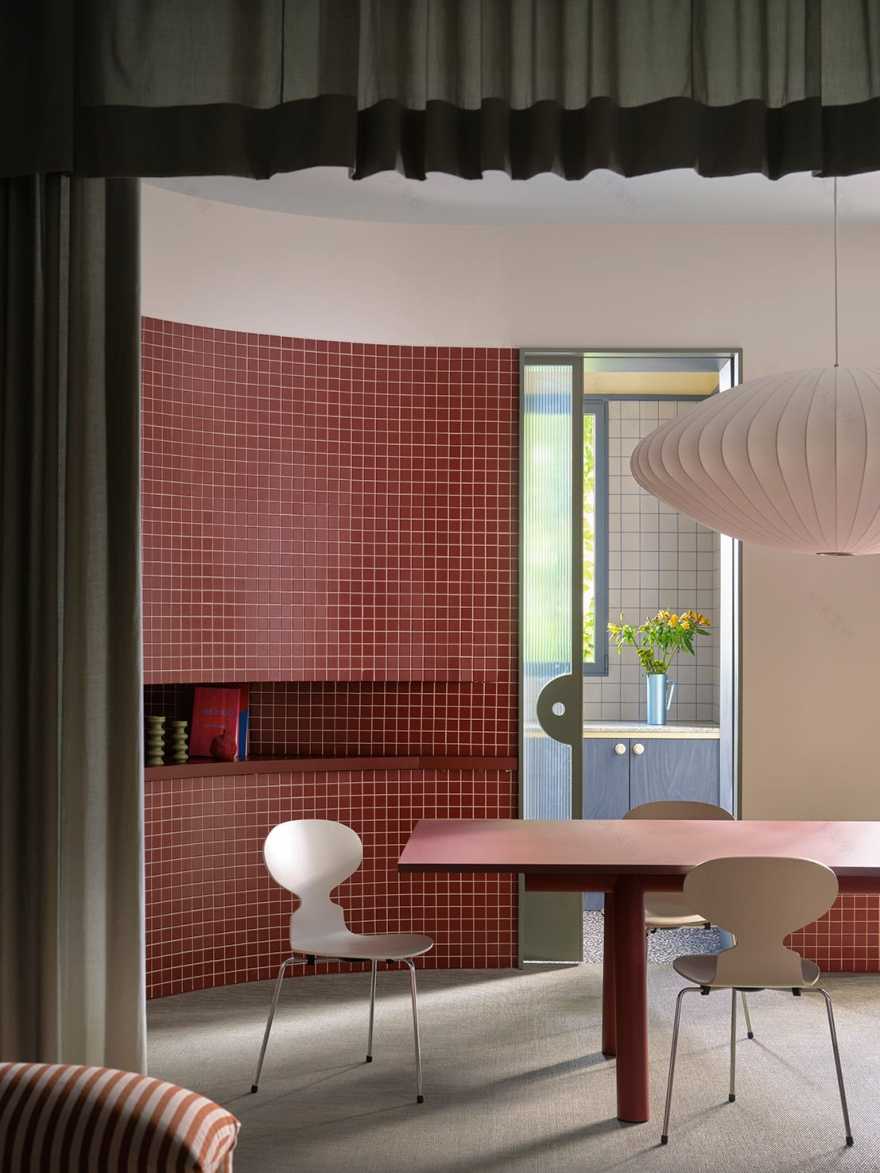


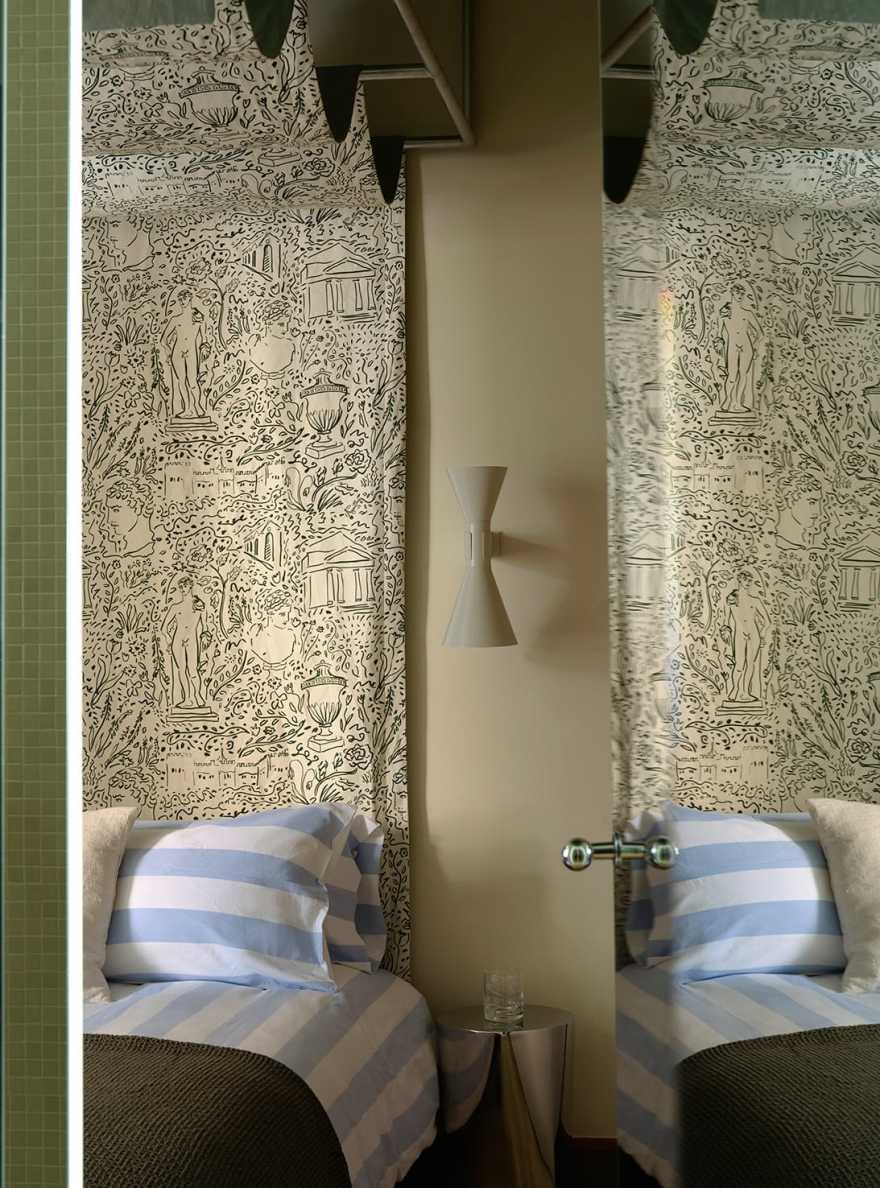
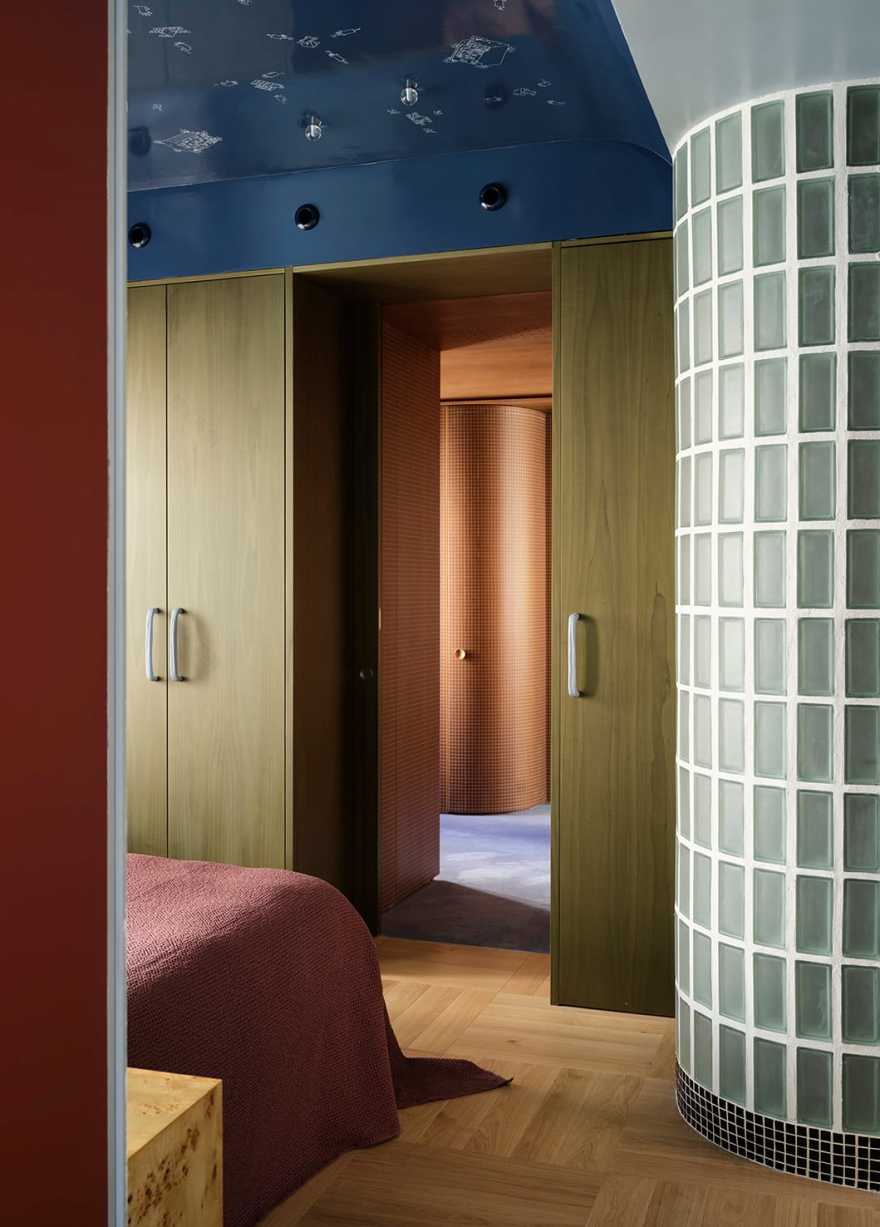
Upstairs, the master bedroom is extraordinary. The vaulted ceiling is midnight blue, embedded with lights that mimic stars and a hand-painted constellation by Jesús Colmenero. “We always say that dark colours embrace you,” says Ana—and walking into this space, you’d believe it. Curved doors, circular glass blocks, and green-stained wood panelling create something immersive without being overwrought. The curve is a recurring motif throughout the house—softening transitions, eliminating hard angles, lending fluidity between rooms.
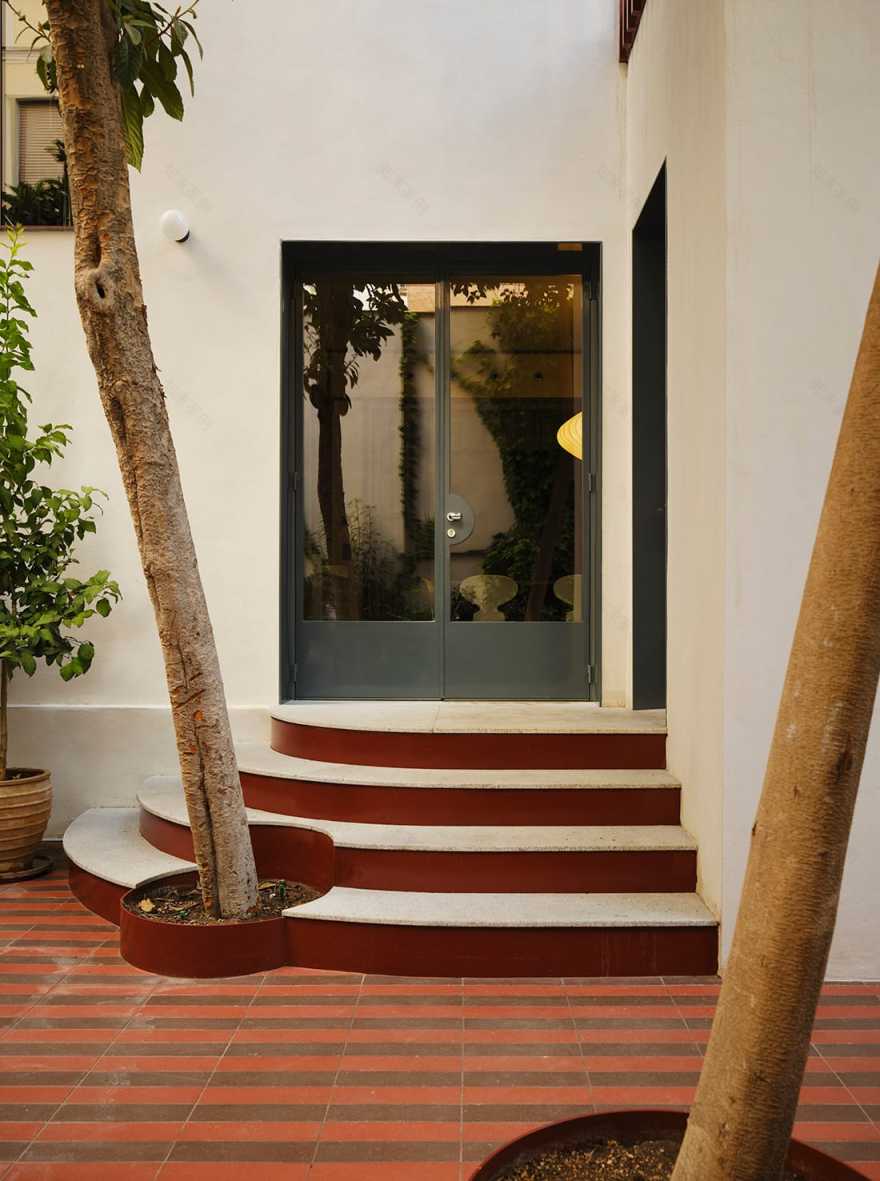
Outside, a green mosaic tile pool, striped tiled flooring, and a Virginia creeper destined to turn red each autumn complete a home built for gathering and living well. “We love having people over, using the house, enjoying the common areas,” Ana says.
This project is living proof of what happens when a designer follows their gut. It’s a design manifesto made physical—a space where every idea could be tested, every material combination tried, and every instinct followed through.
[Images courtesy of Plutarco. Photography by Germán Saiz.]










南京喵熊网络科技有限公司 苏ICP备18050492号-4知末 © 2018—2020 . All photos and trademark graphics are copyrighted by their owners.增值电信业务经营许可证(ICP)苏B2-20201444 苏公网安备 32011302321234号
苏公网安备 32011302321234号客服
消息
收藏
下载
最近