

创作上传
VIP
收藏下载
登录 | 注册有礼
查看完整案例

收藏

下载

分享

翻译
Architects:0.5m Studio,Ref Architects
Area:240m²
Year:2025
Photographs:AOGVISION
Lead Architects:Hu Wenyuan, Fang Yao, Tang Junru, Wang Jiao’er
Category:Community Center,Adaptive Reuse,Coffee Shop Interiors
Design Team:Hu Wenyuan, Fang Yao, Tang Junru, Wang Jiao’er
Clients:Wangcunkou Town Government of Suichang County, Backland Culture
City:Lishui
Country:China

Project Background and Site Understanding — The site is located on an elevated riverside plot along the Wuxi River in Wangcunkou Town, Suichang County, Zhejiang Province, descending toward a natural stone riverbank. Historically, it served as an important water transportation dock during the Ming and Qing dynasties and later became an active area of revolutionary history. With the shift of time, the site has remained abandoned for many years. Although the village is structured along the river, most of the riverbank is occupied by residential buildings, leaving little public access to the water. The renovated house sits between a small plaza and the riverbank, and its enclosed condition had long blocked villagers' approach to the water. The design goal therefore emerged clearly: to transform "separation" into "connection" by renewing the old house and releasing an openly accessible waterfront public space for the community.
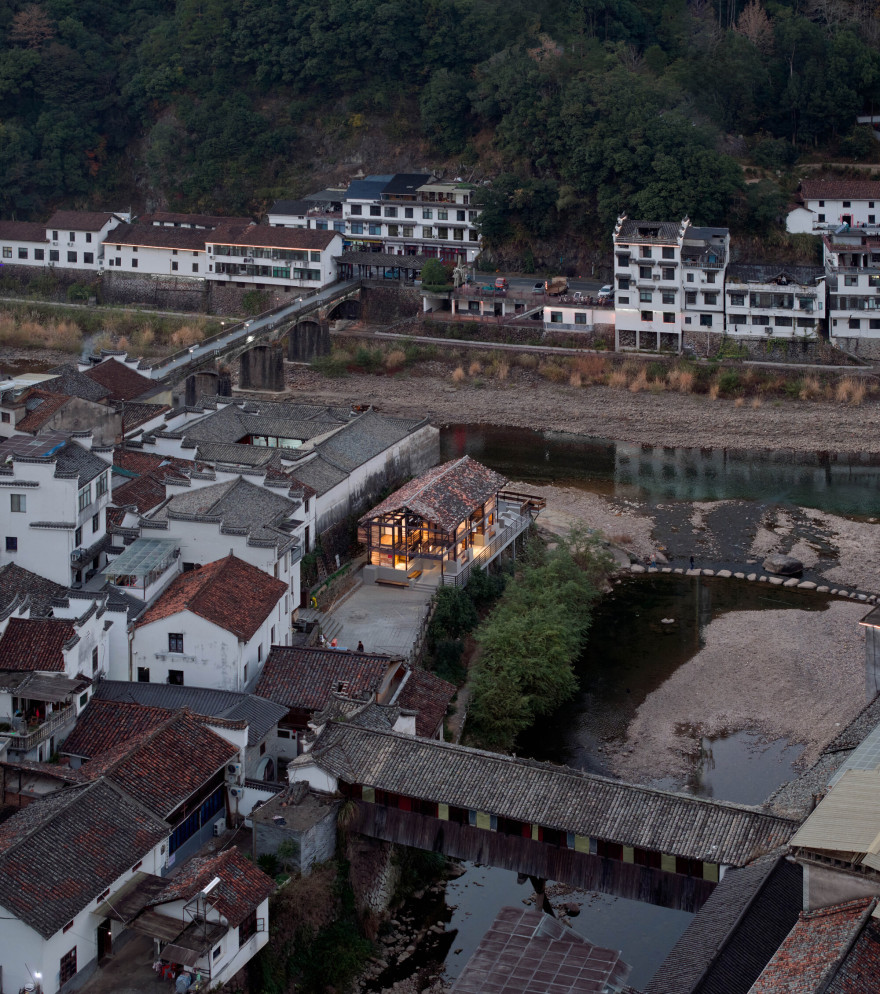


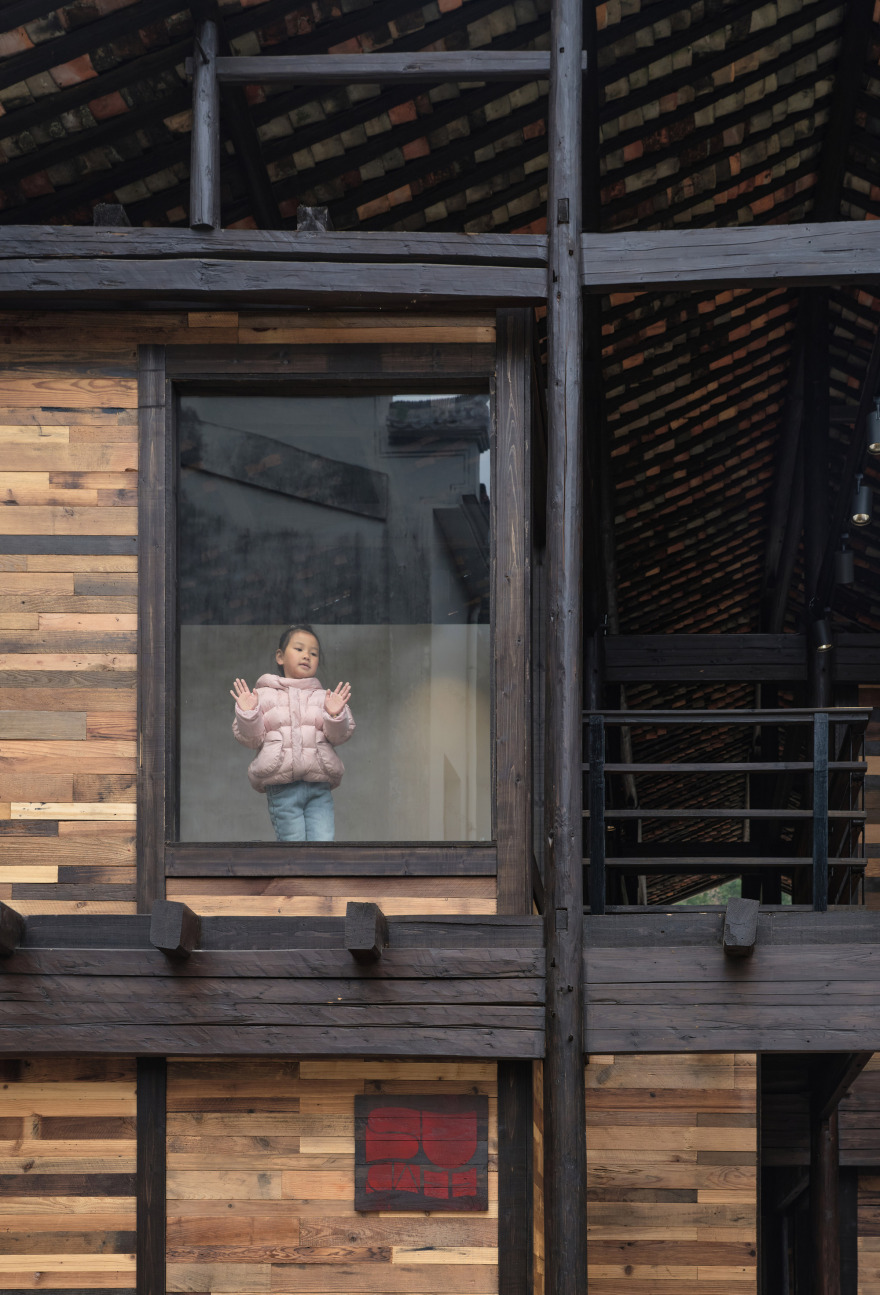
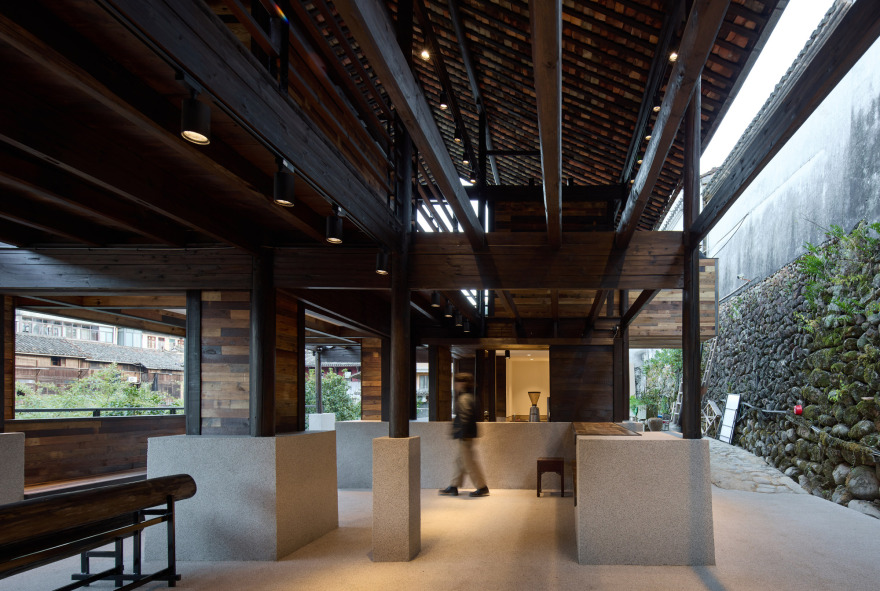
Design Strategy: Spatial Reorganization Based on the Existing Structure — At the core of the project stands a two-story traditional timber house. While the wooden frame remains intact, the enclosure system had deteriorated and the original spatial layout no longer functioned. The design preserves the original timber structure, removes the ineffective exterior walls, and inserts four functional wooden box units within the frame to reorganize the spatial order through a "new boxes within the old frame" strategy. The inserted wooden boxes introduce new programs while simultaneously acting as structural supports. Together with the original timber frame, they form a stable structural system in which spatial renewal and structural reinforcement are achieved in a single process.
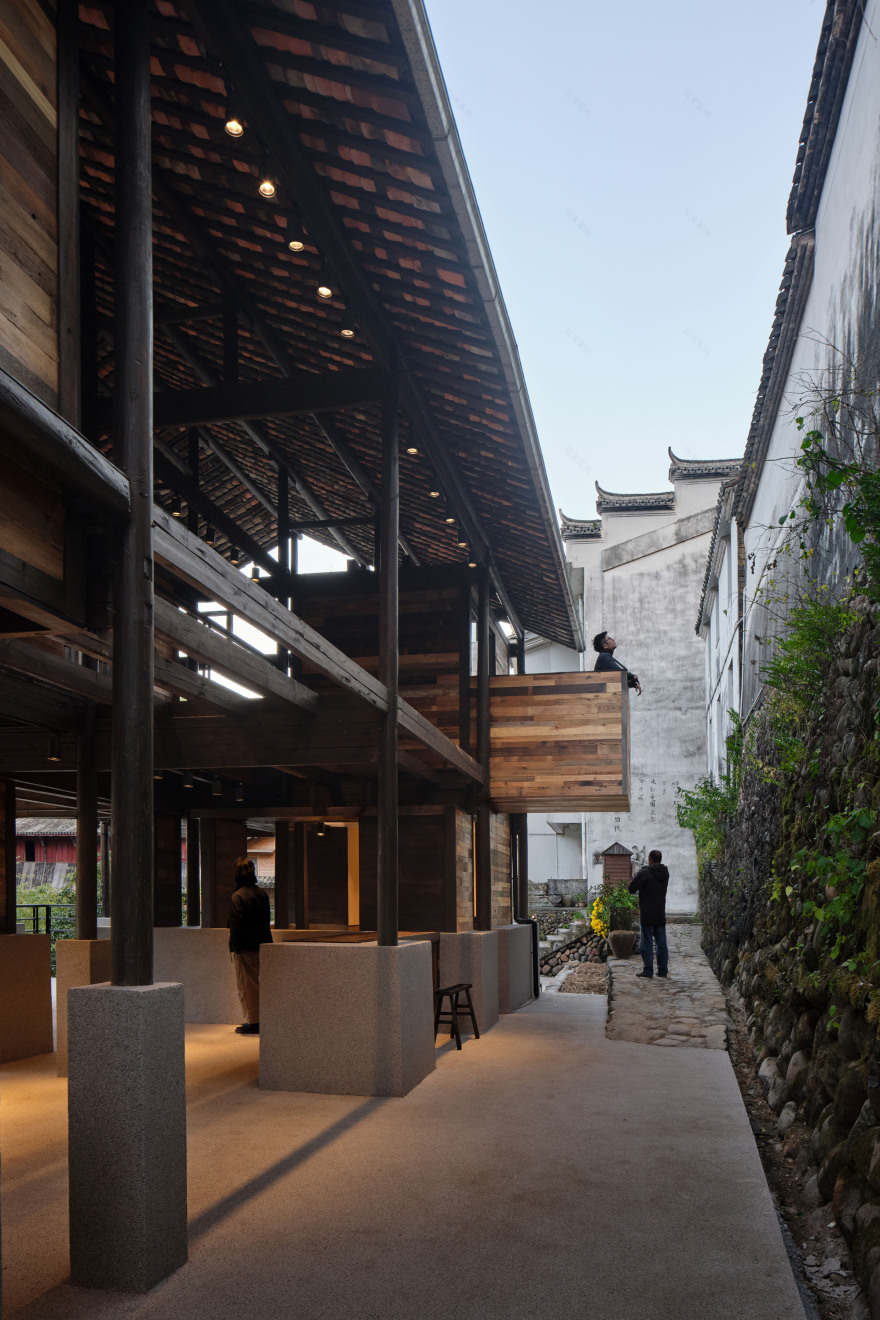


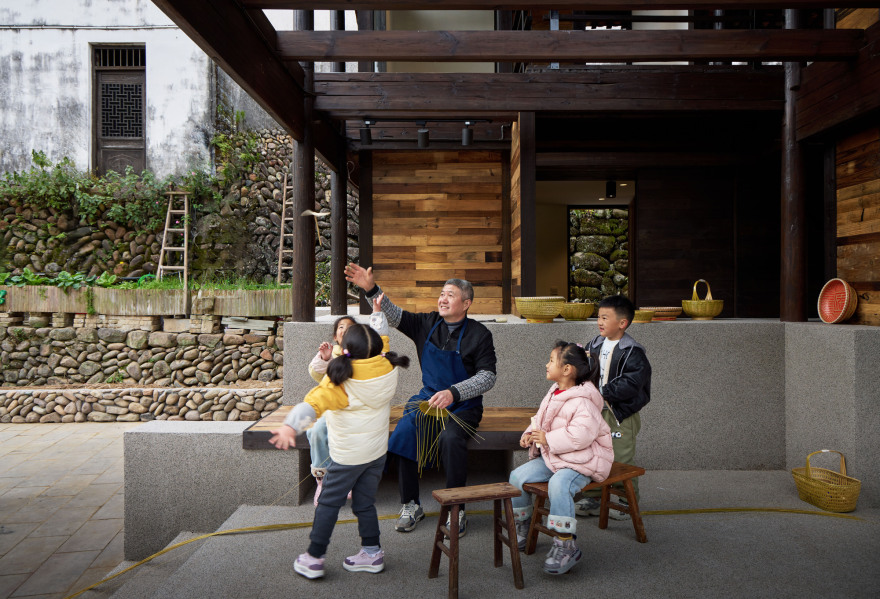
Spatial Organization: Re-establishing Publicness — The ground floor is defined as a freely accessible public level. The staggered arrangement of the wooden boxes in plan and section generates multiple circulation paths and visual connections, allowing people to enter from different directions, move through, pause, and directly engage with the riverbank and stone shore. It functions as a highly active open space rather than an enclosed interior. The second floor is more restrained in character. Three wooden boxes open toward the river, directing views to the surrounding mountains and water, while the exposed original timber structure below remains visible, evoking a layered perception of time and scale.


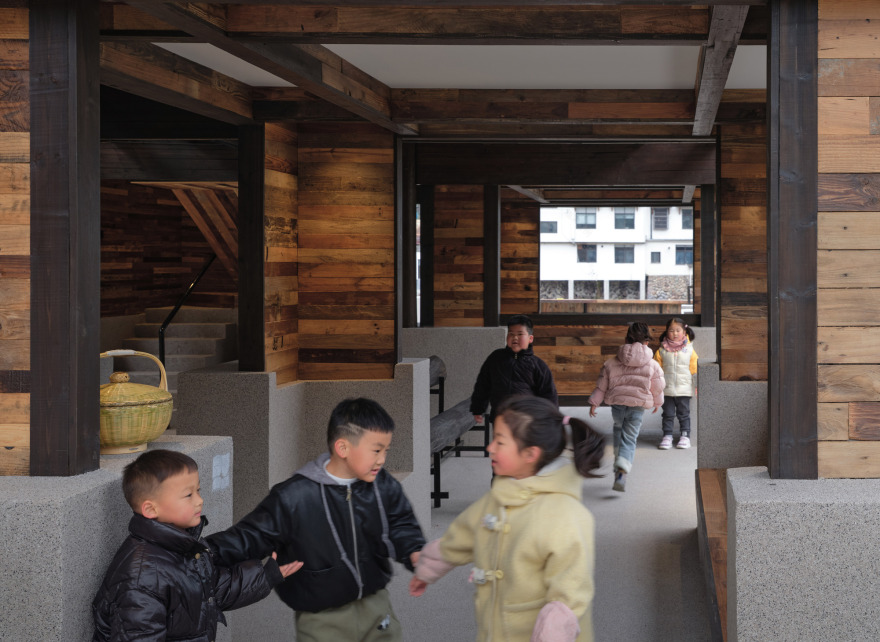
Response to Site Conditions and Material Approach — In response to periodic water discharge from the upstream reservoir, which can raise the water level and inundate the site, a concrete base is introduced below 1.45 meters to lift the column bases and wooden boxes, ensuring structural safety. This solid base forms a stable lower mass that contrasts with the lighter timber structure above. Dismantled old wooden boards were repaired and reused in the interior construction, allowing the material memory of the old house to continue.


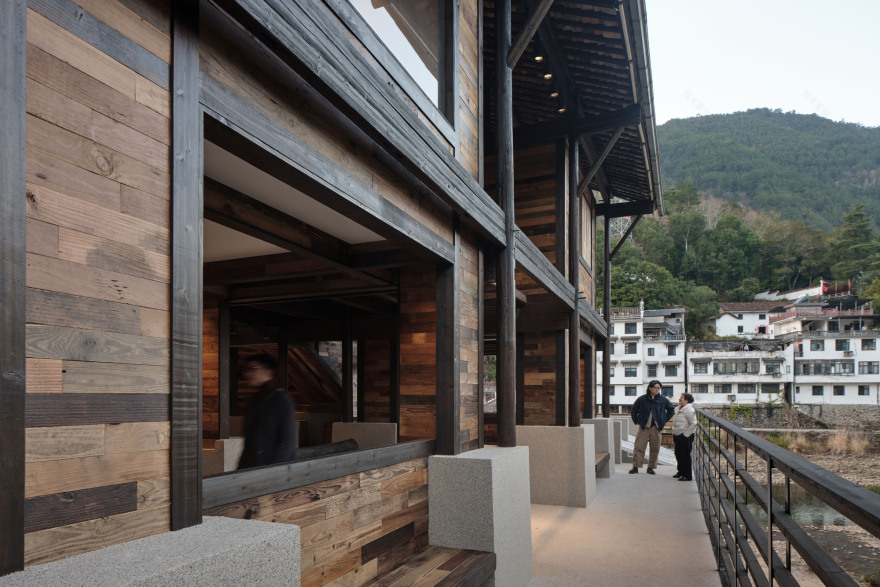
Result — Through a restrained and precise intervention, the old house re-enters public life while retaining its village character. No longer merely a historical remnant, it becomes an active node connecting landscape, village, and memory, continuing to be used and understood over time.

Project gallery





南京喵熊网络科技有限公司 苏ICP备18050492号-4知末 © 2018—2020 . All photos and trademark graphics are copyrighted by their owners.增值电信业务经营许可证(ICP)苏B2-20201444 苏公网安备 32011302321234号
苏公网安备 32011302321234号客服
消息
收藏
下载
最近