

创作上传
VIP
收藏下载
登录 | 注册有礼
查看完整案例

收藏

下载

分享

翻译
Architects:Maisuradze,T-architects,Tsanava
Area:2880m²
Year:2025
Photographs:Grigory Sokolinsky
Manufacturers:SketchUp,AutoCAD,NBK Architectural Terracotta
Lead Architects:Davit Tsanava, Giorgi Inasaridze, Nikoloz Maisuradze, levan Mirianashvili
structure:Kapiteli
Construction Company:produceinvest
Engineering:Erekle Mesturishvili
Category:Museum,Cultural Center,Sustainability
Design Architect:Mikheil Maglakelidze, Salome Gudushauri, Gigi Tavidashvili
Facade Engineering:Advanta Consulting
City:Zugdidi
Country:Georgia
Text description provided by the architects. The project establishes a multifunctional civic and educational center in Zugdidi, setting a precedent for decentralization and regional cultural renewal in Georgia. It addresses the city's ambition to foster social integration and is a new civic landmark where interaction and public space are at the core of the design.


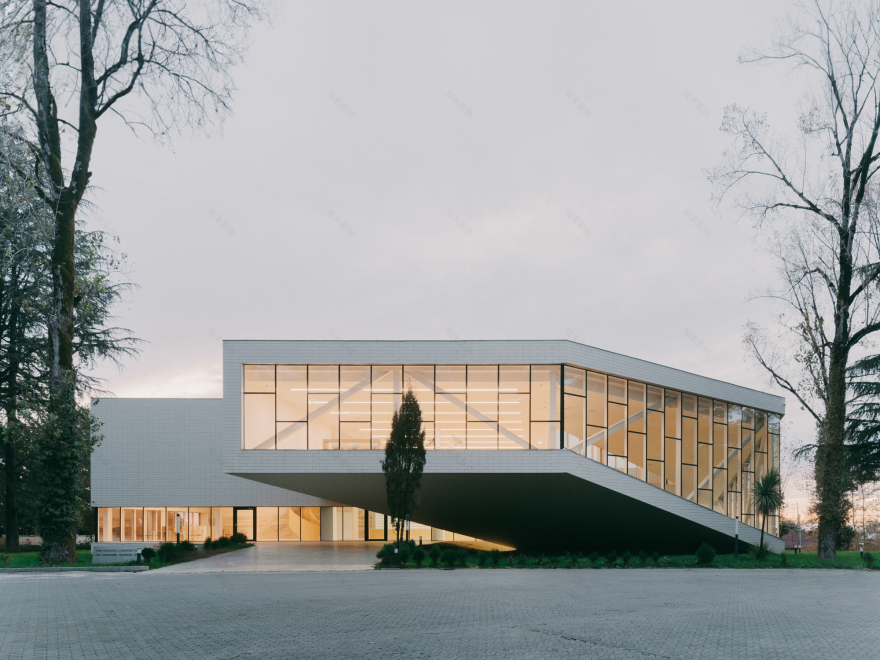
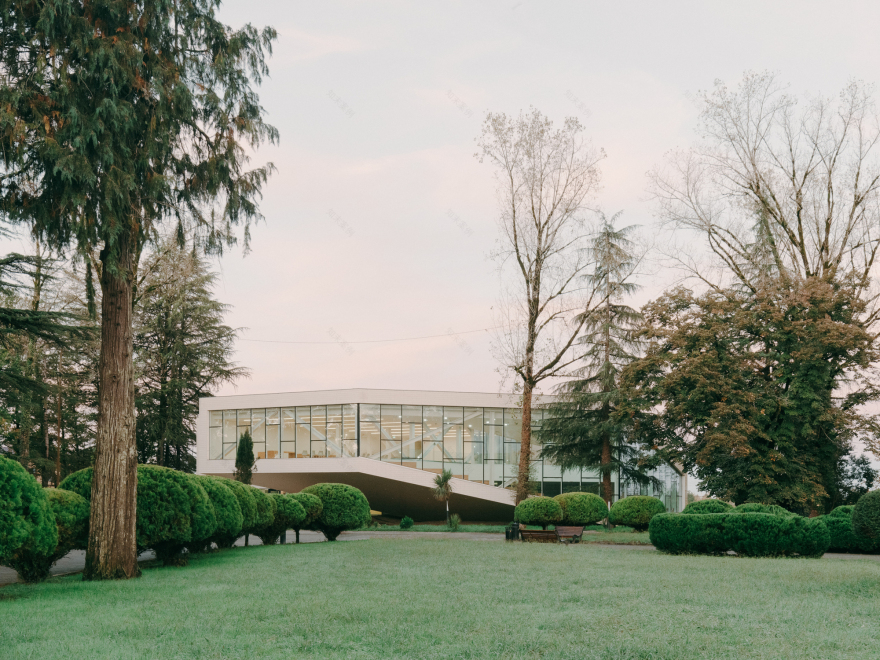
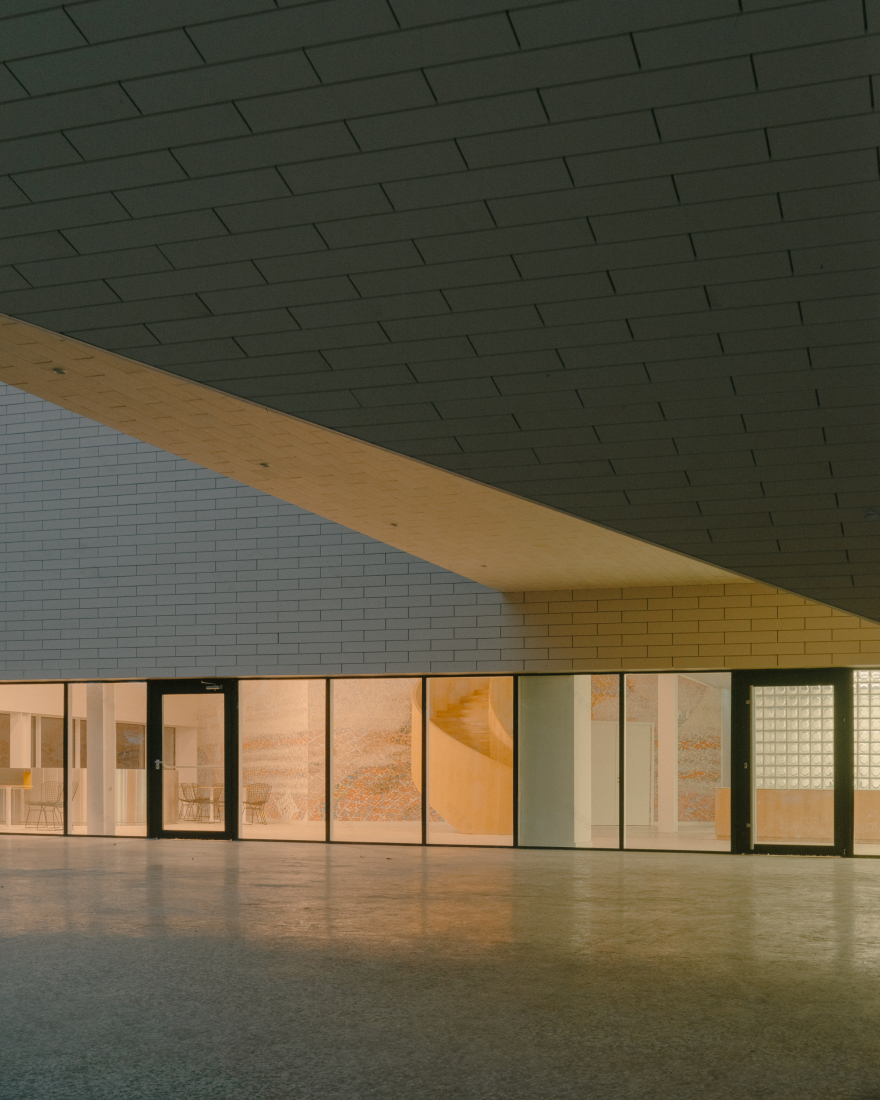
Positioned at the nexus of Zugdidi's historical and contemporary urban fabric, the building houses a polyvalent cultural program: media library, museum, conference space, and café. Its form is a direct contextual response; a cross-shaped plan orients four distinct facades toward key city identities.

The lightweight steel structure allows for exceptional spatial flexibility, creating a continuous, non-hierarchical experience across diverse functions. The interior palette is a tactile composition of natural wood, glass block, and local terrazzo, complemented by a natural terracotta facade.


The project confronted two core challenges: a lack of accessible, modern public space in the city, and the need to redefine the library in the digital era. Our strategy was to create a dynamic civic hub for active interaction, not passive collection. The design dissolves boundaries between its polyvalent functions, replacing walls with subtle sectional shifts and a continuous, amphitheatrical circulation loop. This forms an open, non-hierarchical spatial experience.

As an urban connector, the building's angular geometry presents a dynamic, multifaceted identity, with each facade responding to specific urban identities. The main reading room's large glazing dissolves the boundary to the park, fusing the interior with the landscape. This architectural strategy is fundamentally social. By rejecting the traditional, silent model, the building becomes an open, democratic platform for community, collaboration, and public life.

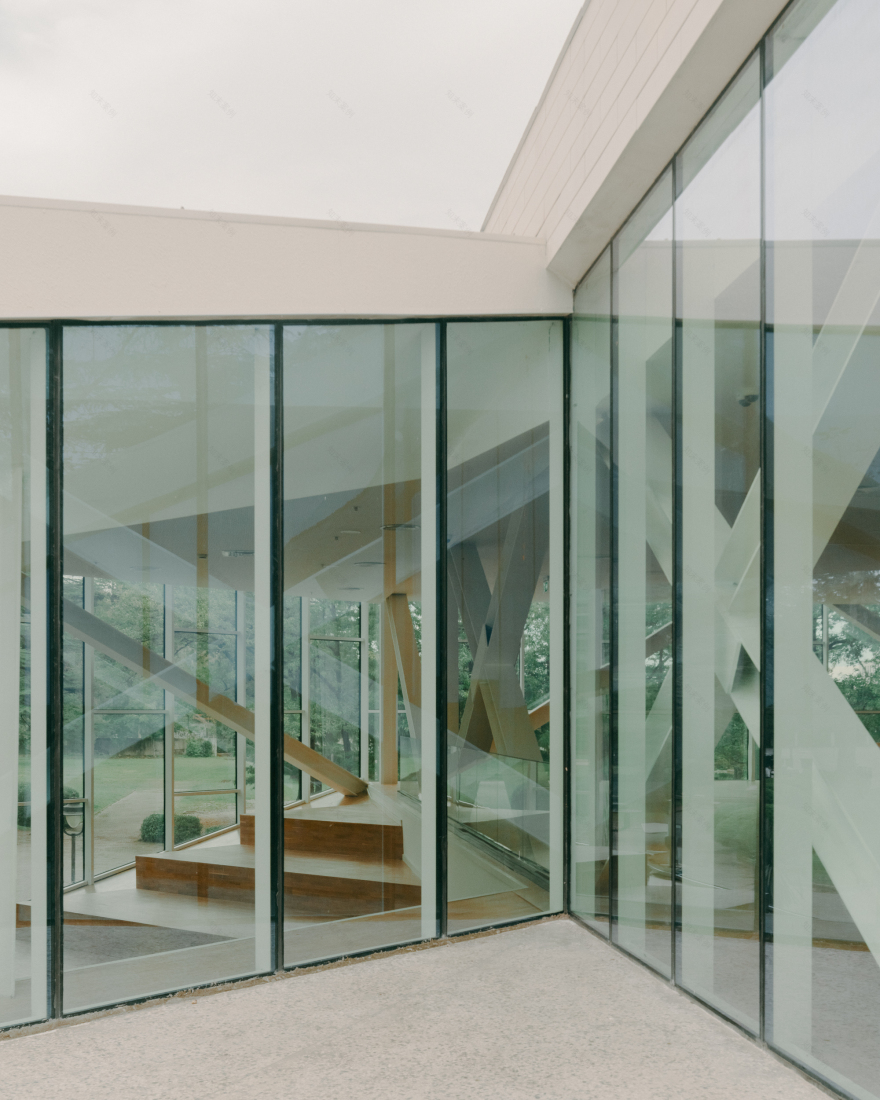
An exposed steel frame generates the building's cross-shaped plan. This structural system was a strategic response to the compact site, allowing for the column-free, open-plan interior spaces and amphitheatrical circulation. The facade is articulated by a high-performance, ventilated rainscreen of natural terracotta, paired with large-scale glass vitrages. The interior material palette is tactile and contextual, defined by natural wood and locally-sourced custom terrazzo.

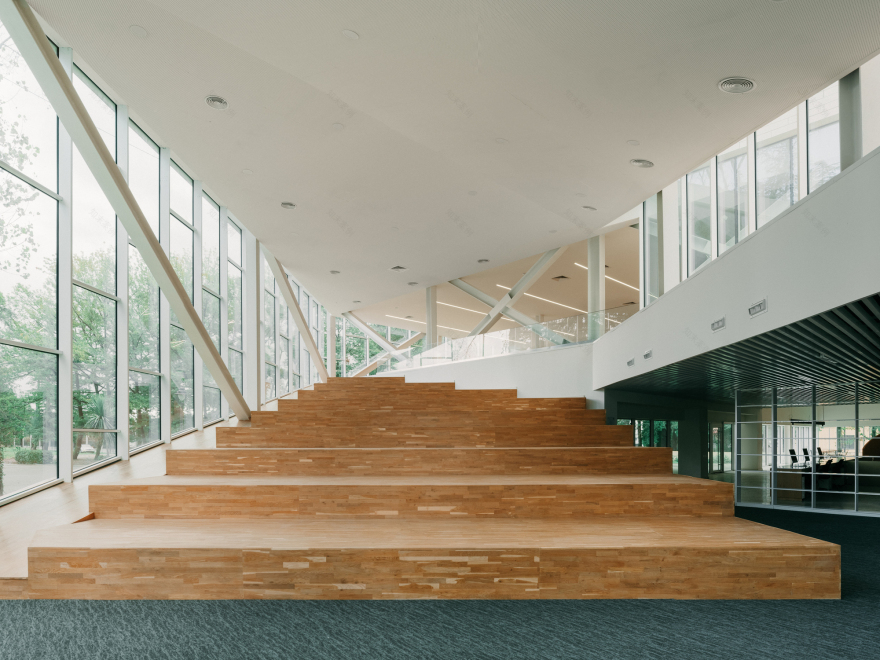
Sustainability is a core driver. The high-performance envelope and terracotta rainscreen ensure thermal efficiency. The building's passive strategy is led by its orientation: large vitrages face North-East, harvesting abundant, consistent daylight while critically avoiding solar heat gain. This significantly reduces the building's energy consumption and cooling load. Maintenance recommendations include periodic inspection of the rainscreen joints and regular cleaning of the terracotta and glass.
Project gallery






南京喵熊网络科技有限公司 苏ICP备18050492号-4知末 © 2018—2020 . All photos and trademark graphics are copyrighted by their owners.增值电信业务经营许可证(ICP)苏B2-20201444 苏公网安备 32011302321234号
苏公网安备 32011302321234号客服
消息
收藏
下载
最近