

创作上传
VIP
收藏下载
登录 | 注册有礼
查看完整案例

收藏

下载

分享
时代已经改变!几个世纪以来,建筑与城市往往是在层层叠加中发展:教堂建在神庙之上,大教堂又覆盖在教堂之上,愈发高大而宏伟;而大教堂的地下墓室,往往正是此前教堂遗存的部分。然而在今天,我们对那些在快速城市化浪潮中幸存下来的建筑更加尊重与敬畏。我们倾向于将这些建筑列入“历史保护名录”,以确保其被保存下来,不再在其之上或之前继续建造。尽管如此,为了让历史建筑能够适应现代生活方式,增建往往仍然不可避免。于是,人们通常将新增部分隐藏起来——置于建筑后方,或如这座宏伟住宅一般,深藏于地下。
Times have changed! For centuries, buildings and towns were built layer upon layer. Churches were built on the foundations of temples, and cathedrals over churches, taller and grander; the crypts of cathedrals were often what remained of the previous church. Today, however, we are more respectful and reverential of those buildings that have survived the ravages of rapid urbanisation. We tend to ‘heritage list’ such buildings to preserve them, and we do not build over or in front of them. That said, additions are often necessary to ensure an historic building’s compatibility with our modern lifestyles, and so we seek to disguise these additions, by placing them to the rear, or in the case of this grand home, hiding them below ground level.
▼住宅外观,exterior view© Piers Haskard

这座住宅建于1889年,由当时极具影响力的建筑师 Walter Liberty Vernon 设计。他的重要作品包括位于 The Domain 的新南威尔士州美术馆以及悉尼中央车站等大型公共建筑;同时,他也设计了大量私人住宅,其中就包括这座名为 Family Heritage 的住宅。近期,Luigi Rosselli Architects 有幸对其进行更新改造。
Constructed in 1889, the house was designed by Walter Liberty Vernon, who was a highly influential architect of the time, and who counted both the Art Gallery of New South Wales, located in The Domain, and Sydney’s Central Station among his many projects. Along with these grand public works, he also designed many private residences, including Family Heritage, which Luigi Rosselli Architects recently had the privilege of updating.
▼住宅花园,garden of the house© Prue Ruscoe

最初,这栋为一位成功的会计师建造的两层住宅,矗立在一块宽阔的土地之上,享有俯瞰悉尼港及对岸悉尼市区的开阔视野。然而在20世纪90年代,原有用地中相当一部分被出售,用于联排住宅开发,花园面积随之大幅缩减。因此,在新建部分的设计中,保留现存花园成为一项重要前提。为此,设计选择拆除较晚期加建的车库,并在原址上建造一座全新的翼楼,共四层,包括地下空间与一座犹如冰山露出水面的屋顶花园,占据了原本“上层”花园的位置。新增部分的上层容纳了新的厨房、餐厅与起居空间——一个契合现代生活方式的当代场所,并通过与明亮通透的花园空间的直接联系而得以强化。下层则安置了酒窖以及一整套设施:健身房、按摩室、桑拿、SPA与游泳池——一切仿佛都是为“追求永恒”而准备的。同时,还包含一些更为日常却不可或缺的功能空间,如设备用房和泳池水箱。
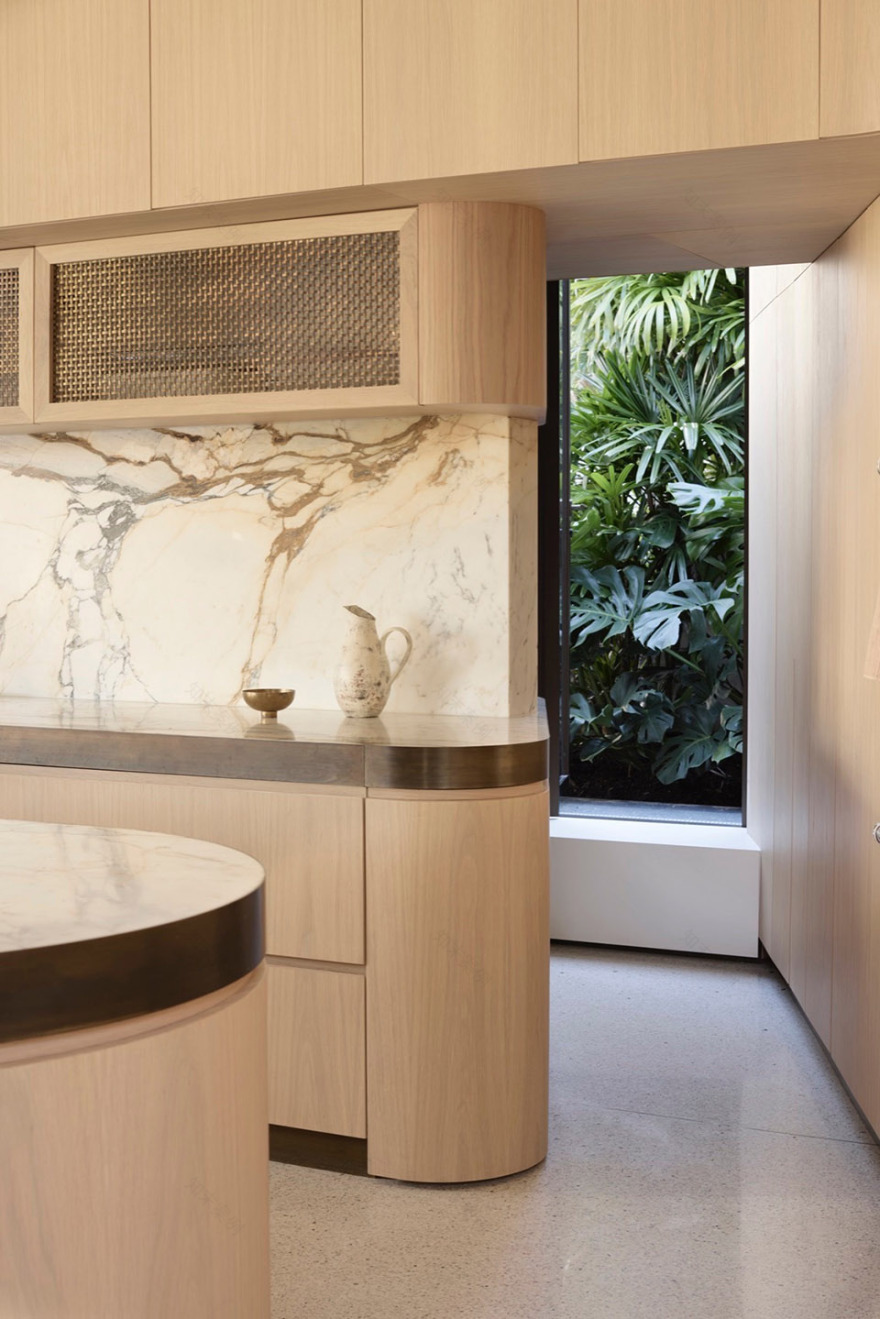
Built for a successful accountant, the original two-storey dwelling stood tall on a large parcel of land blessed with views down to Sydney harbour and the city of Sydney opposite. In considering the design for the new additions, there was a requirement to retain what remained of the garden after a significant portion of the original plot was sold off in the 1990s for a development of townhouses. To achieve this aim, the solution was to demolish a more recent garage addition, and replace it with a new wing that covers four levels, including subterranean spaces and a roof garden akin to an iceberg tip, which occupies the space where the ‘upper’ garden of the property used to be. Housed within the upper level of the additions are a new kitchen, dining and sitting room; a contemporary space that complements a modern lifestyle, enhanced by easy access to the light and airy garden space. The lower levels contain a wine cellar, and all the apparatus: a gym, massage room, sauna, spa, swimming pool, necessary for achieving immortality. Along with the more mundane elements to support that aim, such as the plant room, and a water tank for the pool.
▼由住宅看城市,viewing the city from the house© Piers Haskard

▼花园顶视图,top view of the garden© Piers Haskard

▼庭院半鸟瞰,half-aerial view of the garden© Piers Haskard

▼屋顶花园与通向屋顶的楼梯,the roof garden and the staircase leading to the roof© Piers Haskard

“Cryptic-architecture(隐秘建筑)”这一概念源自拉丁语与希腊语中“隐藏”之意,并非新生事物,却在保护既有建筑或高效利用有限空间时展现出独特价值。世界范围内的著名案例包括:华裔美籍建筑师贝聿铭为巴黎卢浮宫设计的金字塔扩建;日本建筑师安藤忠雄为Benetton集团在一座17世纪威尼斯别墅中打造的Fabrica;以及Emilio Ambasz令人惊叹的地下建筑作品。
Borrowing from both the Latin and Greek words for hidden, ‘cryptic-architecture’ is not a new concept, though it is one that may be put to effective use where the aim is to preserve what already exists, or to make effective use of limited space. World renowned examples of ‘crypticarchitecture’ include, Chinese-American architect, I.M. Pei’s pyramid addition to the Paris Louvre; Fabrica, the addition integrated into the confines of a seventeenth century Venetian villa by Japanese architect, Tadao Ando for United Colors of Benetton; and the wonderful underground buildings of Emilio Ambasaz.
▼庭院,courtyard© Prue Ruscoe


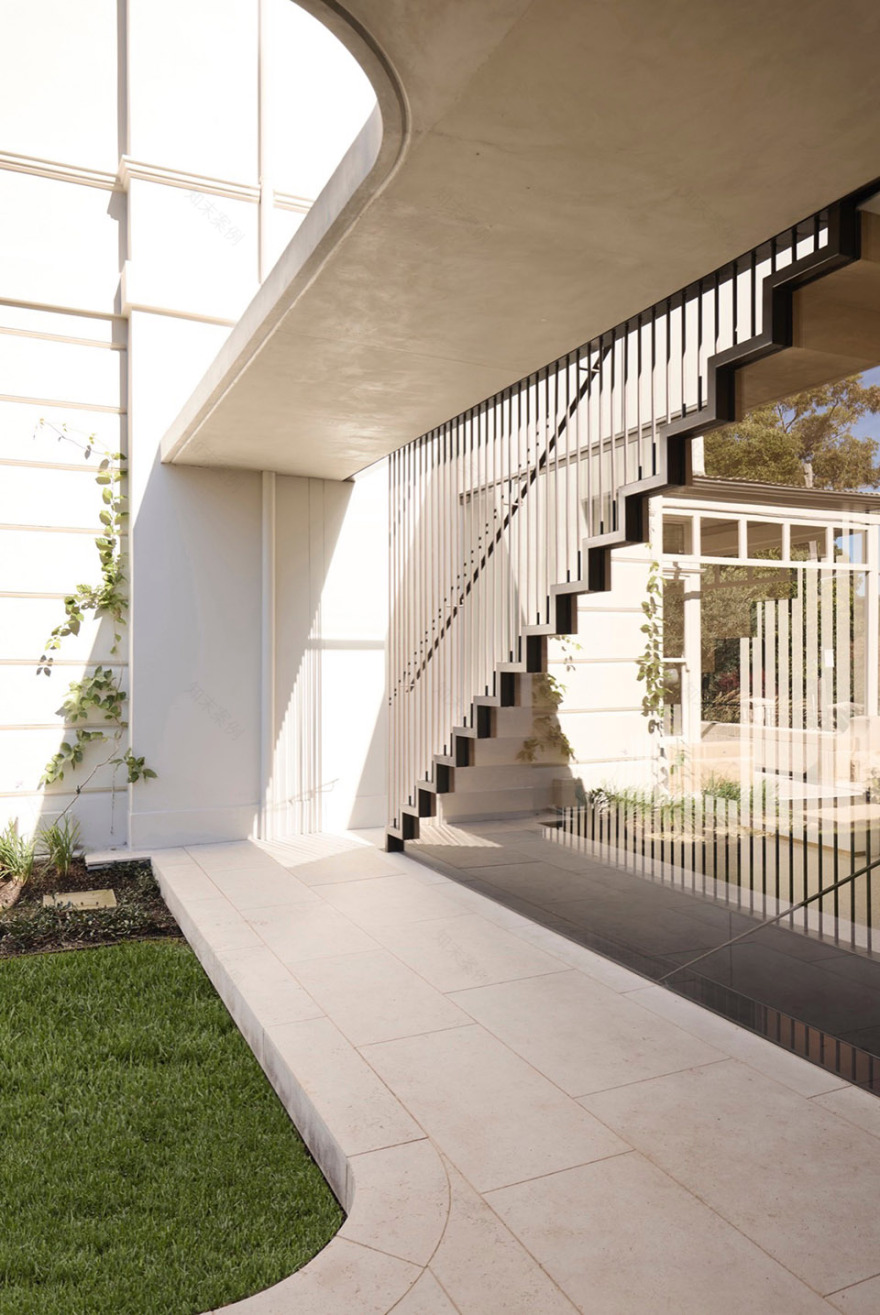
▼模糊的室内外界限,blurred exterior and interior boundaries© Prue Ruscoe


▼弧形玻璃,curved glazing facade© Prue Ruscoe


▼生活空间向庭院打开,the living space opens to the courtyard© Prue Ruscoe

在澳大利亚,相关主管机构普遍并不支持以“隐秘建筑”作为应对城市密度问题的解决方案,反而更倾向于持续清理土地并推进资源不足的城市蔓延。官方给出的反对理由多基于减少填埋量以及降低开挖所带来的噪音污染,然而在批准大规模公共工程(如庞大的地下道路系统)时,却并未表现出同样的顾虑。北悉尼市政厅是少数支持这种策略的机构之一。该区域位于悉尼下北岸,其地形以陡峭的岩石台地为特征,使得游泳池、车库、设备用房及水箱等功能空间得以隐藏于地下,从而保留地面层郁郁葱葱的景观。
Authorities within Australia are quite opposed to utilising cryptic-architecture as a solution to the challenges of our crowded urban landscape, preferring instead to allow ever growing rates of land clearance and poorly resourced urban sprawl. Supposedly the objections are formed on the basis of reducing the volumes of landfill, and noise pollution resulting from excavation, yet those same authorities show none of those same concerns when approving large scale public works such as vast underground road systems. North Sydney Council is one of the few authorities to support this type of solution. Geographically located on Sydney’s lower north shore, the topology of the Council area is characterized by the steep slopes of a rock shelf, and it allows for the placement of swimming pools, and utilitarian elements such as garages, plant rooms, and water tanks, out of sight below ground to retain a leafy ground plane.
▼加建翼楼底层的生活空间,living space of the extension wing of the house© Prue Ruscoe


▼加建部分的客厅,living room of the extension part© Prue Ruscoe


隐秘之宅(Hidden Home)的花园将维多利亚时期对草坪与边界的偏爱,与亚热带植物配置相融合,由Dangar Barin Smith的William Dangar精心挑选与设计,呈现出一处层次丰沛的景观。室内设计师Romaine Alwill则在这座晚期维多利亚风格的住宅内部,将其收藏的现代主义与古典室内元素加以融合。Vernon在当年的设计中,正处于从繁复、叠加的维多利亚装饰风格,向更为纯粹的安妮女王风格过渡的阶段,而Romaine正是能够捕捉并延续这一微妙转变的理想人选。
The gardens of Hidden Home are a lush interpretation of the Victorian affection for lawn and edges, blended with subtropical planting artfully and personally selected by William Dangar of Dangar Barin Smith. Interior designer, Romaine Alwill combined her collection of modernist and classic interior elements within the late-Victorian interiors of the house. With his design, Vernon was in a transition phase from the ornate and layered Victorian clutter, to the purer approach of the Queen Anne period, and Romaine was the right person to pick up on this subtle change.
▼历史住宅中的客厅,living room of the original house© Prue Ruscoe


▼厨房与酒吧,kitchen and bar© Prue Ruscoe
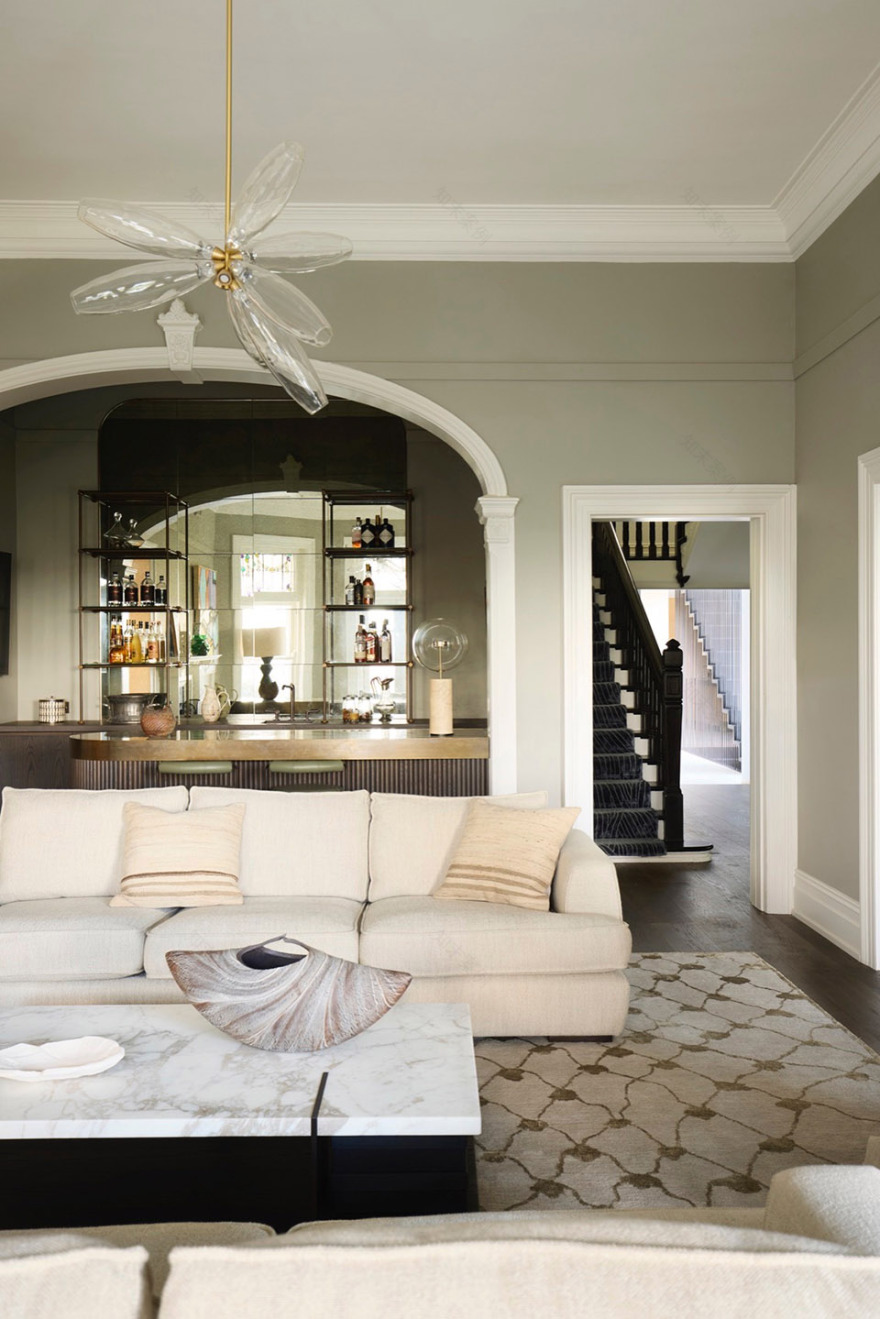

▼走廊与楼梯,hallway and staircase© Prue Ruscoe


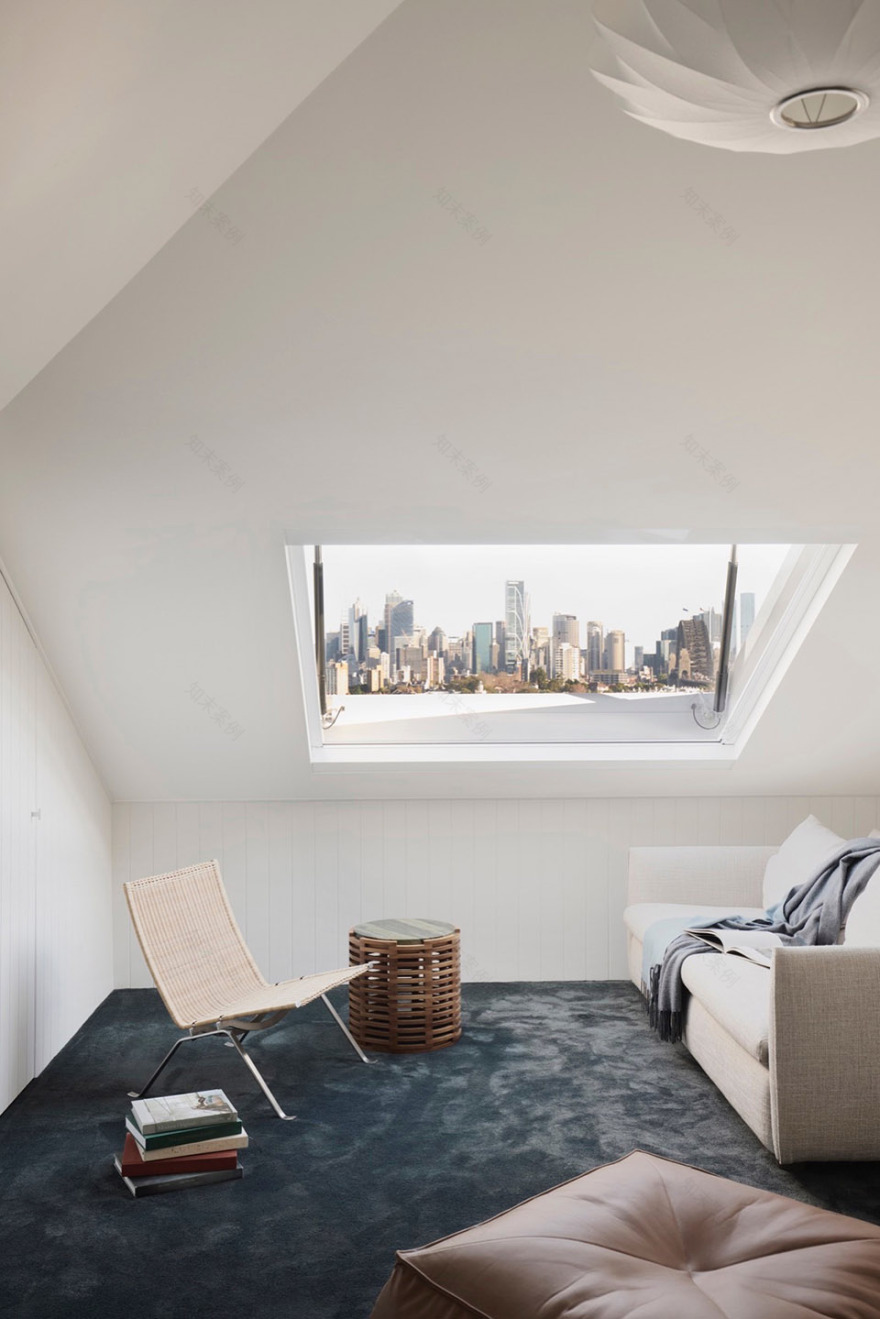
▼化妆室与阁楼,dressing room and loft© Prue Ruscoe

▼浴室,bathroom© Prue Ruscoe


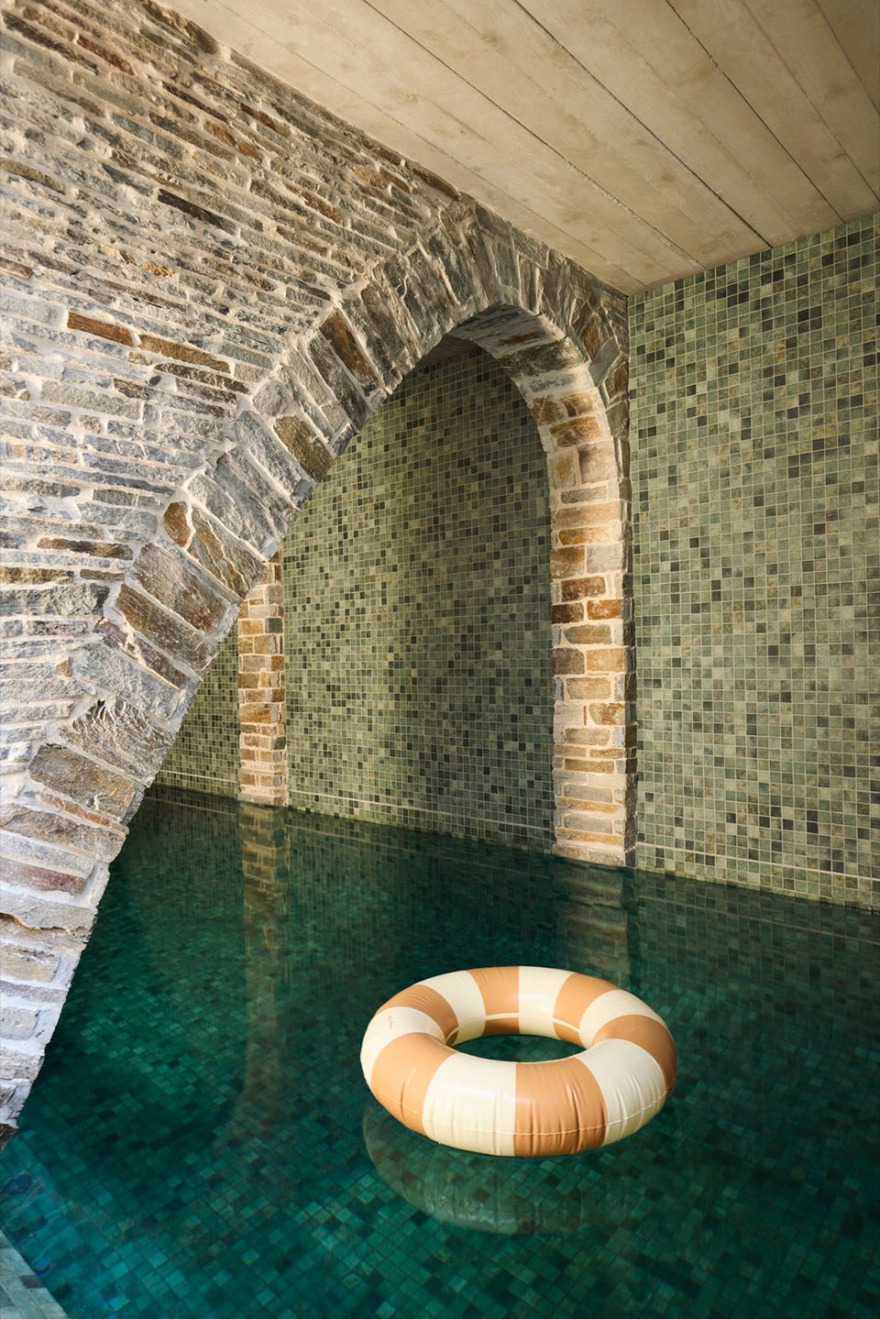
Luigi Rosselli Architects为地下泳池所做的设计,直接汲取了场地“隐秘性”的灵感。泳池开凿于构成悉尼下北岸地貌特征的砂岩岩层之中,其形式必须回应石作工艺的语言。抛物线拱券不仅在视觉上极具建筑表现力,同时也是在承载泳池上方多层空间重量时最为高效的结构形态。设置于泳池上方两层楼板中的天窗,将自然光引入地下空间,并营造出与外部世界相互联系的感受。
Luigi Rosselli Architects’ design for the subterranean swimming pool drew inspiration from the cryptic nature of the place. Excavated from the sandstone rock ledges that characterise large areas of Sydney’s lower north shore, the pool had to speak the language of the stonemasonry. While clearly architecturally striking, the parabolic arches also happen to be the most structurally efficient shape capable of carrying the load of the multiple levels situated above the pool. Skylights cut into the floors of the two levels above the pool draw light down into the space and foster a sense of connection to the world beyond.
▼室内泡池,indoor hop-spring© Prue Ruscoe


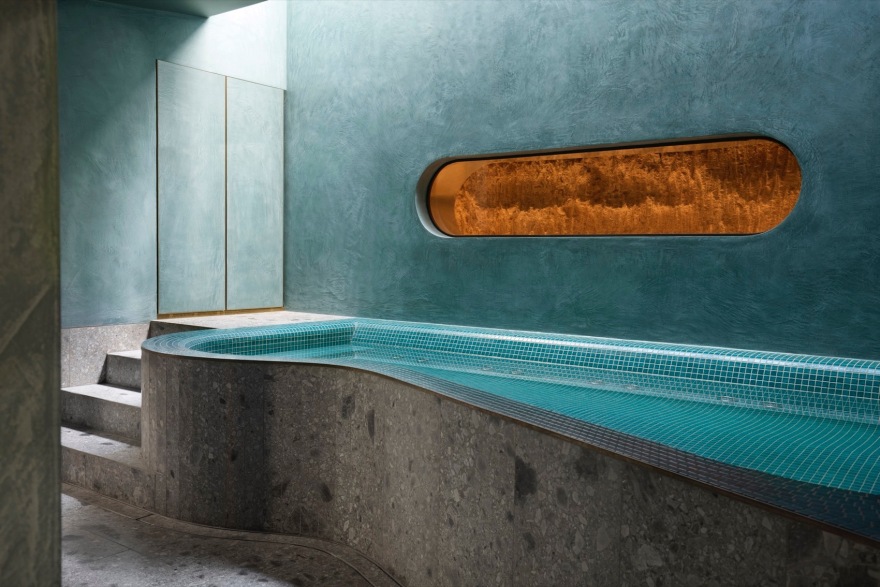
▼细部,details© Prue Ruscoe


▼泳池,pool© Prue Ruscoe
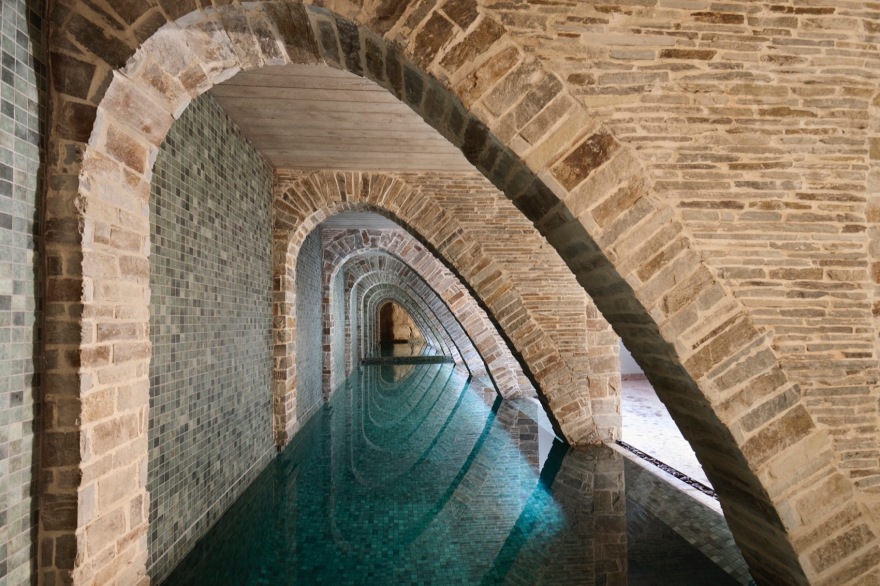
▼拱圈,arched structure© Prue Ruscoe


▼泳池细部,details of the pool© Prue Ruscoe
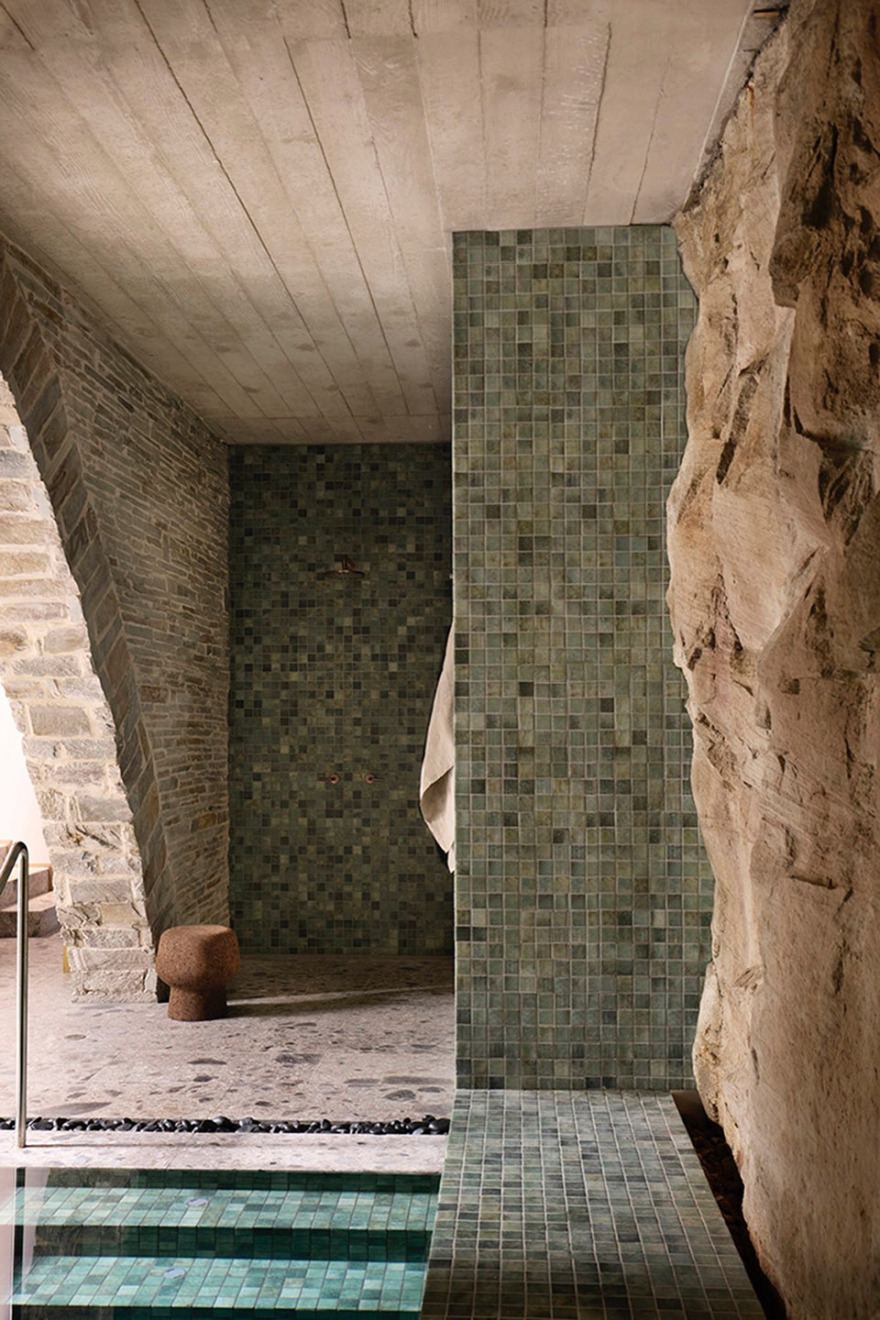

▼地下层走廊,hallway of the basement© Prue Ruscoe

Council: North Sydney Council
Design architect: Luigi Rosselli
Project architect: Evan Howard
Interior designer: Romaine Alwill for Atelier Alwill
Landscape architect: Will Dangar for Dangar Barin Smith
Builder: Pimas Gale
Joinery: Corelli Joinery
Heritage consultant: John Oultram
Structural engineer: Phil O’Hara for Northrop Consulting Engineers
Swimming pool stonemasonry: Chris French for French Stonemasonry
Custom skylight: Tilt Industrial Design
Geothermal system: CWL Group
Stucco veneziano: Mark Stanford
Marble slabs: Granite Marble Works
Brass hardware: Savage Design
Photography: Prue Ruscoe
Drone photography: Piers Haskard



南京喵熊网络科技有限公司 苏ICP备18050492号-4知末 © 2018—2020 . All photos and trademark graphics are copyrighted by their owners.增值电信业务经营许可证(ICP)苏B2-20201444 苏公网安备 32011302321234号
苏公网安备 32011302321234号客服
消息
收藏
下载
最近