

创作上传
VIP
收藏下载
登录 | 注册有礼
查看完整案例

收藏

下载

分享

翻译
Architects:OAD - Open Architecture Design
Area:780m²
Year:2024
Photographs:Alvis Rozenbergs
Category:Houses
Lead Team:Zane Tetere-Sulce, Eva Heidingere-Jukama
Design Team:Dace Bula
Technical Team:Alvis Petrovskis
City:Saraiķi
Country:Latvia

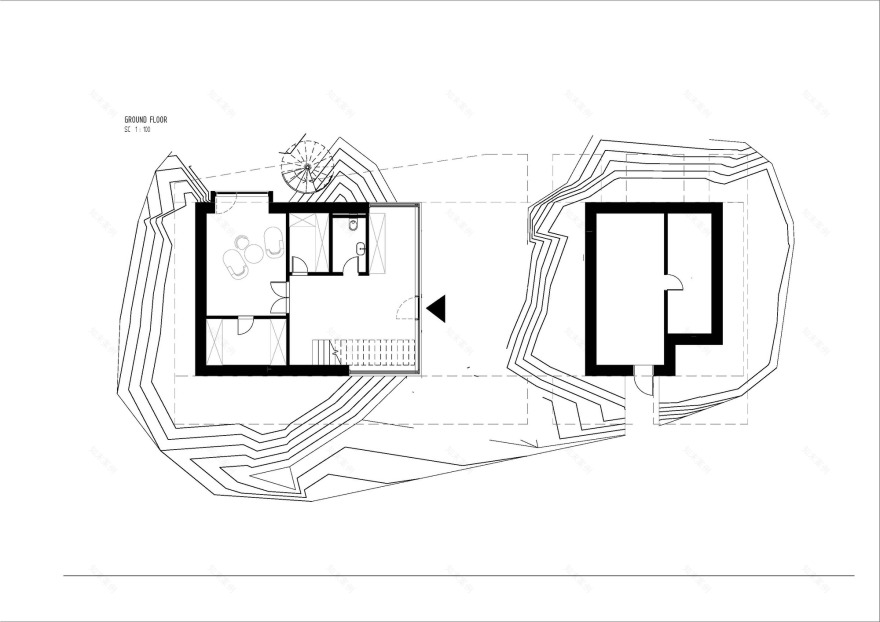
Text description provided by the architects. Constructed on historic foundations of Soviet-era military units to safeguard the Baltic coastal dune habitats as one of the world's most vulnerable marine regions, this seaside residence introduces an alternative path of sustainable architecture. The site was discovered with four grass-covered and timeworn military bunkers, now transformed into one main home and two guest houses for a family of three generations.


Located on the Latvian coastline, where northern winds are strong enough to bend century-old pines to their will, summer home SAR was created as a sacred heaven for a multi-generational family.
"In this project, we wanted to explore the role of a shelter within the domestic environment," shares OAD founder and lead architect, Zane Tetere-Sulce. "The calm resilience of the local people is a central theme that connects the remnants of the past with the evolving needs of our time, revealing a modern interpretation of the local history."

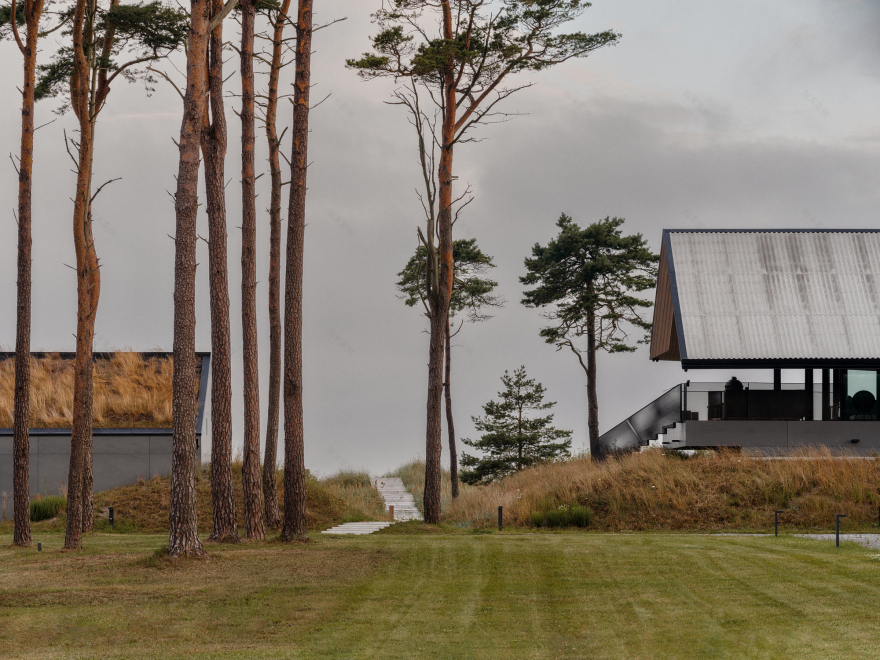
The essence of the main family house lies within its pronounced dual-sloped roof. While compliant with the local architectural regulations, it is redefined through a contemporary expression of fiber cement panels, drawing a link to the Soviet-era architecture. Faced with the technical challenge of anchoring the massive roof over a glass facade, OAD developed a tailored metal frame that serves as both a structural and design element.

Life in the main residence begins on the second floor, with the entrance tucked below the structure. Elevated above the horizon of the Baltic Sea, the house forms a bridge over two bunker foundations – an innovative solution for increasing the living area with minimal impact on the surrounding environment. Drawing inspiration from original bunkers in shape and form, the guest houses with their grass-covered roofs expand the habitats of local fauna, seamlessly blending with the untamed wilderness. This contrast between levitation and groundedness becomes the defining quality of SAR's spatial experience.


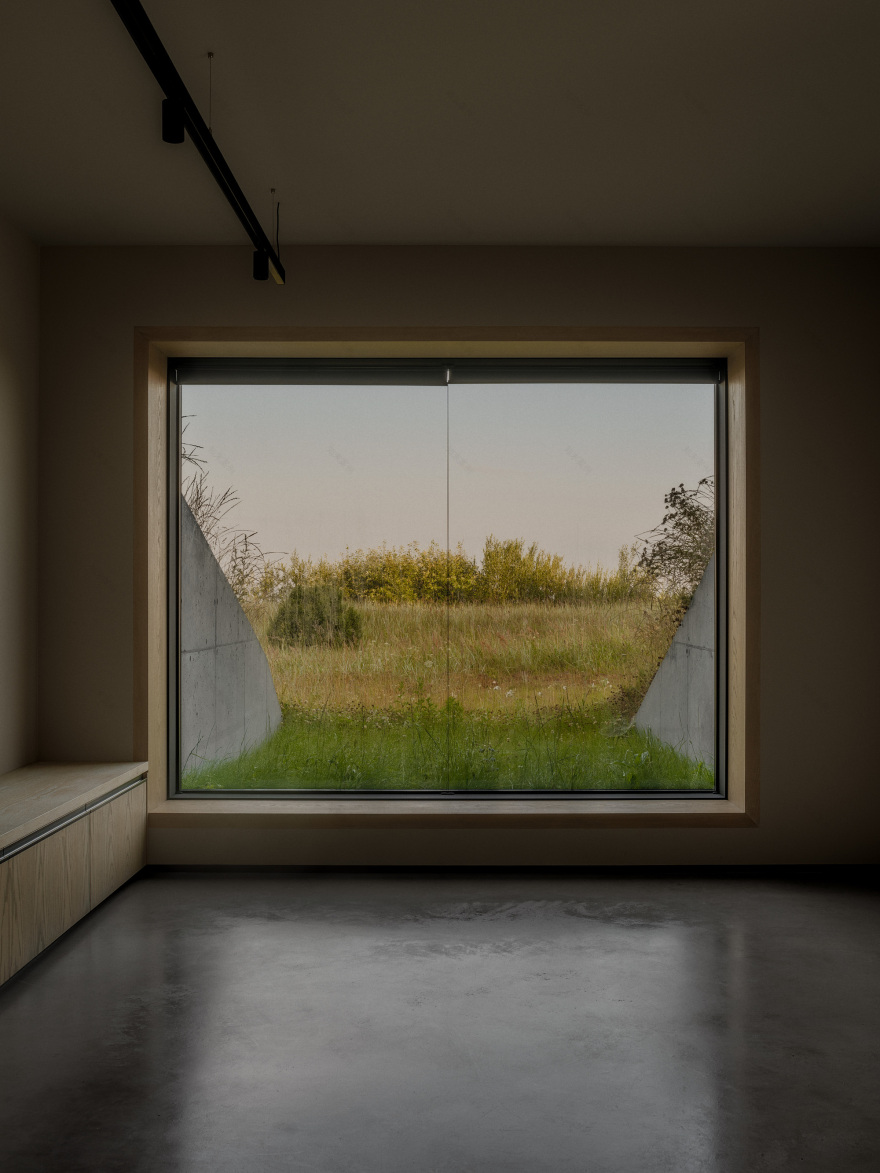
Inside, the architectural language is restrained, ascetic, and raw. Interior design embraces minimalistic detailing, defined by wooden finishes, concrete floors, and tactile materials that embrace texture over color. The layout is designed to encourage residents to follow natural rhythms of life – the main living area is filled with morning light, while windows in the master bedroom capture sunset views. Transparent glass façade reinforces the connection to the land below, dissolving the boundary between the natural environment and man-made space. This project is a poetic gesture.

"A key intention of this coastal home is to minimize its impact on the surrounding landscape. SAR is a home that does not conquer the land but lives lightly upon it," concludes Tetere-Sulce.

Project gallery



南京喵熊网络科技有限公司 苏ICP备18050492号-4知末 © 2018—2020 . All photos and trademark graphics are copyrighted by their owners.增值电信业务经营许可证(ICP)苏B2-20201444 苏公网安备 32011302321234号
苏公网安备 32011302321234号客服
消息
收藏
下载
最近