

创作上传
VIP
收藏下载
登录 | 注册有礼
查看完整案例

收藏

下载

分享

翻译
Architects:KPW architecten
Area:1450m²
Year:2025
Photographs:Andre Nullens
Manufacturers:Arcelor Mittal,Ebema,Orona | Ascensores,Recticel,Sapa Building System International NV,Velux
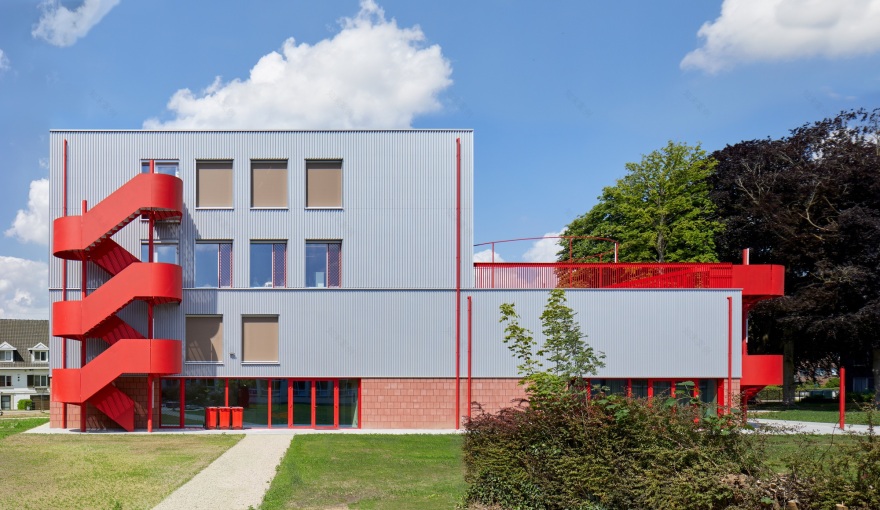
Text description provided by the architects. The new extension to the De Nova secondary school illustrates how architecture can embody innovative approaches to learning. The existing educational campus—comprising a kindergarten, primary school, and secondary school, alongside facilities for music and arts education—had evolved over decades. What began as a cluster of pavilions from the 1950s and 1960s, with further additions in the 1970s and 1980s, had become a fragmented ensemble lacking overall cohesion.
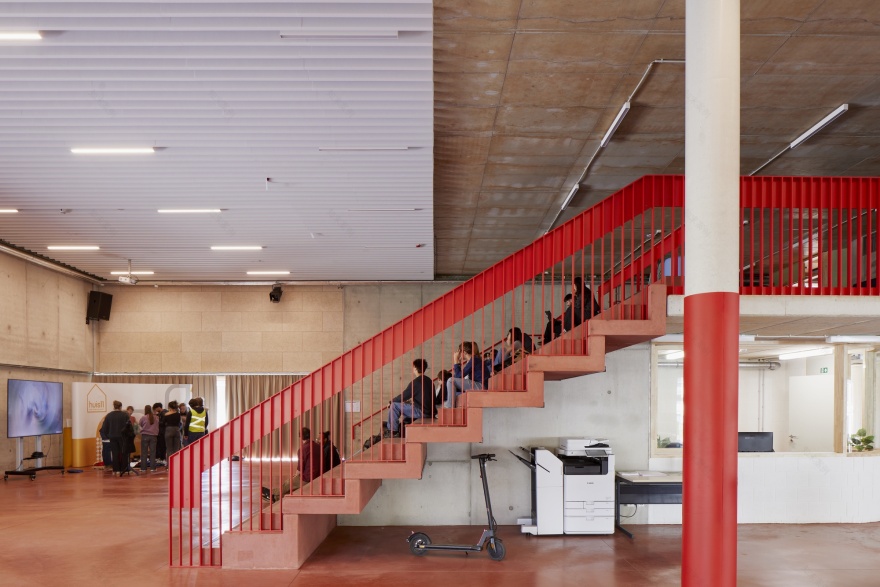
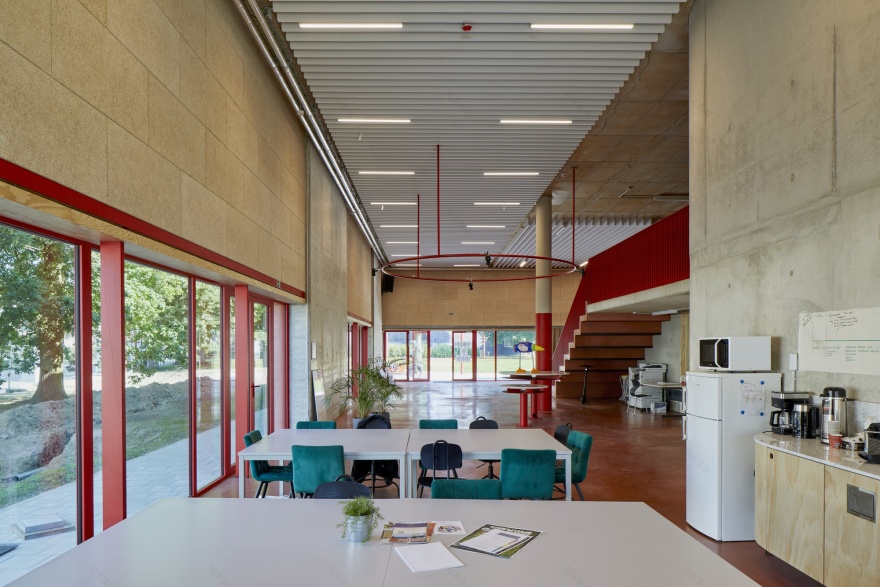
This context called for a masterplan that would not only provide spatial clarity and strengthen the site's relationship with the surrounding urban developments, but also give architectural form to the pedagogical principle of "learning through experience." The secondary school envisioned an educational hub: a place open to collaboration with organizations and businesses, integrating external expertise into the learning process.

KPW Architects approached the competition with a strong respect for the existing buildings and with particular attention to the "negative space" of the site: the spaces between buildings. By differentiating these interstitial areas in scale, texture, and atmosphere, new types of learning environments could emerge. The mature trees on the site and the circular entrance of the elegant Expo '58–style building became key points of departure. This resulted in a circular plaza where the entrances to the school's various facilities are directly visible from the street, giving the campus a clear and recognizable public face. The new school building is organized over three levels. At its heart is the "market hall," a generous central space with a tribune and two learning platforms. At the top of the tribune, a cozy mezzanine provides a quiet library and retreat for study.
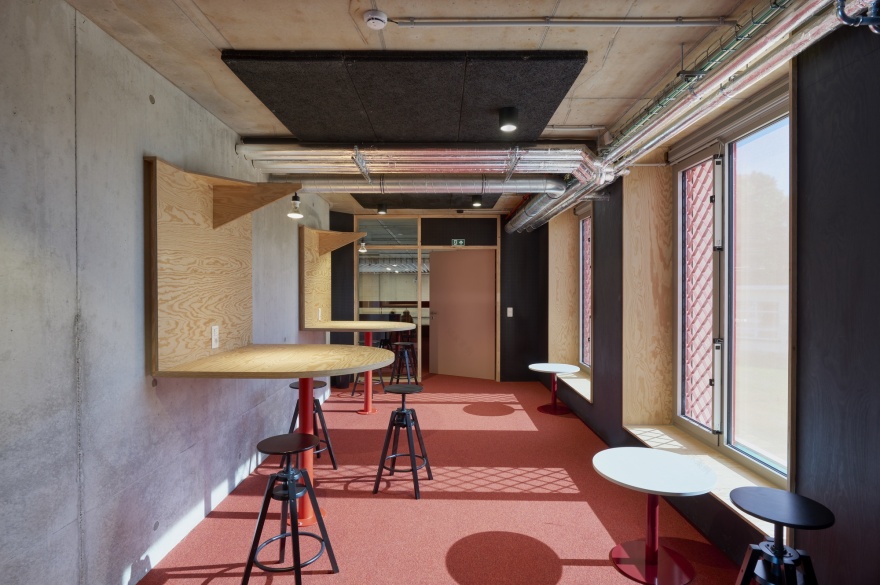
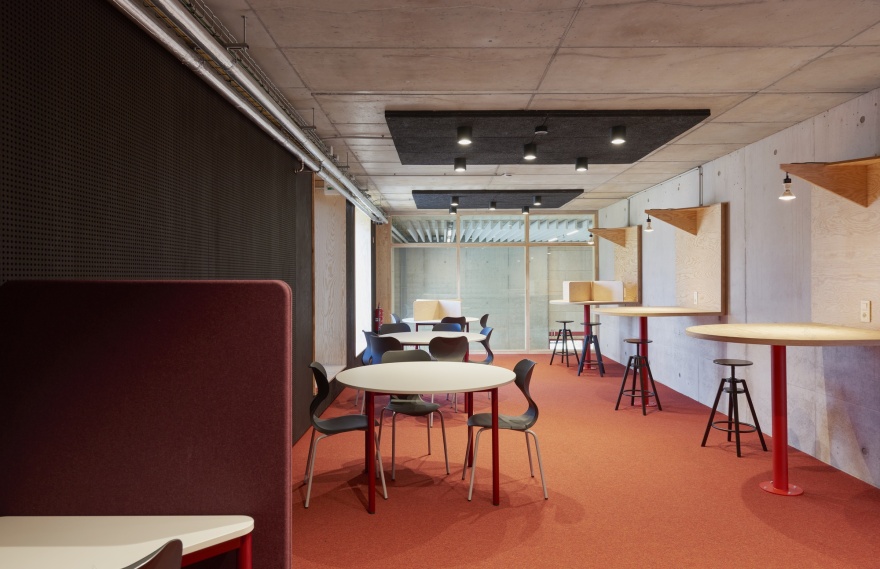
Sustainability is addressed through a strong emphasis on future adaptability. The primary structural elements—concrete columns, floor slabs, technical shafts, and staircase—are clearly legible and deliberately left uncompromised, in contrast to the more flexible secondary components. The thick concrete floor slabs act as acoustic buffers, allowing interior partitions to be reconfigured freely. The façade is designed to be demountable and adaptable, enabling future upgrades such as improved thermal insulation or window replacement at the end of its life cycle. Technical installations are fully exposed and accessible: electrical wiring can be modified via a circular cable duct, and ventilation systems can be removed or rerouted with ease. As a result, the building can be renovated, extended, or even repurposed without invasive interventions.

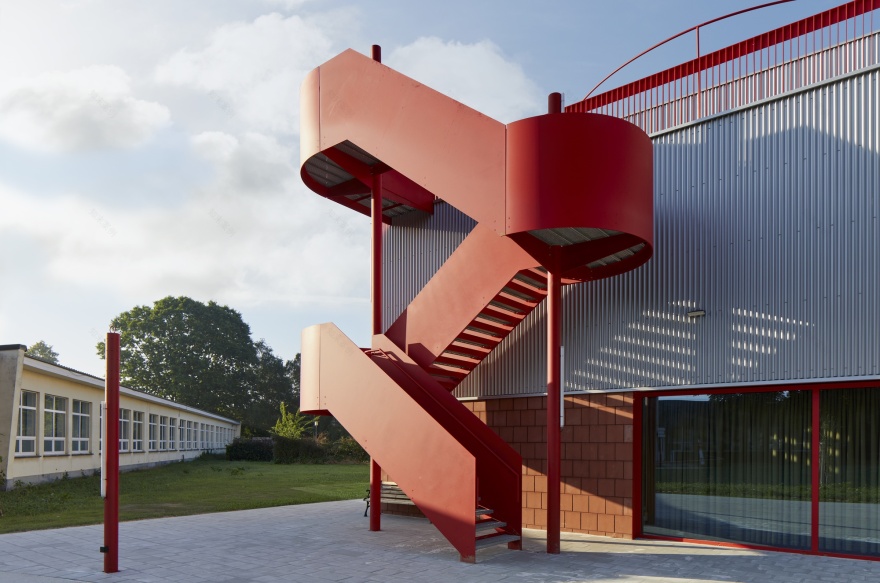
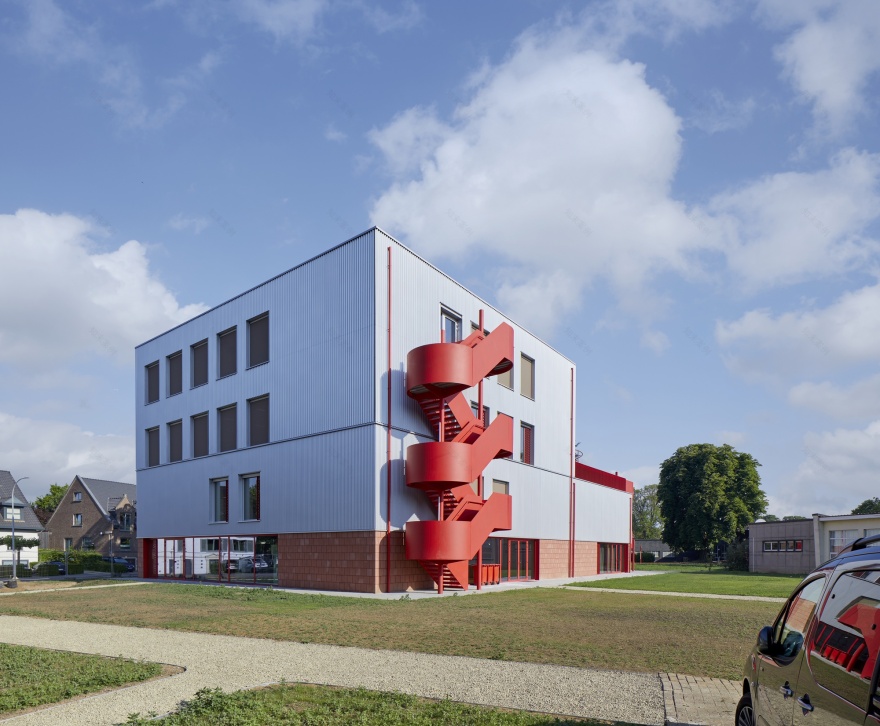
The aluminum façade may appear austere at first glance, but its reflective surface mirrors the changing light and surrounding greenery, taking on different hues throughout the day and across the seasons. This subtle dynamism softens the building's massing. The external staircases, required by fire safety regulations, further contribute to the building's lively character.
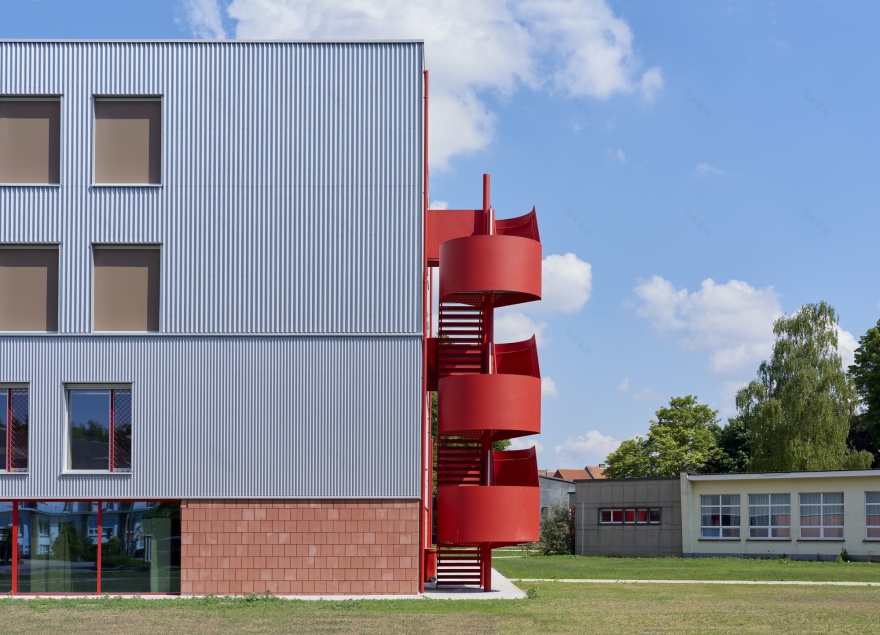
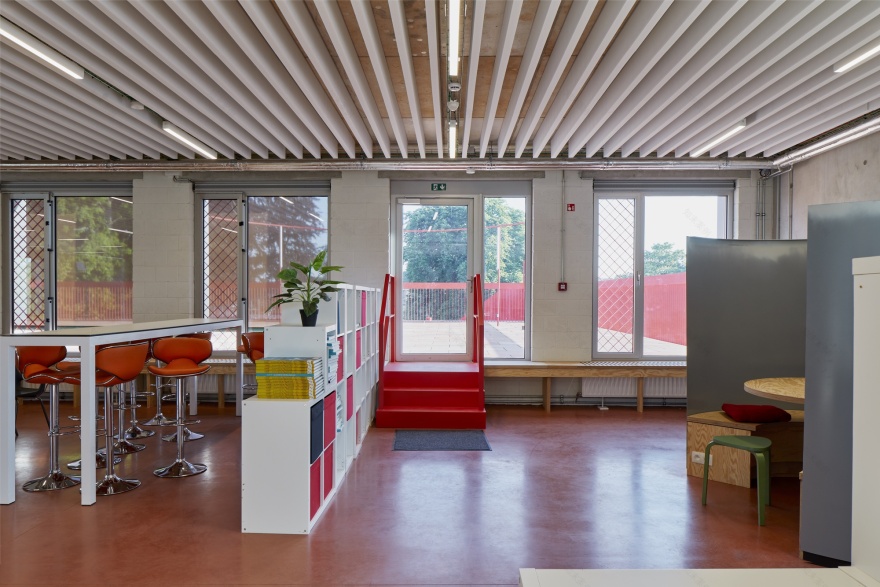
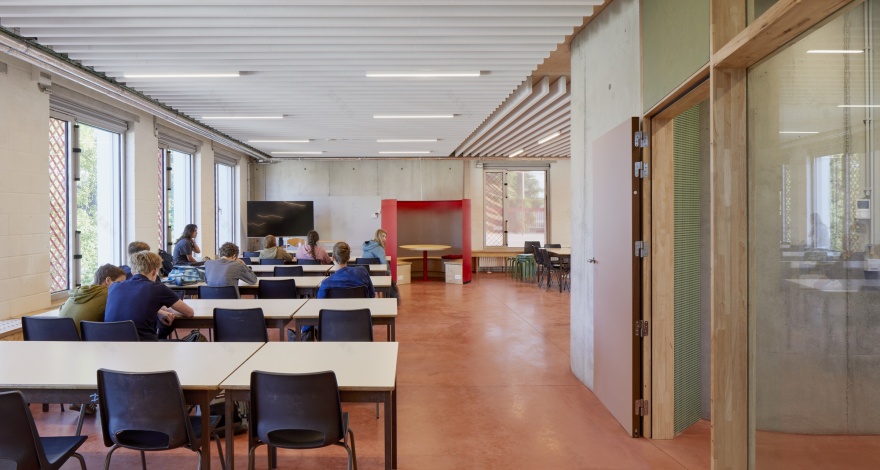
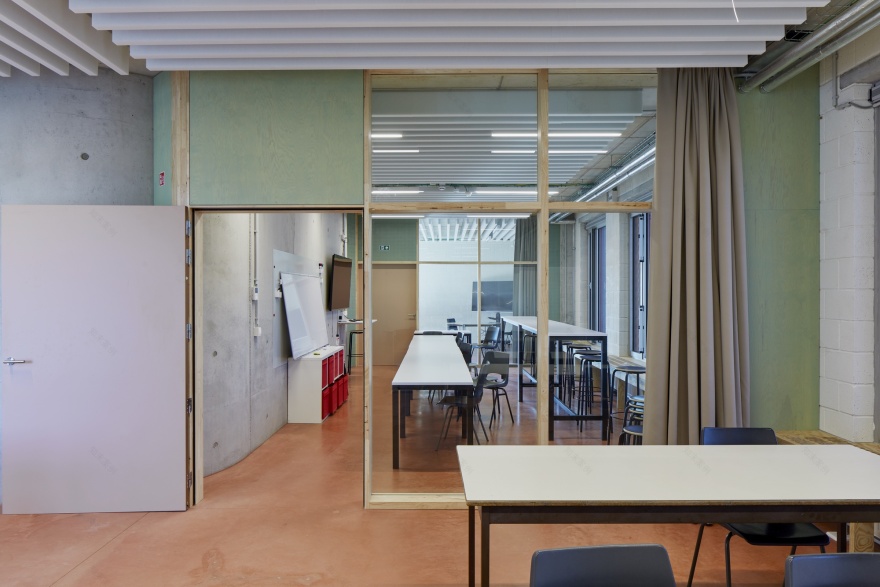
Inside, the material palette is robust and suited to an active, hands-on student population, yet retains a sense of warmth and carefully considered acoustic comfort for large groups. Red polished concrete floors lend the interior a distinctive identity, while marble countertops and tiles in the sanitary spaces are reclaimed materials.

Project gallery




南京喵熊网络科技有限公司 苏ICP备18050492号-4知末 © 2018—2020 . All photos and trademark graphics are copyrighted by their owners.增值电信业务经营许可证(ICP)苏B2-20201444 苏公网安备 32011302321234号
苏公网安备 32011302321234号客服
消息
收藏
下载
最近