

创作上传
VIP
收藏下载
登录 | 注册有礼
查看完整案例

收藏

下载

分享

翻译
Architects:MARS Architectes
Area:1646m²
Year:2025
Photographs:Charly Broyez
Manufacturers:Kalzip,Metsa Woods,CLAREO LIGHTING,DPC,Dora Metal,Gerfloor,MOBIDECOR,Novoceram,Villeroy & Boch
Category:Schools
Lead Team:Sylvain Rety, Julien Broussart, Raphaël Renard
Design Team:Manon Teillet, Nuno Morais
Engineering & Consulting > Structural:Batiserf
Engineering & Consulting > Electrical:Choulet
Engineering & Consulting > Other:C2P, Arwytec
Engineering & Consulting > Acoustic:Alternatives
Landscape Architecture:Lignes
Engineering & Consulting > Civil:AVR
City:Gonesse
Country:France
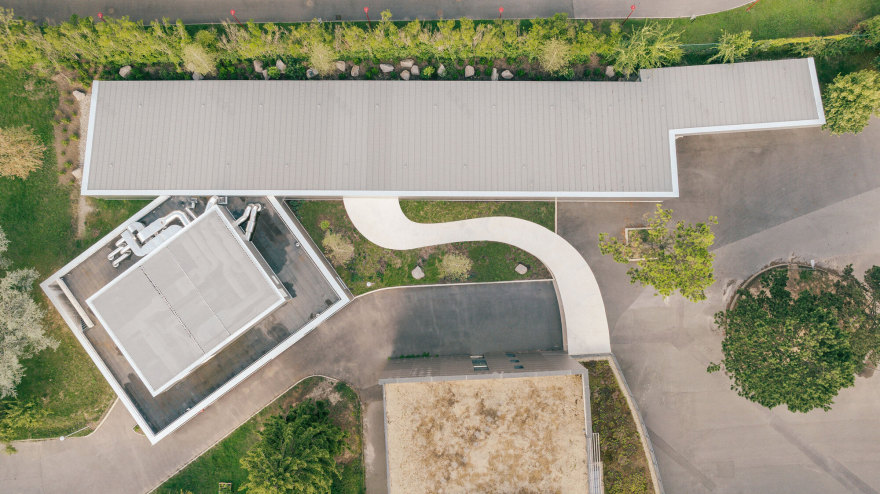
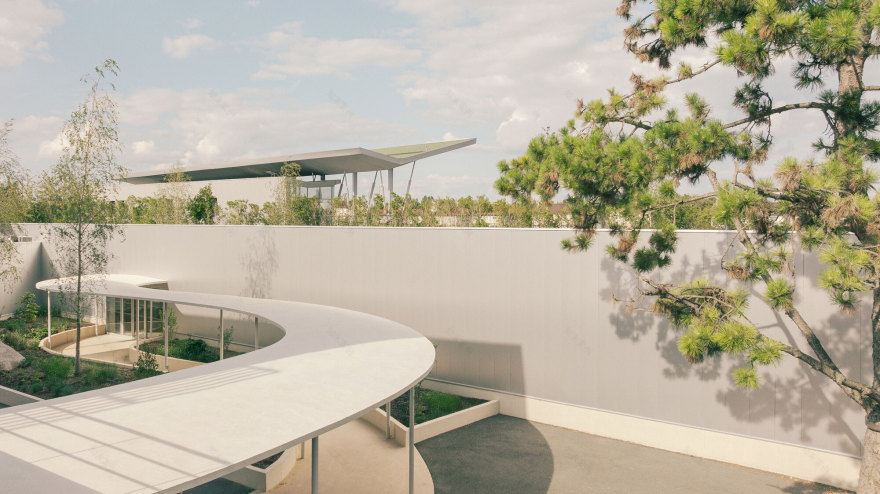
Text description provided by the architects. Building the places where our children are educated is a demanding task. Too often, these spaces suffer from obsolescence, both functional and symbolic. School architecture in France is strongly marked by two major eras: the nineteenth century with the Jules Ferry school model, and the post war period with the Pailleron model. While new schools continue to be built, many existing ones are renovated, extended, or transformed from these earlier models in order to meet contemporary educational and environmental expectations.
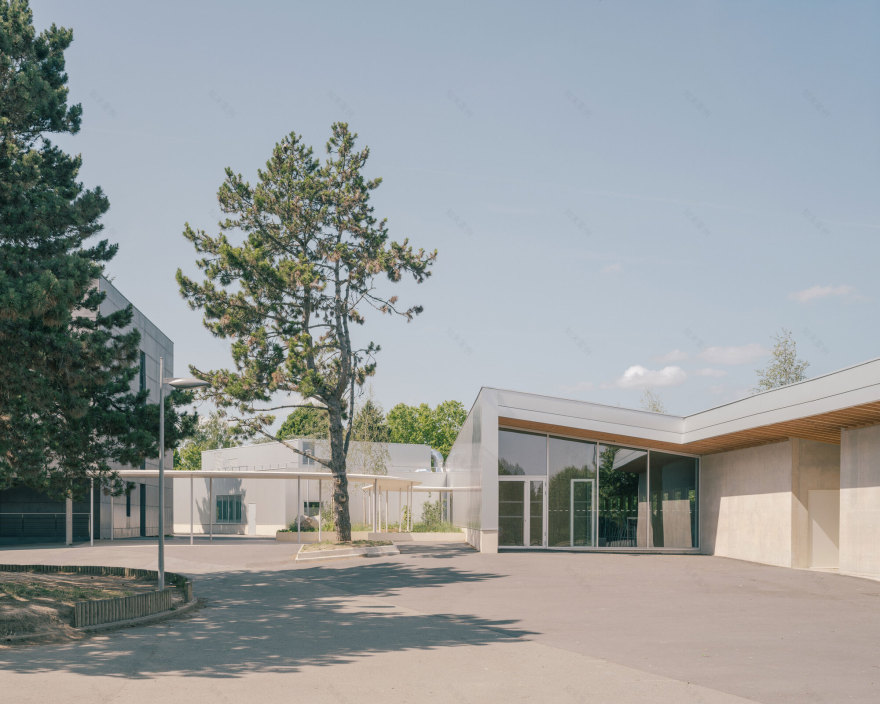
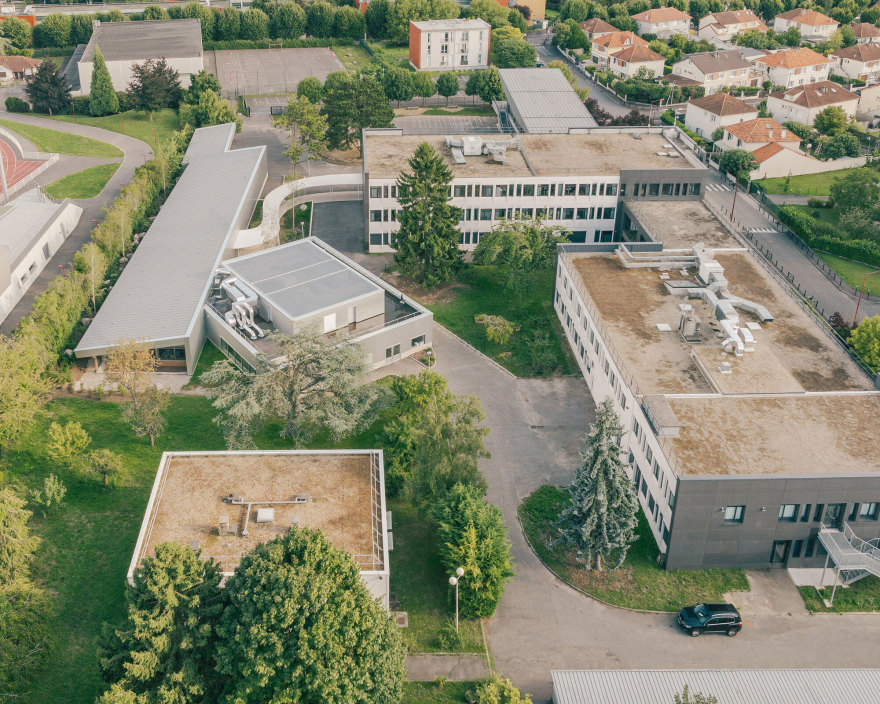
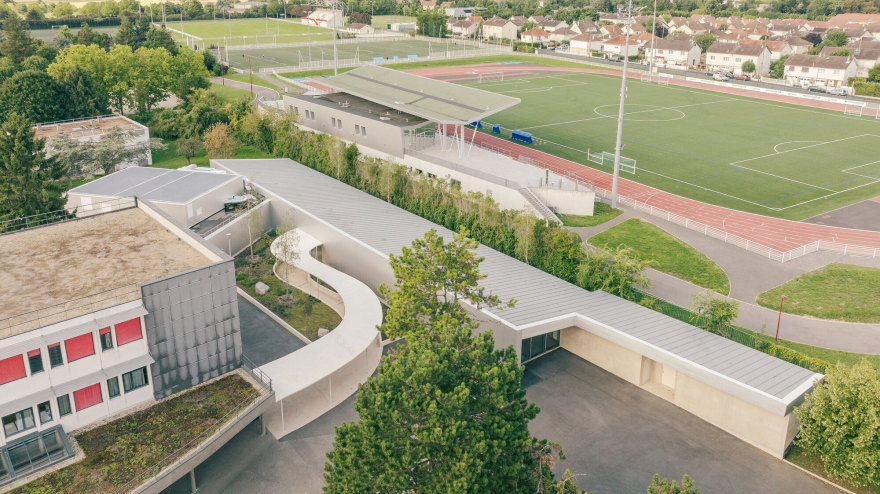
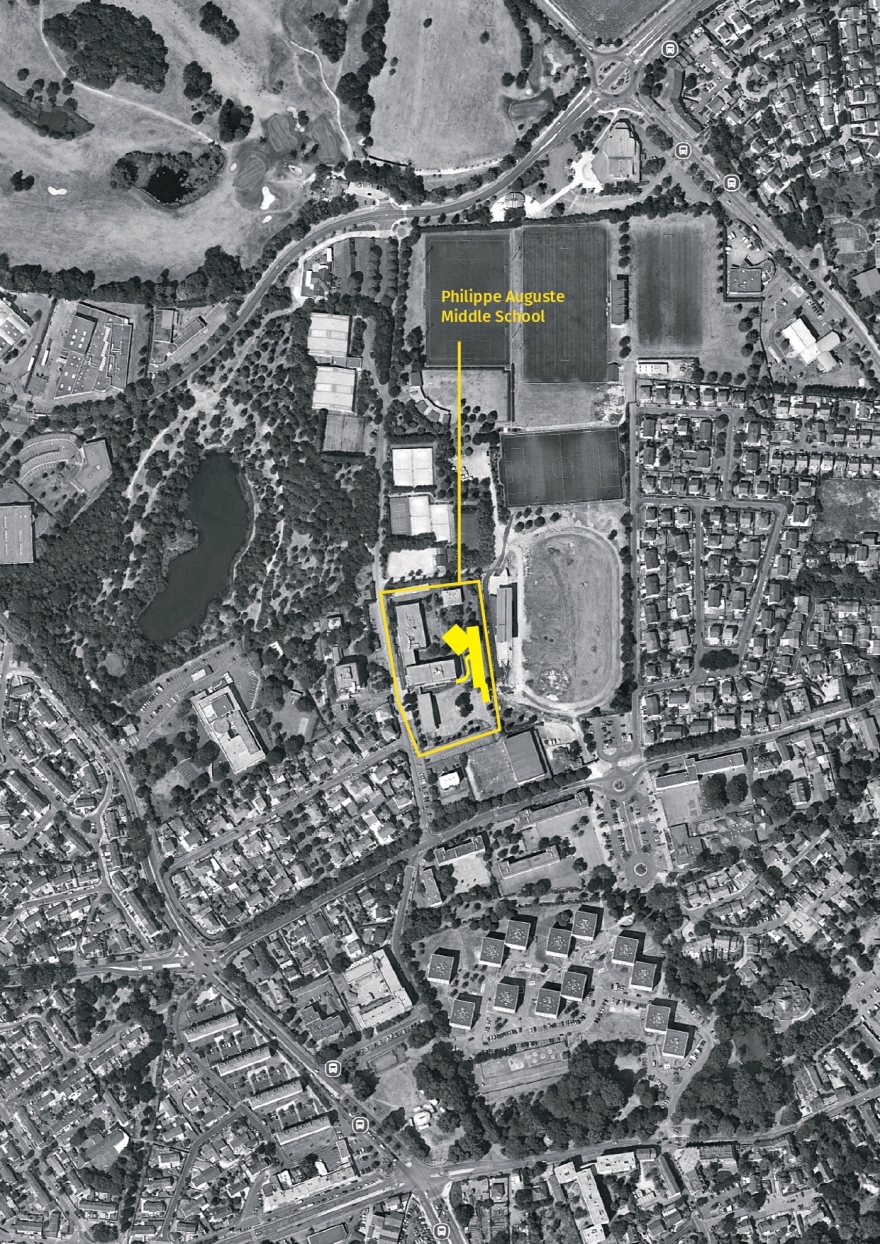
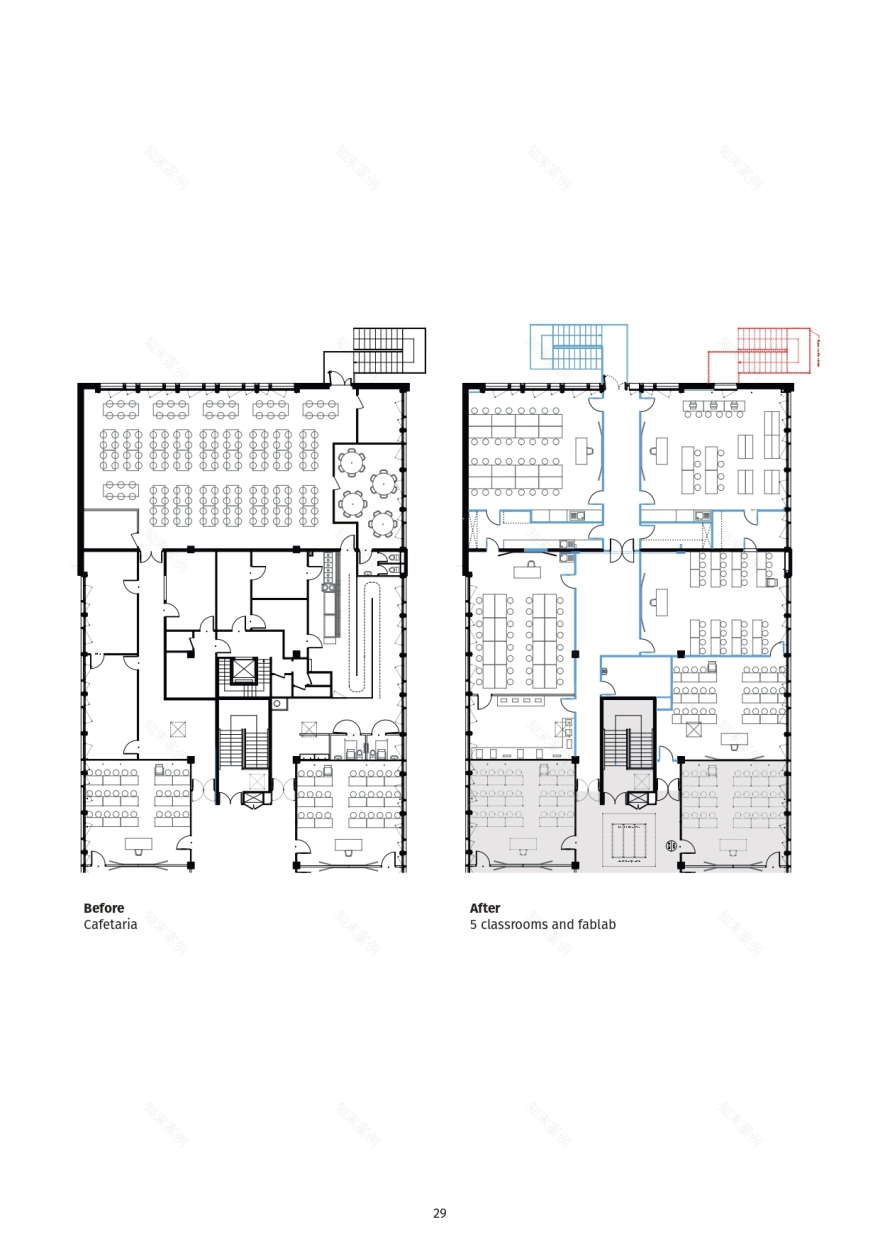
Located in the heart of a district undergoing renewal, the Philippe Auguste Middle School was built in the late 1970s and now shows significant technical and functional deterioration. In response, the project aims to convert the former dining hall into classrooms, to create an extension accommodating a new cafeteria and changing rooms while clarifying access, to enhance the school's image through a contemporary architectural approach, and to carry out construction work on an occupied site. Beyond these objectives, the intervention forms part of a broader effort to requalify both built and landscaped spaces, restoring coherence and legibility to the campus while building upon the qualities of the existing structures.
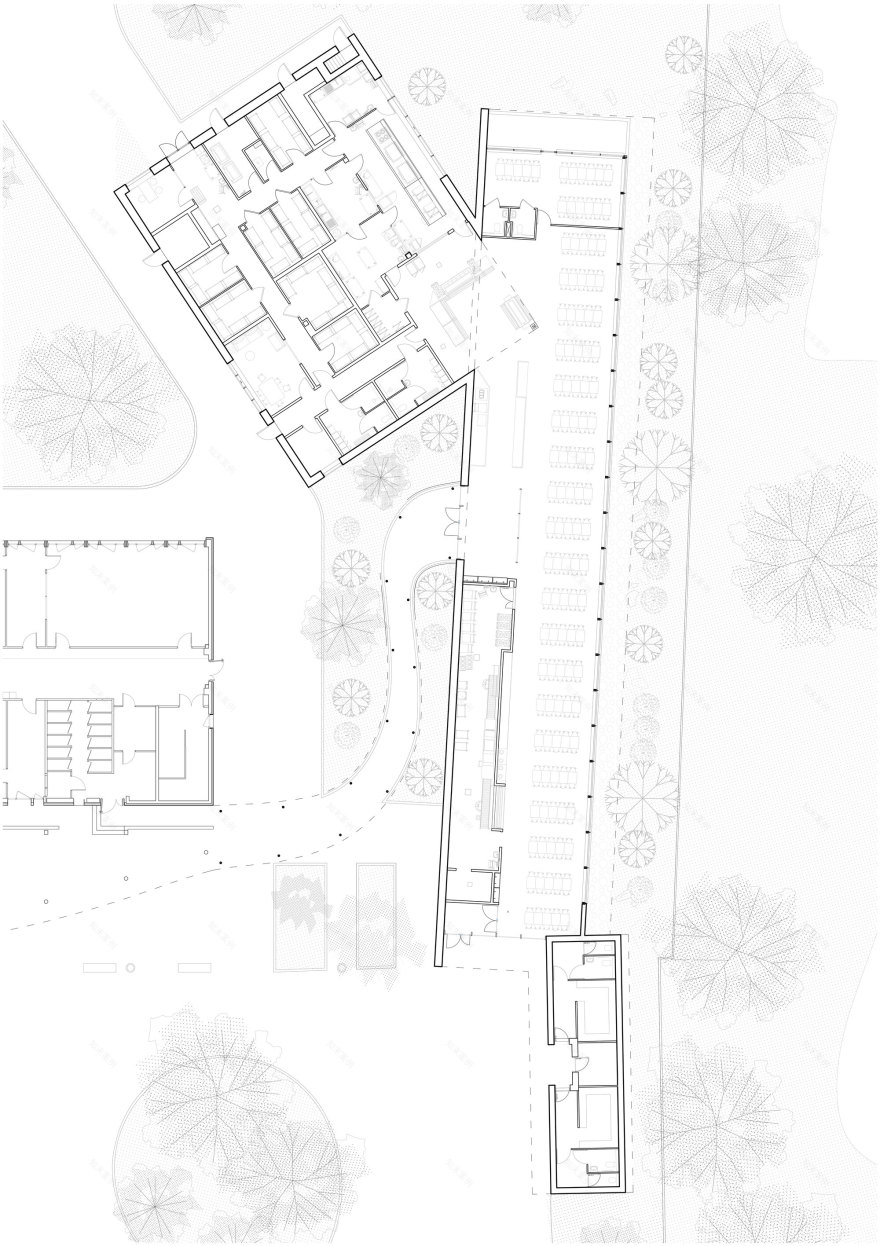
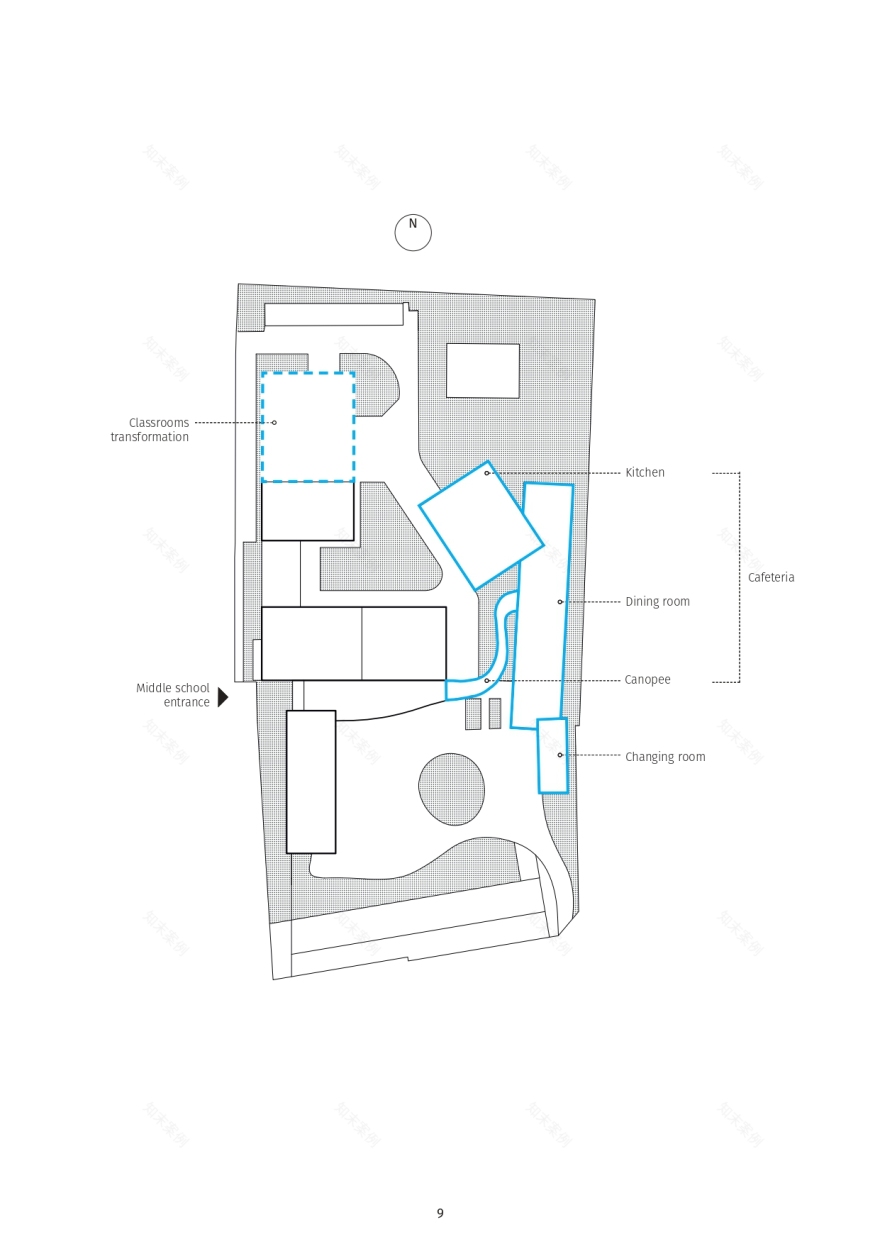
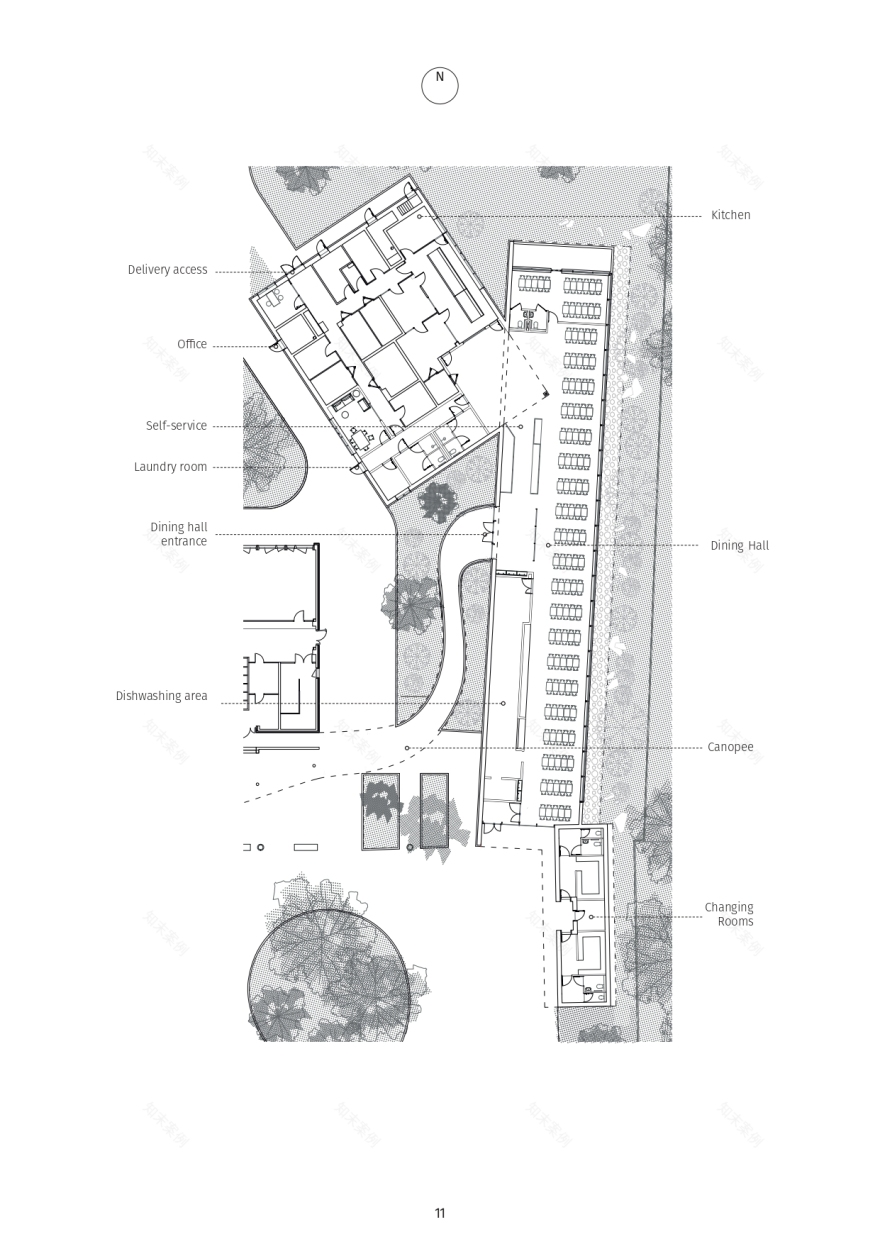
To accommodate the growing number of students, the new cafeteria is housed in an independent building. This strategic relocation frees space within the main building for additional teaching rooms and allows the reorganization of internal circulation. The displacement of the dining function also creates an opportunity to imagine new spatial sequences conceived as a calm parenthesis within the rhythm of the school day. Given the constrained geometry of the site, the design emphasizes the building's elongated form rather than depth.
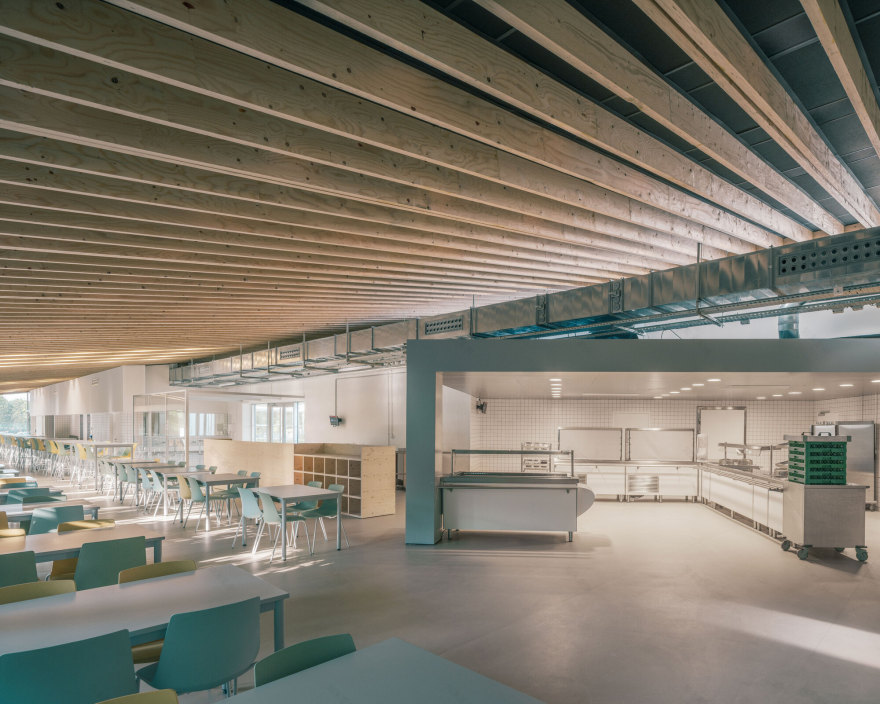
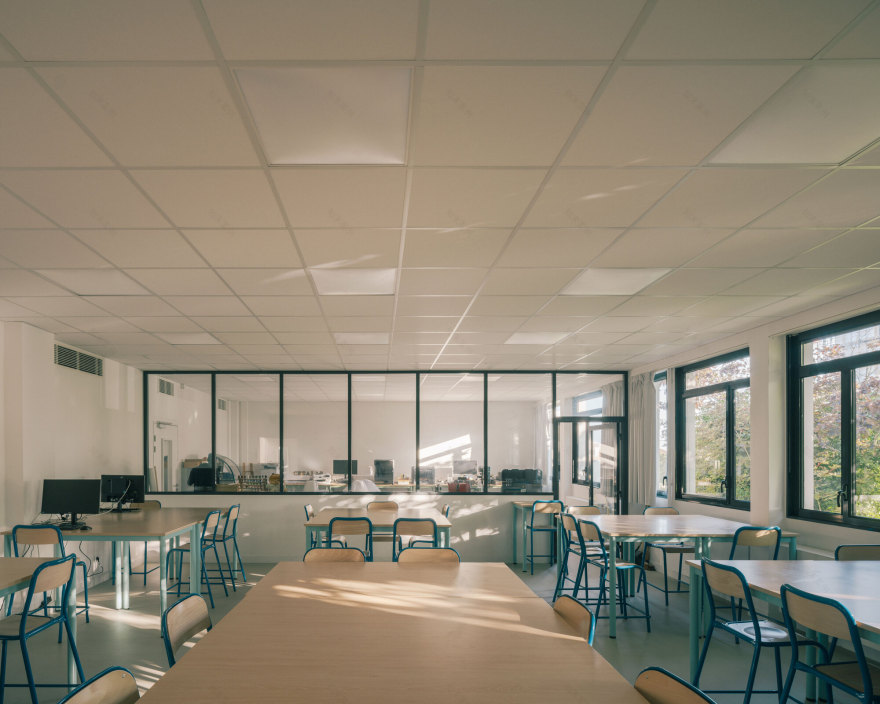
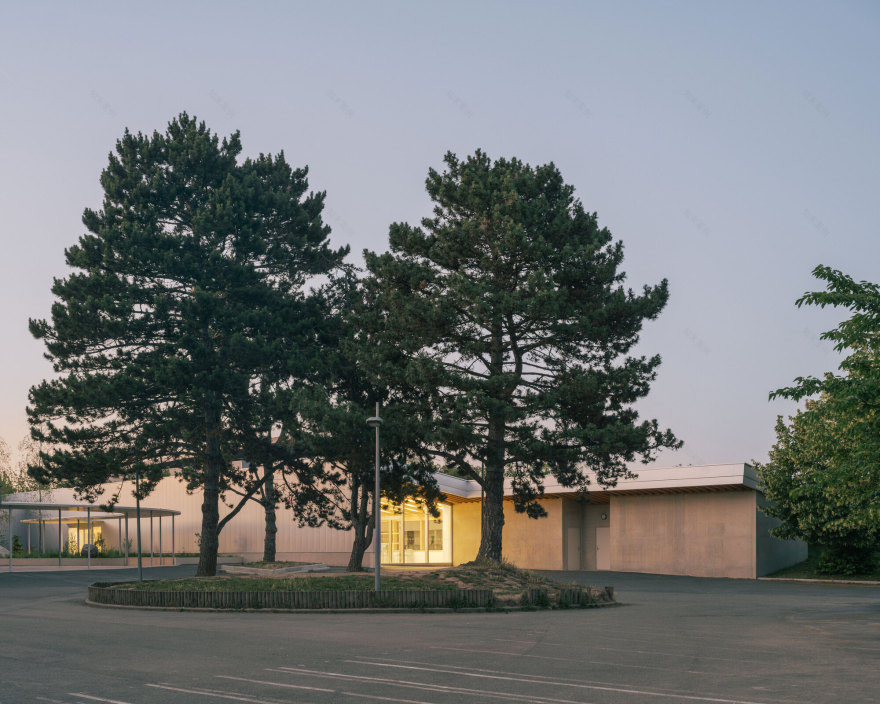
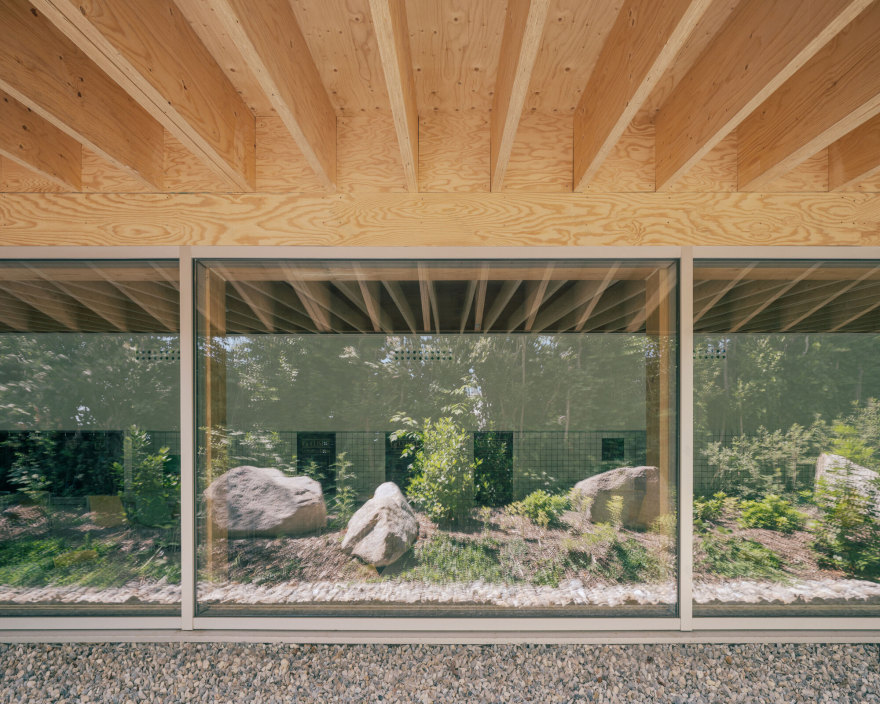
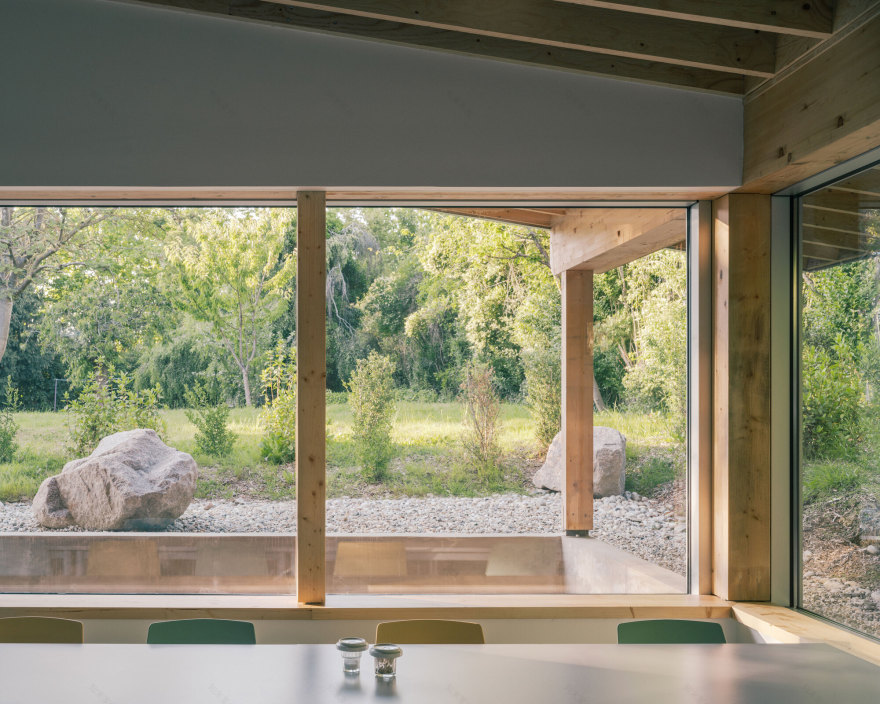
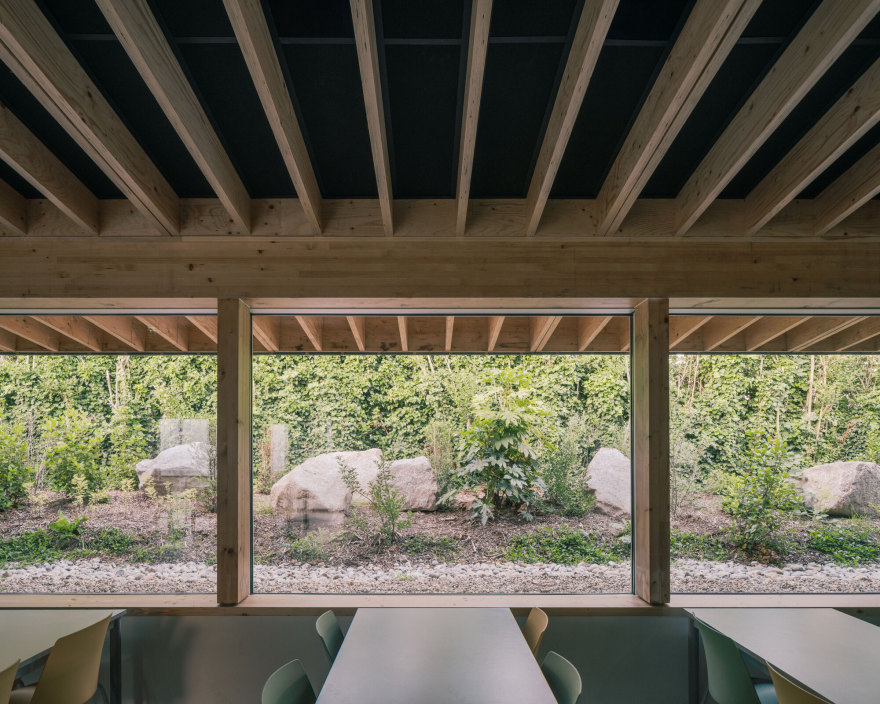
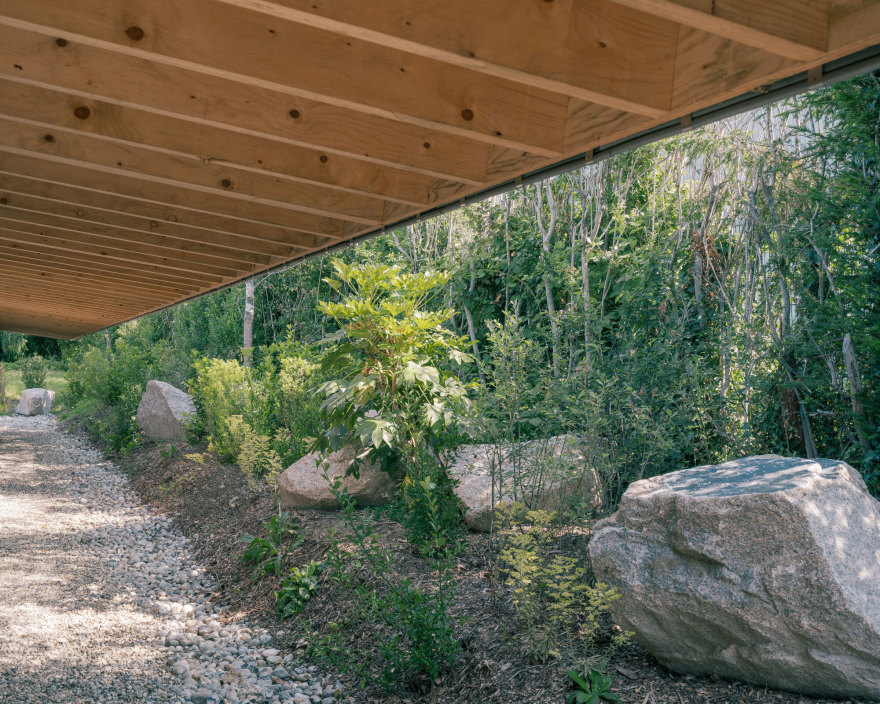
Oriented toward the site boundary, the dining hall opens onto a quiet landscaped area deliberately withdrawn from playground activity. Urbanity is not expressed through formal monumentality but through a sensitive and almost physiological atmosphere closely connected to the living environment. From within the school grounds, the extension appears largely opaque, with only limited openings onto the courtyard, reinforcing the sense of retreat and concentration.
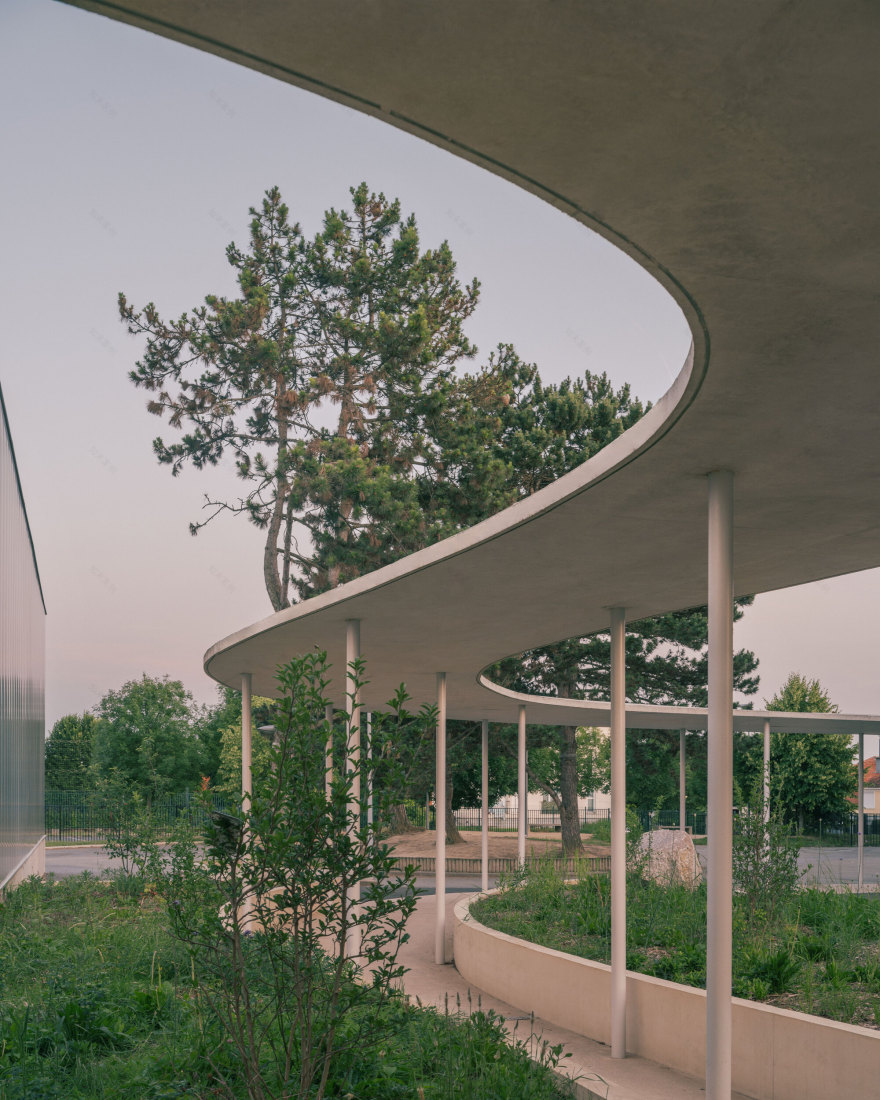
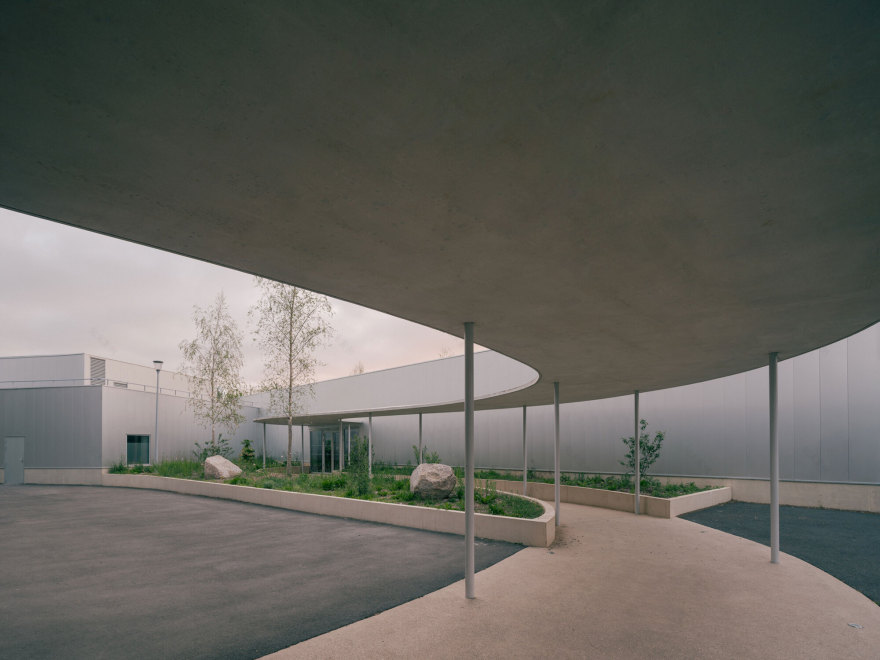
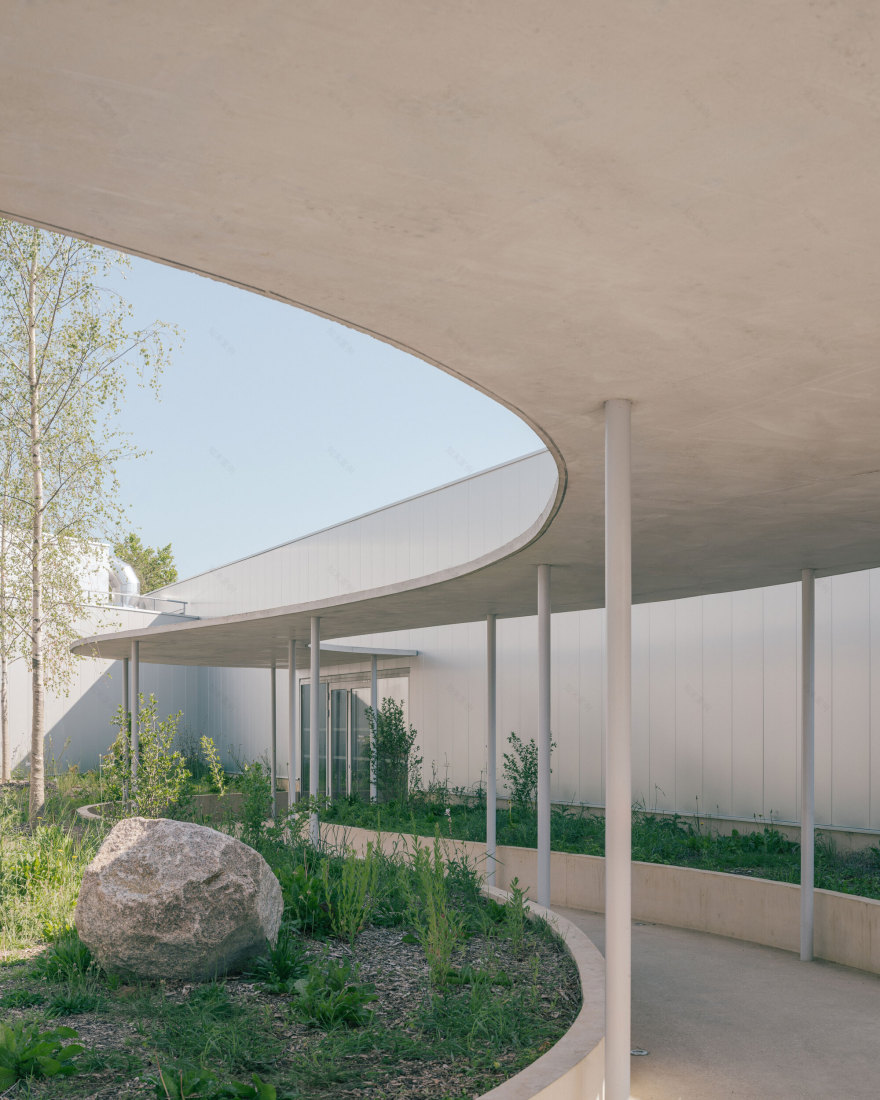
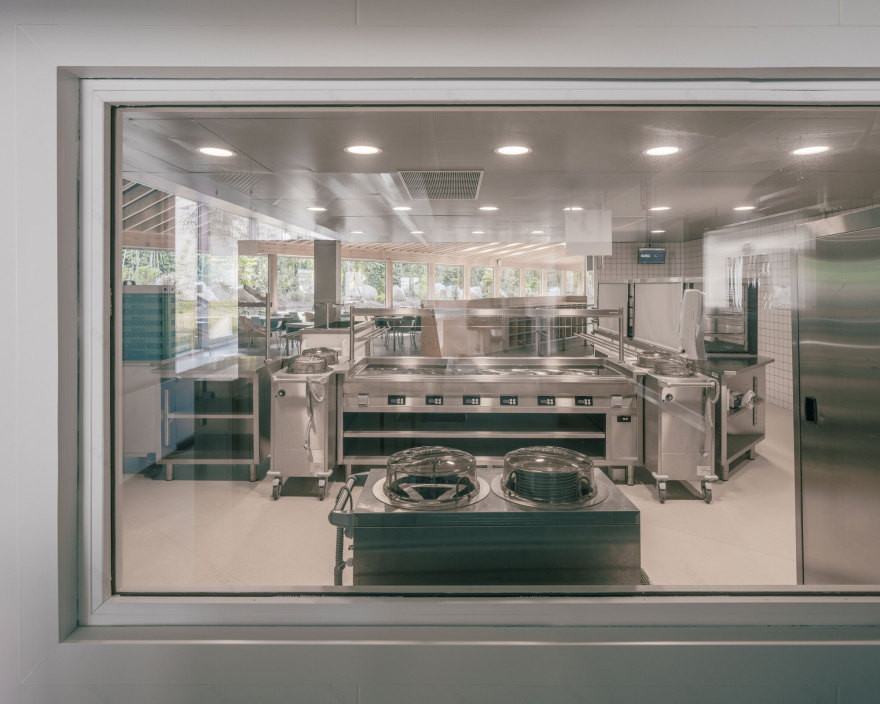
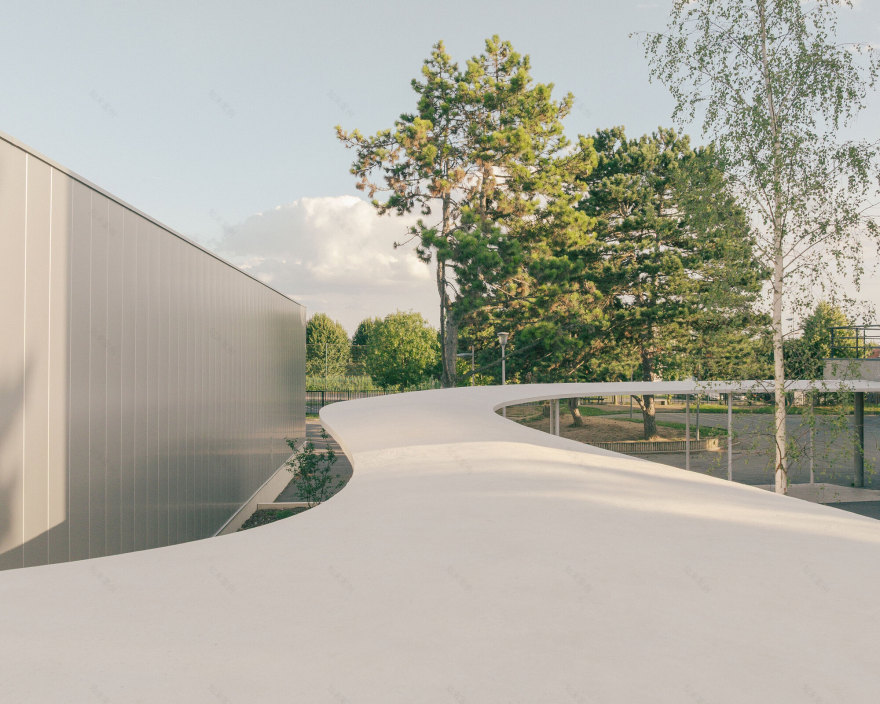
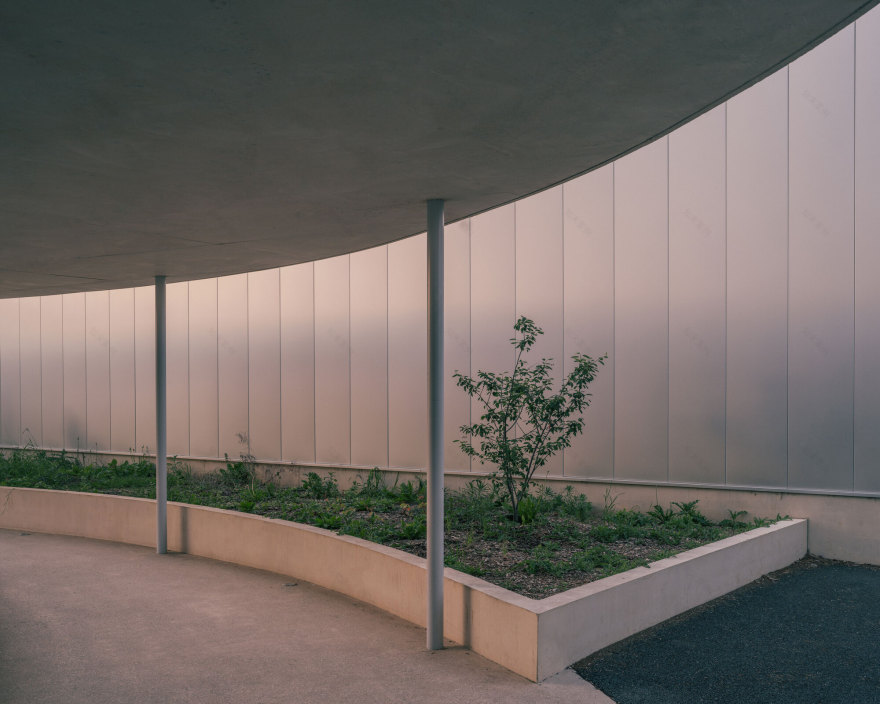
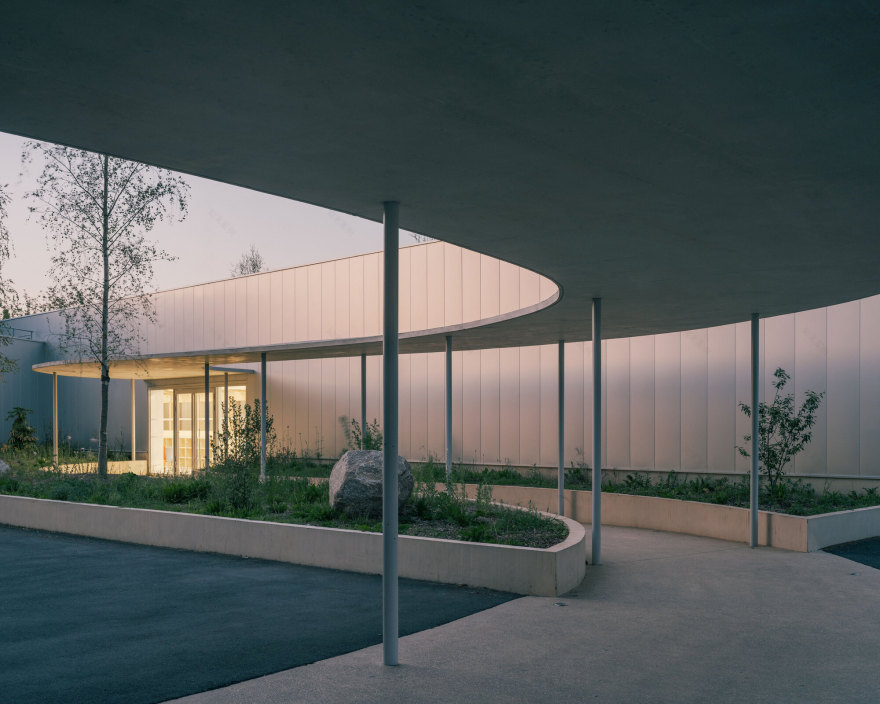
The architectural composition brings together three interlocking volumes unified by slightly reflective aluminum cladding and a standing seam steel roof with a zinc-like finish. The 340 square meter kitchen is positioned along the service road with direct delivery access, enabling on-site meal preparation and significantly improving daily conditions for both students and staff. Access to the dining hall is provided through a 32-meter-long concrete canopy whose organic form follows the circulation path and integrates seating within the landscaped design, offering a sheltered transitional space between exterior and interior.
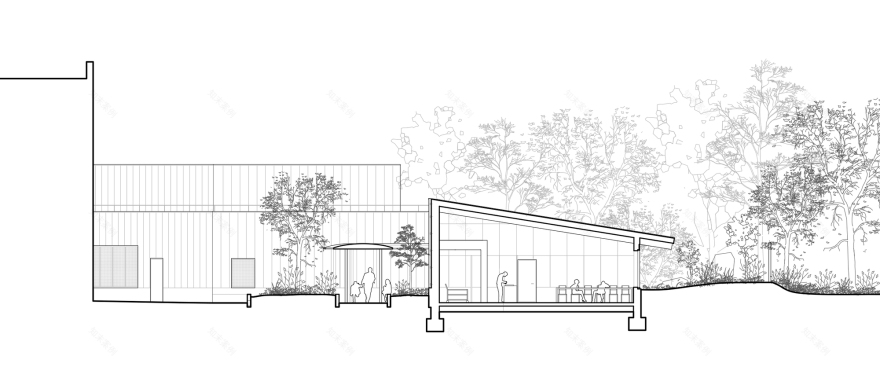
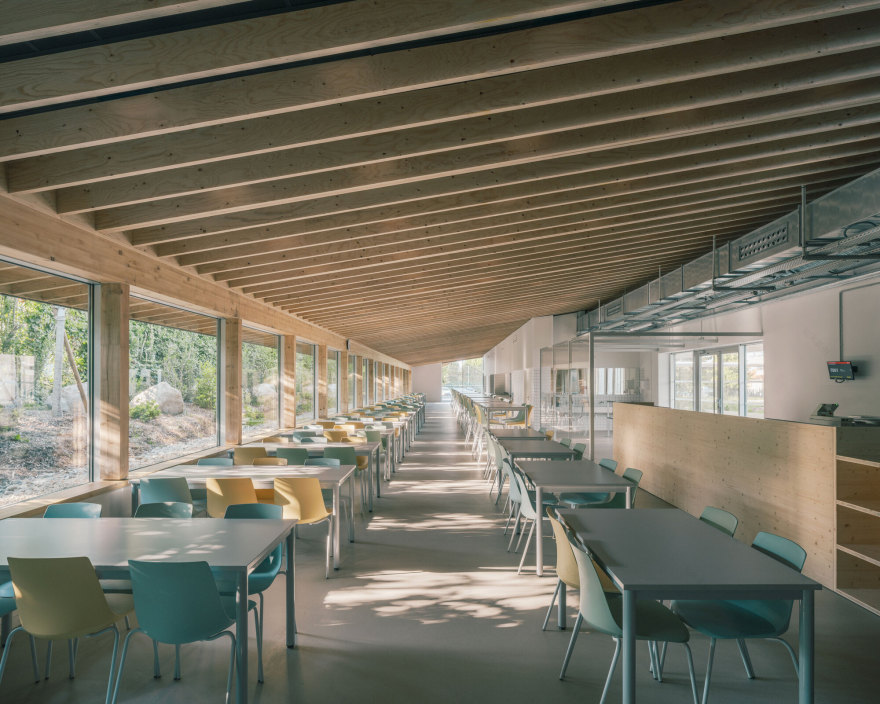
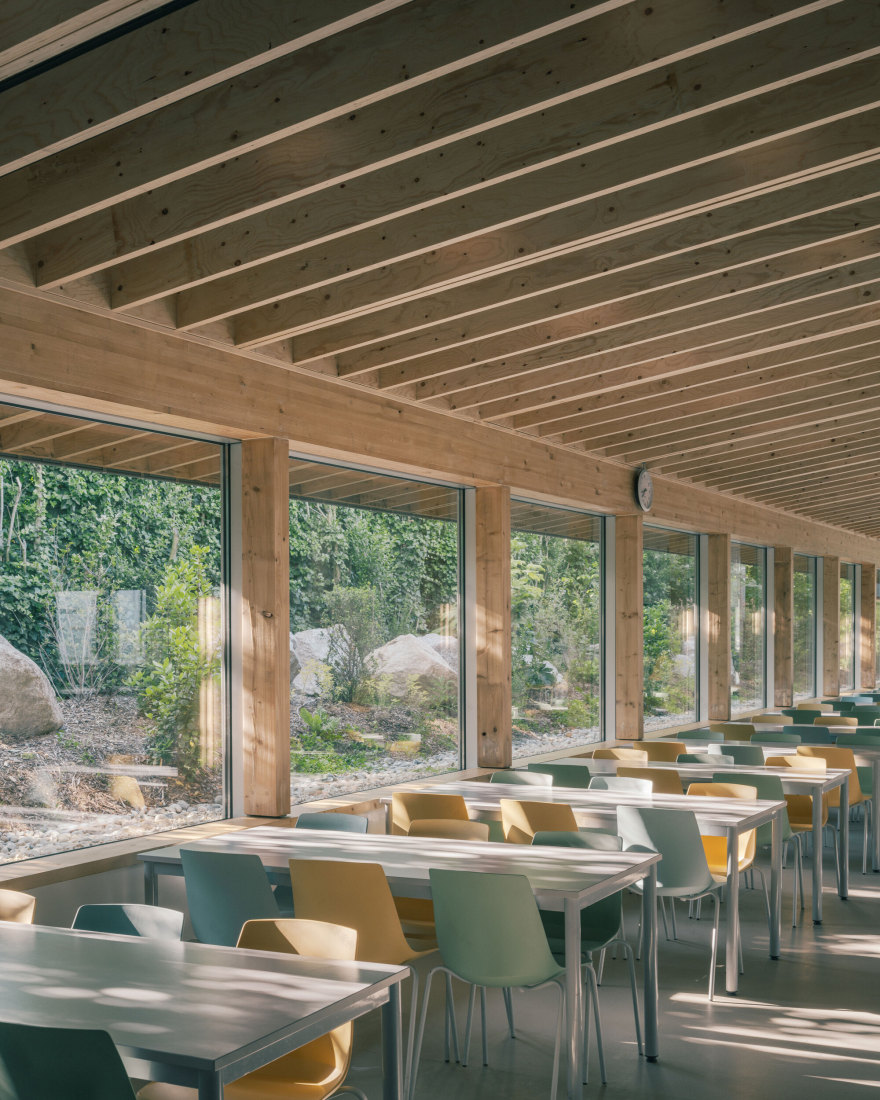
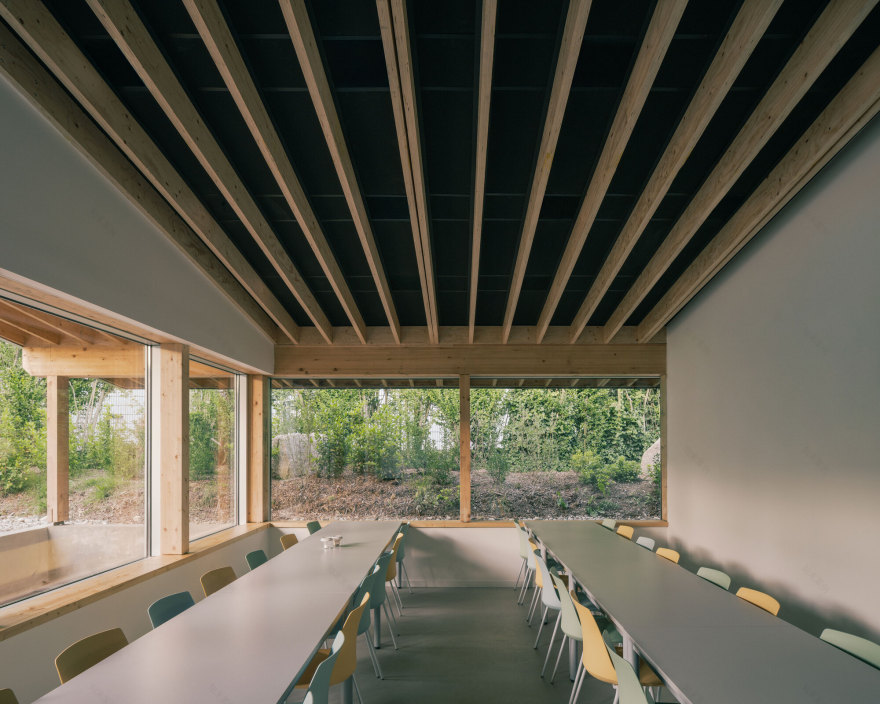
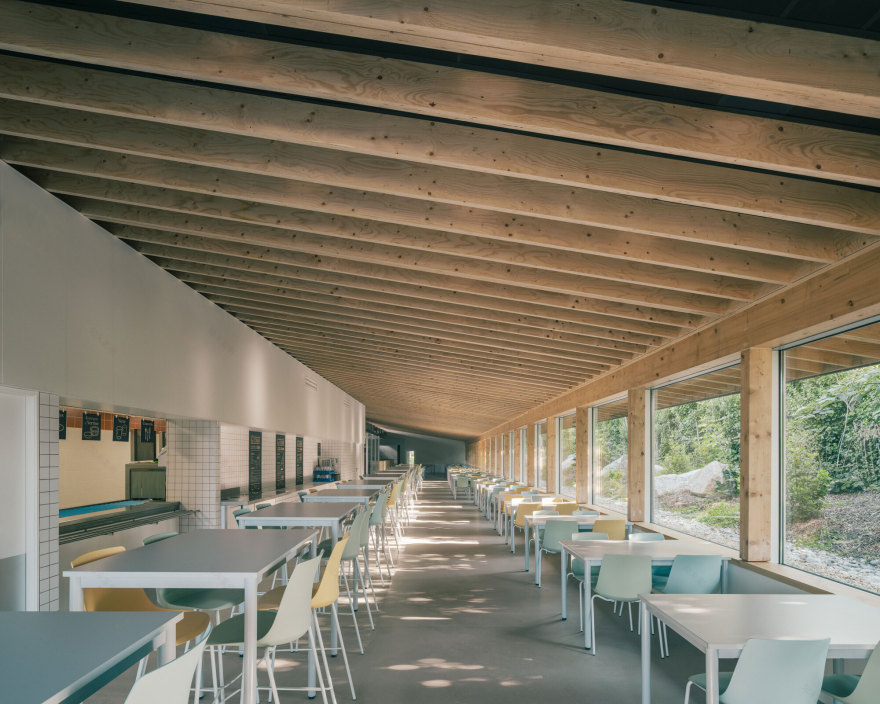
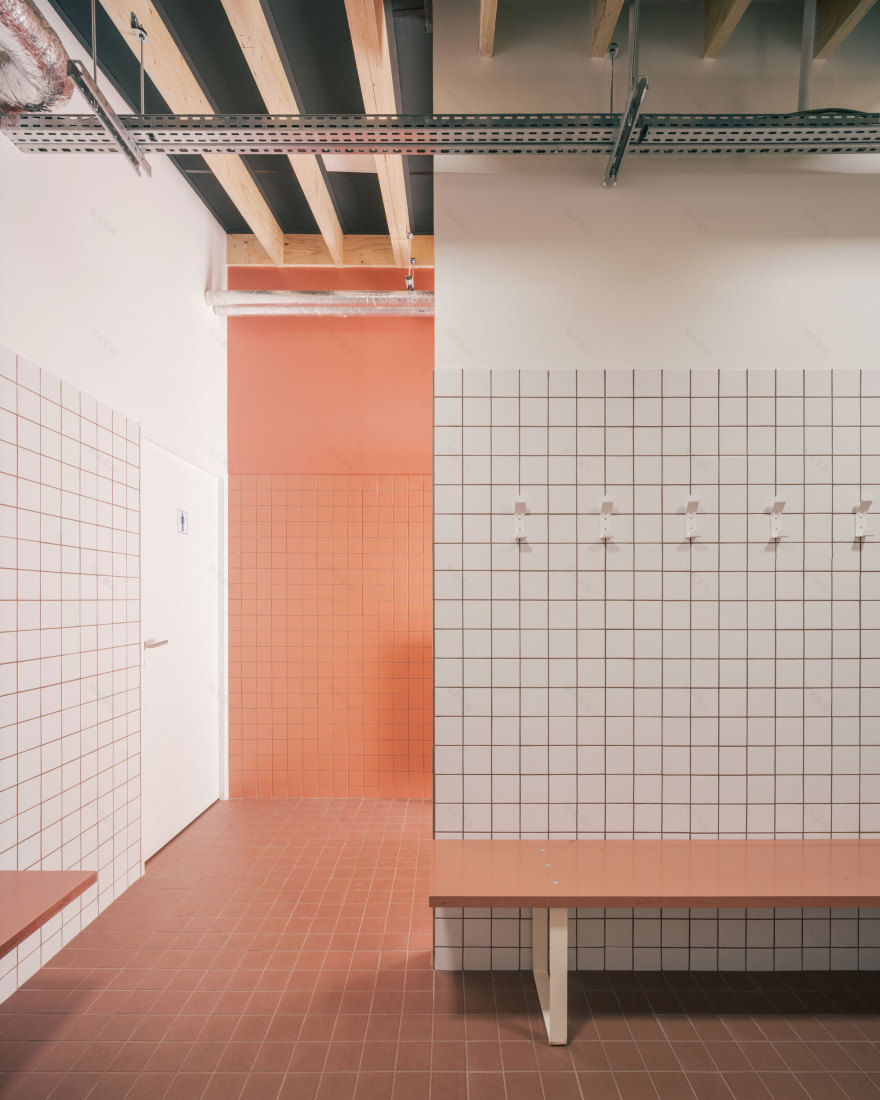
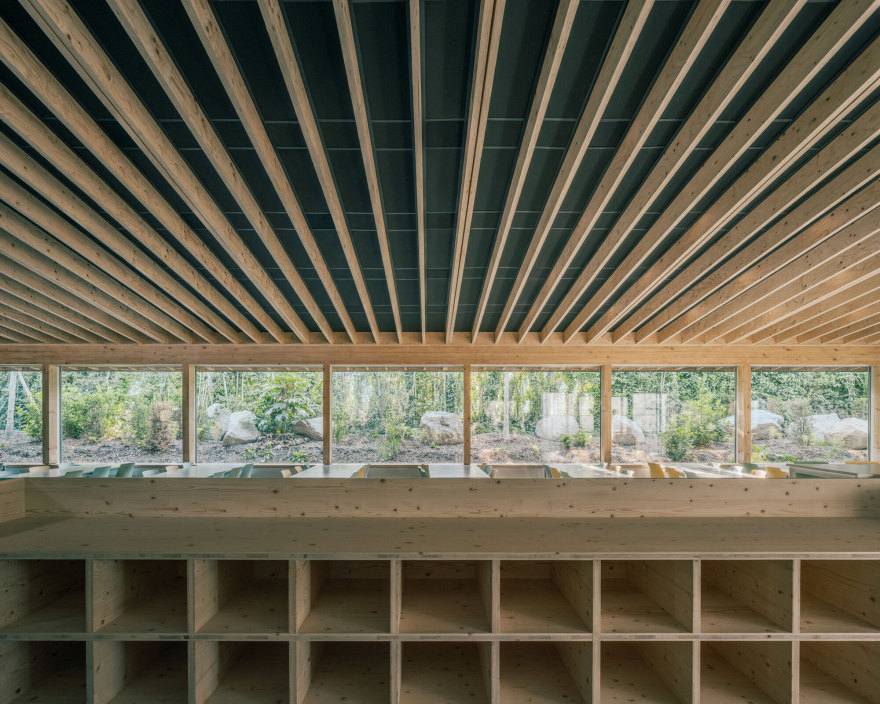
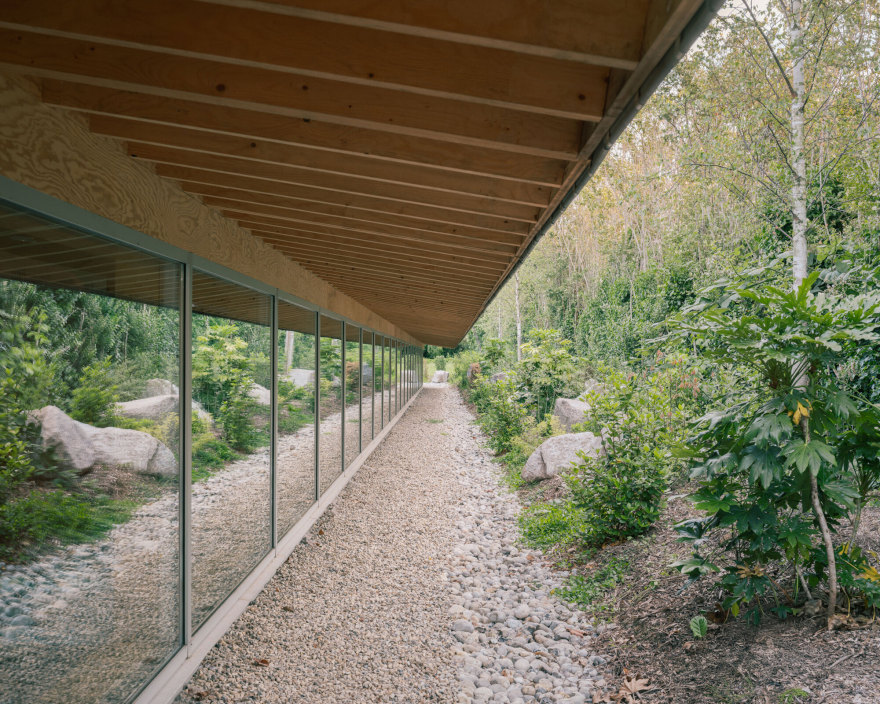
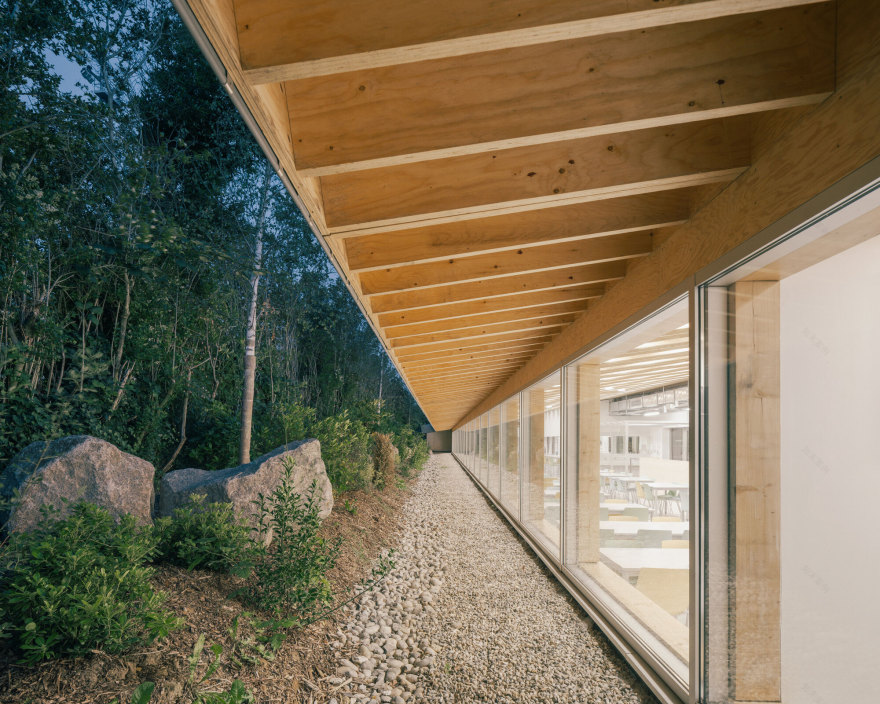
Inside, the dining hall unfolds as a linear space measuring 55 meters by 10 meters, generously glazed to the east and opening onto a dense garden. This planted buffer filters natural light and creates a calm atmosphere distinct from the rest of the school. Two changing rooms of 120 square meters each accompany the exit from the cafeteria and ensure a smooth transition between the quiet dining garden and the lively playground.
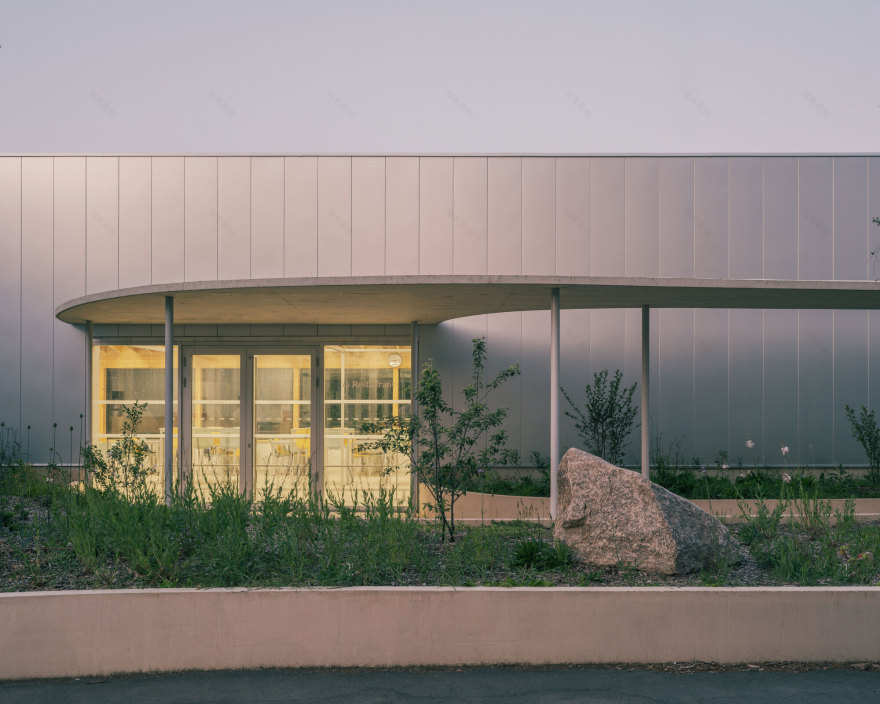
The former cafeteria on the first floor of the original building is transformed into teaching spaces organized along the existing structural grid, ensuring fluid circulation and flexible use. Throughout the project, landscape acts as a guiding thread, shaping a sequence of planted atmospheres that accompany students from arrival to departure and allowing each part of the cafeteria to engage in dialogue with its own distinctive vegetal environment.
Project gallery
南京喵熊网络科技有限公司 苏ICP备18050492号-4知末 © 2018—2020 . All photos and trademark graphics are copyrighted by their owners.增值电信业务经营许可证(ICP)苏B2-20201444 苏公网安备 32011302321234号
苏公网安备 32011302321234号客服
消息
收藏
下载
最近