

创作上传
VIP
收藏下载
登录 | 注册有礼
查看完整案例

收藏

下载

分享

翻译
The Oasis House sets a quiet, controlled rhythm within Bangkok, Thailand, where Pongpat Architect shapes a compact house into a deeply inward-looking retreat. The project channels the clients’ wish for a modern home that feels like a private resort, turning a dense urban plot into a courtyard-centered dwelling. Every move responds to privacy, proportion, and daily rituals, translating a tight footprint into generous internal life.
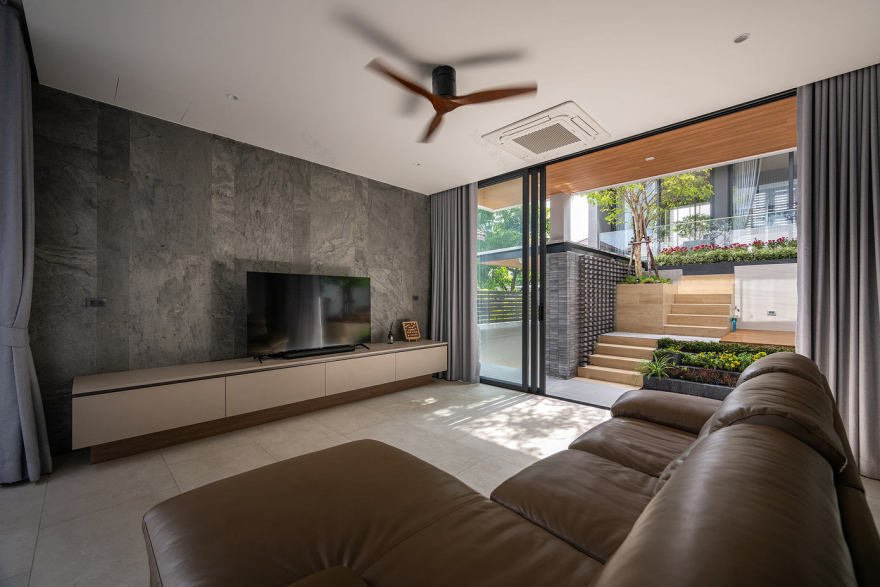
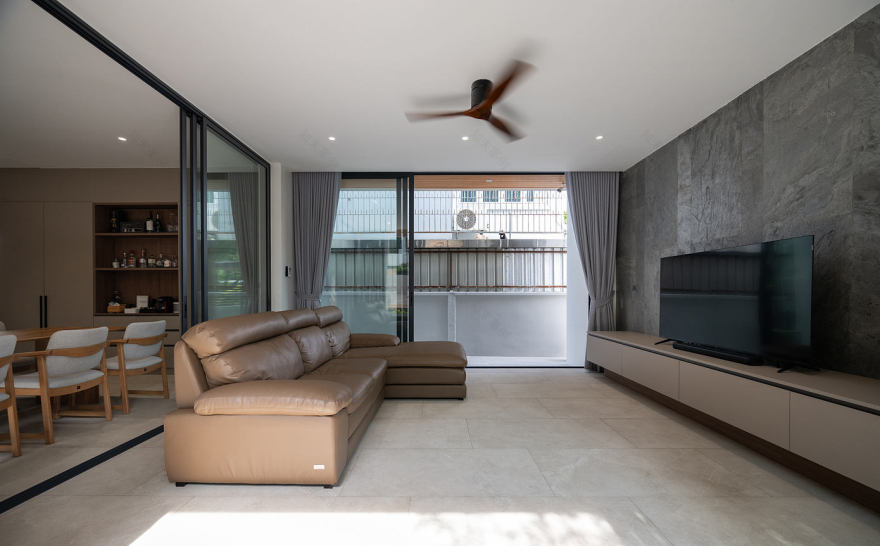
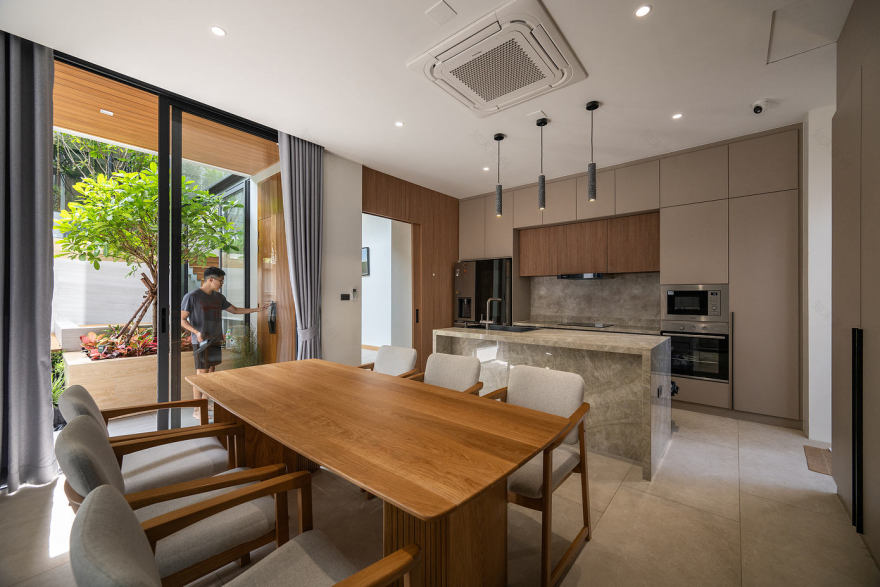
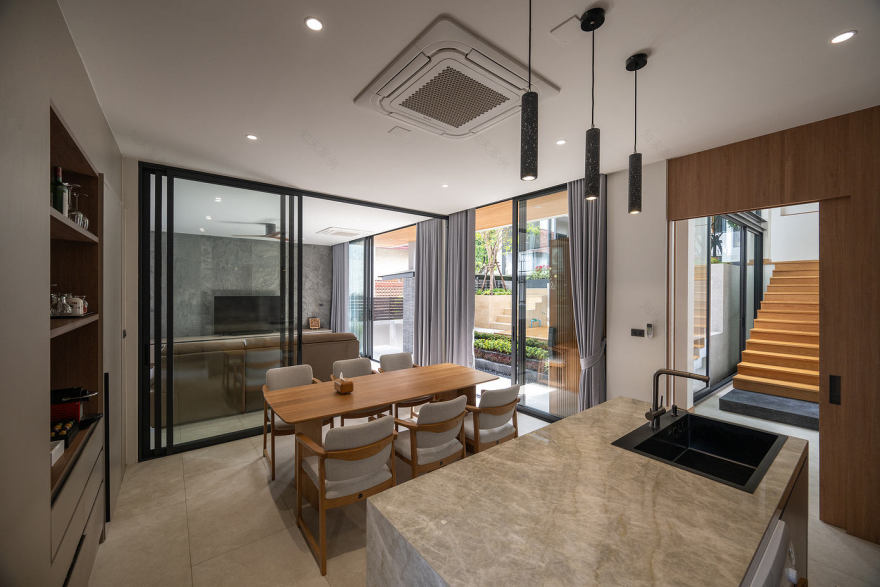
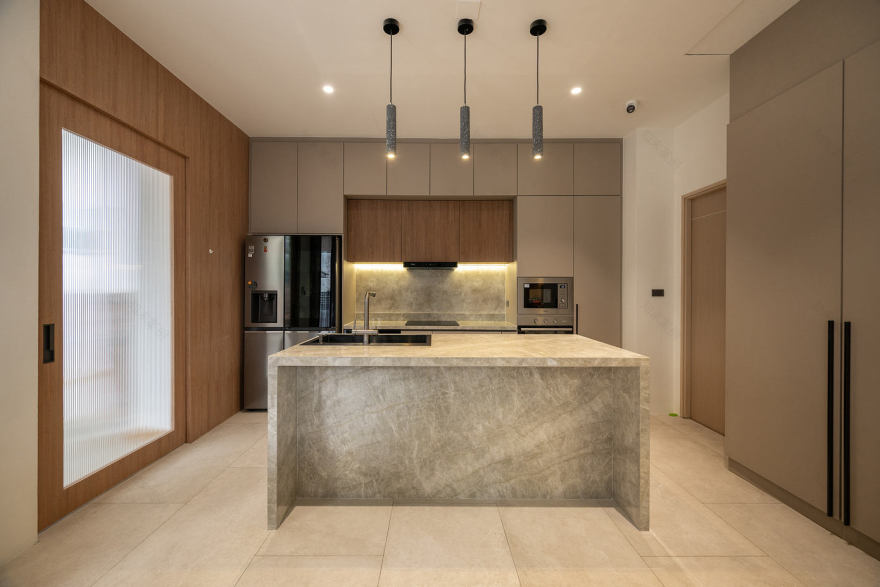
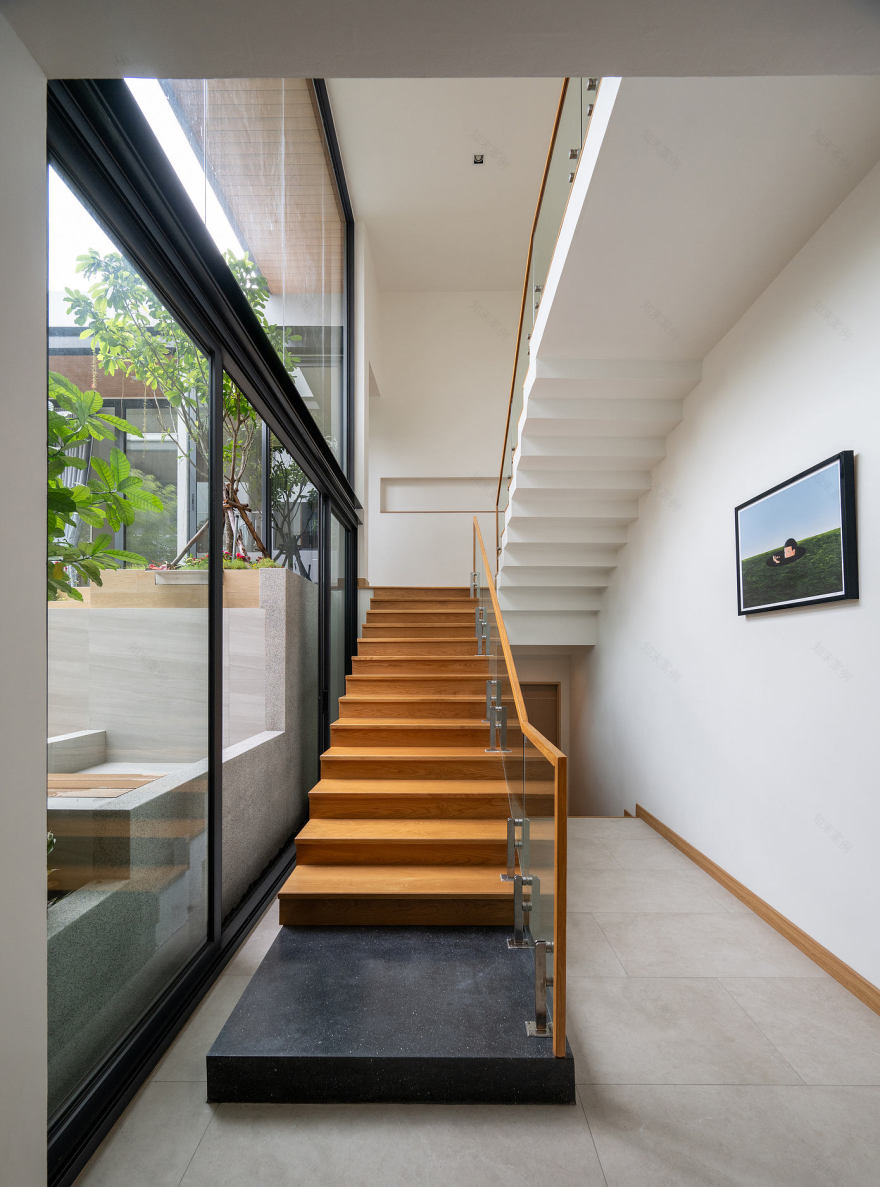
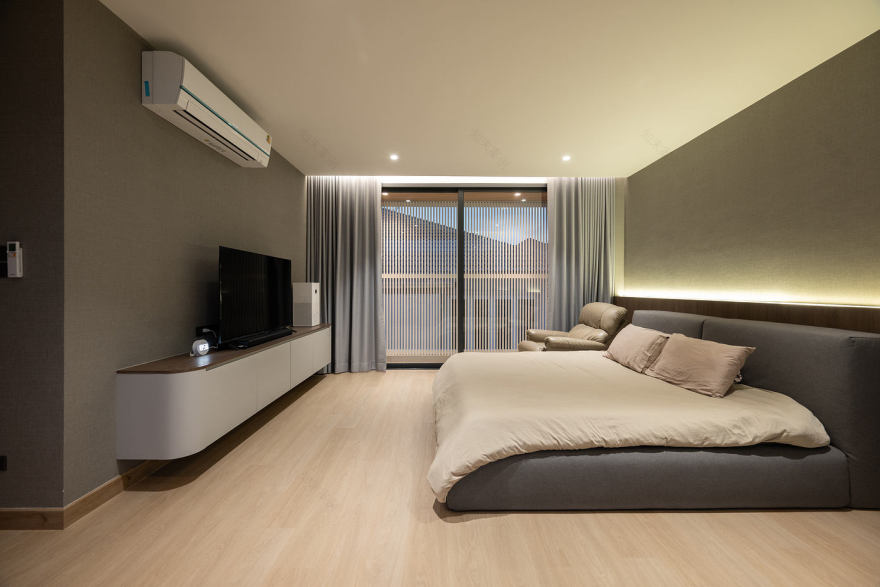
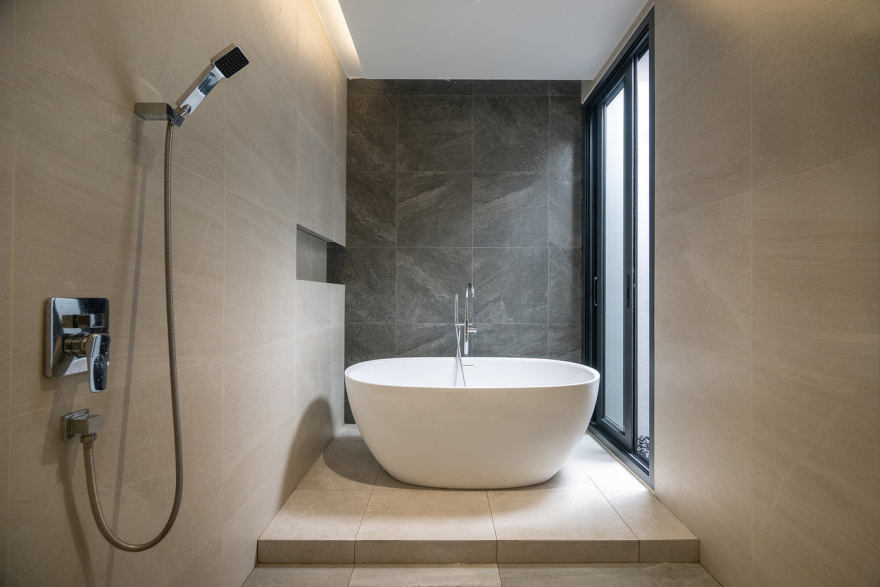
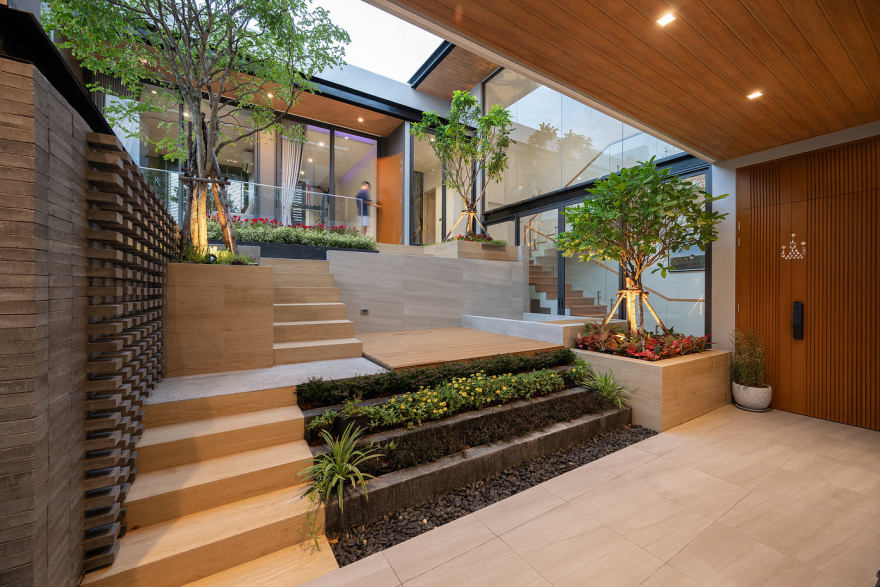
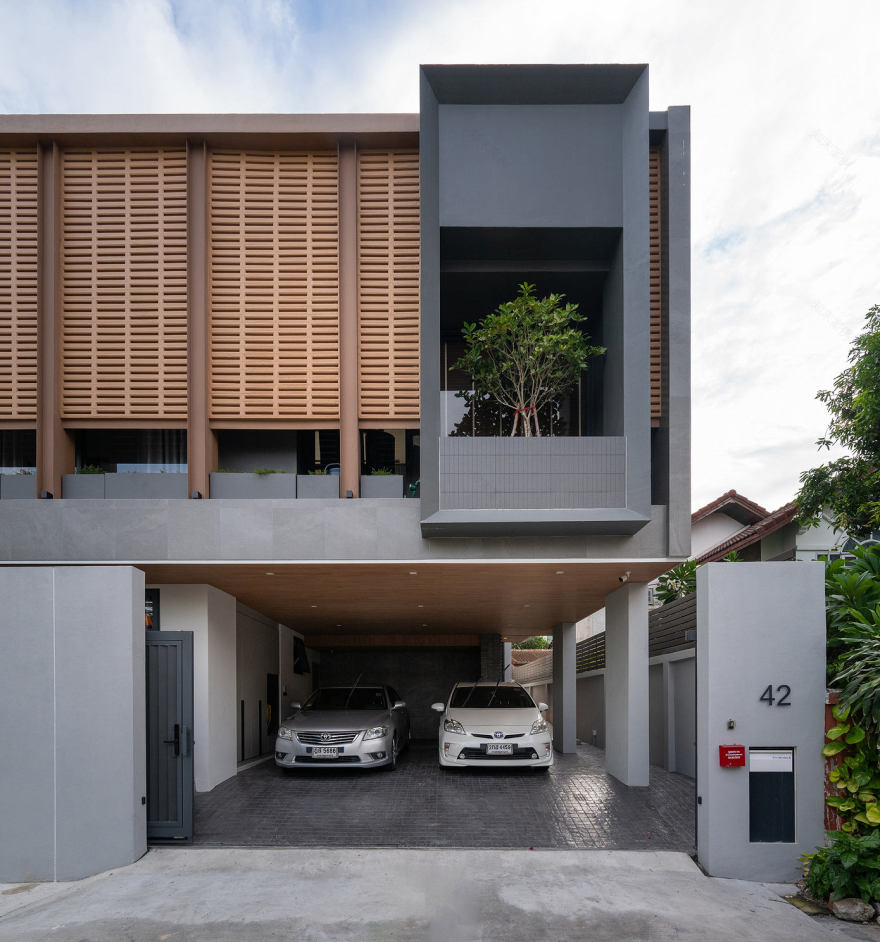
Late light grazes the solid street façade as the house holds its line against the busy Soi. Step inside and the mood shifts, trading the tight urban grain for a generous courtyard ringed by quiet rooms and layered levels that pull the eye across trees, terraces, and sky.
This is a compact house in Bangkok, Thailand by Pongpat Architect, planned as a private resort for a young family. The project takes on a tight urban lot and uses split levels and a U-shaped plan around a central garden as its primary tools. Everything turns on one idea: daily life always orbits greenery, air, and privacy.
The clients ask for a modern home that feels like a world apart, not just a place to sleep. They want calm, security, and the ability to live fully at home without turning to cafés or malls for leisure. Pongpat Architect answers by treating the site’s limits as a brief in themselves, using level changes, inner-facing rooms, and a generous courtyard to choreograph how the family moves, looks, and rests.
Entering The Inner Realm
From the street, the building reads as closed and almost fortified, its outer shell protecting what lies within. Once past the threshold, the plan relaxes and opens, with circulation slipping along edges and bending toward the central courtyard rather than the road. Each turn directs views inward, so that the first impression is not traffic or neighbors but trees and sky held within the U-shaped volume. That shift from outside noise to interior calm happens quickly, yet the house makes it feel gradual.
Split Levels Shape Movement
The raised ground level, lifted by +1.20 meters to address flooding, becomes the driver for a split-level strategy rather than a problem to mask. Floor plates slide and step, breaking down the house’s mass so it sits more gently within its dense context while also producing shorter, more intimate runs of stair and landing inside. Moving through the home feels continuous but never monotonous, as each half-level reveals a slightly different angle on the courtyard, catching daylight and breezes on the way. This sequence turns simple circulation into a daily ritual of ascent, pause, and return.
Courtyard As Daily Anchor
At the center, the courtyard is not an afterthought or soft decoration; it is the main room under open sky. Living, working, cooking, and exercise all maintain a visual line back to this planted core, so that greenery becomes the constant background to everyday routines. Split levels carve terraces, steps, and landings around the garden, transforming what could have been a single flat lawn into a sequence of outdoor thresholds where family life spills out at different times of day. The courtyard doubles as circulation, as gathering place, and as quiet retreat, binding the home’s separate rooms into one clear diagram.
Privacy Through Inward Views
The U-shaped plan wraps the courtyard on three sides, turning most windows toward the inner garden and away from neighboring buildings. This simple move filters out the visual chaos of the city while still admitting daylight and cross-ventilation through the protected void. Solid outer walls secure the perimeter, yet interior rooms stay open to one another across the planted court, letting the family feel together even when they occupy different corners. Secondary outdoor nooks extend this idea, creating more secluded pockets for rest without giving up the overall sense of connection.
A House That Rewrites Routine
Over time, the plan reshapes how the residents spend their days, drawing activities that once happened out in the city back into the home. Work, play, and relaxation now share the same quiet orbit around the garden, with each level and landing offering a slightly different way to sit, watch, and breathe. Every corner remains tied to the central greenery, so even solitary moments carry a gentle awareness of the wider household. As light shifts across the courtyard and up the stepped interiors, the house keeps renewing its own calm rhythm.
By night, the courtyard reads as a calm void, reflecting the day’s movement in still air and foliage. Rooms lean in toward that center, not out toward the street. Within this compact urban plot, plan and section together turn constraint into clarity, giving the family a home that feels both contained and quietly expansive.
南京喵熊网络科技有限公司 苏ICP备18050492号-4知末 © 2018—2020 . All photos and trademark graphics are copyrighted by their owners.增值电信业务经营许可证(ICP)苏B2-20201444 苏公网安备 32011302321234号
苏公网安备 32011302321234号客服
消息
收藏
下载
最近