

创作上传
VIP
收藏下载
登录 | 注册有礼
查看完整案例

收藏

下载

分享

翻译
Architects:OBO Estudi
Area:112m²
Year:2023
Photographs:Andres Flajszer
Manufacturers:Cerámicas Arcís
Lead Architects:Oriol Troyano, Bernat Sancho / Òscar Farrés
Category:Houses
City:Sant Esteve de Palautordera
Country:Spain
Text description provided by the architects. The building is located on a plot close to the urban center of Sant Esteve de Palautordera, near the Montseny Natural Park. Despite being in a privileged environment, the urban conditions of the area allow for little separation between homes, and the developers request a single-story construction.

Since long views of the landscape cannot be obtained, the house is organized around a contemporary impluvium: a rectangular central patio that articulates the four wings that make it up. This void, far from being merely a residual space, stands as the vital core of the home, allowing for filtered views between the rooms and expanding the spatial perception of the whole.

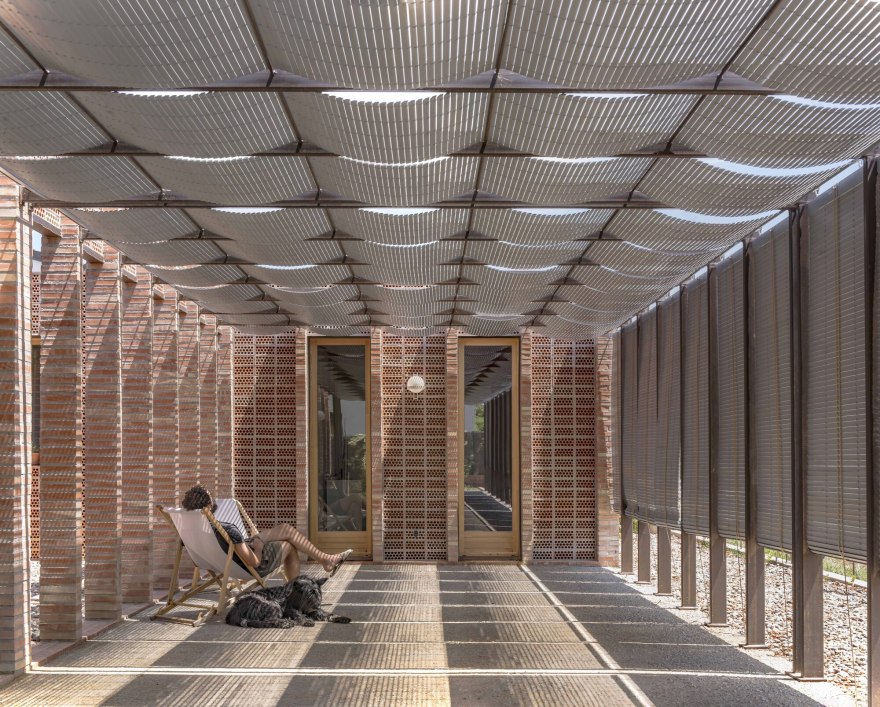
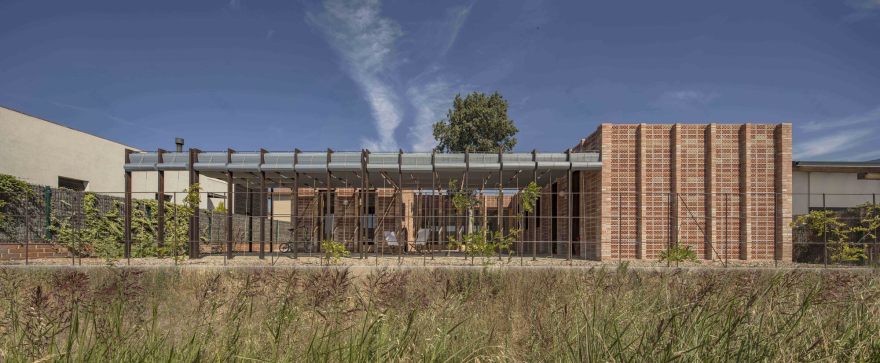
Access is through the north facade, via a corner vestibule that hints at the central patio. From there, two of the wings are accessed, occupied by the kitchen-dining room and the living room. The different rooms unfold following a gradient of privacy, culminating in the main bedroom, located in the corner opposite the entrance. The south wing, conceived as a semi-open porch with wooden rolling shutters, diffuses light and creates a liminal space between the interior and exterior, blurring the boundaries between public and private.

In response to rising construction costs in the post-Covid era, the use of traditional materials is chosen, which are therefore controllable both economically and constructively. At the same time, a skilled local builder with extensive experience in brickwork is employed, capable of executing a ceramic facade that meets the technical and climatic demands of the house with precision.

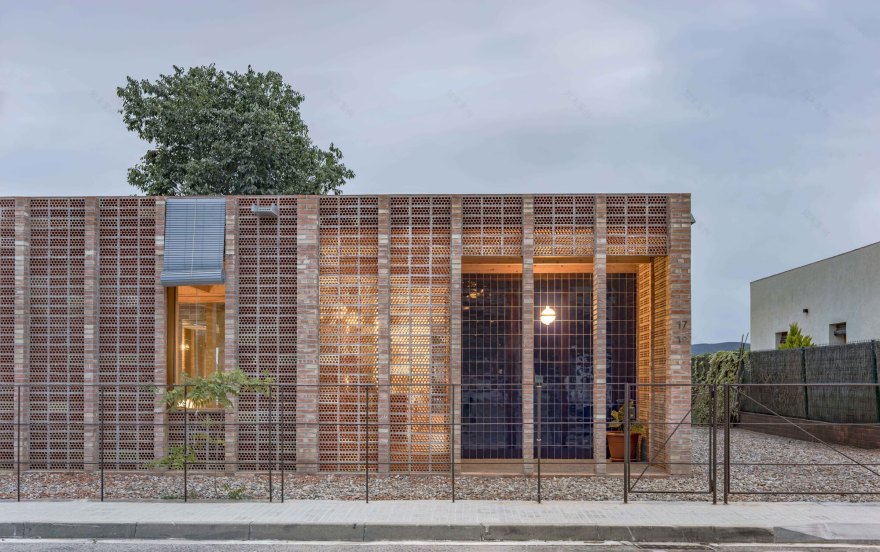
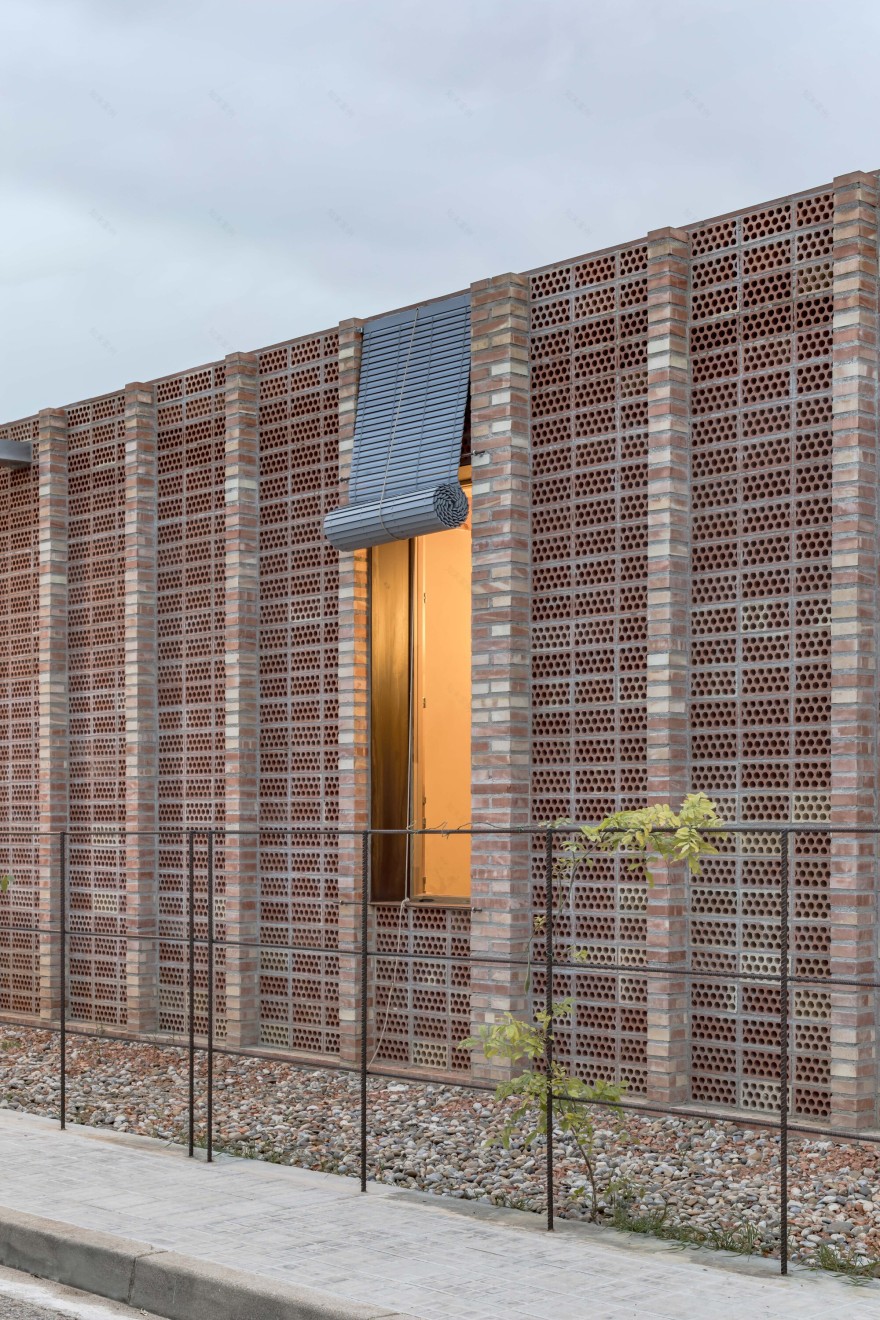
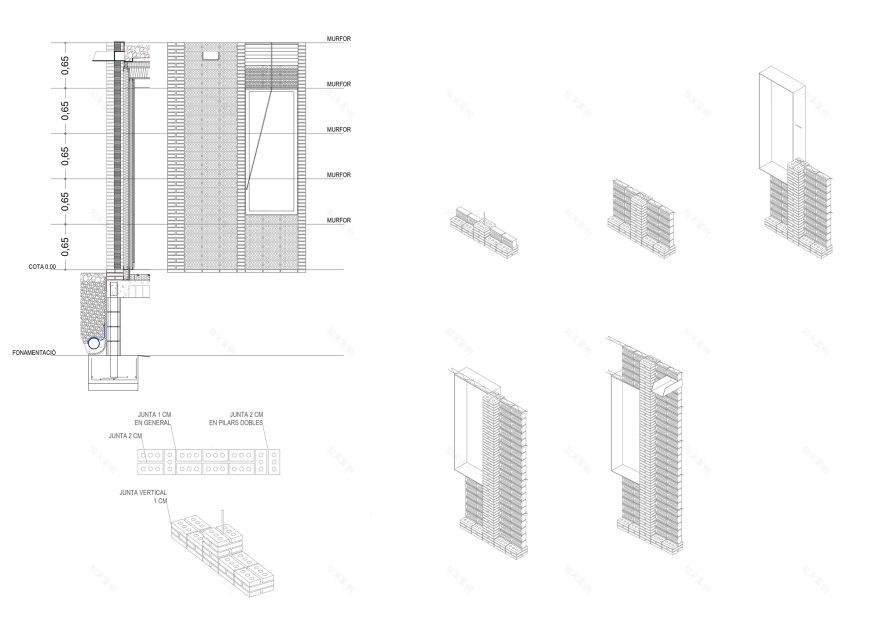
Solid brick is used to clad the facade, generating a compositional rhythm and bearing the vertical load of the roof. This is connected by a system of wooden beams arranged perpendicularly to the direction of each wing. Furthermore, due to the slenderness of the columns, a commonplace element like perforated brick—"gero"—is used to provide bracing and stability to the load-bearing facade. Placed perpendicularly, this element defines the building's image and generates a breathable shade that, in certain situations, acts as a lattice, regulating privacy and lighting while allowing natural ventilation.

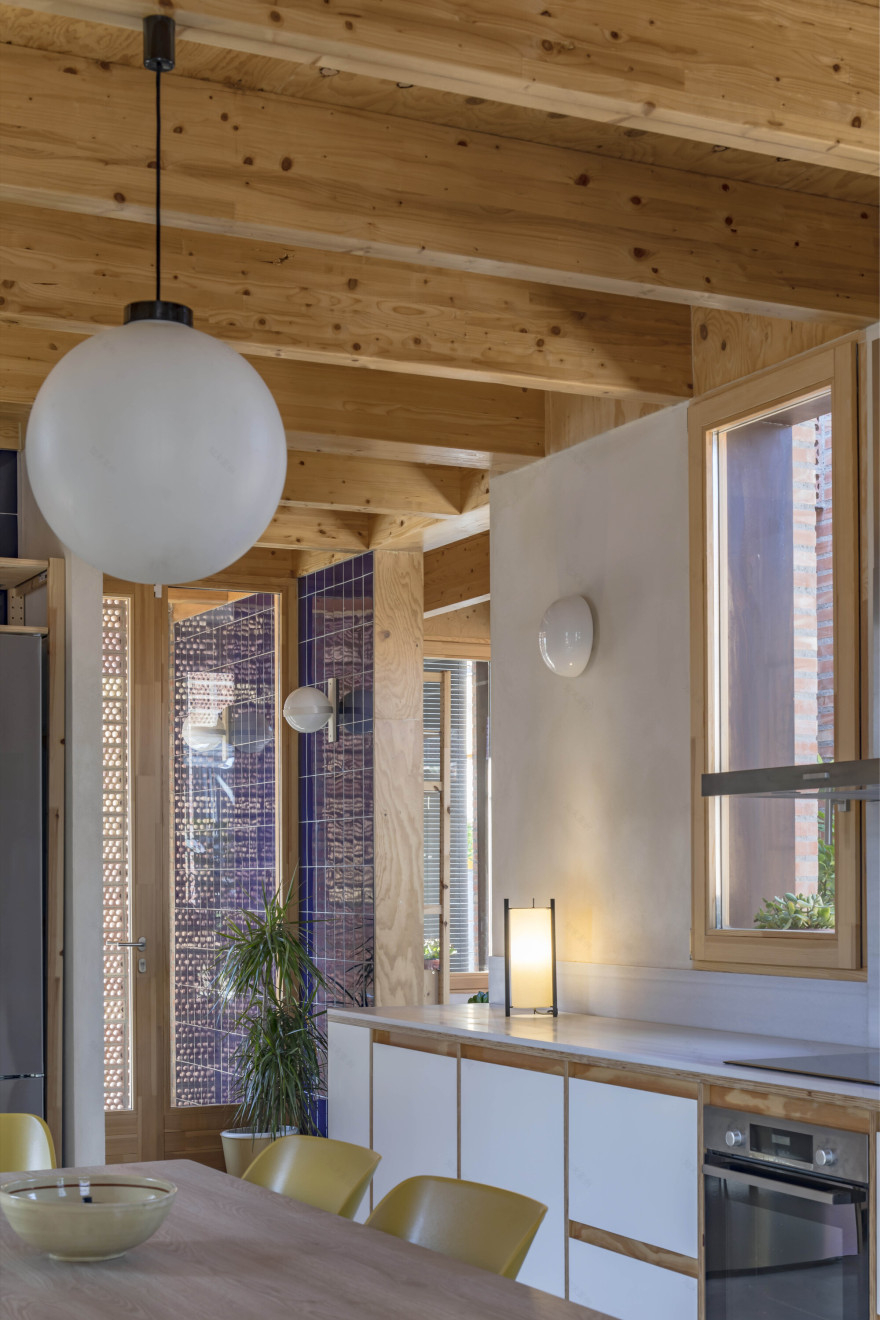
Inside, the materiality remains simple and coherent: the polished concrete floor acts as the main inertial element, while the ceramic walls plastered with lime mortar provide an irregular and warm finish. The wooden structure of the roof remains exposed, visually extending the ceramic columns of the facade.

Over the last decade, the climatic context at the foot of Montseny has transformed: summers are hotter with more tropical nights, while winters are becoming increasingly brief and mild. In this framework, a hackberry tree—a traditional deciduous tree of the area—planted in the central patio acts as a bioclimatic regulator, providing shade in summer and allowing solar radiation to enter in winter. Additionally, the horizontal slat rolling shutters, inspired by vernacular design, run around the perimeter of the house, varying their position according to the seasons.
The strategic arrangement of the windows takes advantage of the proximity between the wings to increase air speed through the thermal jump between the perimeter and the patio. Finally, the ventilated facade reduces thermal gain from the surfaces, while the lime mortar plaster contributes to the hygrometric control of the interior environment.
Project gallery




南京喵熊网络科技有限公司 苏ICP备18050492号-4知末 © 2018—2020 . All photos and trademark graphics are copyrighted by their owners.增值电信业务经营许可证(ICP)苏B2-20201444 苏公网安备 32011302321234号
苏公网安备 32011302321234号客服
消息
收藏
下载
最近