

创作上传
VIP
收藏下载
登录 | 注册有礼
查看完整案例

收藏

下载

分享

翻译
AMAYADORI
Competition: NOT A HOTEL Year: 2026
Location: Japan, Yakushima
Architect: Alexander Velgan, Inna Dobrovolska
Area: 300 sq.m.
Status: Concept
RESEARCH
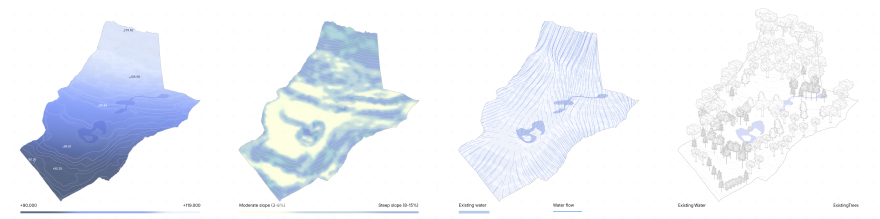
General Context: Yakushima is one of the wettest places on Earth, experiencing extreme rainfall (4,000mm coastal to 10,000mm mountainous) and 5–6 annual typhoons. Despite this, the humid subtropical climate offers mild winters (>11°C) and comfortable summers. Designated a UNESCO World Heritage site in 1993, the island preserves 42% of its land as a National Park. Cultural heritage runs deep, from Jomon period archaeology to traditional cedar forestry and mythology. Today, the island supports a sustainable tourism economy, welcoming over 200,000 visitors annually.Elevation Zones: The island demonstrates a unique vertical ecosystem gradient - from subtropical coastal forests to cool temperate zones above 1,800m. The project site is located at 90-120m elevation in the subtropical vegetation zone with temperatures above 20°C. This location ensures year-round comfortable climatic conditions, access to evergreen vegetation, and opportunities to observe ecological transitions to higher zones.
AMAYADORI
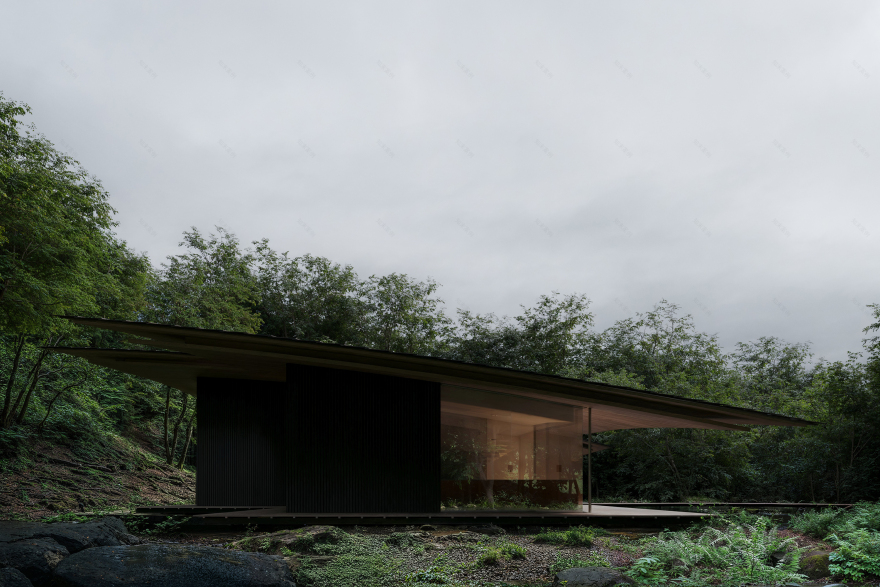
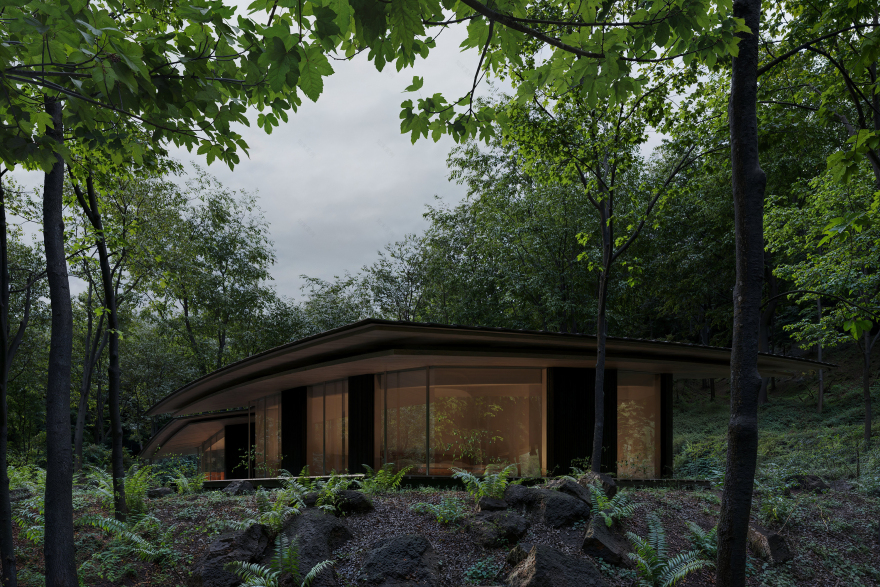
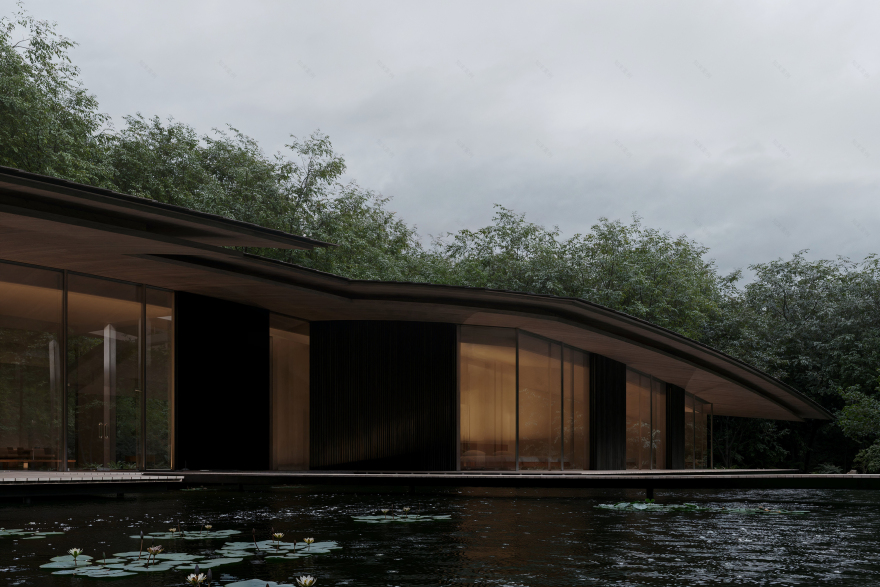
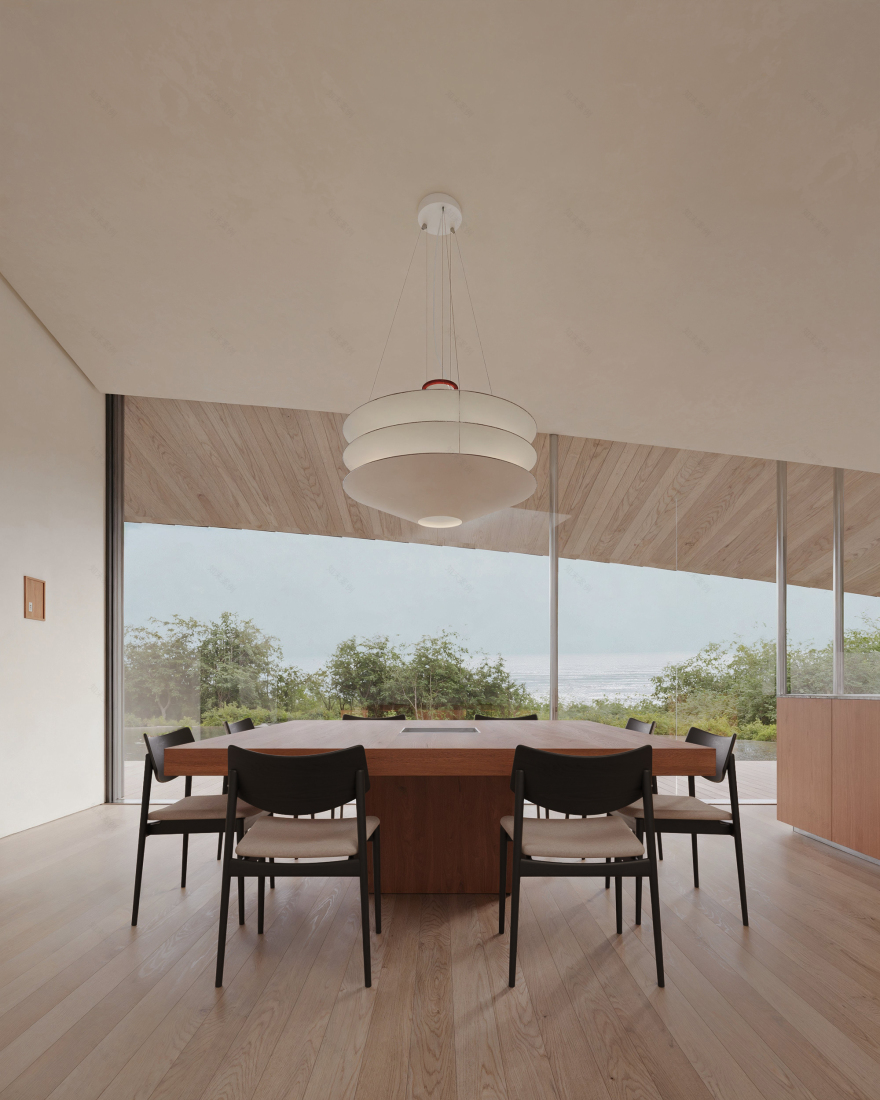
Situated within Yakushima’s ancient forests, the Amayadori House represents in contextual preservation and topographical negotiation. Interacting with a landscape defined by dramatic verticality and one of the highest precipitation rates globally, the architectural response prioritises a symbiotic integration with the terrain.
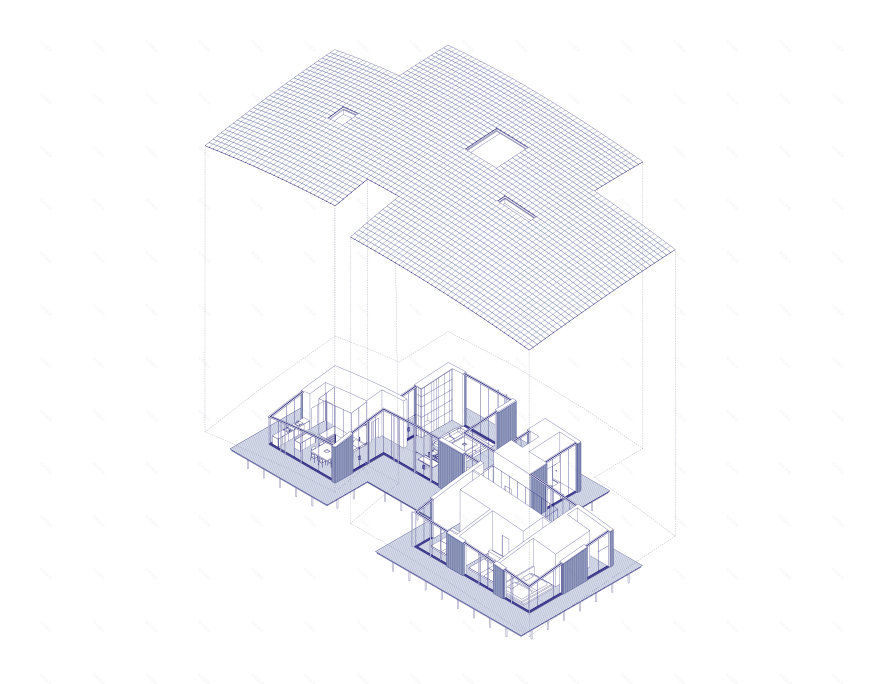
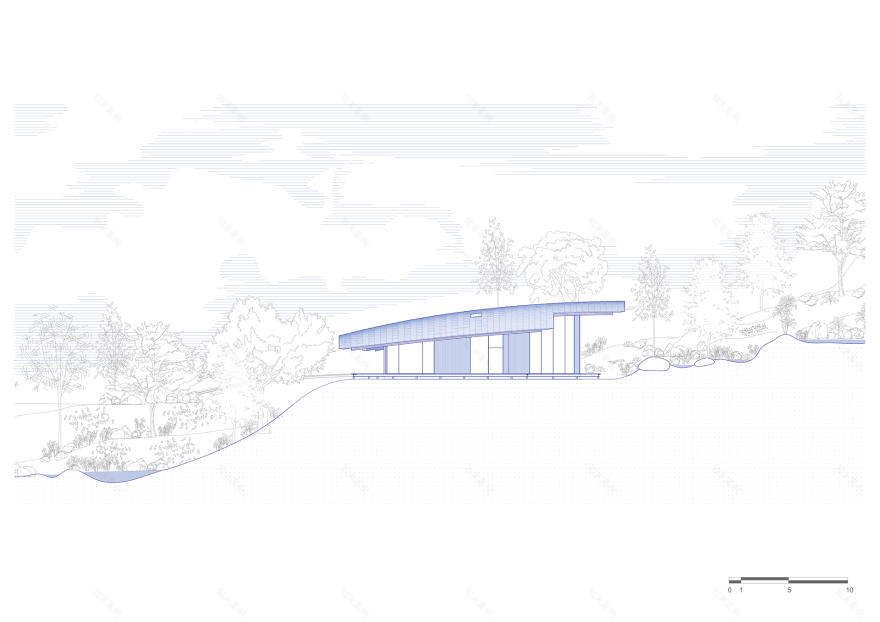
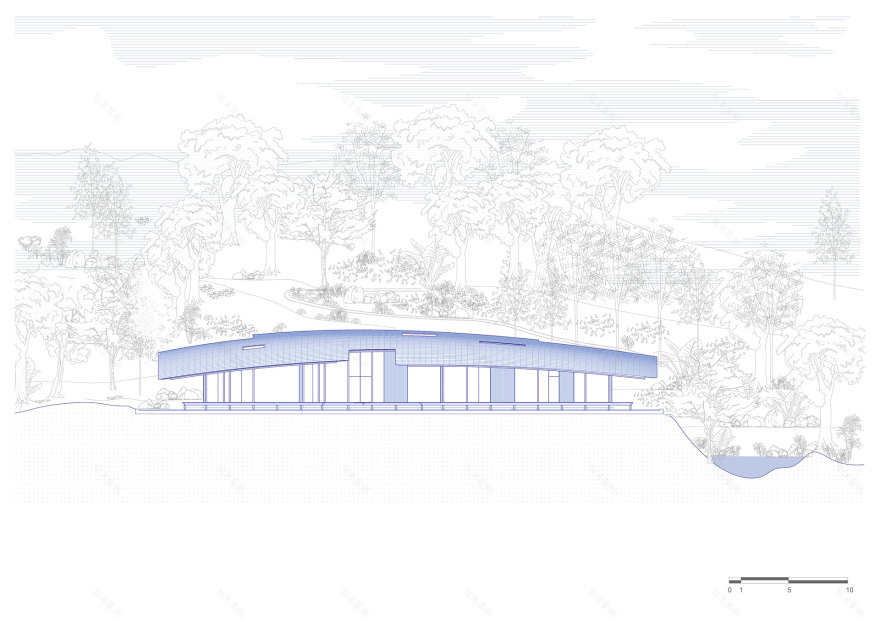
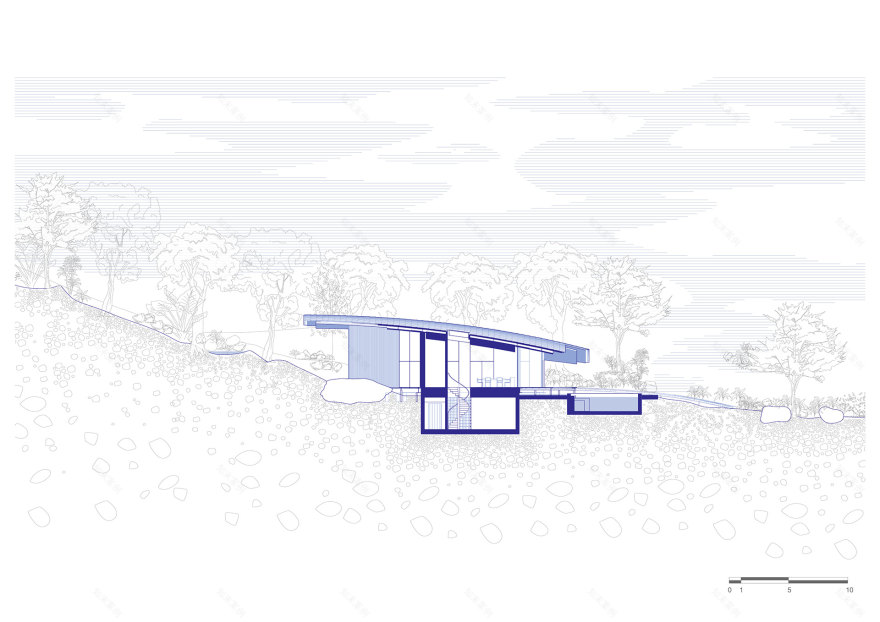
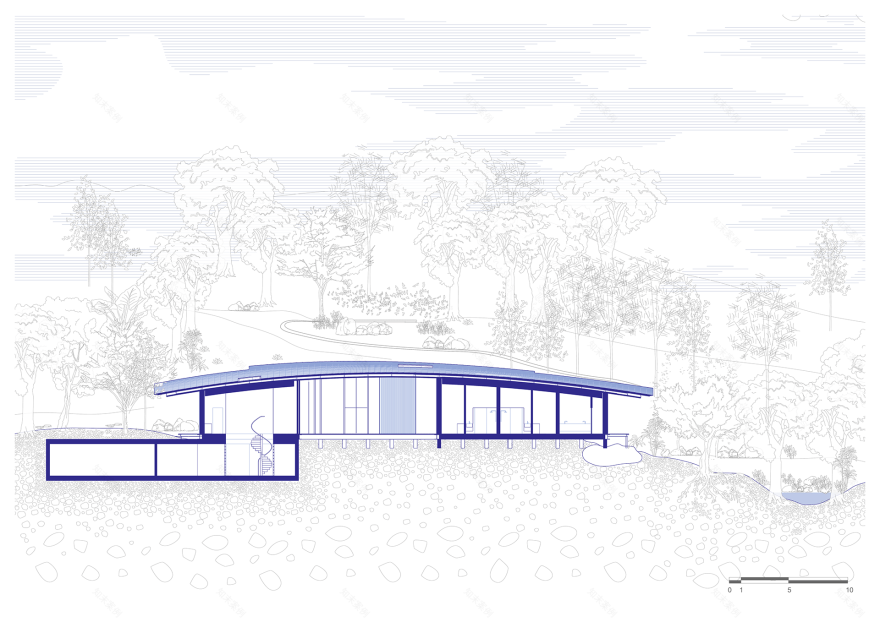
The structural logic is defined by a distinct separation from the ground plane. The residence establishes an elevated datum, resting atop a grid of slender, high-strength pilotis that delicately puncture the forest floor. This suspension minimises the building's physical footprint, allowing the intricate subterranean root networks and natural hydrological pathways to flow uninterrupted beneath the inhabitable volume. The architecture essentially floats, ensuring the continuity of the subsoil ecosystem.
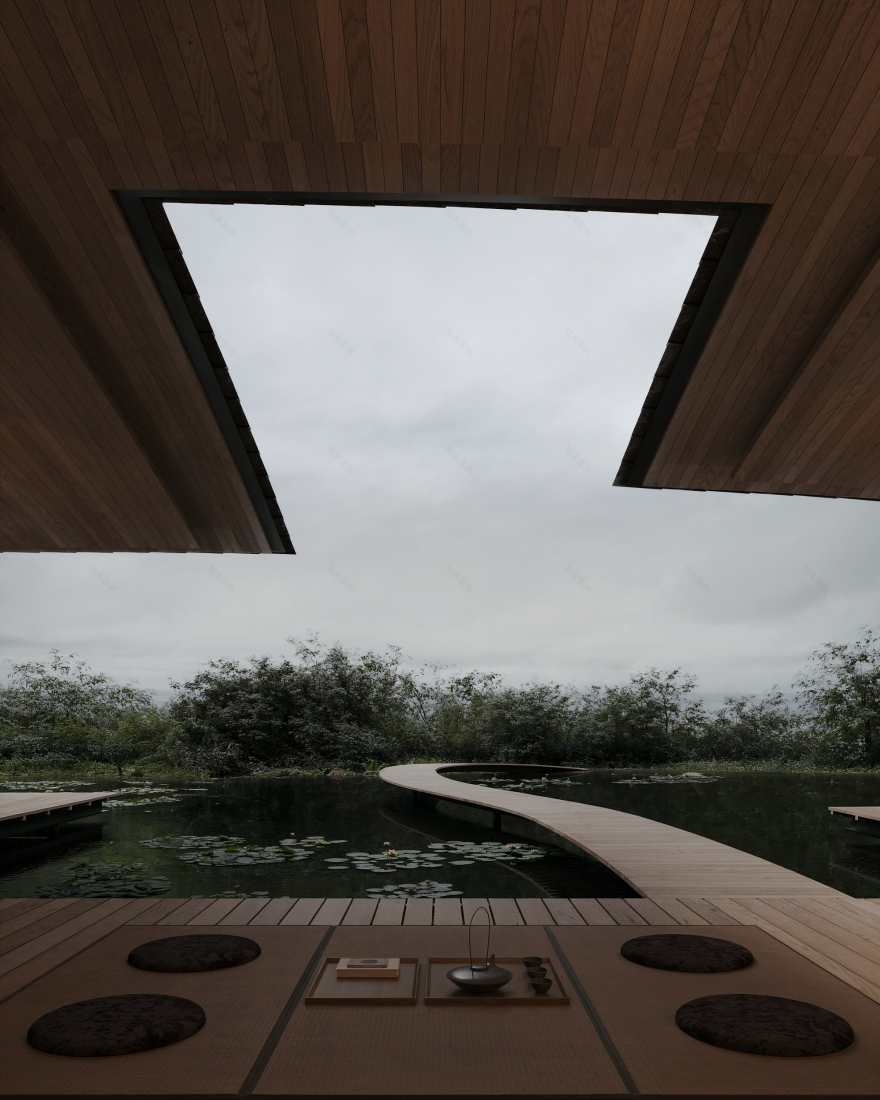
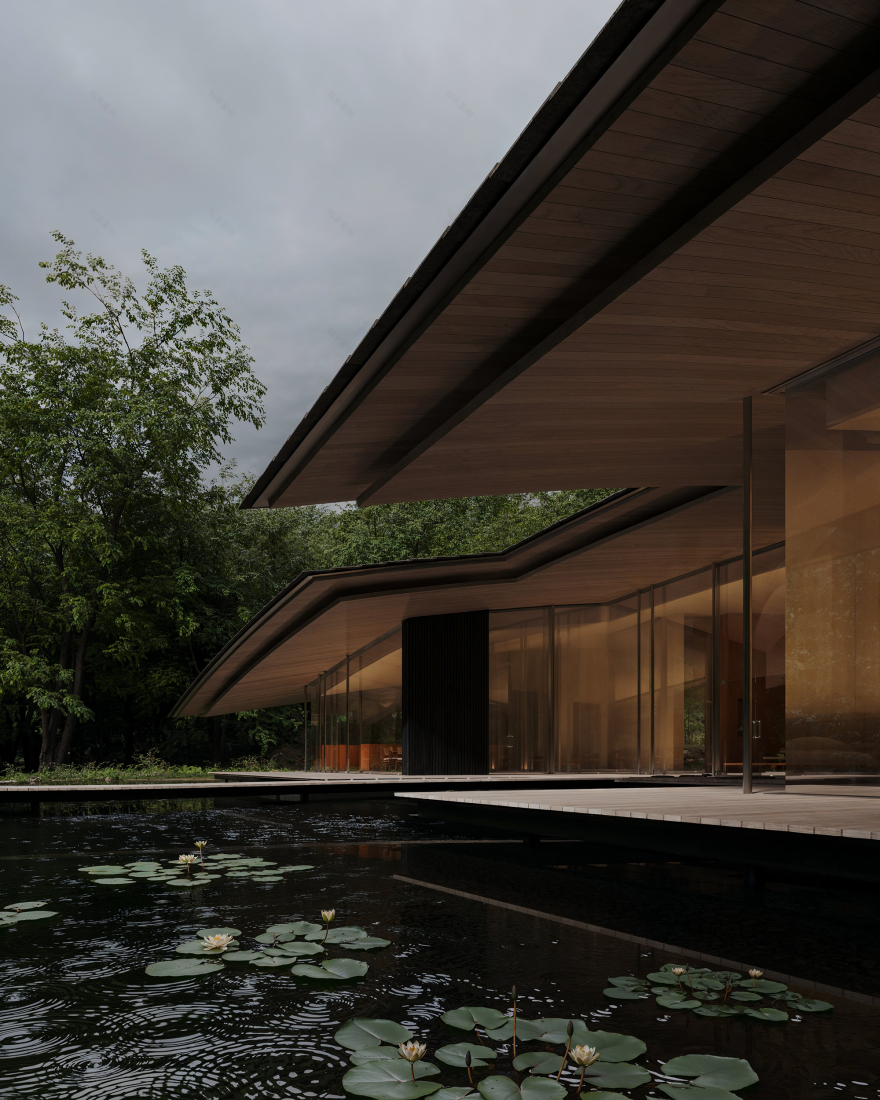
The roofscape acts as the primary protective element; deep, cantilevered eaves project outward to manage the Heavy rains, creating a transitional threshold that shields the interior while amplifying the sensory experience of the climate.
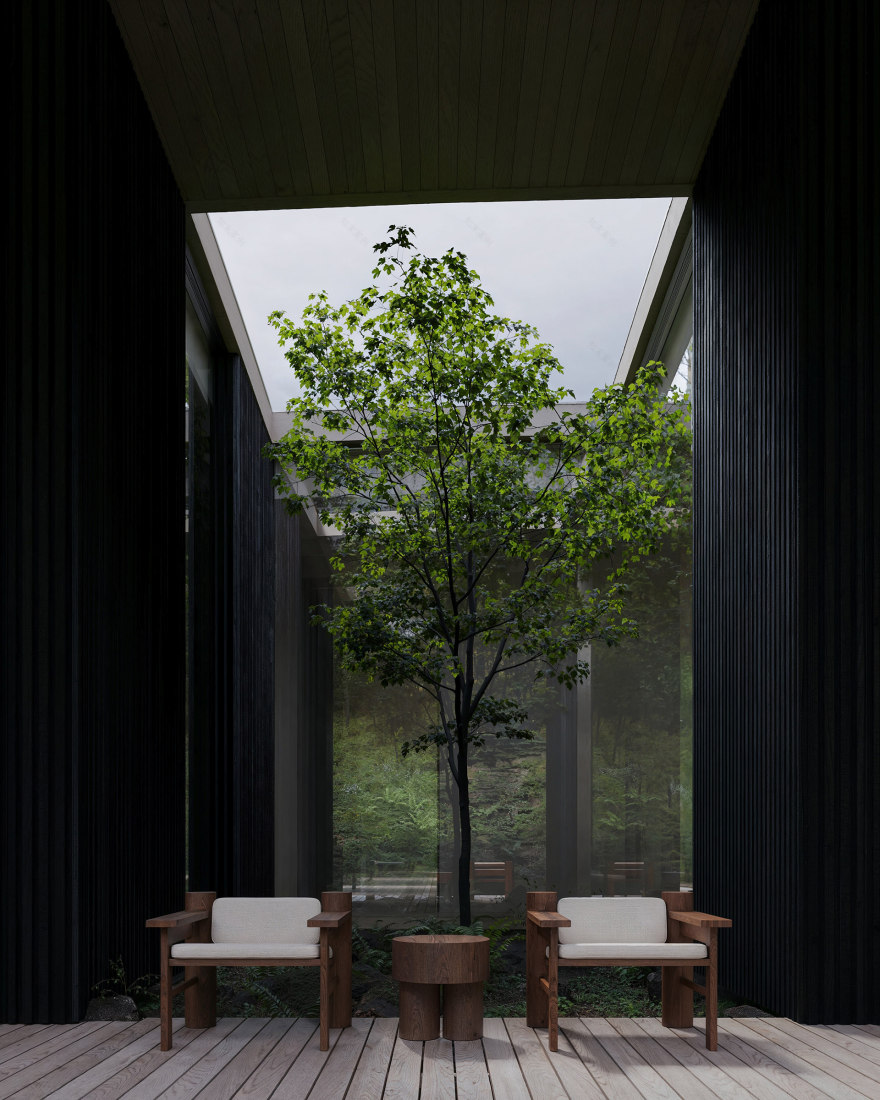
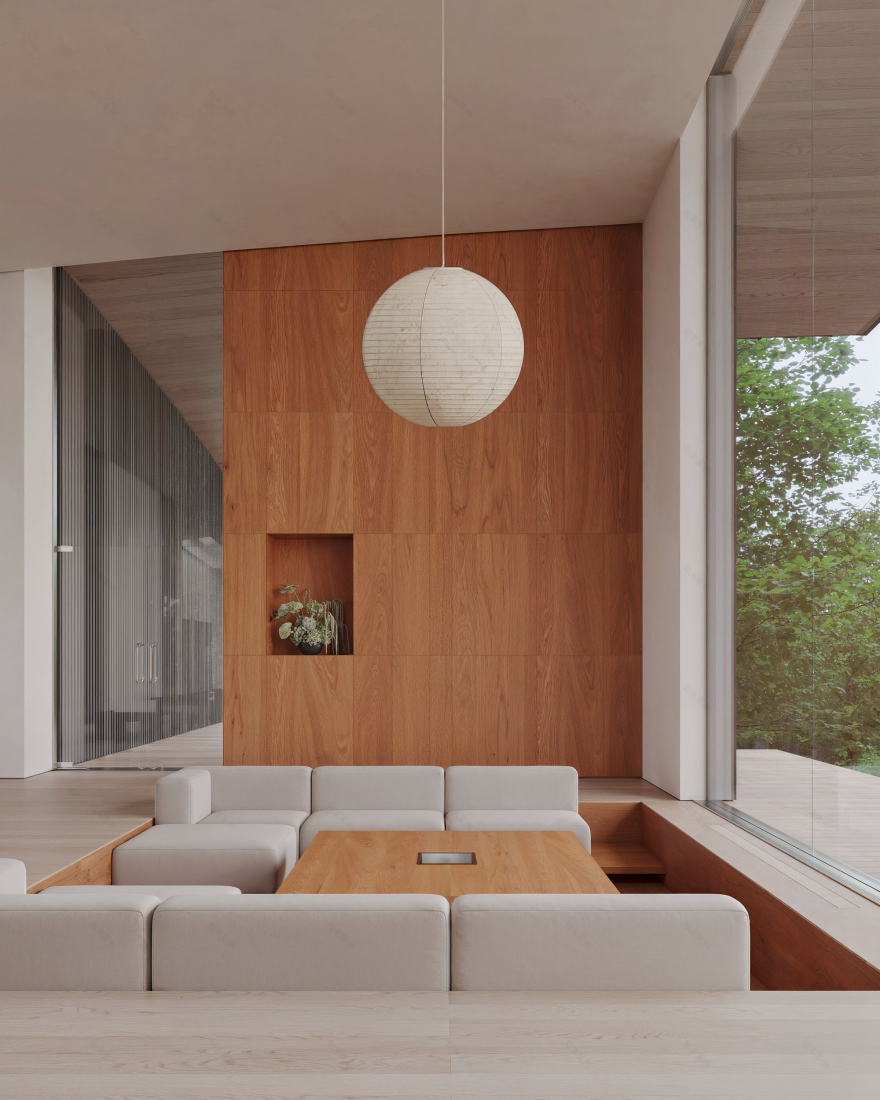
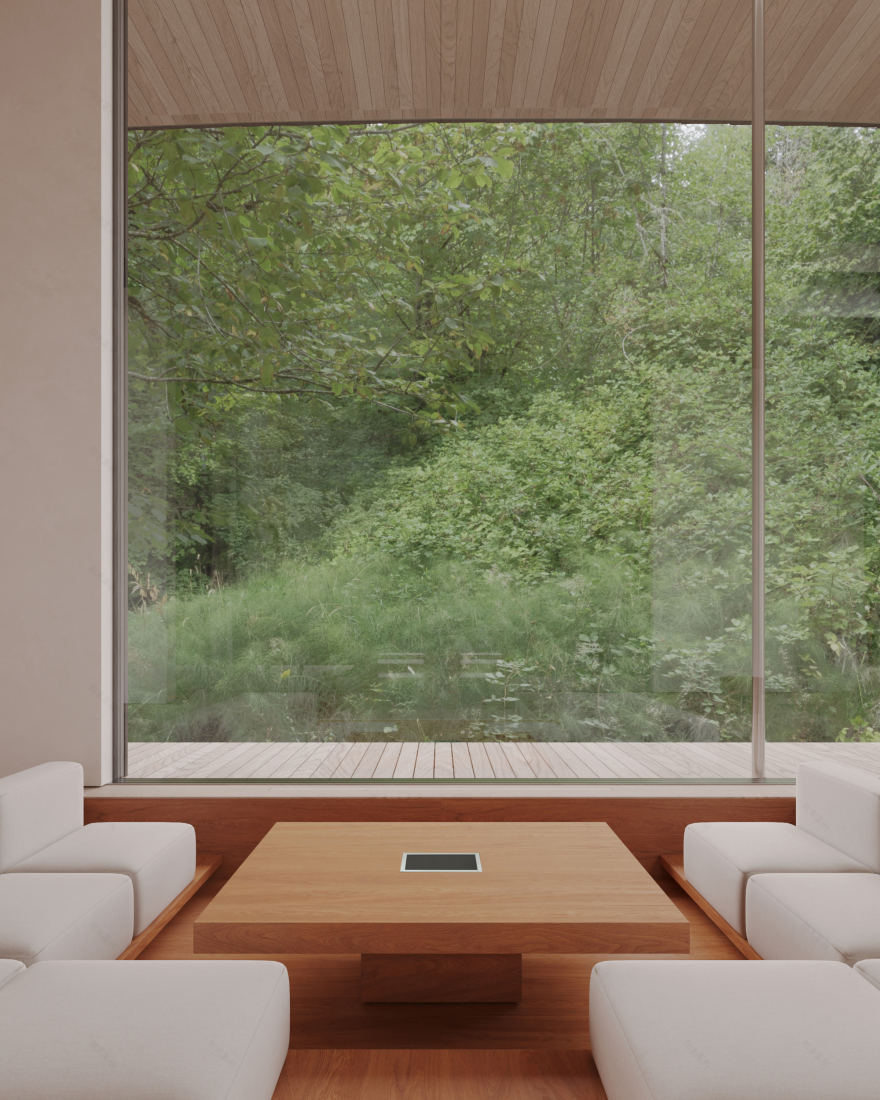
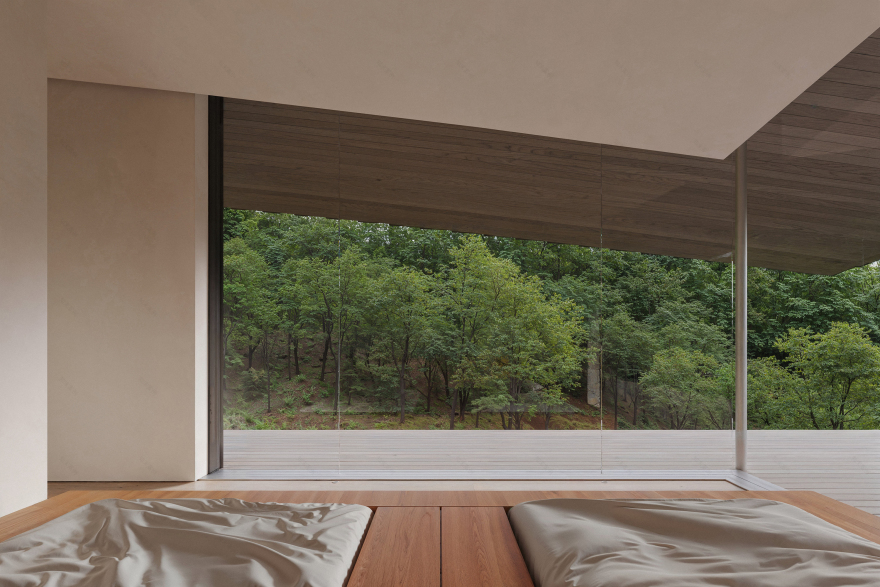
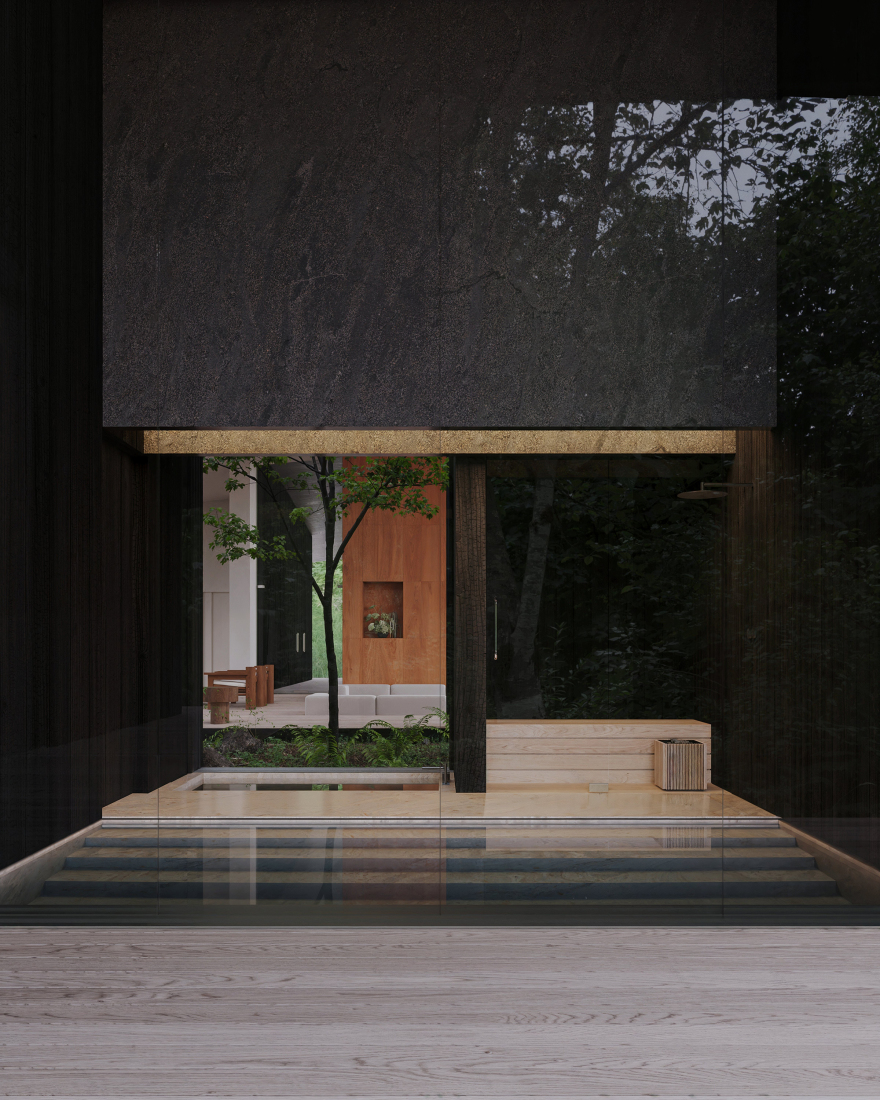
The envelope dissolves the boundary between the interior and the exterior. Architecture functions as a silent optical instrument, fostering a profound biophilic connection. By engaging in this dialogue with the surrounding flora, existing merely as a contemplative vessel—a quiet observer suspended within the rain
STRUCTURE
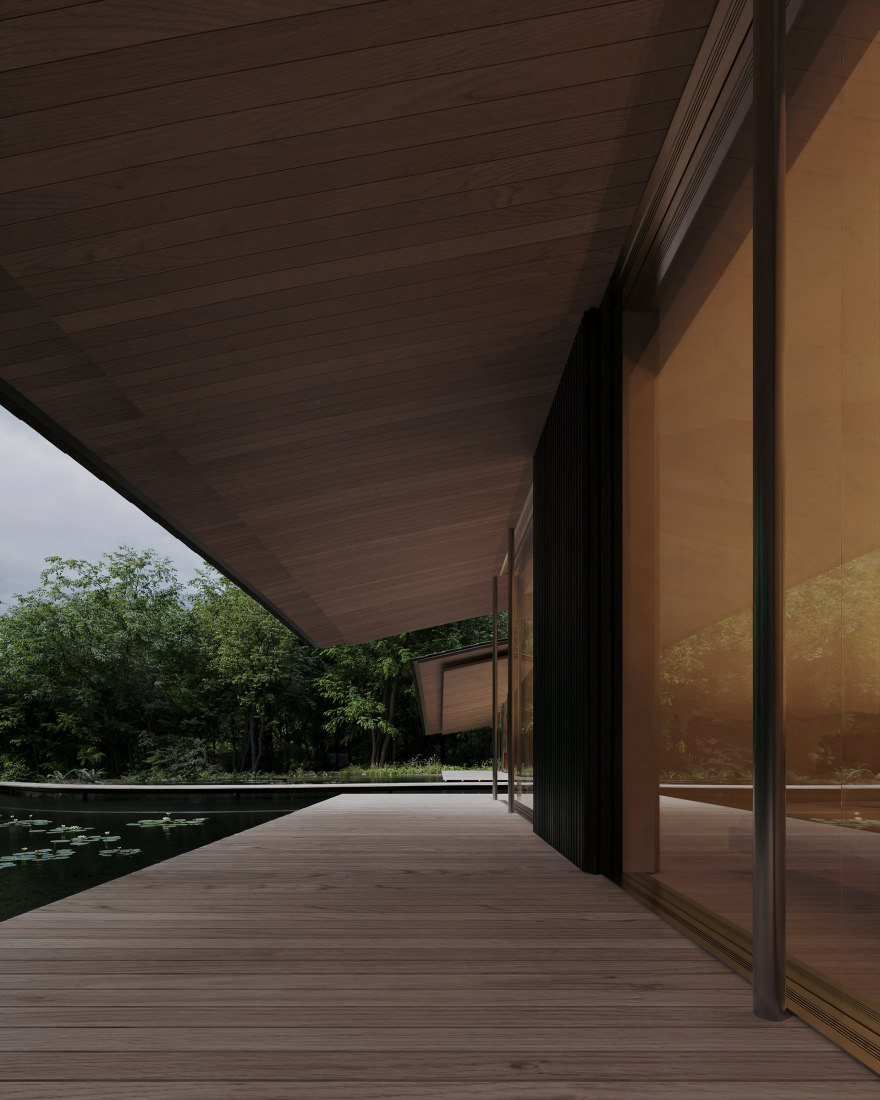
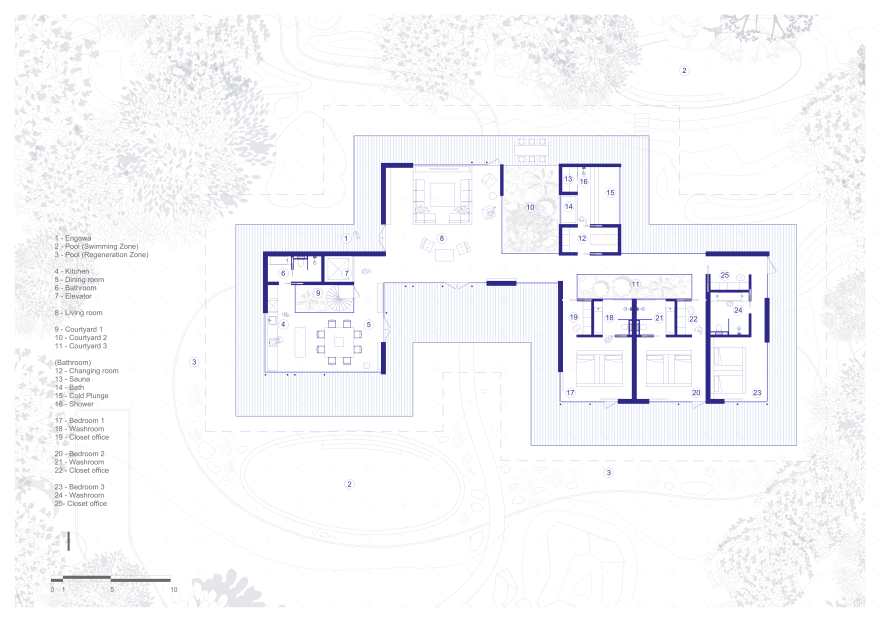
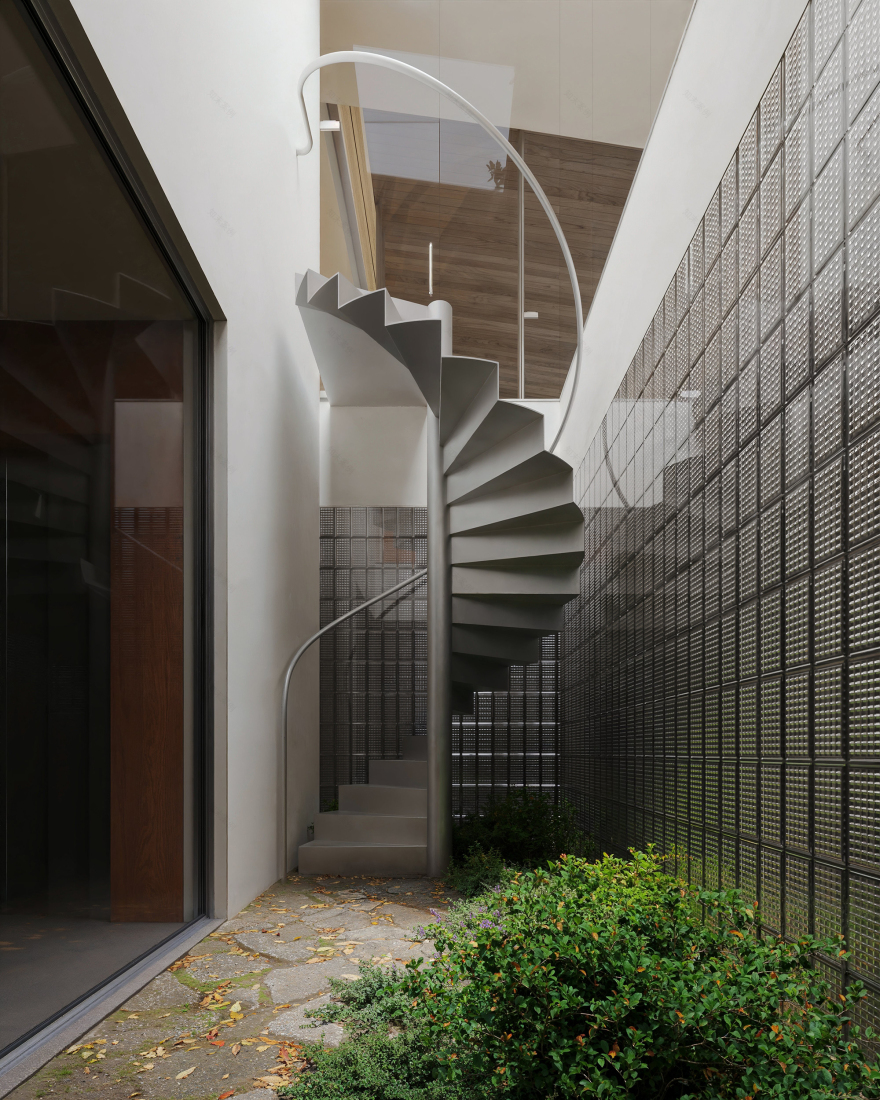
The building uses a hybrid approach, pairing the strength of industrial steel with the "breathability" of organic materials. Slender steel I-beams form the skeleton, providing the muscle needed to hold up the massive, deep-set eaves. By lifting the house on metal pilotis, we allow it to hover above the earth, ensuring the forest’s delicate root systems and natural water veins remain completely undisturbed. Within this steel frame, we’ve integrated carbon-sequestering wooden hempcrete elements. This creates a "breathable" skin for the house — a necessity in Yakushima’s relentless humidity. This hybrid system prevents damp air from stagnating, protecting the structure from rot and reducing the need for high-maintenance climate control. Engawa creates a beautiful second contour for living. During the island's famous heavy downpours, this space becomes a dry, sheltered stage. Because the roof extends so far beyond the floor, you can sit right at the edge of the forest and watch the rains without getting wet. It transforms a severe weather event into a peaceful, contemplative moment, providing a space to sense the energy of the wild while staying securely hidden behind the architectural barrier.
LANDSCAPE
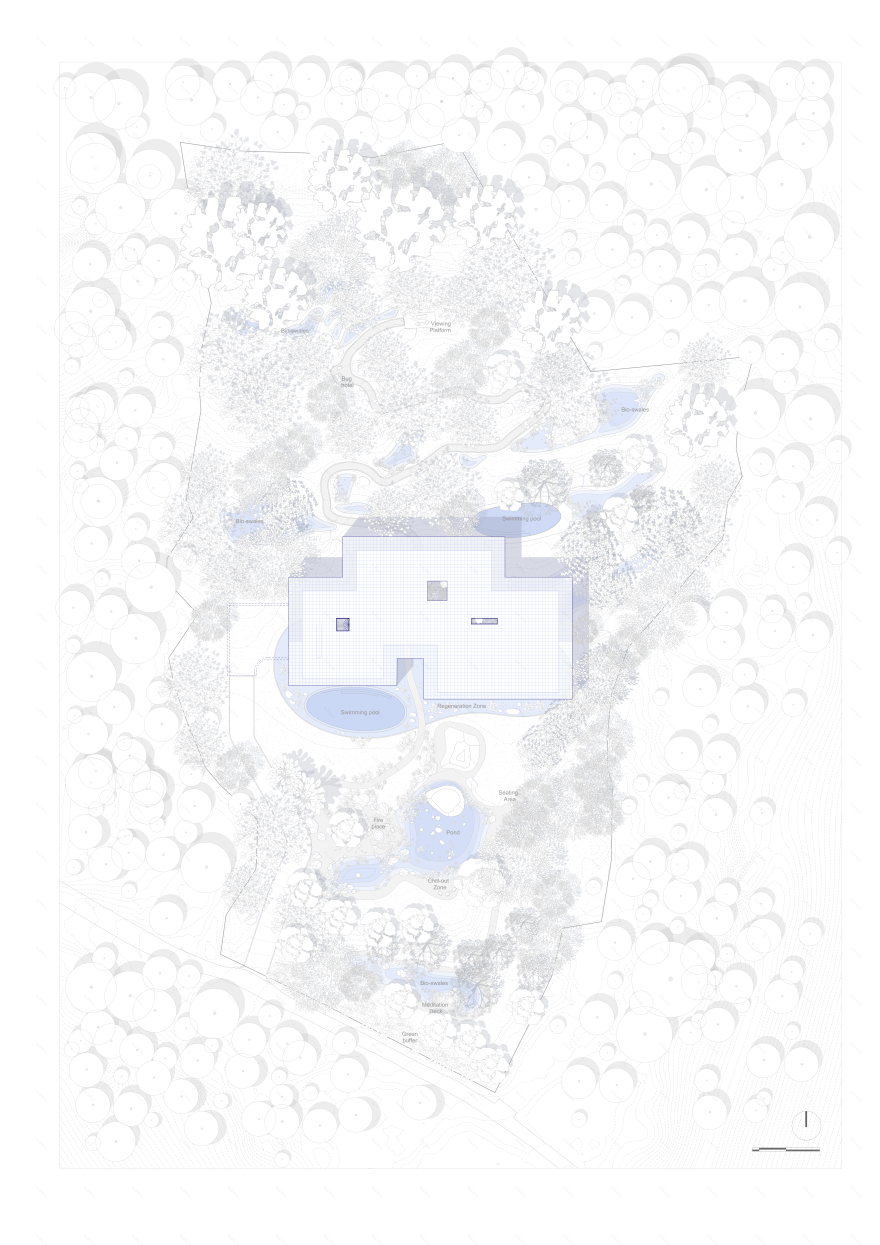
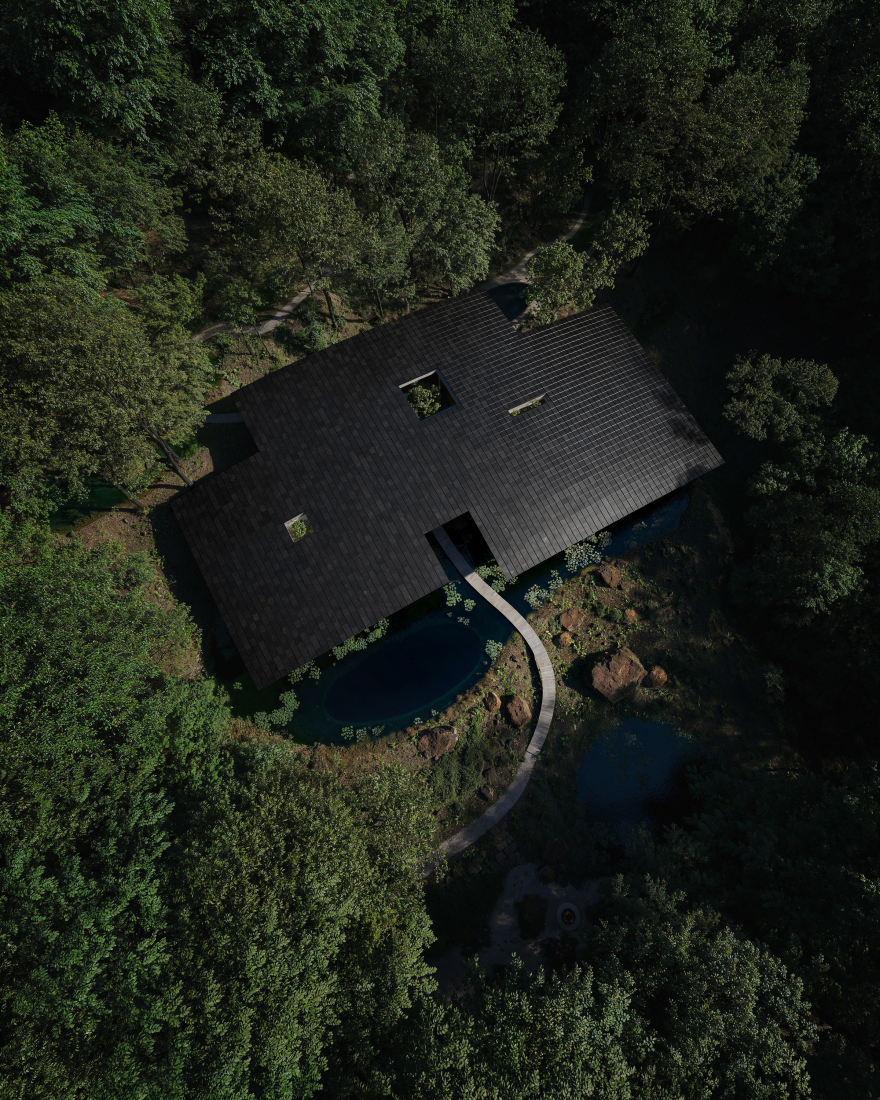
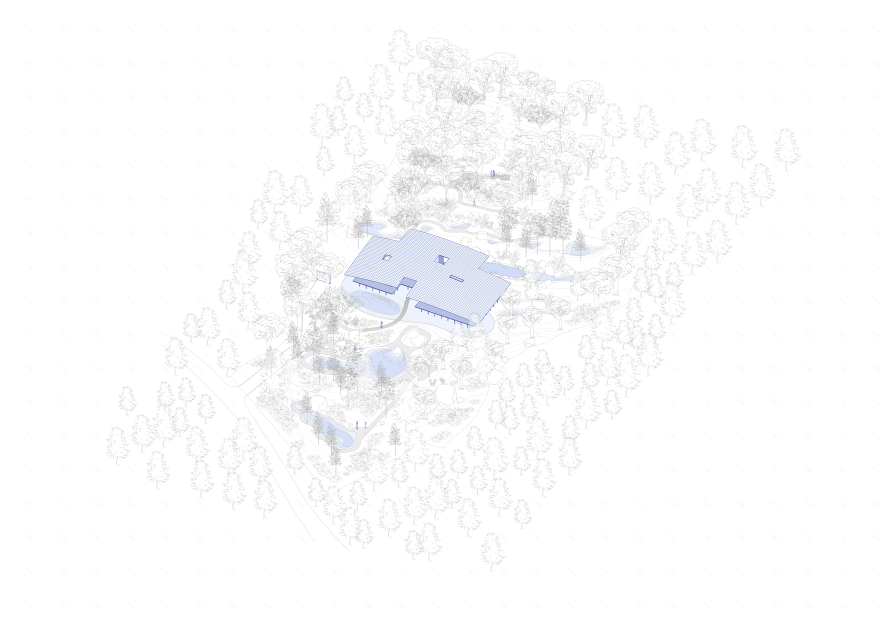
Open Social Space: The gently sloping area in front of the building preserves the existing stone formations that give the site its unique character. We create a bio-pool near where water historically existed on the site, expanding it into a larger naturalistic pond with aquatic plants for natural filtration. Social spaces surround the water: Fire pit for gatherings, various seating areas, and a meditation spot lower on the slope. A green buffer of dense plantings runs along the road for privacy. The parking access curves between existing trees to preserve the forest.
Forest Experience: Behind the building, steeper slopes create an intimate forest setting. Bio-drainage channels follow the natural contours to manage Yakushima's heavy rainfall and prevent erosion. These planted swales also support local wildlife. Small features like insect hotels blend into the understory.
THANKS FOR WATCHING
南京喵熊网络科技有限公司 苏ICP备18050492号-4知末 © 2018—2020 . All photos and trademark graphics are copyrighted by their owners.增值电信业务经营许可证(ICP)苏B2-20201444 苏公网安备 32011302321234号
苏公网安备 32011302321234号客服
消息
收藏
下载
最近