

创作上传
VIP
收藏下载
登录 | 注册有礼
查看完整案例

收藏

下载

分享
T.O.T Studio 的 Ausiàs Pérez 与 Paloma Bau 联手开启了Sornells 21的大门——他们在瓦伦西亚鲁萨法街区的共享工作室,将一处原商业单元改造成一个受东京都市景观启发的创意工作空间。该改造项目将深刻的概念叙事与精心策划的材料策略融合,营造出一个设计、社区与创意交汇的场所。索内尔斯街21号——连接鲁萨法市场与周边住宅区的步行路线之一——由 Pérez 领导的 T.O.T Studio 与 Paloma Bau 共同打造了这个新工作空间,既服务于各自团队,也汇聚了一小群创意专业人士。
Ausiàs Pérez of T.O.T Studio and Paloma Bau open the doors to Sornells 21, their shared studio in the Valencian neighborhood of Ruzafa, transforming a former commercial unit into a creative workspace inspired by the urban imagination of Tokyo. The intervention combines a strong conceptual narrative with a carefully executed material strategy, shaping a place where design, community and creativity converge. At number 21 Sornells Street-one of the pedestrian routes linking Valencia’s Ruzafa Market with the surrounding residential fabric-T.O.T, the studio led by designer Ausiàs Pérez, and Paloma Bau present a new workspace conceived to host their respective teams as well as a small community of creative professionals.
▼项目入口,entrance of the project© David Zarzoso
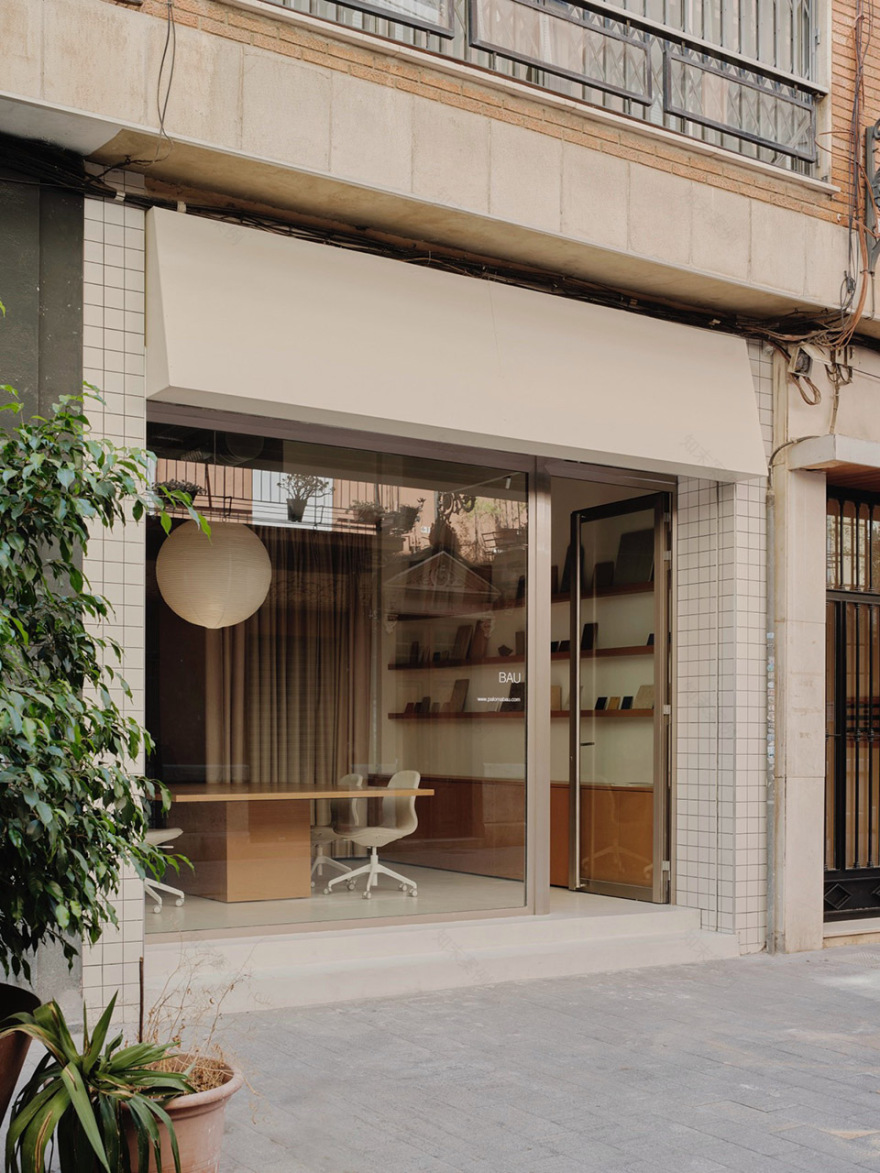

项目占地约170平方米,呈 U 形布局,拥有双向街道入口。该空间的诞生源于一次自然发展的合作:Pérez 重返城市,Paloma Bau 寻找新的工作室。它不仅是一种战略伙伴关系,更体现了双方共同的愿景——营造一个不同学科、方法与表达方式能够共存的环境,让建筑与设计成为促进交流与自发协作的催化剂。
The project occupies a 170 sqm U-shaped premises with dual street access and emerges from a collaboration that developed organically: Pérez’s return to the city and Paloma Bau’s search for a new studio. More than a strategic partnership, it represents a shared desire to create an environment where different disciplines, methodologies and languages can coexist, and where architecture and design actively foster encounters and spontaneous synergies.
▼呈 U 形布局的餐厅区域,U-shaped kitchen-dining/ working area© David Zarzoso

背景与概念
Context and concept
从一开始,T.O.T 负责项目的概念开发,而 Paloma Bau 团队负责建筑的具体落地。这种分工反映了两家事务所的特质:T.O.T 的推演与战略性,以及 Paloma Bau 将概念通过材料、几何与细节转化为具体形式的能力。项目出发点是一个简单而有力的想法:重新诠释创始人喜爱的东京日常场所,将其氛围转化为瓦伦西亚的灵活工作空间。项目并非字面主题化,而是对三个典型日本城市情境的建筑解读:陶瓷砖街道、居酒屋酒吧及温泉的放松环境。
▼入口外户外空间轴测图,
axonometric drawing of the outdoor space outside the entrance© T.O.T Studio + Paloma Bau Estudio
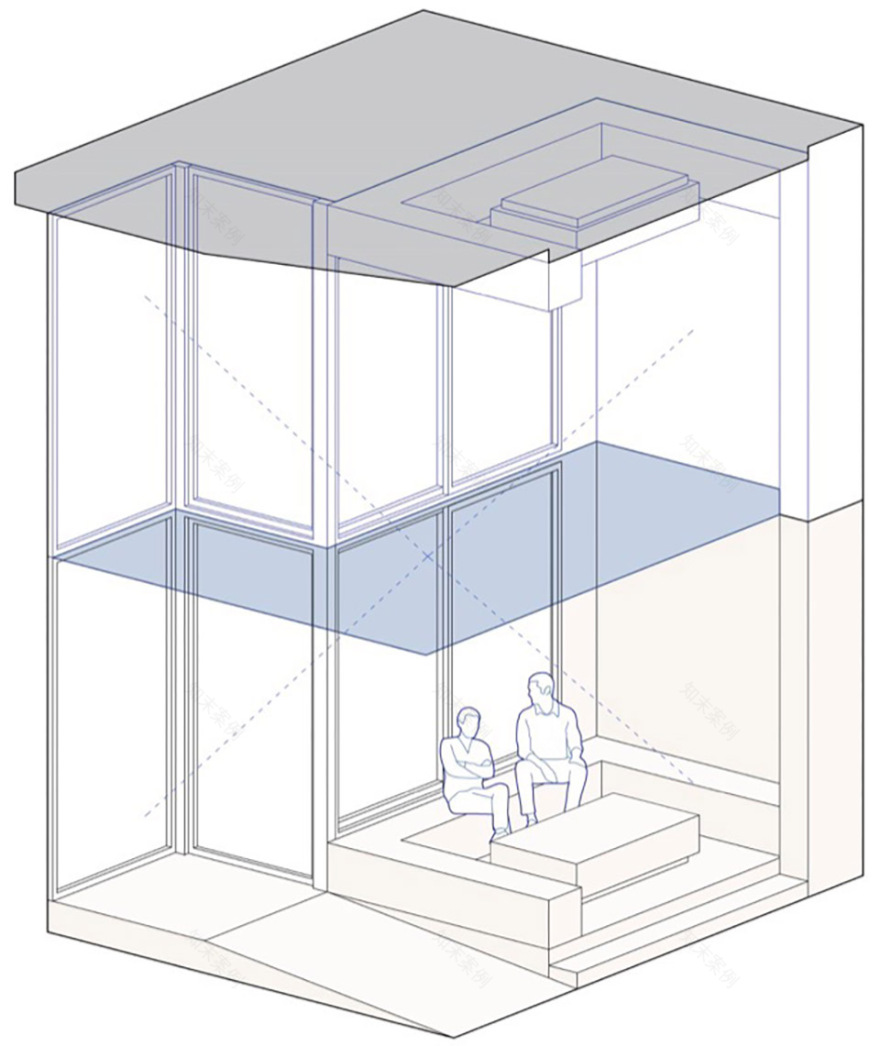
From the outset, T.O.T led the conceptual development of the project, while Paloma Bau’s team took charge of its architectural materialization. This division reflects the essence of both practices: the speculative and strategic nature of T.O.T, and Paloma Bau’s ability to translate concepts into tangible form through matter, geometry and detail. The starting point was a simple but powerful idea: to reinterpret some of the founders’ favorite everyday places in Tokyo and translate their atmosphere into a flexible workspace in Valencia. Rather than literal theming, the project offers an architectural interpretation of three recognizable Japanese urban situations: the ceramic-tiled street, the izakaya bar, and the relaxed environment of the onsen.
▼入口外户外空间,the outdoor space outside the entrance © David Zarzoso
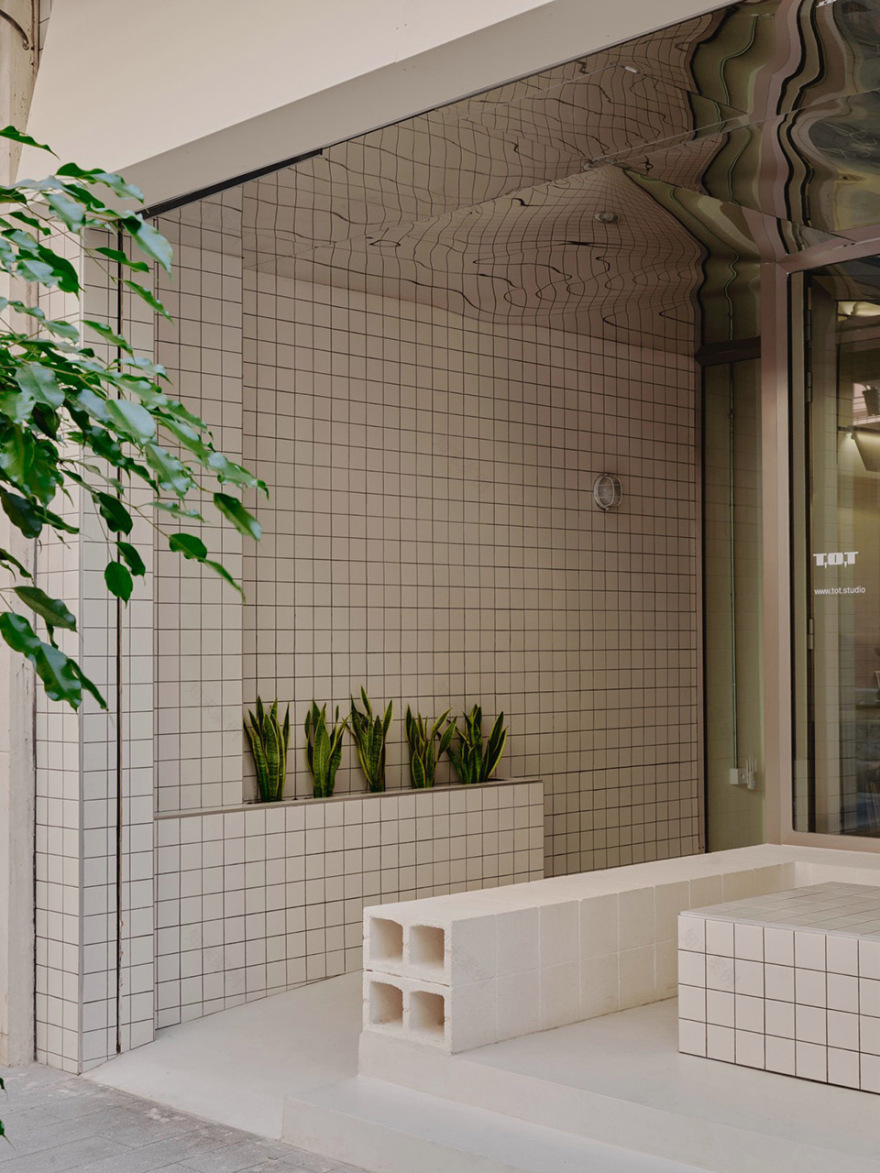
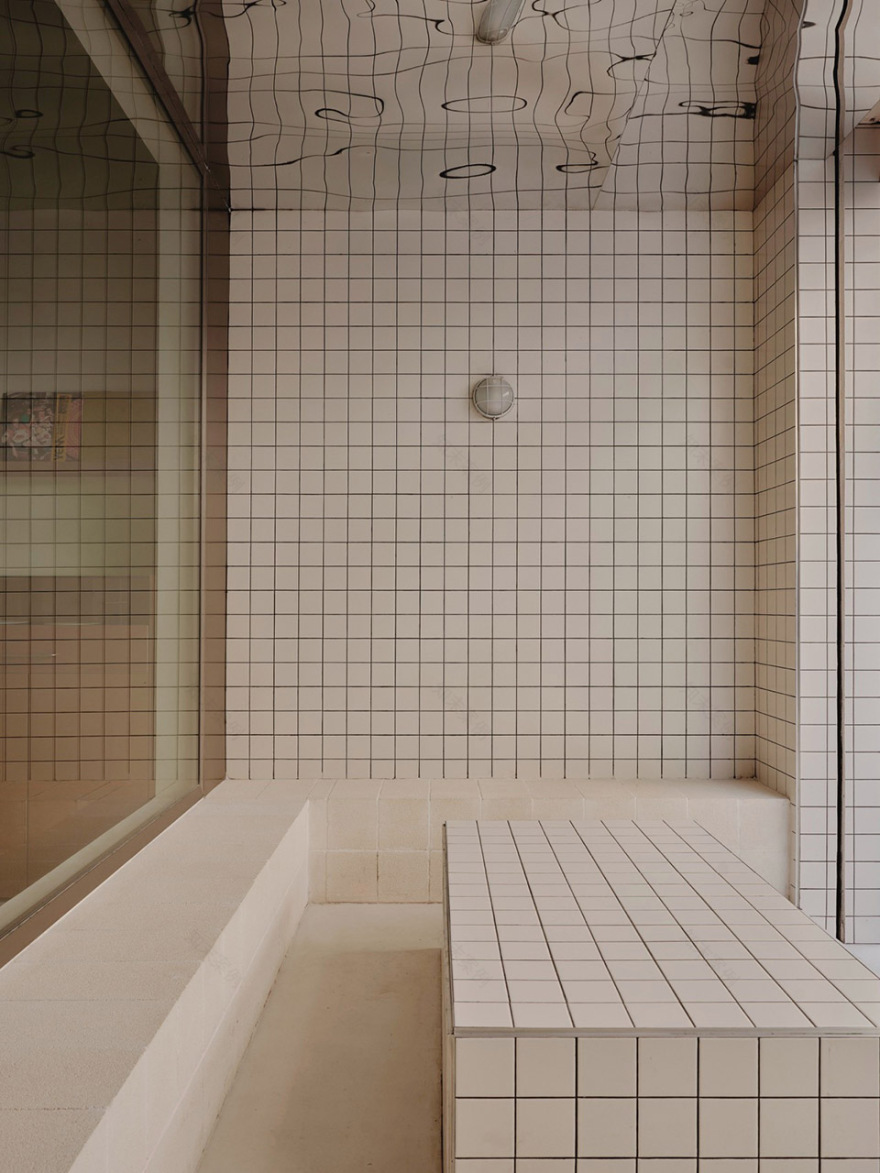
到达序列被设计为项目的概念门槛。入口再现了东京许多城市建筑的材料逻辑,白色10×10陶瓷砖覆盖整个立面。在这里,同样的瓷砖形成了一个干净、几乎如室外般的门槛,并通过大型天花镜加以强化,使空间翻倍并改变比例。这一装置创造了即便进入后仍然感觉置身户外的效果,模糊了街道与工作室的界限。一条坚固的白色混凝土长凳引入了项目中反复出现的材料,预示其在整个空间中的结构作用。
The arrival sequence is conceived as the project’s conceptual threshold. The entrance reproduces the material logic of many urban architectures in Tokyo, where white 10×10 ceramic tiles wrap entire façades. Here, the same tile forms a clean, almost exterior-like threshold, reinforced by a large ceiling mirror that doubles the space and alters its proportions. This device creates the sensation that the visitor is still outdoors even after entering, blurring the boundary between street and studio. A solid white concrete bench introduces one of the project’s recurring materials, anticipating its structuring role throughout the space.
▼白色10×10陶瓷砖覆盖整个立面,
white 10×10 ceramic tiles wrap entire façades © David Zarzoso

▼细部,details© David Zarzoso

空间与组织
Space and organization
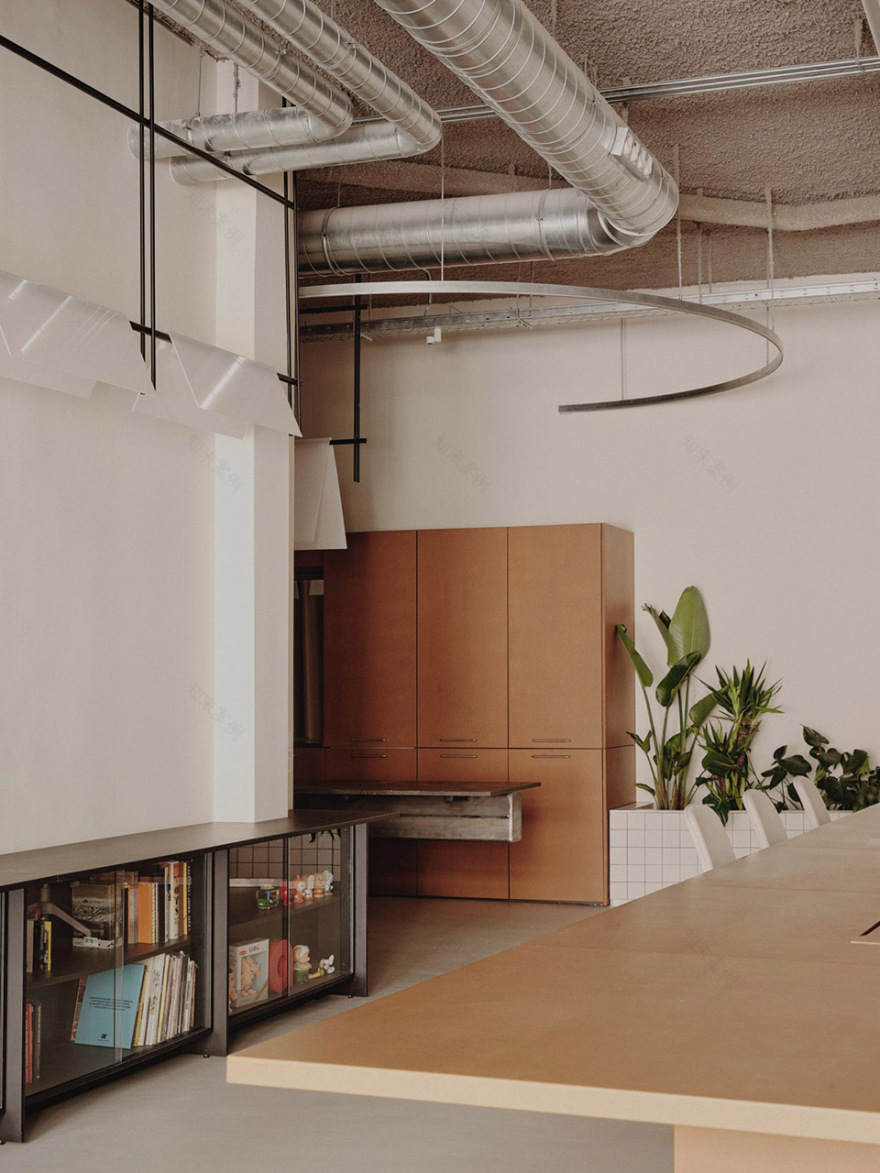
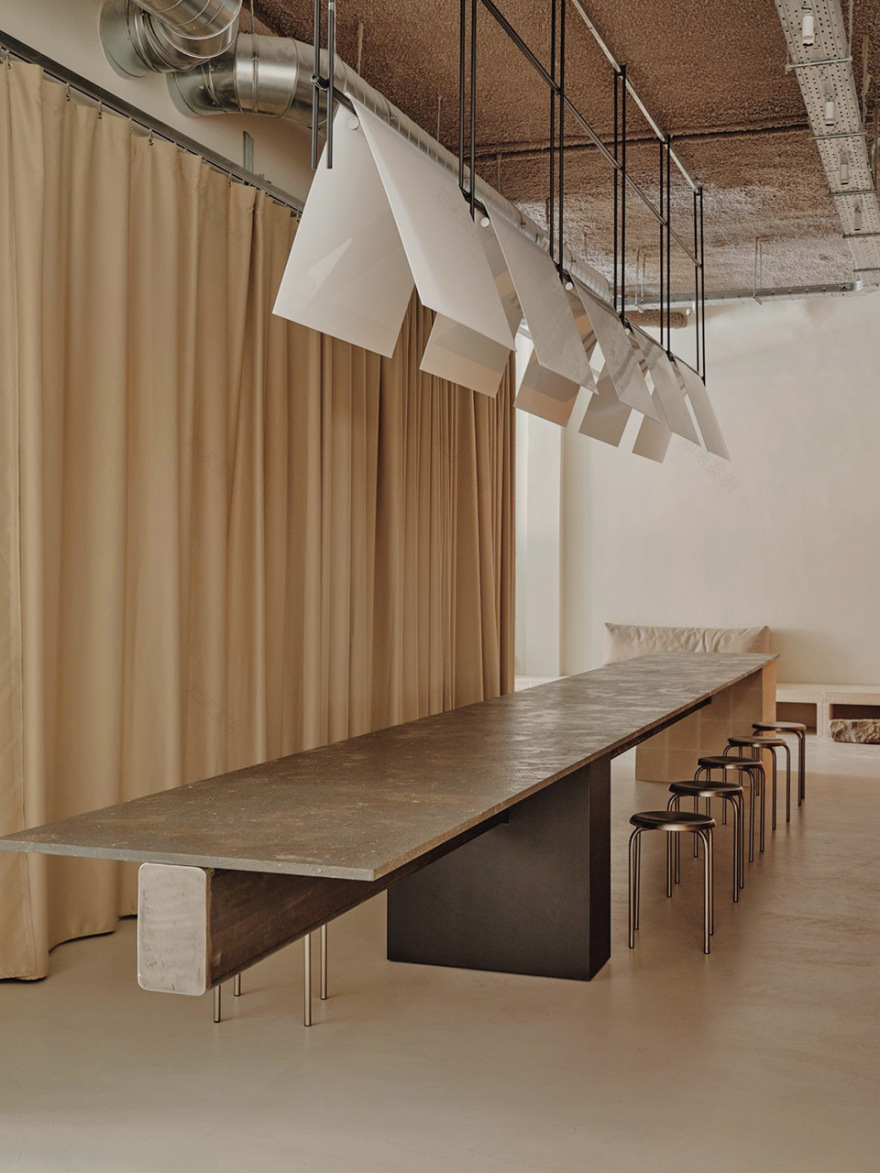
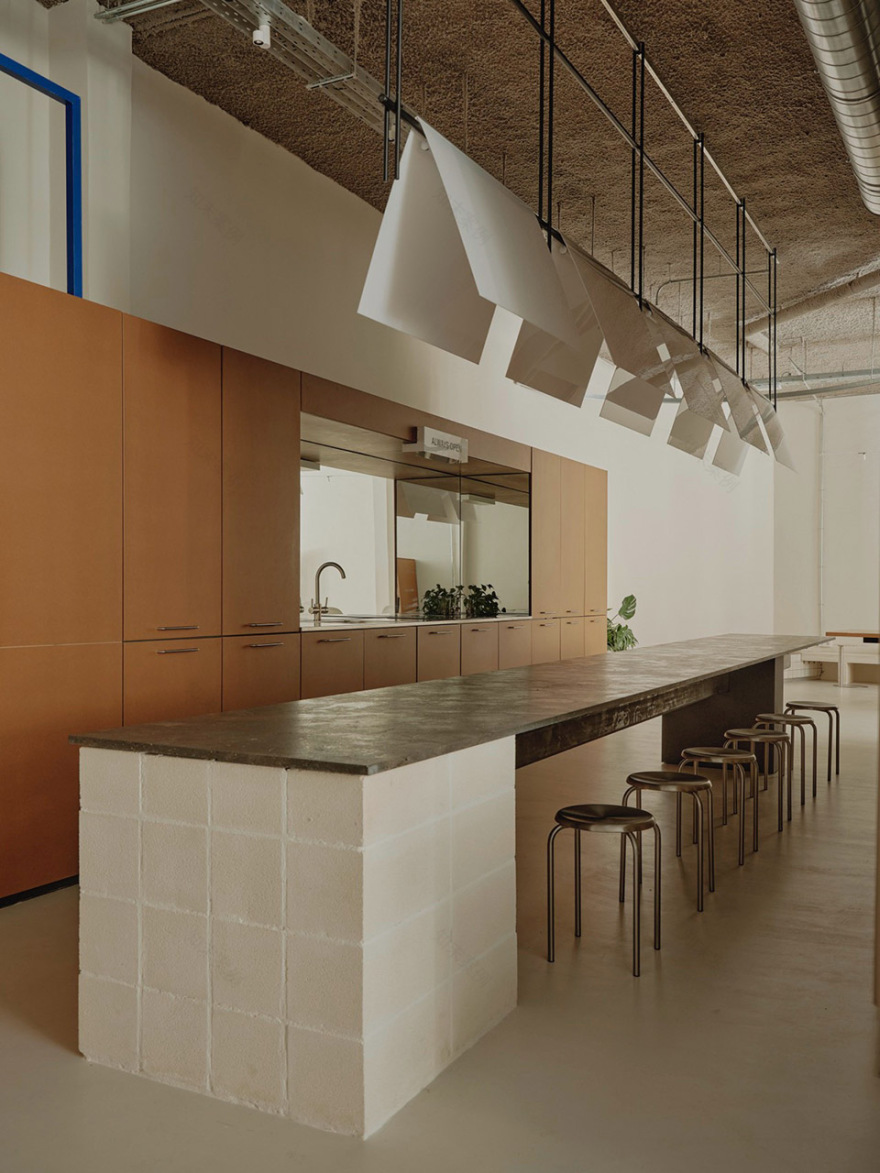
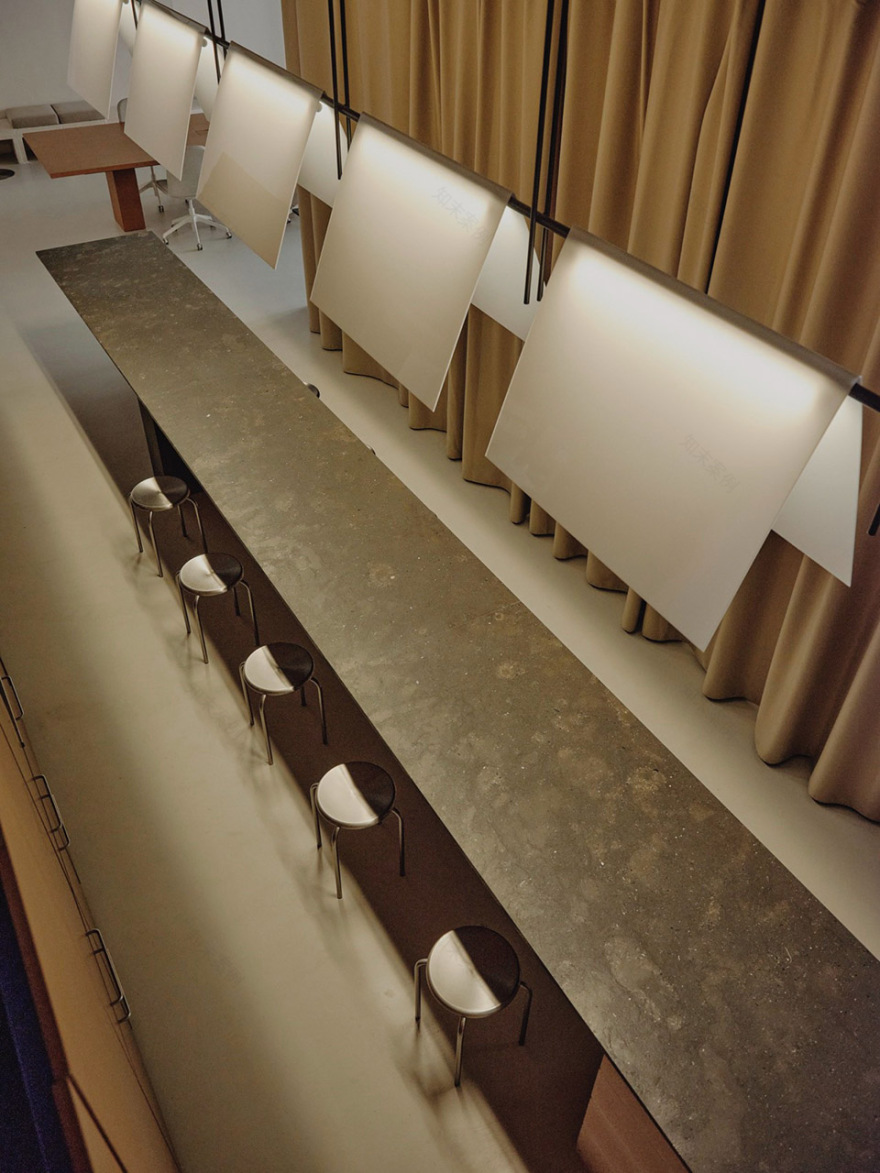
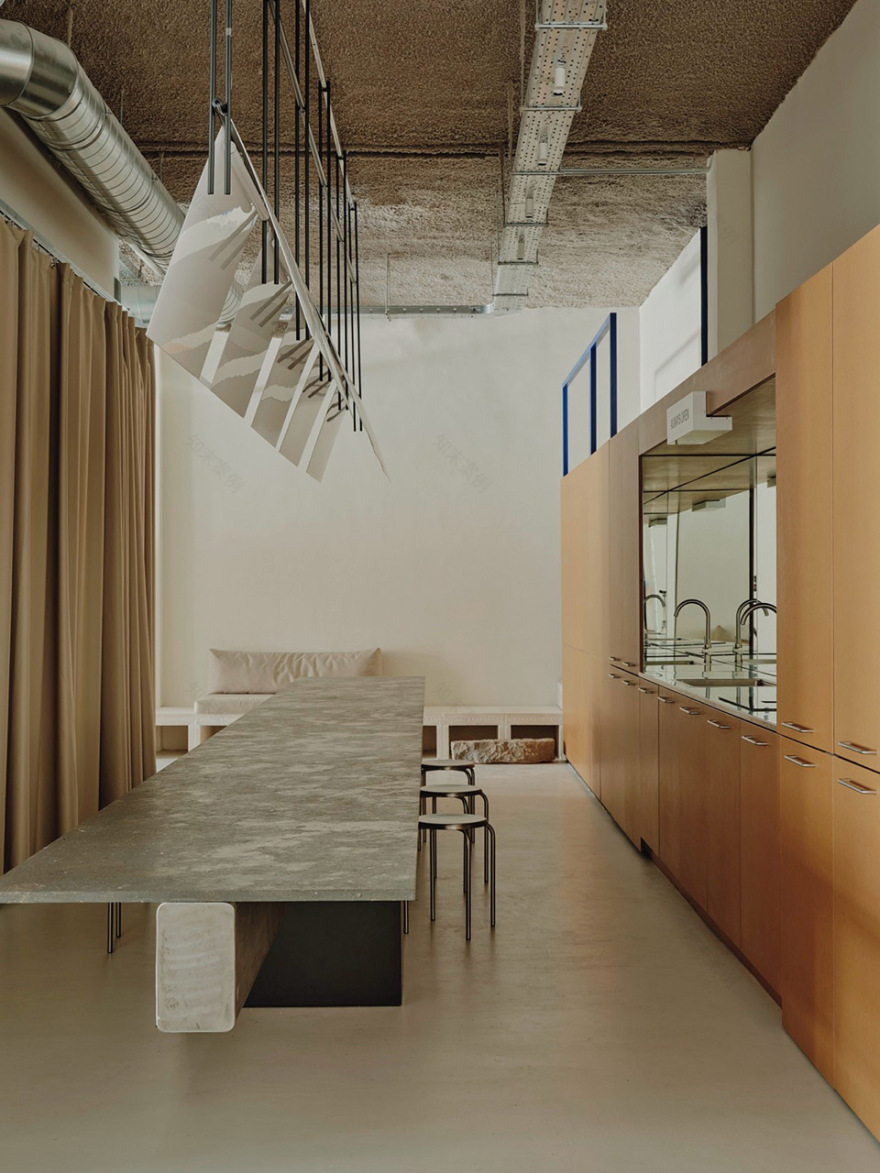
超越门槛后,空间围绕中央元素组织:贯穿U形平面的长吧台。吧台由黑色染色 MDF 制成,兼顾自然纹理与结构功能,同时作为共享工作区、展示台和社交中心。中央部分设置一张7.2米长、部分悬挑的桌子,由钢结构、黑色圣文森特石材及雕塑式白色块状桌腿组成,可容纳近二十人,并作为空间灵活转换的核心元素,可用作餐饮区、品鉴区、展示或会议空间。
Beyond this threshold, the space is organized around its central element: a large bar that runs through the U-shaped plan. Made of black-tinted MDF (colored in mass to preserve the material’s natural texture), this piece structures both uses and circulation. The bar functions simultaneously as coworking workspace, display surface and social hub. The central section incorporates a 7.20-metre-long partially cantilevered table, resolved with a steel structure, black San Vicente stone and a sculptural white block leg. Designed to seat nearly twenty people, this table also acts as the key element that allows the studio to transform easily into a dining space, tasting area, presentation venue or professional meeting setting.
▼共享办公区域,co-working area© David Zarzoso
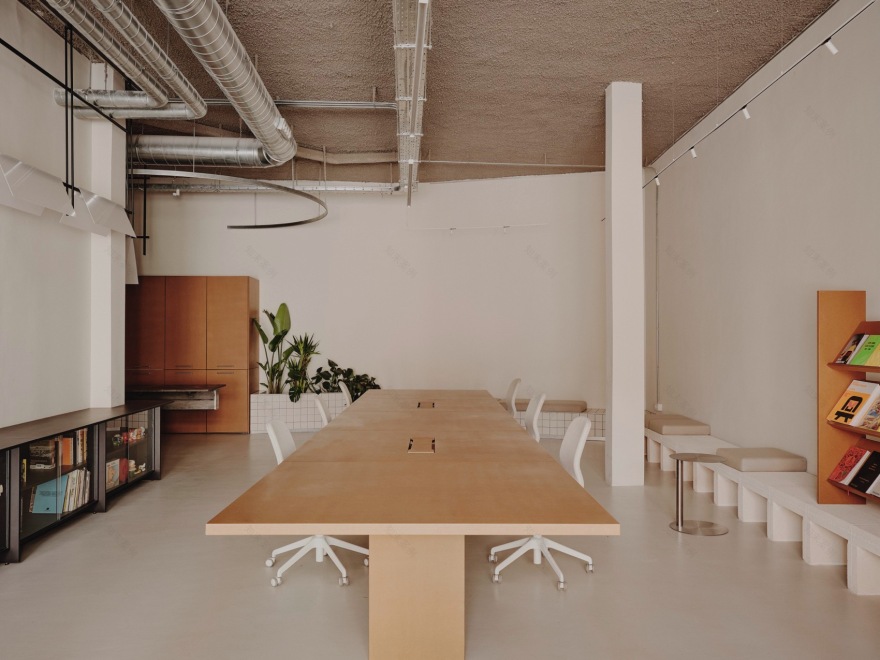
▼办公桌,working table© David Zarzoso
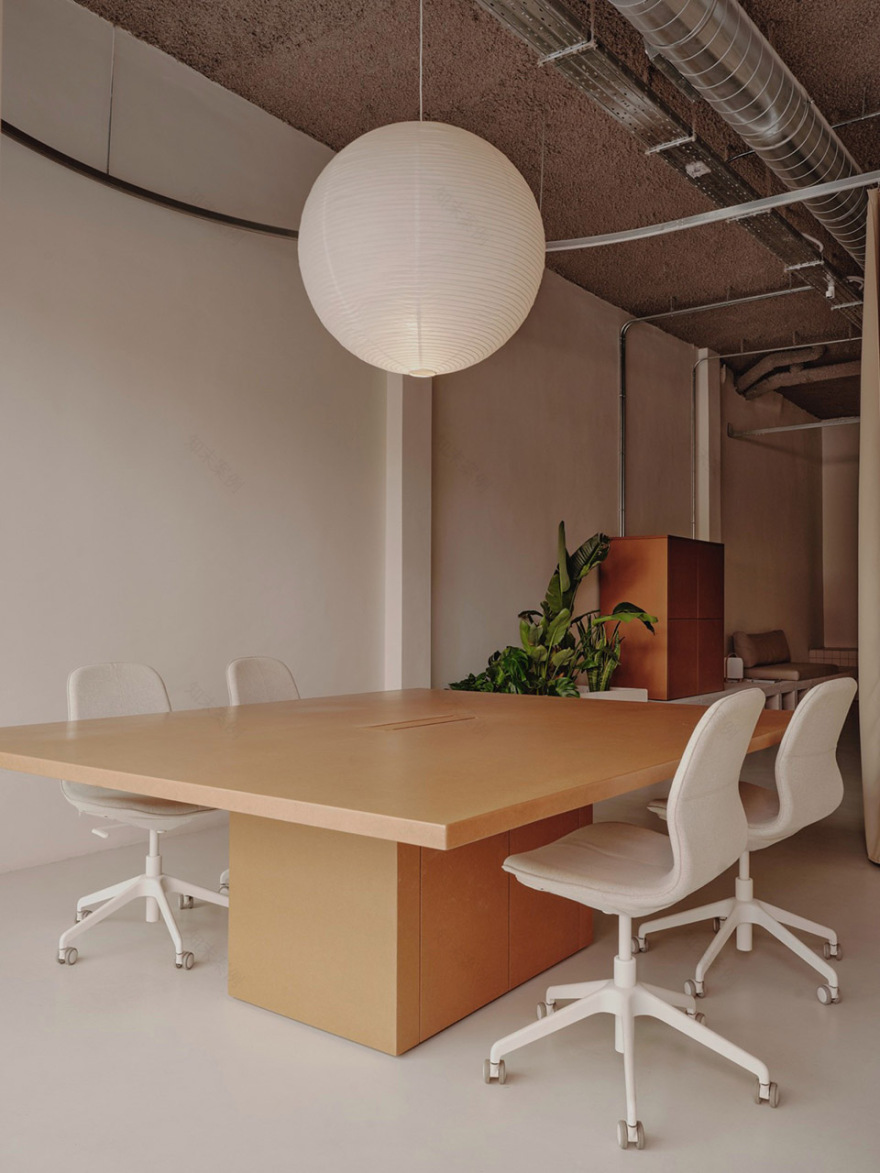
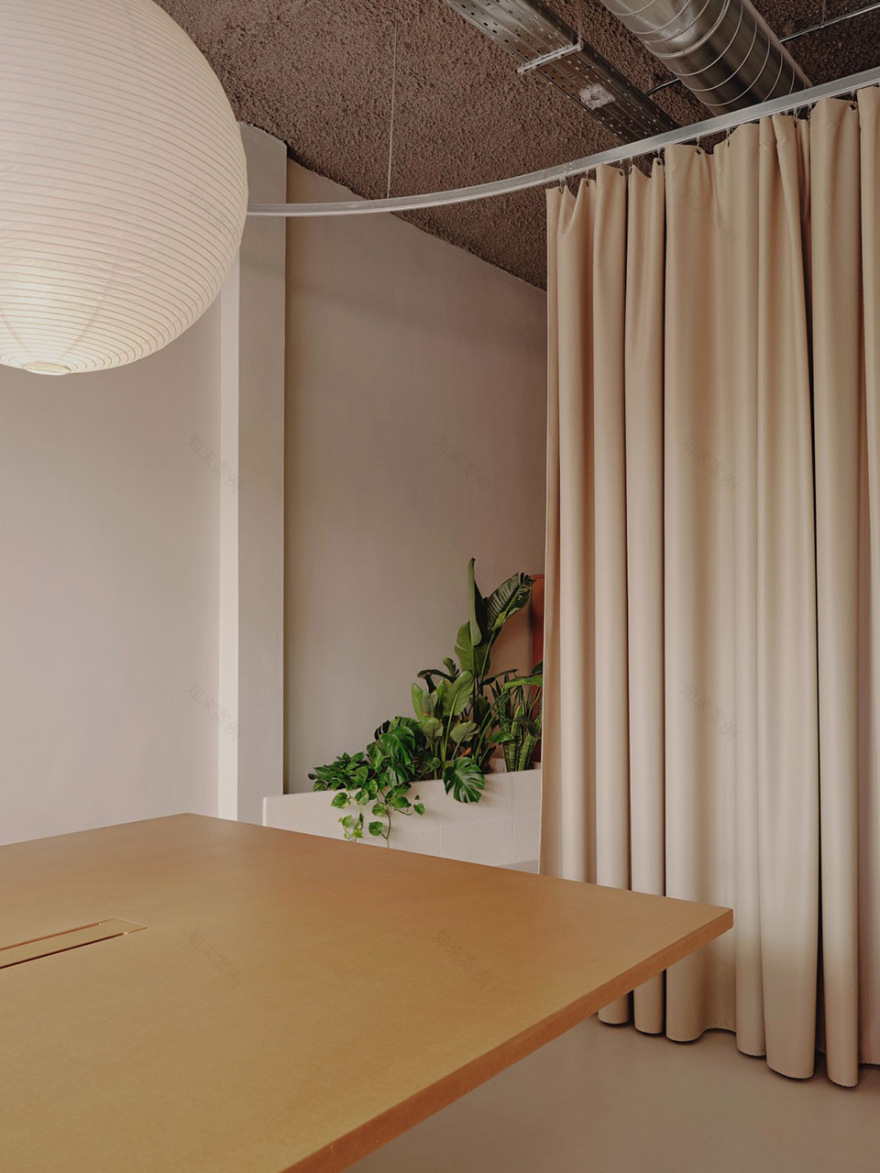
▼布帘作为空间分隔,the curtains serve as a spatial divider© David Zarzoso
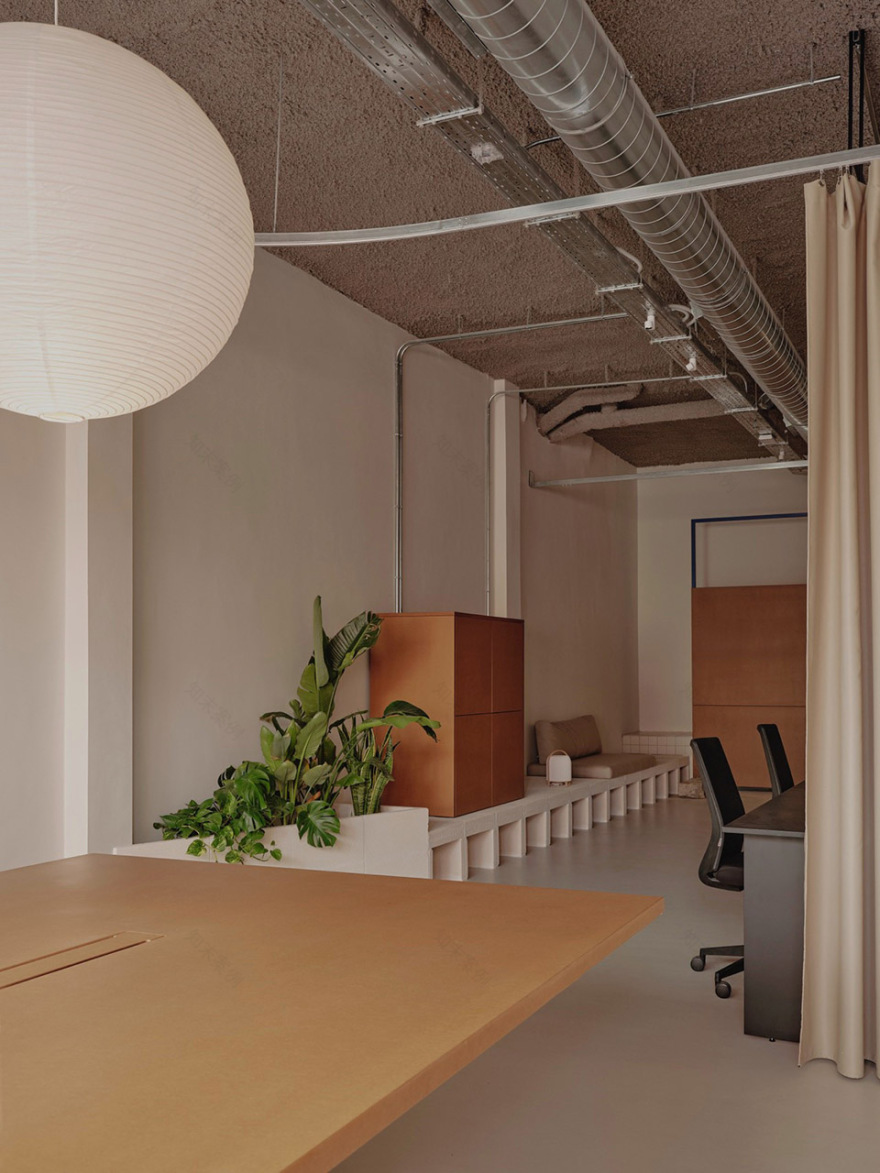
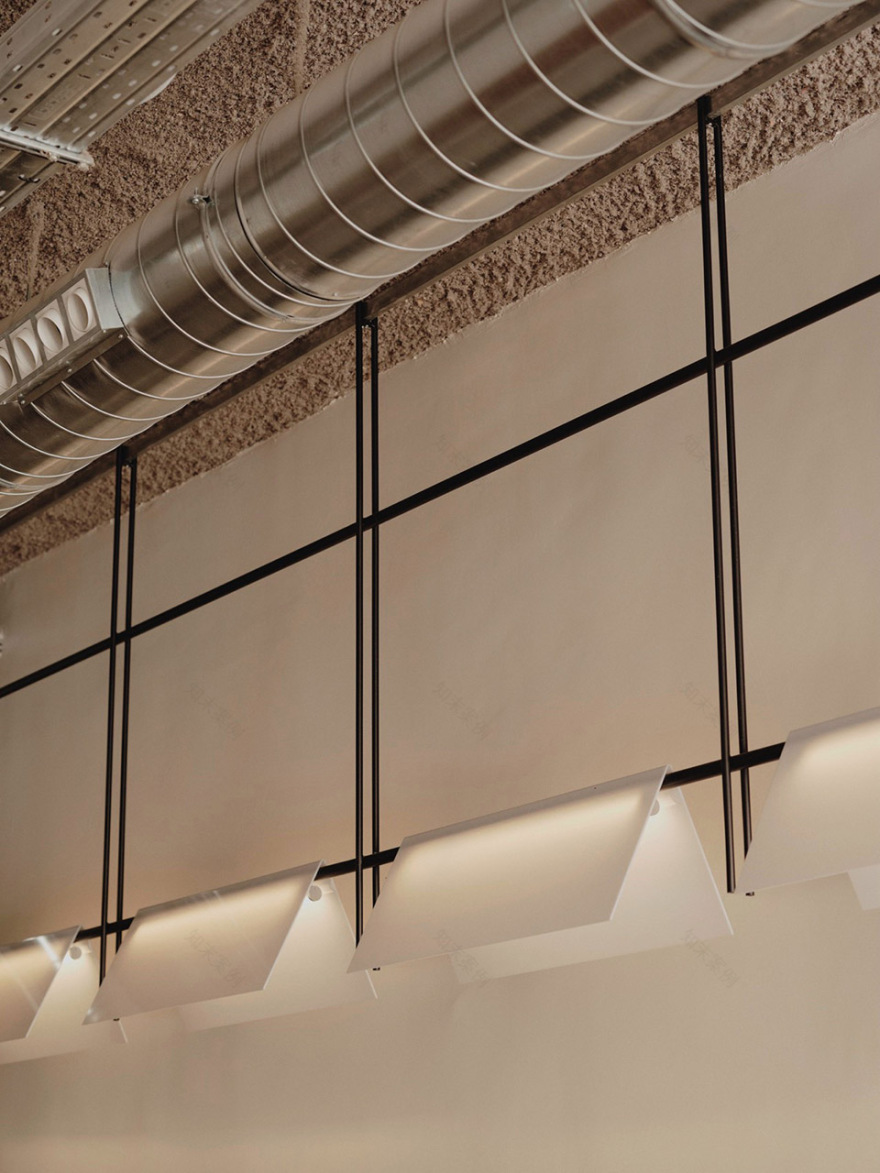
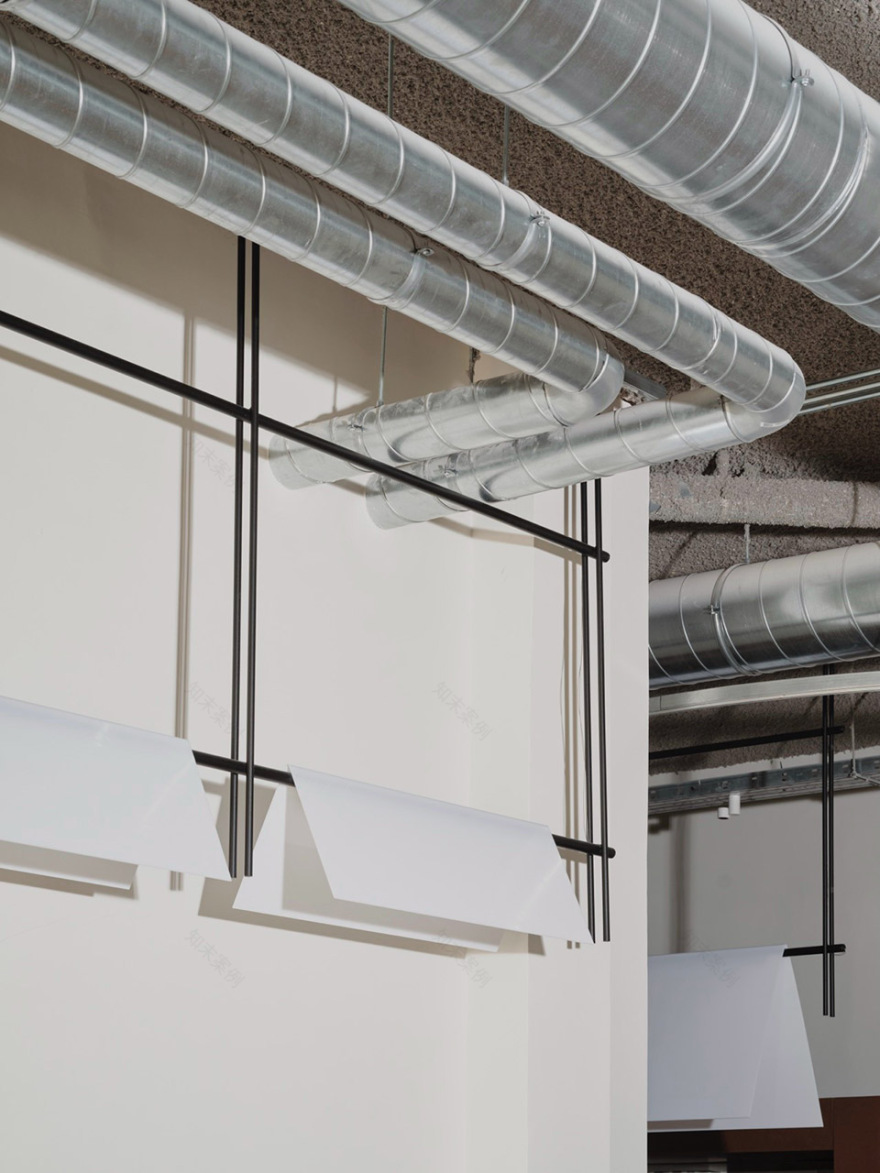
此外,周边白色块状长凳和整个空间安装的连续轨道系统,使工作室可作为展览区,灵活且连续地展示物品和图形作品。吧台上方悬挂定制纵向灯具,灵感来自 Noren(日本居酒屋和商铺标记门槛的传统纺织帘),沿吧台全长布置,引入水平节奏,强化空间尺度并营造温暖、内敛的氛围。
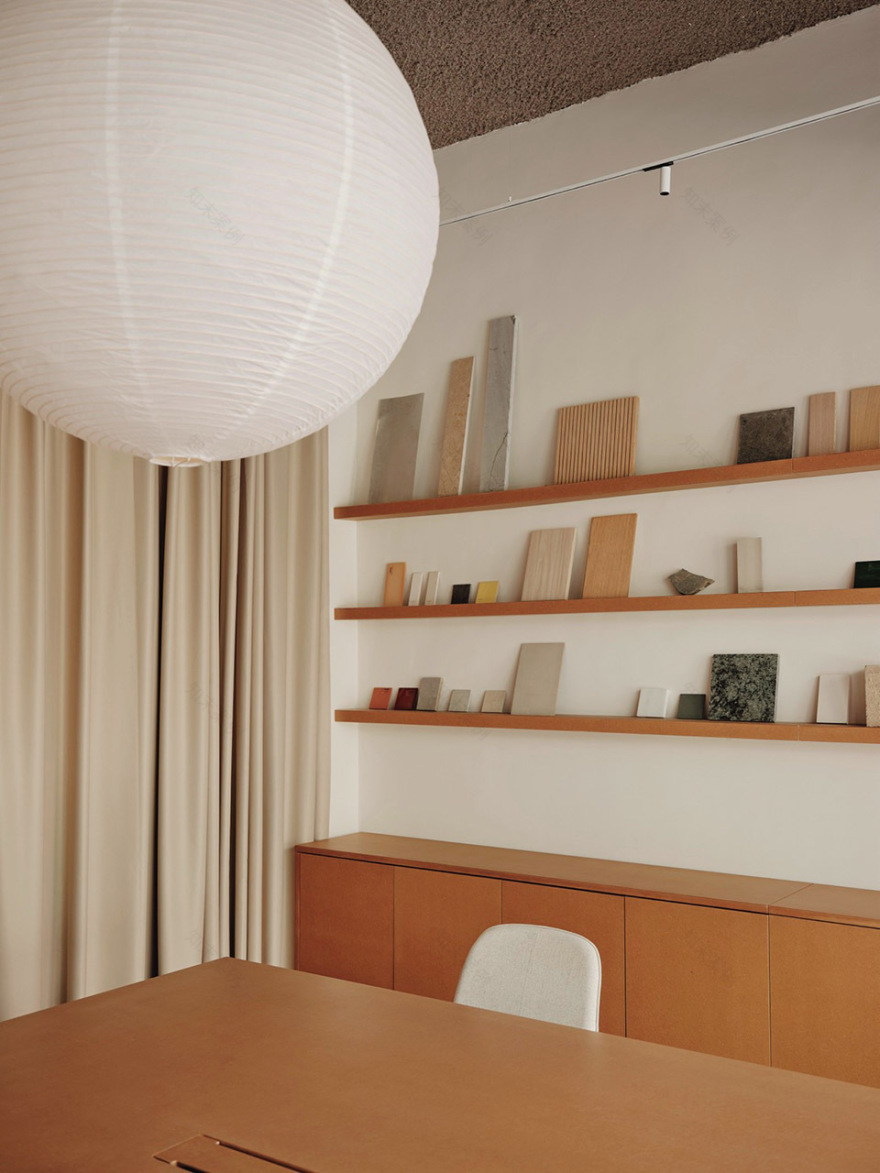
In addition, the perimeter white block benches and a continuous rail system installed throughout the space allow the studio to function as an exhibition area, enabling the flexible and continuous display of objects and graphic work. Running above the bar is a bespoke longitudinal luminaire designed specifically for the project, inspired by Noren-the traditional textile curtains that mark the thresholds of Japanese taverns and shops. Suspended along the full length of the bar, this light introduces a horizontal rhythm that reinforces the scale of the space and contributes to its warm, contained atmosphere.
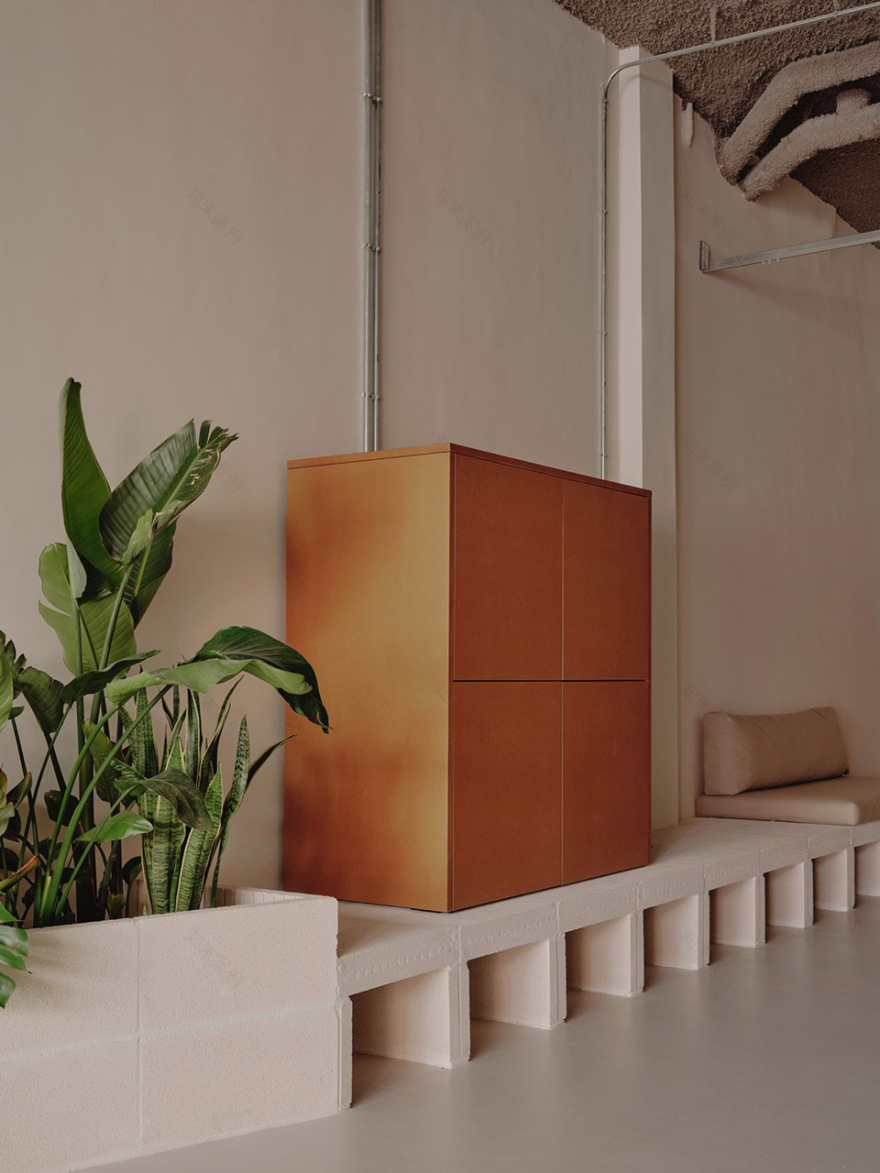
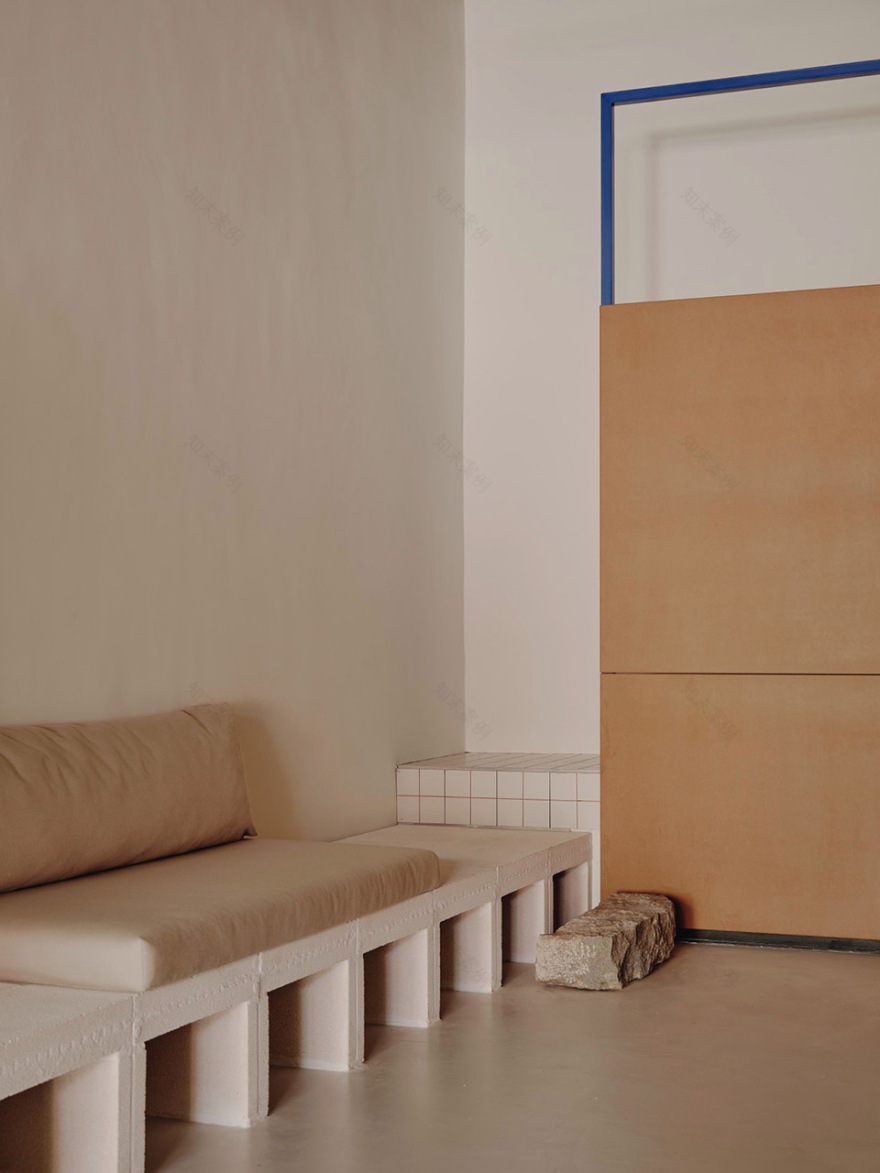
▼周边白色长凳,the perimeter white block benches © David Zarzoso
▼灯具,lighting feature© David Zarzoso
▼细部,details© David Zarzoso

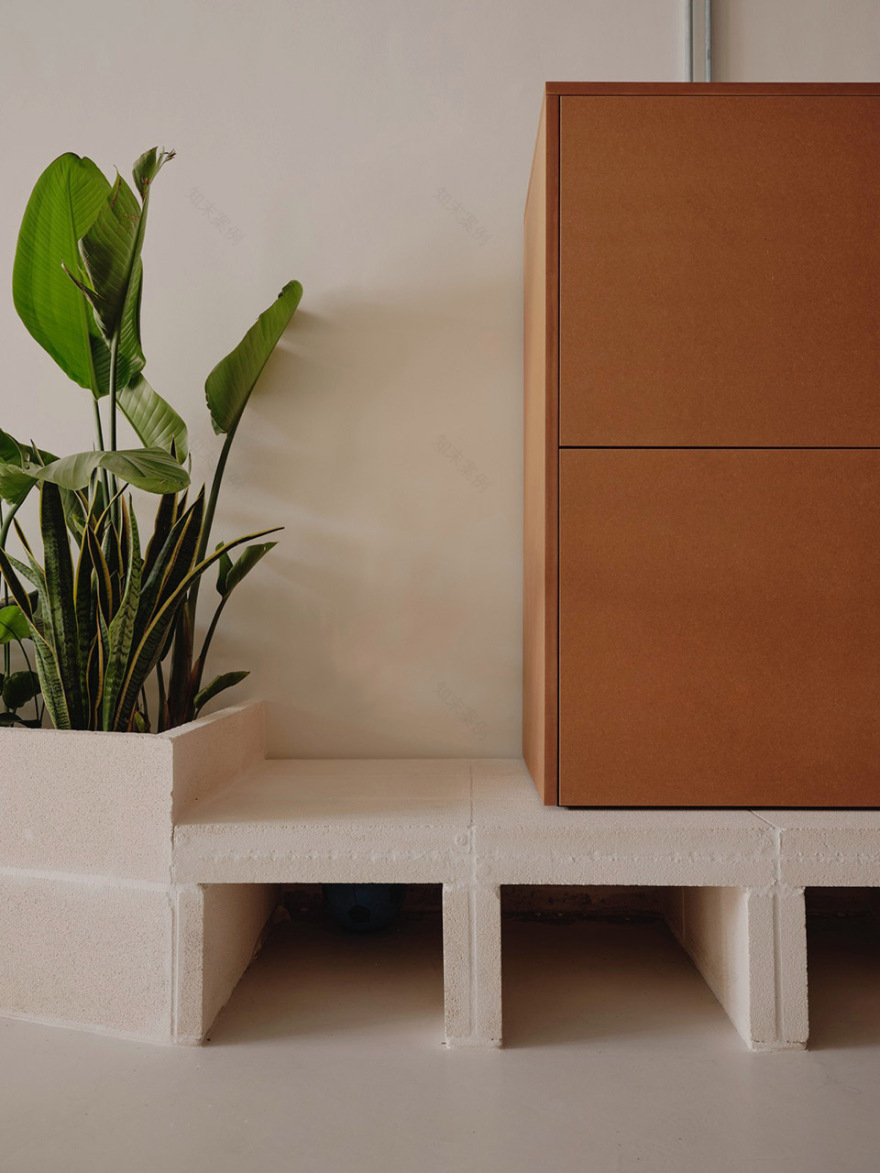
▼材料细部,details of material© David Zarzoso

项目最独特的决策之一是将厨房置于吧台之外,颠覆居酒屋的常规逻辑。为解决这一表面矛盾,在厨房对面放置一面镜子,反射厨师形象,象征性地将其存在“归还”到吧台内部。与入口镜子一起,这一手法构成了项目中更广泛的感知游戏,通过微妙颠倒的预期顺序创造出意外但连贯的空间情境。
▼厨房轴测分析图,axonometric drawing of the kitchen© T.O.T Studio + Paloma Bau Estudio
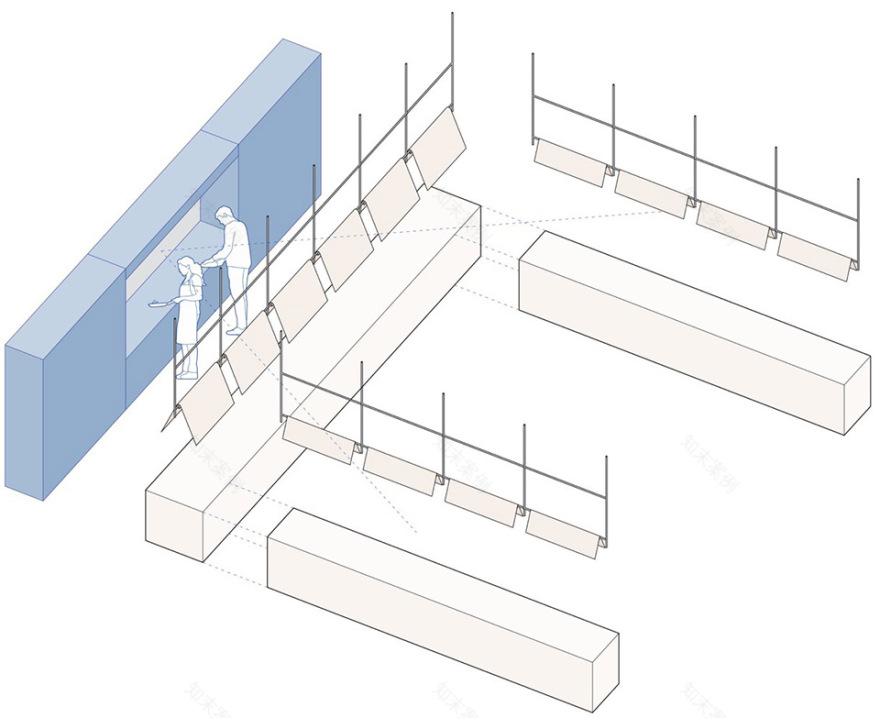
One of the project’s most singular decisions is the placement of the kitchen outside the bar, inverting the conventional logic of an izakaya. To resolve this apparent contradiction, a mirror has been placed opposite the kitchen, reflecting the cook and symbolically returning their presence to the interior of the bar. Together with the mirror at the entrance, this gesture forms part of a broader perceptual game that runs throughout the project, where subtle inversions of the expected order generate unexpected yet coherent spatial situations.
▼办公区,working area© David Zarzoso
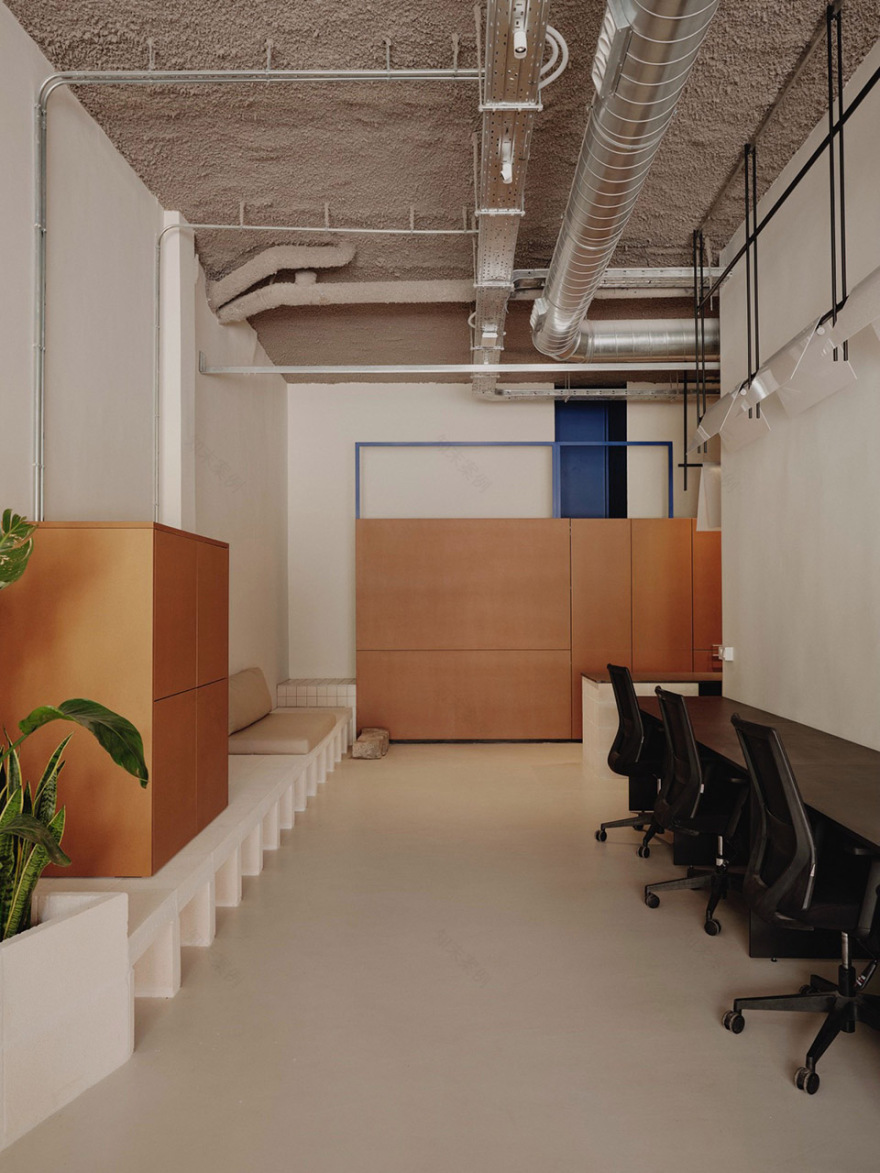

▼细部,details© David Zarzoso
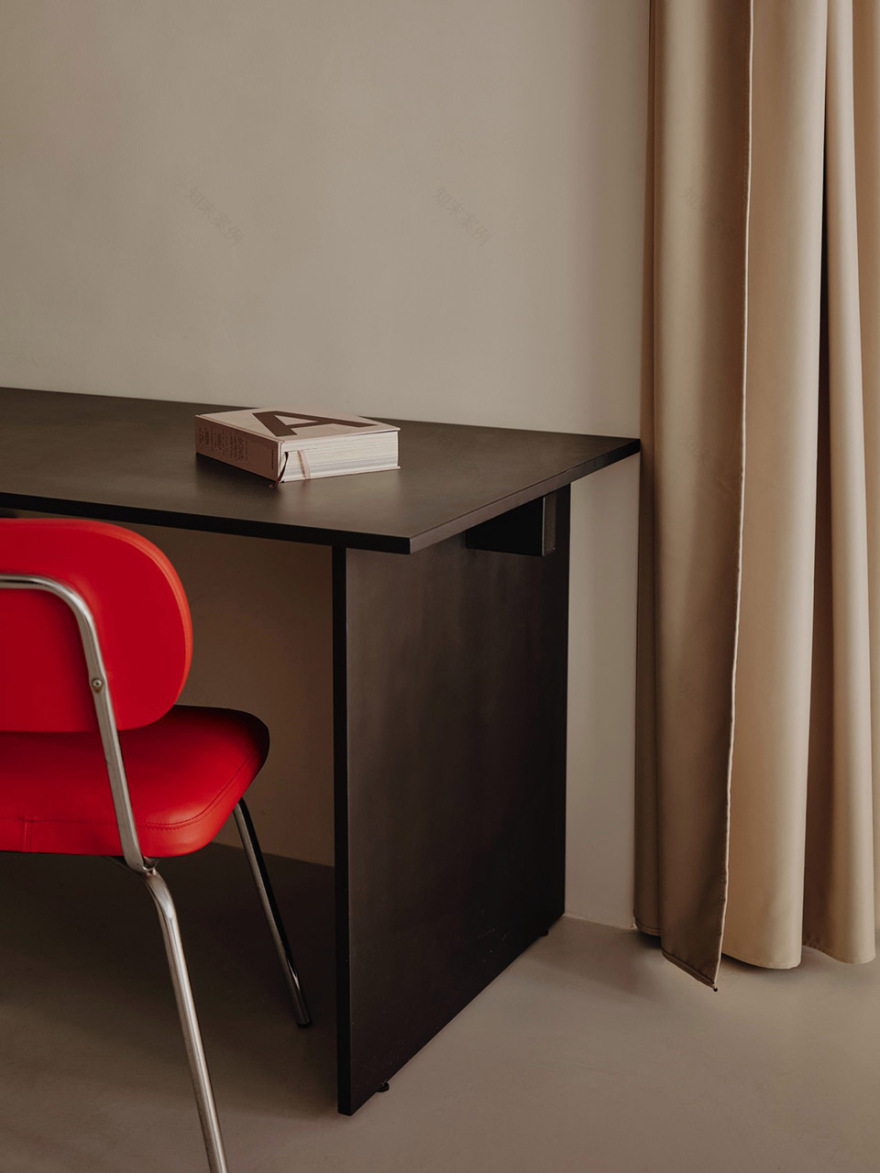
▼厨房长桌,long-table in the kitchen area© David Zarzoso
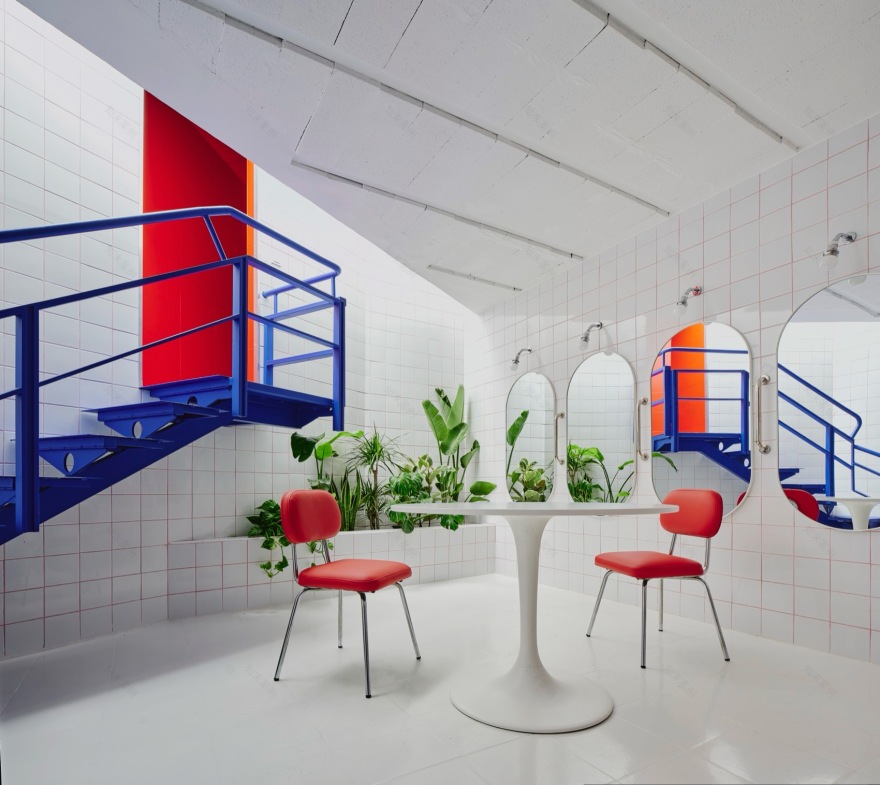
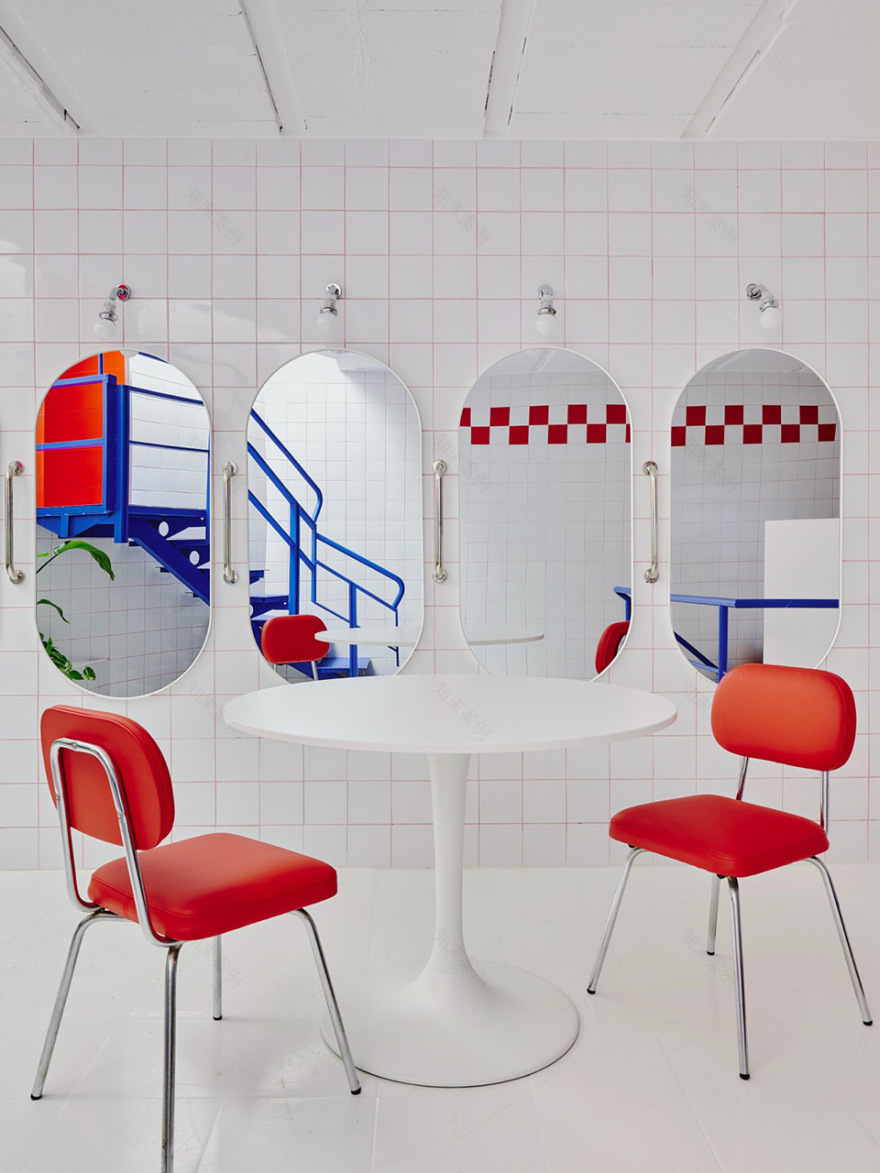
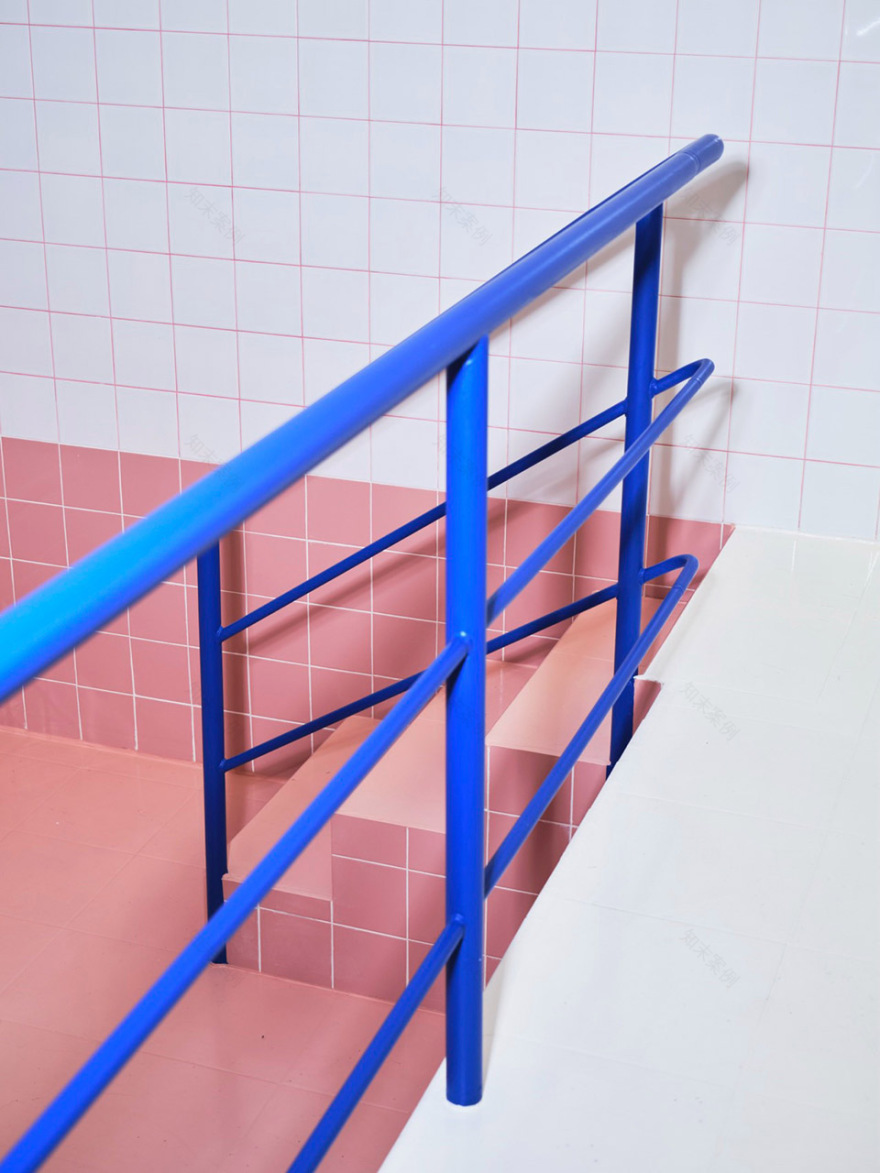
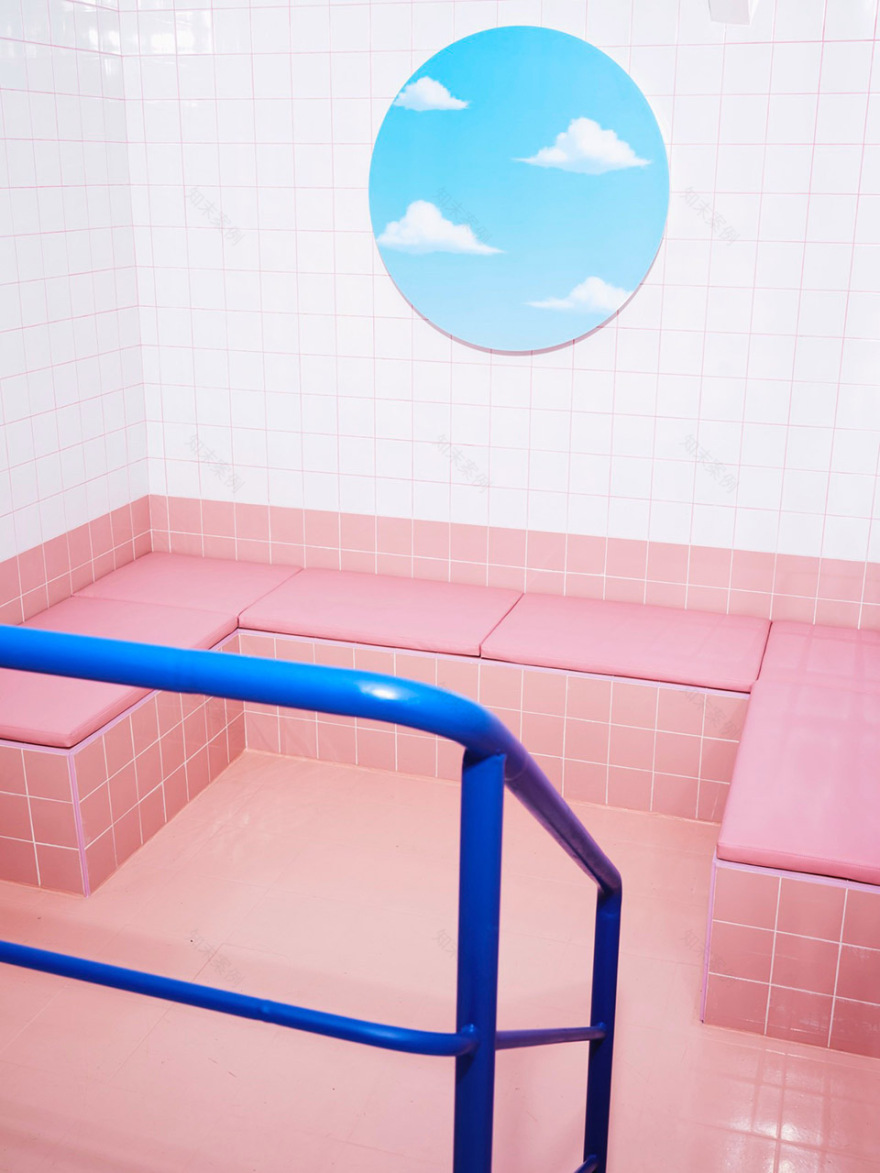
项目的第二个概念领域位于原建筑的一个凹位,用作会议室。灵感来自温泉氛围,该空间刻意打破工作室整体的简约感。通过厨房面板内隐藏的小阶梯进入,一扇克莱因蓝色门预示氛围的改变。其中一个周边榻榻米元素作为门槛,并辅以花岗岩,呼应传统日本住宅入口。室内色彩强烈,淋浴头灯具、带浴区扶手的镜子,以及带小花坛的假天窗,营造出更具趣味性和实验性的形象。霓虹天空讽刺性地取代了温泉影像中常见的富士山。除了惊喜元素,毗邻的浴室以鲜艳红色完成,强化对比并为整体叙事增添略微挑衅的趣味。
▼分析图,analysis diagram© T.O.T Studio + Paloma Bau Estudio

The second conceptual realm of the project is in one of the original recesses of the premises and functions as a meeting room. Inspired by the atmosphere of the onsen, this space deliberately breaks with the studio’s general sobriety. Accessed via a small stair concealed within the kitchen paneling, a glimpse of a Klein blue door anticipates the change in mood. One of the perimeter tatami elements acts as a threshold and is complemented by a granite piece, referencing traditional Japanese domestic entrances. Inside, the chromatic intensity, shower-head luminaires, mirrors with bath-area handrails, and a false skylight incorporating a small planter create a more playful and experimental image. A neon sky ironically replaces the customary Mount Fuji often found in onsen imagery. Beyond the element of surprise, the adjacent bathrooms-finished in an intense red-reinforce the contrast and introduce a slightly provocative note to the overall narrative.
▼会议室,meeting room © David Zarzoso
▼克莱因蓝的楼梯,the Klein Blue staircase© David Zarzoso

▼淋浴头灯具、带浴区扶手的镜子,
shower head lamp, mirror with bathroom handrails © David Zarzoso


▼室内色彩强烈,the interior has strong colors© David Zarzoso

▼细部,details© David Zarzoso
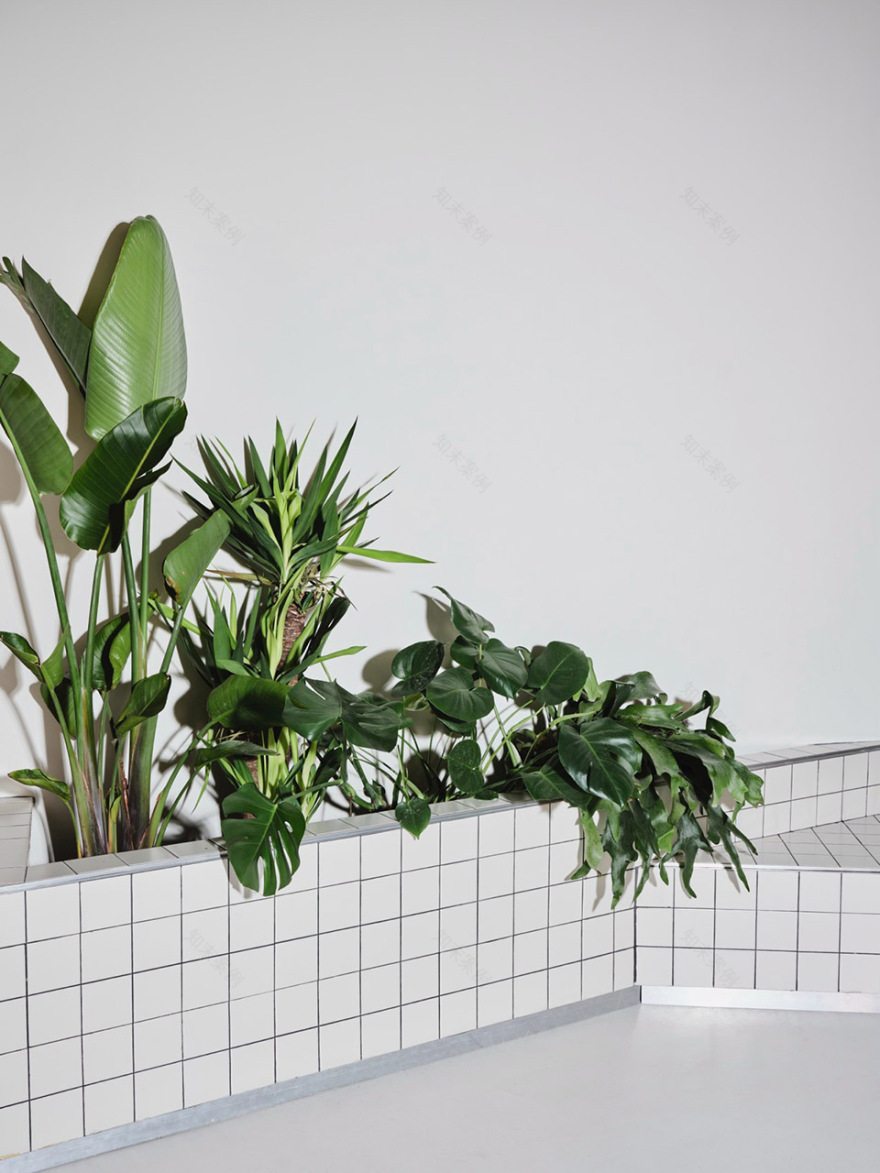
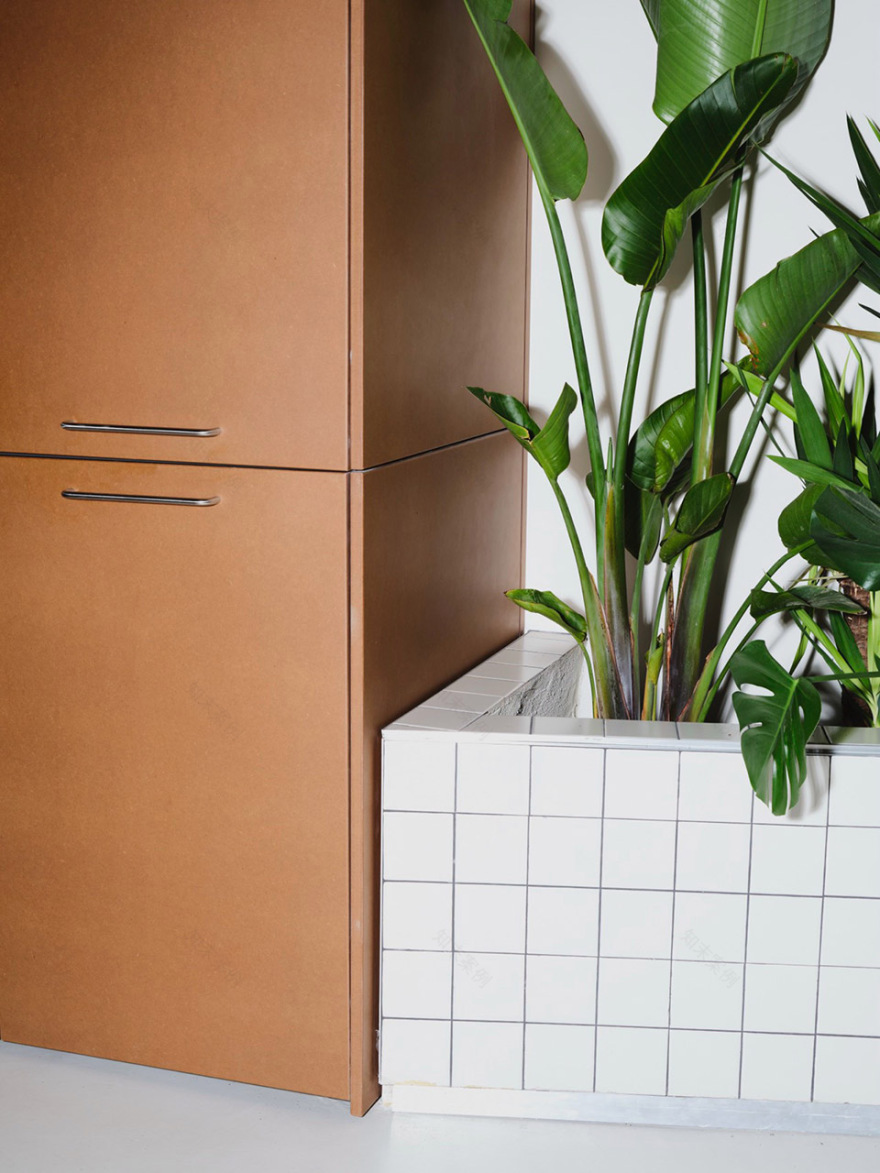
▼楼梯扶手,the staircase handrail© David Zarzoso

▼具趣味性和实验性的形象,
an interesting and experimental image© David Zarzoso

材质
Materiality
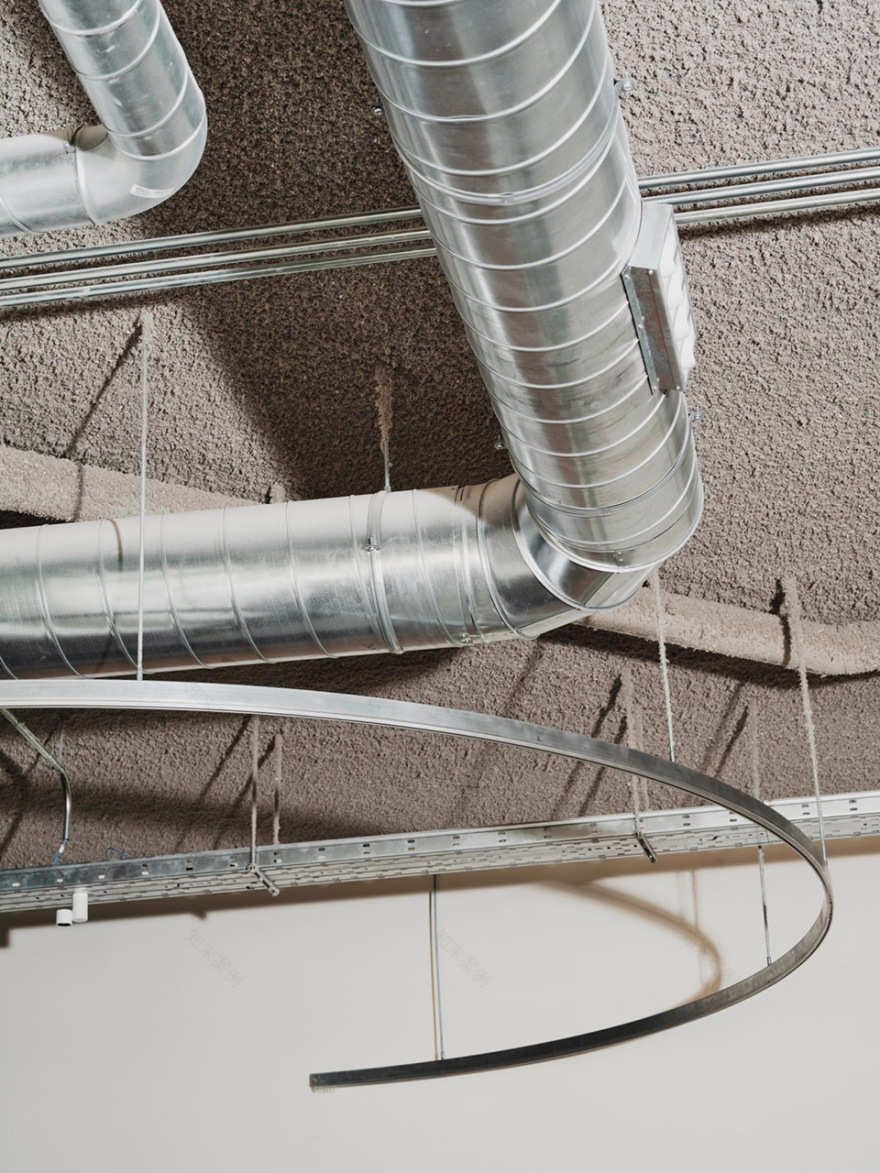
材料策略遵循 Paloma Bau 作品特有的一致性与重复逻辑。轻微水泥地面统一整个序列并提供均匀光感。喷涂纤维素天花作为技术和吸声平面,同时保留裸露管线和窗帘轨道,使空间可通过纺织元素划分。轨道的曲线引入更动态、细腻的阅读方式,微妙地打破整体空间秩序。
The material strategy follows a logic of coherence and repetition, characteristic of Paloma Bau’s work. Light microcement flooring unifies the entire sequence and provides homogeneous luminosity. The sprayed cellulose ceiling functions as a technical and sound - absorbing plane, leaving raw installations and curtain rails exposed, allowing the space to be subdivided with textile elements. The curved lines of these rails introduce a more dynamic, nuanced reading, subtly breaking the overall order of the space.
▼灯具,lighting feature© David Zarzoso

▼厨房细部,details of the kitchen© David Zarzoso

▼展示区,display area© David Zarzoso
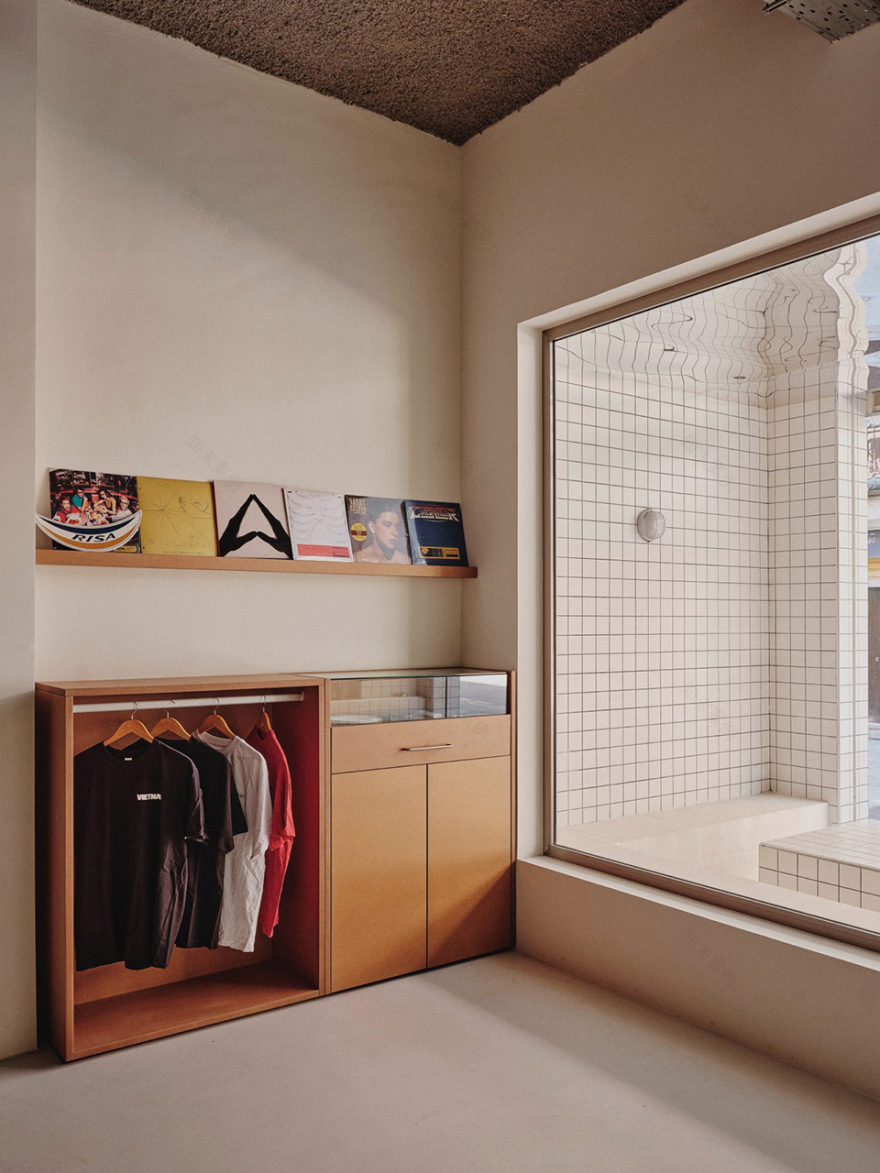
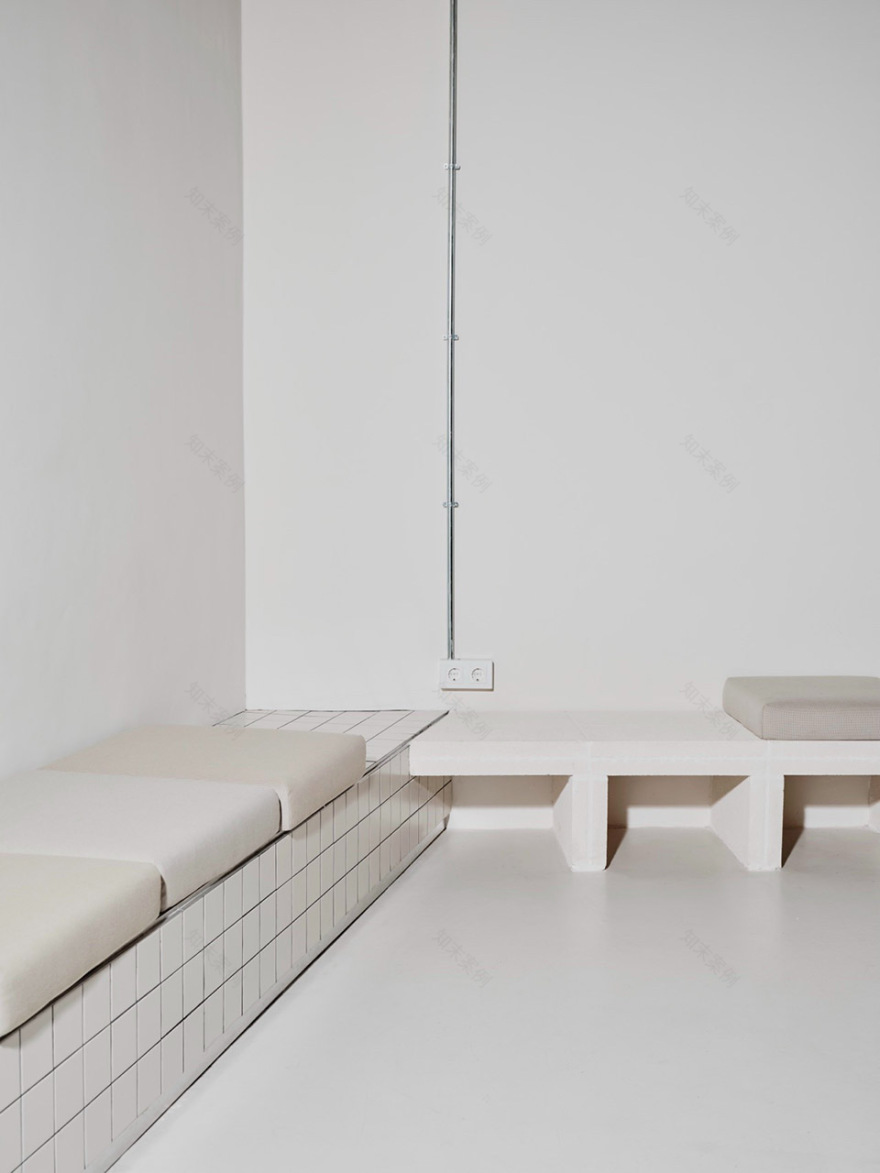
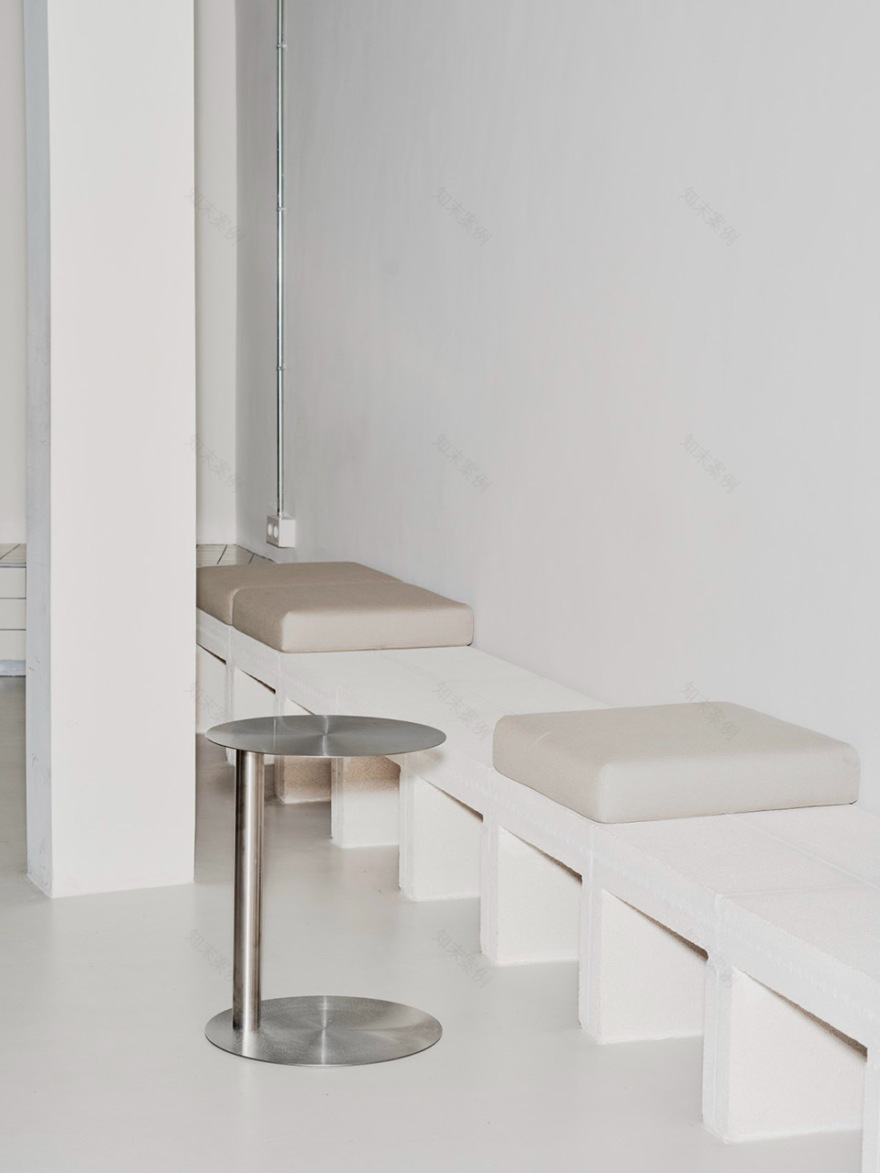
周边白色榻榻米可用于就坐、非正式会议或活动,并在部分区域作为花坛,强化多层次活跃空间概念。工作家具——桌子、厨房单元和储物柜——采用原始 MDF,通过简单干净的构建系统解决,与固定元素及展示特性共存。所有定制家具由瓦伦西亚 Lebrel 家具公司制造。
Perimeter white block tatami elements allow for sitting, informal meetings or event use, and in some areas also function as planters, reinforcing the idea of an active, multi-layered space. Work furniture-tables, kitchen units and storage-is resolved in raw MDF through a simple, clean construction system designed to coexist with fixed elements and the space’s exhibition character. All bespoke pieces were manufactured by the Valencian firm Lebrel Furniture.
▼展架,display shelves© David Zarzoso


▼白色榻榻米可用于就坐、非正式会议或活动,
white block tatami elements allow for sitting, informal meetings or event use© David Zarzoso
灯光与家具
Lighting and furniture
灯光设计结合 Arkoslight 技术灯具(该品牌在工作室项目中经常出现)、纸灯笼以及为 T.O.T 开发的不锈钢灯具。技术精确与柔和光感之间的平衡营造出既可控又温馨的氛围。家具大多定制,完美融入材料叙事,强化空间灵活性,实现多用途和自然过渡,而不改变核心结构。
The lighting design combines technical fixtures by Arkoslight-a brand frequently present in the studio’s projects-with decorative rice-paper lamps and specific solutions such as the stainless-steel luminaire developed for T.O.T. This balance between technical precision and diffused warmth creates an atmosphere that is both controlled and welcoming. The furniture, largely custom-designed, integrates seamlessly into the project’s material narrative and reinforces its flexible vocation, enabling simultaneous uses and natural transitions without altering the space’s core structure.
▼灯具细部,details of the lighting feature© David Zarzoso

▼洗手间,restroom© David Zarzoso

多功能创意空间
A multifunctional creative space
Sornells 21不仅是建筑与设计工作室,更是瓦伦西亚的一个新空间,旨在工作、协作、会面和庆祝。其空间与材料配置允许多种用途共存,无需复杂改造。从建筑角度,它强化了创意社区的理念,将不规则建筑改造成一个灵活舞台,使专业日常与共享时刻交融。
Sornells 21 is not only an architecture and design studio. It is a new space in Valencia conceived for working, collaborating, meeting and celebrating. Its spatial and material configuration allows multiple uses to coexist without complex transformations. Architecturally, it strengthens the idea of a creative community, transforming an irregularly shaped premises into a flexible stage where professional daily life merges with shared encounters and collective moments.
▼管道与轨道系统,the pipeline and track system© David Zarzoso
▼平面图,plan© T.O.T Studio + Paloma Bau Estudio

DATA PROJECT
Project: Workspace
Area (m2): 170 sqm
Location: Valencia, Spain
Studio: Paloma Bau Estudio
Architecture & Interior Design: Paloma Bau
Photography: David Zarzoso
SUPPLIERS & FURNISHINGS
Built-in sofa and upholstery Paloma Bau
Wood and metal carpentry Lebrel Furniture
Technical lighting Arkoslight
T.O.T suspended lamp and bar lamp Ilutrek
Paper lamp HAY
Stools Zara Home
Office chairs IKEA
Red chairs Reupholstered vintage pieces
Onsen table IKEA
Upholstery Deloli Sail


南京喵熊网络科技有限公司 苏ICP备18050492号-4知末 © 2018—2020 . All photos and trademark graphics are copyrighted by their owners.增值电信业务经营许可证(ICP)苏B2-20201444 苏公网安备 32011302321234号
苏公网安备 32011302321234号客服
消息
收藏
下载
最近