

创作上传
VIP
收藏下载
登录 | 注册有礼
查看完整案例

收藏

下载

分享
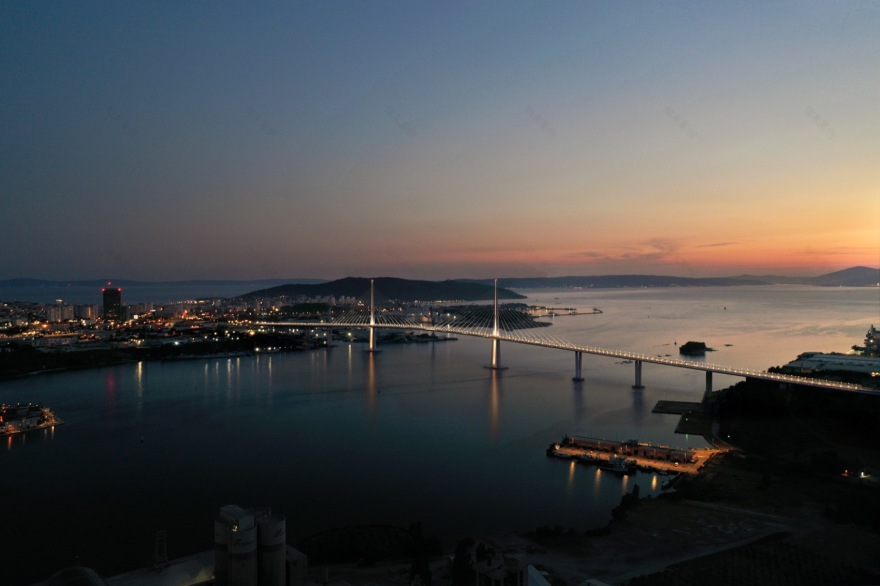
横跨Kaštela湾的新大桥是斯普利特及其周边地区的重要基础设施项目。大桥全长1,600米,连接斯普利特半岛与Kaštela镇。同时,该项目也开启了对海湾北岸的转型——这一片数十年来以军事和工业设施为主的区域,如今正获得发展成为城市新型海岸景观的潜力。
The new bridge over the Kaštela Bay represents a key infrastructure project for the wider Split area. Spanning 1,600 meters, the bridge connects the Split peninsula with Kaštela. Simultaneously, the project initiates the transformation of the bay’s northern shore. An area characterized for decades by military and industrial infrastructure is now gaining the potential to develop into a new urban facade for the city.
▼西北视角,northwestern view ©3LHD
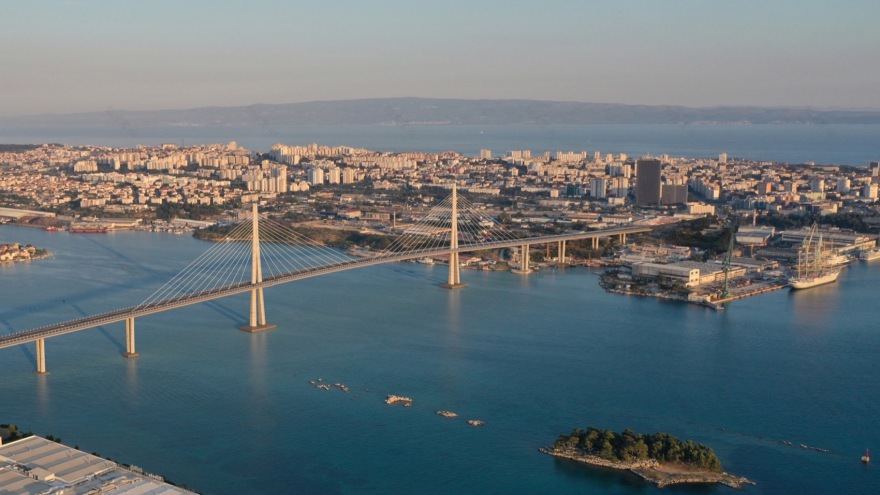
▼西北视角,northwestern view ©3LHD

▼海上视角,view from the sea ©3LHD
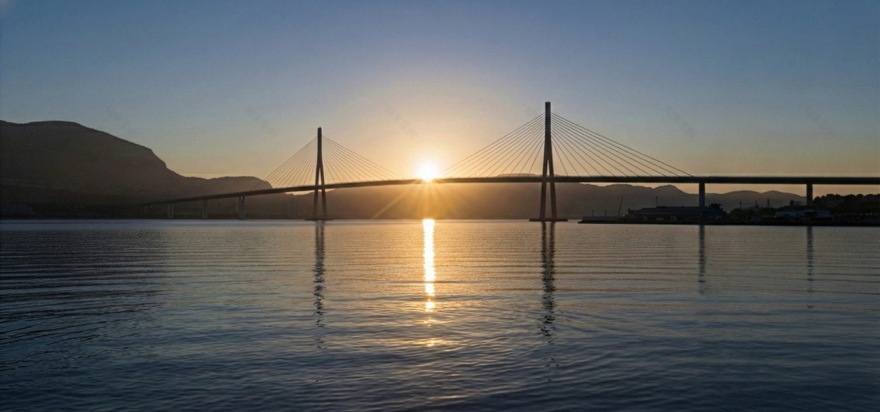
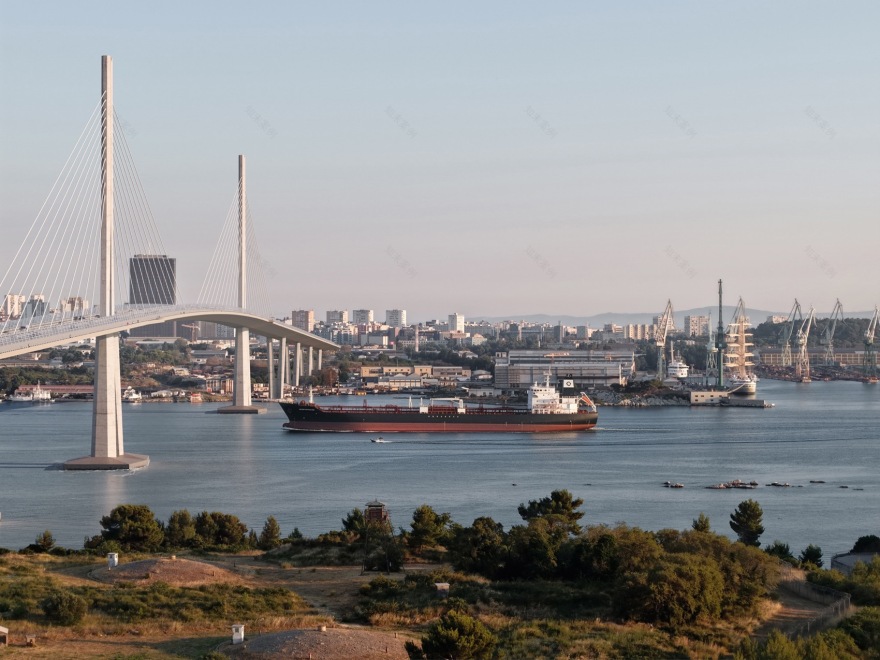
大桥位于斯普利特的北侧入口处,为城市形成了一个新的入口节点。对于许多从机场或特罗吉尔方向抵达的游客来说,这座大桥是他们与城市肌理及Kaštela湾的首次空间接触。基于这一战略位置,项目被设计为独特而易于识别的结构,形成海上门户,同时为北岸创造全新的城市轮廓线。
▼附近的居民点和公共设施 / 陆地和海洋通道的方向,nearby settlements and public amenities / land and sea passage direction ©Ida Ister
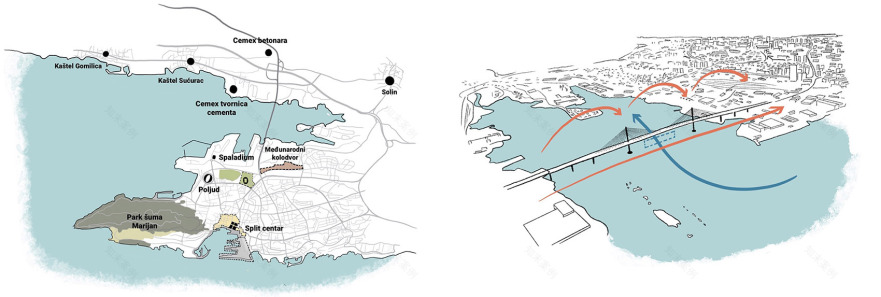
Situated at the northern approach to Split, the bridge defines a new entry point into the city. For many visitors arriving from the direction of the airport or Trogir, it represents their first spatial encounter with the urban fabric and the Kaštela Bay. Due to this strategic position, the project is designed as a distinct, recognizable structure that forms a maritime gateway and establishes a completely new silhouette for the northern coast.
▼西侧视角,view from the west ©3LHD
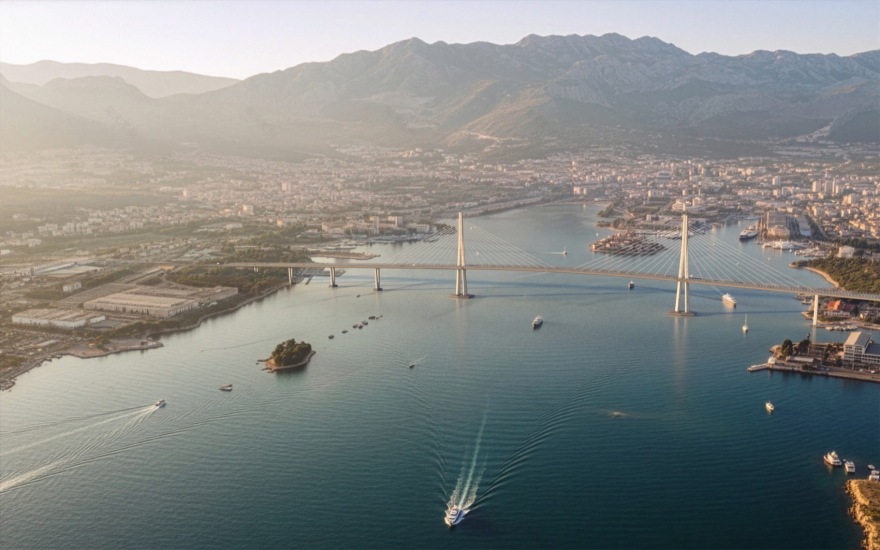
▼北侧视角油轮进港,northern view tanker enters the port ©3LHD
▼斯普利特鸟瞰图.,view over Split ©3LHD
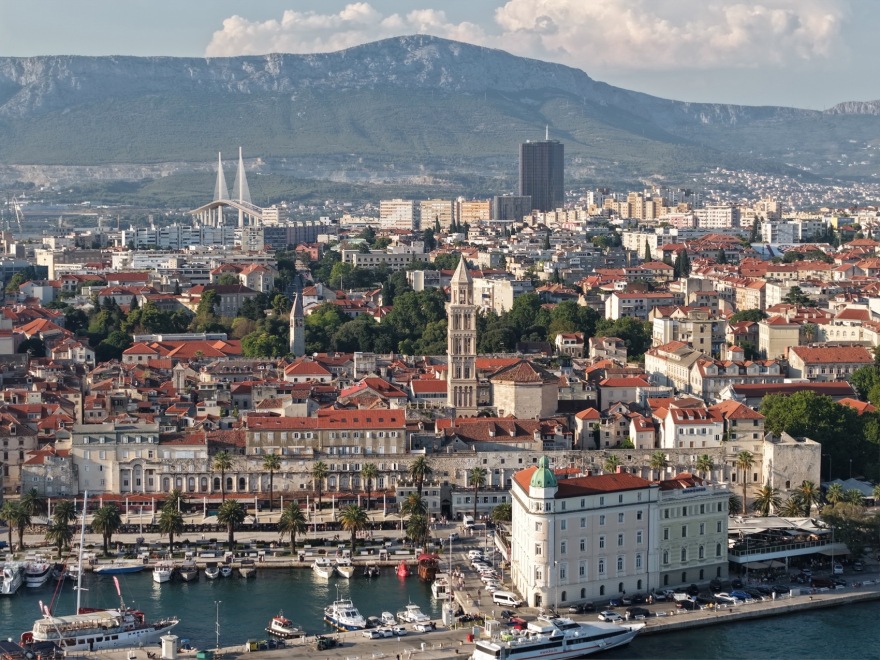
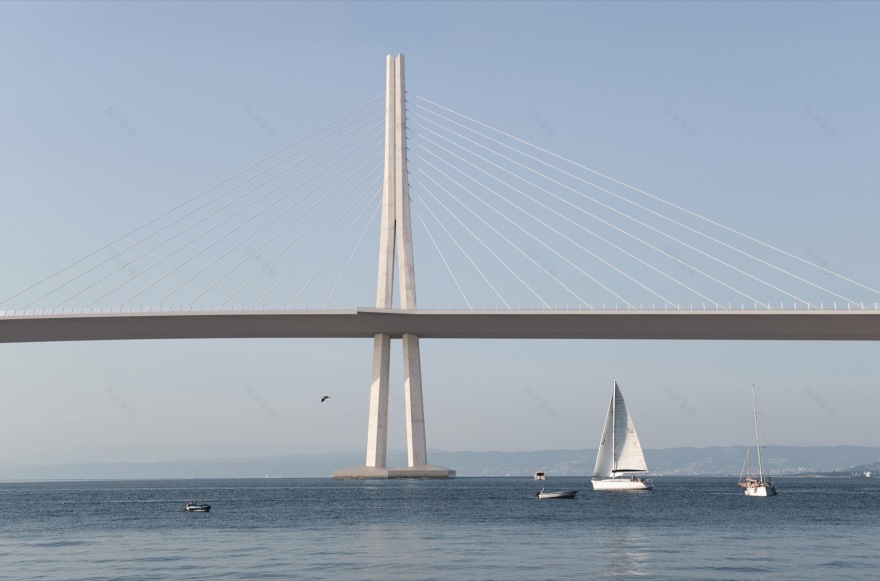
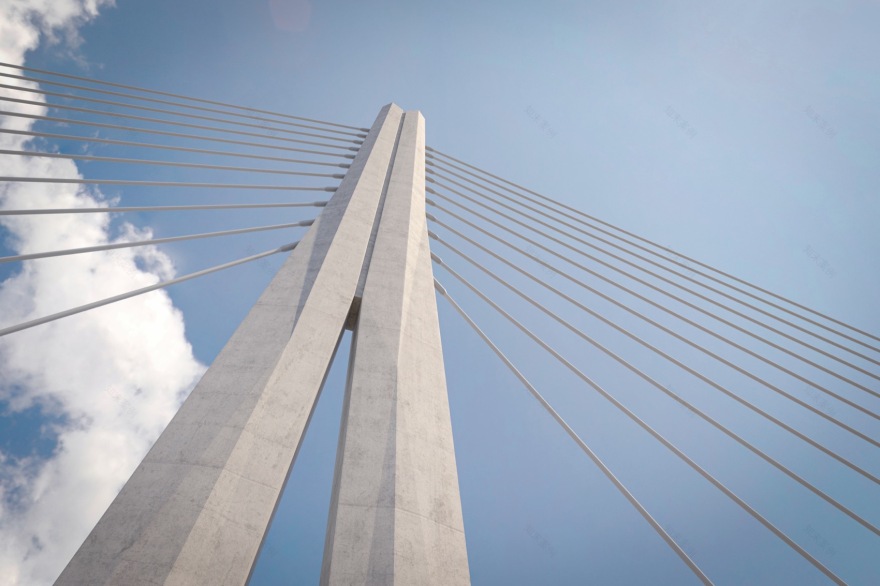
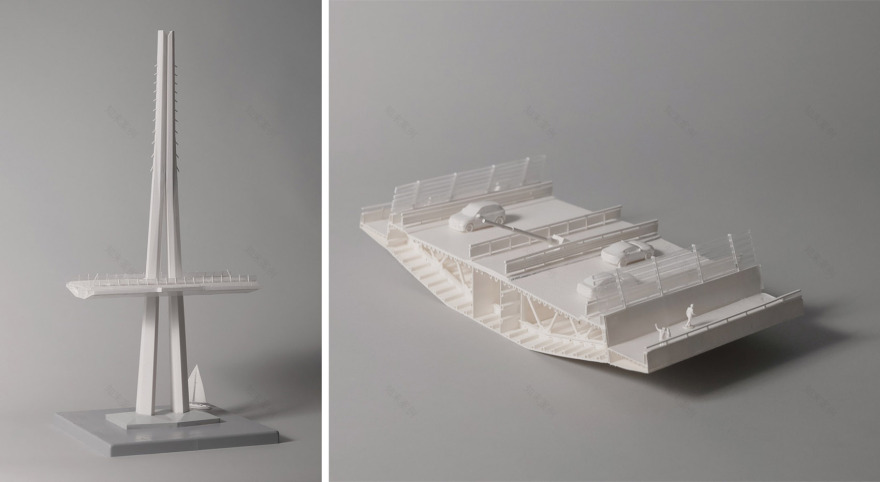
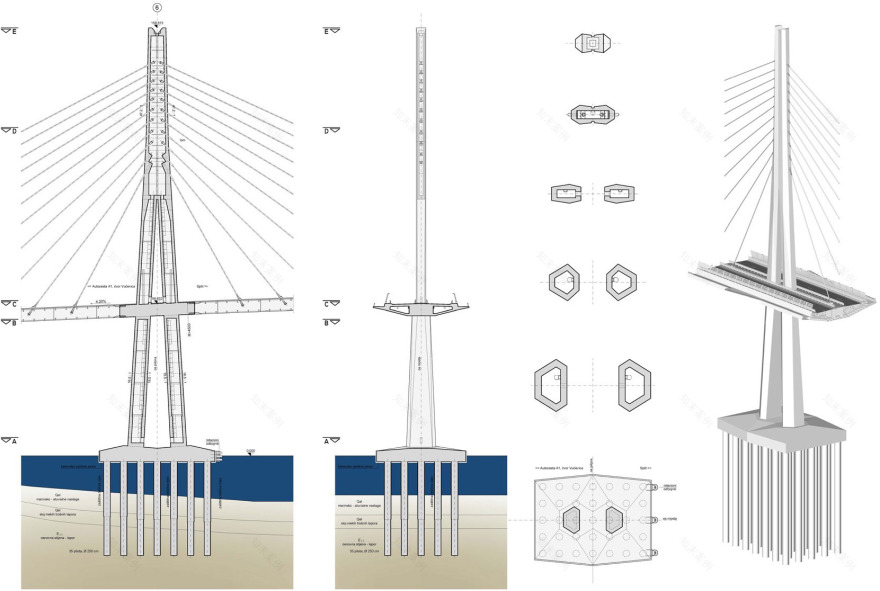
大桥的视觉识别核心在于两根高157米的纤细桥塔,它们成为湾区的标志性元素。桥塔的多面体形态直接再解读了达尔马提亚石灰石的晶体结构——这种石材是戴克里先宫及斯普利特历史核心建筑的基础材料。通过这种方式,现代工程结构与当地建筑遗产建立了强烈的对话。
▼分析图,analysis diagrams ©Ida Ister

The visual identity of the bridge is centered on two slender pylons, 157 meters in height, which serve as iconic elements within the bay. Their faceted form is a direct reinterpretation of the crystalline structure of Dalmatian limestone—the foundational material of Diocletian’s Palace and Split’s historic core. In this way, the modern engineering structure establishes a powerful dialogue with the local architectural heritage.
▼主跨桥塔,main span pylon ©3LHD
▼桥塔视角,pylon view ©3LHD
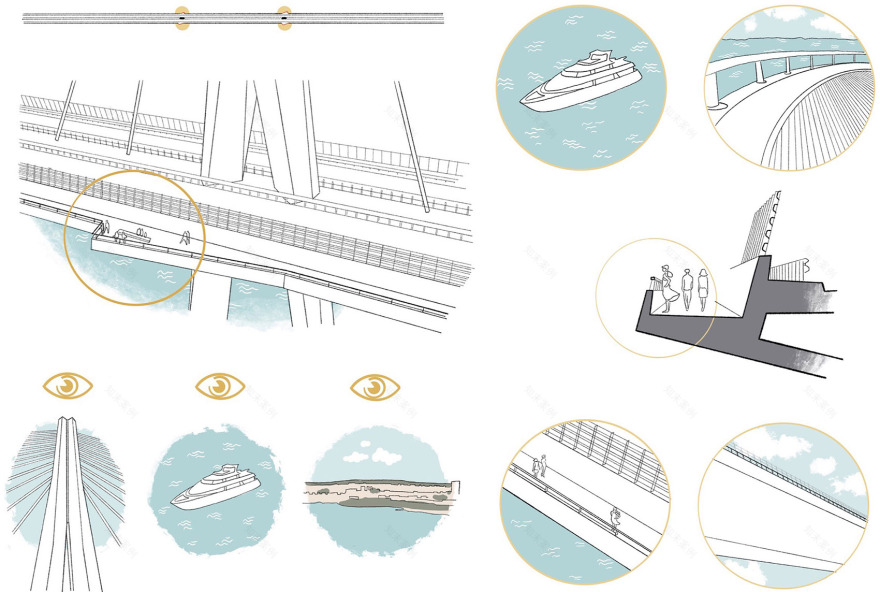
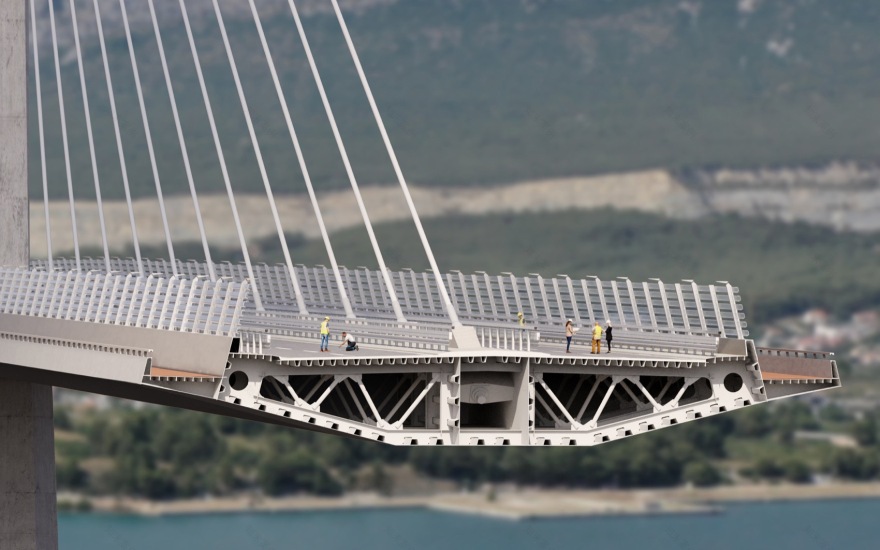
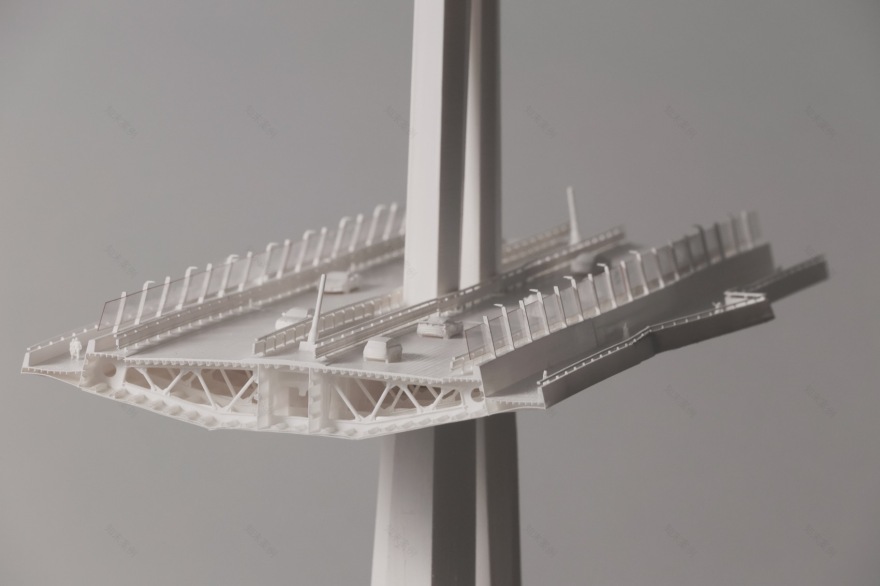
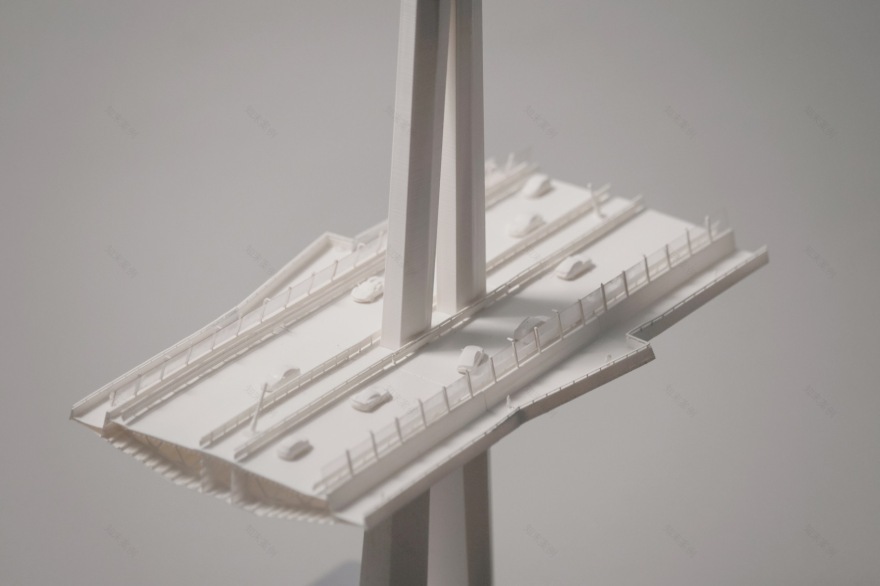
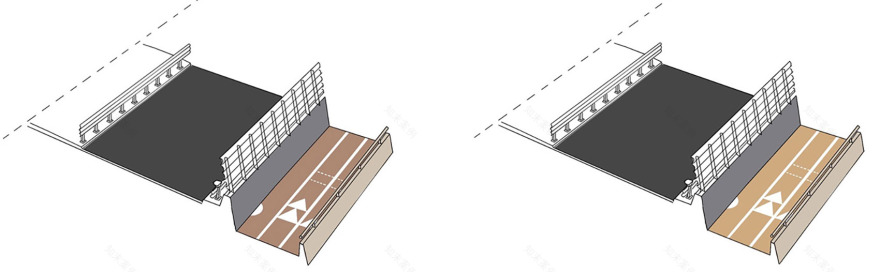
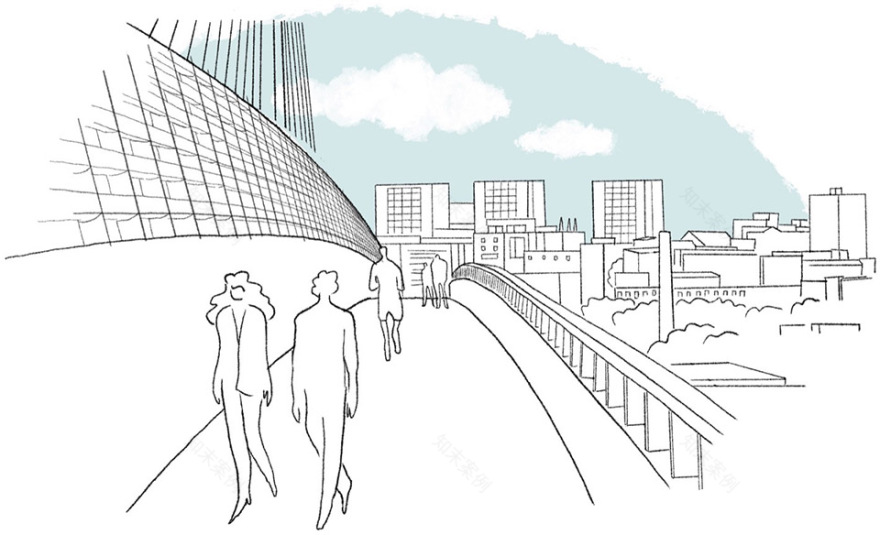
大桥两侧设有人行和自行车通道,刻意降低至主车道以下。该设计在海面上方形成了一个受保护的通道,可隔绝发动机噪音、风力和尾气污染。桥塔附近的拓展区域则成为全景观景点和聚集空间。因此,跨越海湾不再只是交通需求,而成为一场独特的空间体验,可畅享水域与城市的开阔景观。
▼分析图,analysis diagrams ©Ida Ister
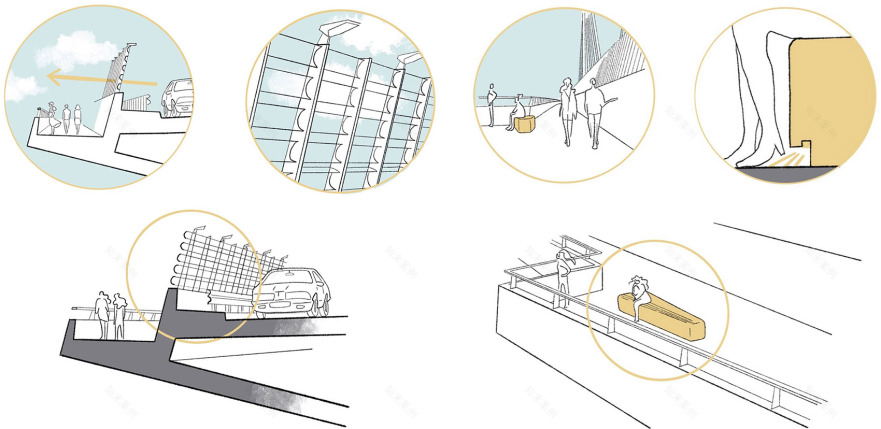
Pedestrian and bicycle paths, positioned on the outer sides of the bridge, are intentionally lowered below the level of the main roadway. This design creates a protected corridor directly above the sea, insulated from engine noise, wind, and exhaust fumes. Expanded zones near the pylons function as panoramic viewpoints and gathering spots. Consequently, crossing the bay ceases to be a mere traffic necessity and becomes a unique spatial experience with unobstructed views of the waters and the city.
▼观景视角,viewpoint ©3LHD
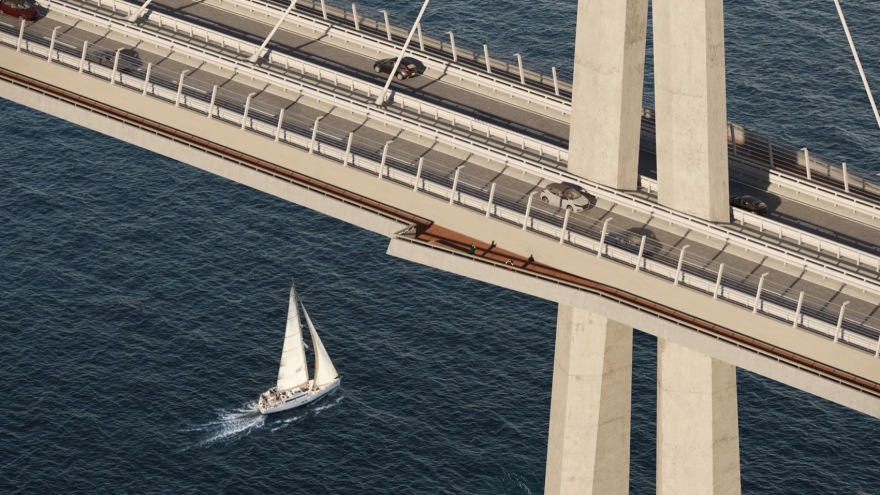
对于建筑理念,3LHD合伙人Marko Dabrović表示:“我们将桥视为一条新的空间轴线,也是促进斯普利特北部和Kaštela发展的重要催化剂。它是一种基础设施,同时成为公共空间。纤细的桥塔形成新的城市门户,而降低的步行道及观景点则将桥转变为休闲路线和海上新公共空间。”
Speaking on the architectural concept, Marko Dabrović, partner at 3LHD, stated:”We approached the bridge as a new spatial axis and an important catalyst for the development of northern Split and Kaštela. It is an infrastructure that simultaneously becomes a public space. The slender pylons form new urban gateways, while the lowered promenade with viewing points transforms the bridge into a recreational route and a new public place above the sea.”
▼桥面结构,bridge deck structure ©3LHD
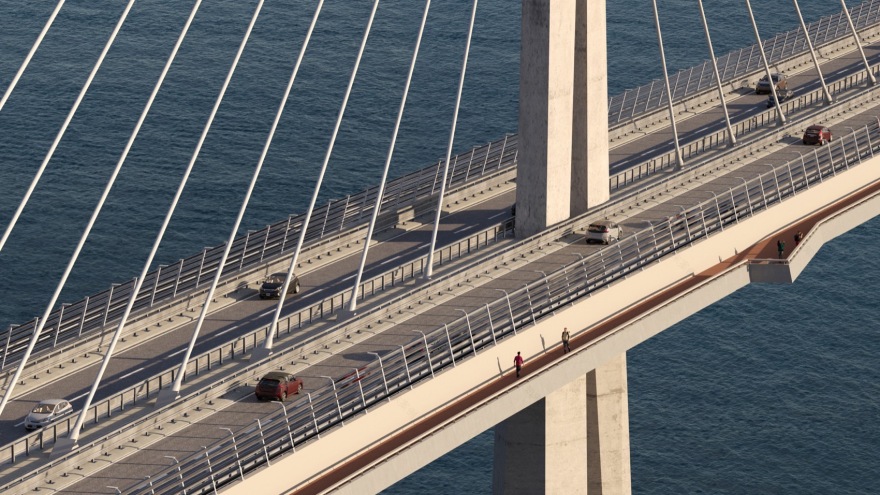
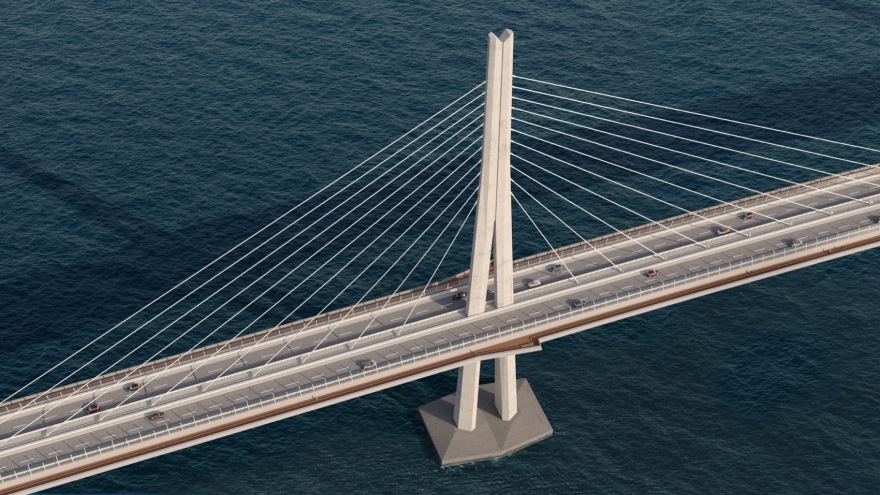
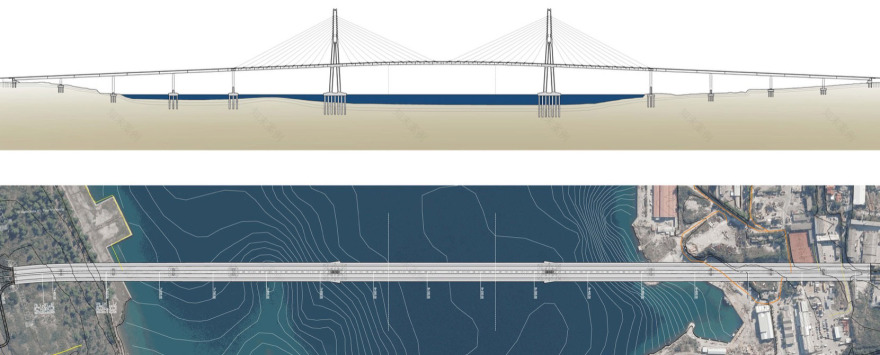
工程逻辑基于斜拉体系,中跨长度为400米。将拉索置于单一中央平面,使桥面结构异常纤细,并呈现简洁的视觉轮廓。这种布局不仅保证了高效的结构性能,也清晰界定了航道,并保护了Kaštela湾敏感景观免受视觉干扰。
▼分析图,analysis diagrams ©Ida Ister
The engineering logic is based on a cable-stayed system with a central span of 400 meters. Placing the cables in a single central plane allows for an exceptionally slender deck construction and a visually clean silhouette. This configuration ensures high structural efficiency, clearly defines the navigation channel, and protects the sensitive landscape of the Kaštela Bay from visual clutter.
▼桥塔与道路结构,pylon and road structure ©3LHD
▼道路结构剖面,road structure cross section ©3LHD
对于结构理念,Pipenbaher咨询工程公司首席执行官Marjan Pipenbaher补充道:“从结构上看,这是一项高难度且富有创新性的桥梁工程。纤细桥塔和斜拉体系使400米主跨成为可能,同时保持清晰优雅的轮廓。我们特别重视确保结构的抗震能力,以及桥梁在强阵风和高速风条件下的空气动力学稳定性。”
Regarding the structural concept, Marjan Pipenbaher, CEO of Pipenbaher Consulting Engineers, added: “Structurally, this is a highly demanding and innovative bridge project. The slender pylons and cable-stayed system enable the 400-metre main span while maintaining a clear and elegant silhouette. Special attention was devoted to ensuring the seismic resistance of the structure and the aerodynamic stability of the bridge under conditions of strong, gusting high-speed winds.”
▼弗拉尼奇视角,view from Vranjic ©3LHD
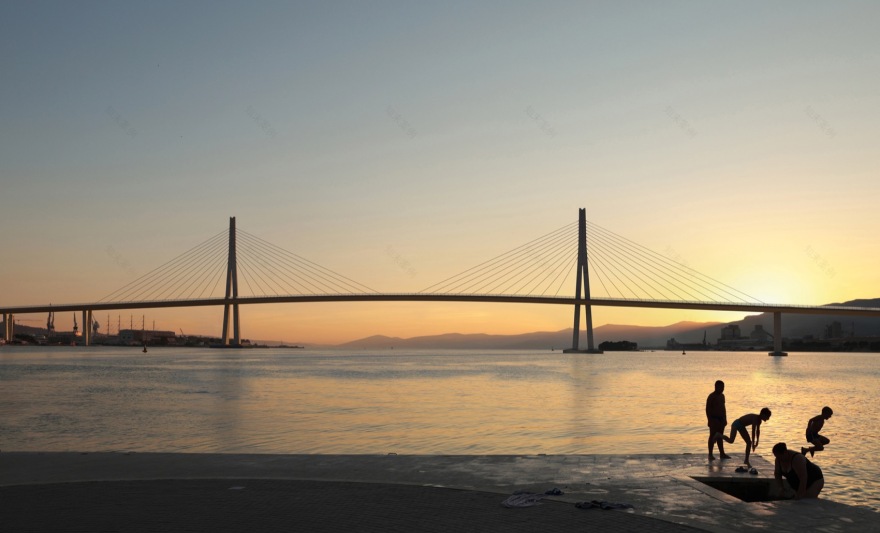
▼东侧视角日落,eastern view sunset ©3LHD
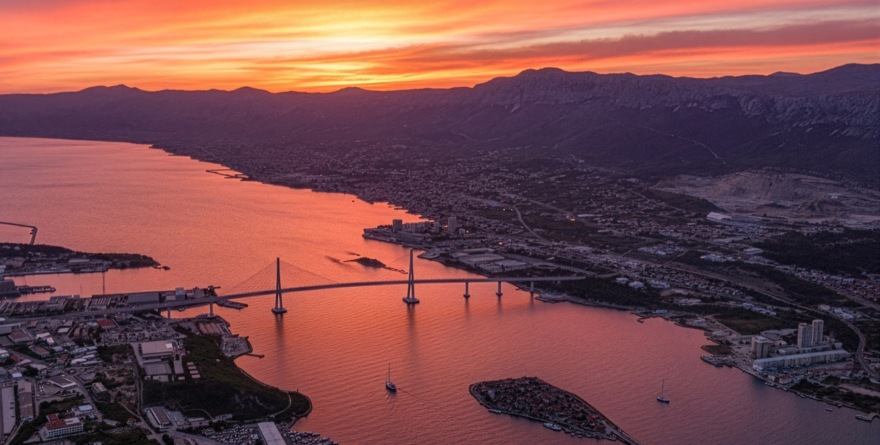
▼东北视角,northeastern view ©3LHD
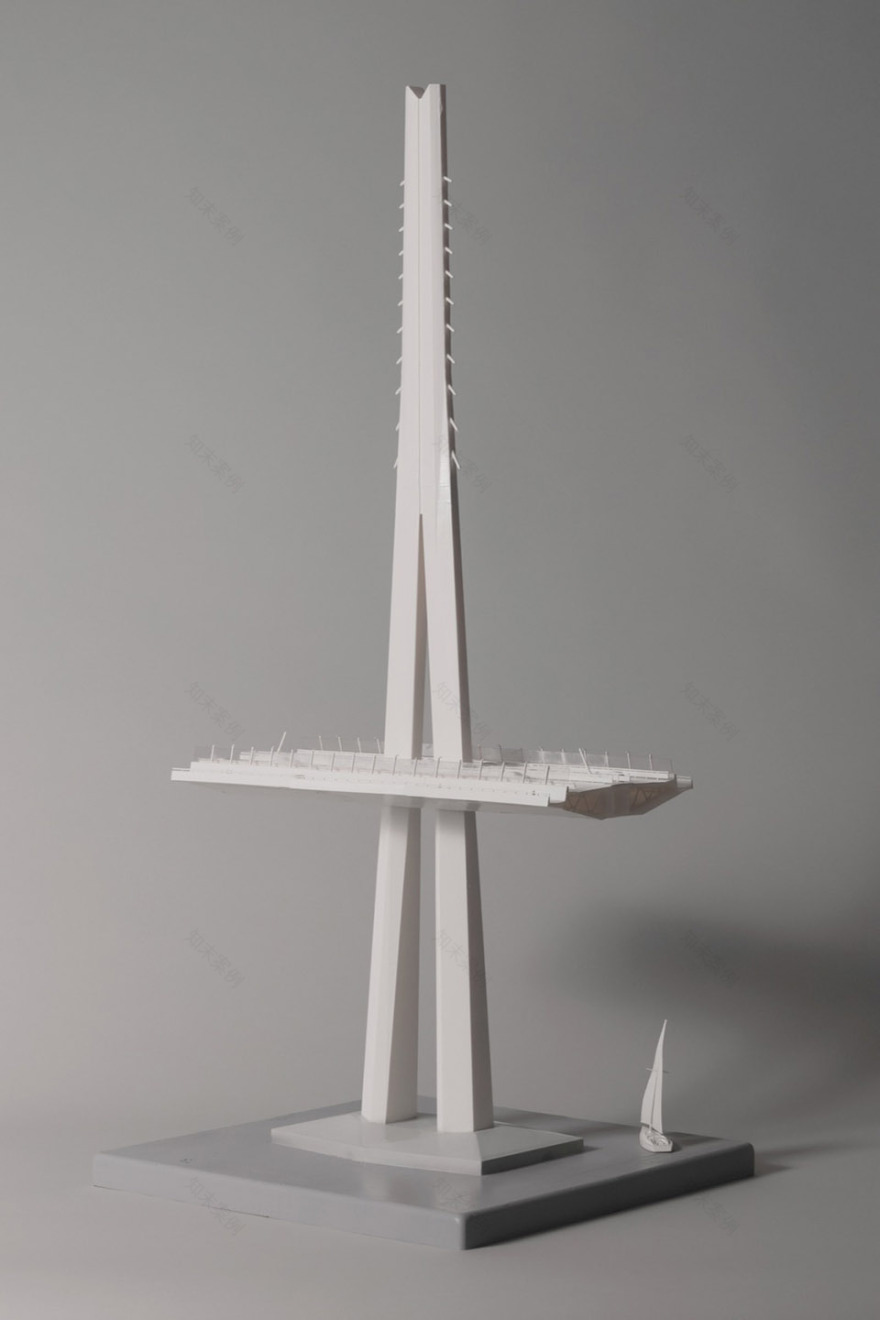
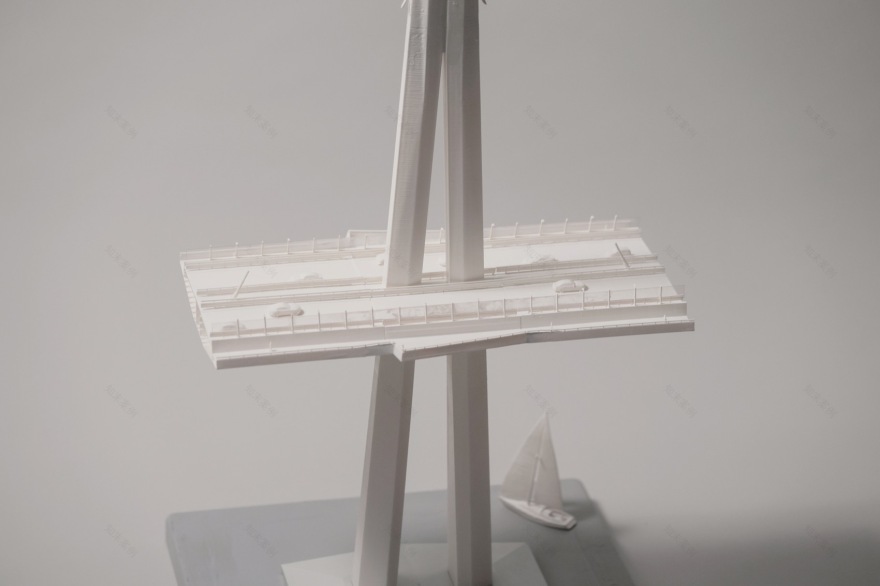
▼模型,model ©3LHD
▼分析图,analysis diagrams ©Ida Ister
▼大桥平面图及纵向剖面图,footprint and longitudinal section ©3LHD
▼大桥桥墩,pylon ©3LHD
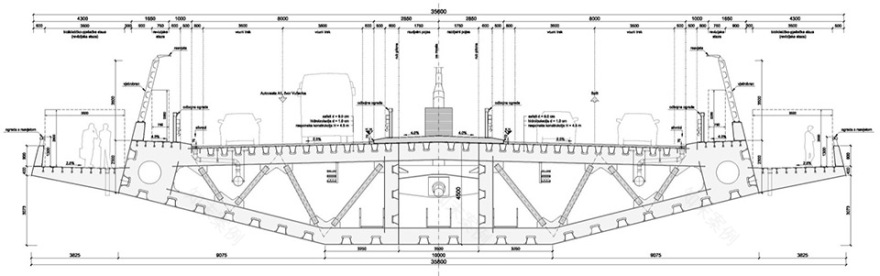
▼剖面图(带尺寸标注),cross section with dimensions ©3LHD
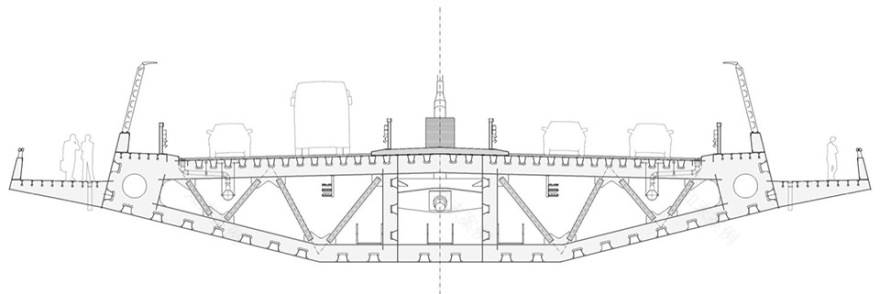
▼剖面图,cross section ©3LHD
Fact Sheet
Project name: Kaštela Bay Bridge
project number: 348
program: infrastructure, urban planning
status: project
project: 2025 – 2025
Location: Croatia, Split, Kaštela Bay
author: 3LHD i PIPENBAHER INŽENIRJI
client: Hrvatske ceste
南京喵熊网络科技有限公司 苏ICP备18050492号-4知末 © 2018—2020 . All photos and trademark graphics are copyrighted by their owners.增值电信业务经营许可证(ICP)苏B2-20201444 苏公网安备 32011302321234号
苏公网安备 32011302321234号客服
消息
收藏
下载
最近