

创作上传
VIP
收藏下载
登录 | 注册有礼
查看完整案例

收藏

下载

分享

翻译
Architects:Iki Builds
Area:5660ft²
Year:2024
Photographs:Vivek Eadara
Manufacturers:Saint-Gobain,ALCOGLAZE,Anchor,Ashirvad,Bosch,CASA LIGHTS,GREENPLY,Jaquar,NUVOCOTTA,Yale
Lead Architects:Vamshidhar Reddy, Mounica Reddy
Category:Houses
Lead Team:Vamshidhar Reddy, Mounica Reddy
Technical Team:Neha, Tejashree, Rithin
Engineering & Consulting > Civil:IKI BUILDS EXECUTION WING
Engineering & Consulting > Electrical:JAGADEESH CONSULTANTS
Engineering & Consulting > Structural:SVANIK CONSULTANTS
City:Telangana
Country:India

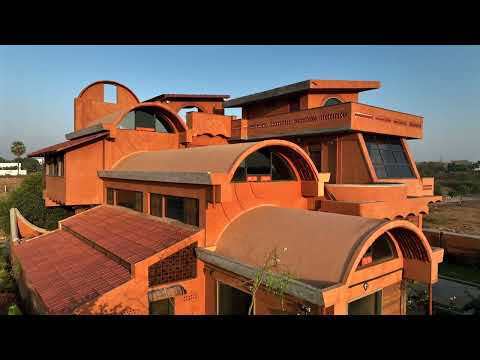
Text description provided by the architects. Set against the expanding urban edge of Hyderabad, Aurva Illam, a name bridging the Sanskrit Aurva (of the earth) and the Tamil Illam (home), is a residential prototype conceived as a "cascading earth" that unapologetically redefines modern luxury for the Anthropocene. Rejecting the ubiquitous glass-and-marble paradigm, the home proposes a new status symbol: bespoke materiality, thermal autonomy, and zero-air-conditioning living.


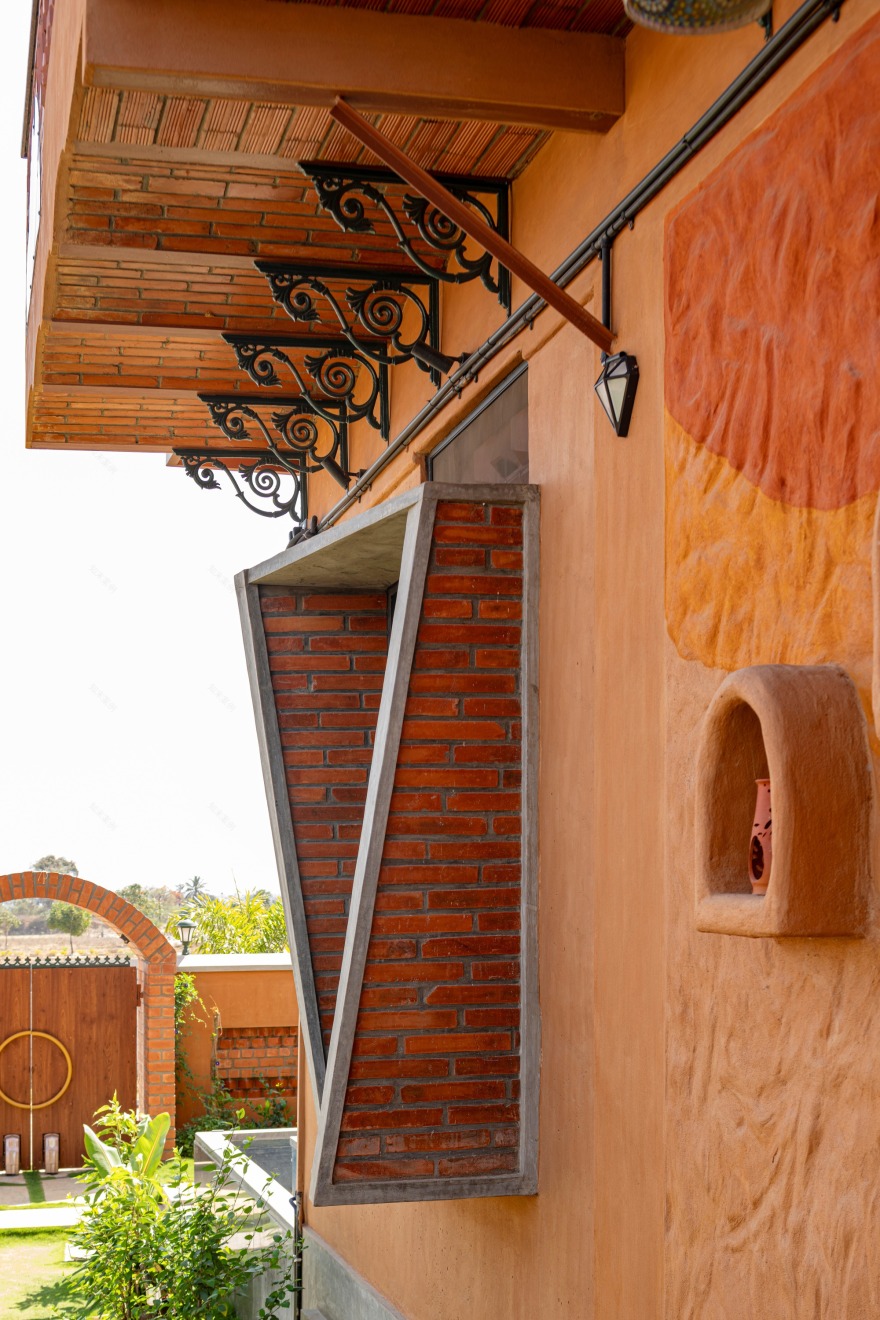
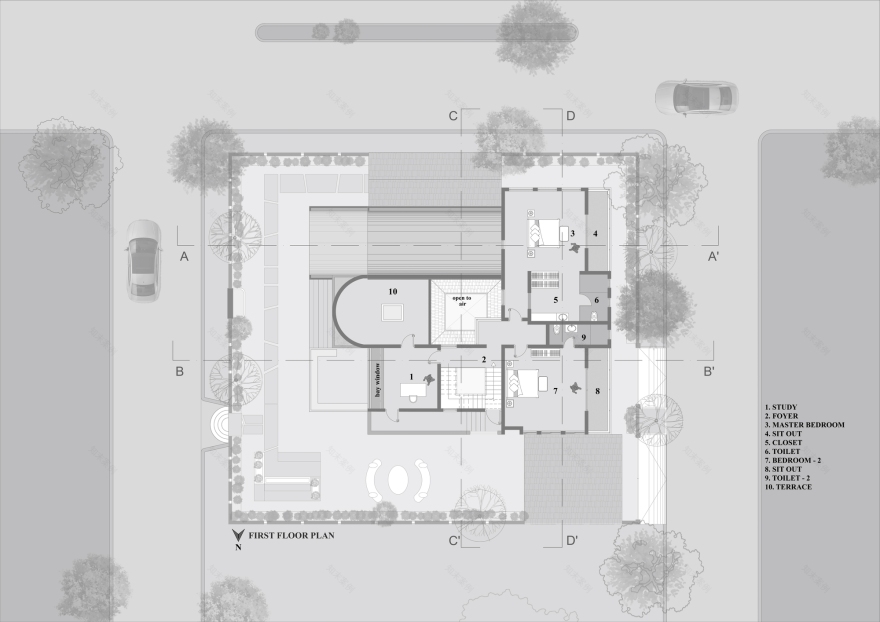
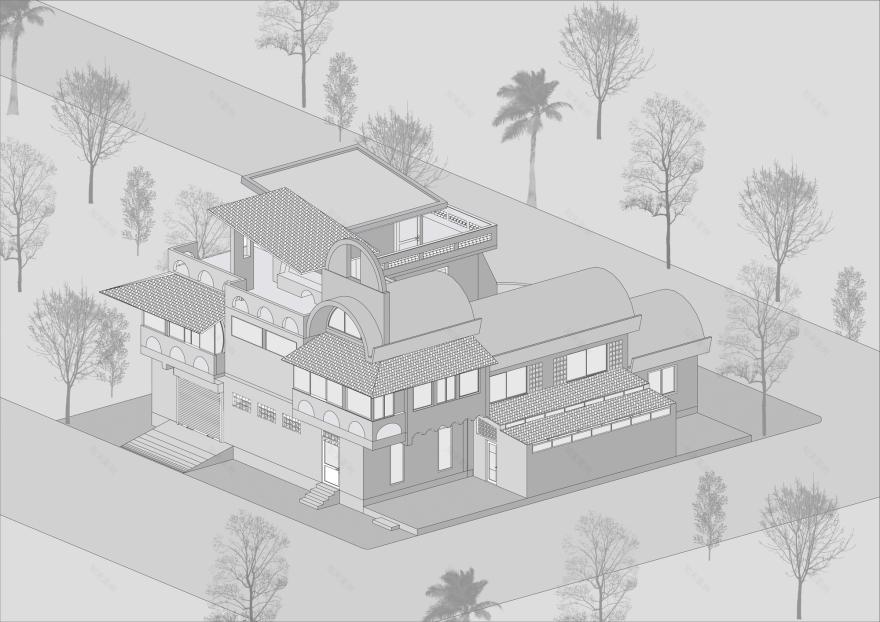
Situated roughly sixty kilometers from the city, the project occupies a corner plot bordered by roads on three sides and a public park to the west, presenting the classic challenge of balancing privacy with exposure. Concurrently, the core design ambition was driven by a desire for a profound architectural duality: seamlessly uniting rigorous, highly optimized spatial logic with a deep reverence for poetic, tactile materiality and handcrafted imperfection. Rejecting the defensive luxury of high compound walls and inward-looking blindness, the architectural response embraces unapologetic fenestration. It utilizes spatial hierarchy, screening, and level differences to engage the street edge while boldly opening the primary volumes, including the master suite, to the western tree canopy.

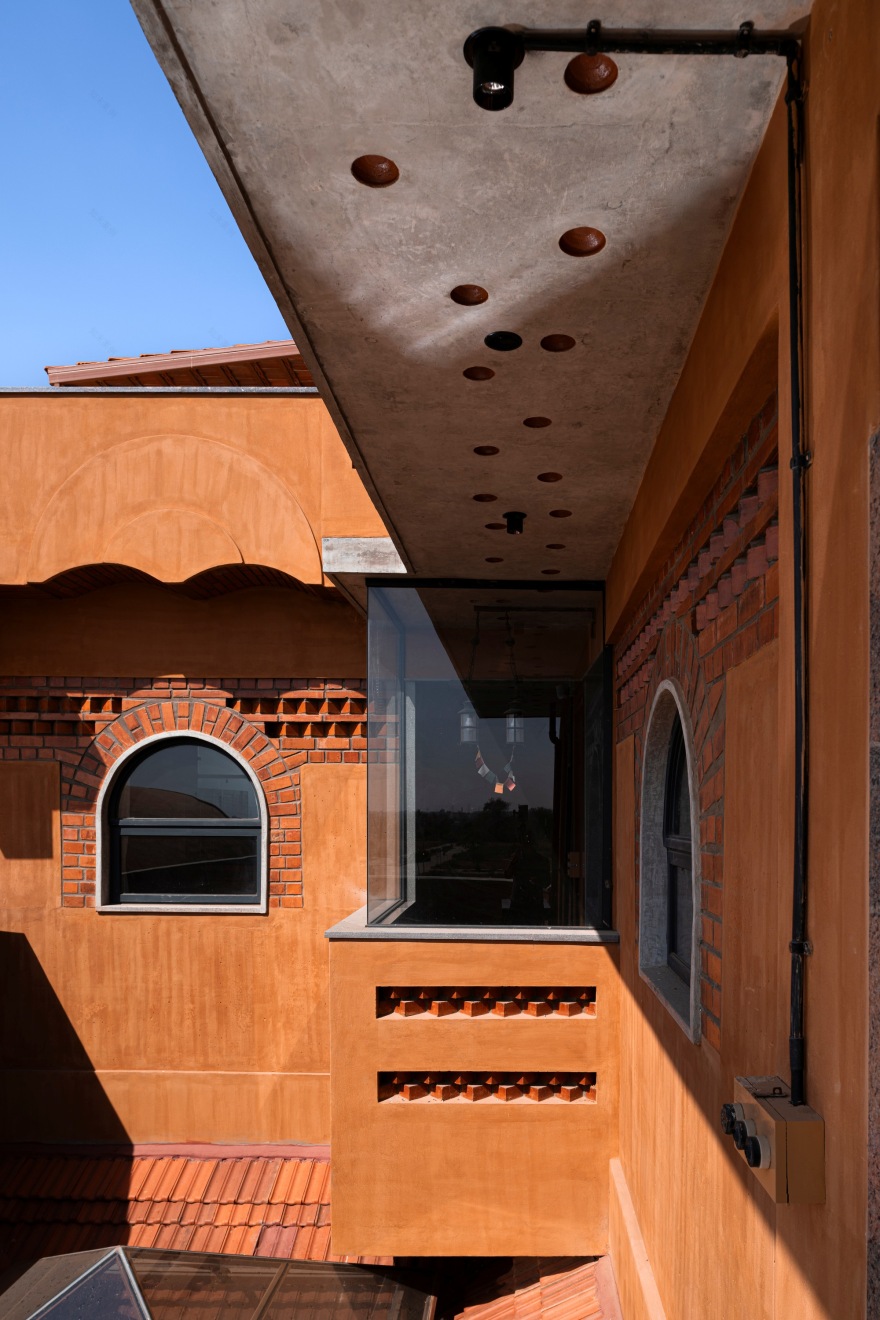
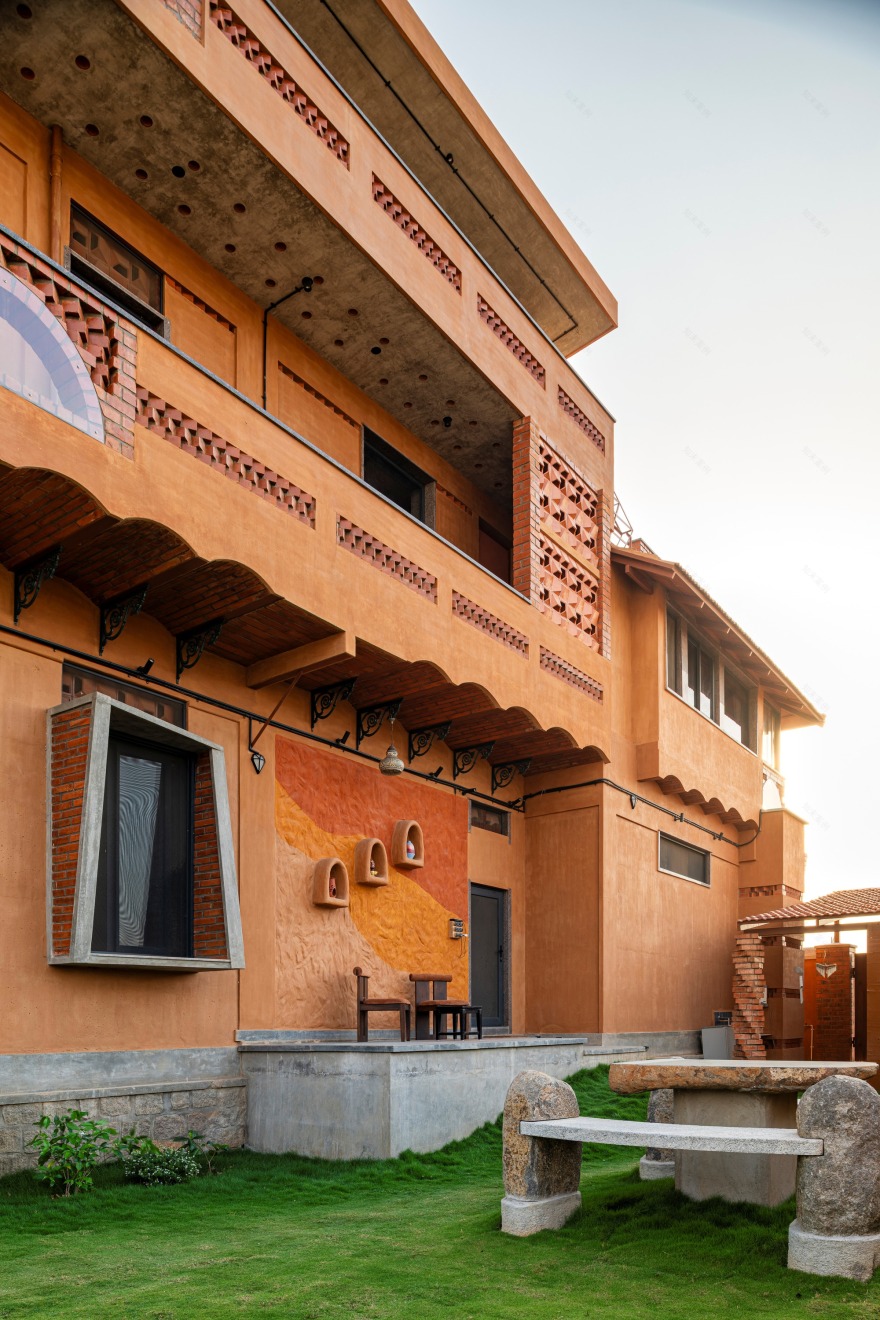
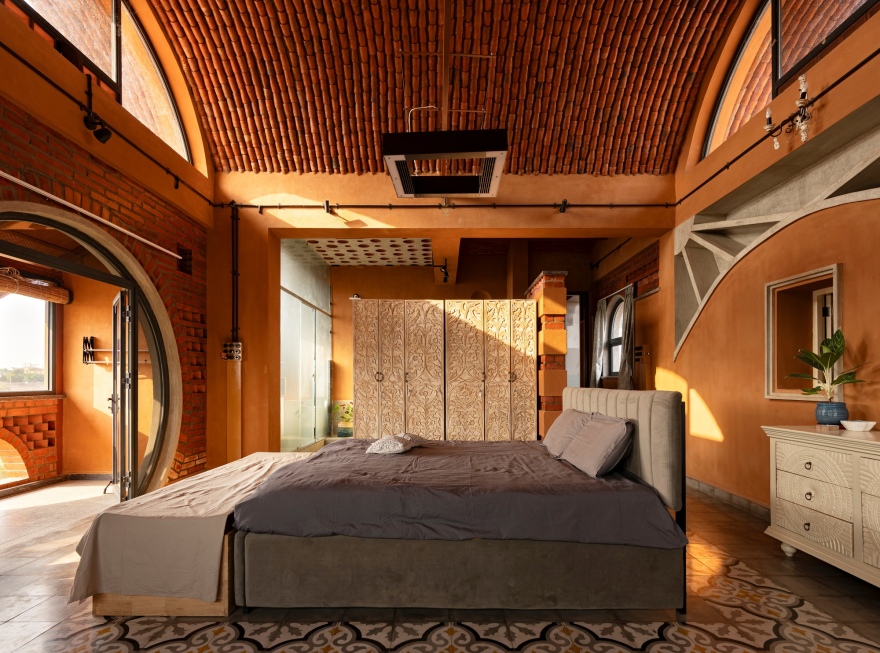
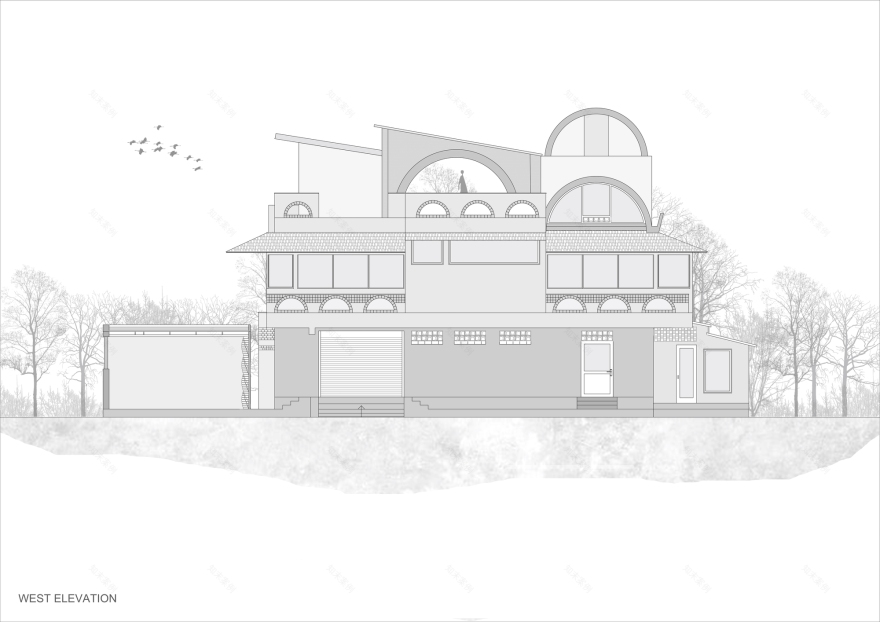
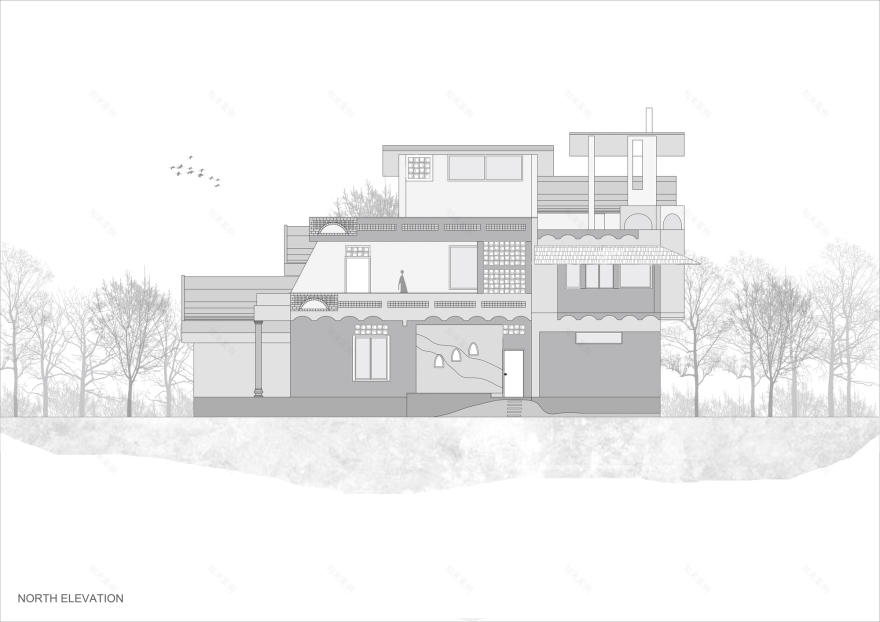
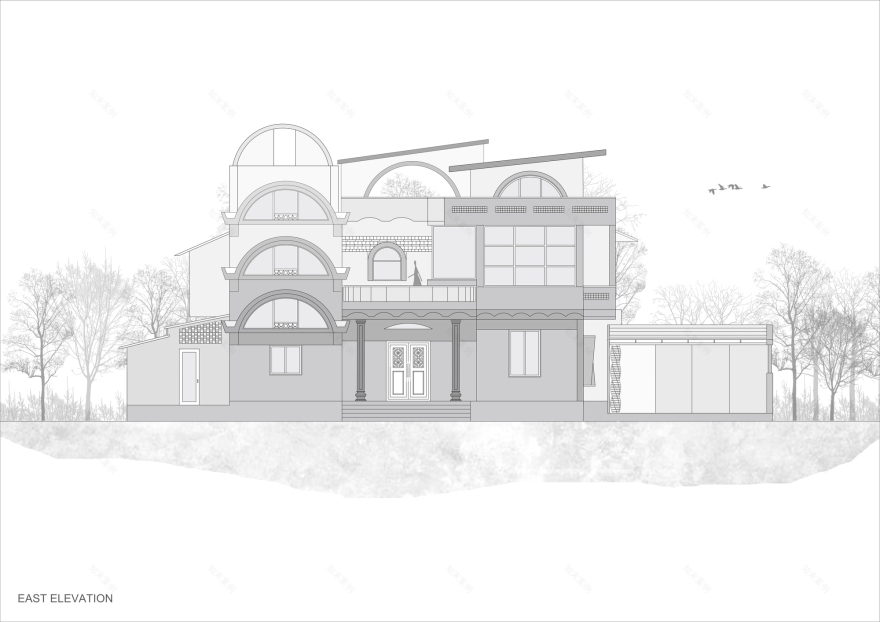
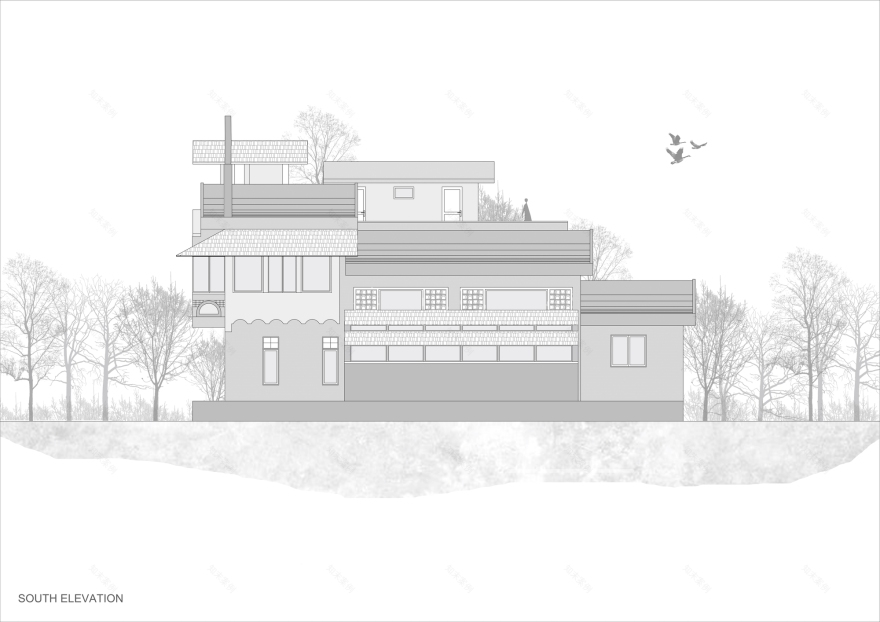
The design philosophy centers on volumetric expressionism, where the building's dynamic elevation is a truthful map of lived function and climate response rather than applied styling. The massing literally manifests this "cascading earth" concept, unfolding as a sequence of ascending vaults—a cascading landscape that dictates daily rituals while functioning as a passive solar instrument. Lower volumes, such as the grounded kitchen, step up to a double-height living concourse, culminating in the summit suite. This geometry allows higher vaults to cast protective shadows over lower terraces, shielding the interiors from harsh afternoon heat while capturing gentler light.

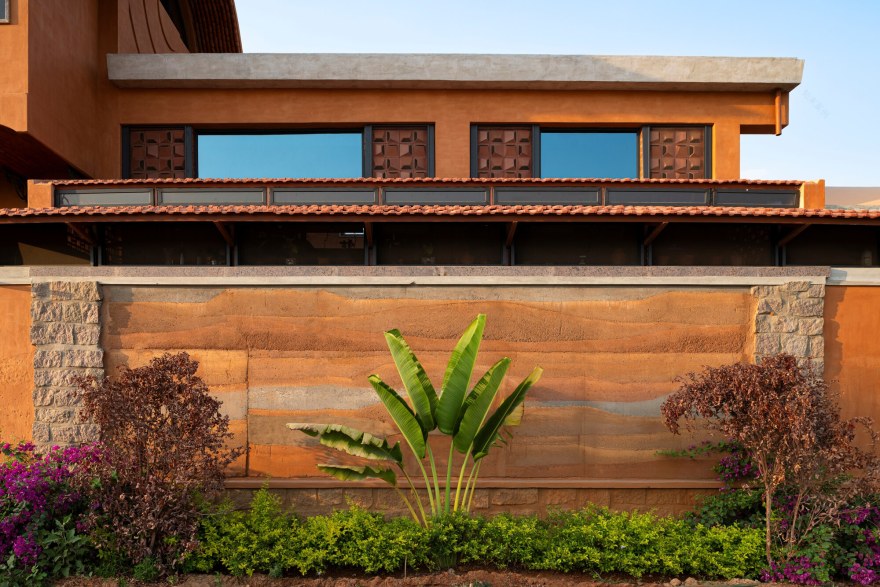
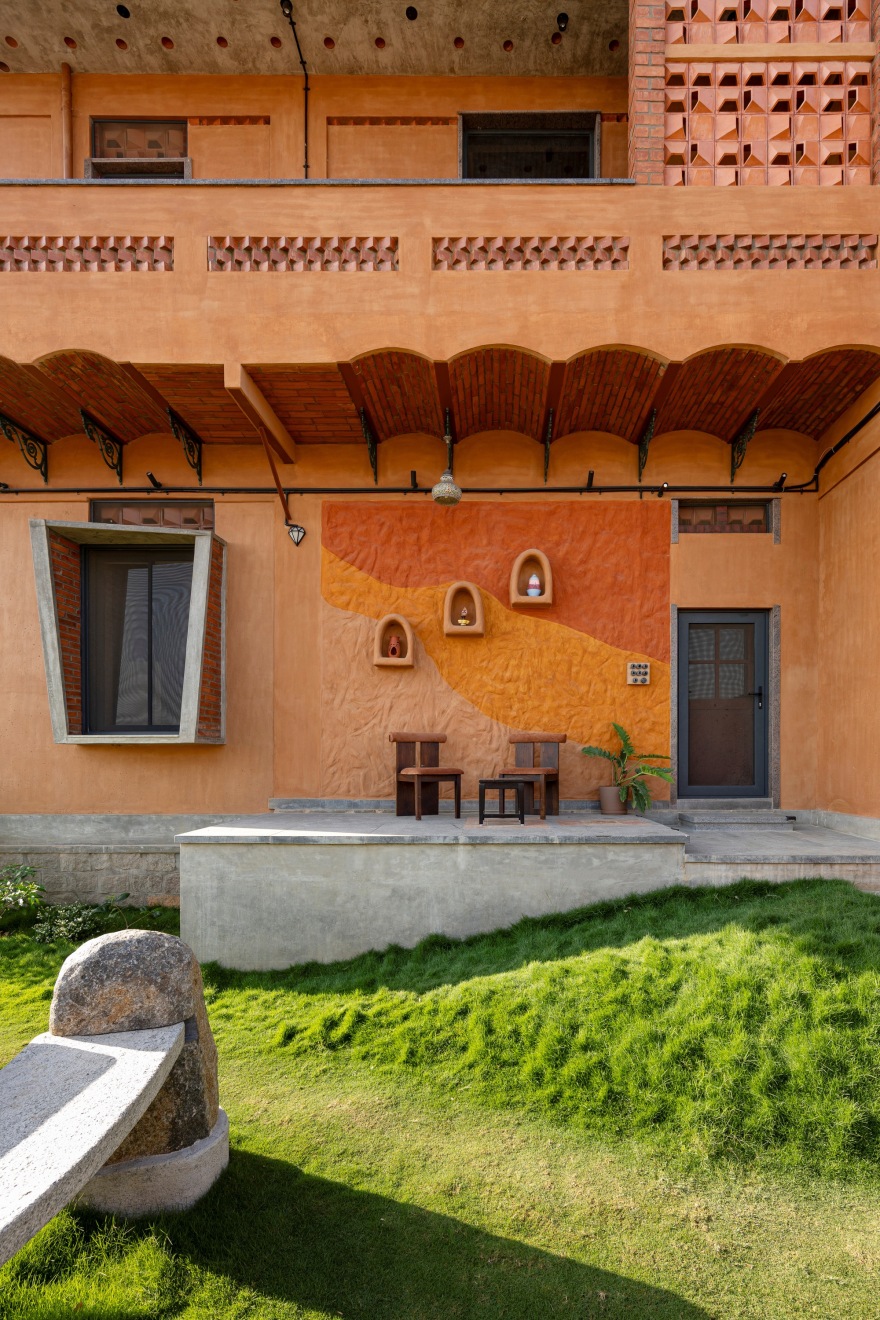
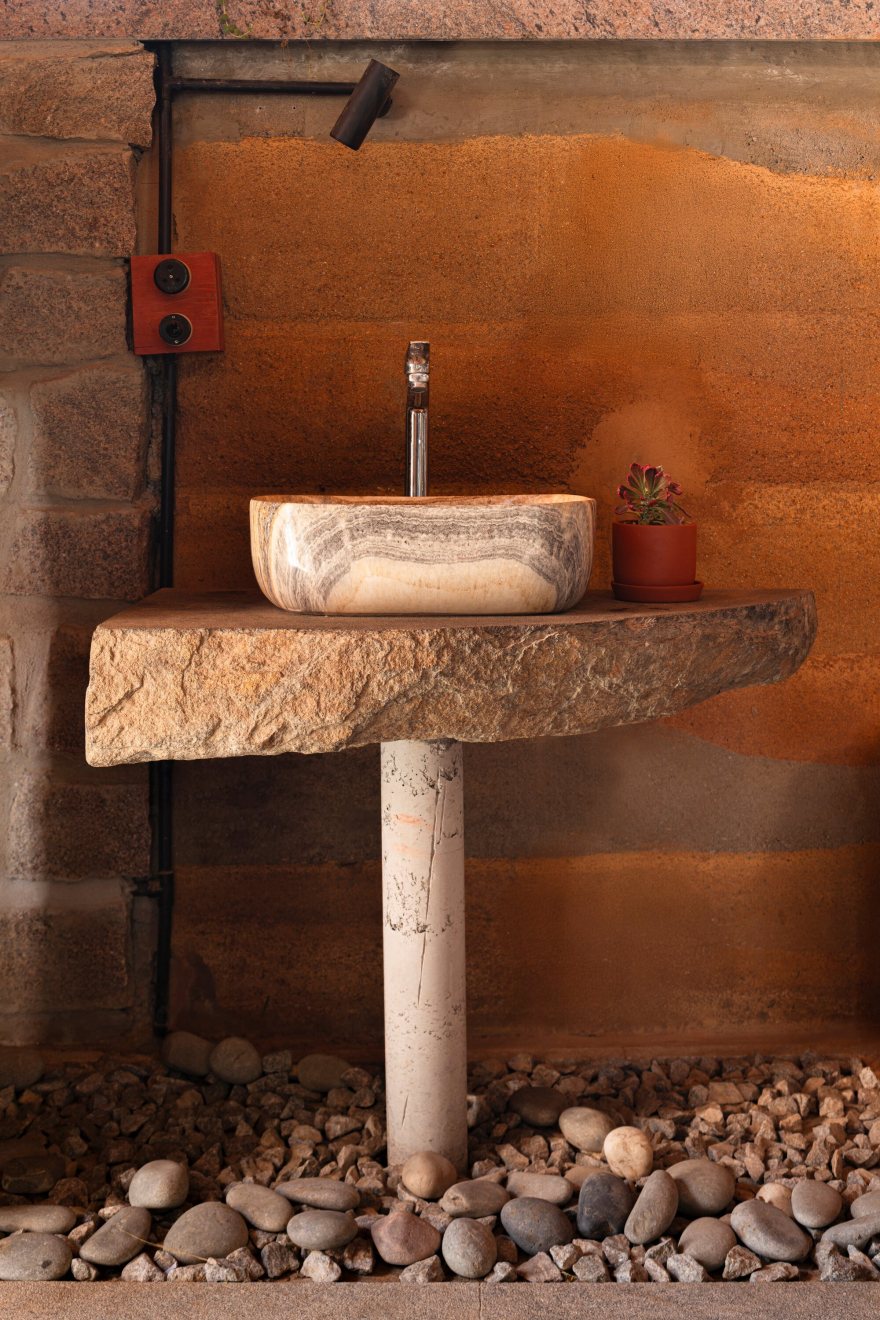
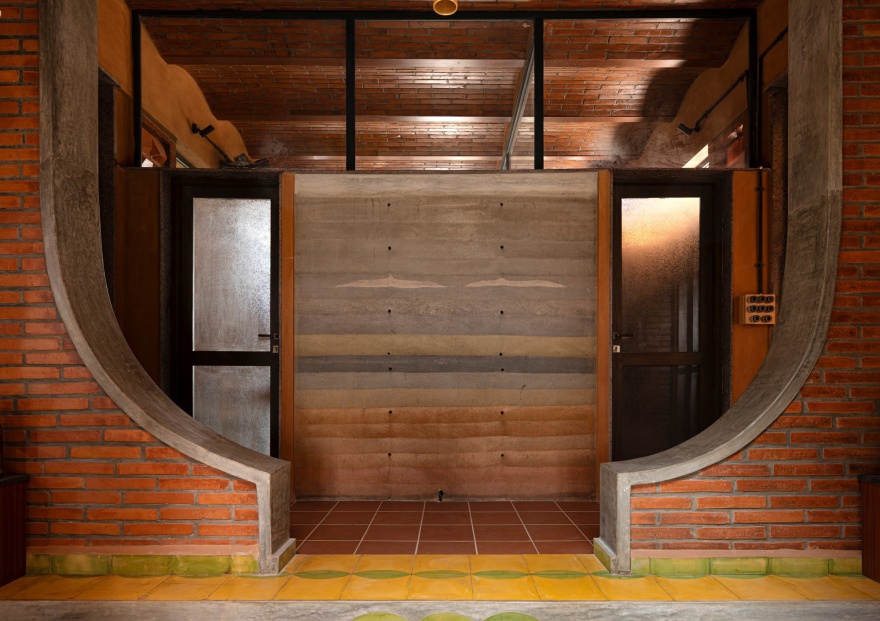
Materially, the home is an intriguing essay in ecological circularity and resourcefulness. The primary envelope resurrects discarded quarry stone debris, transforming lithic waste into monolithic, poured-earth thermal batteries that delay heat transfer across day and night cycles. At the eastern threshold, raw, striated layers of rammed earth offer an immediate, tactile connection to the site's deeper geology. Both earthen expressions are stabilized with less than seven percent lime and cement, ensuring structural longevity while preserving the soil's breathable, eco-friendly nature. The roofscape utilizes the science of the void: interlocked terracotta Guna tubes trap insulating air, and brick jack-arches compress between repurposed structural steel.
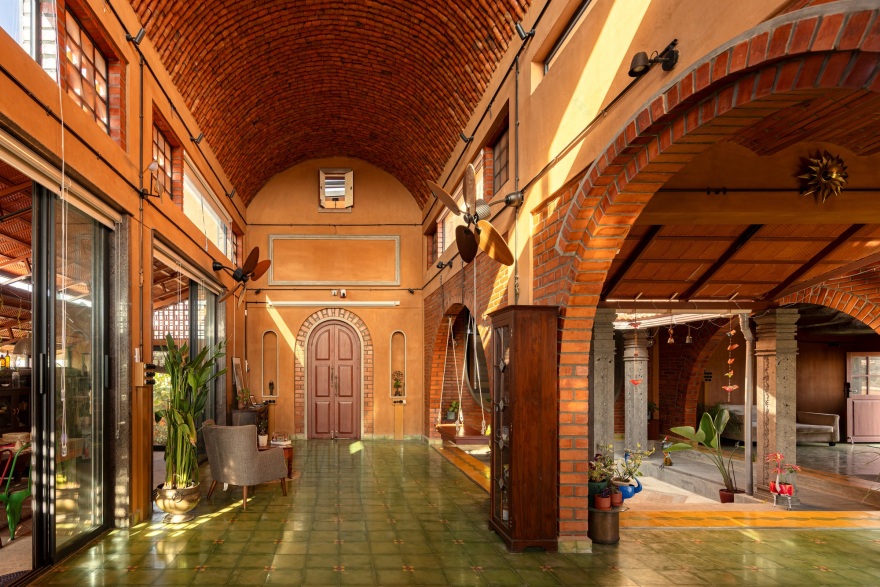


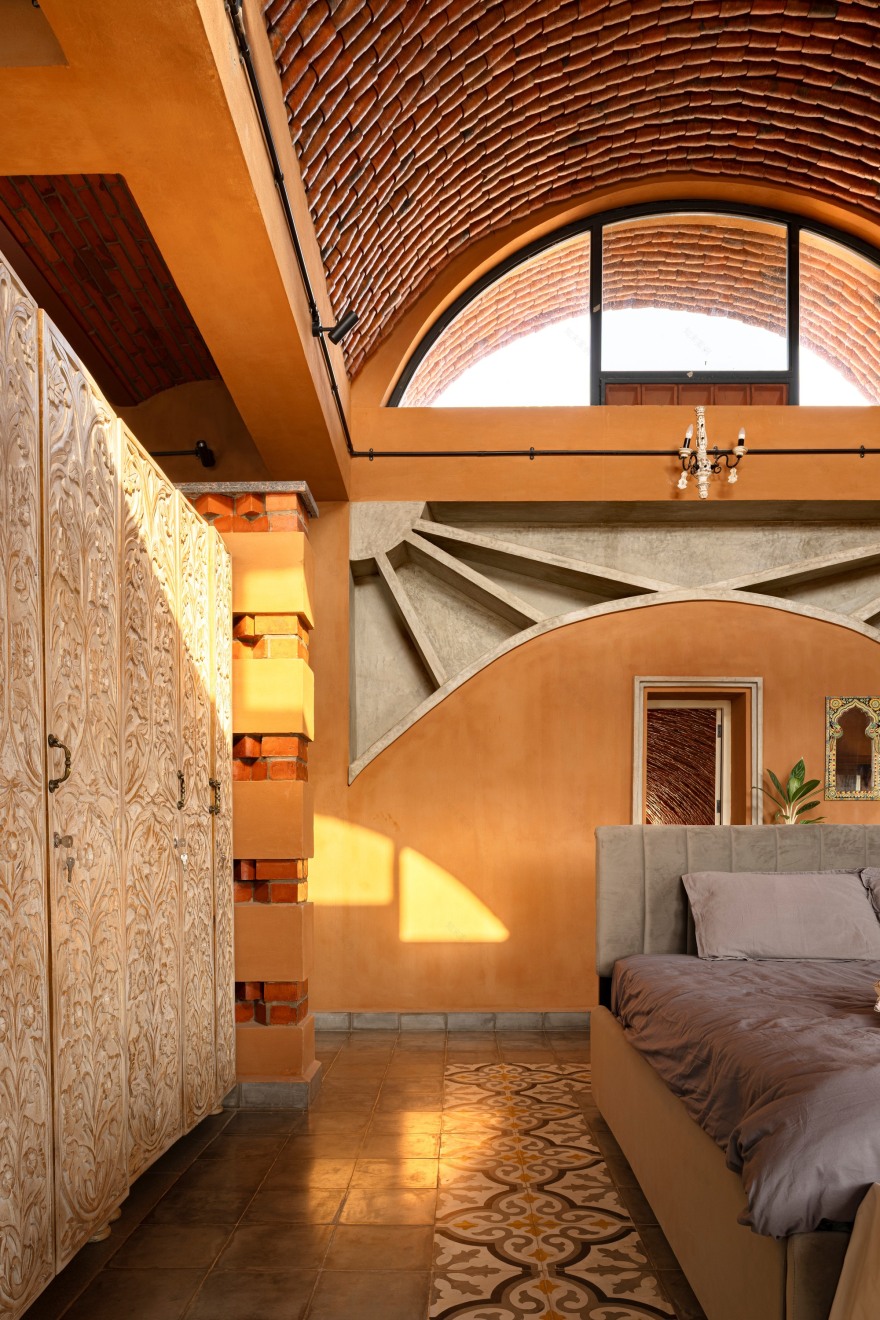

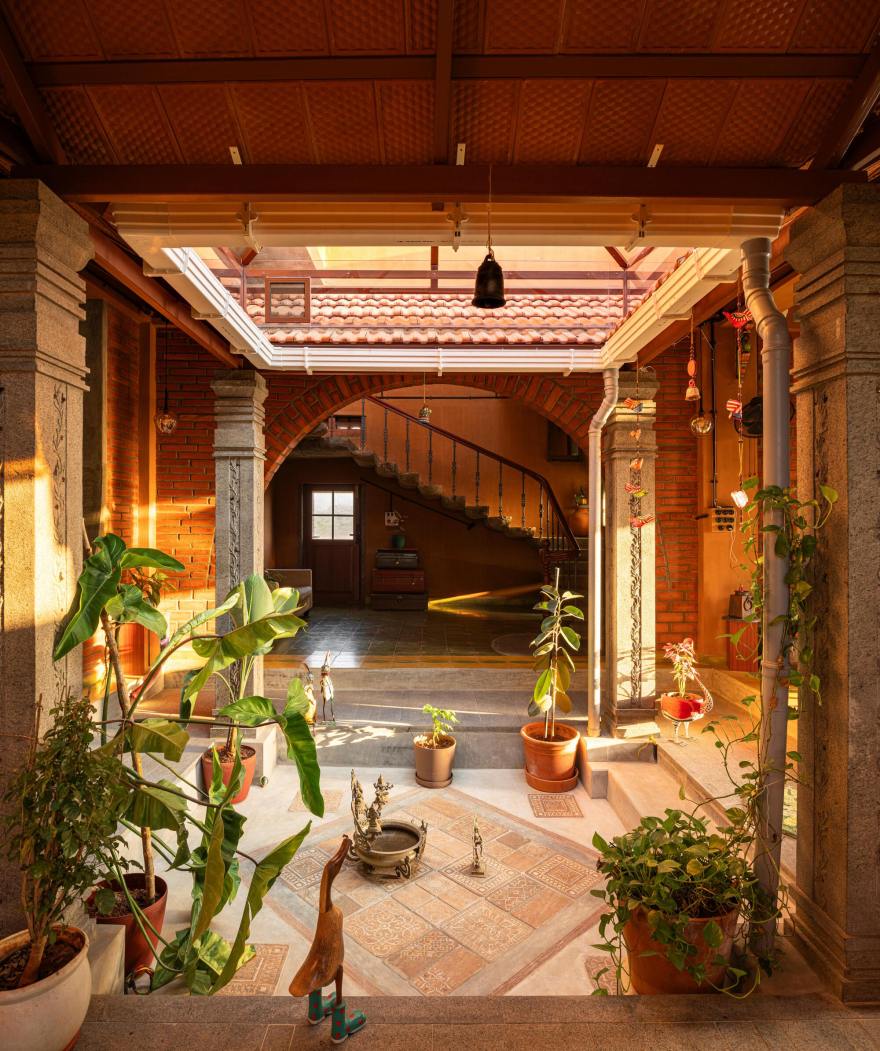
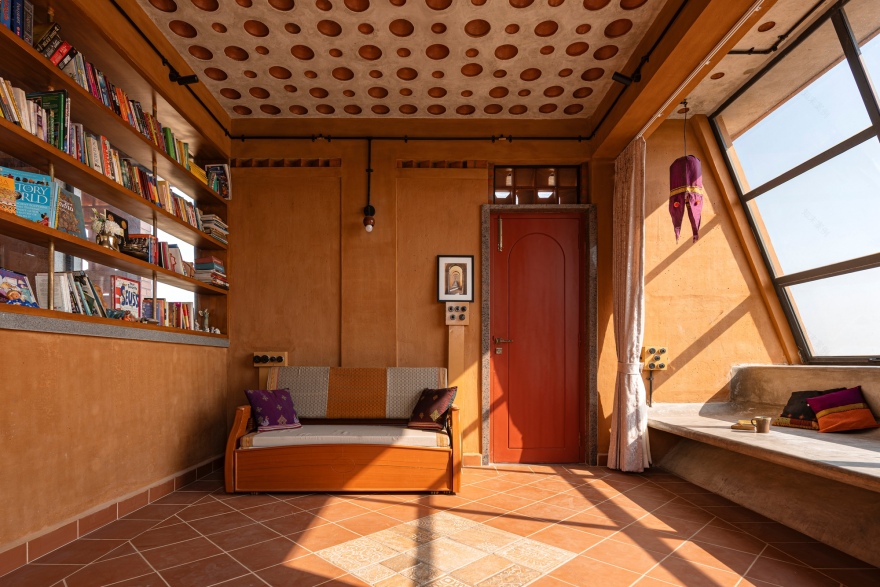
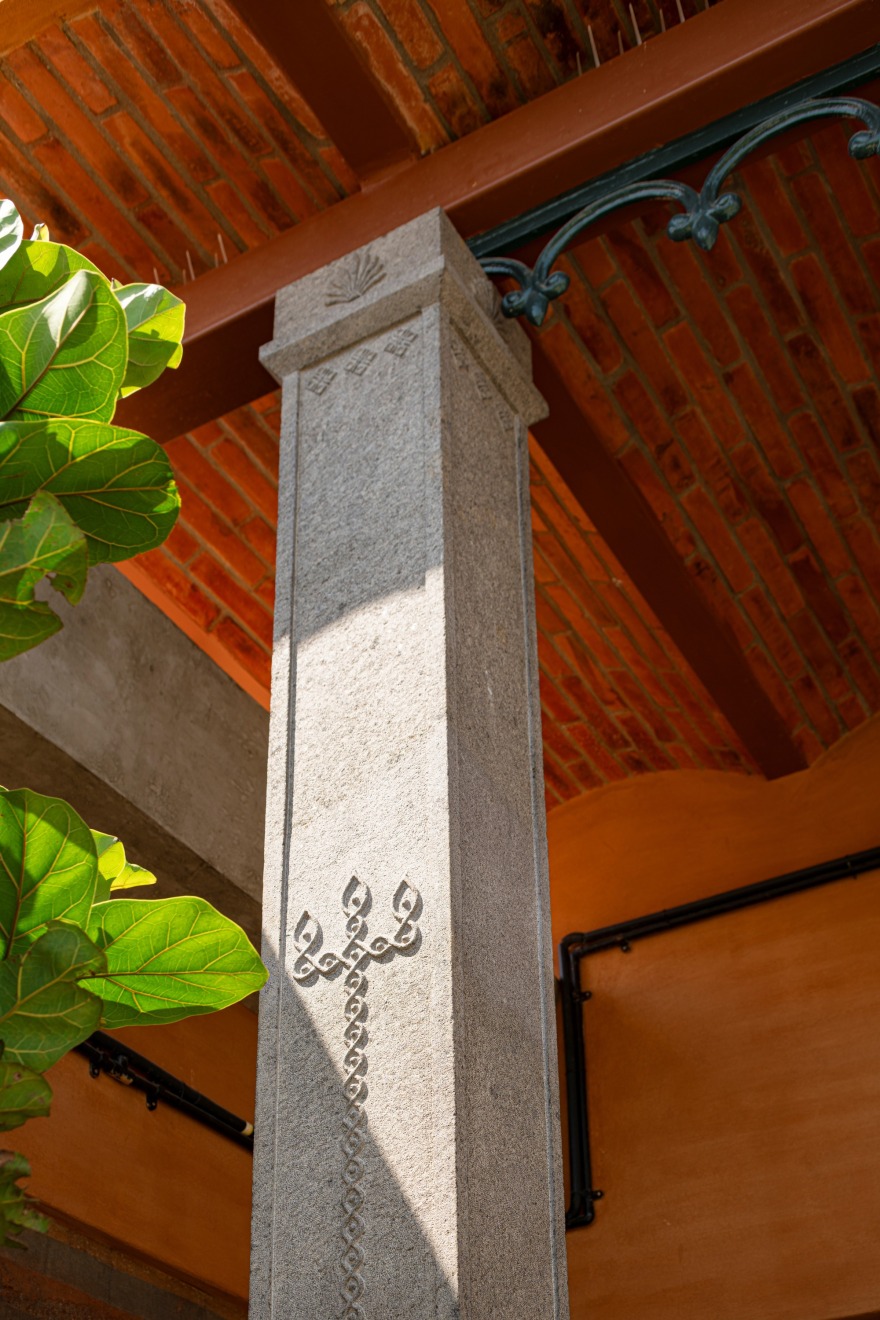
Spatially, the home orchestrates dramatic, sensory contrasts. A double-height living hall acts as a cathedral of clay, flanking a central cooling courtyard known as the Mutram. The kitchen elevates daily routine into a cinematic event, featuring exposed sunburst concrete ribs and a massive lunette light cannon that pours golden morning light into the space. A cantilevered rough-cut granite staircase serves as a lithic spine against delicate cast-iron balusters, framing skylight-washed vertical movement. These rugged elements contrast beautifully with the glass-like sheen of handmade Athangudi floor tiles, rooting the home in deep heritage craft.

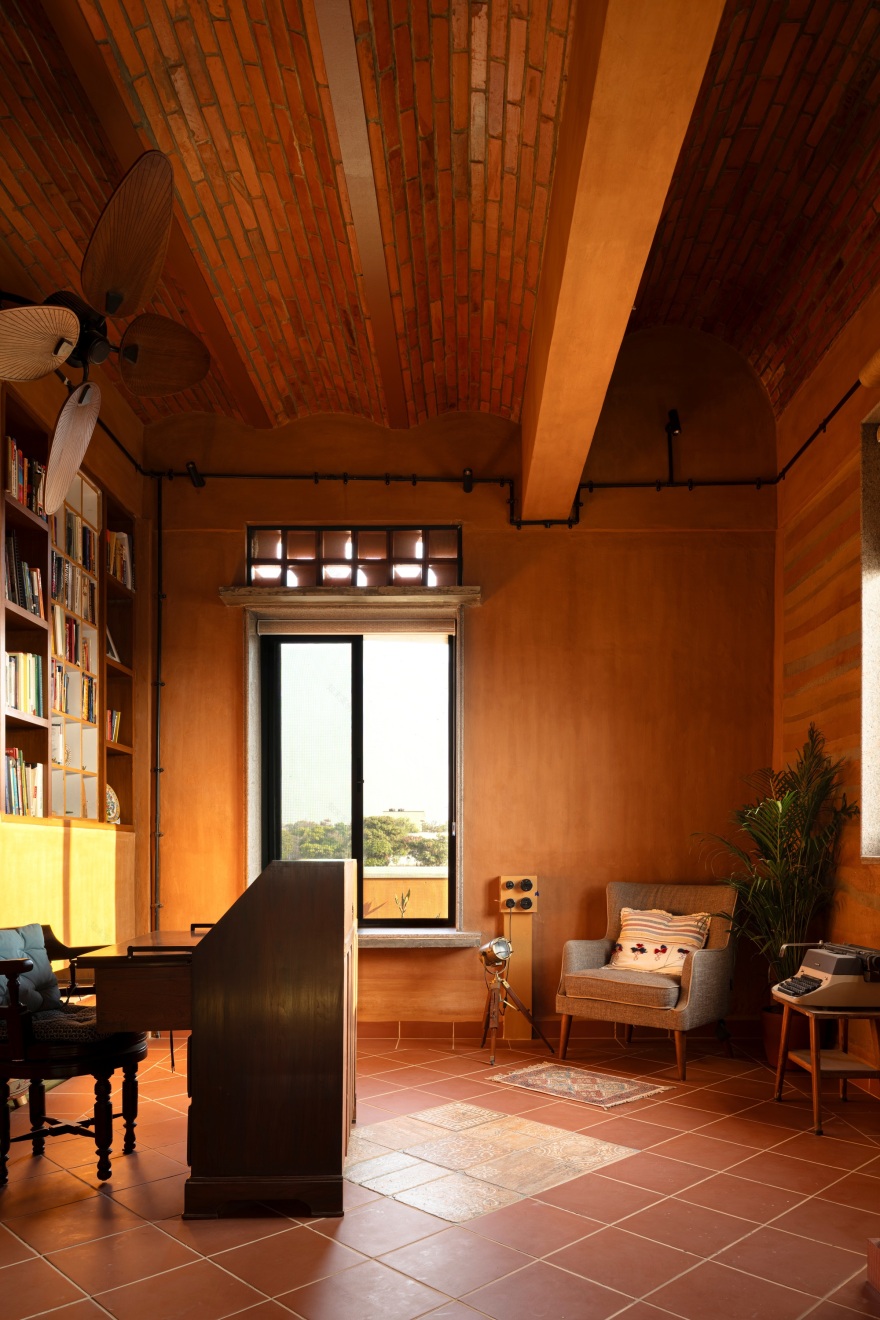
Aurva Illam ultimately operates as a highly tuned climate engine, achieving complete thermal comfort without mechanical cooling. Its ascending volumes harness the stack effect, naturally drawing cool air from the courtyard and exhausting hot air through apex terracotta jaalis. Even the monsoon is treated as an engaging architectural event; rainwater physically cascades along exposed ferrocement gutters into underground harvesting tanks for zero-drop wastage. The residence proves that regenerative architecture can elevate the human experience, turning resurrected stone debris and structural physics into a lasting legacy of poetic, sustainable living.
Project gallery












南京喵熊网络科技有限公司 苏ICP备18050492号-4知末 © 2018—2020 . All photos and trademark graphics are copyrighted by their owners.增值电信业务经营许可证(ICP)苏B2-20201444 苏公网安备 32011302321234号
苏公网安备 32011302321234号客服
消息
收藏
下载
最近