

创作上传
VIP
收藏下载
登录 | 注册有礼
查看完整案例

收藏

下载

分享

翻译
Architects:Julia Kosciuk,WaCa Design
Area:224m²
Year:2023
Photographs:Pedro Kok
Manufacturers:Ardosia do Vale Comercio de Pedras Ltda,GM Muros de Pedras Eireli,Mazal Industria de Esquadrias de Madeira Ltda,Thiesen Carretas Nauticas Eireli,Vegetalis
Lead Architects:Walter Cain, Julia Kosciuk
Category:Residential Architecture,Houses
Project Management:Engenho Projetos e Construções Ltda
Engineering & Consulting > Structural:Steimbach Construcoes
City:Governador Celso Ramos
Country:Brazil
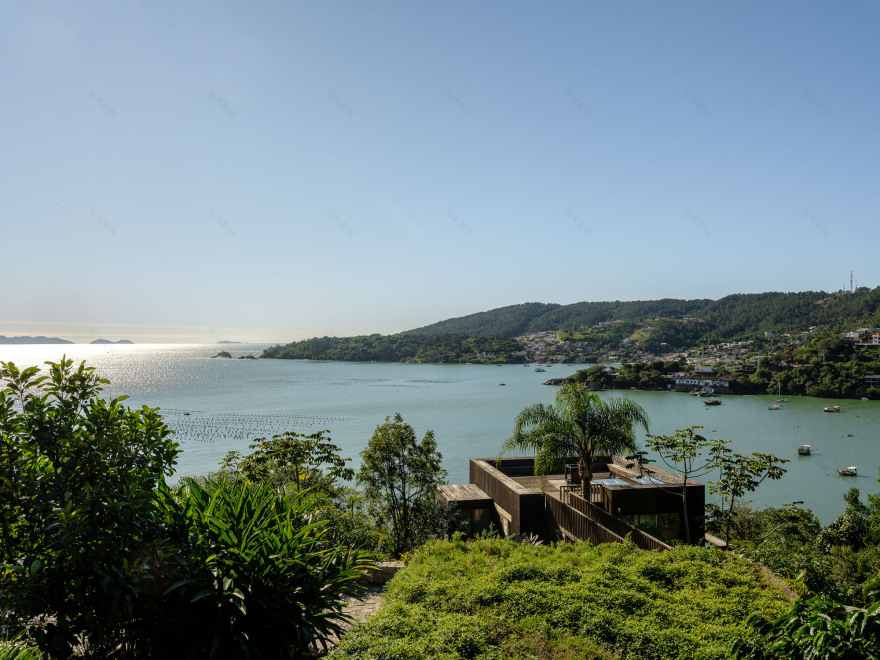
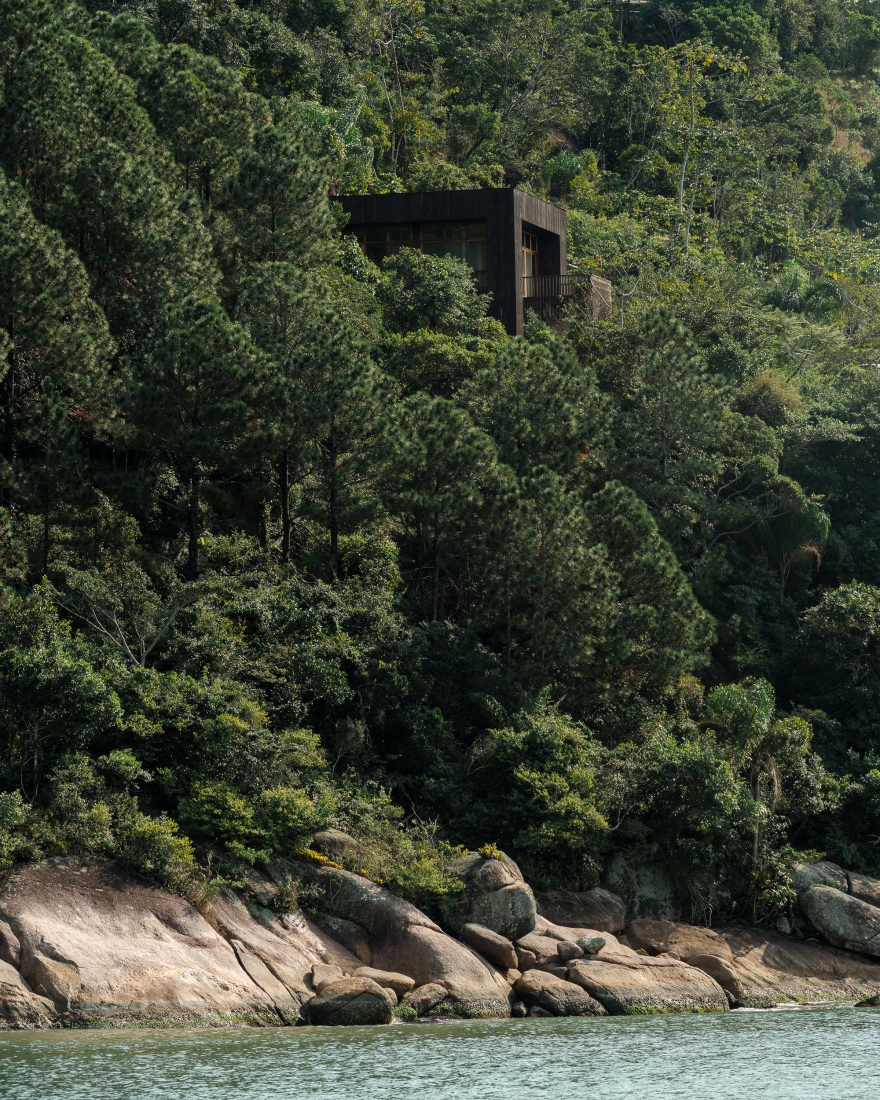
Text description provided by the architects. WaCa Design's Rocha Floridas Guest House core concept relies on pragmatic constructivism and pure spatial geometry—adding and subtracting volumes from a central two-story cube. Located on Brazil's southern coast facing Calheiros Beach, the project is one of the four buildings in the Rocha Floridas compound, committing to sustainability by prioritizing Low Embodied Carbon (LEC) materials.

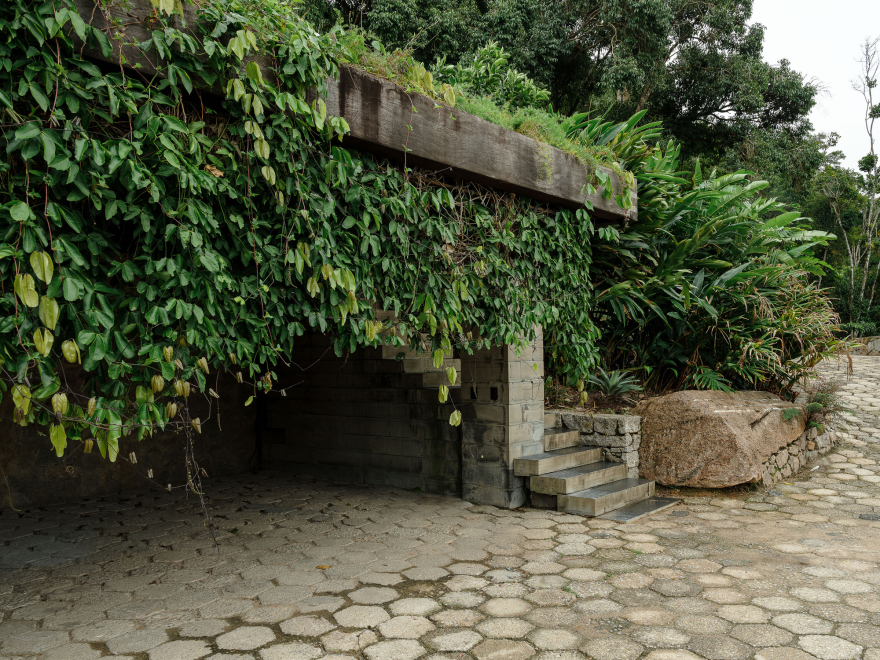
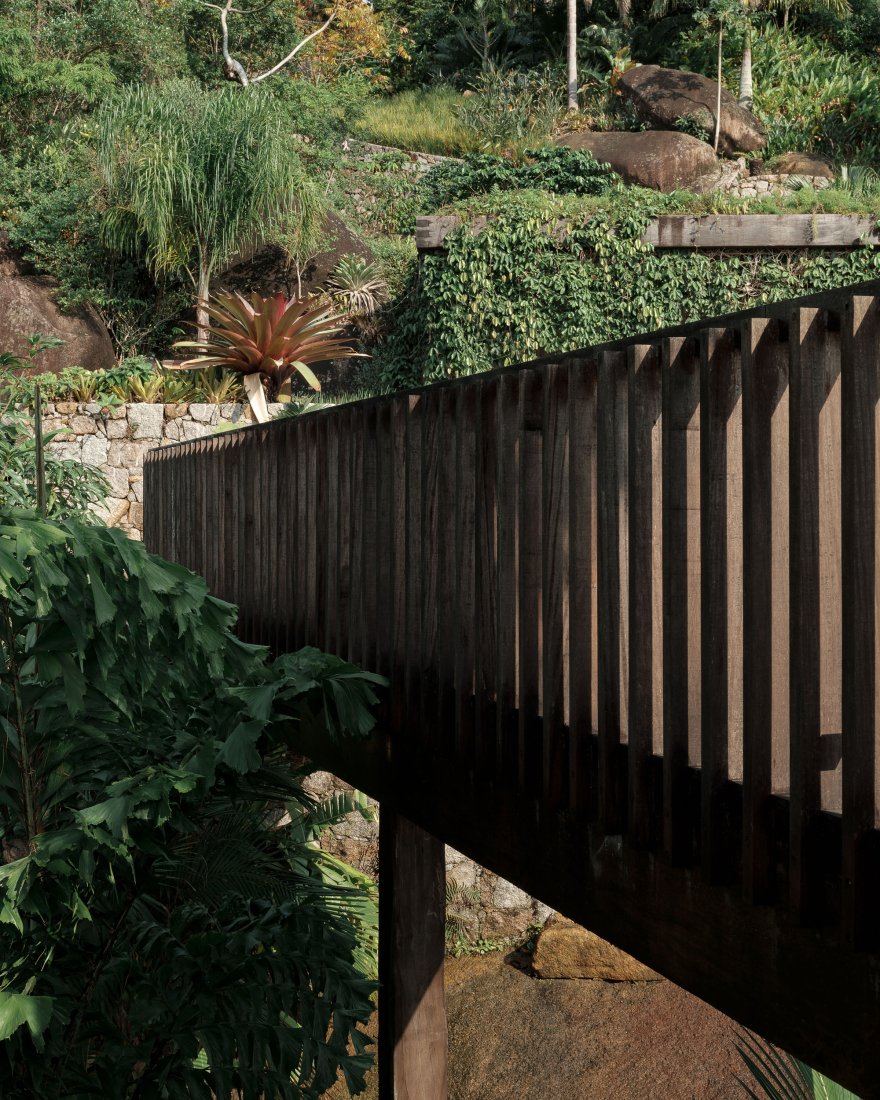
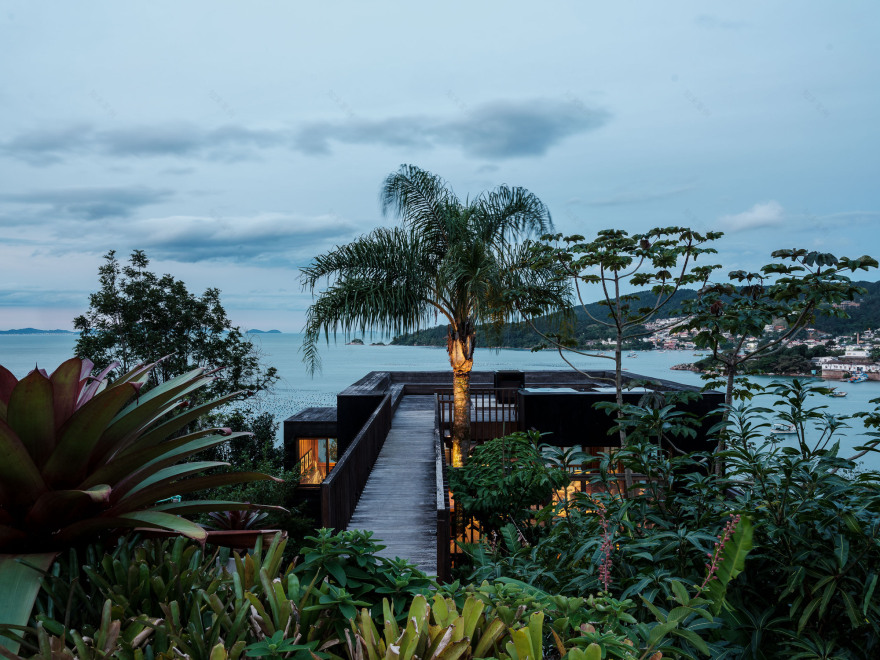
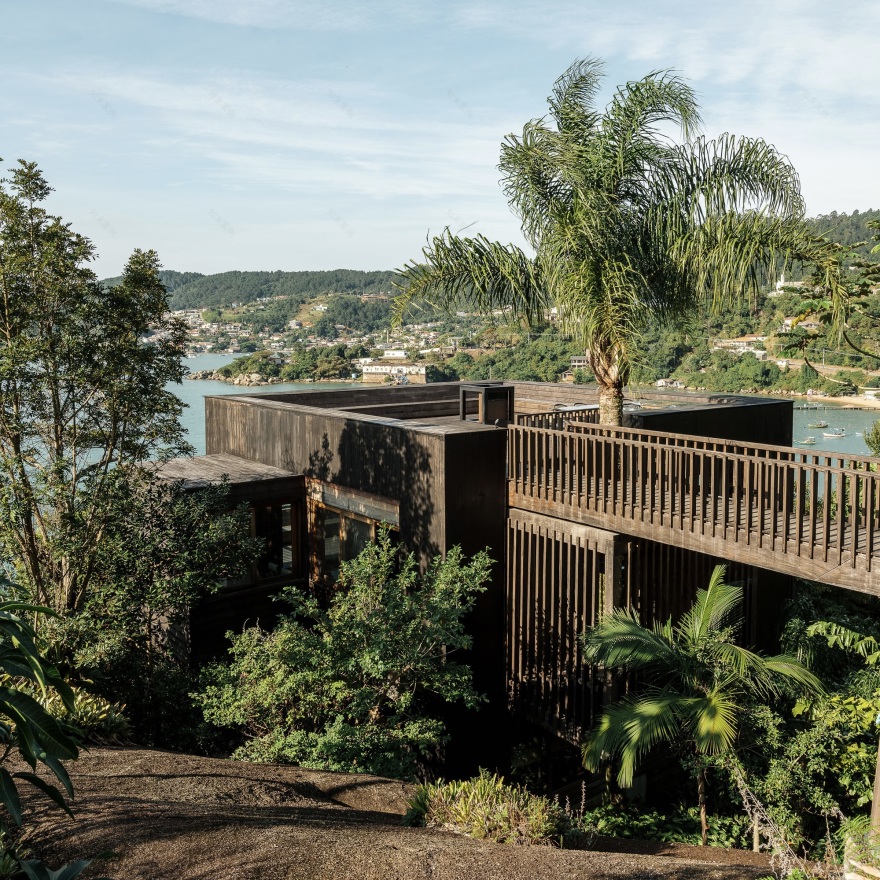
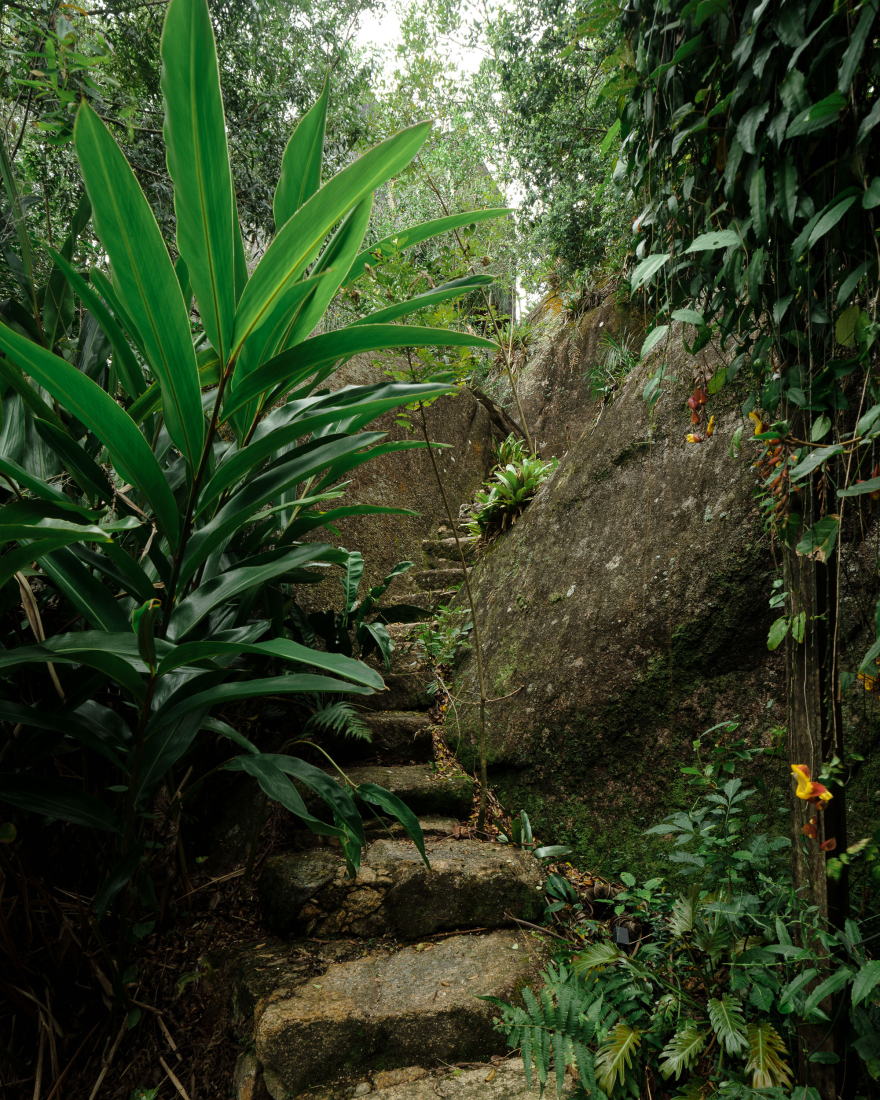
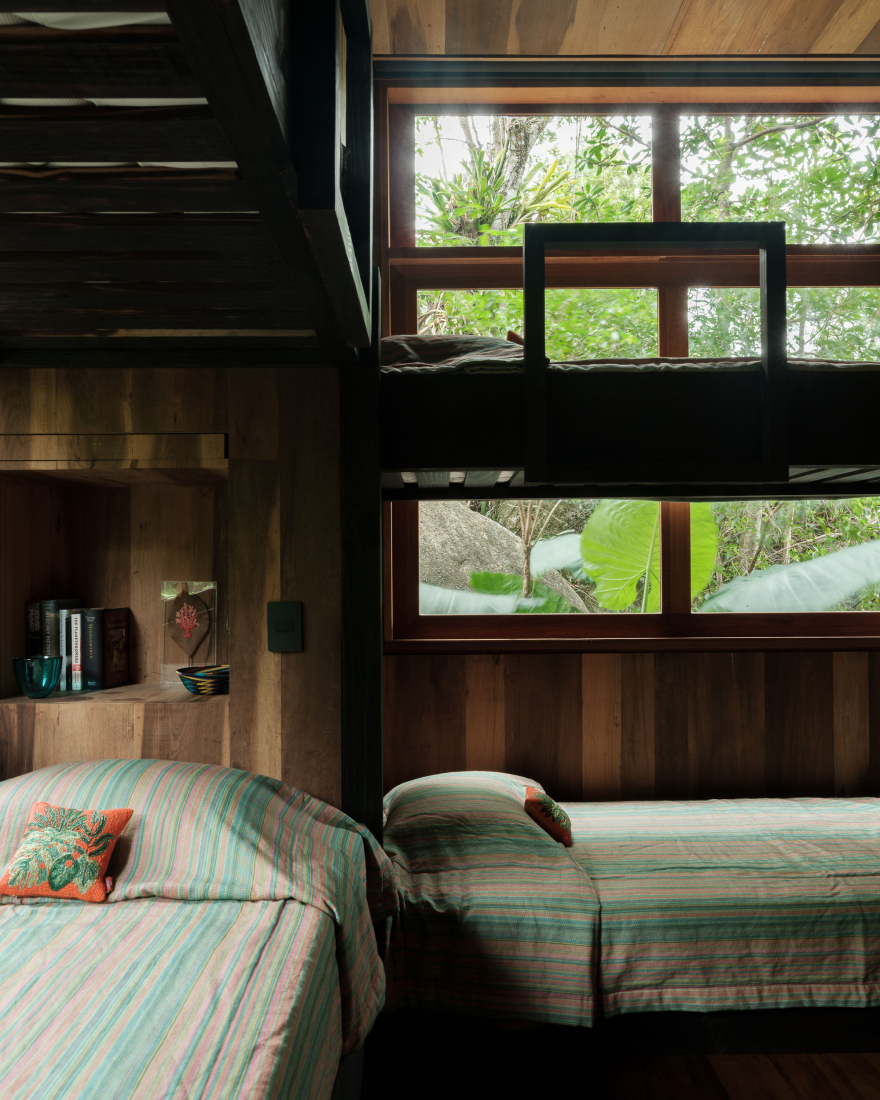
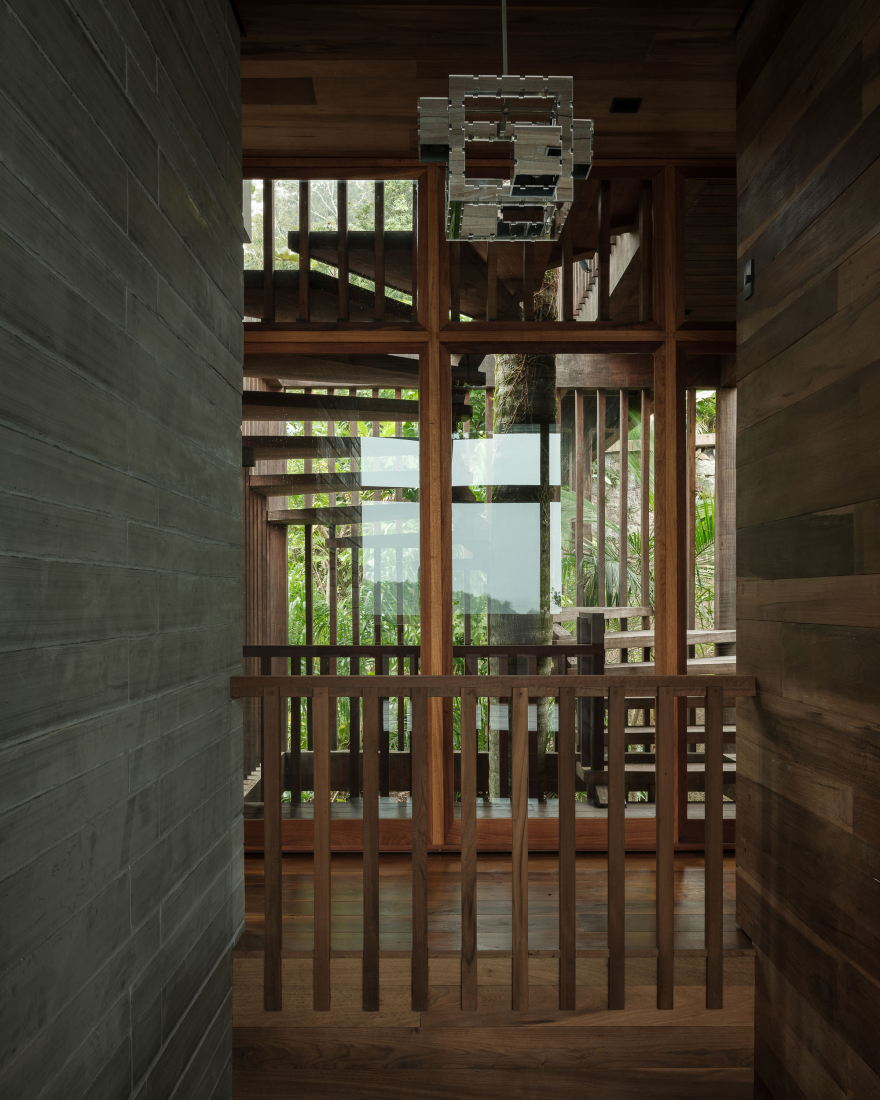
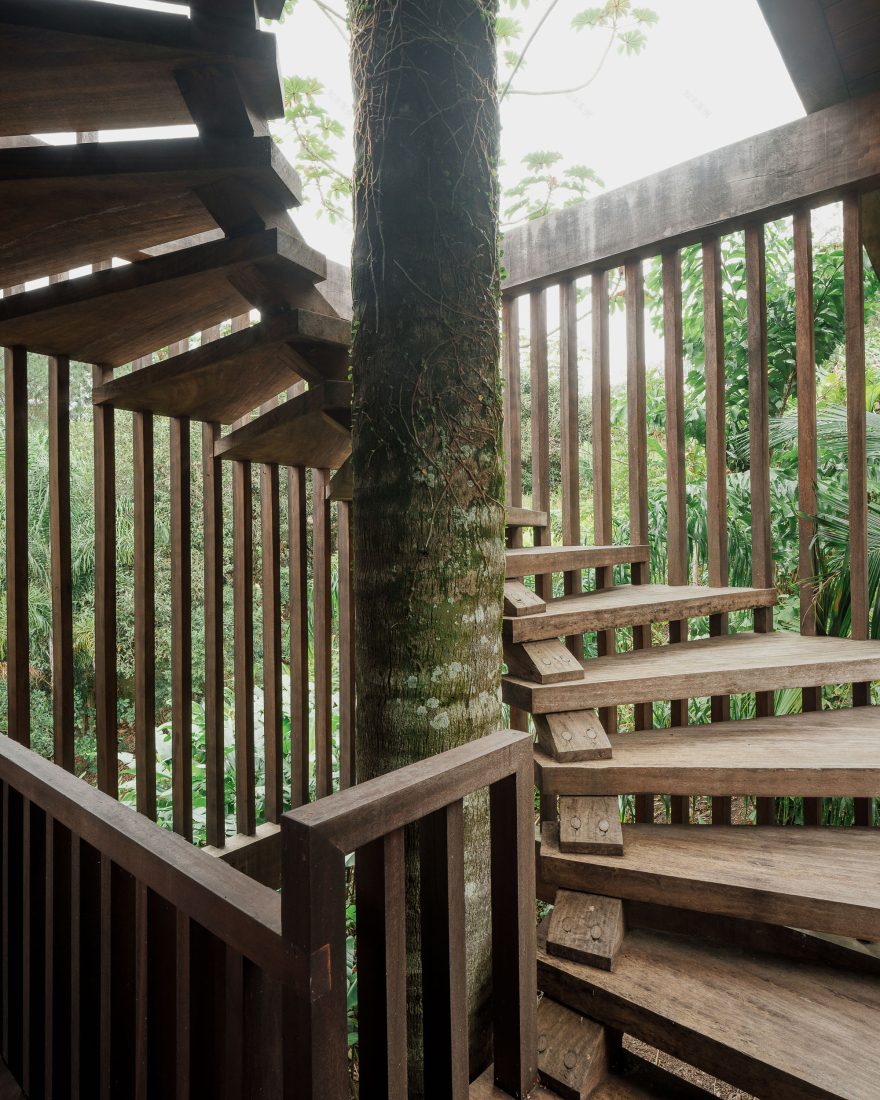
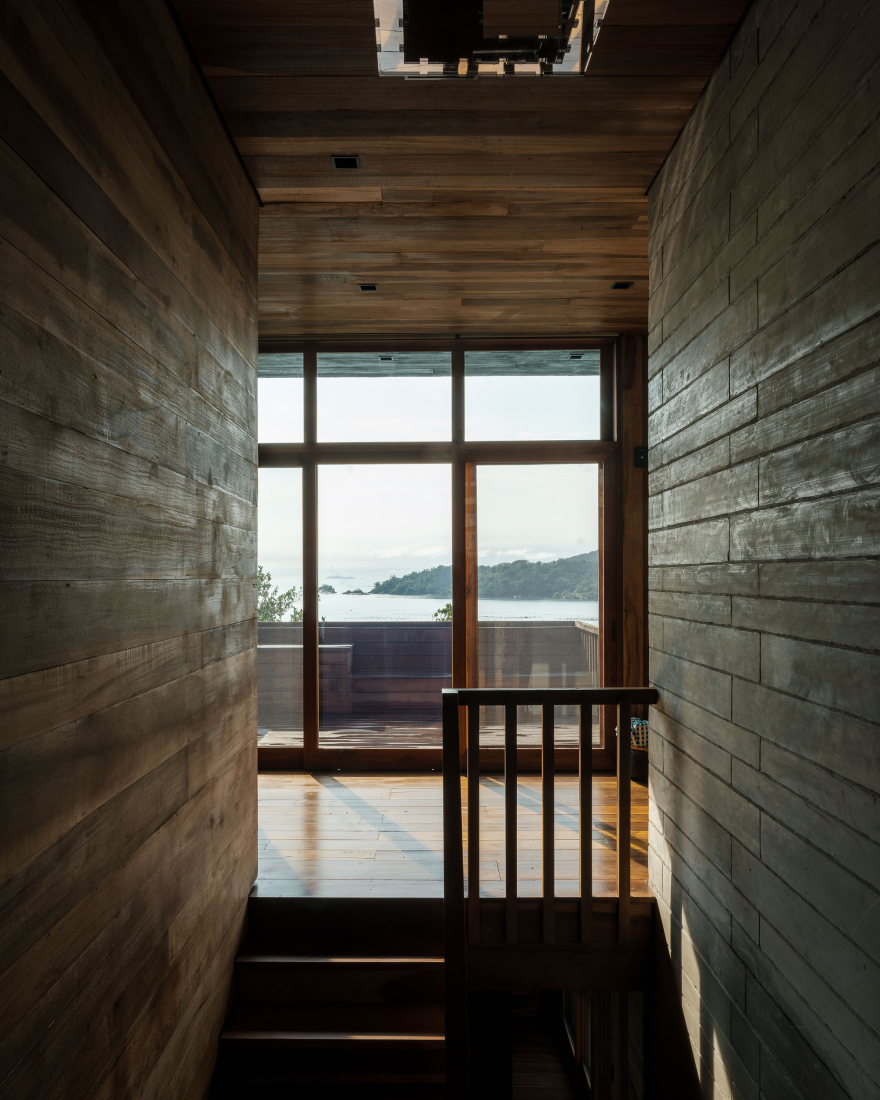
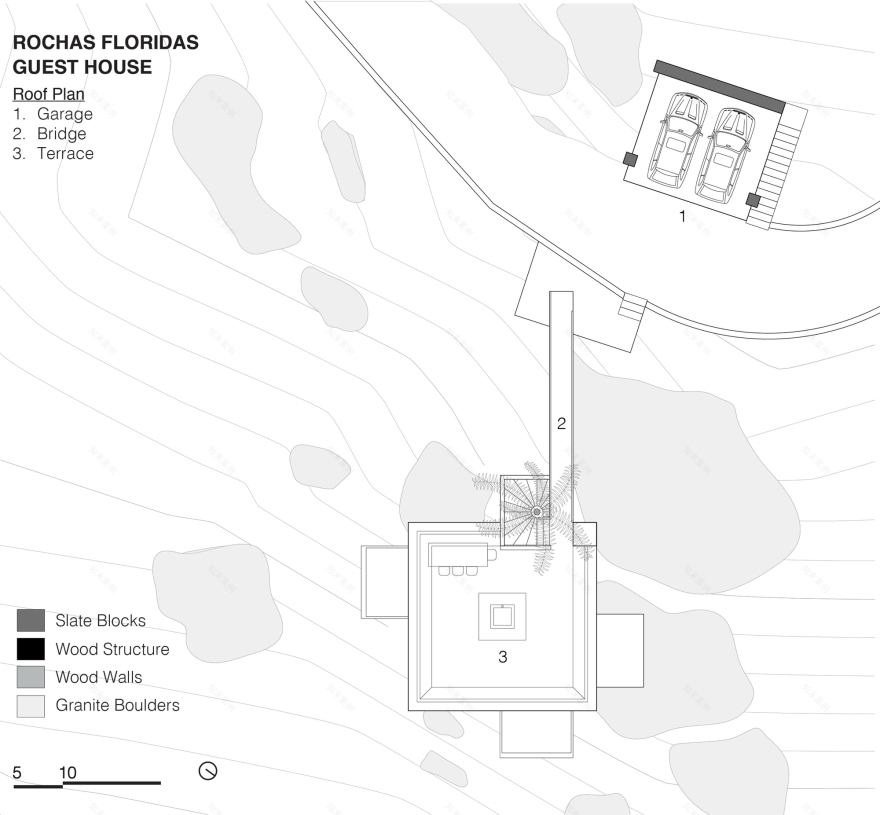
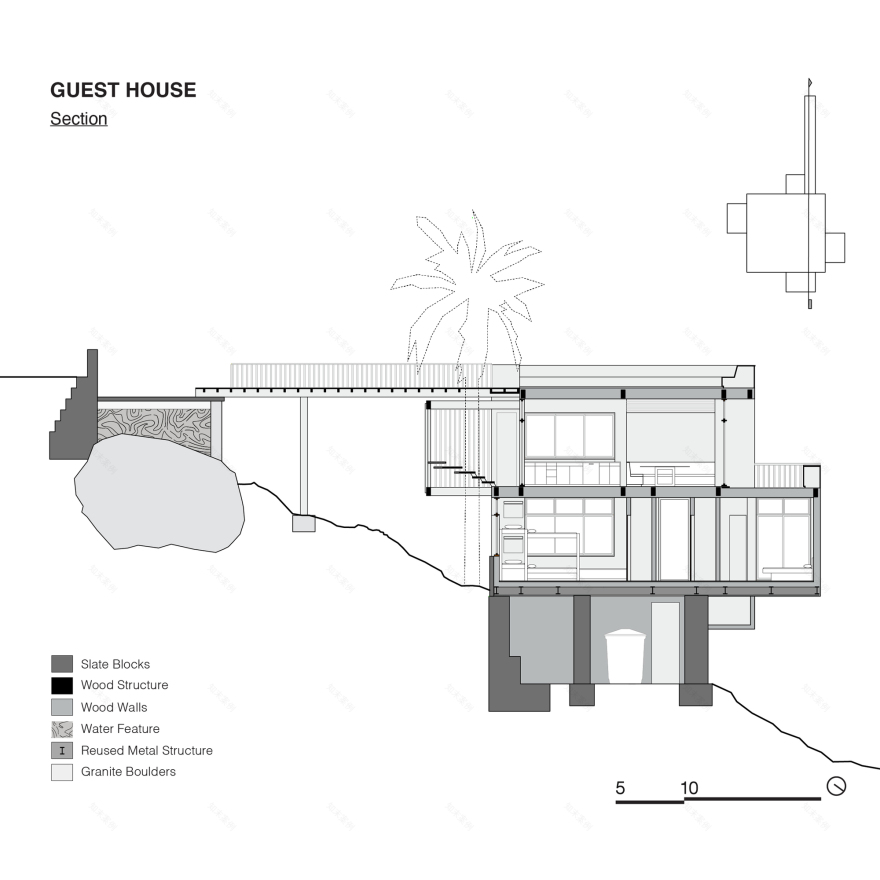
The spatial sequence is choreographed to engage the landscape. Guests arrive at a carport built with traditional taipa de pedra (earth and locally harvested granite) nestled into the hill. A wooden bridge leads to a roof terrace offering panoramic ocean views, before an outdoor helical staircase—carefully wrapped around a preserved majestic Jerivá palm—descends to the main living floor. The house itself is a wood and glass cube elevated on a structurally minimal slate pedestal. To expand the living, dining, and sleeping areas, a thick wood frame surrounds the cube, and four cubed "drawers" are cantilevered outward into the Atlantic Forest, creating a dynamic interplay of solids and voids.
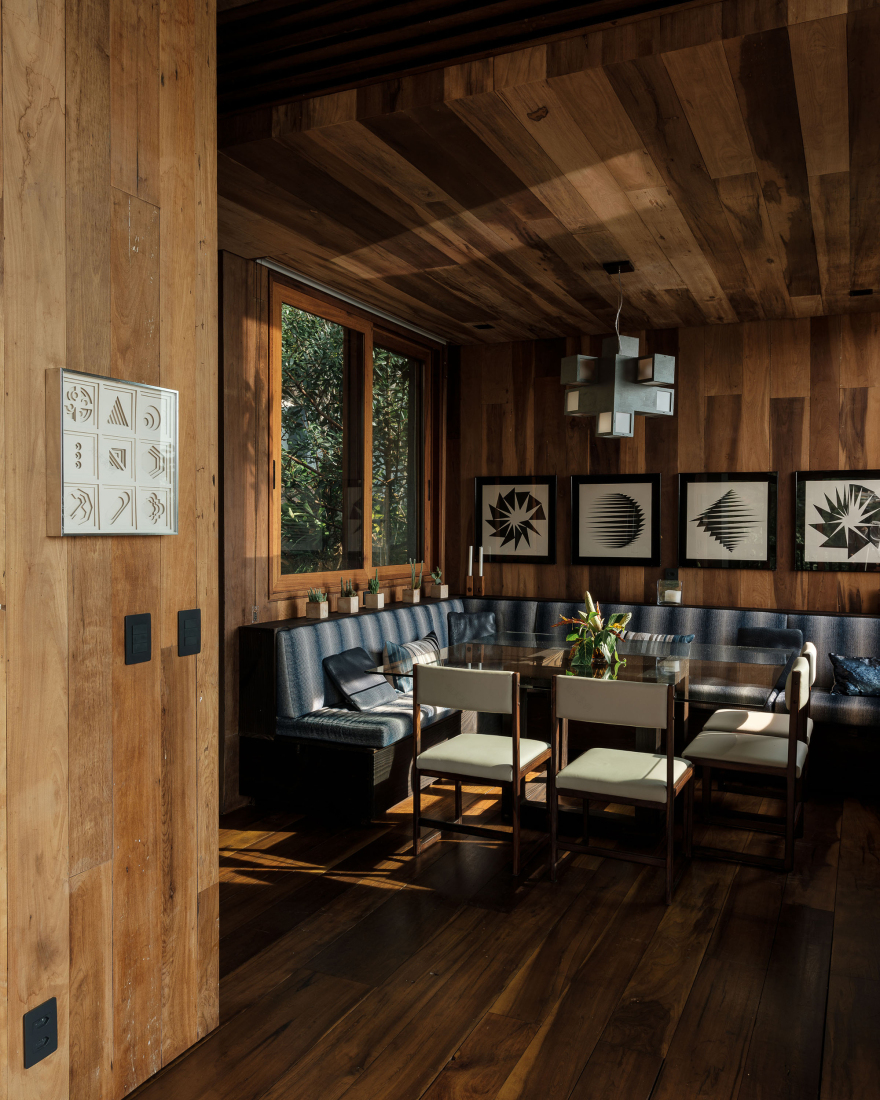
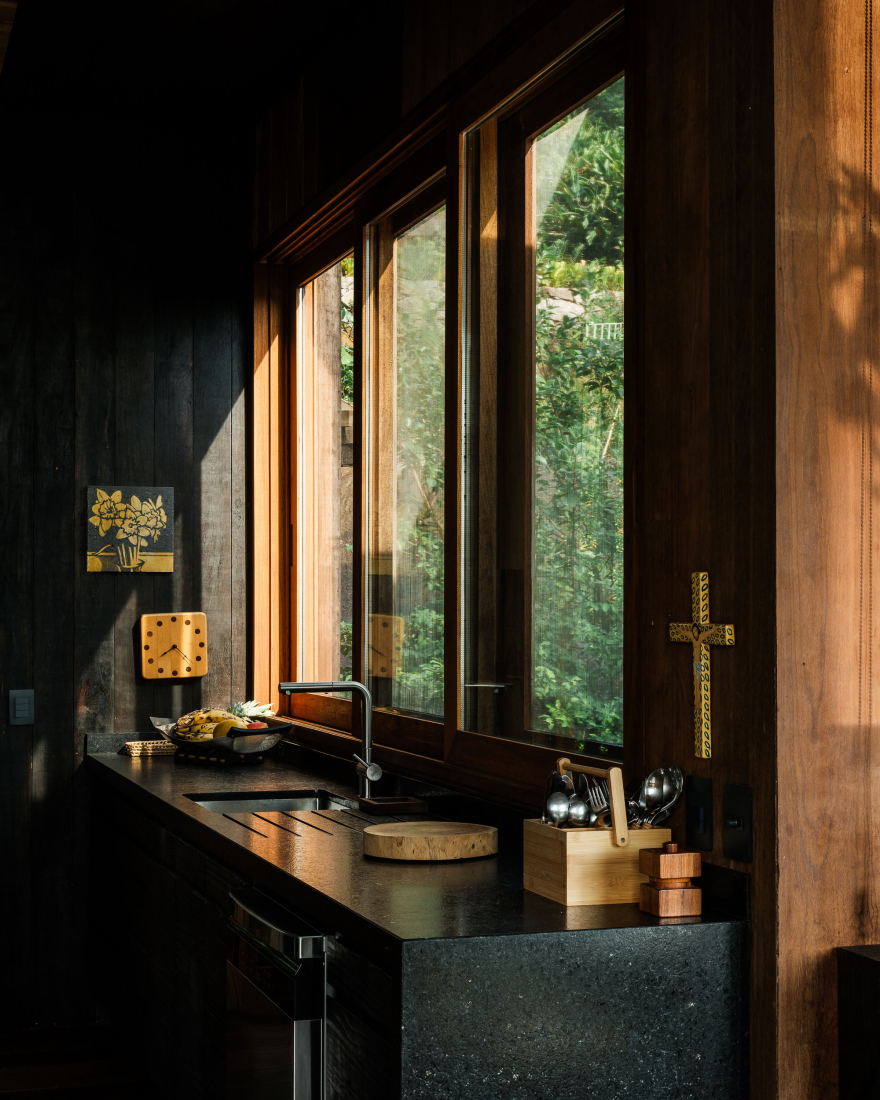
Balancing the dramatic structural demands of these cantilevers with the project's geometric clarity presented a significant challenge. The design called for a hardwood timber frame, but this proved inefficient and overly heavy. To resolve this setback, the team redesigned the framework using repurposed steel beams sourced from a salvage yard. By embedding these beams beneath the drawer volumes, the geometric purity was maintained, allowing the forms to appear to float effortlessly.
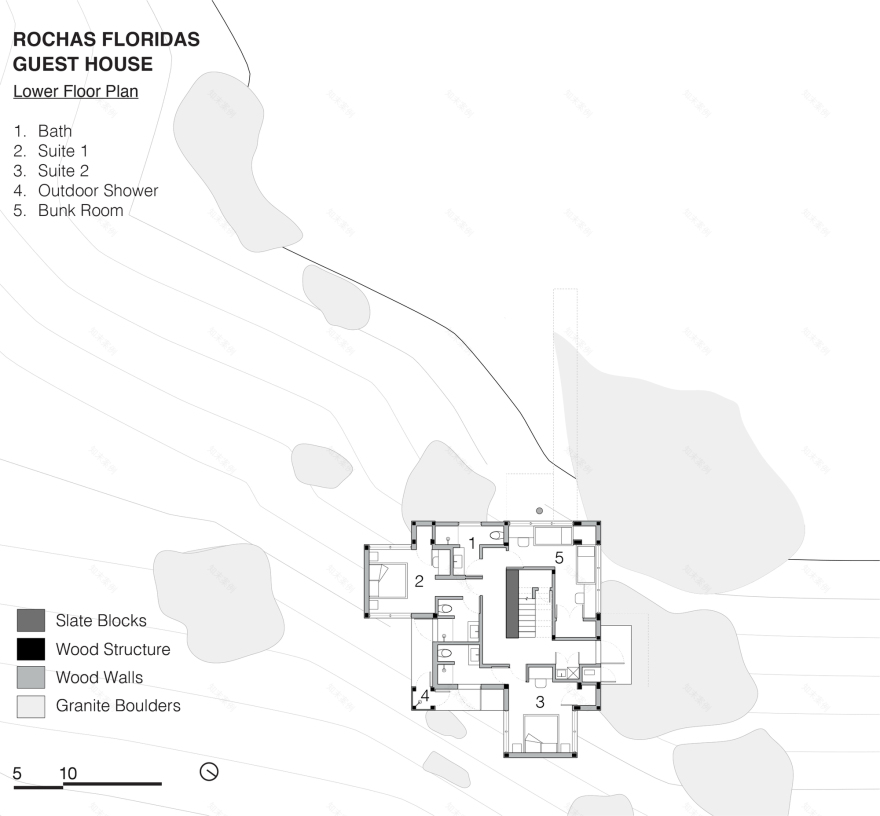
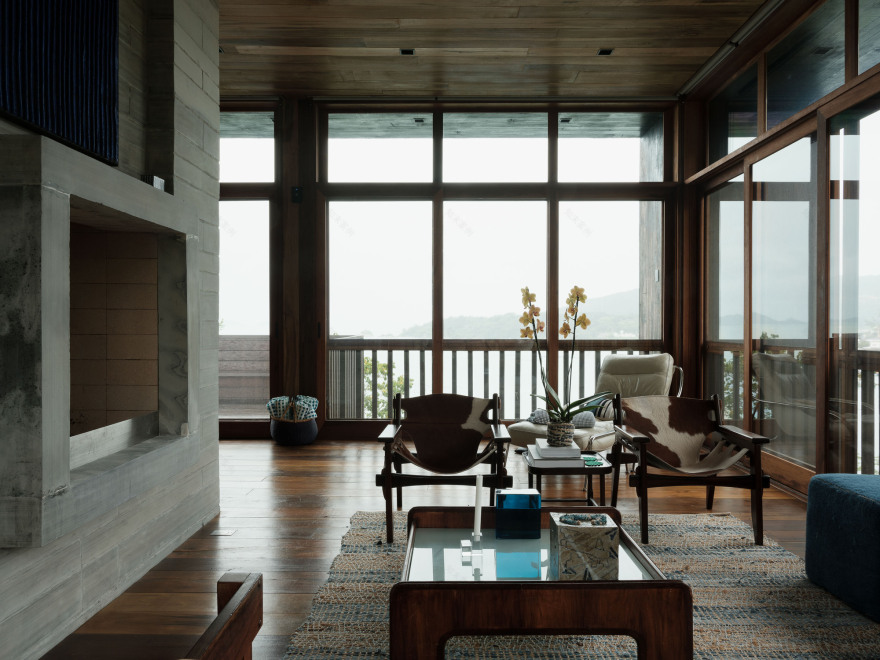
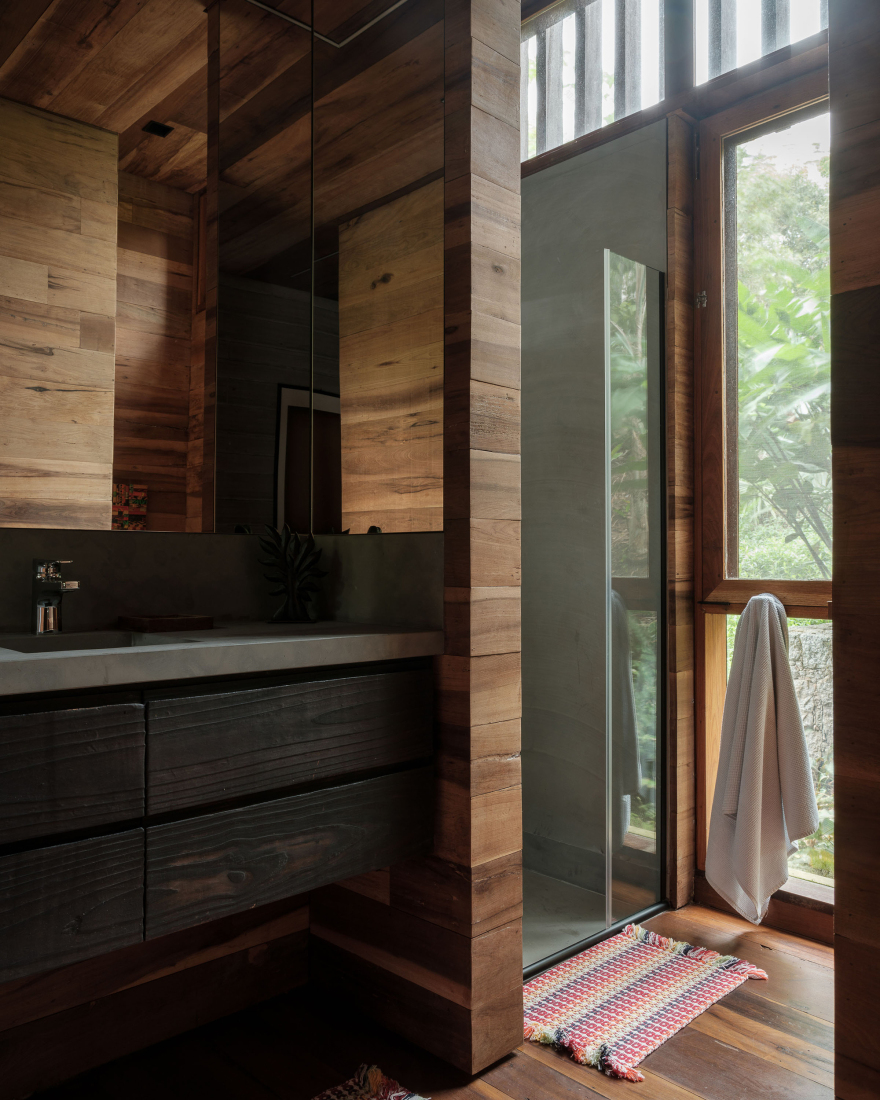
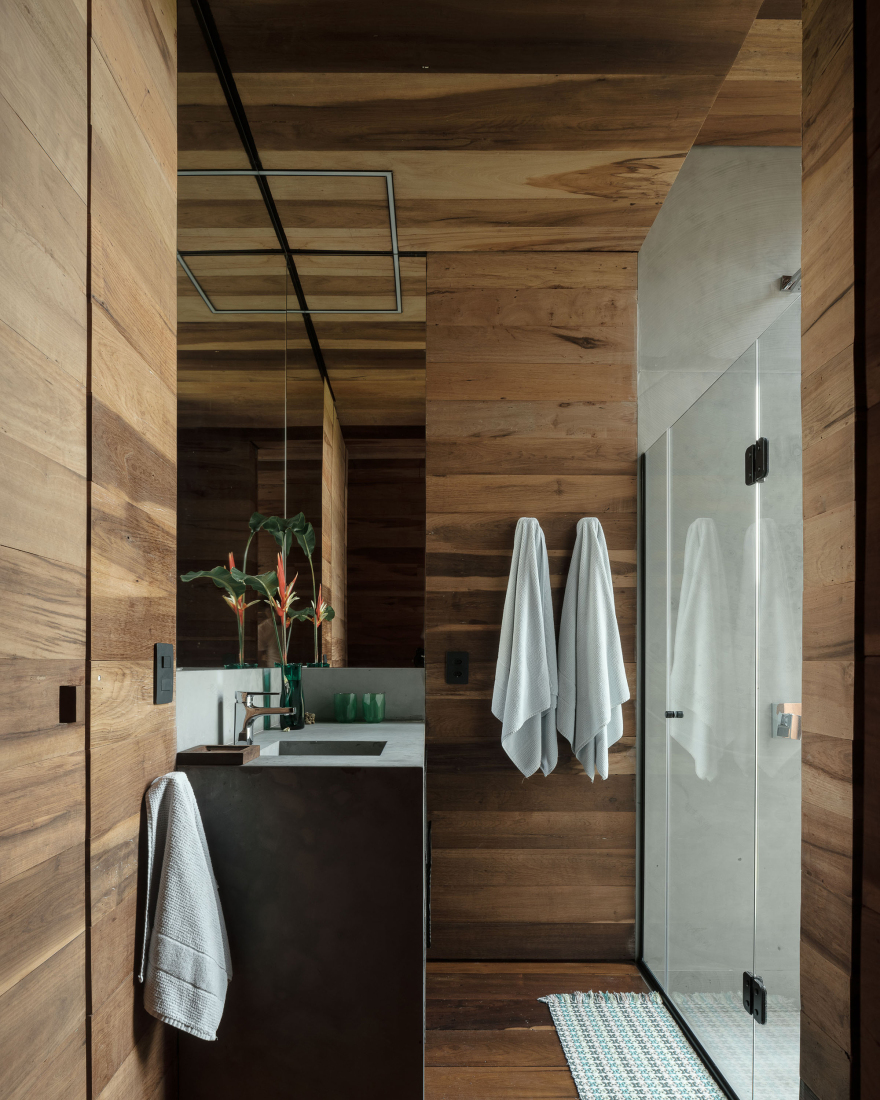
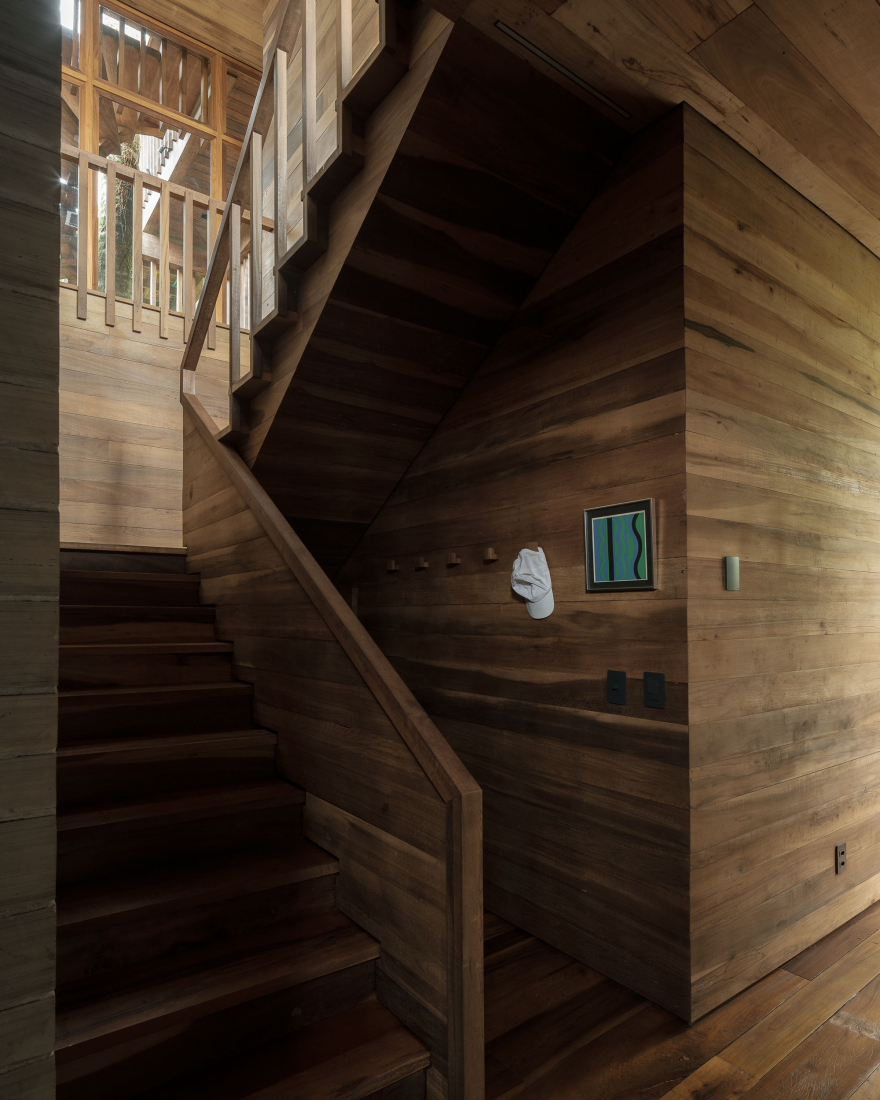
The construction techniques and material palette are deeply rooted in local sourcing and reuse. Salvaged Canela Preta—a protected local hardwood—found in a nearby abandoned warehouse was repurposed for the interior finishes. Structural timbers feature sustainably harvested Garapera and Itauba, while cabinetry utilizes local pine charred using the Shou sugi ban technique. A central structural spine of natural, quarry-cut slate houses the fireplace. Furthering this low-impact approach, bespoke wooden latches and pivot doors replace conventional metal hardware, seamlessly blending into the walls and ensuring spatial continuity throughout the home.

Furniture, textiles, and interior artworks were curated by the owners, blending folk art with finds from auctions and second-hand markets. Notable highlights include original chairs and sofa by Sérgio Rodrigues, as well as tapestries by Kennedy Bahia. The project is a convergence of material experimentation, craftsmanship, careful siting, and spatial choreography.
Project gallery
南京喵熊网络科技有限公司 苏ICP备18050492号-4知末 © 2018—2020 . All photos and trademark graphics are copyrighted by their owners.增值电信业务经营许可证(ICP)苏B2-20201444 苏公网安备 32011302321234号
苏公网安备 32011302321234号客服
消息
收藏
下载
最近