

创作上传
VIP
收藏下载
登录 | 注册有礼
查看完整案例

收藏

下载

分享

翻译

American artist James Gwertzman has revealed a sprawling wooden structure based on an ephemeral desert bloom for the 2026 Burning Man temple.
Called Temple of the Moon, the structure will be based on the shape of the Queen of the Night – a cactus flower that only blooms once during the year.
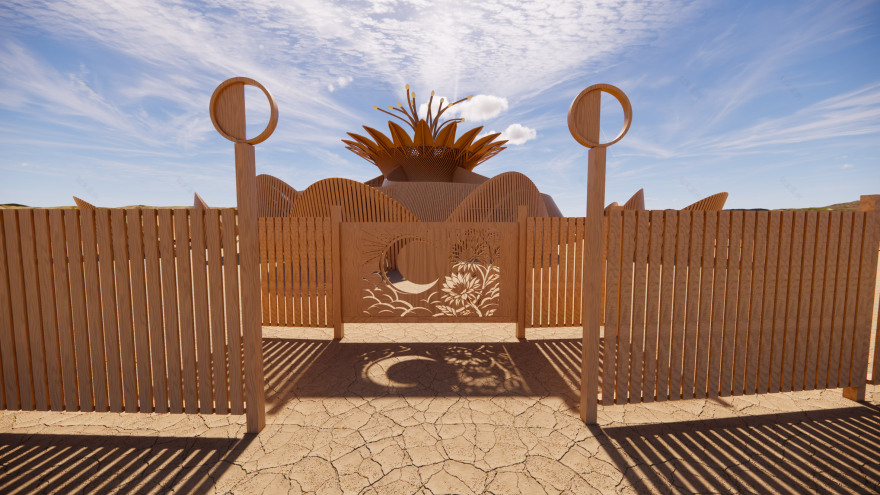
James Gwertzman has been selected to design this year's Burning Man temple
The annual nature of the flower has obvious resonances with the yearly nature of the week-long Burning Man festival in Nevada, which culminates in the burning of dozens of structures, including the temple and a pavilion with an effigy that gives the event its name.
Gwertzman, a former tech CEO who leads a Burning Man-associated group called Moonlight Collective, worked with architectural designer Annie Locke Scherer on the design.

Gwertzman's design is based on a desert flower that bloom twice a year
According to Burning Man director of art Katie Hazard, Gwertzman is taking a parametric approach to the design, using algorithmic design to instruct the form-making.
"James and his team designed the Temple using a parametric approach, shifting the creative process from manual drafting to algorithmic generation," said Hazard and Burning Man art management specialist Spec Guy.
"This allowed the team to generate complex, organic curves using straight pieces of timber, something that would be nearly impossible to design by hand, and to realize a highly expressive form through careful, intentional construction."
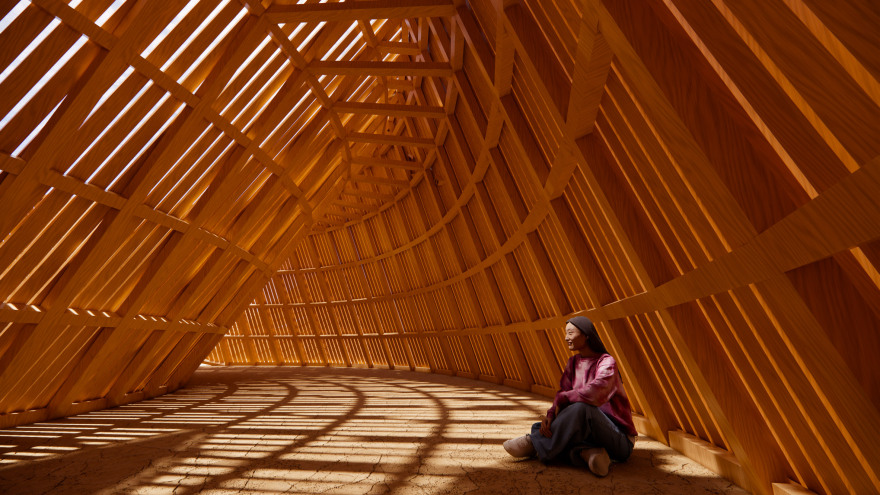
It features a radiating parametric design
Using the parametric approach, the design team rendered the design as a series of slated petals radiating out from a central structure, so that from the air it looks much like a flower.
The central temple space features a hyperboloid structure oriented around a column. At the top, it flares out, hemmed with sharp petals and a series of light-topped wood pieces resembling the stalks of a flower's stamen.
From here, fan-like wooden structures surround the central column. These fan-like aspects provide shelter and entryways into the mostly enclosed central chamber.
Petal-like wood forms radiate in an offset circular pattern from the centre, with seating in each.
A slated wooden fence will surrounds the structure, with eight entrances representing different stages of the moon cycle.
The design team will work with volunteers and the builders in the Burning Man organisation to complete the project this fall.
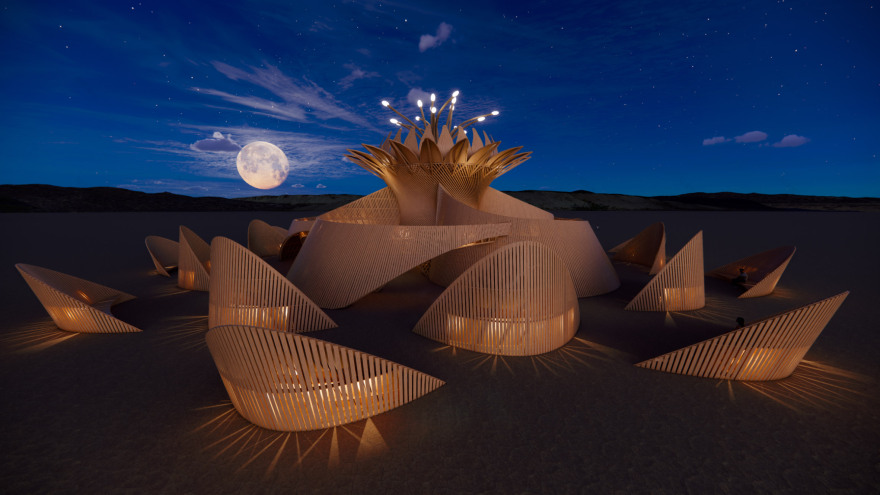
The slatted wood petals that radiate out feature nooks for sitting
Hazard said that the resonance of the flower design with the ephemerality of the festival as well as Gwertzman's experience building in the harsh conditions of the desert site, led to the decision to pick the design out of the largest pool of applicants to date.
"The Temple of the Moon stood out for the brilliant nature of its concept, reflecting the ephemerality and immediacy of Black Rock City," said Hazard and the Spec Guy. "We appreciated the grace of its spatial journey, and the strength of its team."

From above the design of the flower becomes clear
Last year, Spanish architect Miguel Arraiz designed a monolithic temple informed by volcanic rock and the Japanese kintsugi technique, while in 2024, Caroline Ghosn's design featured a mix of classic cathedral architecture and Lebanese weaving design.
The renderings are by Annie Locke Scherer.
Burning Man will take place in 30 August to 6 September 2026 in Nevada. For more international happenings in architecture and design visit Dezeen Events Guide.
南京喵熊网络科技有限公司 苏ICP备18050492号-4知末 © 2018—2020 . All photos and trademark graphics are copyrighted by their owners.增值电信业务经营许可证(ICP)苏B2-20201444 苏公网安备 32011302321234号
苏公网安备 32011302321234号客服
消息
收藏
下载
最近