

创作上传
VIP
收藏下载
登录 | 注册有礼
查看完整案例

收藏

下载

分享

翻译
JAM FACTORY ART CENTER
Architects: Anna Kruglova, Olena Kruglova, Viktoriia Savchenko, Liubov Myronchuk, Alyona Tryhub, Andrew Taran, Anton SyvashenkoCreative supervision: Slava BalbekProject managers: Kateryna Karelshtein, Anna ViktorovaProcurement manager: Daryna IhnatievaGraphic design: Dasha LevchukTechnical support: Iryna Holovata, Valerii Stefanov, Volodymyr PonomarenkoProject area: 1458 sq. m Project year: 2023Location: Lviv, UkrainePhoto credits: Andriy Bezuglov, Maryan Beresh
ABOUT | LOCATION | TASK | CONCEPT | DESIGN | TEAM

ABOUT
Jam Factory Art Center is a contemporary cultural space in Lviv, opened in the revitalized premises of the former jam factory. The institution organizes exhibitions, theater, music, educational projects, concerts, and performances.

LOCATION
The history of this place dates back to 1826 and formally begins with the Josef Kronik and Son distillery, founded in 1872. The factory's premises were partially destroyed in a fire and rebuilt in the Neo-Gothic style before the First World War. In the 1950s, during the Soviet era, the company was re-qualified for wine production, and in the 1970s it became a jam factory, which operated until the beginning of the new century. In 2015, Harald Binder Cultural Enterprises bought the building to create a cultural center. Through two world wars, the Holocaust, and a full-scale invasion, this location has preserved traces of history that embody the past of the entire city of Lviv.

In total, the territory of the Jam Factory covers 3,410 square meters, with five exhibition spaces, a summer concert venue, workshops for artists, an interactive playground, and a strolling spot. The factory building is located in Lviv's Pidzamche district: the formerly lively industrial area turned into a marginalized industrial zone due to the closure of factories in the 1990s. The opening of the cultural center aims to start the process of gentrification of Pidzamche and invite Lviv residents from other parts of the city.

TASK
To realize their plans in 2019, the clients announced two competitions for the restoration and reconstruction of the former factory. The architectural concept was developed by the Atelier Stefan Rindler (Vienna) at the request of Harald Binder Cultural Enterprises. The architectural and engineering company AVR Development (Lviv) was responsible for adapting the project to Ukrainian building codes. Our studio won the competition for the best design concept and was responsible for the appearance of the halls and lobby, administrative block, cafe and bar, as well as the surrounding areas and terraces.


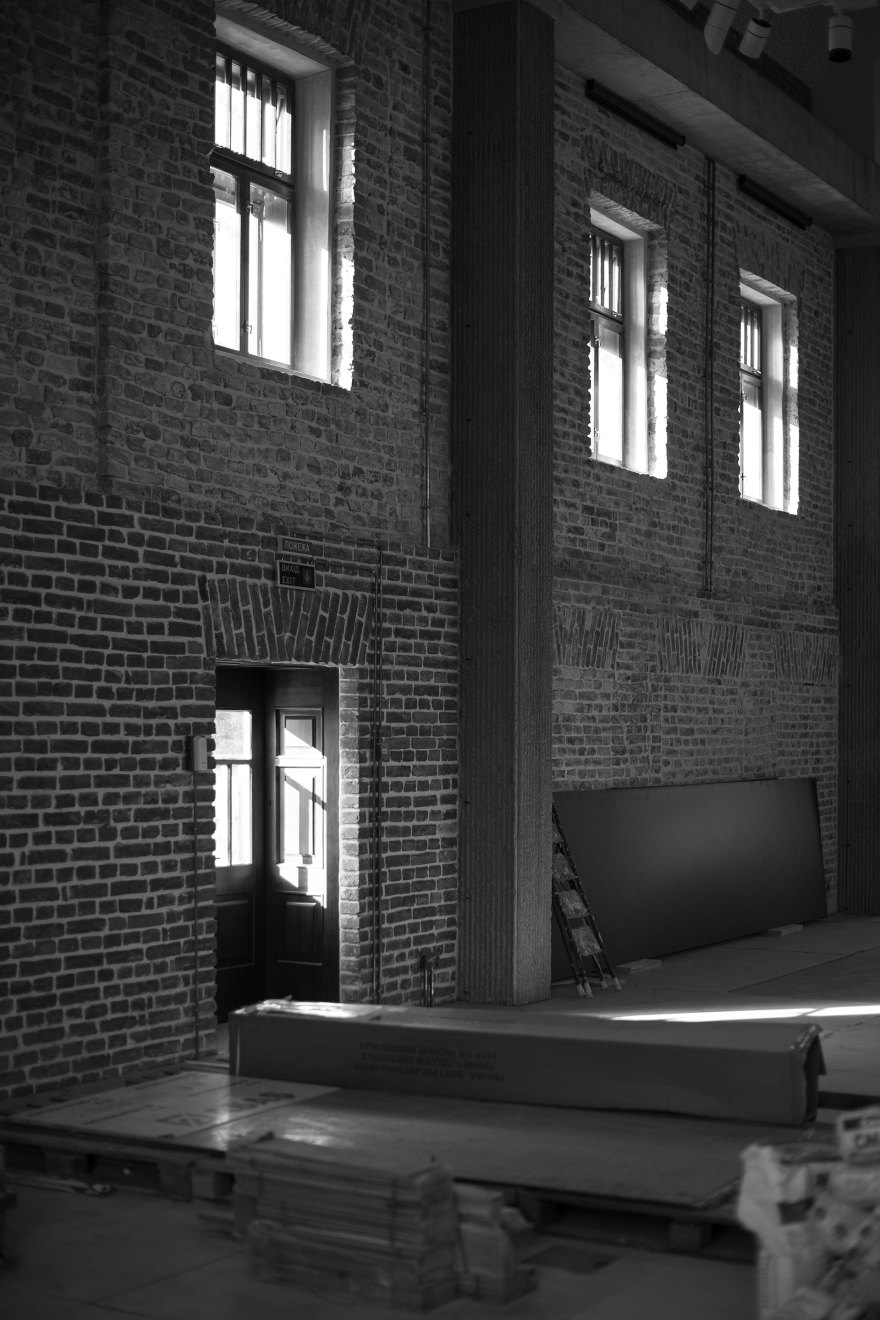
The clients’ main request was to preserve the original decoration as much as possible and to use the finds found during the dismantling in the design of the space. The exhibition spaces required minimal intervention. We had to give a new function to the abandoned building and do it with respect for the historical context. The clients also wanted to see the colors of the Jam Factory Art Center brand identity in the interior.


CONCEPT
The basis of our concept for Jam Factory Art Center was the slogan “a place for everyone”. We wanted to create a space that would emotionally resemble a playground – a place where a person can relax, not be afraid to discover new things, improvise and interact with others. A place for learning, entertainment, new experiences, a place where you want to come back.
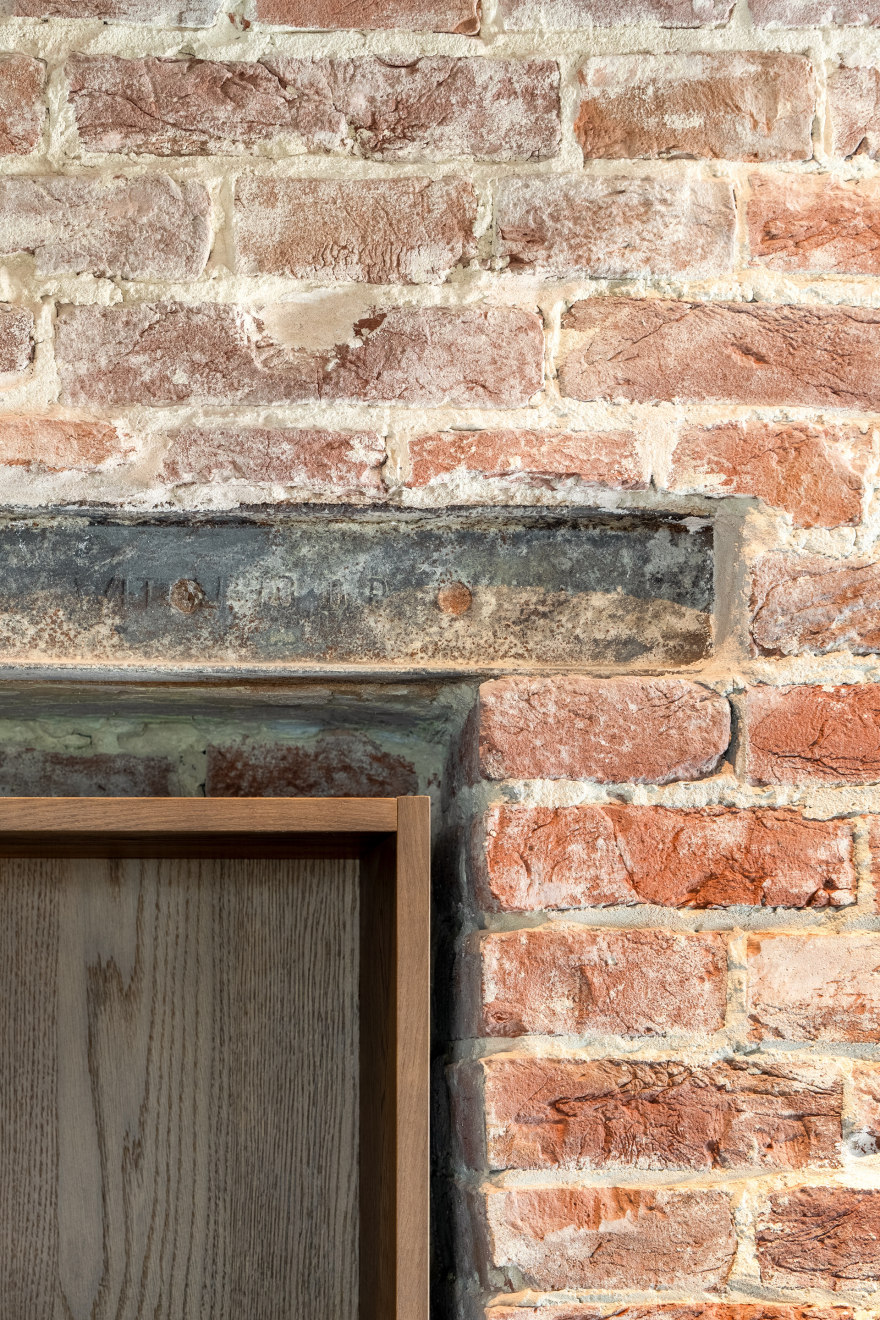
The goal was a modern design that would work in synergy with the historical past. As with other adaptive reuse cases, we decided to follow the “do no harm” principle: preserve everything that can be preserved and not change the space beyond recognition.




DESIGN
The tower
The neo-Gothic tower has four floors. On the ground floor, visitors are greeted by the reception desk, which features an original factory metal pipe behind a glass display case. To the right of the reception desk is the entrance to the gift shop. The original brickwork and niches with built-in cabinets for goods have been preserved. The tiles embedded in microcement are the original metal floor of the Jam Factory, which has survived to this day. Metal shelving was made according to individual sketches.


The historic staircase was preserved and reconstructed. The interior has old wooden ceilings and plaster, as well as original bricks, which were partially recreated.


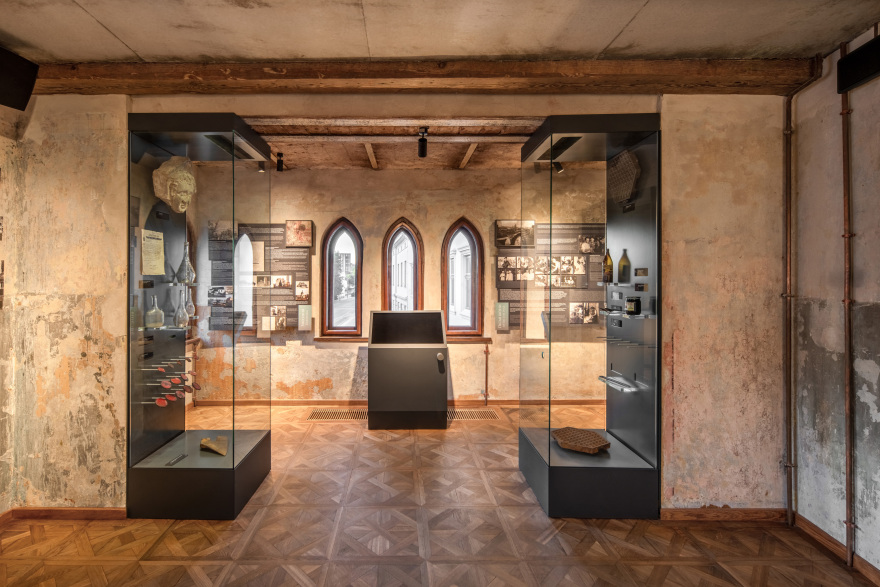
On the tower's second floor, there is an exposition dedicated to the history of the Znesinnya district, the Kronik family, and the production of the Jam Factory in Soviet times. Metal tables with the identity of the art center add accents to the interior: you can leave a cup of coffee on them while looking at the exhibits. The floor is lined with vintage reconstructed parquet.


Jam Bar
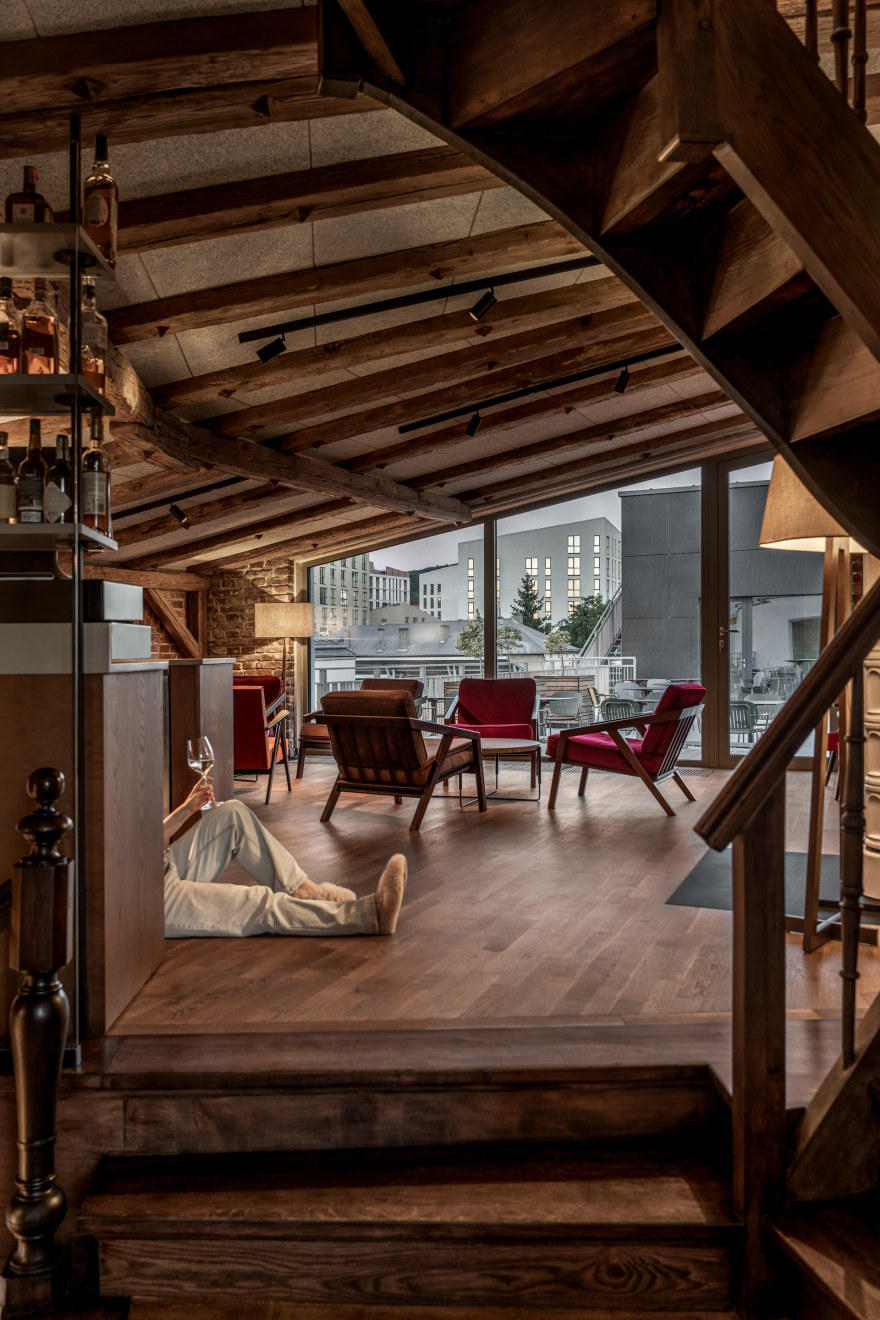
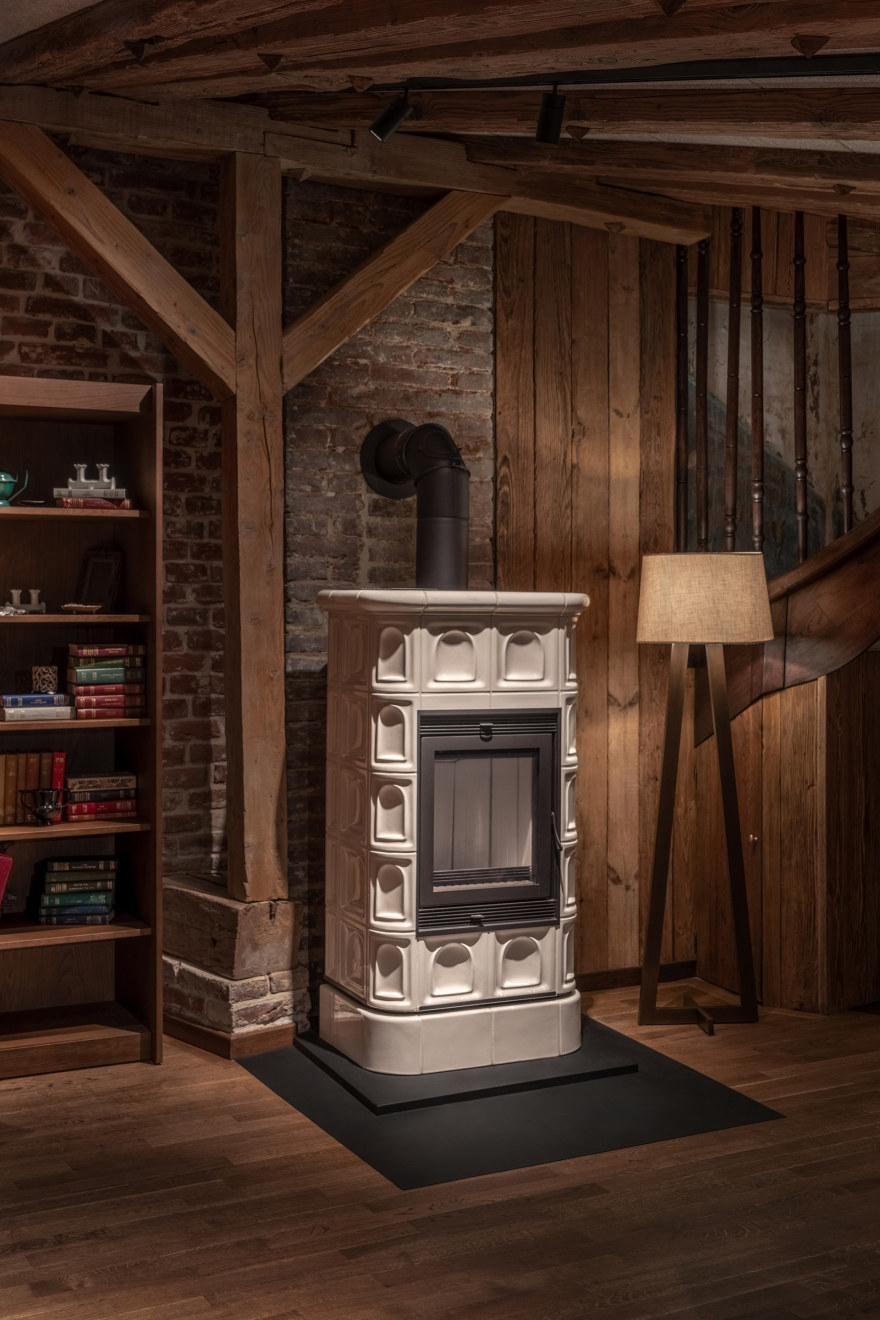
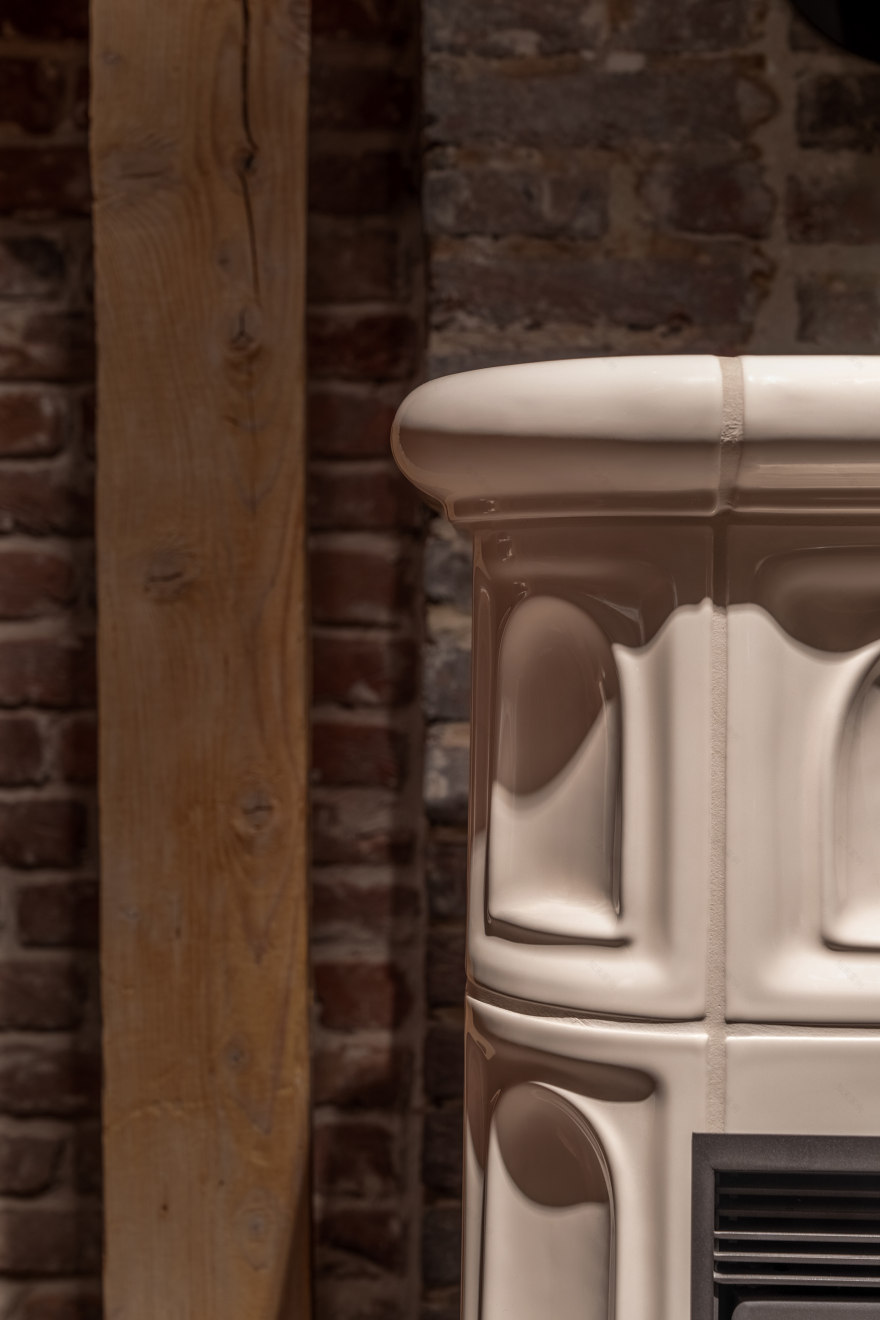
The third floor of the tower is a cozy Jam Bar. This area is dominated by tactile wood. The chamber space with low, soft seating is suitable for evening gatherings and long conversations. A ceramic-tiled fireplace, created by a local contractor based on historical sketches, adds warmth. From the bar, guests can get to the terrace, which offers a panoramic view of the High Castle.





Exhibition areas reception
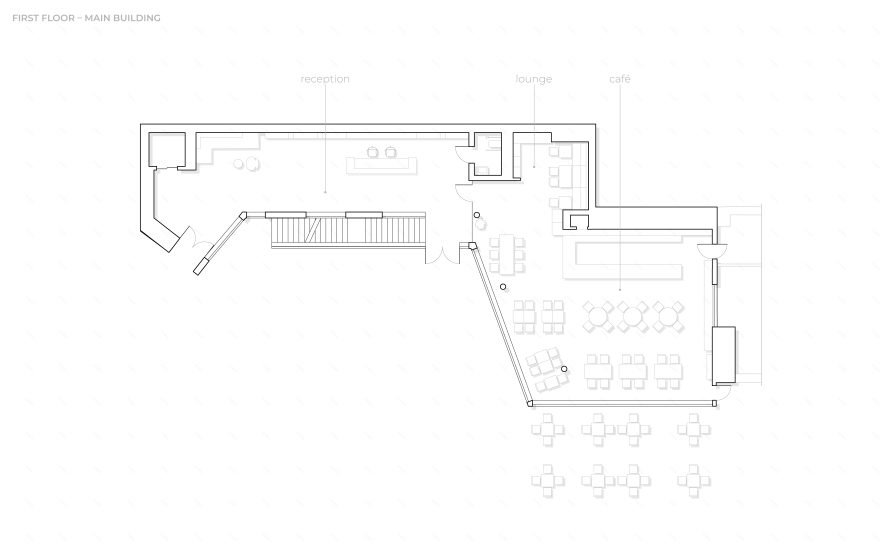
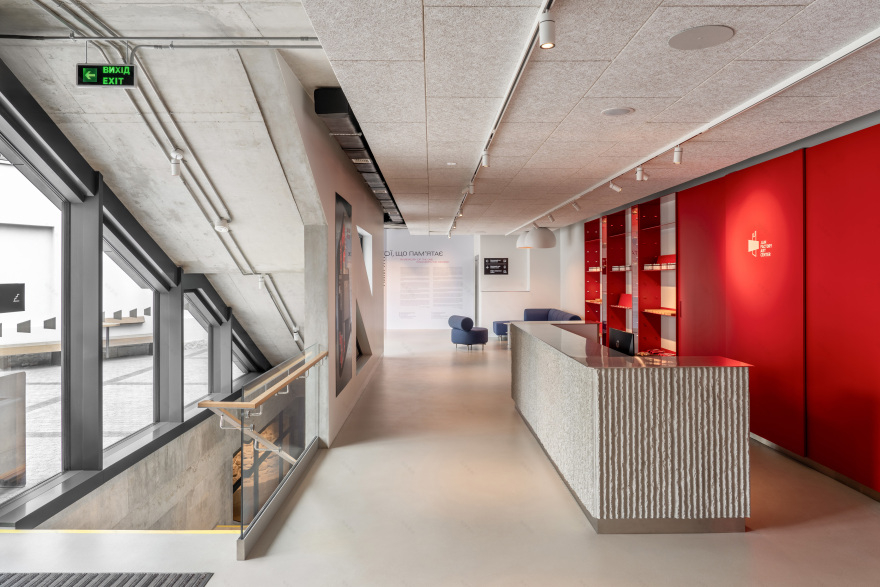
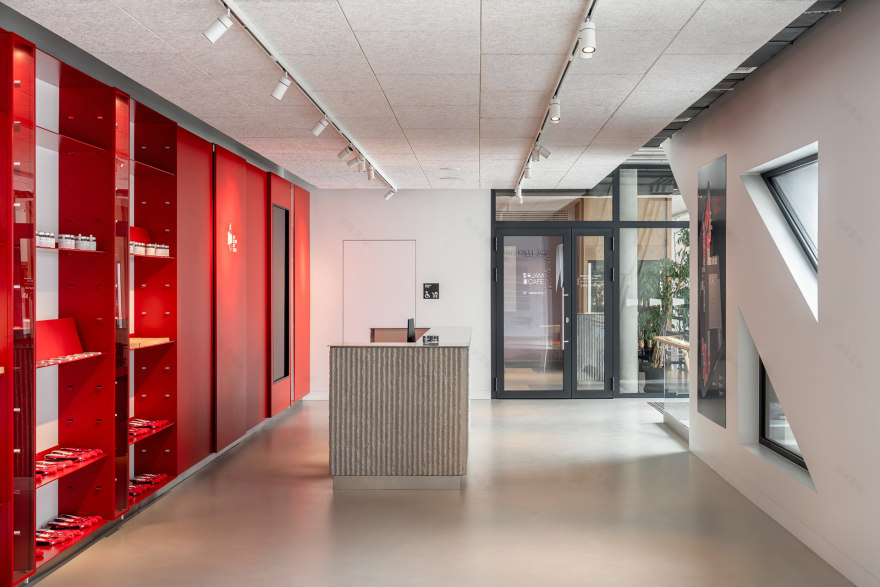
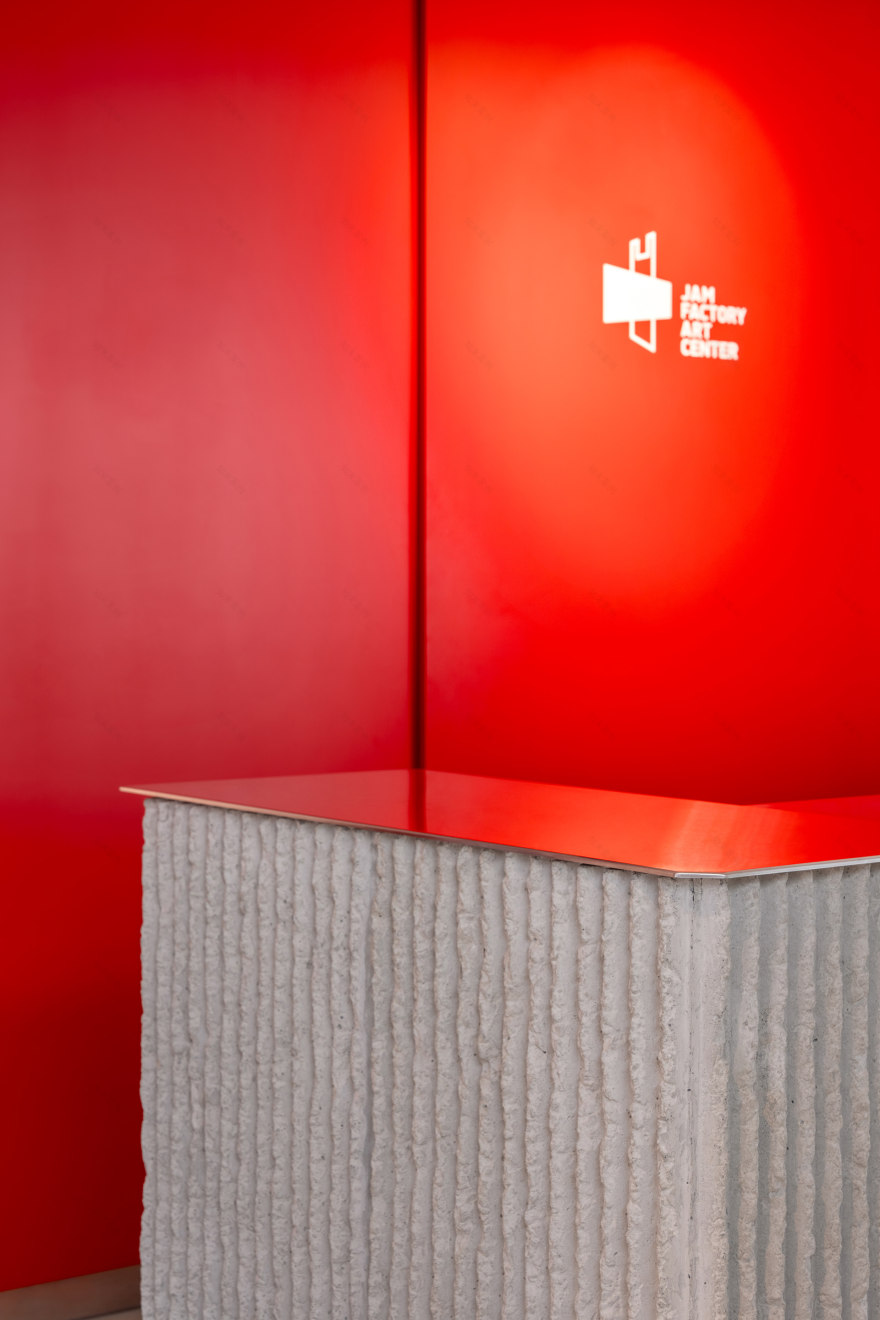
The main entrance to the exhibition space starts from the reception area. The reception desk was custom-made according to our sketch – the customers had purchased concrete forms for the columns in the exhibition space and wanted to reuse them in the interior. Behind the counter, you can see a red panel in the colors of Jam Factory Art Center and a rack with souvenirs. On the left is a soft group with Noom metal tables.


Jam Cafe
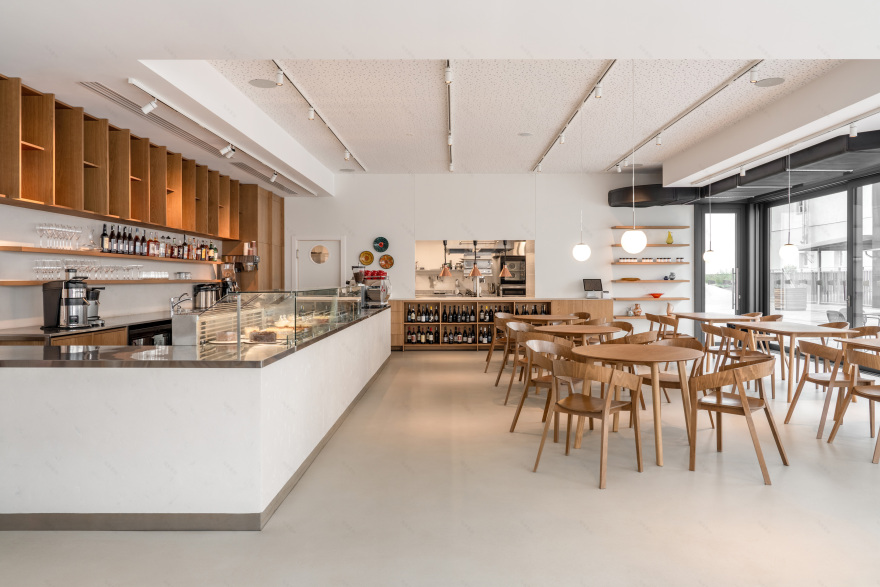
The space on the ground floor underwent the most revisions as several different restaurant operators with different concepts planned to start operating at the location. In the end, clients settled on a city cafe format with a neutral design that would best suit the art center.

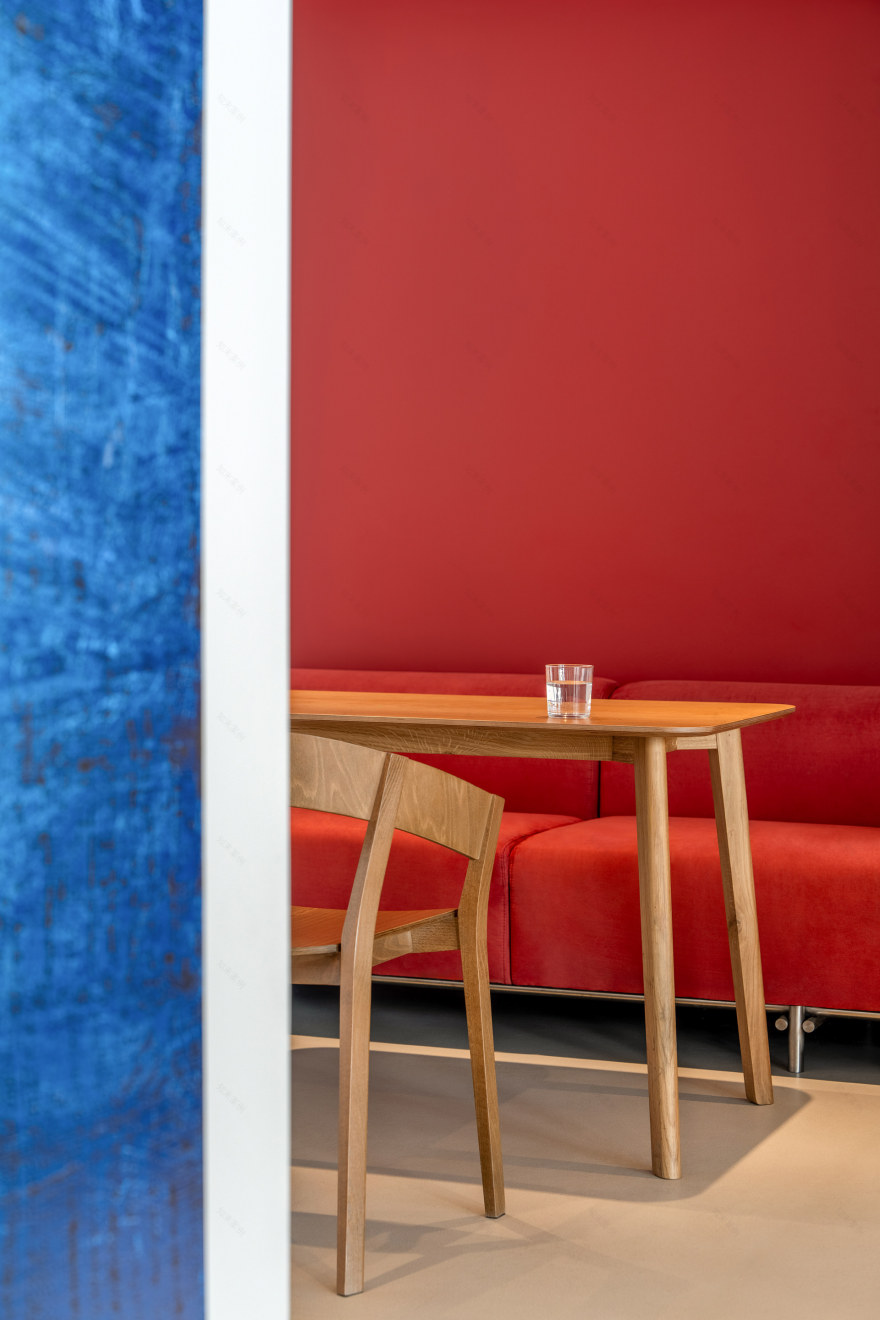
The restaurant, opened in partnership with the 23.restaurants chain, also serves as an exhibition space, so the interior had to serve as a backdrop for the exhibition. We deliberately avoided the dominance of bright color elements or accents so as not to contradict the artworks. At the same time, we made sure that the space was cozy and used warm-colored wood. The only color accent in this area is a red wall in one of Jam Factory's brand colors. Colored blown glass is now displayed in this space – shelves on the walls and above the bar are used for display.
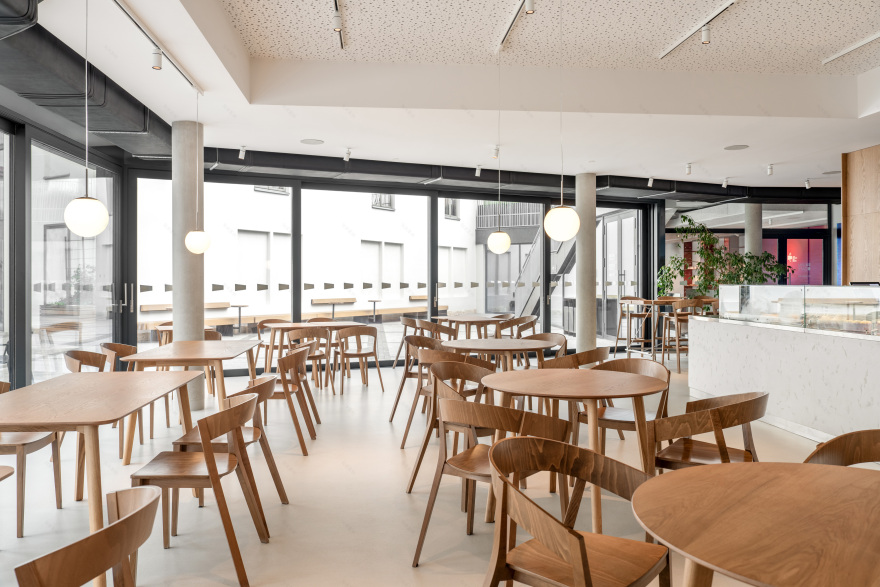



The cafe's kitchen is open – you can watch the chefs at work through the window in the hall. The bar combines daytime and evening functions: during the day, it serves coffee and soft drinks, pastries, and in the evening, guests are offered alcohol (the bar has a good collection of wine that can be seen on the shelves). You can also see two wine refrigerators built into a custom wooden case. The bar counter, shelves and a high-sided table were made to order.
Offices
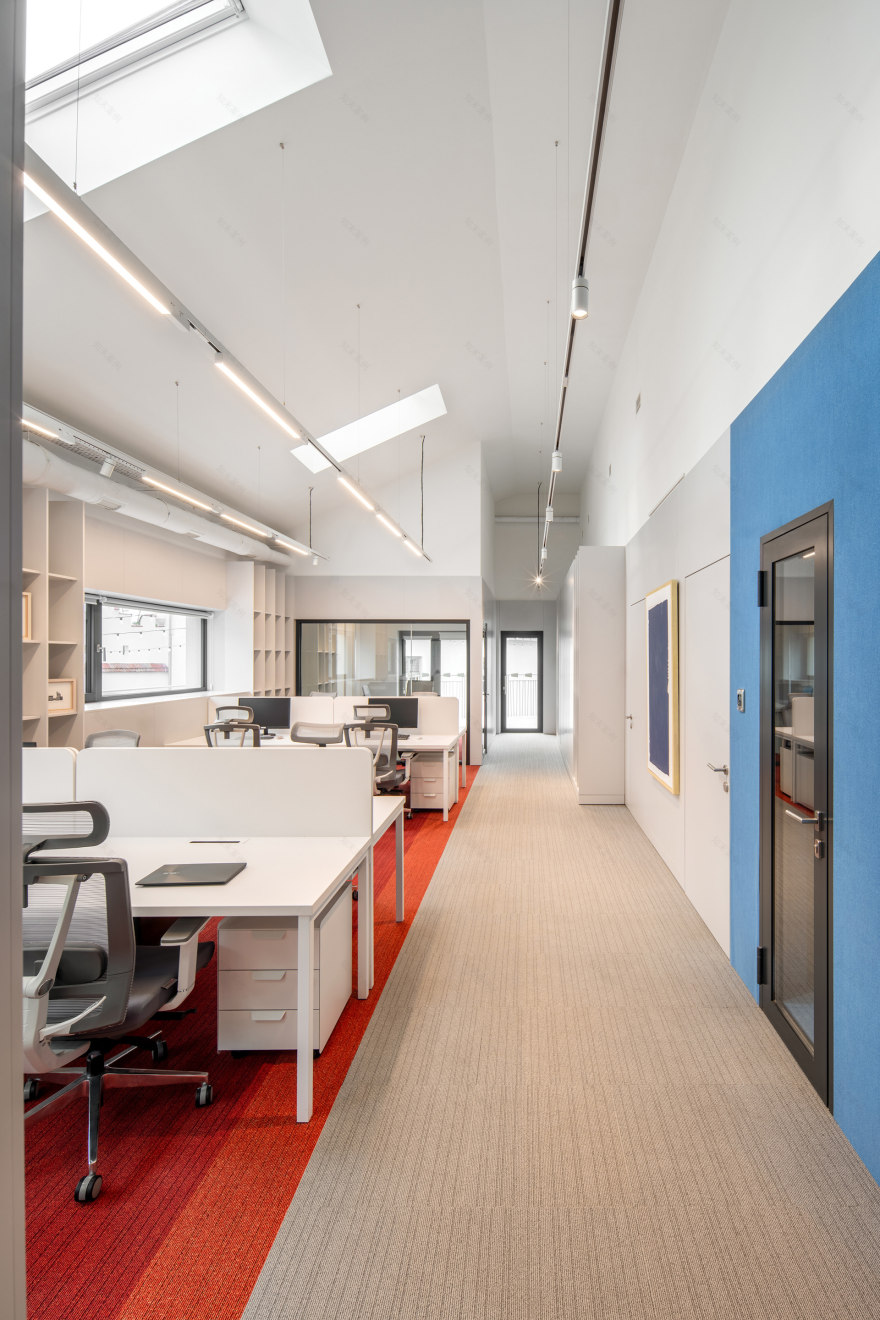
The Jam Factory Art Center administration offices are decorated in the colors of the brand identity—a white background with red accents. The space has a meeting room and individual workstations. Behind the blue MDF doors, there is a video conferencing room. The office also has access to one of the terraces.




Exterior
Jam Factory Art Center's two open terraces offer views of Lviv. Green chairs with tables by the Italian brand S•Cab match the greenery placed around the perimeter of the space.


Collaboration with cultural institutions and revitalization of industrial spaces are among the priorities of our bureau. Therefore, the team is especially proud to work on this project and is pleased to have the opportunity to contribute to the development of third places in Ukraine – side by side with clients who continue their mission even in times of full-scale war. Jam Factory Art Center organically continues the industrial history of the Pidzamche neighborhood, and we are confident that this space will become one of the key places on the cultural map of Lviv.

TEAM

Instagram Facebook
南京喵熊网络科技有限公司 苏ICP备18050492号-4知末 © 2018—2020 . All photos and trademark graphics are copyrighted by their owners.增值电信业务经营许可证(ICP)苏B2-20201444 苏公网安备 32011302321234号
苏公网安备 32011302321234号客服
消息
收藏
下载
最近