

创作上传
VIP
收藏下载
登录 | 注册有礼
查看完整案例

收藏

下载

分享
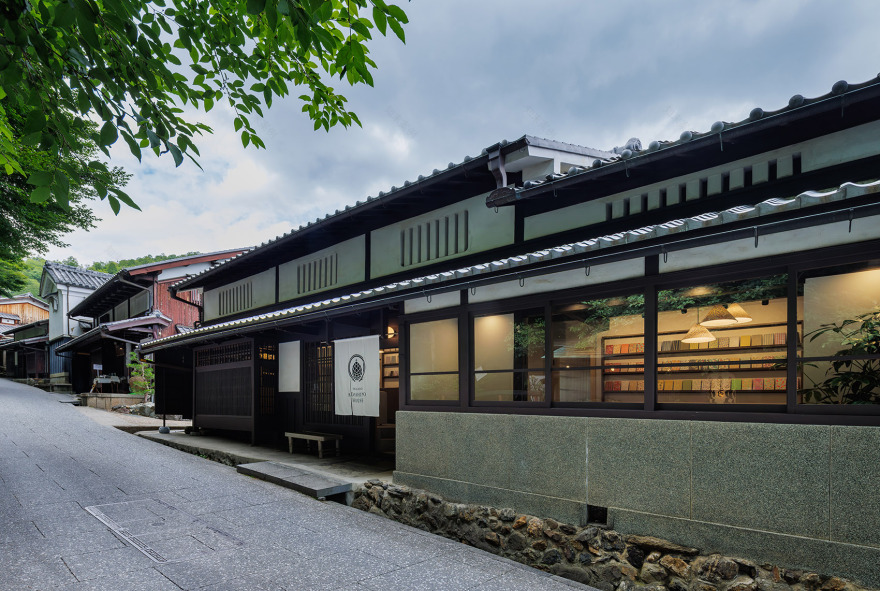
足立野之家是松花堂的新址,松花堂是一家以色纸短册、和纸制品及日本文具闻名的公司。该项目位于京都嵯峨鸟居本历史风貌保存区内的一栋传统町屋内。其目标是在保留古老町屋静谧韵味的同时,融入为室内带来新鲜感的现代元素,创造一个能够体验和纸之美的生活化空间。
Adashino House is the new home of Shogado, a company known for its shikishitanzaku (decorative paper strips), washi paper goods, and Japanese stationery. The project is set within a traditional Japanese machiya town house located in the Saga-Toriimoto Historic Buildings Preservation District of Kyoto. The aim was to create a space where the beauty of washi could be experienced in everyday life, while preserving the quiet dignity of the old machiya and weaving in modern elements that bring freshness to the interior.
▼建筑外观,Overview of the building © Yohei Sasakura
▼室内概览,Interior overview © Yohei Sasakura
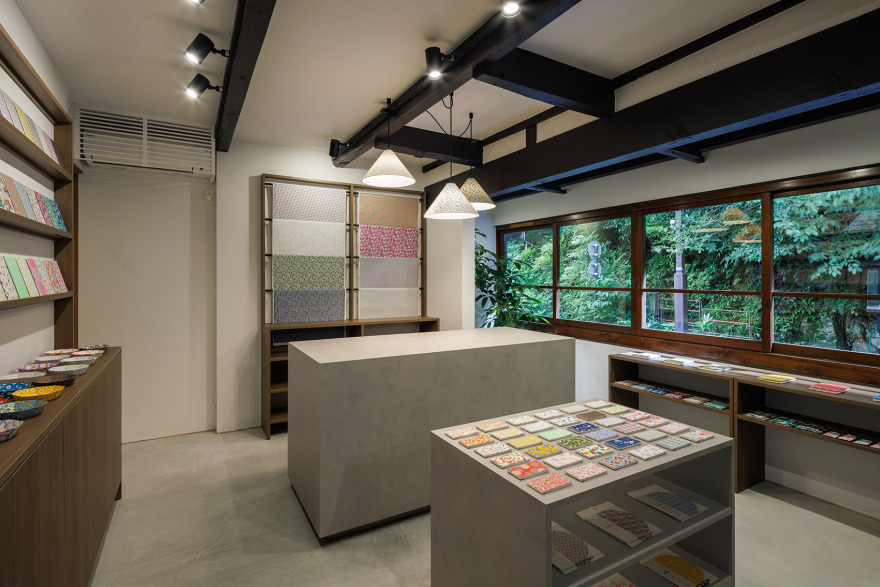
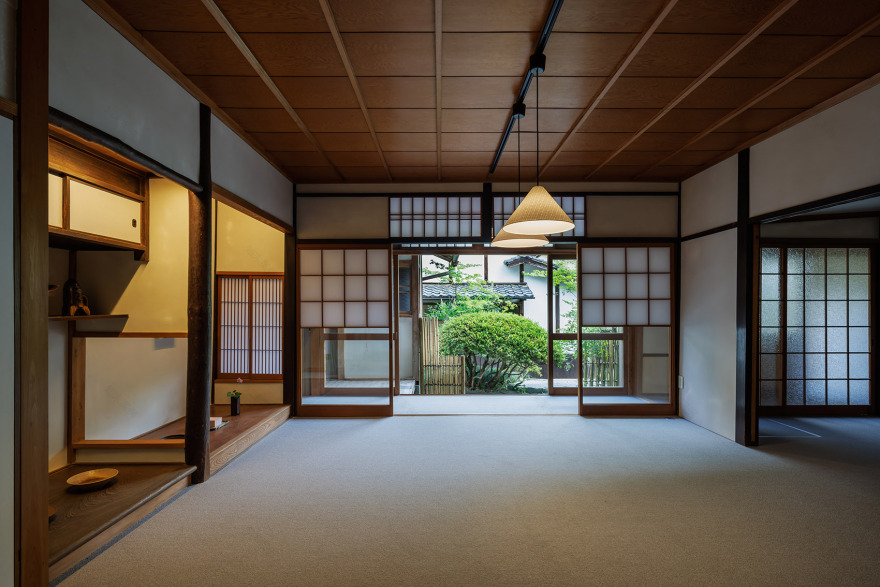
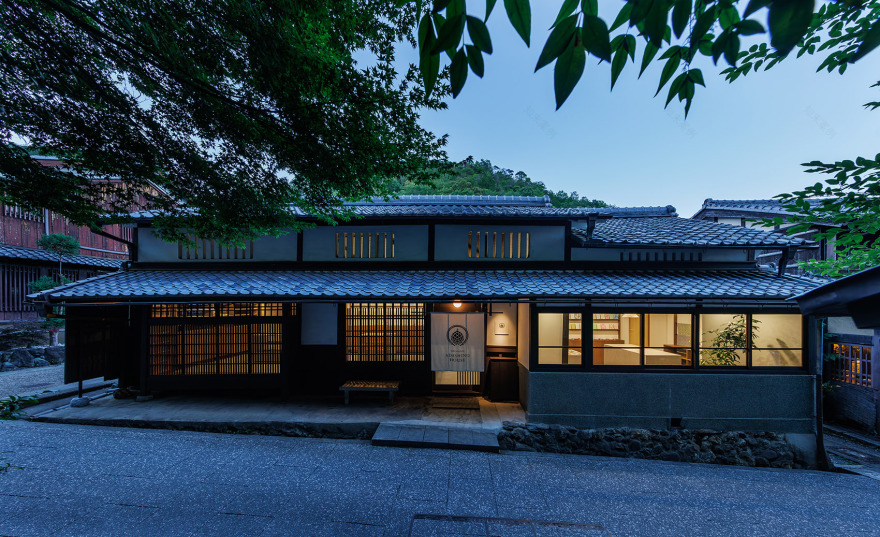
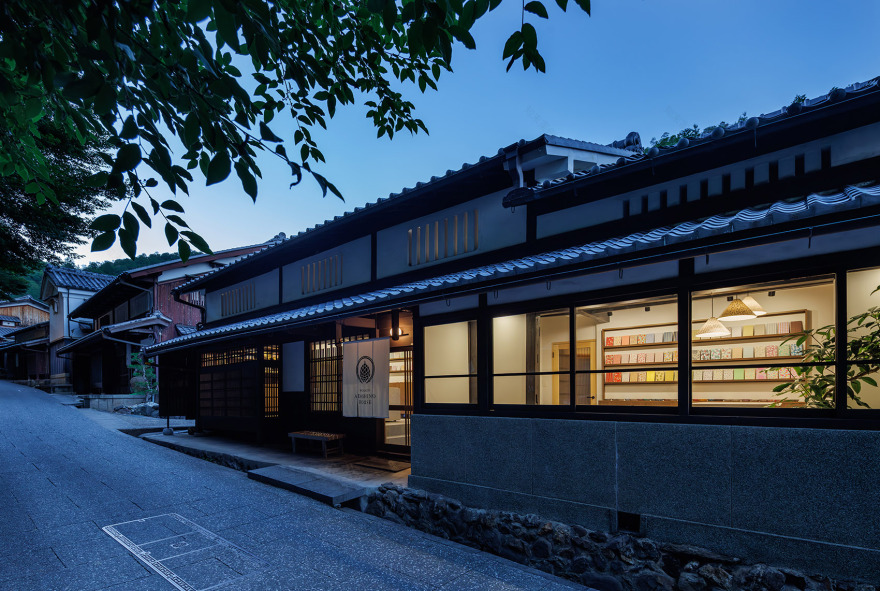
房子主要分为两个区域:一个临街的店铺,以及一个面向庭园、带有传统床之间的会客空间。从路上透过窗户,便能瞥见松花堂的笔记本和御朱印帐,吸引着人们步入其中。
The house is organized in two main areas: a shop that faces the street, and a meeting space that opens onto a garden with a traditional tokonoma alcove. From the road, Shogado’s notebooks and goshuincho (temple stamp books) catch the eye through the windows, drawing people into the space.
▼入口,Entrance © Yohei Sasakura
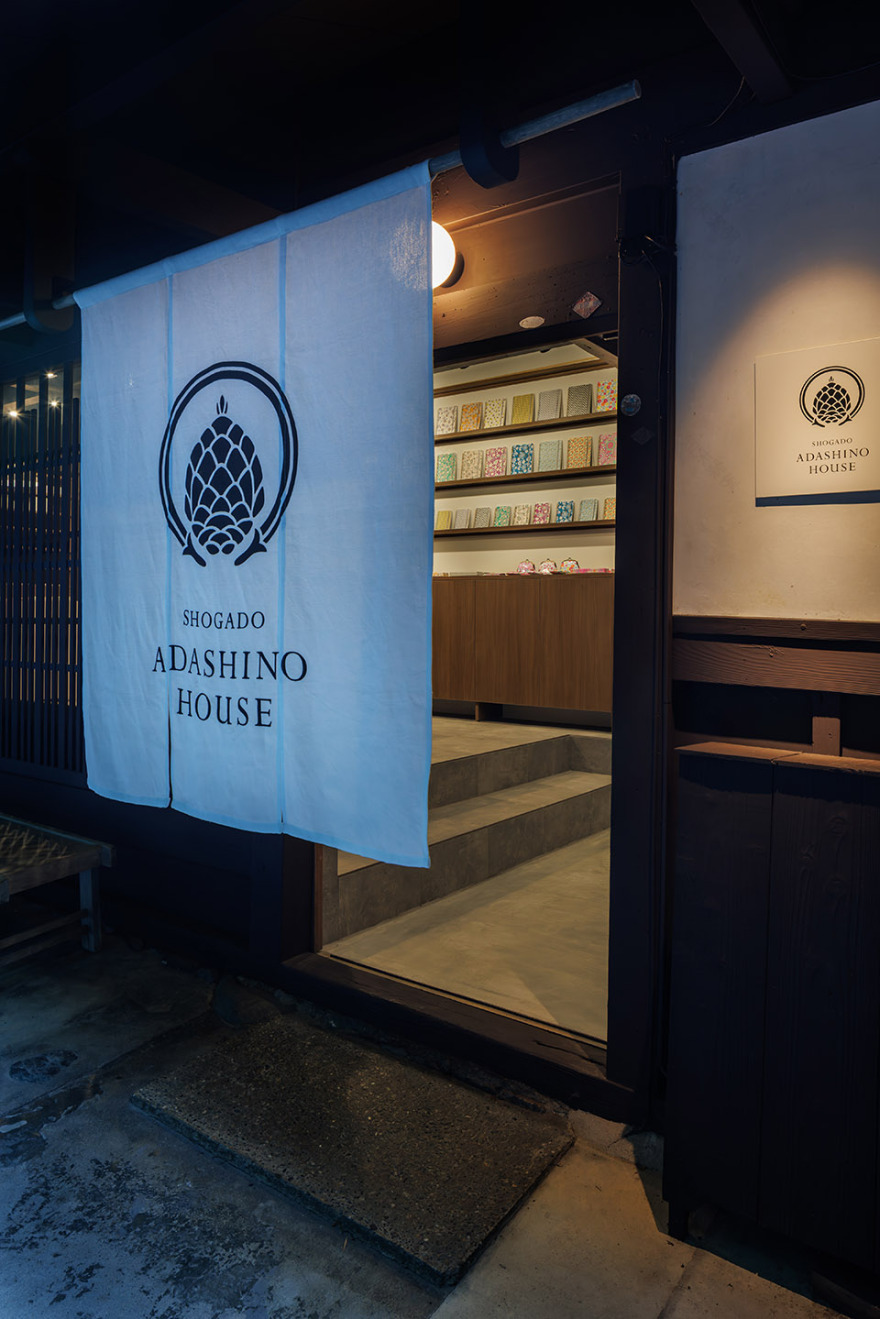
店铺内部,西侧完全打通至阁楼,让自然光通过虫笼窗倾泻而入,营造出开阔通透的感觉。这些虫笼窗因其形似传统的虫笼而得名,是通仕二层町屋的一个关键特征。(在火灾多发的江户时代,它们通常覆盖着厚厚的灰泥,最初用作防火措施。)它们的存在不仅提供了光线,也微妙地连接着过去的建筑工艺。
Inside the shop, the western side has been opened fully to the attic, allowing natural light to pour in through the mushikomado lattice windows and creating a feeling of openness and air. These mushikomado, named for their resemblance to traditional insect cages, are a key characteristic of tsushi-nikaimachiya. (Typically covered in a thick layer of plaster, they were originally used as a fire prevention measure during the fire-prone Edo period.) Their inclusion offers not only light but also a subtle link to the architectural practices of the past.
▼展陈空间,Retail space © Yohei Sasakura
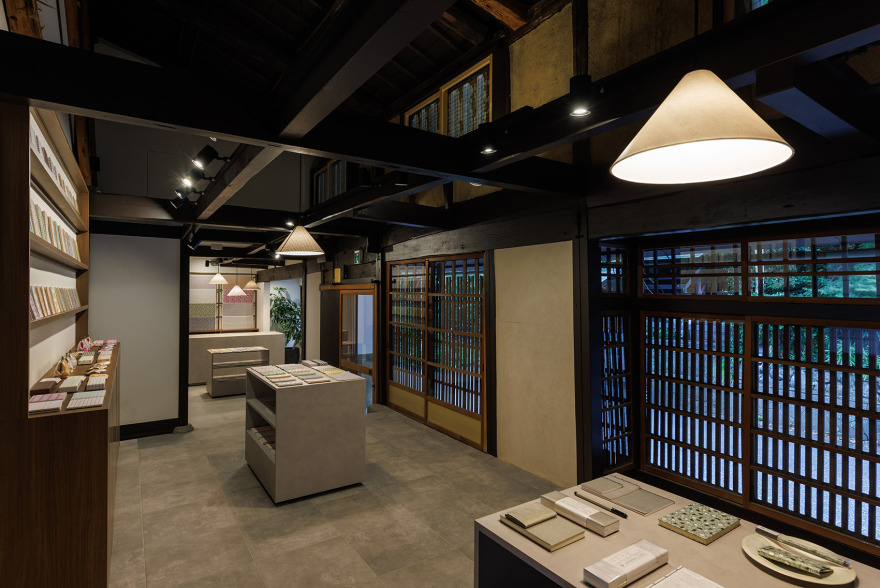
原有的地板高度被保留,作为对建筑历史的一点小小敬意,而新的台阶和陶瓷地砖则引入了现代气息。家具的设计旨在呼应其所陈列的产品。
The original floor level was preserved as a small gesture of respect to the building’s history, while new steps and ceramic flooring introduce a contemporary touch. Furnishings were designed to echo the products they hold.
▼保留原有地板高度,Original floor level was preserved © Yohei Sasakura
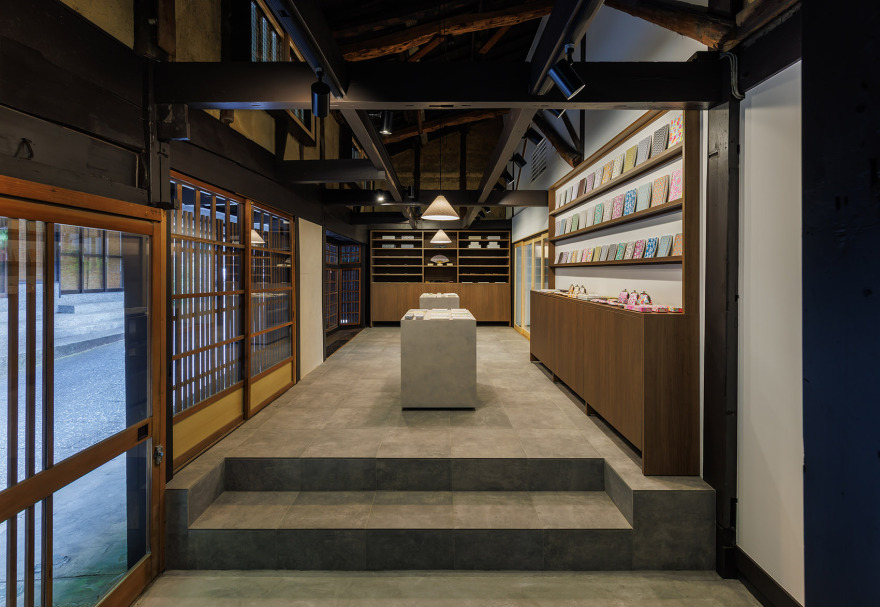
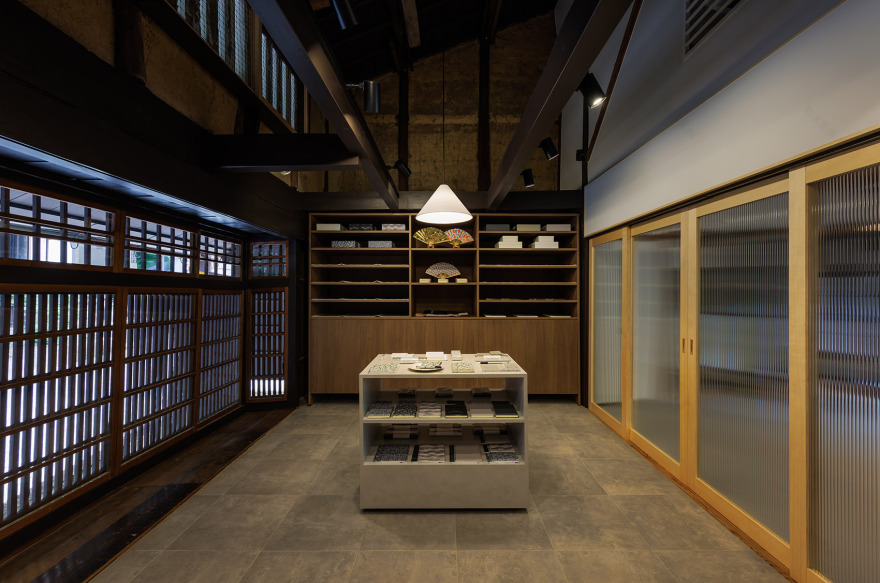
一个长柜台可以平铺整张友禅和纸,其后的挂架则完整展示着图案醒目的作品。
A long counter accommodates full sheets of Yuzen washi, with a hanging rack behind it that displays bold patterns in their entirety.
▼长柜台展示区,A long counter © Yohei Sasakura
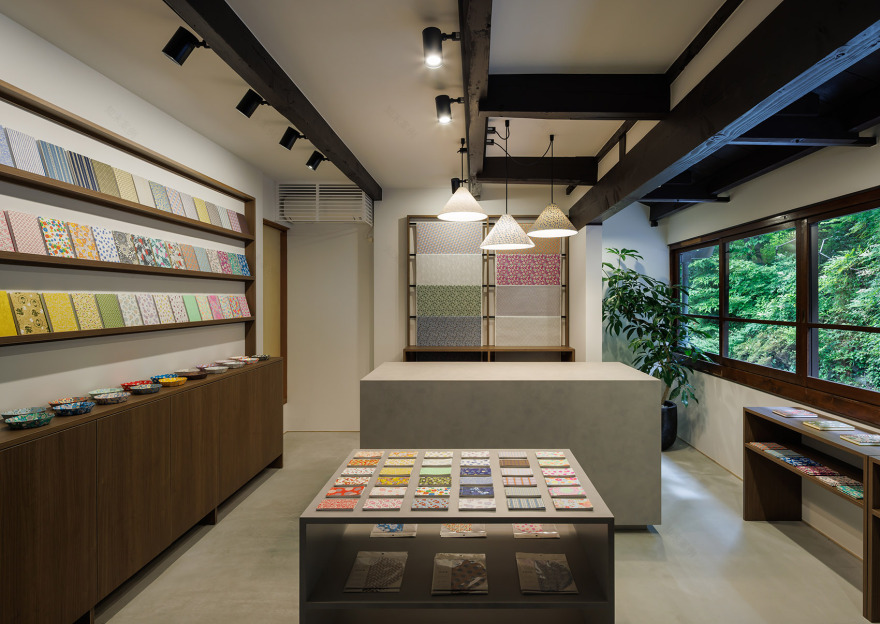
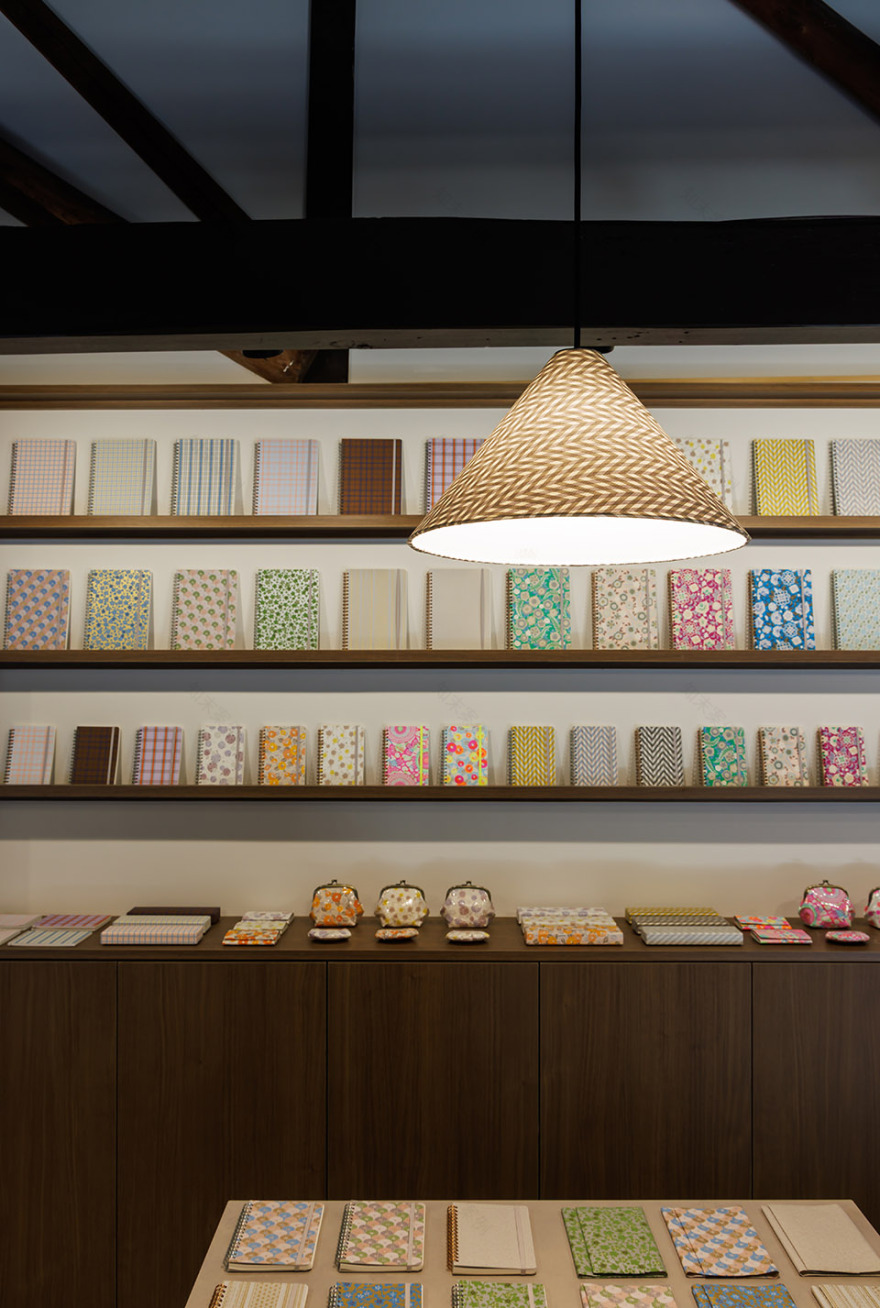
两侧墙壁上,近三米宽的货架可同时展示多达六十本御朱印帐,尽显色彩与图案各异的日本织锦工艺。
On both walls, shelving nearly three meters wide presents up to sixty goshuincho at once, showcasing Japanese tapestry with varying colours and motifs.
▼墙壁展示区,Wall display space © Yohei Sasakura
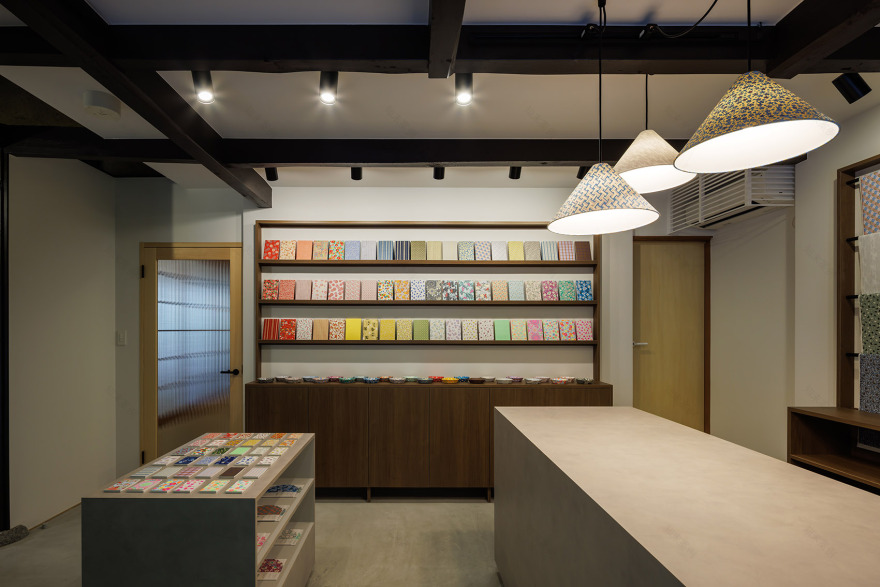
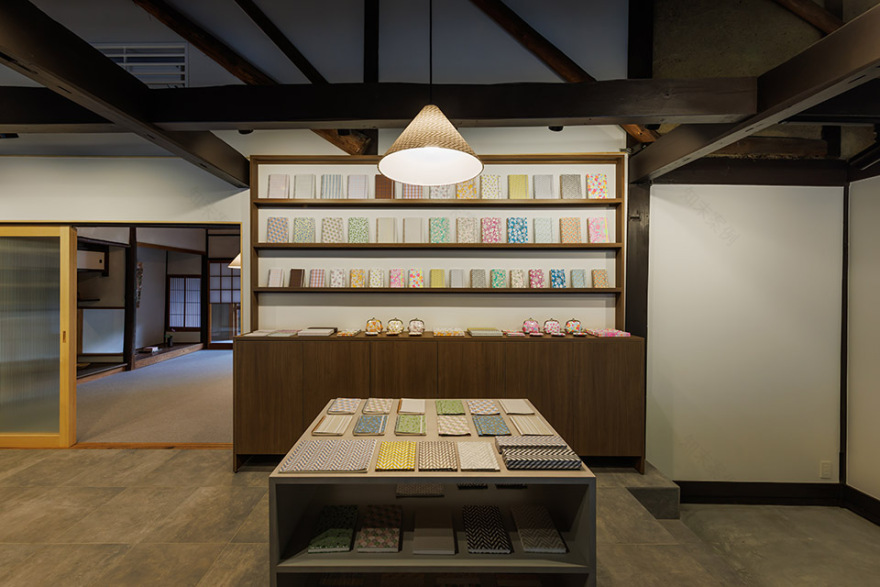
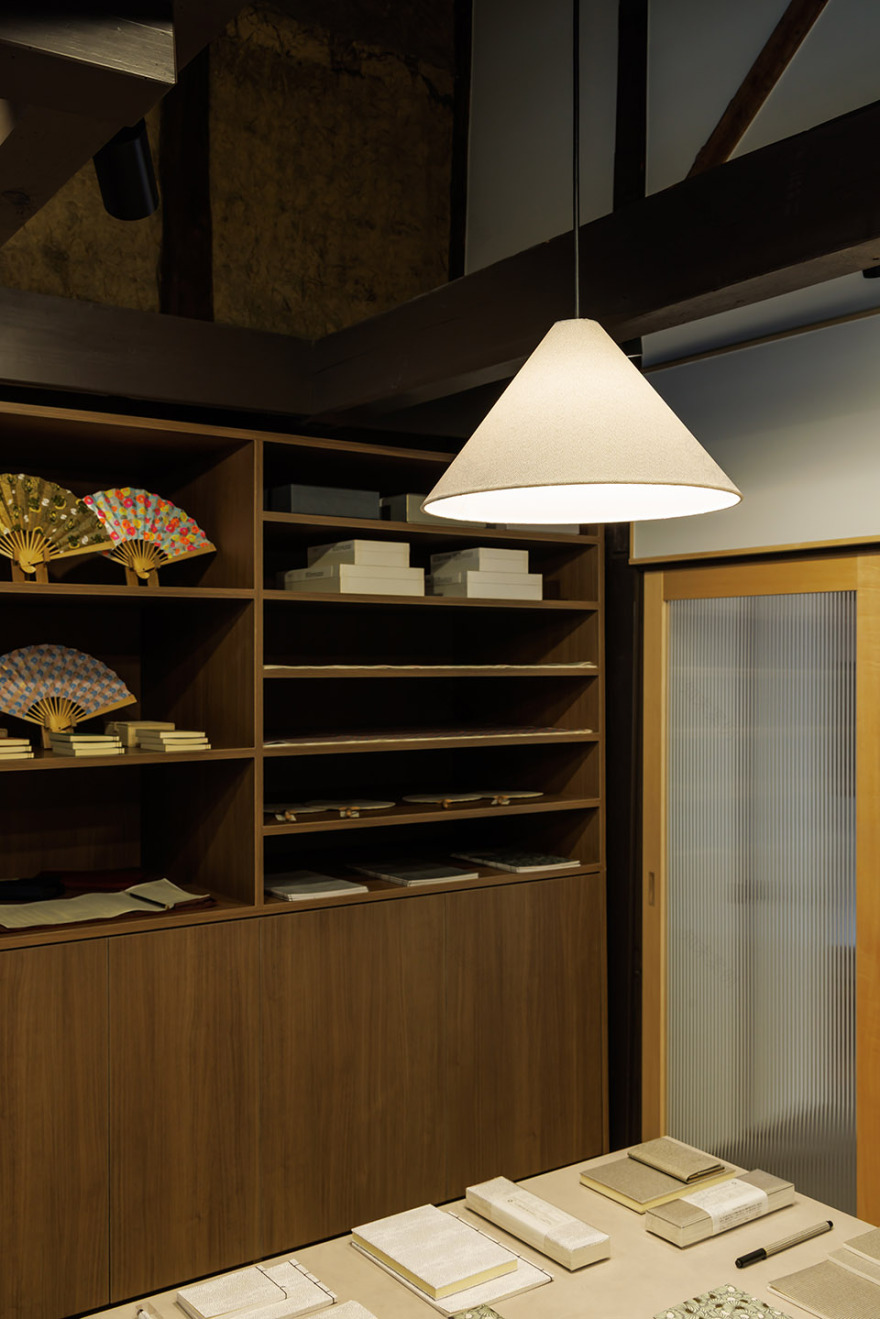
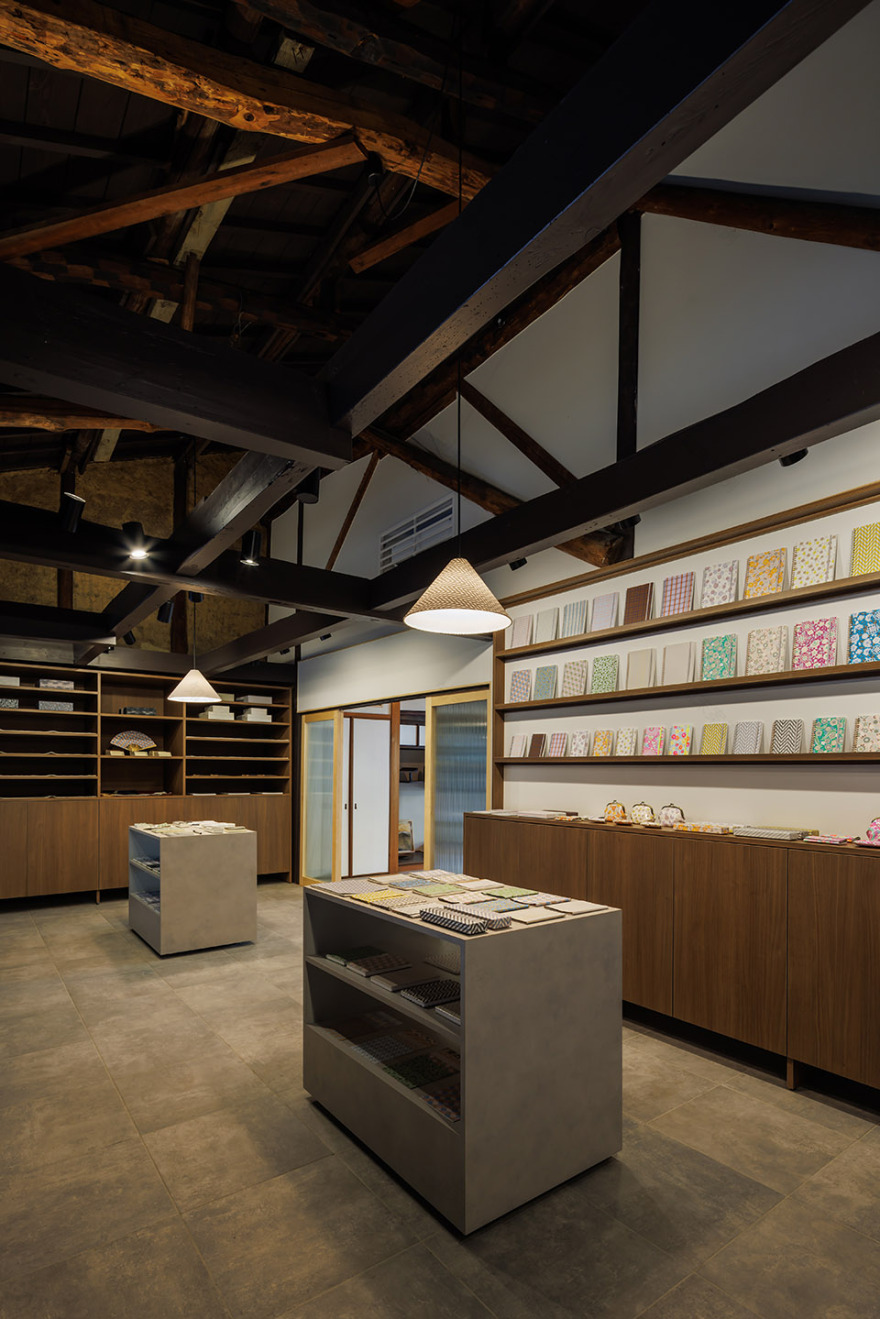
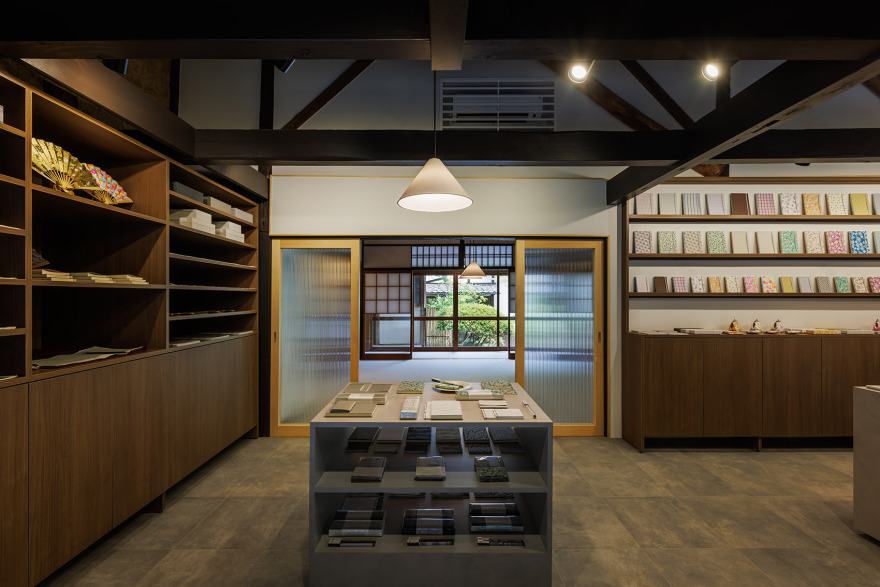
一个昔日的壁橱被重新利用,用于存放扇子、礼盒和整张纸等较大物品,而三个中央岛台则方便顾客拿取小型文具。
A former closet was repurposed to house larger items such as fans, boxes, and full paper sheets, while three central island fixtures keep smaller stationery within easy reach.
▼壁橱,Closet © Yohei Sasakura
▼中央岛台,Central island © Yohei Sasakura
通过一扇条纹压花玻璃门即可到达会客室,这扇门在柔化视线同时允许光线穿过。室内,柔和的地毯色调延续了店铺宁静的基调。
The meeting room is reached through a door of striped moulded glass, which allows light to pass while softening the view. Inside, muted carpet tones continue the calm palette of the shop.
▼通往会客厅的条纹压花玻璃门,Moulded glass door to meeting room © Yohei Sasakura
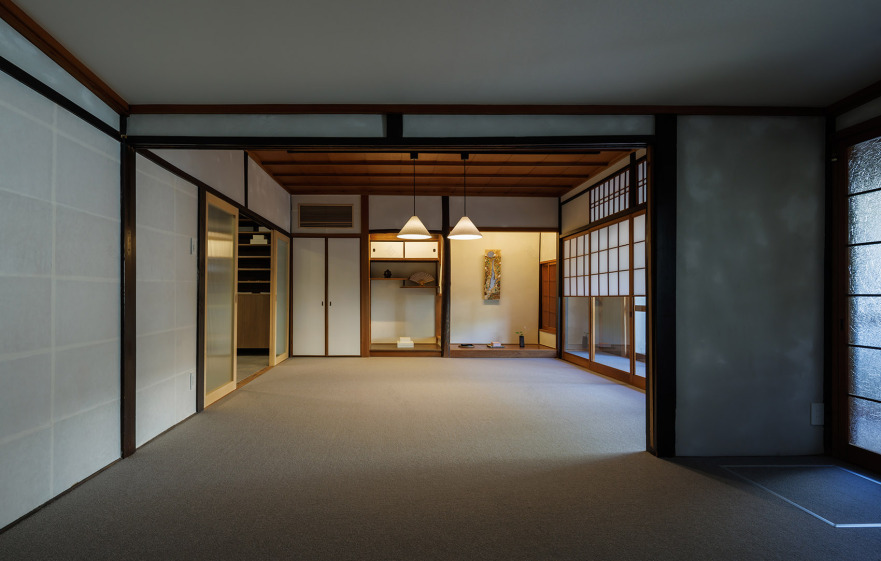
沙发和矮桌正对着床之间,访客可以透过观景障子,眺望庭园中与这栋房子相伴近一个世纪的杜鹃花丛。
A sofa and low table face the tokonoma, where visitors can look through snow-viewing shoji to see the azaleas in the garden, plants that have grown alongside the house for nearly a century.
▼会客厅,The meeting room © Yohei Sasakura
材料的选择将新旧元素融为一体。胡桃木色的搁板与町屋深邃的棕色横梁相呼应,而具有混凝土饰面的柜台和固定装置则与灰泥墙和瓷砖相连,引入了微妙的当代格调。
Material choices tie the old and the new together. Walnut toned shelves resonate with the deep brown beams of the machiya, while counters and fixtures with a concrete-like finish connect to mortar walls and ceramic tiles, introducing subtle contemporary accents.
▼新旧元素融为一体,The old and the new together © Yohei Sasakura
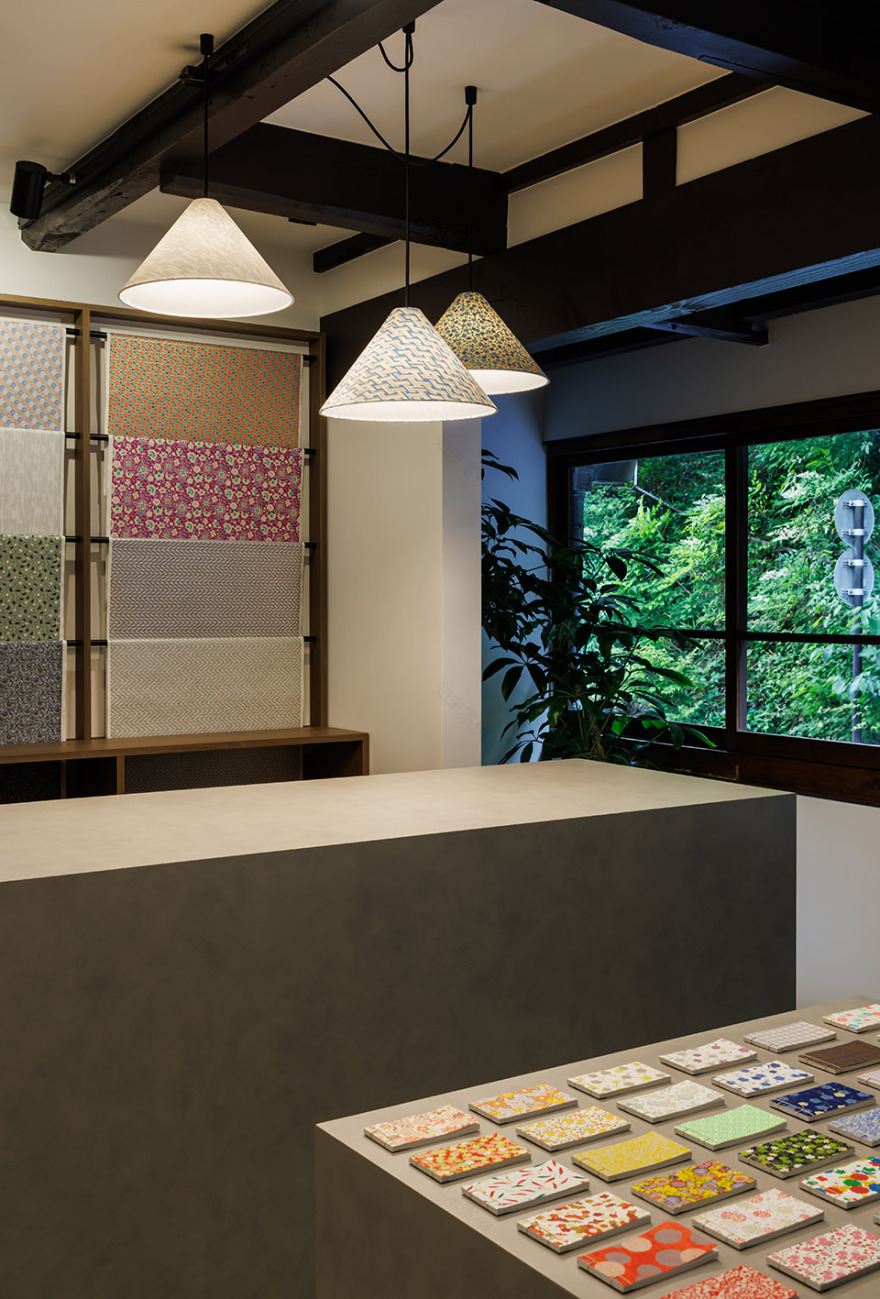
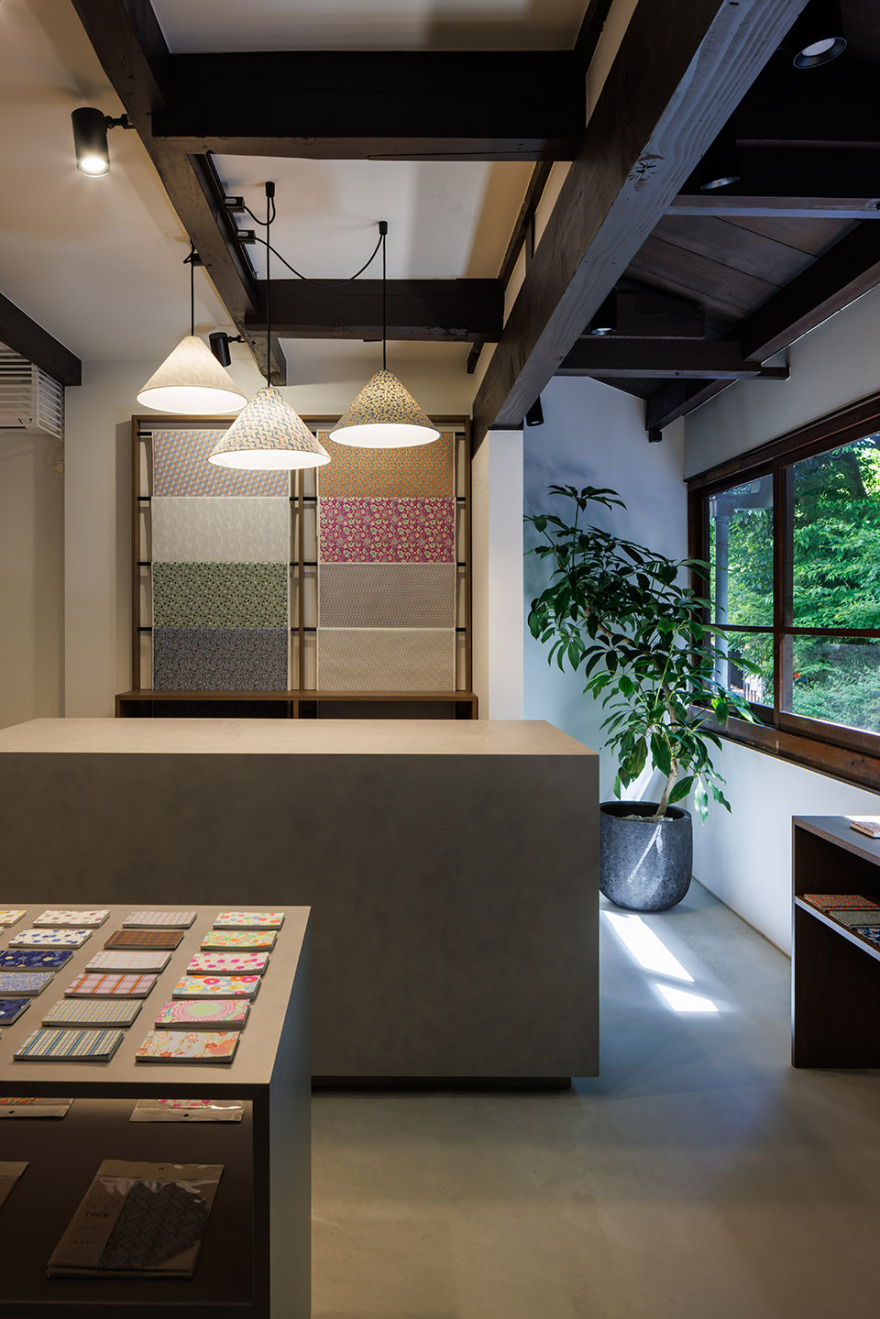
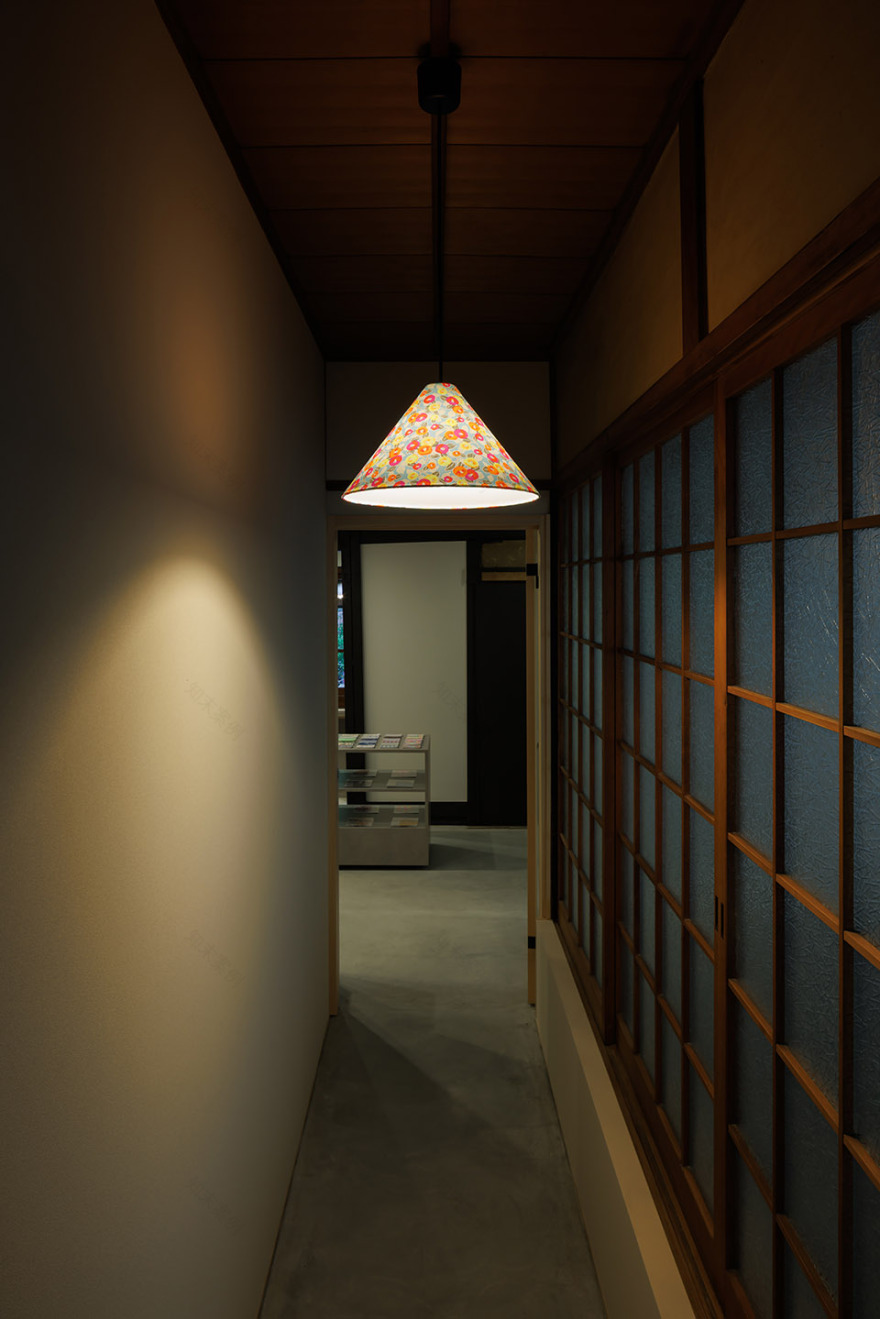
照明经过精心规划,兼顾了氛围营造与产品展示。固定于横梁上的射灯角度经过调整,可以柔和地照亮空间而不产生眩光。由友禅和纸制成的吊灯散发着柔和的光芒,既是熟悉的元素,又带来意想不到的惊喜,成为一道美丽的风景。
Lighting was carefully planned to support both the atmosphere and the presentation of the products. Spotlights fixed to the beams are angled to softly illuminate the space without creating glare. Pendant lamps made from Yuzen washi paper glow as beautiful features, both familiar and unexpected.
▼和纸吊灯,Washi paper light © Yohei Sasakura
在店铺内,灯光色温设置为3500K,以最佳状态突显和纸的色彩;而在会客空间,则使用更温暖的2700K灯光,营造出更为私密放松的氛围。
In the shop, lights are set to 3500K to best highlight the colors of the washi paper, while in the meeting space, a warmer 2700K light creates a more intimate and relaxed tone.
▼夜览,Night-view © Yohei Sasakura
足立野之家不仅仅是一家店铺。它是一个传统与日常生活相遇的场所,一栋历史悠久的町屋、它的庭园和松花堂的和纸在此和谐相融。其结果是一个宁静而富有巧思的空间,悄然连接着工艺、文化与当下。
Adashino House is more than a store. It is a place where tradition and everyday life meet, where a historic townhouse, its garden, and Shogado’s washi paper come together in harmony. The result is a serene, thoughtful space that quietly connects craft, culture, and the present moment.
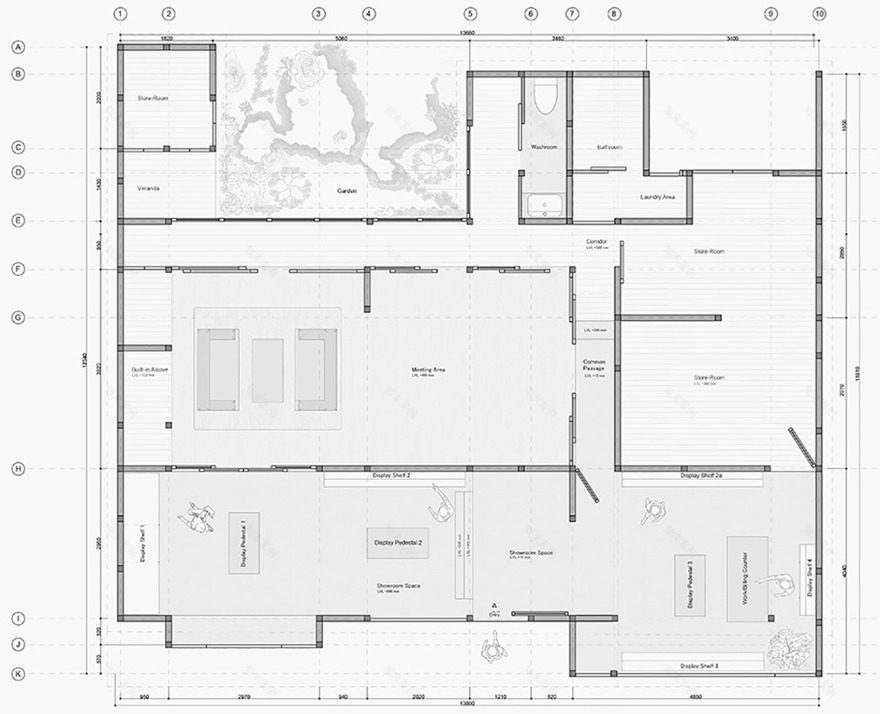
▼平面图,Floor plan © Ryosuke Fukusada
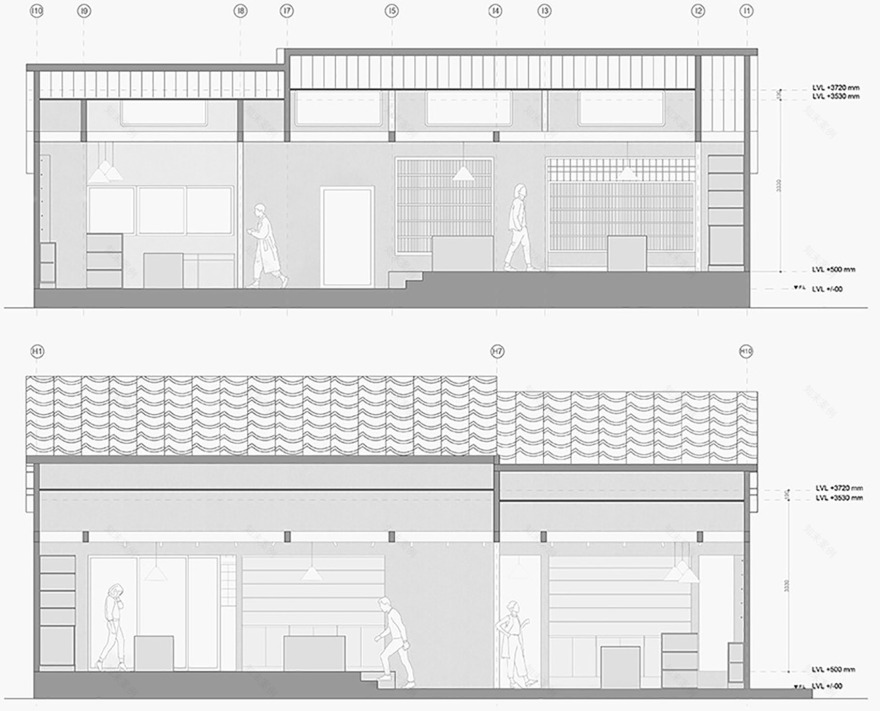
▼剖面图,Section © Ryosuke Fukusada
Project management : Shogado Co., Ltd. Yasuhiro Matsuo
Graphic design : Izumi Nakata
Construction : Persona Co., Ltd. Katsunori Takahashi
Furniture production : MCS Tomohiro Tabata
Furniture production : Y-wood Yasushi Hirobe
Furniture cooperation : Masterwal
Photo : Yohei Sasakura
南京喵熊网络科技有限公司 苏ICP备18050492号-4知末 © 2018—2020 . All photos and trademark graphics are copyrighted by their owners.增值电信业务经营许可证(ICP)苏B2-20201444 苏公网安备 32011302321234号
苏公网安备 32011302321234号客服
消息
收藏
下载
最近