

创作上传
VIP
收藏下载
登录 | 注册有礼
查看完整案例

收藏

下载

分享

翻译
Architects:Taller MACAA
Area:135m²
Year:2025
Lead Architect:Rafael Ortiz Santos
Category:Mixed Use Architecture,Houses
City:Taray
Country:Peru

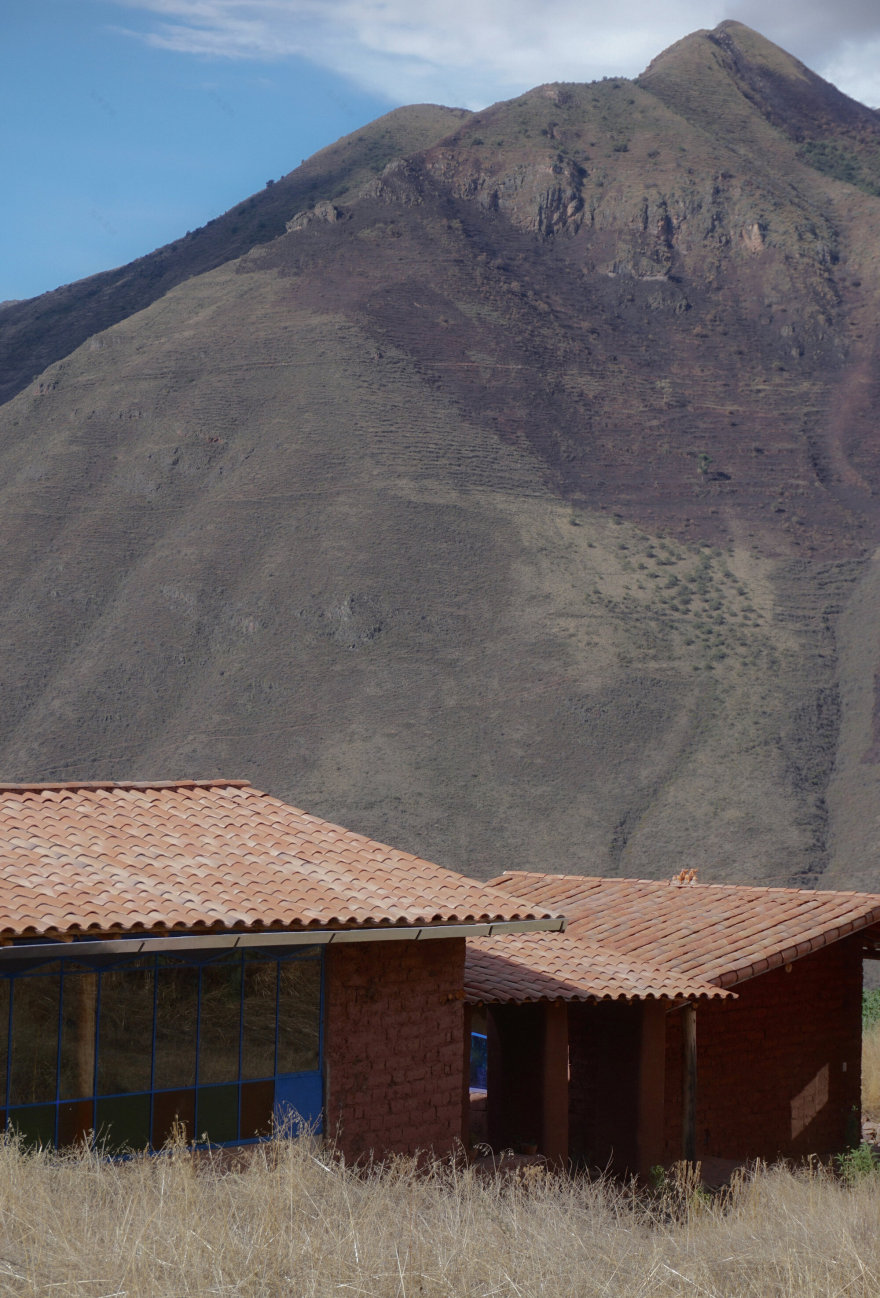
Text description provided by the architects. The Dormis Donata form the connecting axis of KUSKA, a rural complex located at 3,100 meters above sea level in the agricultural landscape of the Sacred Valley of the Incas. Nestled between mountains and terraces, they offer a context in which architecture engages in dialogue with memory, topography, and the cyclical rhythms of the environment. Designed to bridge two modes of habitation—permanent and temporary—they serve a key role as an intermediate space between the private core (next to the Home) and the communal core (next to the Quincho).
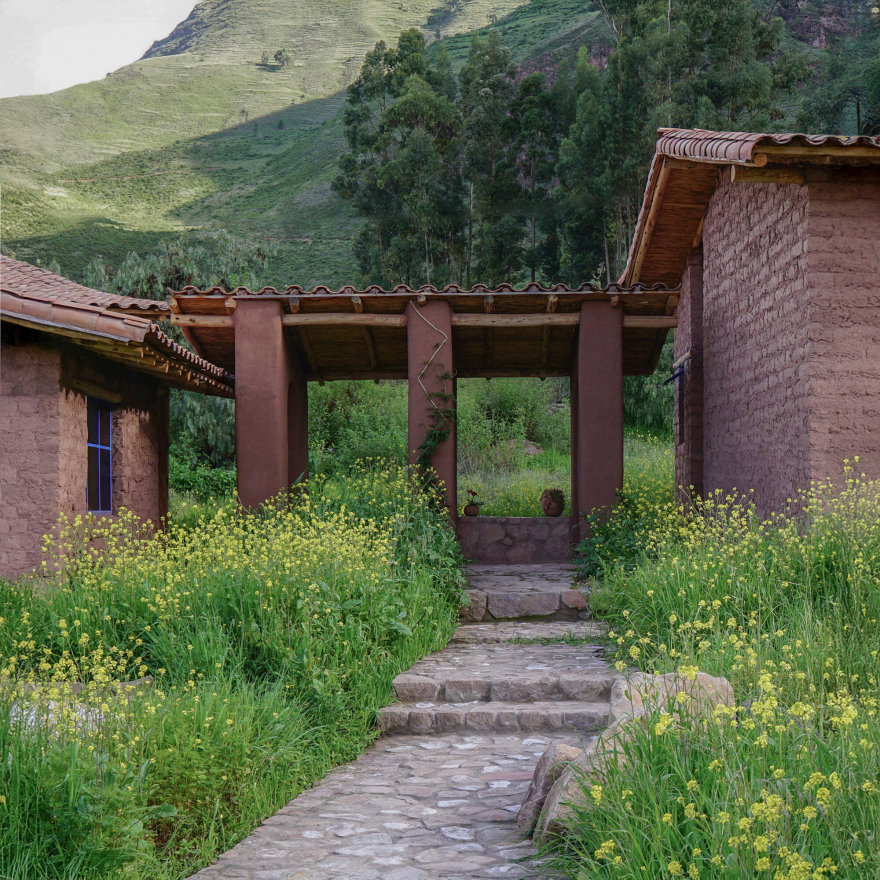
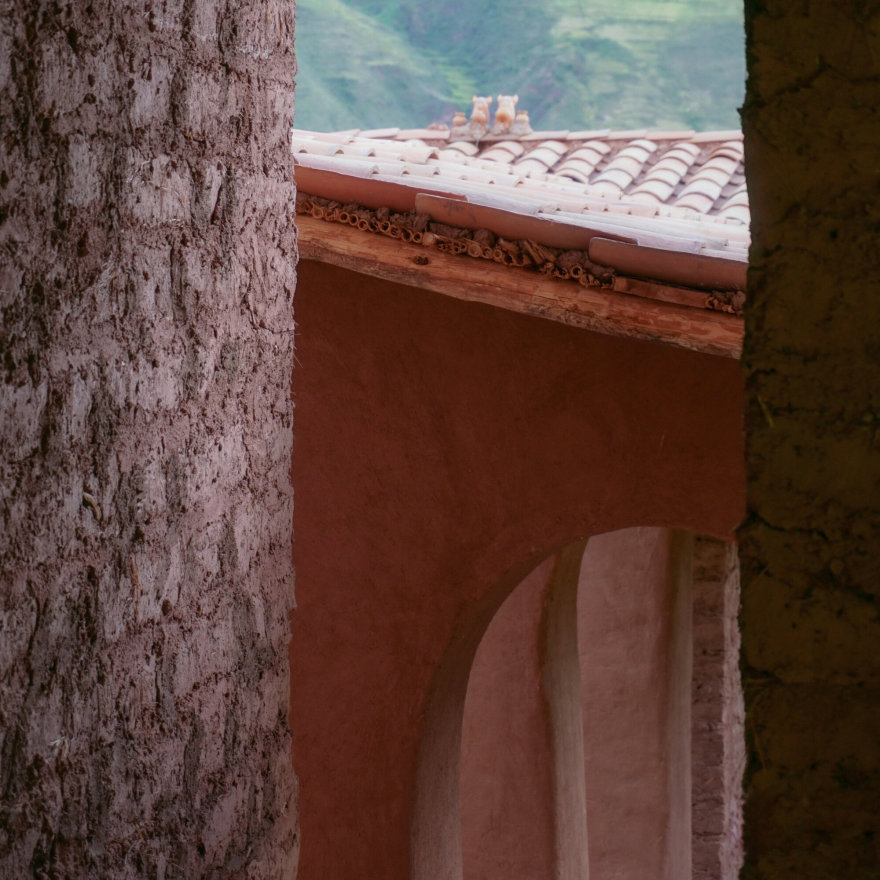
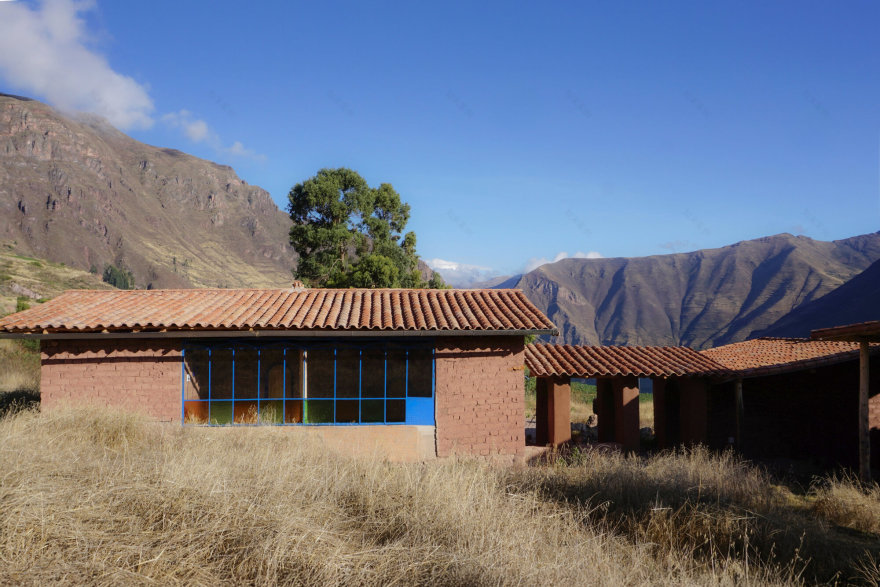
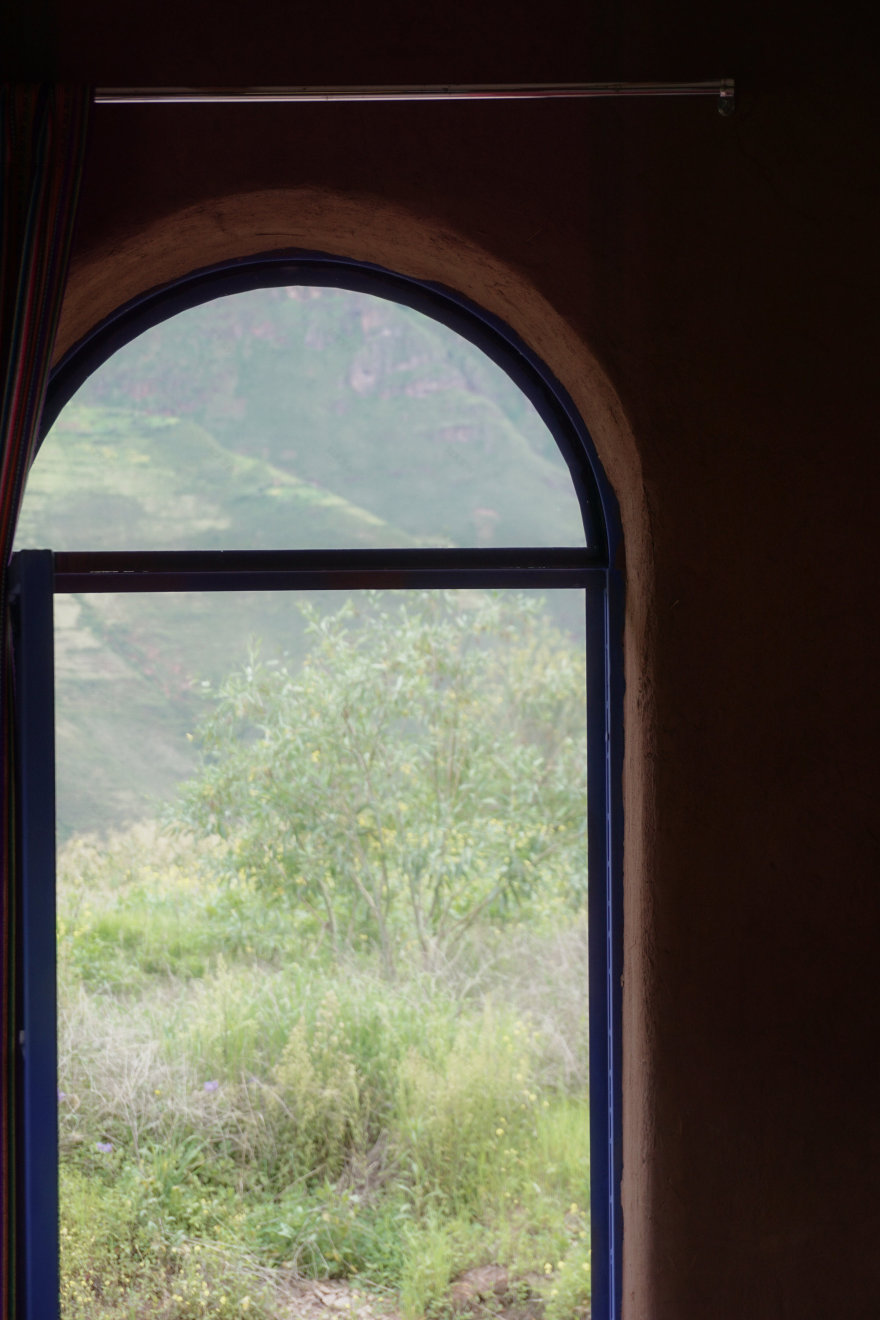
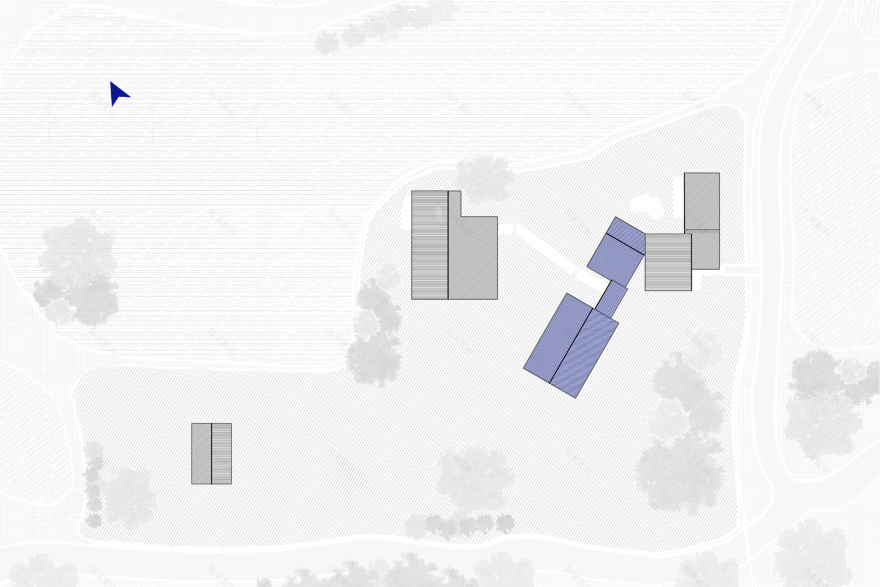
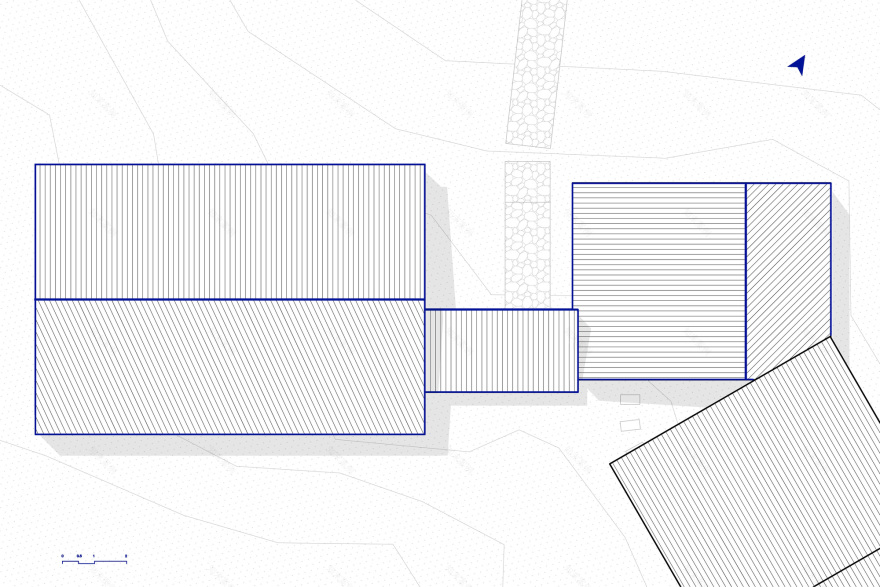
The ensemble is composed of three linear subspaces: a residents’ module, a visitors’ module, and a gallery of arches connecting them. This gallery serves as both a passageway between the two blocks and a link to the Quincho, easing the transition between intimacy and collectivity. Moving through the Dormis Donata entails constant interaction between scales, between inside and outside, where architecture guides the inhabitant through thresholds and framed views of the natural surroundings.


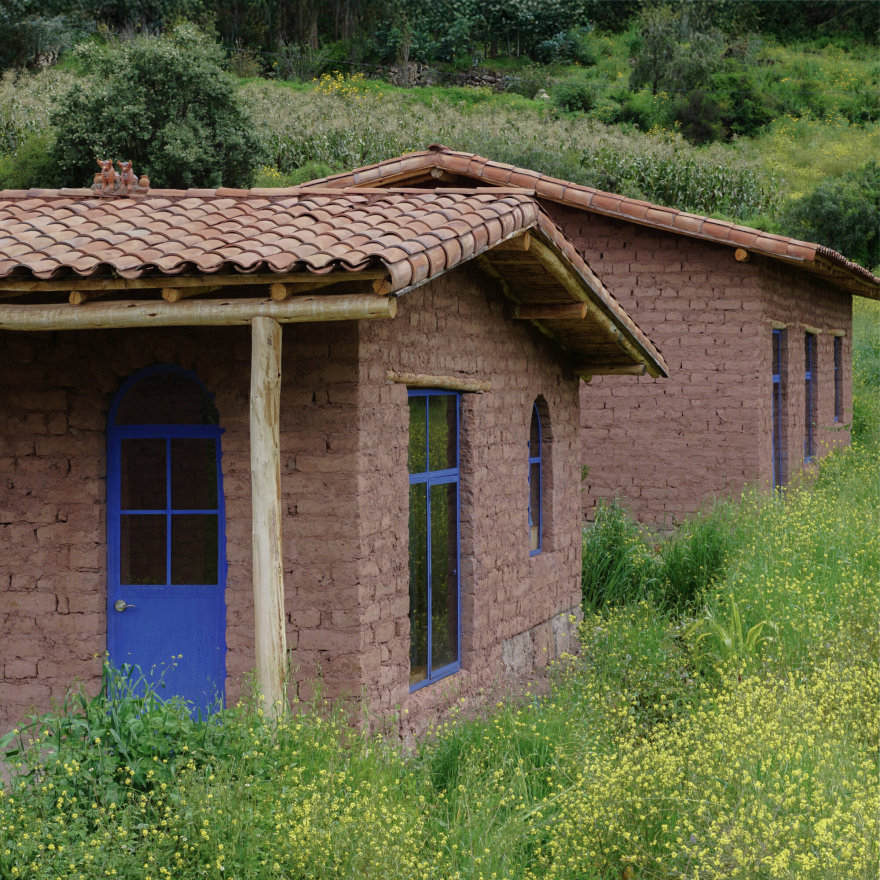
Each volume resolves its roof differently: the modules feature gabled roofs, while the gallery has a single-pitch roof open to the sun. The ridgelines of the residents’ and visitors’ roofs are oriented perpendicularly. In the visitors’ module, the ridge follows the slope of the terrain, creating spatial variation even though the rooms share the same floor plan dimensions.

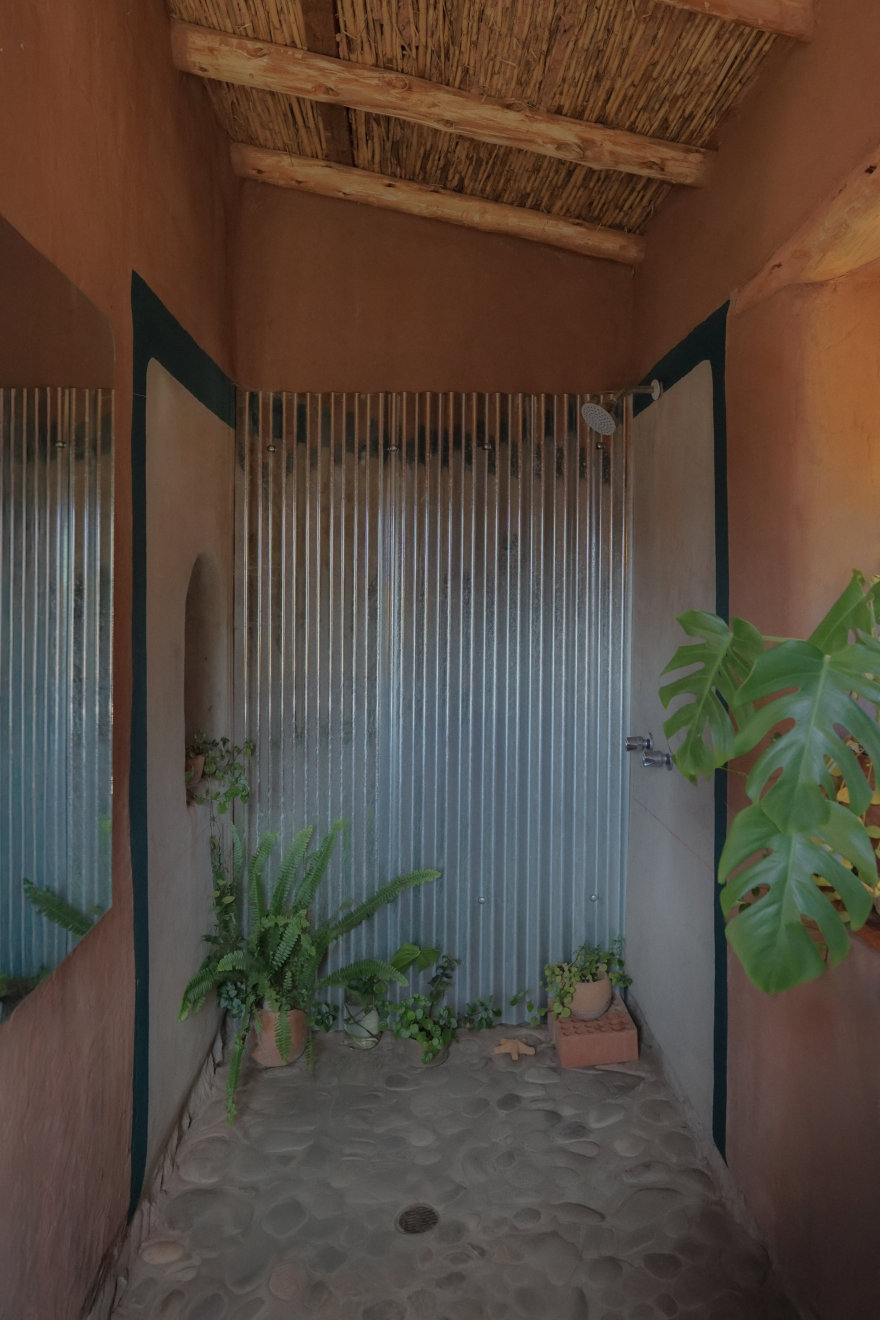
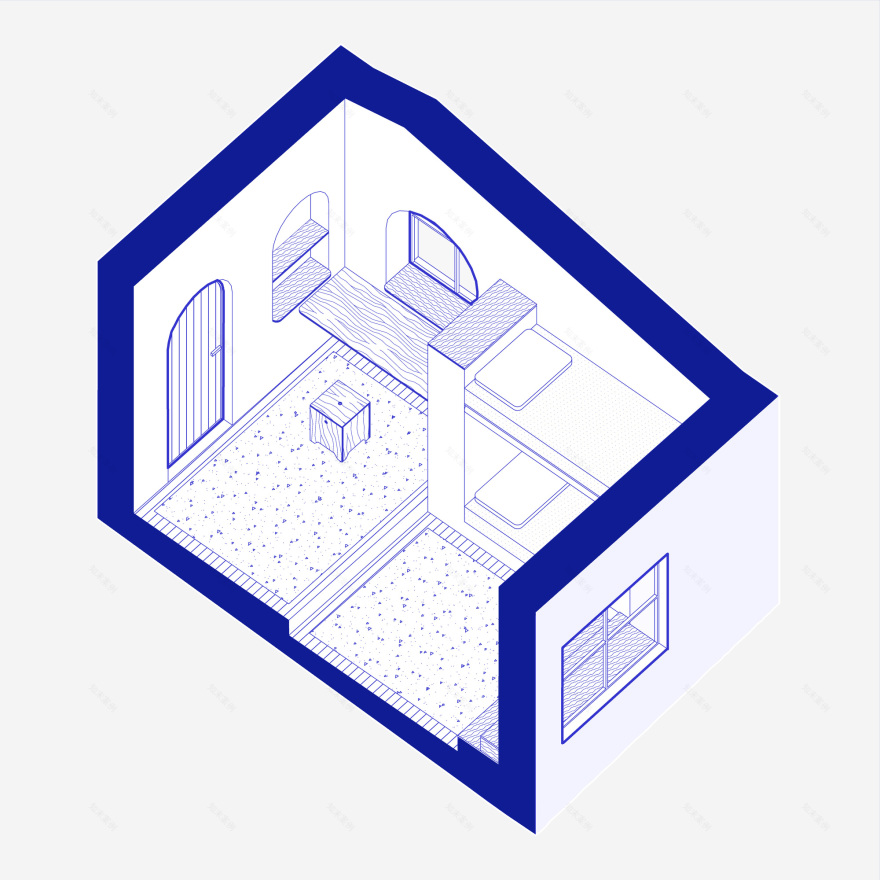
The residents’ module, located at a lower elevation next to the House, contains a bedroom and a bathroom, functioning as an autonomous yet connected unit. The visitors’ module includes three shared rooms (two double and one quadruple), a shower, a toilet, and a semi-enclosed covered patio as a gathering space.


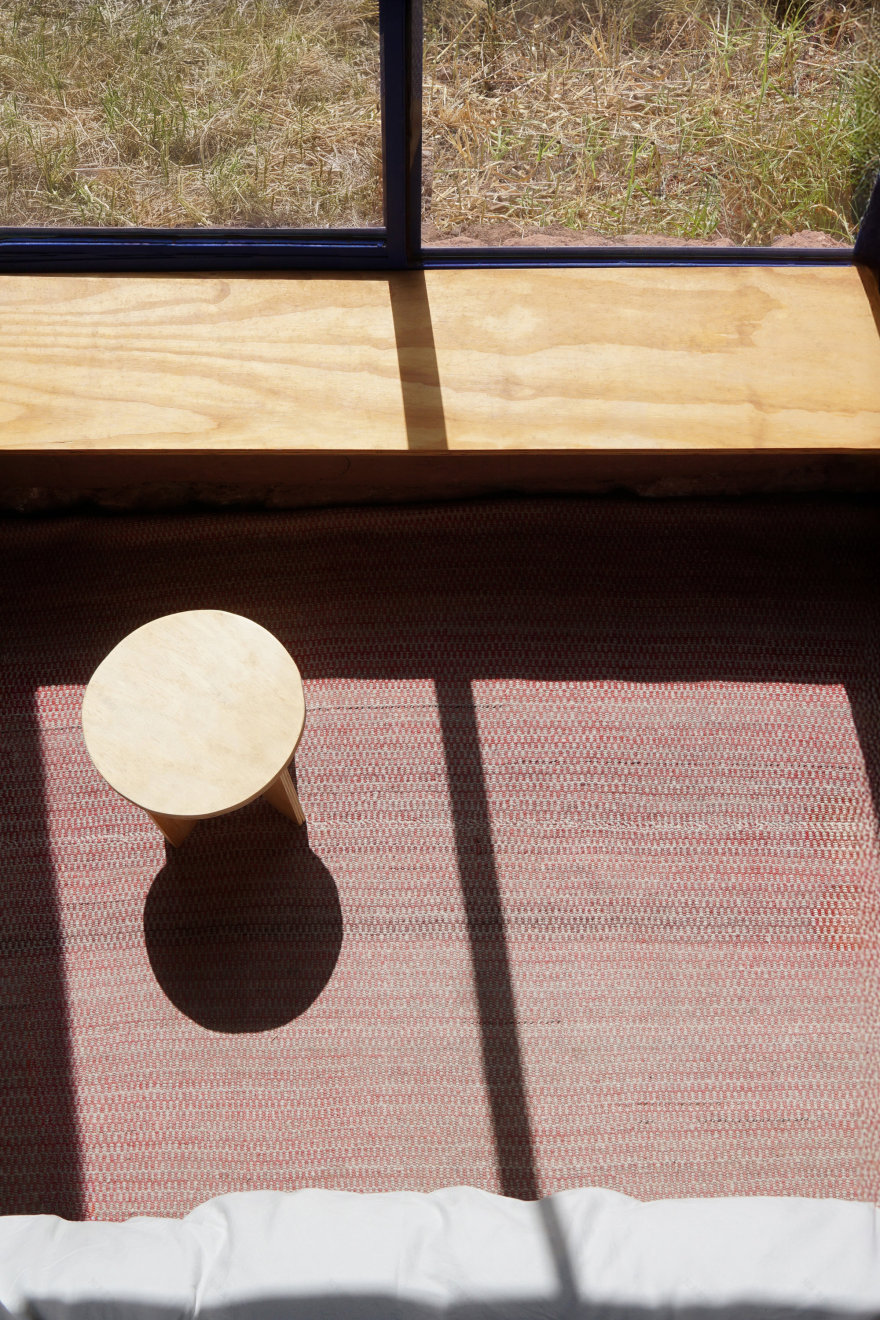
Both modules incorporate fixed earthen furniture that enables sleeping, storage, work, and contemplation, integrating basic functions into the construction elements. Stone benches built into the patio and gallery walls reinforce the adobe structurally while offering seating surfaces.

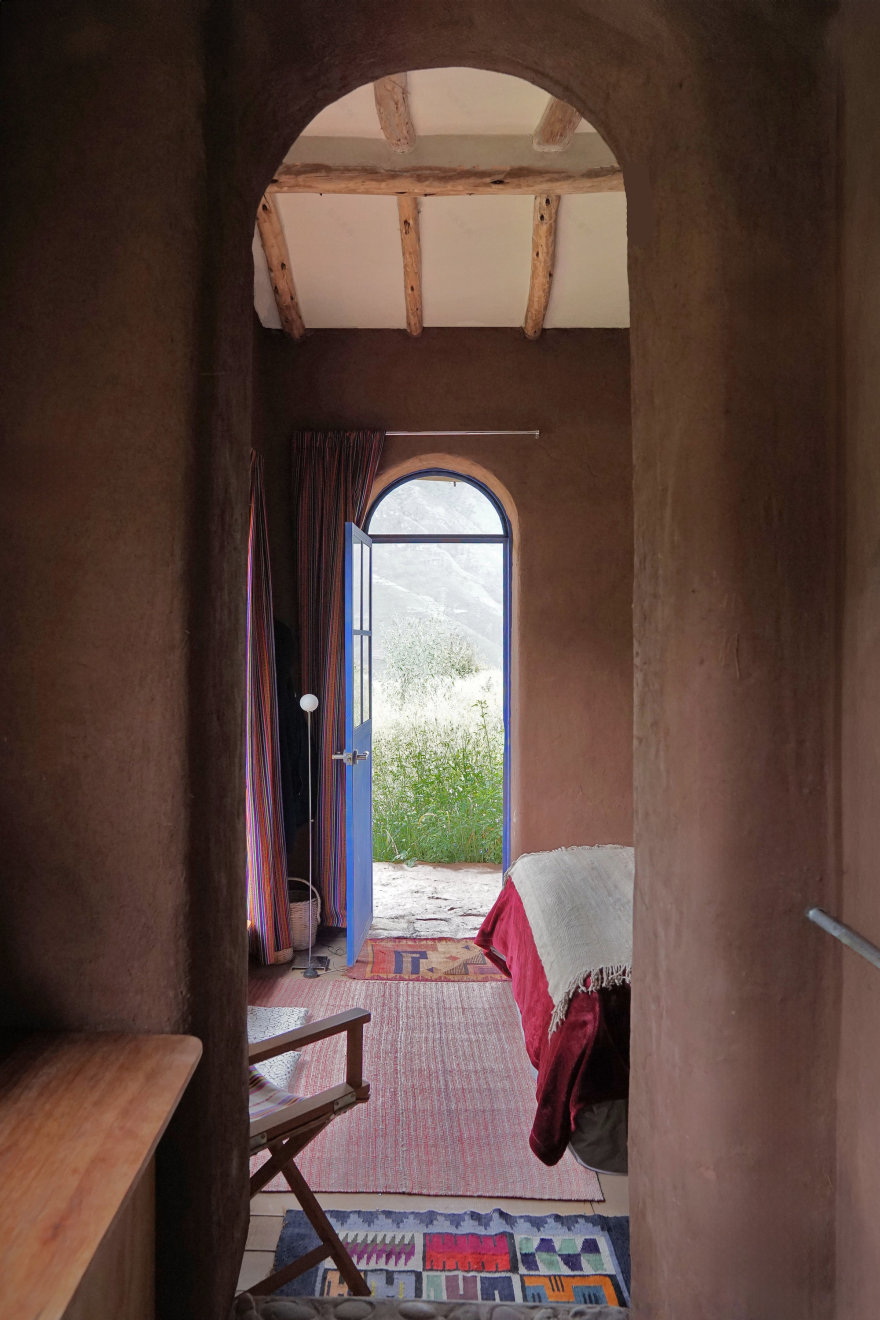

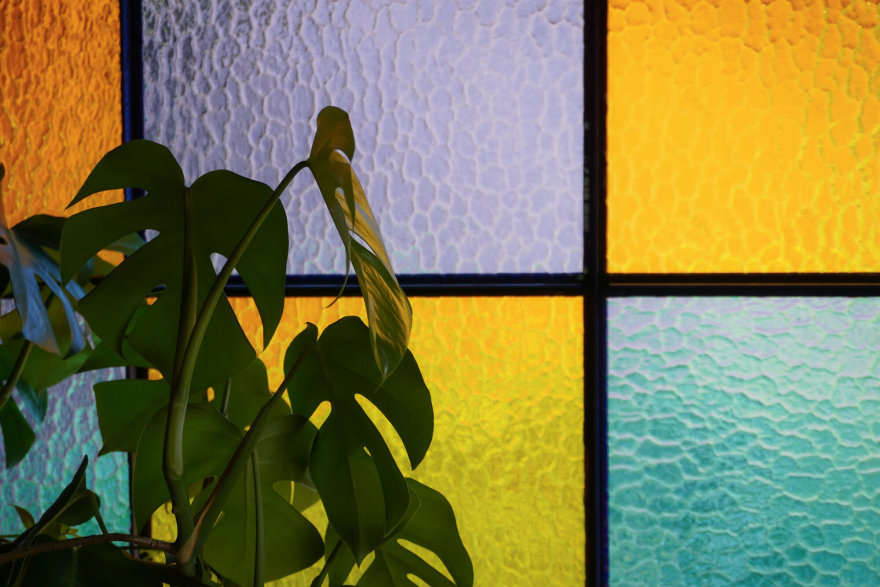
The main façades are oriented 30° off the west-east axis to optimize sunlight entry and thermal performance. The southeast façade of the visitors’ module, made of glass panels and colored glazing, receives the morning sun, projecting colored light into the interior. In the afternoon, light enters from the adjacent façade, between the southeast and the main face, allowing sunlight to accompany and transform the interior spaces throughout the day.

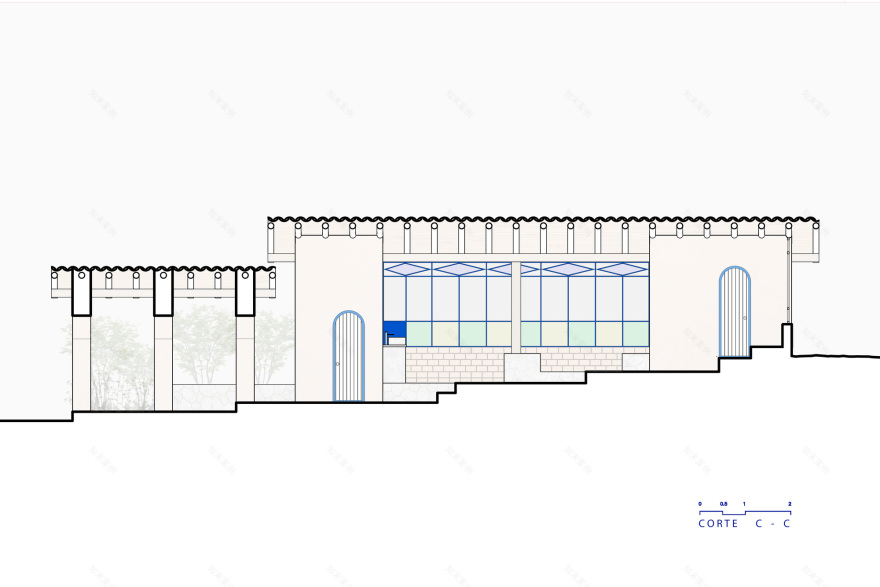
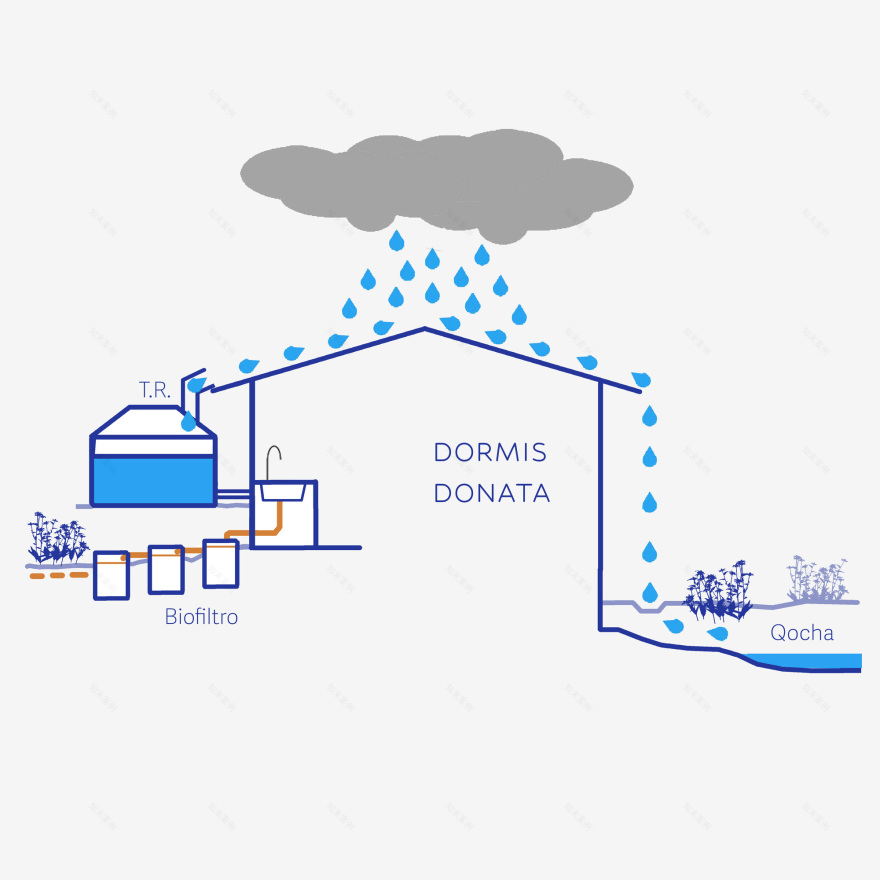
A dual rainwater harvesting system supplies both an elevated tank and a qocha—a reflecting pool inspired by Andean tradition—essential during the dry season. Greywater is filtered through biofilters, while blackwater is treated in a biodigester. At night, solar lamps light the semi-covered spaces, supporting energy self-sufficiency.

Project gallery










南京喵熊网络科技有限公司 苏ICP备18050492号-4知末 © 2018—2020 . All photos and trademark graphics are copyrighted by their owners.增值电信业务经营许可证(ICP)苏B2-20201444 苏公网安备 32011302321234号
苏公网安备 32011302321234号客服
消息
收藏
下载
最近