

创作上传
VIP
收藏下载
登录 | 注册有礼
查看完整案例

收藏

下载

分享
迟到的补写
A Belated Supplement
宋麓书院是安吉章村一个酒店的公共茶书房。虽然这个酒店坐落在山林脚下,但建筑设计却无山林气象,等我们赶到之时,它已然开建。在当下的开发模式下,无奈山水与我们总是迟到的。唯一能做的,就是给这个建筑植入一颗宋画山水的心脏——“宋麓书院”,当是一种精神缺失的补写。
Songlu Academy is a public tea study within a hotel in Zhangcun Village, Anji. Although this hotel is situated at the foot of wooded hills, its architectural design lacks the spirit of mountains and forests. By the time we arrived, construction had already begun. Under the current development model, it seems we are always belated in engaging with the landscape. The only thing we could do was to implant a heart of Song Dynasty landscape painting into this building — the “Songlu Academy” — a kind of spiritual supplementation.
▼书院全景,overview of theSonglu Academy© 造园建筑

屋下的造园
Garden-Making Under the Roof
在中国人眼里,山水从来不是纯粹的自然。在张若虚的《春江花月夜》里,绵绵不绝涌现的景物,历史感是其核心,自然是历史感的承载物,自然是一个怀古场,园林是一个借自然言说历史的剧场。说园林是自然,不如说园林是历史,中国园林中那无处不在的“文本性”,都在提醒着我们景物背后的人与事,都在关联着历史以增强现实。中国园林不是一座植物园,花木是祝仪、象征、教化、画意、隐喻的载体和符号。同样,中国建筑的类型、元素、构件,在几千年的演进中,皆被赋予了人情、仪轨、象征、愿念……建筑成为对自然的指看,成为对历史的演示,建筑本身形成了一种完备的自然与历史的叙事,建筑本身可以建立山水场,这是童寯先生敢于说“没有花木依然成为园林”的前提。
In the eyes of Chinese people, landscape has never been purely nature. In Zhang Ruoxu’s “Spring River, Flower Moon Night,” the ceaselessly emerging scenes have historical sentiment as their core. Nature serves as the carrier of this historical sentiment; it is a field for cherishing the past. A garden is a theater where nature is used to narrate history. To say a garden is nature is less accurate than to say a garden is history. The ubiquitous “textuality” in Chinese gardens constantly reminds us of the people and events behind the scenes, connecting them to history to enhance reality. A Chinese garden is not a botanical garden; flowers and trees are carriers and symbols of rituals, representations, teachings, pictorial ideas, and metaphors. Similarly, over thousands of years of evolution, Chinese architectural types, elements, and components have all been imbued with human sentiment, rituals, symbolism, and aspirations… Architecture becomes an allusion to nature, a demonstration of history. Architecture itself forms a complete narrative of nature and history; it can establish a landscape realm on its own. This is the premise for Mr. Tong Jun’s bold statement that “a garden can exist without flowers and trees.”
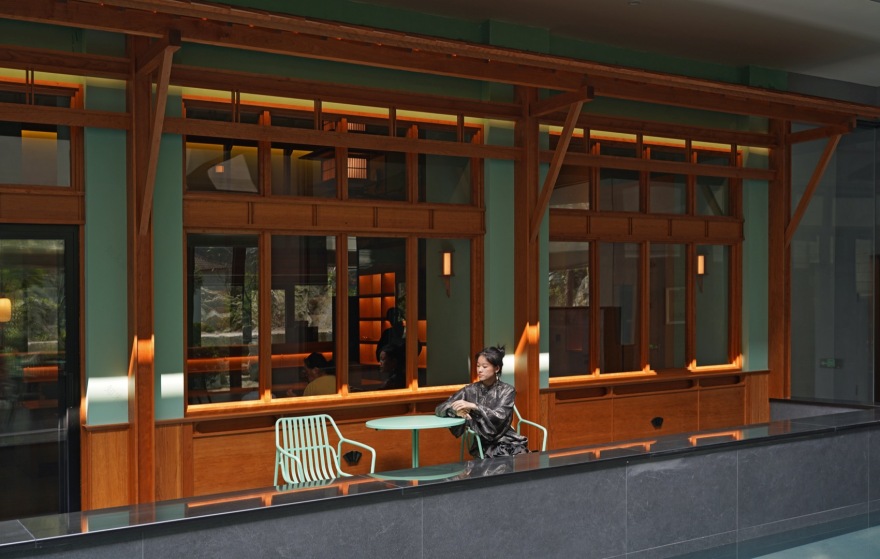
▼书院外景,临水台座,The exterior view of the academy, with a waterside platform© 造园建筑
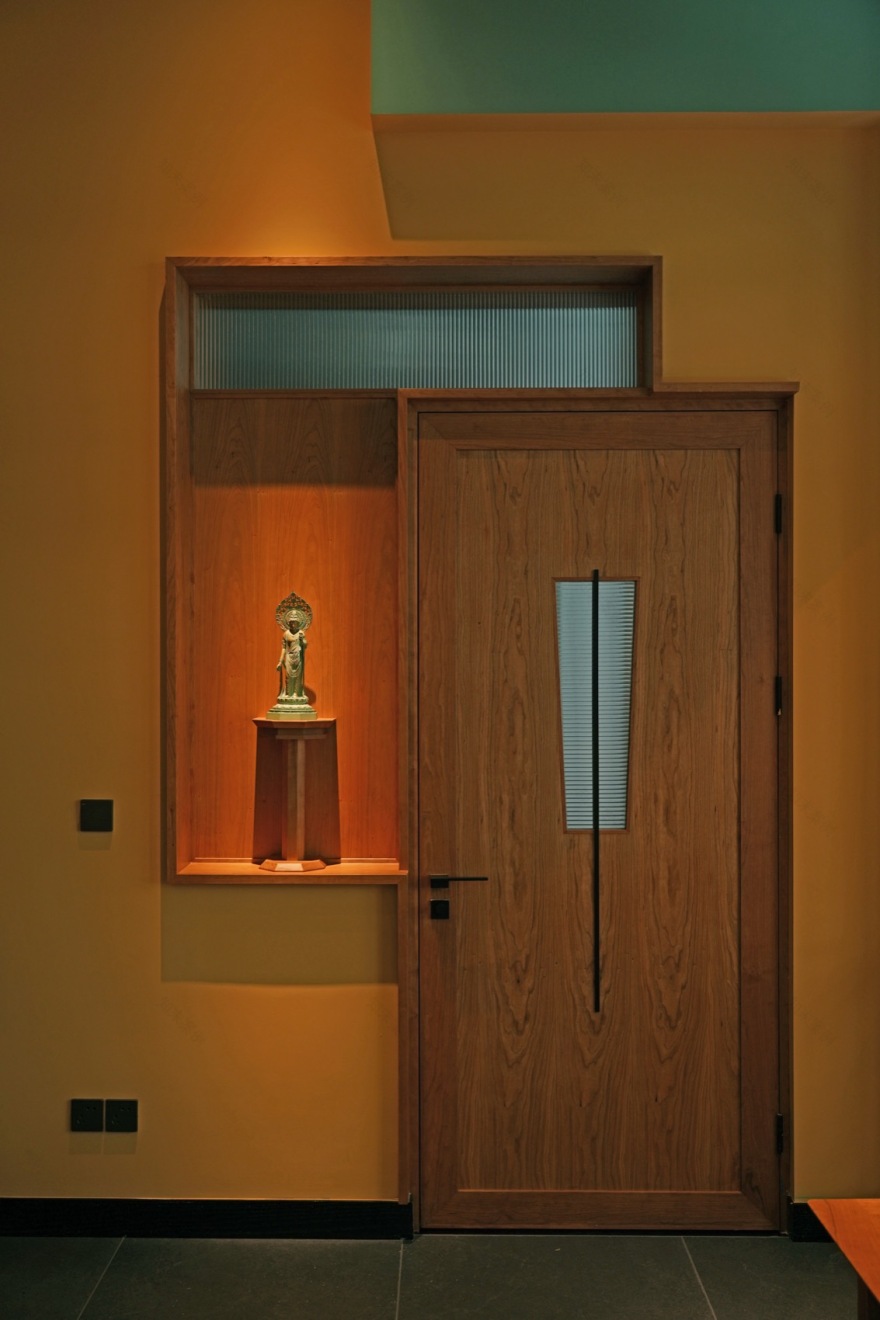
▼洞状的门,Hole-shaped door© 造园建筑
正观:近庭与远山
Frontal View: The Near Court and Distant Mountains
人闲桂花落,夜静春山空。月出惊山鸟,时鸣春涧中。
Man at leisure, cassia flowers fall; The quiet night, spring mountain empty.
The moon startles the mountain birds; They twitter in the spring brook occasionally.
▼山阶洞窥,Peering through the mountain steps © 造园建筑
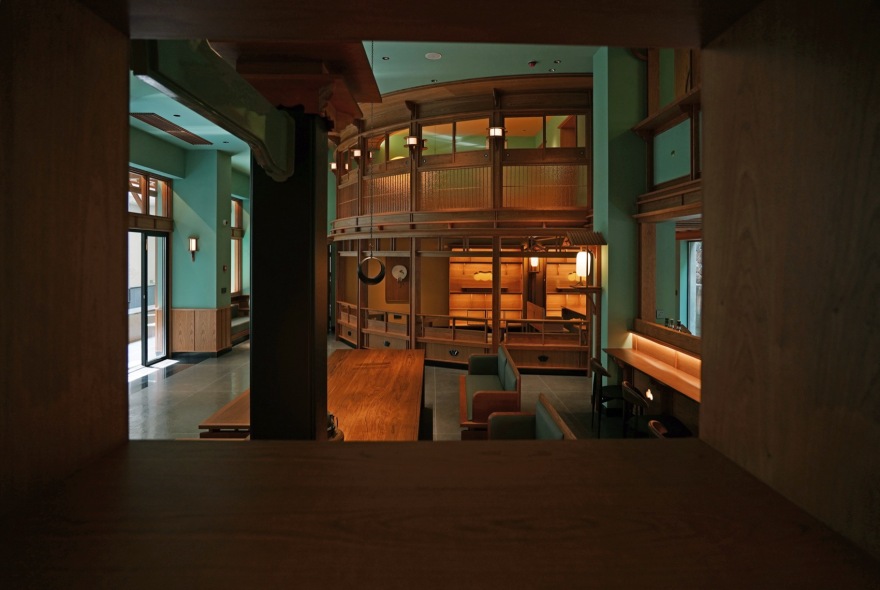
▼玄关外待座,Waiting area outside the entrance© 造园建筑
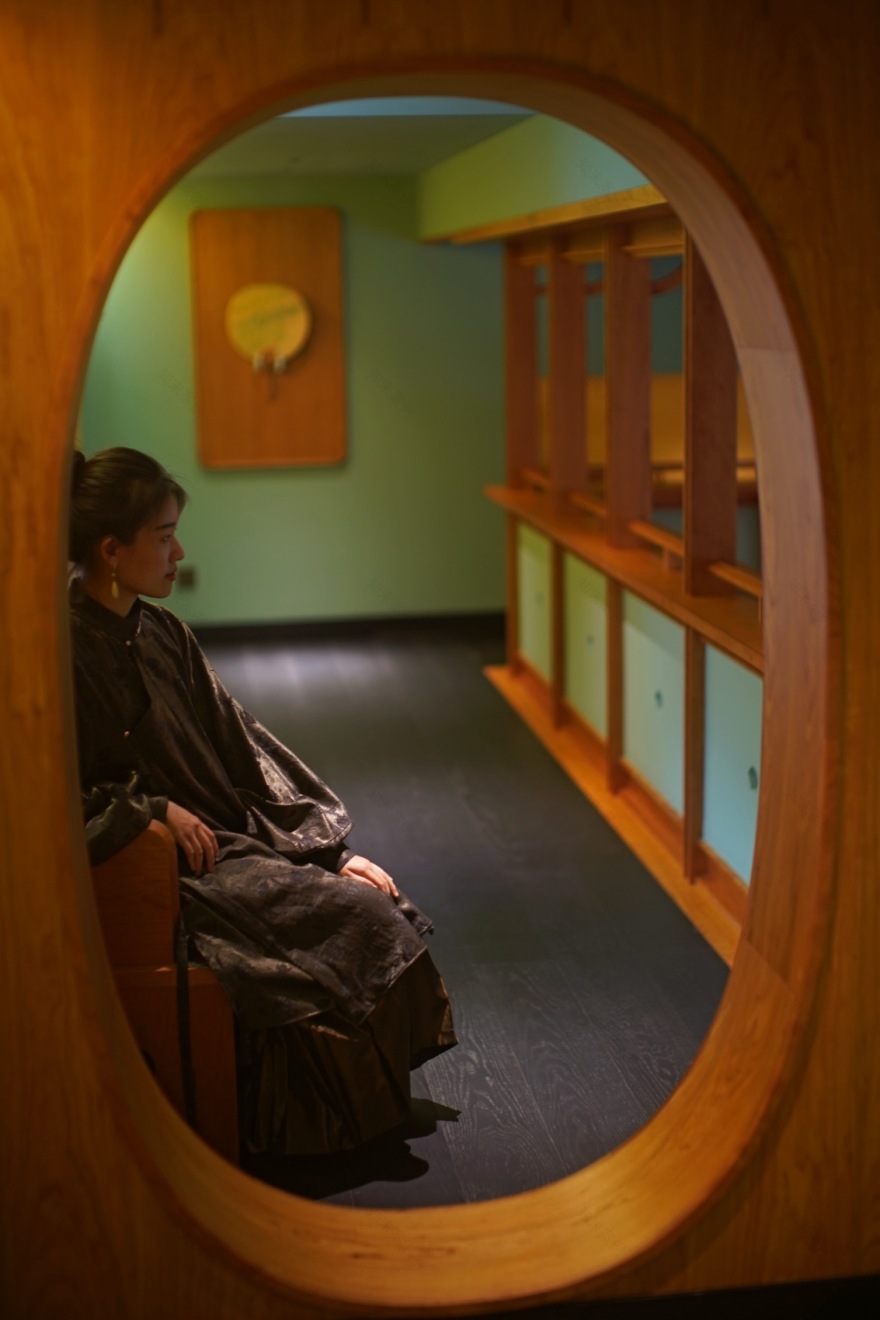
▼钻入扇中的玄关,The entranceway that penetrates into the fan-shaped space © 造园建筑
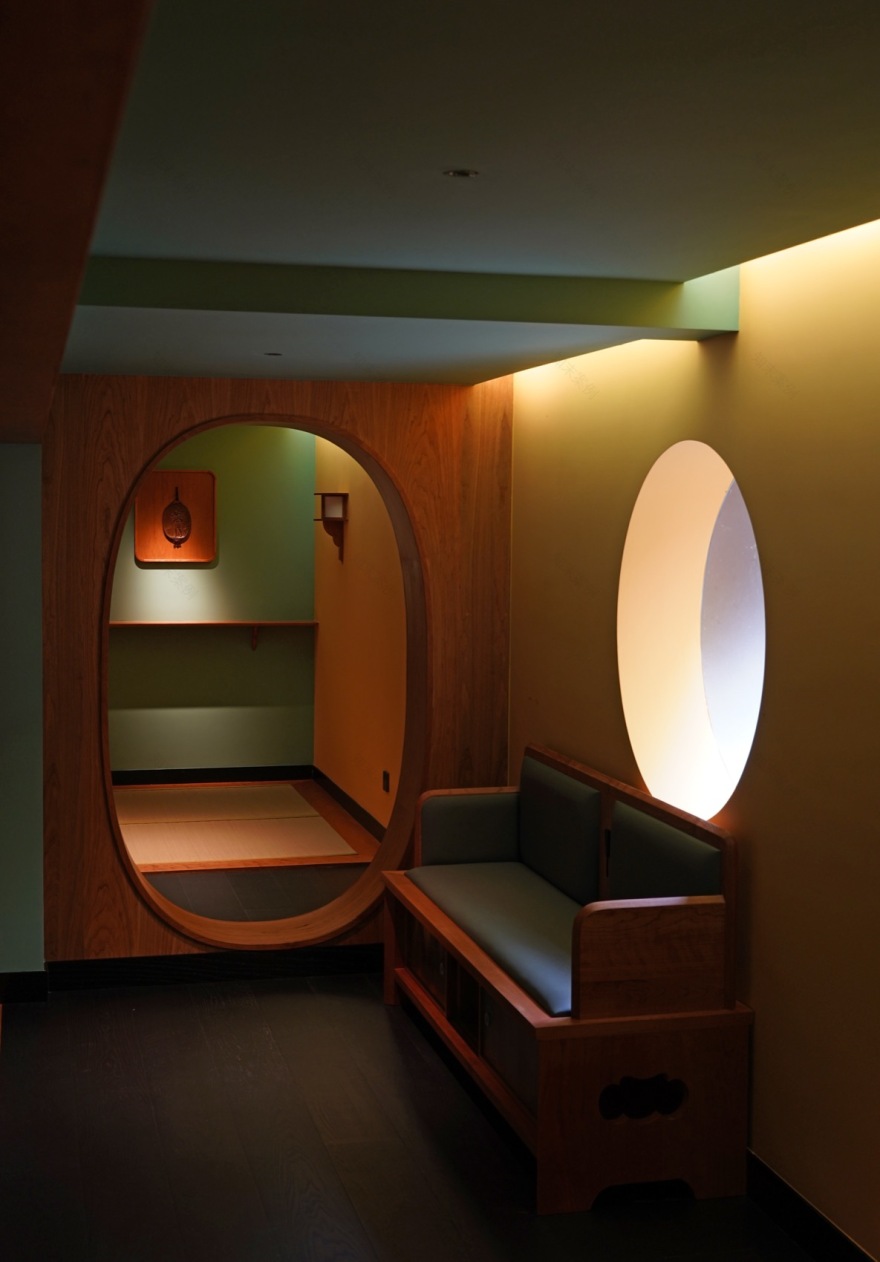
受道家与禅宗的影响,在中国人的诗境中,很早就形成了小大、远近、真幻、感觉的互摄、时空的互摄与圆融。我们以人的感受与想象,弥合近身与远方,关联视觉叠合的不同景物,混合声音与空间的交响……实现“落霞与孤鹜齐飞,秋水共长天一色”,“细剪云山缝破衲,闲捞溪月作蒲团”。
Influenced by Daoism and Chan (Zen) Buddhism, the Chinese poetic realm long ago developed an integration and harmony of small and large, near and far, truth and illusion, the interplay of senses, and the fusion of time and space. Through human perception and imagination, we bridge the proximate and the distant, connect visually layered scenes, and mix the symphony of sounds and space… achieving effects like “a lone duck flies with the sunset clouds, the autumn river merges with the vast sky,” or “finely cut clouds to stitch a tattered robe, leisurely scoop up the moon as a cushion.”
▼高灯为中枢,旋转式推延视界,The high lamp serves as the center, and the rotating extension of the visual field © 造园建筑
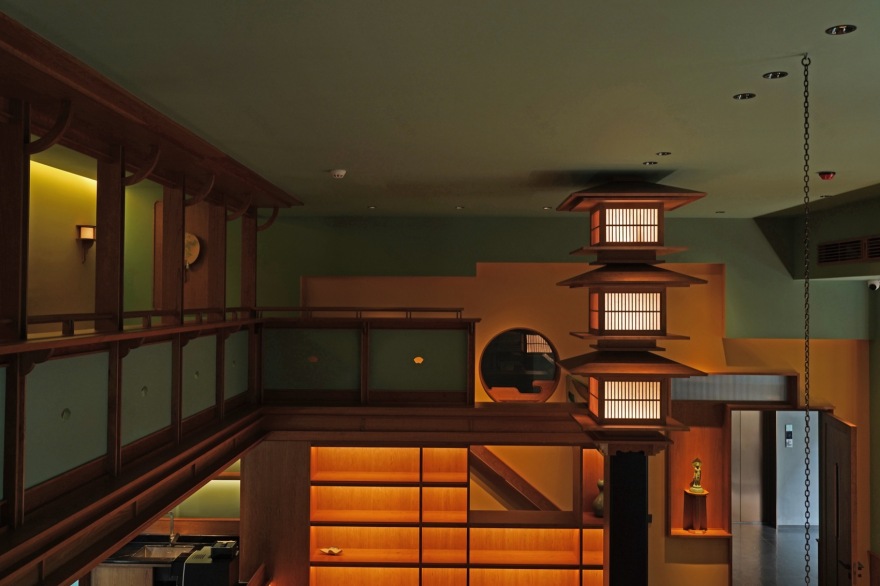
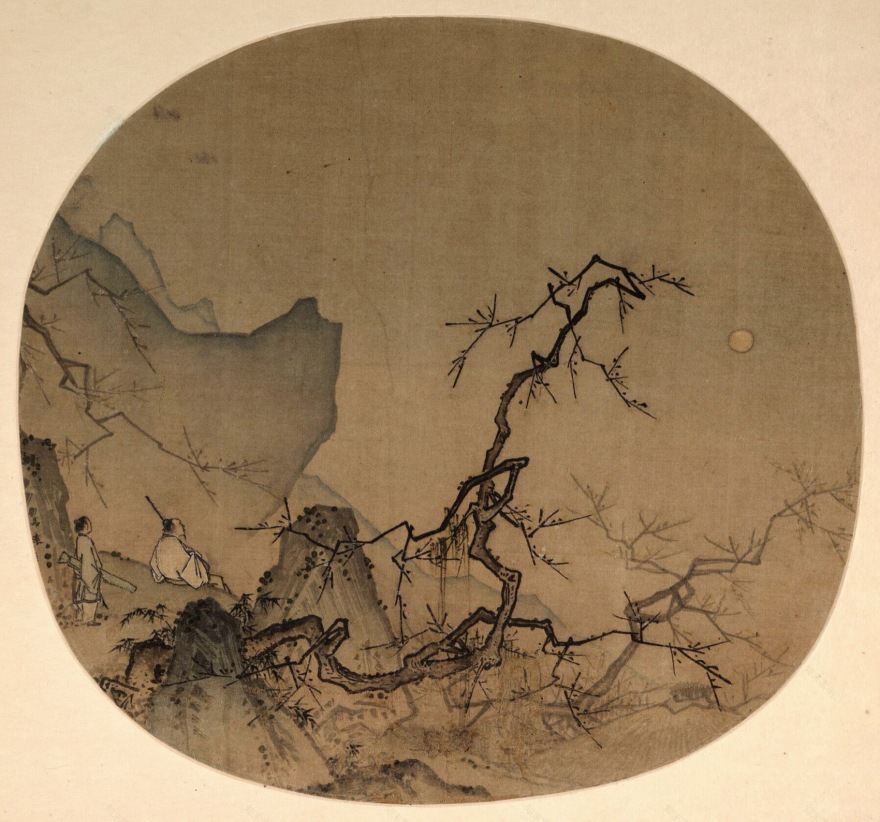
马远的画,正是这种混合与交响诗境的再现,总是远与近的叠合对望,总有作为结构性的巨树弥合远山、天空与明月,所有带着距离的事物,在画面中被交融在一起。马远的构造,前必有“近庭”,通常表现为平台、桥上、高岸,作为人的所在与观想秉持,也是时空展开的基点,近庭上必有高树,作为整个画面的轴心中枢,围绕这个中枢,做远近或者高下的推展与延扩,这个高树也是人的坐标的强调。
Ma Yuan’s paintings are precisely a representation of this mixed and symphonic poetic realm. They always feature the superimposed dialogue between far and near, always include a structurally significant giant tree bridging distant mountains, the sky, and the moon. All distant elements are blended together within the pictorial frame. In Ma Yuan’s composition, there is always a “near court” in the foreground, typically represented as a terrace, a bridge, or a high bank. This serves as the vantage point for human presence and contemplation, and also as the base for the unfolding of time and space. On this near court, there is always a tall tree, acting as the pivotal axis of the entire painting. Around this axis, the composition expands vertically or horizontally. This tall tree also emphasizes the human coordinate.
▼中枢坐标的灯幢,Central coordinate beacon light tower © 造园建筑
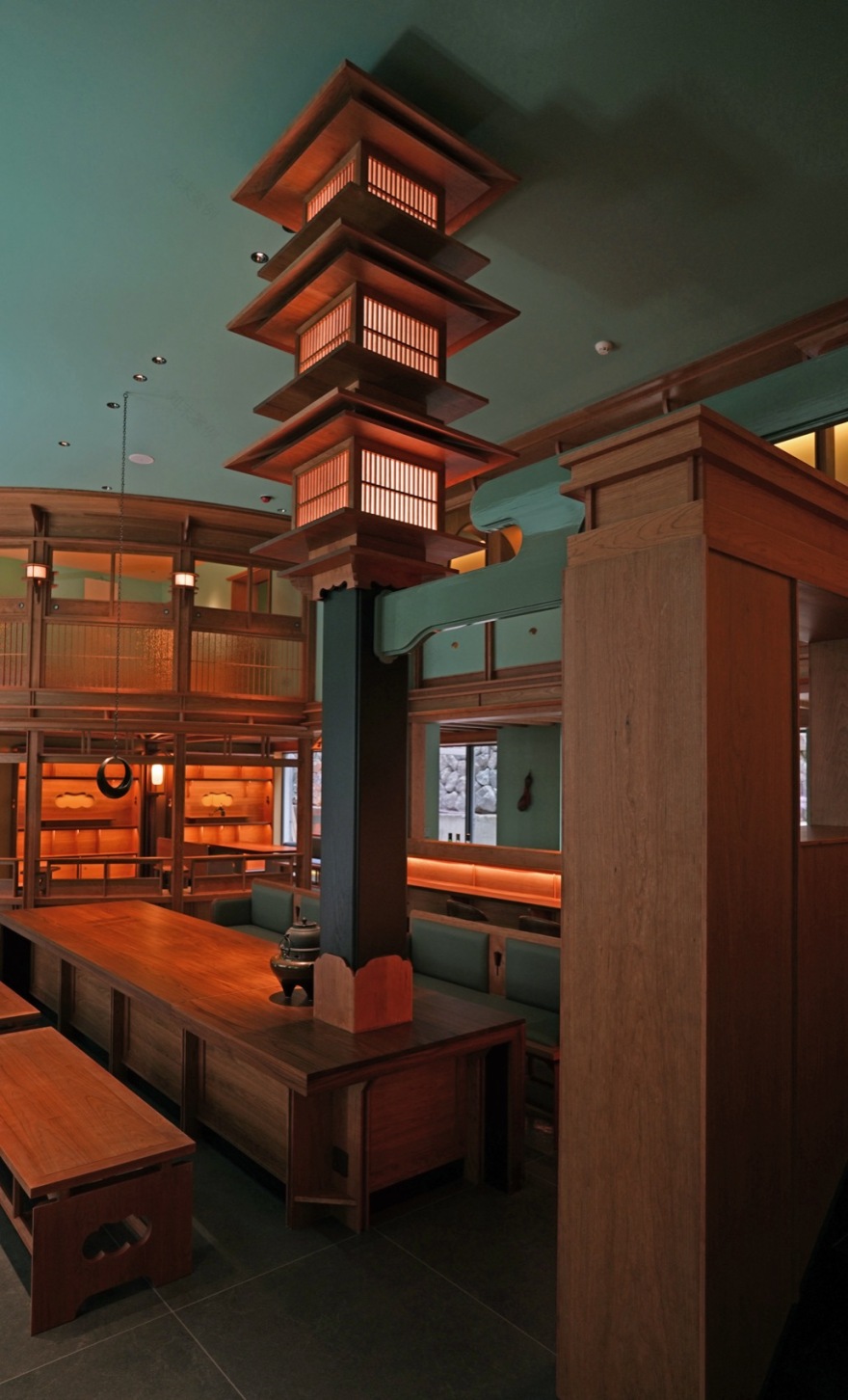
▼高远处守着入口与阶口,Standing guard at the entrance and the steps’ top © 造园建筑
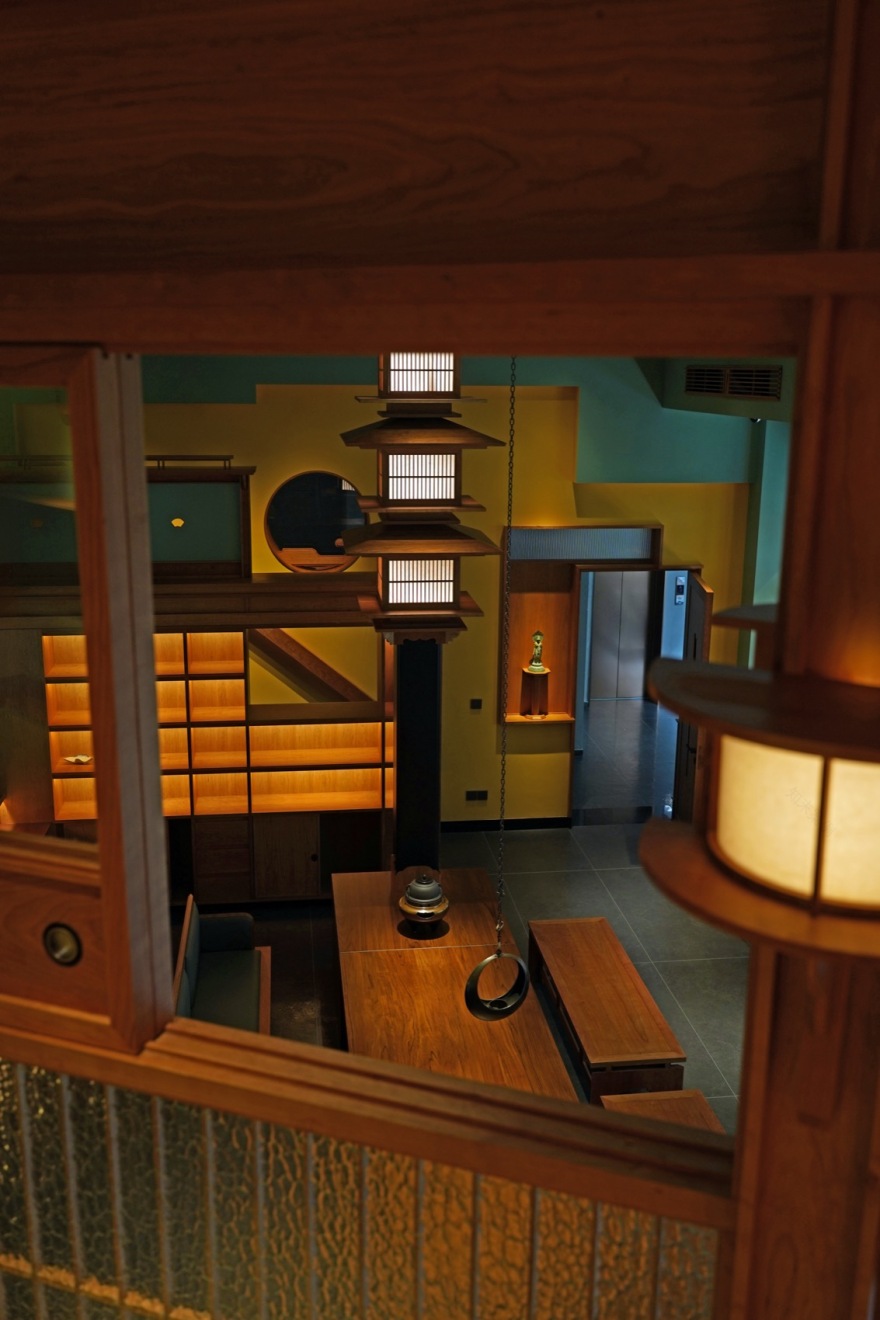
宋麓书院中,以“高灯茶台”作为第一人称的视野基点,就是马远的“近庭”。茶台是士人依仗的平台,高灯是那棵作为视野推展的基准轴心——古树,以平台为基面,以高灯为中枢,带有近似旋转的方式,展开几层界域,由“近庭”推向“远山”,而最终,远山与古树的握手,实现了远山返向近庭的联系。高与远的同在,月上树梢,招摇烟霭,楼台与飞廊与天灯在云端相会,构成一个回环往复。
In the Songlu Academy, the “high-light tea table” serves as the viewpoint of the first person — Ma Yuan’s “near court.” The tea table is the platform for the scholar-gentleman to rely on. The high light is that ancient tree acting as the benchmark axis for the expansion of vision. Using the platform as the base and the high light as the axis, several layers of realms unfold in a quasi-rotational manner, pushing from the “near court” towards the “distant mountains.” Ultimately, the “handshake” between the distant mountains and the ancient tree re-establishes the connection from the distant mountains back to the near court. The coexistence of height and distance, the moon atop the treetops, beckoning mist and haze, the meeting of pavilions, flying corridors, and sky lanterns amidst the clouds — all create a cyclical, reverberating whole.
▼楼台行,the meeting of pavilions© 造园建筑
反观:半壁视野下的雅集图
Reverse View: The Half-Scape View of Elegant Gathering
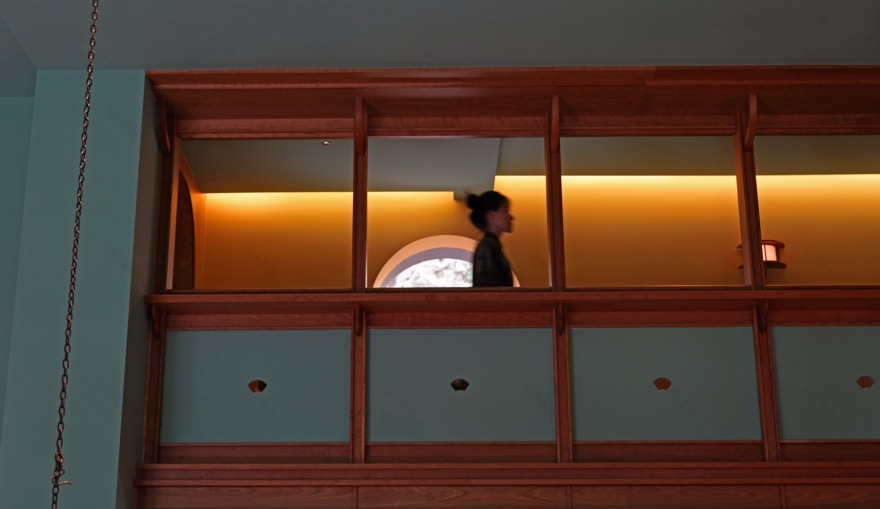
100平米的书院,注定不能构建完整的叙事,一定是“小品”,是团扇镜片的构景方式。南宋产生了“马夏半角”的画法,这里一定是带着对世界不完整的忧思画法,也是杭州的山林对南渡宫廷建筑群组织的反向塑造,所引起的观看的不完整。这即是真实的反映,也是一种视野的创造。从此,小与大有了等量齐观的价值,小与不全,一样拥有叙事的天地,小品与大观是等价的。
A 100-square-meter academy is destined not to construct a complete narrative. It must be a “small piece,” a mode of composition like a round fan or a small framed mirror. The Southern Song dynasty gave rise to the “Ma-Xia One-Corner” painting style. Here, it must be a style imbued with the melancholy of an incomplete world, also shaped by the reverse influence of Hangzhou’s mountains and forests on the organization of the court buildings after the southward relocation, leading to fragmented views. This is both a true reflection and a creation of perspective. From then on, the small and the large gained equal value; the small and the incomplete could also possess a world of narrative. The miniature and the grandiose are equivalent.
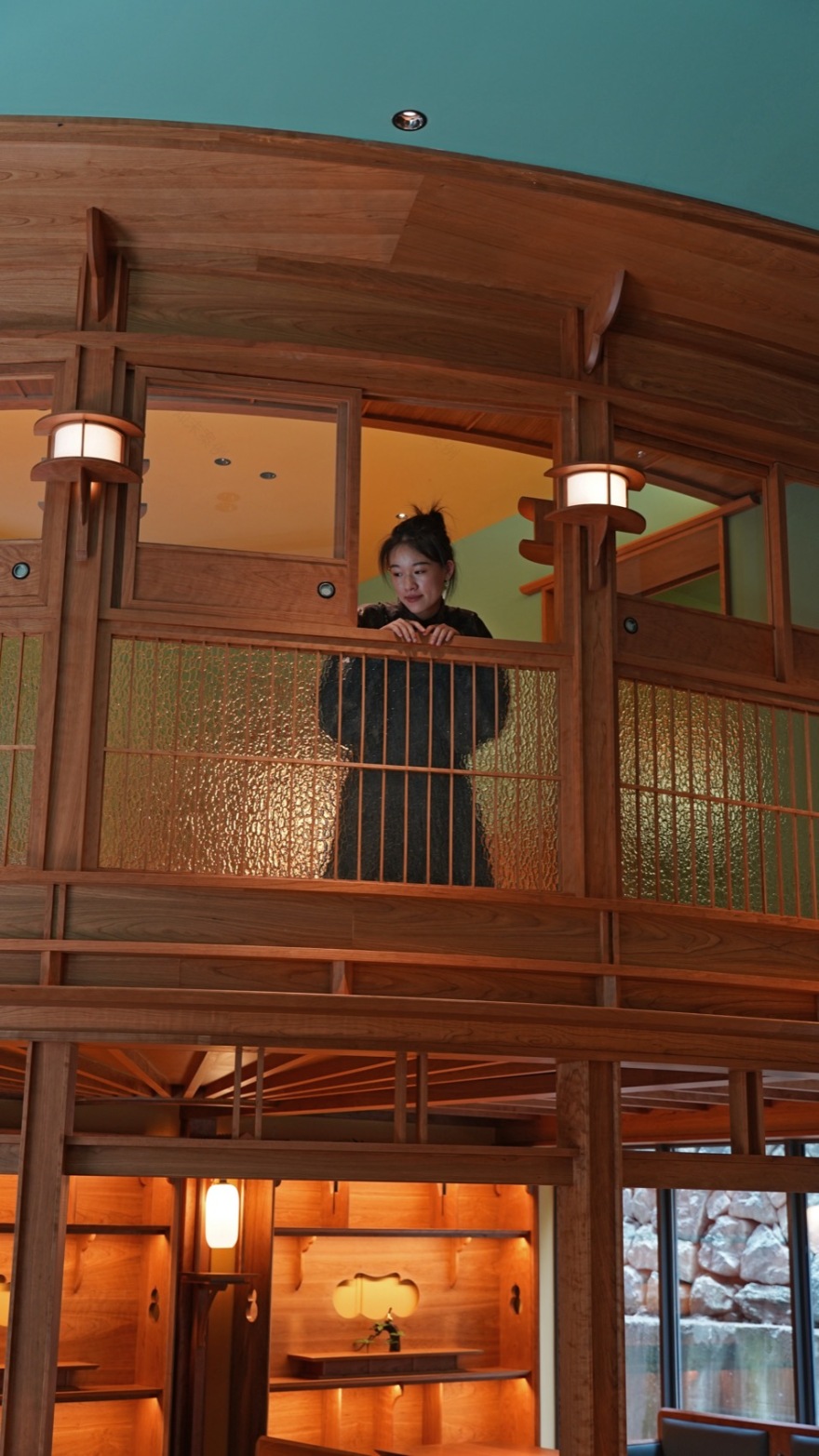
▼自楼台见扇亭藏月,From the pavilion, one can see the fan-shaped pavilion where the moon is hidden© 造园建筑
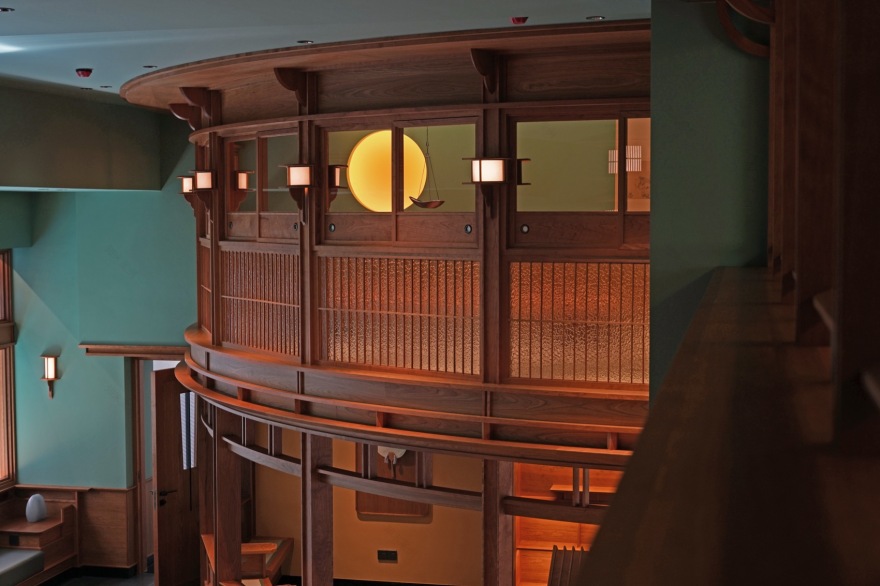
▼望扇阁如山,Wish the fan stand could reach the sky like a mountain. © 造园建筑
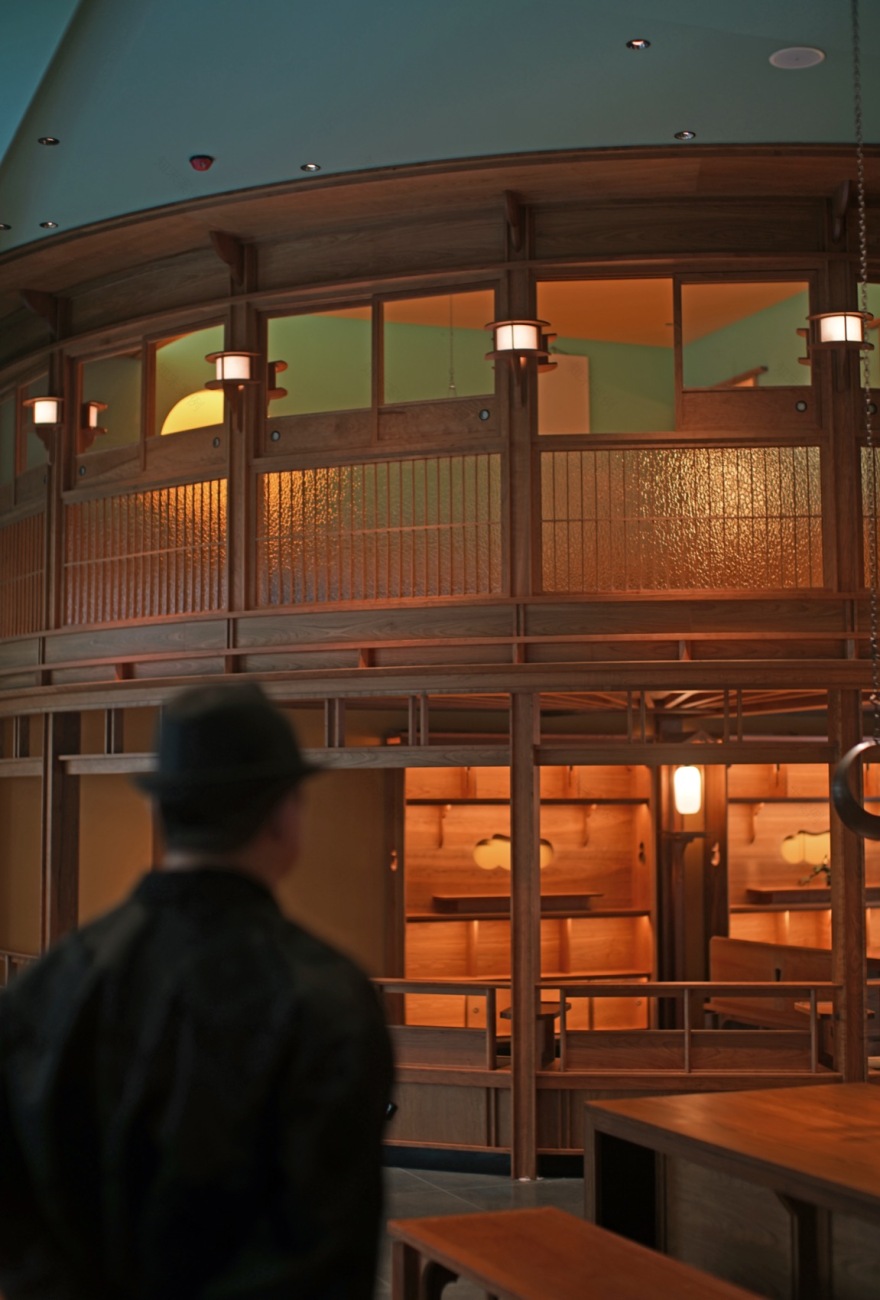
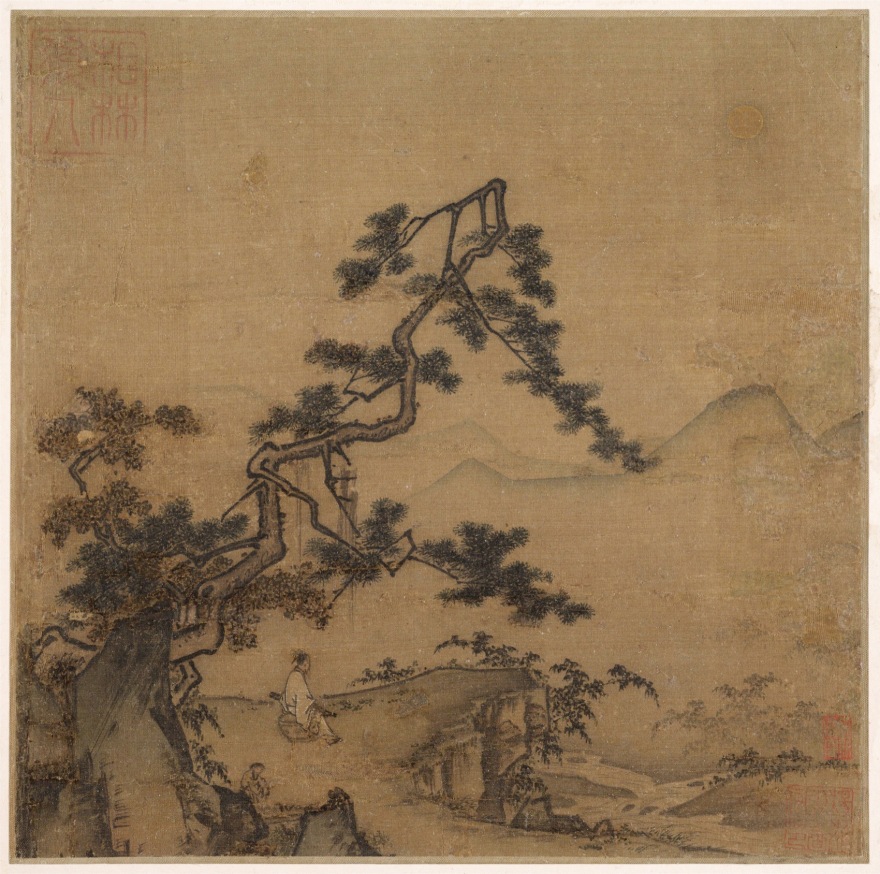
马远的半角,并非构图革新这么简单。而是在绘画史上第一次的“自我视野”,即这是对自我处境与主观观看的融合,半壁是“我”的据守,而空远是真实所见。可以说,这是一种特定的“怅然忧思”的画法,这点从马远的《宋帝命题册》可以看出,白衣主角,零然高处,寄托于山水空辽的寡欢,映照了宋宁宗的心境。
Ma Yuan’s one-corner style was not merely a compositional innovation. Rather, it marked the first time in painting history that a “self-perspective” emerged — a fusion of one’s own situation and subjective view. The half-scape is the “I” holding one’s ground, while the vast emptiness is what is truly seen. It could be said that this is a specific style imbued with “melancholy and longing.” This can be seen in Ma Yuan’s “Album Leaves with Compositions by Song Emperors,” where the protagonist in white robes stands alone in a high place, projecting his solitary feelings onto the vast, empty landscape, reflecting the state of mind of Emperor Ningzong of Song.
▼扇茶之筵席,Tea-serving Banquet© 造园建筑
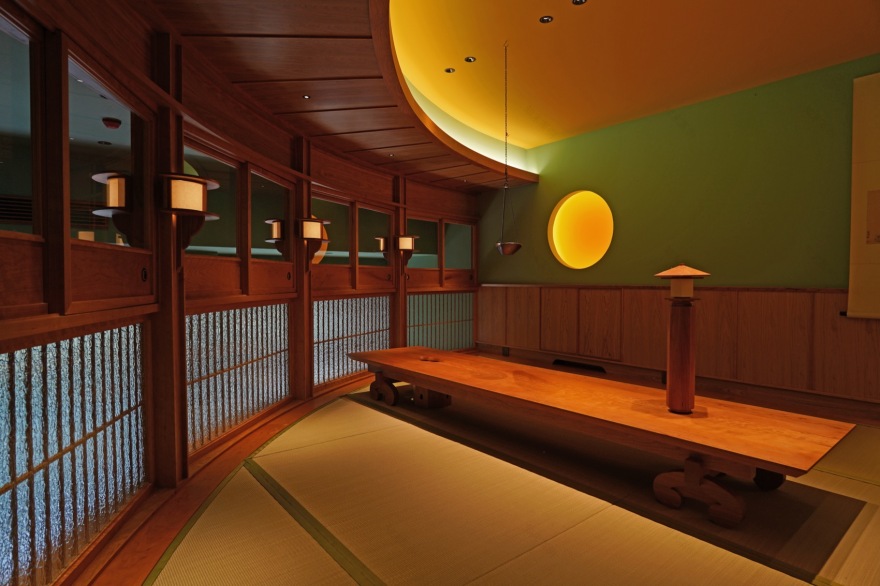
▼十折玻璃映射出月行轨迹,The ten-fold glass reflects the trajectory of the moon’s movement© 造园建筑
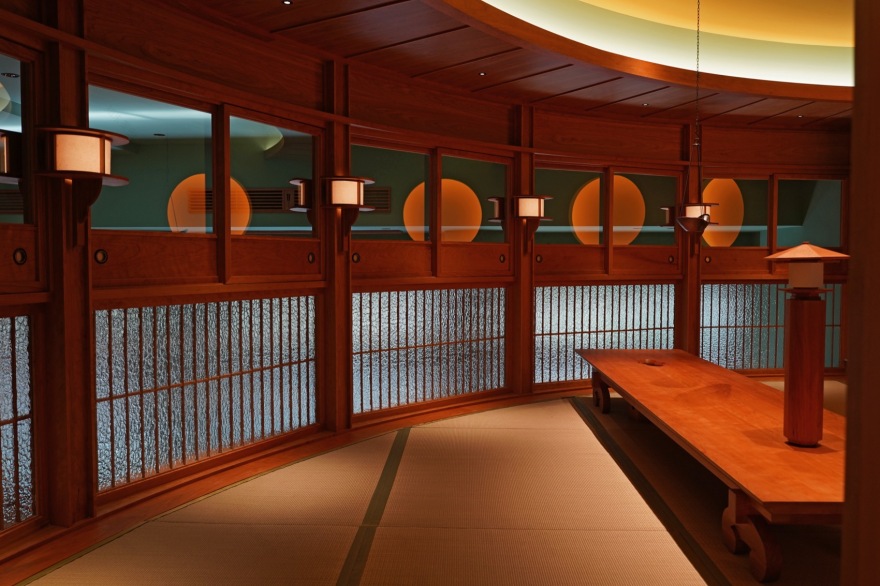
这个书院,我们取了《宋帝命题册》中的《楼台春望图》的构造,半壁视野,构建了折尺登山楼台的勾迴路径,楼阁一路皆以“半边”形式出现,仅显边角,以不全而激发对隐藏体量的想象。楼殿以扇形展开,获得最大视野,并形成扩张性的统摄。半壁围合出一个巨大的中空,这个中空,既要是个景,又要维持为一种“空”。于是,我们在这个半壁视野中,植入另一幅马远的画《西园雅集图》,只有雅集才能实现这种“空景”,众人聚合的时候是满景,而曲终人散的时候,是“废墟”,作为雅集轴心的大案台与高灯,是这个空景的退为最小的“坐标”,有了这个坐标,无人也是一种“人去楼空”的追念之景。案台与高灯的相加,便是雅集的发生进行,以及对发生的召唤。一如佛教中的卓锡传法,算是树立了文会的旗帜。《西园雅集图》是一个低矮的平展弥散视野,树皆不见顶,甚至远处的涌泉亭,视线拦腰截断,只见到柱脚勾栏座靠,但空间却四向延伸开去,引向崖壁,洞穴,溪岸……。在宋麓书院中,《楼台春望图》抱合了《西园雅集图》,而《西园雅集图》托举了《楼台春望图》,此半壁是悬浮的半壁,一层皆是雅集,是雅集托起了半壁楼台。一个人间,一个天上;一个待邀,一个凝望。雅集这个非空的空场,是半壁楼台的期待之景。
▼西园雅集图,Elegant Gathering in the West Garden

For this academy, we adopted the composition from “Spring View from a Pavilion” in the “Album Leaves with Compositions by Song Emperors.” Using a half-scape view, we constructed a zigzagging path resembling a folding ruler climbing up a pavilion. All the pavilions appear in “half” forms, revealing only corners and edges, using incompleteness to stimulate the imagination of hidden volumes. The main hall unfolds in a fan shape, achieving maximum view and creating an expansive sense of command. This half-scape encloses a vast central void. This void must simultaneously be a scene in itself and maintain a sense of “emptiness.” Therefore, within this half-scape view, we implanted another painting by Ma Yuan, “Elegant Gathering in the West Garden.” Only an elegant gathering scene could achieve this kind of “empty scene.” When the crowd gathers, it is a full scene; when the guests disperse, it becomes a “ruin.” The large central table and the high light, as the axis of the gathering, retreat to become the minimal “coordinates” of this empty scene. With these coordinates, even when empty, it becomes a scene of remembrance, a sense of “people have gone, the building is empty.” The combination of the table and the high light represents both the occurrence of the gathering and a summons for its happening. It is akin to the Buddhist tradition of planting the staff to transmit the Dharma, establishing a banner for the literati gathering. “Elegant Gathering in the West Garden” presents a low, horizontally spreading, diffuse perspective. The treetops are not visible; even the distant Yongquan Pavilion is cut off at mid-level, with only the base of columns and railings visible. Yet the space extends in all directions, leading towards cliffs, caves, stream banks… In the Songlu Academy, “Spring View from a Pavilion” embraces “Elegant Gathering in the West Garden,” while “Elegant Gathering in the West Garden” supports “Spring View from a Pavilion.” This half-scape is a suspended half-scape. The ground floor is entirely the elegant gathering; it is the gathering that holds up the half-scape pavilions above. One realm is the human world, the other is the celestial; one awaits invitation, the other gazes longingly. The elegant gathering, this non-empty empty field, is the scene anticipated by the half-scape pavilions.
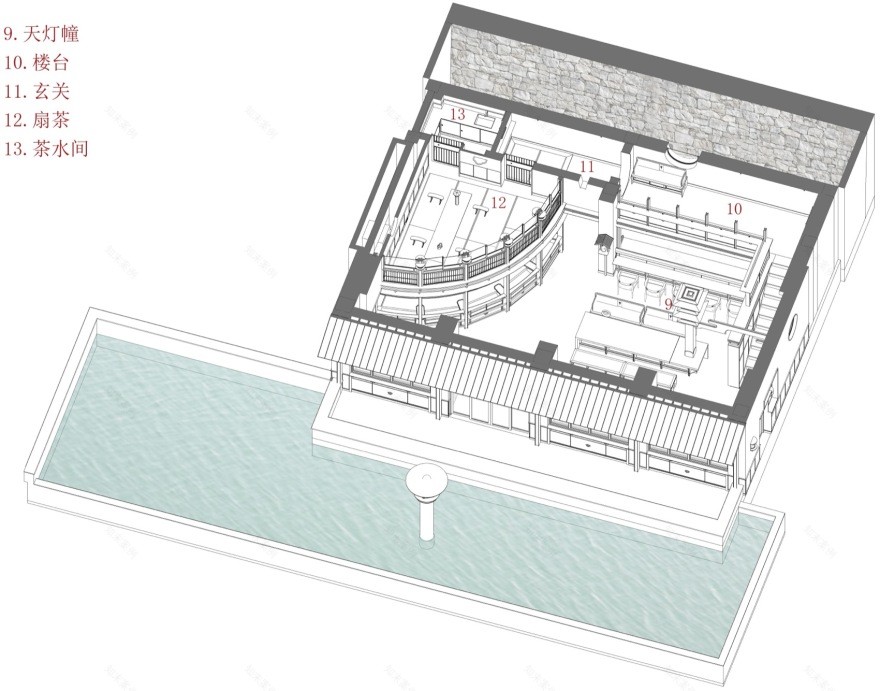
▼宋麓书院一层轴测图,Songlu Academy ground floor axons© 造园建筑

▼宋麓书院夹层轴测图,Songlu Academy interlayeraxons© 造园建筑
设计项目信息:
项目名:宋麓书院
主创建筑师:王欣、姚汉青
设计单位:造园建筑,中国美术学院建筑艺术学院
业主方:安吉乐致酒店管理有限公司
建造单位:杭州方奕建筑有限公司
照明设计:杭州荣熙照明工程有限公司
摄影:造园建筑
设计时间:2023年12月
建成时间:2024年5月
地点:安吉县章村镇
Project Information:
Project Name: Songlu Academy
Principal Architects: Wang Xin, Yao Hanqing
Design Firm: Zao Yuan Architecture, School of Architecture, China Academy of Art
Client: Anji Lezhi Hotel Management Co., Ltd.
Construction Firm: Hangzhou Fangyi Construction Co., Ltd.
Lighting Design: Hangzhou Rongxi Lighting Engineering Co., Ltd.
Photography: Zao Yuan Architecture
Design Period: December 2023
Completion Date: May 2024
Location: Zhangcun Town, Anji County
南京喵熊网络科技有限公司 苏ICP备18050492号-4知末 © 2018—2020 . All photos and trademark graphics are copyrighted by their owners.增值电信业务经营许可证(ICP)苏B2-20201444 苏公网安备 32011302321234号
苏公网安备 32011302321234号客服
消息
收藏
下载
最近