

创作上传
VIP
收藏下载
登录 | 注册有礼
查看完整案例

收藏

下载

分享
2018 年的特大洪灾严重影响了圣伊莱尔村,致使众多房屋受损。灾后,市政府对这片区域的抗灾能力以及历史中心的复兴展开了全面思考。
© Bastien Treille
In the aftermath of the violent floods of 2018, which severely impacted the village of Saint-Hilaire and weakened many homes, the municipality launched a comprehensive reflection on the resilience of the territory and the revitalization of its historic center.
▼项目概览,Overall of the project © Bastien Treille
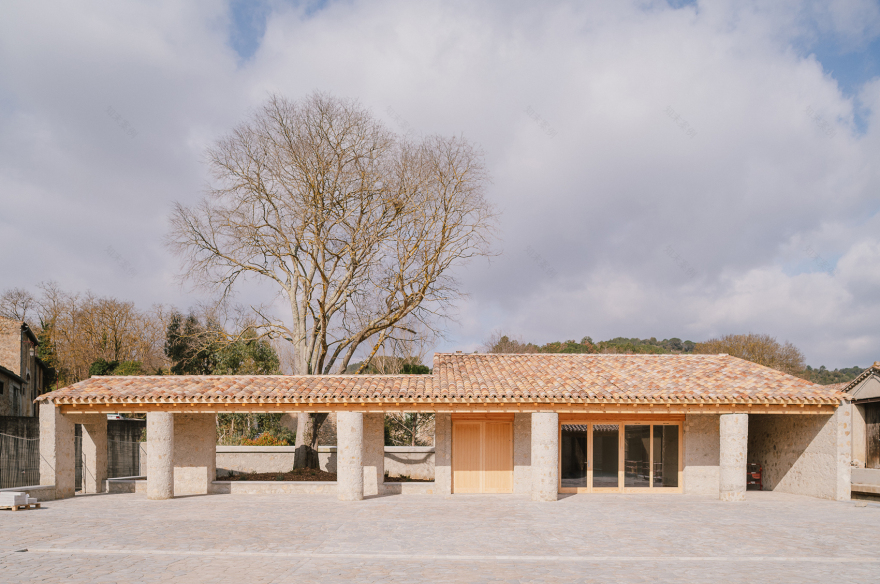
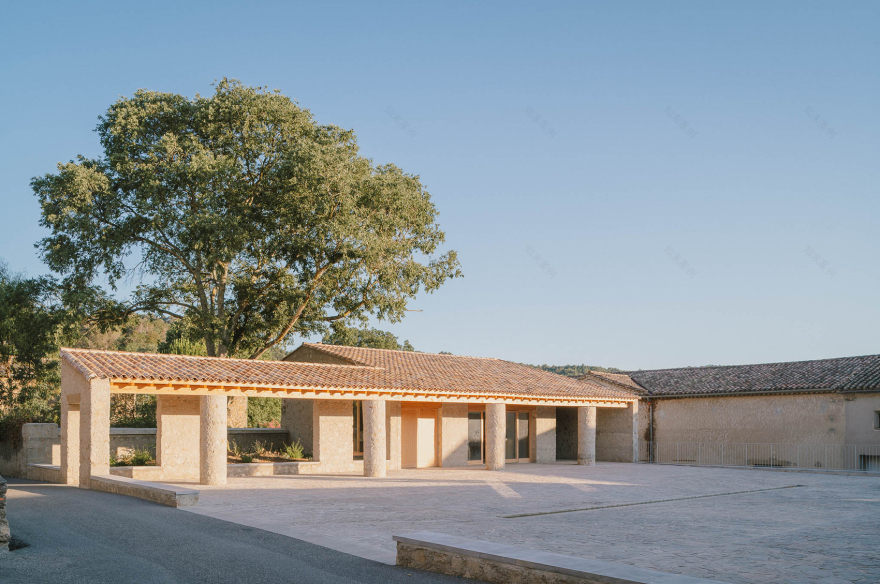
在此背景下,市政府发起了一项设计竞赛,旨在打造一个全新的商业与市民活动中心。项目选址于一座废弃地块,地处俯瞰村庄的12世纪修道院脚下。
Within this framework, it initiated a design competition for the creation of a new commercial and civic hub. The chosen site is a derelict plot located at the foot of the 12th-century abbey that overlooks the village.
▼圣伊莱尔修道院,Saint-Hilaire Abbey © Bastien Treille
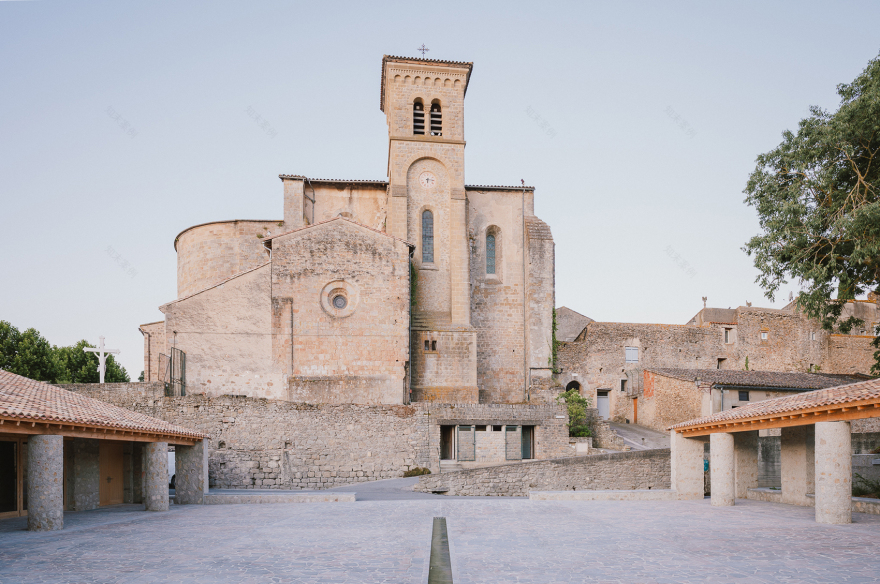
▼修道院脚下的广场,Saint-Hilaire Abbey © Bastien Treille
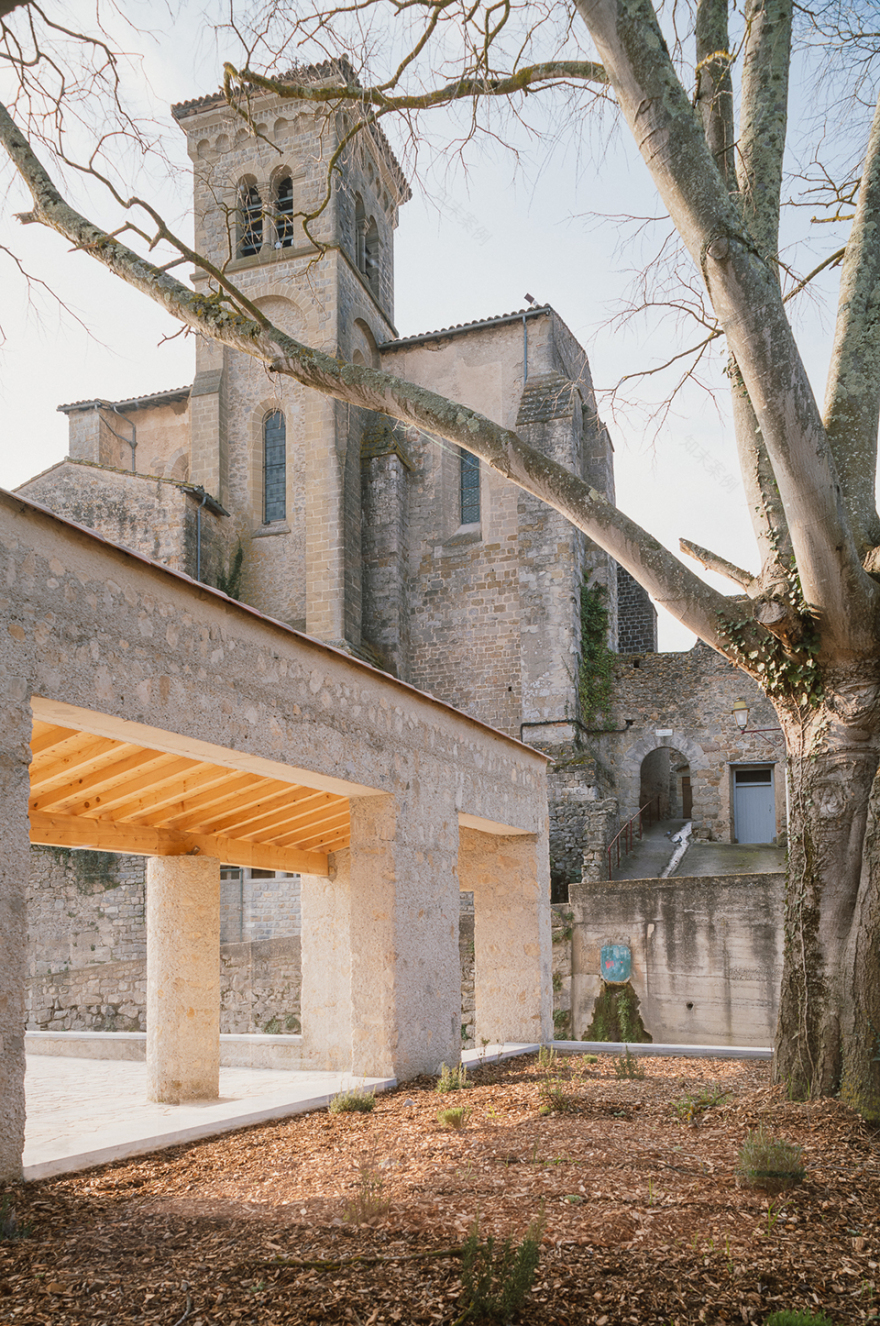
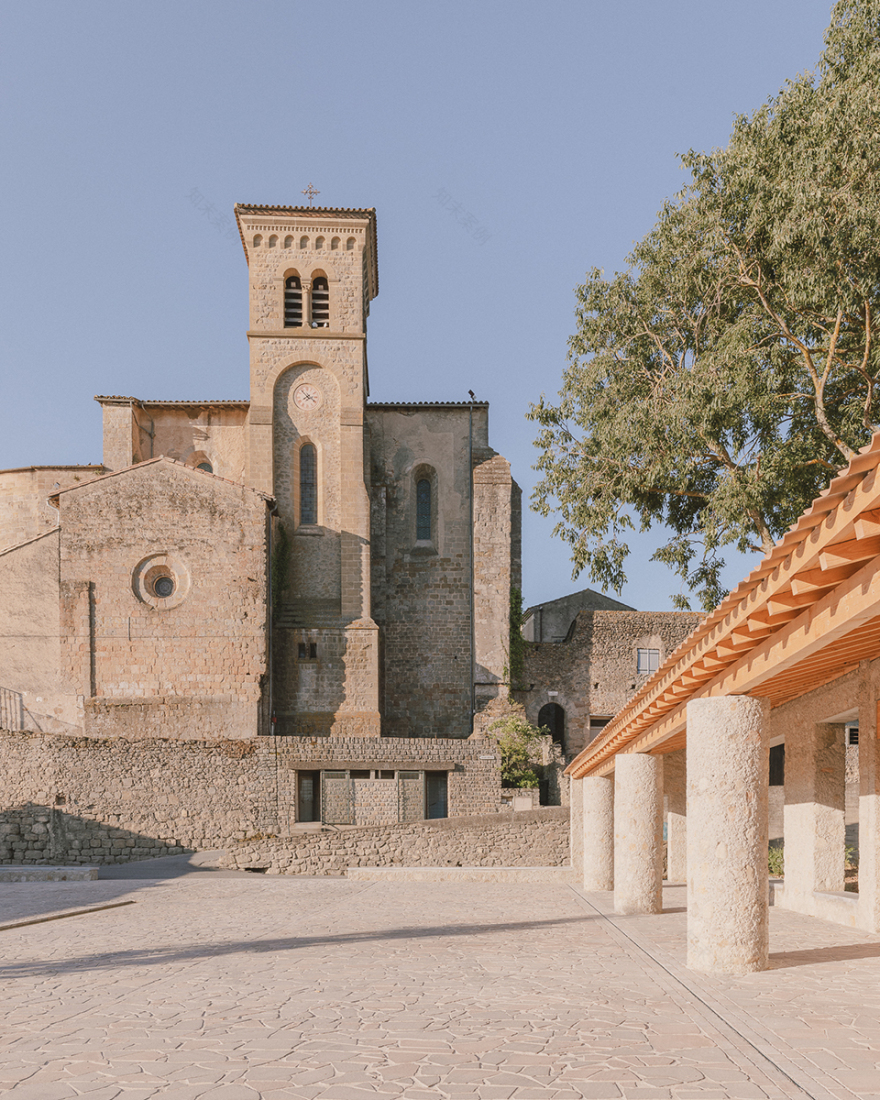
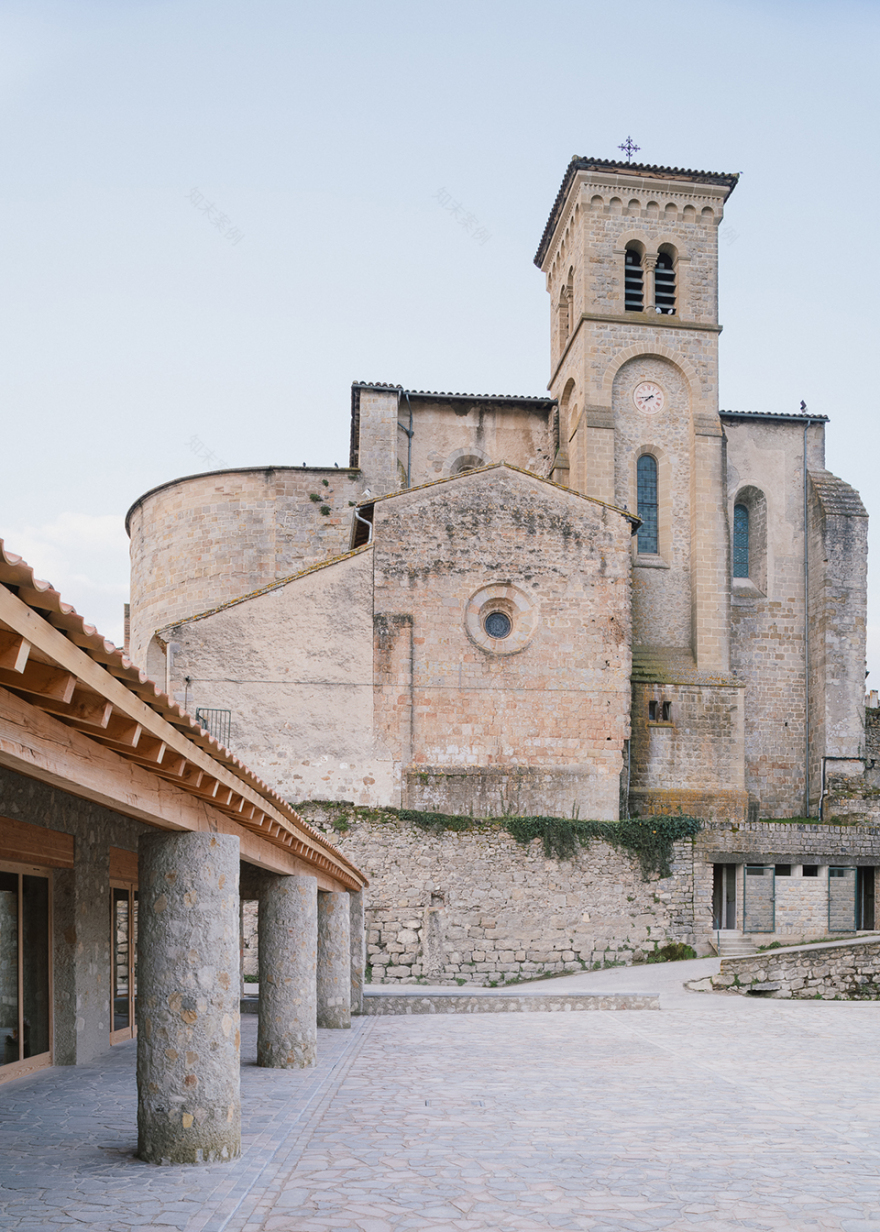
在圣伊莱尔修道院脚下进行建设,意味着要秉持谦逊的态度,充分尊重这座历史建筑。这一理念贯穿了城市规划策略与建筑设计思路:项目并非扰乱历史环境,而是为场地梳理秩序、明晰格局,框定并提升修道院的景观视野。
Building at the foot of the Saint-Hilaire Abbey means building with humility, in full respect of the monument. This attitude has guided both the urban strategy and the architectural approach: rather than disturbing the historic surroundings, the project seeks to bring order and clarity to the site, framing and enhancing views of the abbey.
▼提升修道院的景观视野,Enhancing views of the abbey © Bastien Treille
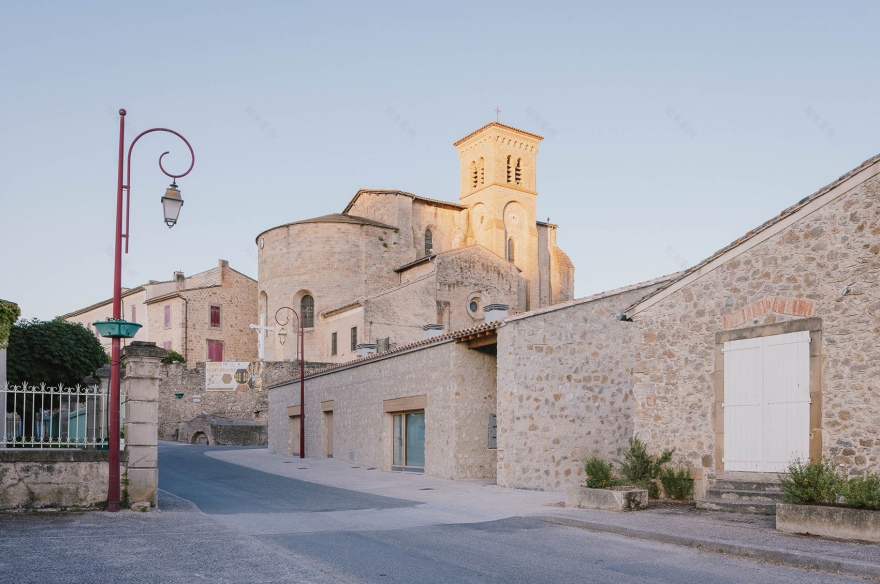
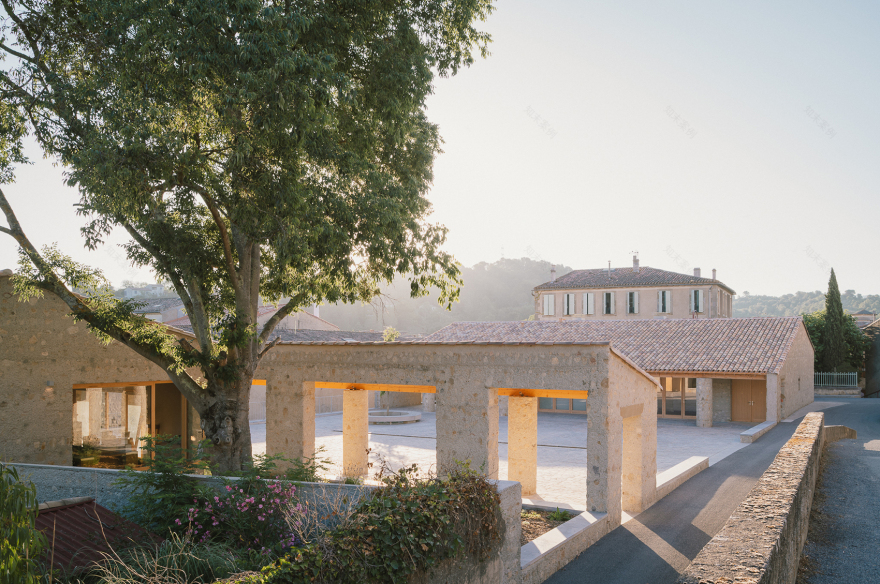
这不仅仅是一个建筑项目,它首先是一个公共空间项目,旨在承载多元功能与集体生活。项目不以庞大体量回应宏伟的修道院,而是以精心营造的留白空间,作为社区的聚集场所。
More than a building project, this is first and foremost a public space project designed to support multiple uses and collective life. It allows the presence of the monumental abbey to be answered not by mass, but by a carefully composed void, a gathering space for the community.
▼精心营造的留白空间,Carefully composed void © Bastien Treille
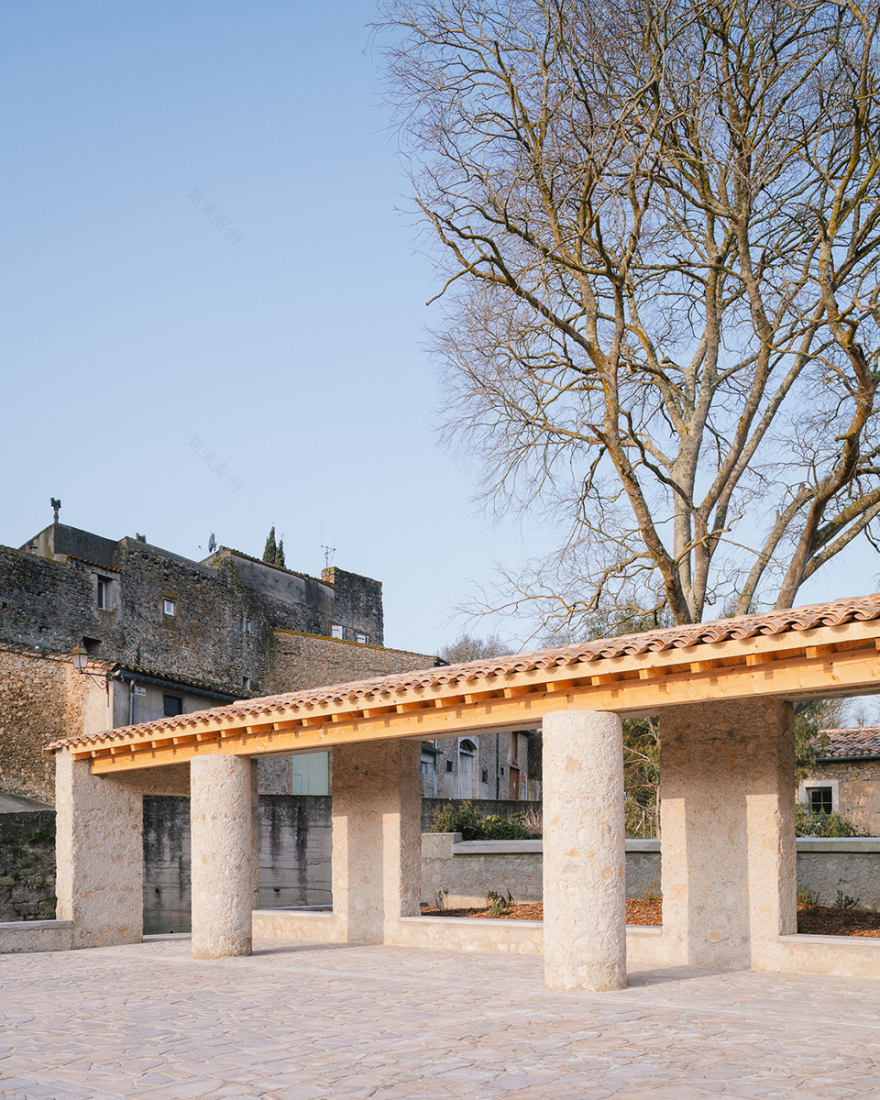
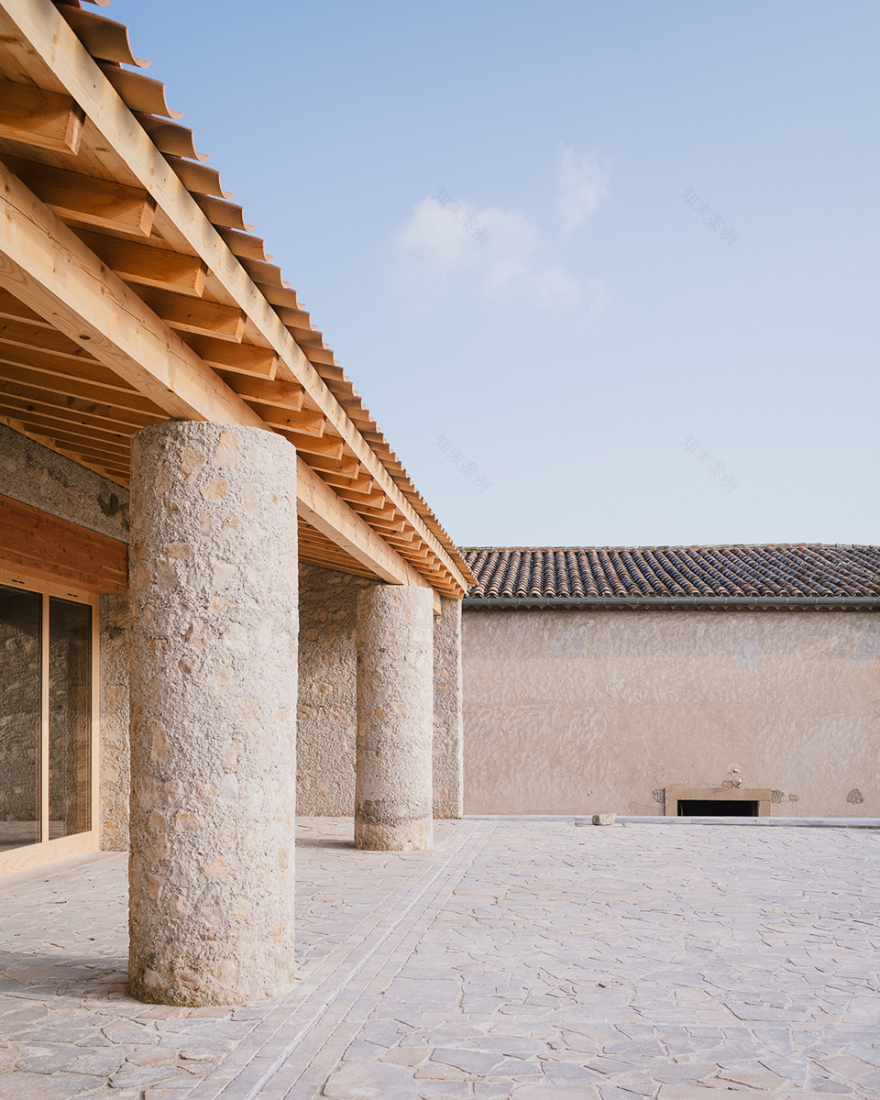
钟楼是昔日堡垒的最高点,矗立在修道院北侧立面之上。这一醒目的视觉地标成为整个设计的核心基准:新广场与钟楼轴线对齐。从堡垒内泉眼流出的水道进一步强化了这一布局,水流汇入中央水渠,横穿广场,凸显空间的导向性。
The bell tower, the highest point of the former fort, dominates the north façade of the abbey. This powerful visual landmark serves as the anchor for the entire composition: the new square is aligned with its axis. This layout is further reinforced by the watercourse flowing from a spring within the fort, collected in a central runnel that crosses the square and emphasizes the spatial orientation.
▼精心营造的留白空间,Carefully composed void © Bastien Treille
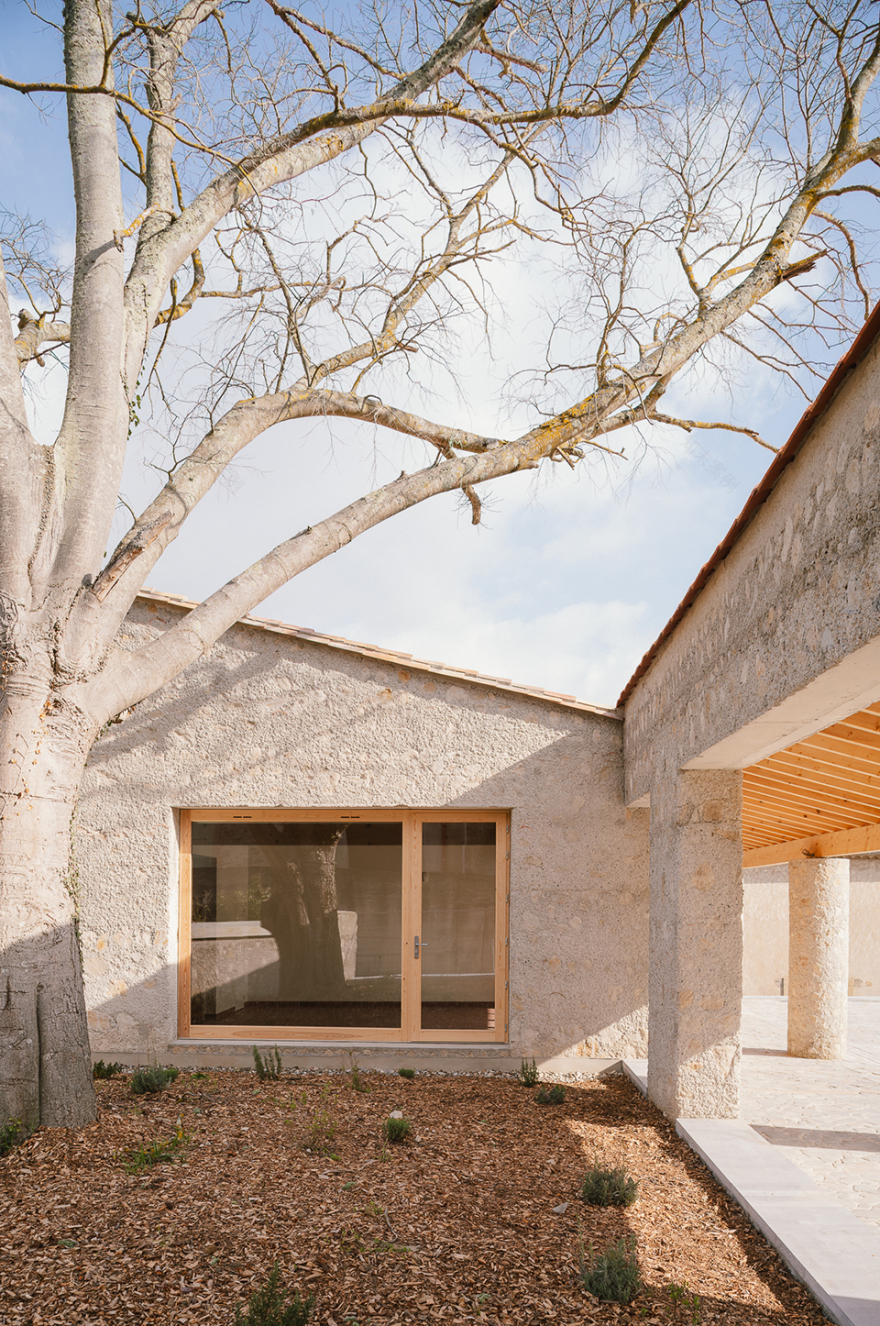
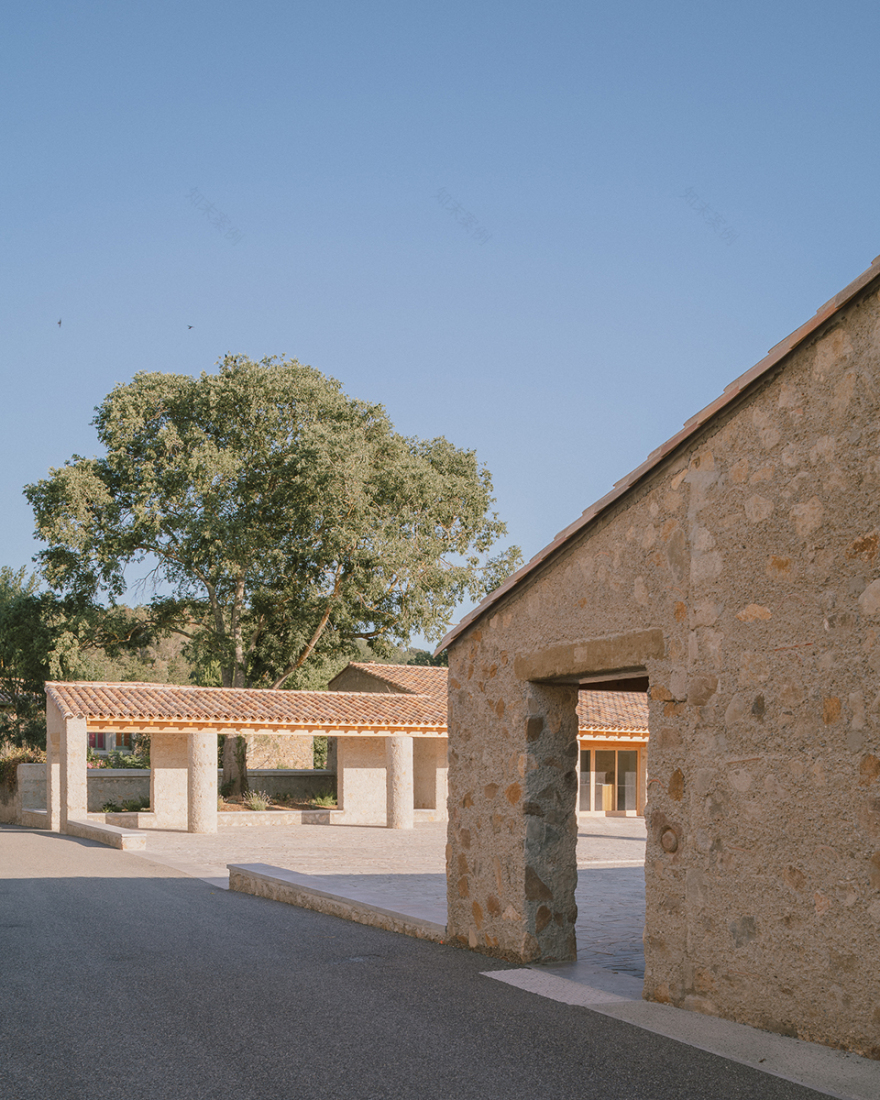
广场的尺度与修道院回廊相呼应,但仅在两侧设有柱廊,既呼应了原有空间格局,又彰显了自身特色。
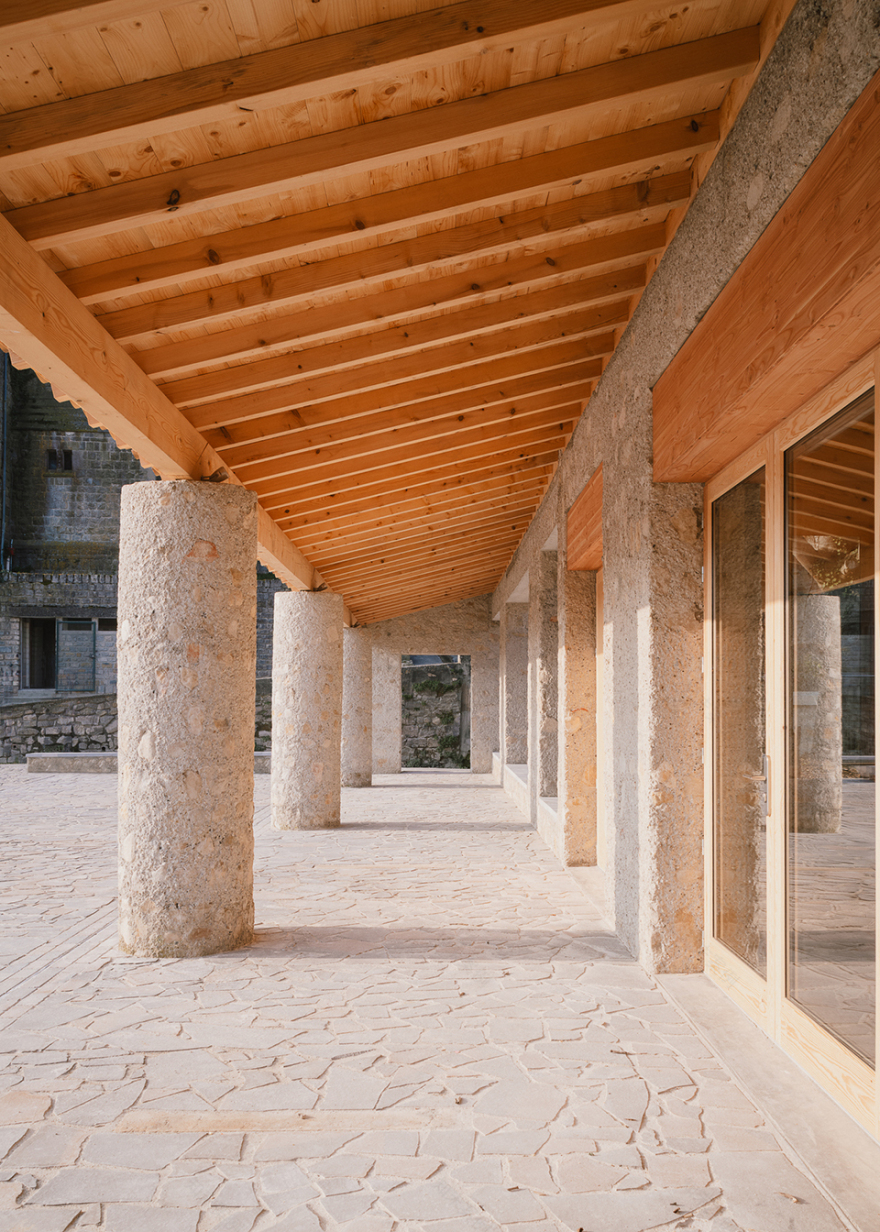
The dimensions of the square mirror those of the abbey’s cloister, but it is framed by a portico on only two sides, asserting its own character while echoing the existing geometry.
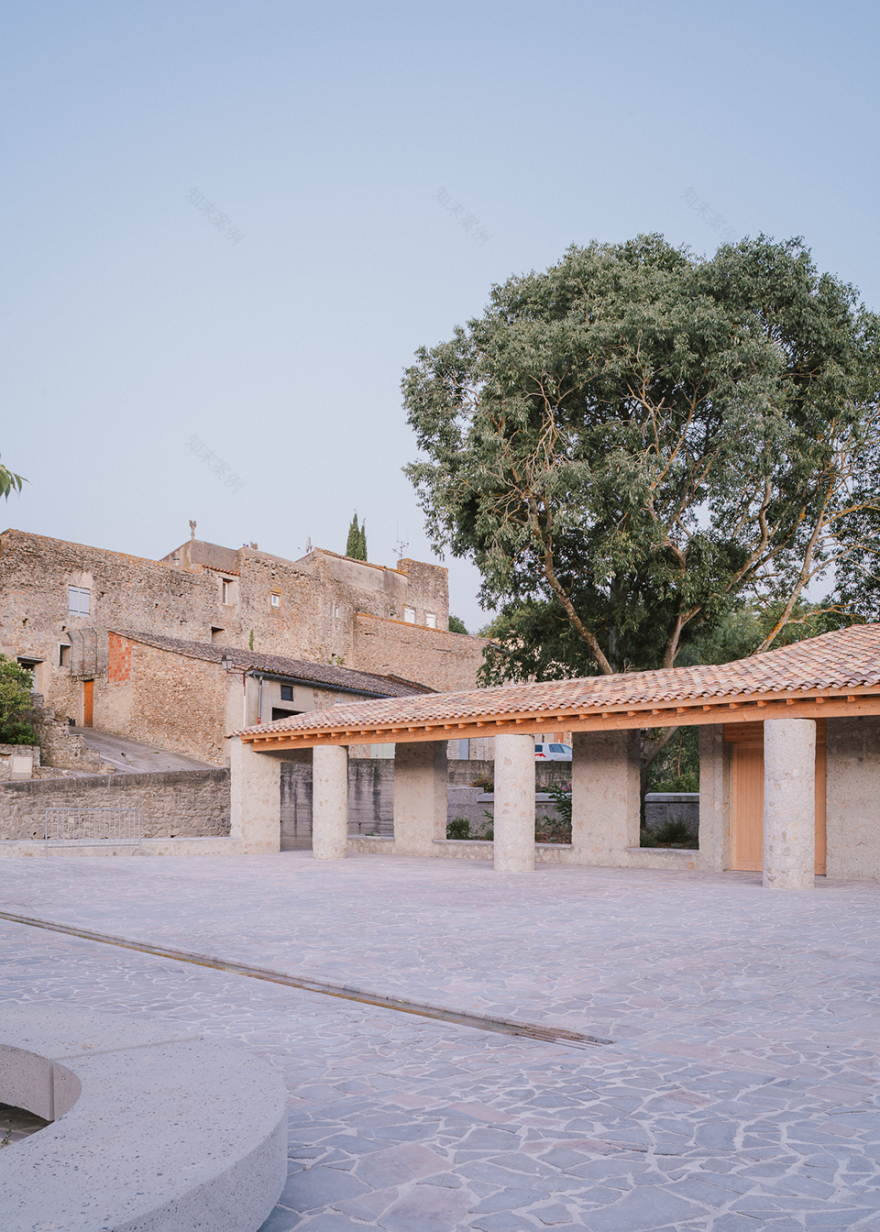
▼柱廊,Portico © Bastien Treille
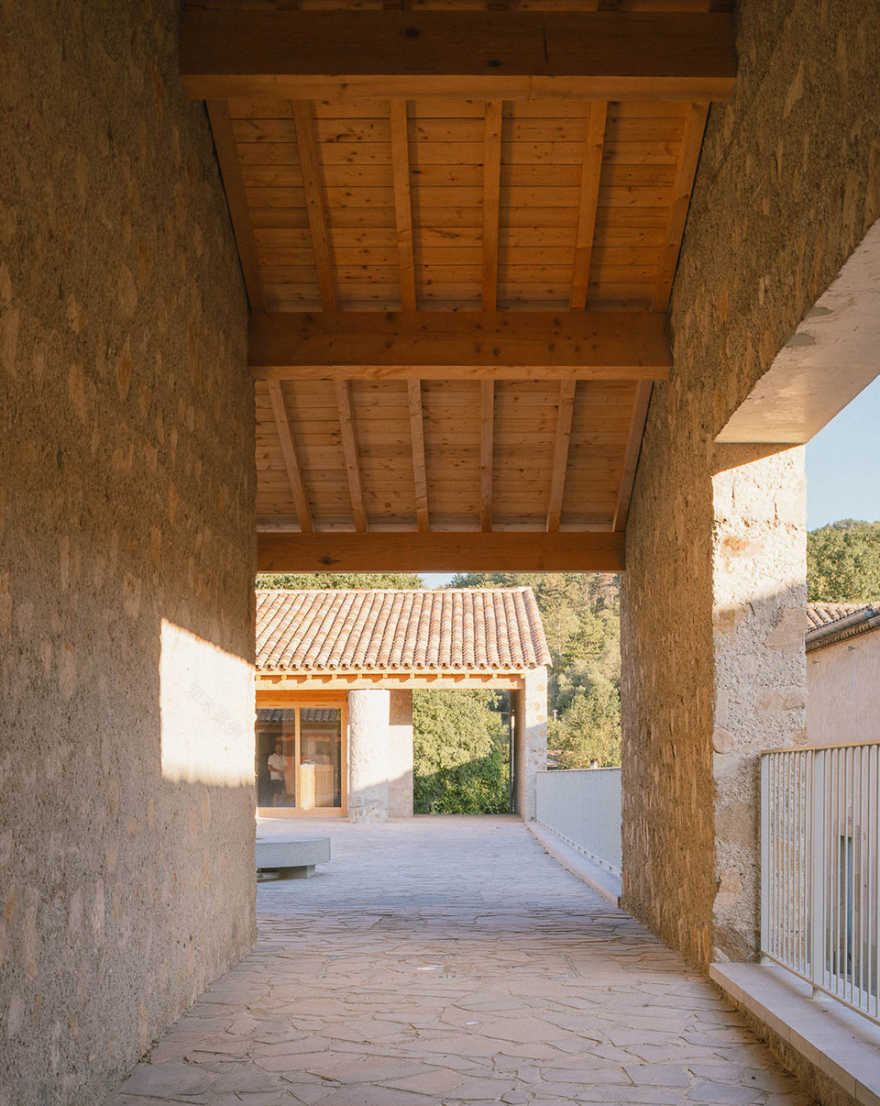
为保留城市肌理的连续性并尊重历史建筑,项目从当地传统建筑中汲取灵感,无论是新建建筑的体量还是构造细节均如此。但这并非简单的复古模仿:建筑立面与开口设计具有鲜明的当代性,在与历史环境的对话中做到尊重且自信。
To preserve the continuity of the urban fabric and respect the monument, the project draws inspiration from the vernacular architecture of the region, both in the volume of the new buildings and in their constructive details. However, this is not a pastiche: the facades and openings are clearly contemporary, expressing a respectful yet assertive dialogue with their historic context.
▼构造细节,Constructive details © Bastien Treille
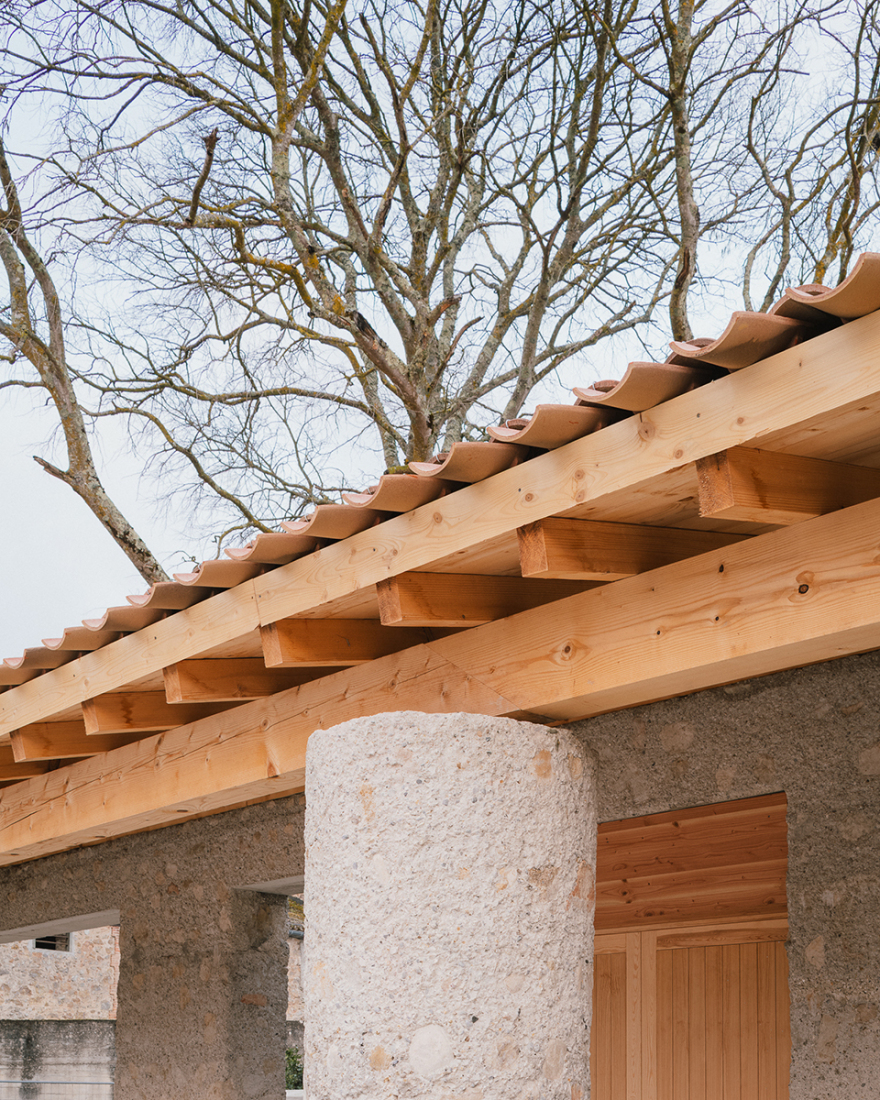
两座新建建筑造型简洁,从修道院露台望去,其 canal 瓦屋顶与周边建筑景观自然相融。建筑细节延续了当地传统:低矮无天沟的屋檐、转角石链、质朴的砖石砌筑工艺。
The two new buildings have simple forms, their canal tile roofs blending seamlessly into the built landscape as seen from the abbey terrace. Construction details reference local traditions: low roof edges without gutters, corner chains, modest masonry.
▼室内概览,Interior view © Bastien Treille
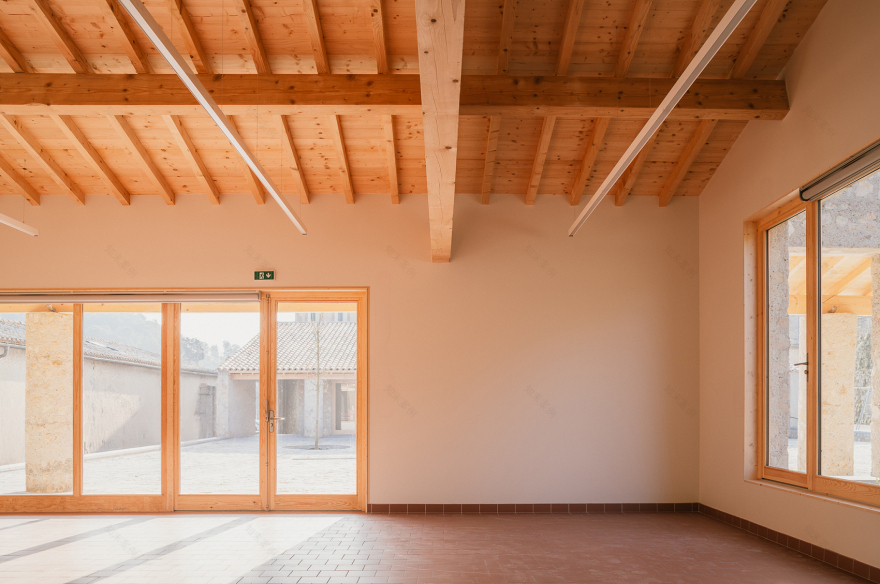
柱廊设计直接源于场地本身:圆柱形石柱重新诠释了昔日农用棚屋的遗存,在过去与现在之间建立起材质与象征意义上的延续。这种对话让项目自然融入圣伊莱尔的历史肌理。
The portico is directly inspired by the site: its cylindrical stone columns reinterpret the remains of former agricultural sheds, creating a material and symbolic continuity between past and present. This dialogue allows the project to integrate gracefully into the historic fabric of Saint-Hilaire.
▼通往村庄的门洞,Openings to the village © Bastien Treille
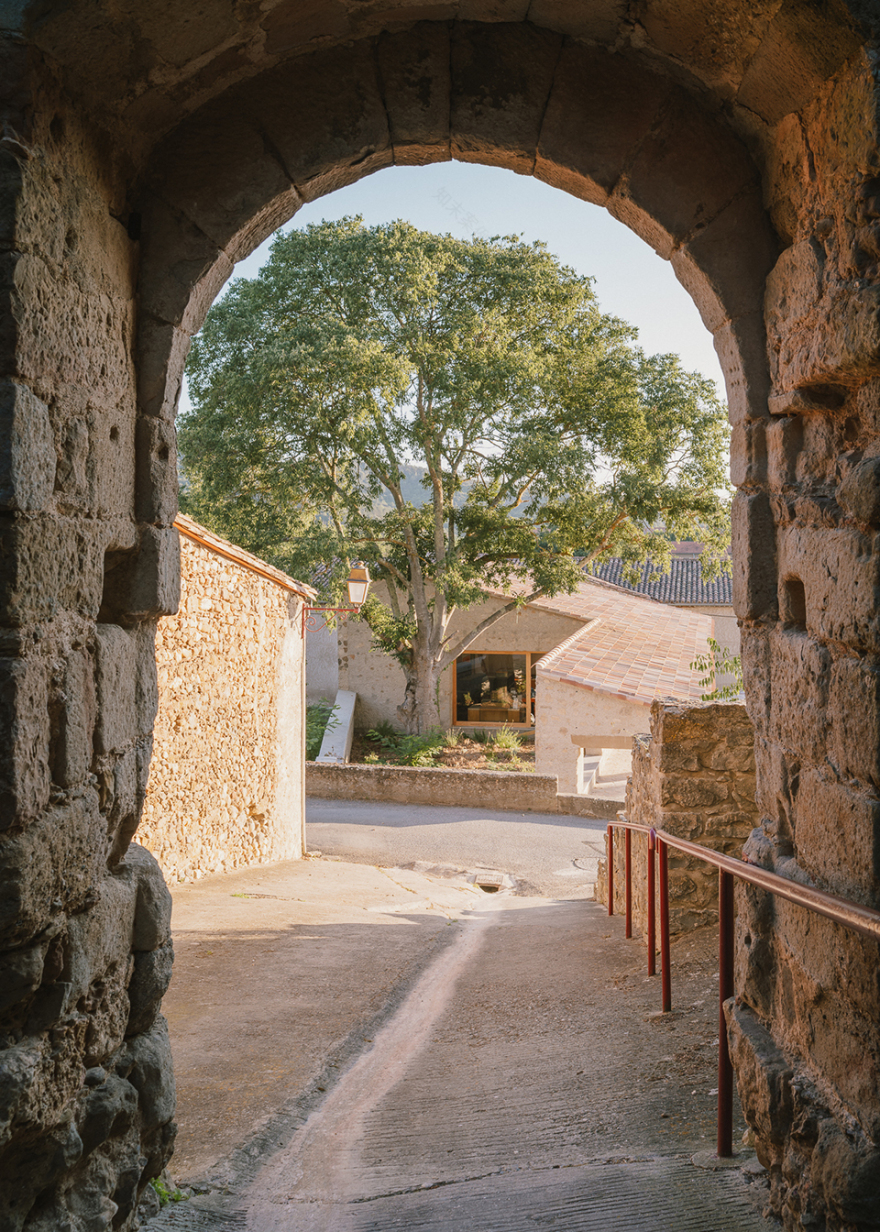
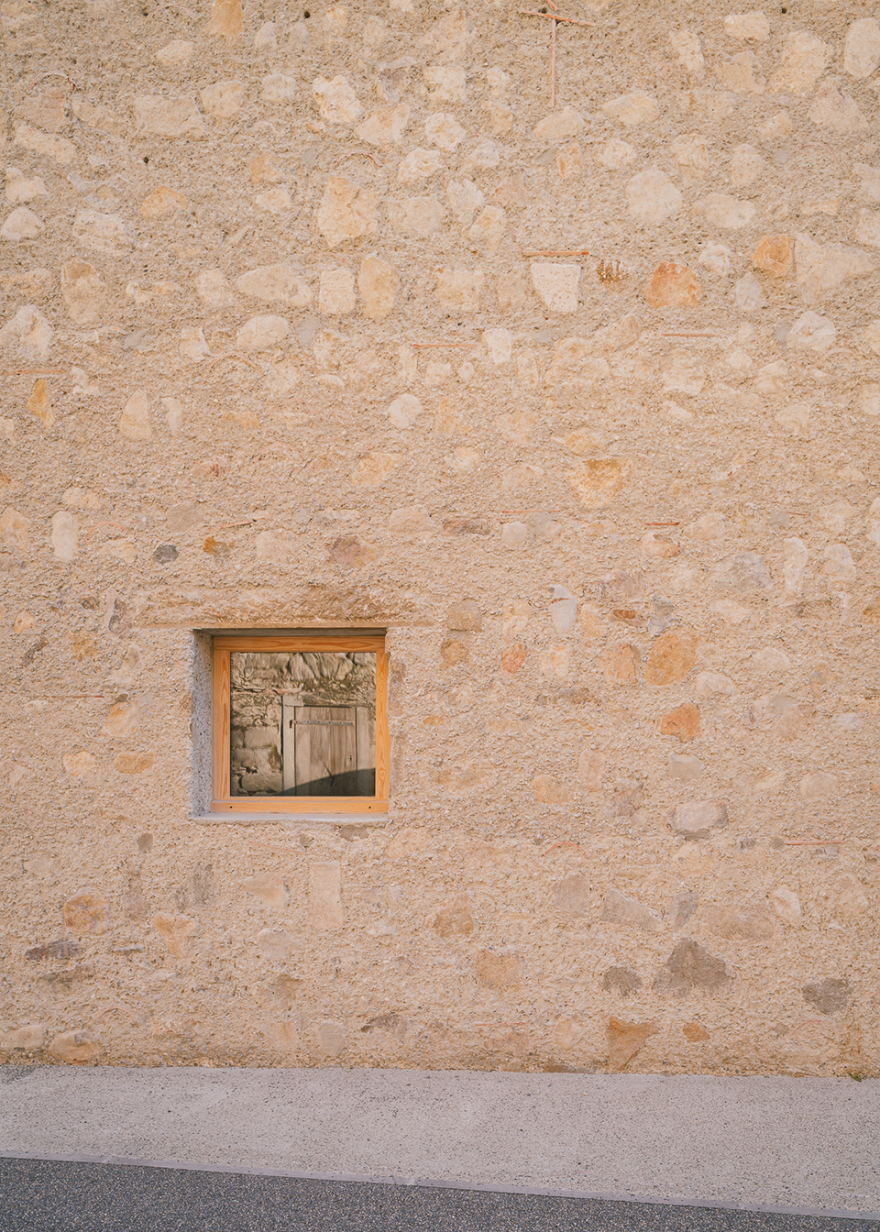
为强化项目的在地性,场地拆除产生的材料被重新利用。所有墙体均采用毛石混凝土建造,掺入石块、卵石与碎砖。这一做法结构坚固且环保,打造出低调的地域性建筑,放大而非抗衡修道院的存在感。
In order to strengthen the project’s rootedness, materials from on-site demolition are reused. All walls are built using cyclopean concrete incorporating stones, pebbles, and brick fragments. This approach is both constructively robust and environmentally responsible, expressing a quiet, contextual architecture that amplifies rather than competes with the abbey’s presence.
▼细节,Details © Bastien Treille
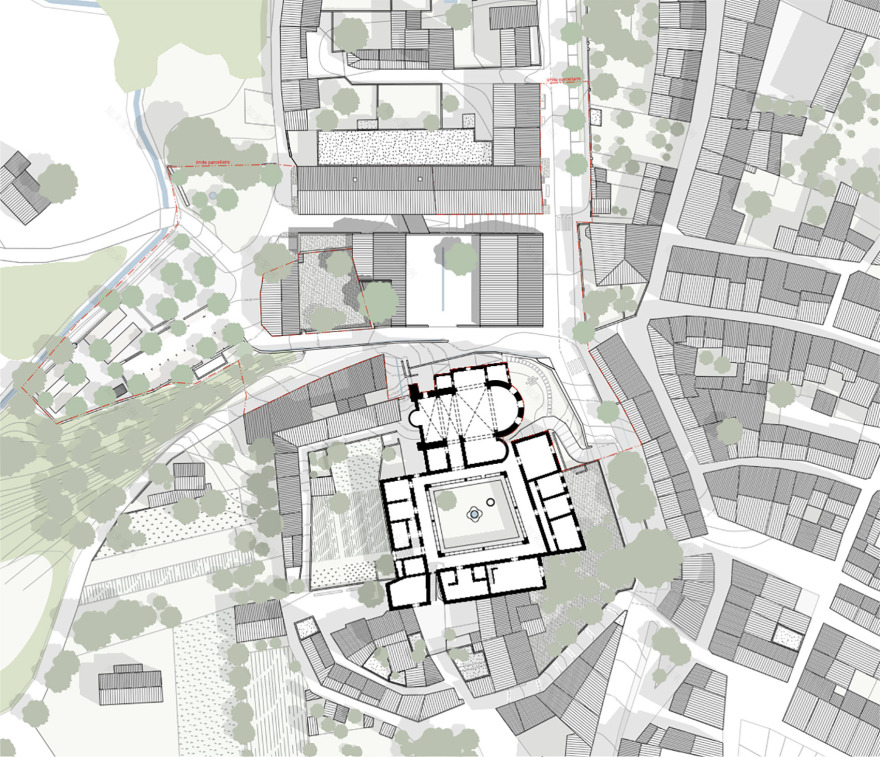
▼总平面图,Master plan © Bastien Treille
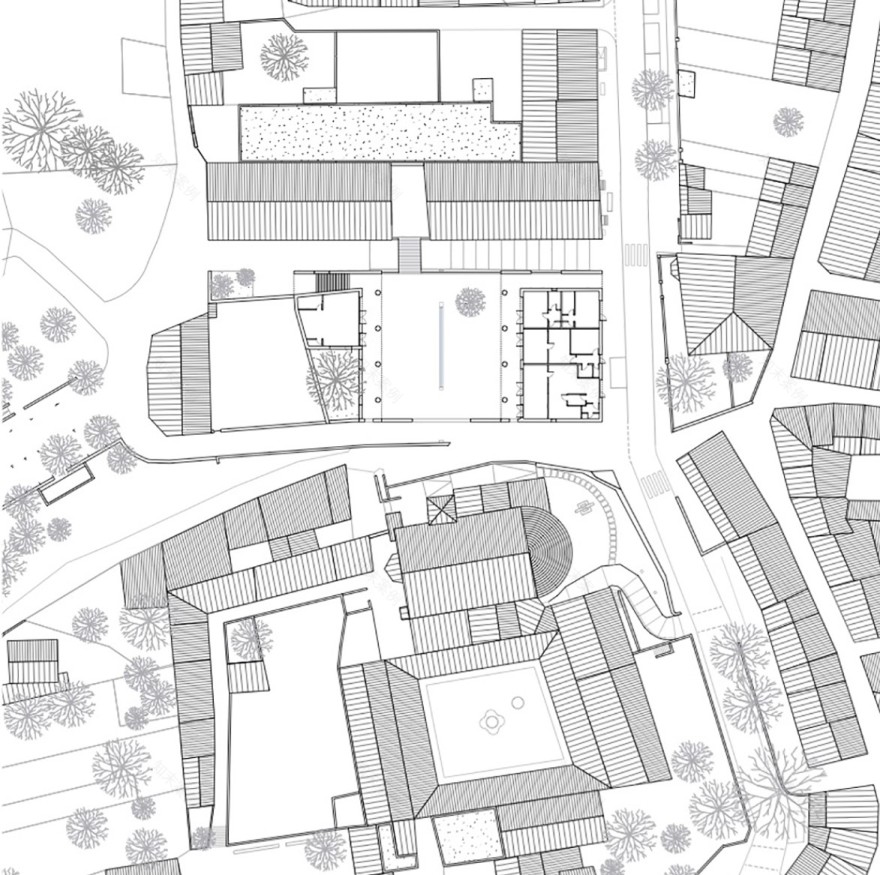
▼平面图,Floor plan © Bastien Treille
▼立面图,Elevation © Bastien Treille
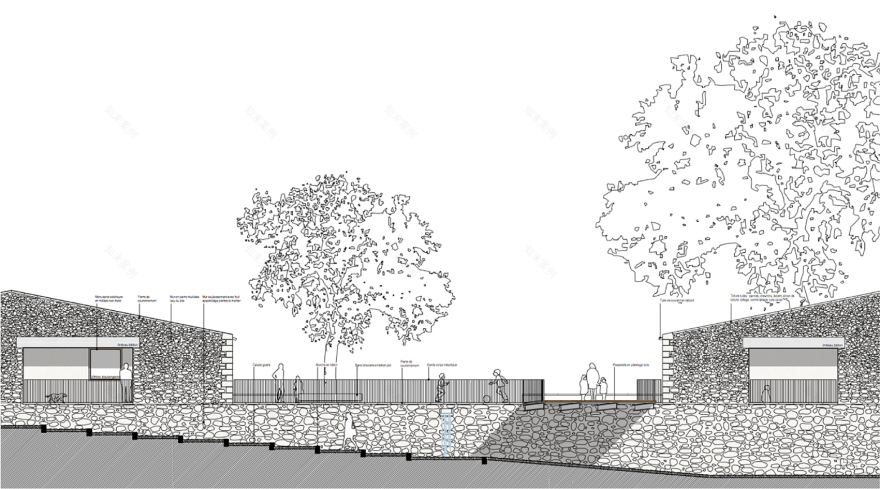
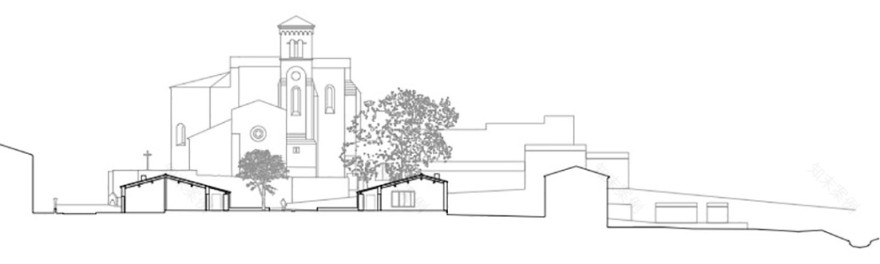
▼剖面图,Section © Bastien Treille
南京喵熊网络科技有限公司 苏ICP备18050492号-4知末 © 2018—2020 . All photos and trademark graphics are copyrighted by their owners.增值电信业务经营许可证(ICP)苏B2-20201444 苏公网安备 32011302321234号
苏公网安备 32011302321234号客服
消息
收藏
下载
最近