

创作上传
VIP
收藏下载
登录 | 注册有礼
查看完整案例

收藏

下载

分享
区位
Location
项目位于一片自然地块之上,四周由如今构成城市网格的街道交汇所界定。基地由四个地块组成,其地表仍保留着部分原有植被与地形特征,呈现出略布雷加特河(Llobregat)旧日沼泽地的自然景观。周边城市开发的地面标高高于原始地形,使此处形成一个自然下沉的盆地空间,如同一座独特的园区,而本项目建筑则为这一整体环境奠定了空间基调。
The project is located on a portion of natural land framed by the intersection of streets that today form the urban grid. It consists of four plots whose surface still preserves part of the vegetation and topography characteristic of the former marshlands of the river Llobregat. The surrounding urban development has its ground level above the natural terrain, forming a natural basin, like a unique campus for which our building sets the tone.
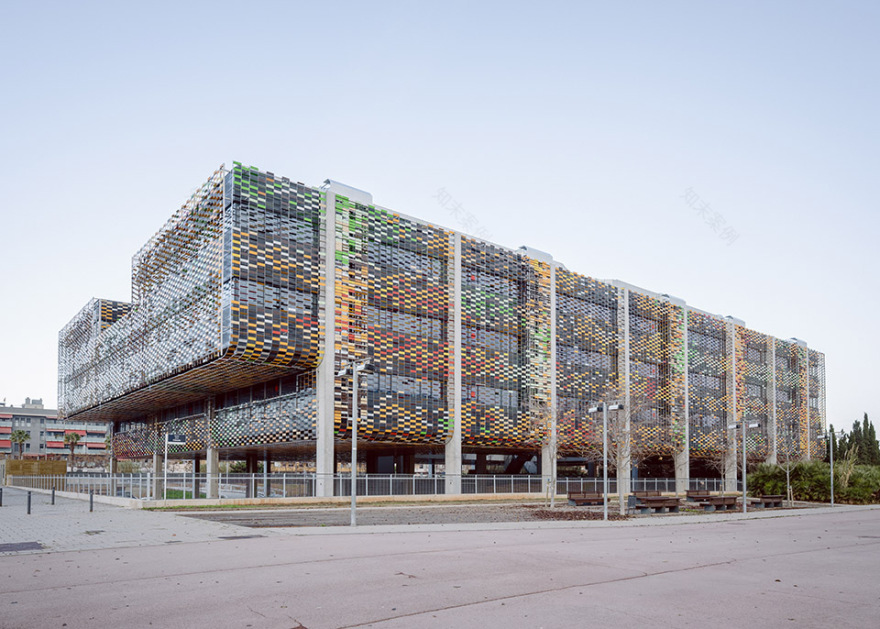
▼建筑外景,Exterior of the building©Aldo Amoretti
外部空间
Exteriors
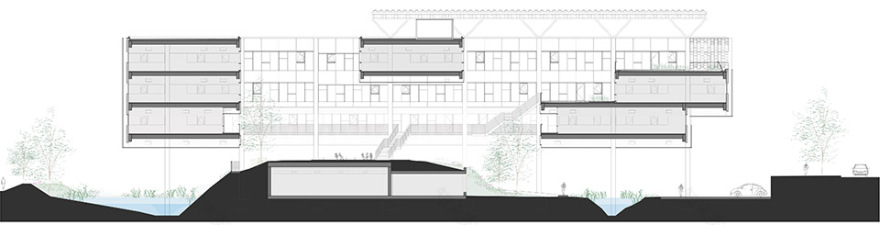
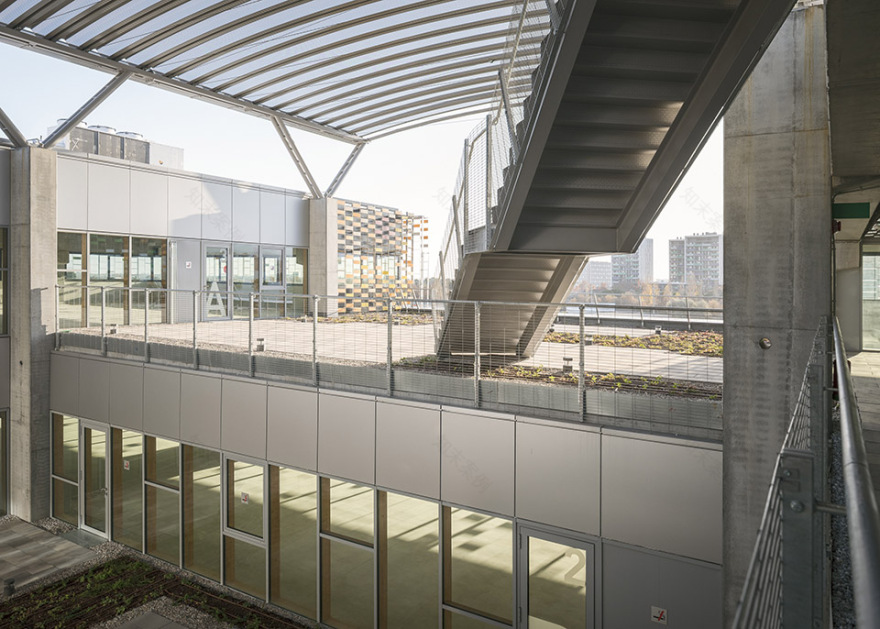
建筑的进入通过一处地下大厅实现,该大厅位于一座景观土丘之下,并与上部建筑体量完全分离。全景电梯在入口处汇集人流,将人们直接送往上部体量中的办公空间。建筑被构想为一种可被“行走体验”的空间。外部楼梯连接不同楼层以及每层的景观步道,引导人们抵达各个办公单元的入口。悬浮体量呈现出多孔且层叠的平台形态:通过庭院形成的“多孔性”调节室内采光与通风;通过层层退台的露台空间,在垂直方向上不断叠加类似地面层的户外使用条件。
Access to the building takes place through an underground lobby, completely detached from the upper volume, beneath a landscaped mound. Panoramic elevators collect the flow of people from the entrance, ascending freely to the upper volume where the offices are located. The building can be experienced as a walk. Exterior staircases connect the levels and landscaped paths on each floor, leading to the entrance of every office unit. The suspended volumes feature a porous and terraced morphology. Porous, through courtyards that modulate interior lighting and ventilation. Terraced, with outdoor surfaces on every level that multiply, vertically, the conditions of a ground floor.
▼建筑街景,Building street view©Aldo Amoretti
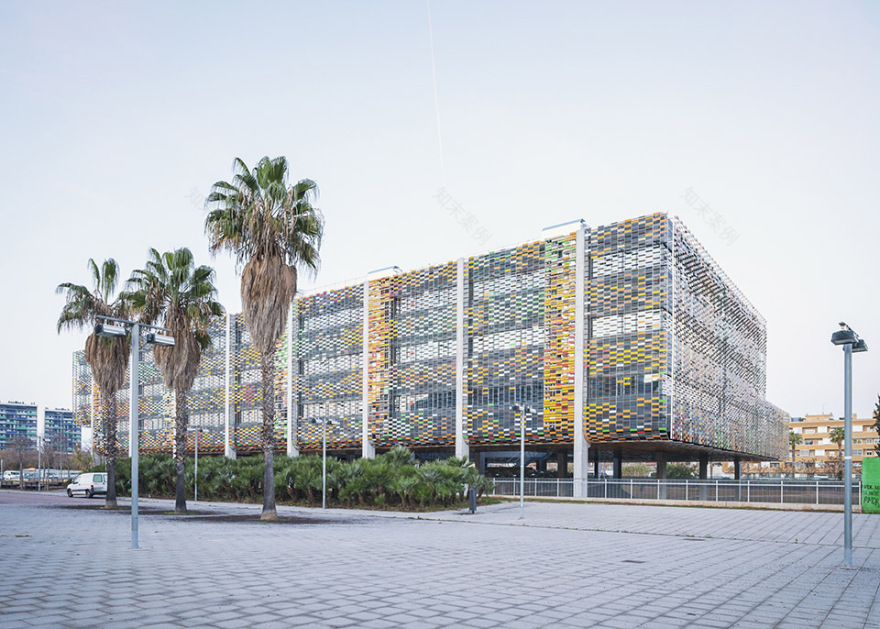
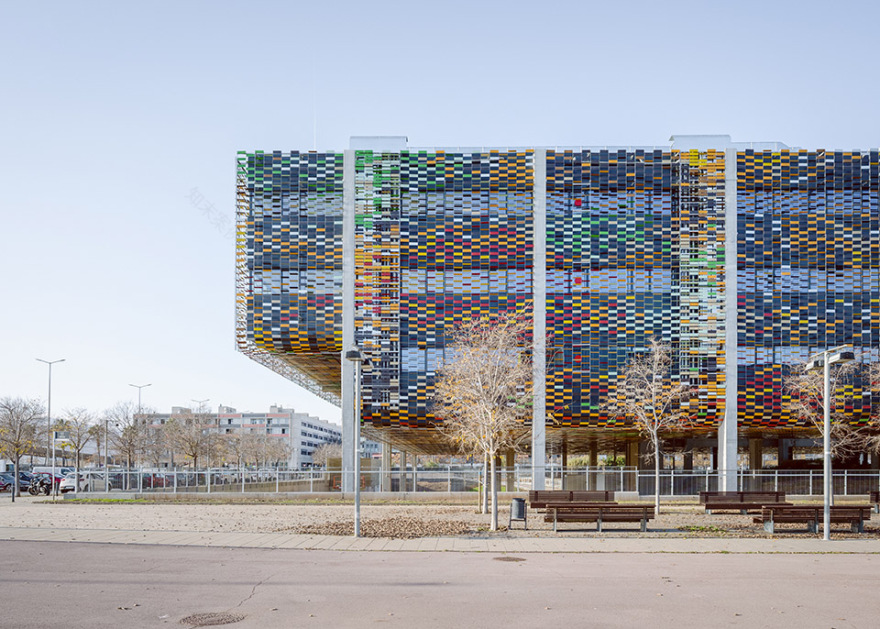
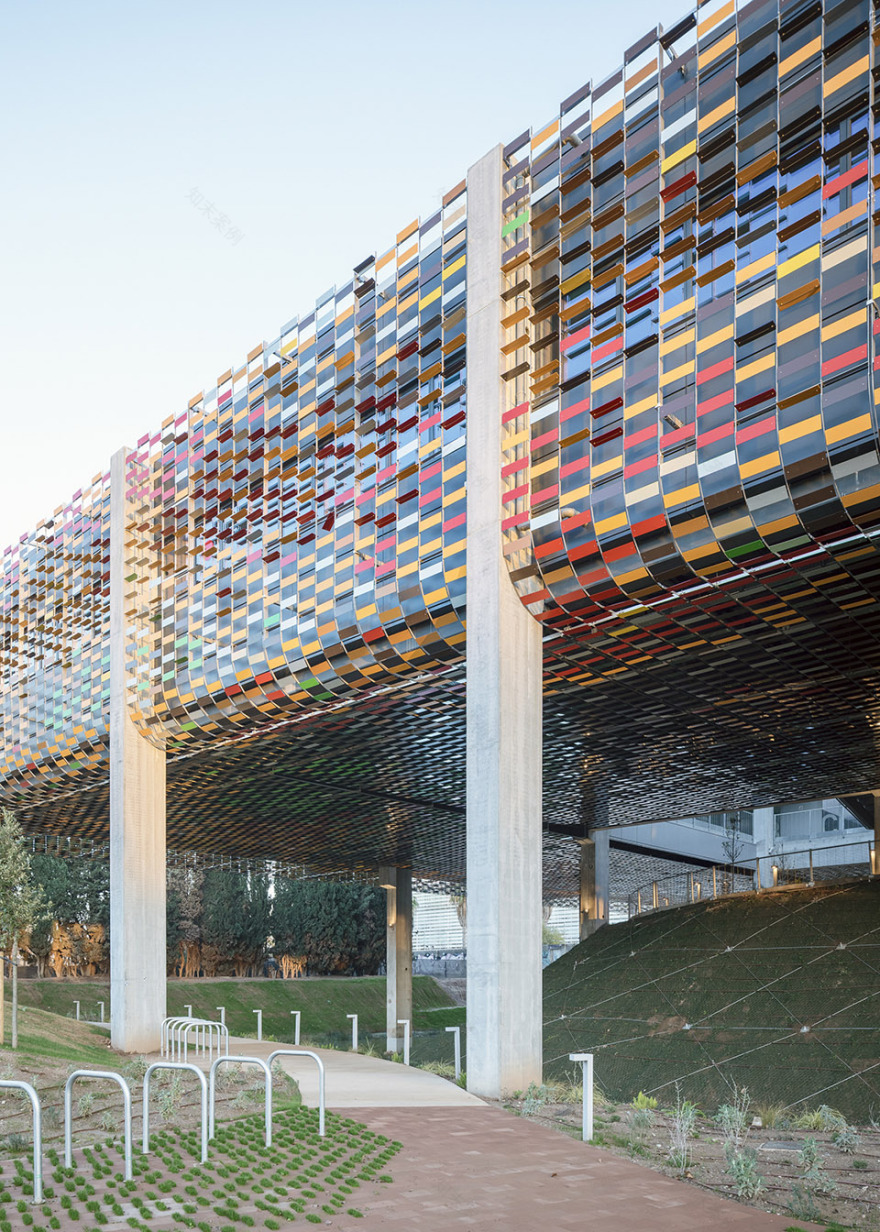
建筑整体呈现出一种双重性的存在感:一方面,通过立面表皮的色彩变化唤起原有河流景观的自然氛围;另一方面,建筑体量又回应邻近城市所形成的笛卡尔式街道界面,从而补充并界定城市空间。建筑立面实现了100%工业化建造,由大量彩色金属构件组成,这些构件能够过滤并反射太阳辐射,使办公空间获得柔和的漫射光。该系统结合三层混凝土结构体系建造,由不同承包方协同实施,通过共享支撑构件以优化资源利用并实现次结构的再利用。这一分层体系使施工更加精准,缩短建造周期,并减少施工废弃物。通过数字化控制流程、装配模板以及精细化施工组织,项目实现了高度协同与低误差的施工执行。▼立面分析,Façade analysis ©Aldo Amoretti
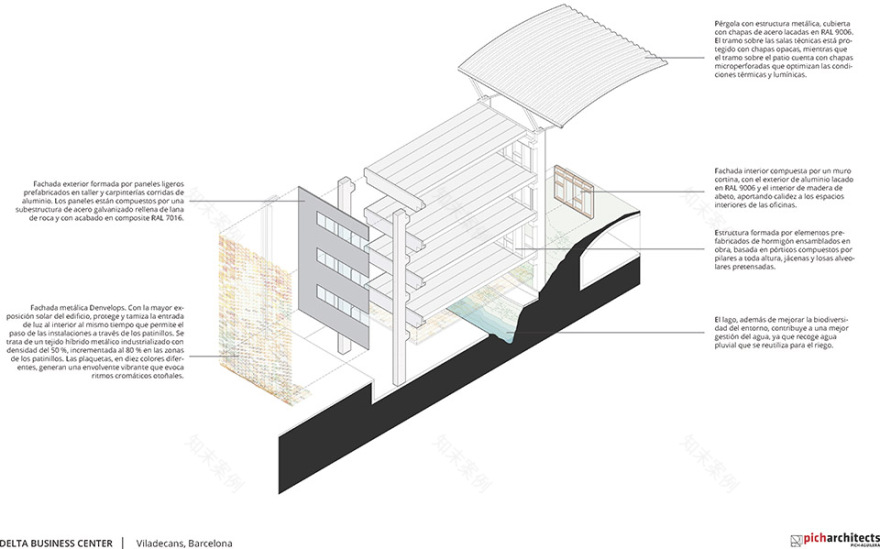
The overall appearance expresses an ambivalent presence. On one hand, it evokes the atmosphere of the pre-existing river landscape through the chromatic vibration of its envelope; on the other, the built volume responds to the Cartesian urban frontage of the adjacent city, completing and qualifying the urban space. The façade is 100% industrialized, composed of a multitude of colored metal elements that filter and reflect solar radiation, providing diffused light inside the offices. It integrates into a concrete structure resolved in three levels coordinated by different contractors who share support elements to optimize resources and reuse substructures. This stratified system allows precise execution, reduced construction time, and minimized waste. The use of digital control processes, assembly templates, and detailed work sequencing ensured coordinated execution with minimal errors.
▼彩色金属立面细部,Colored metal façade elements ©Aldo Amoretti
室内空间
Interiors
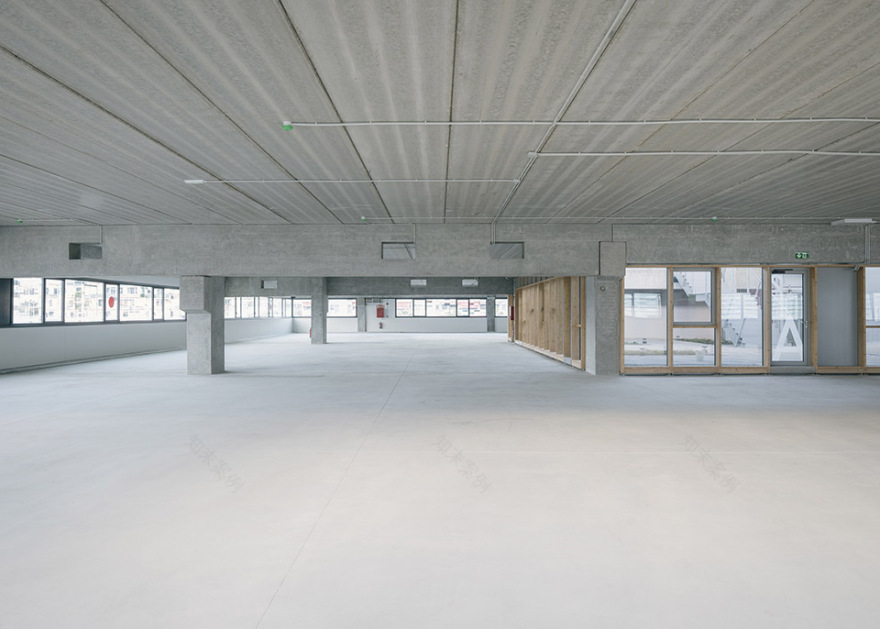
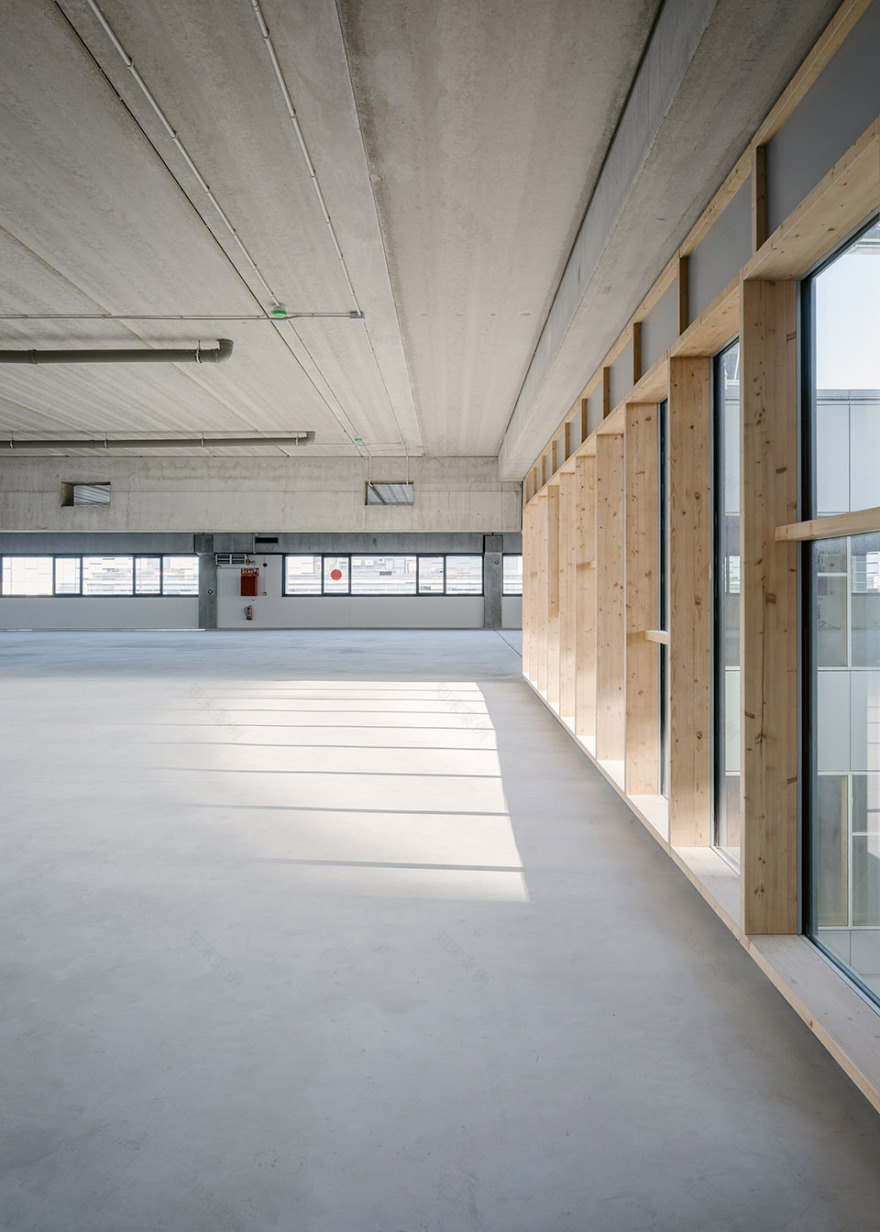
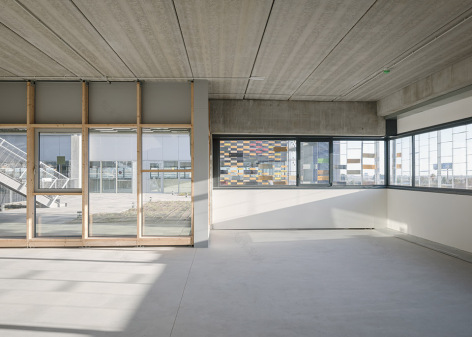
所提出的空间形态与建筑外部流线系统相结合,使空间在使用上具有高度的灵活性与多样性。室内空间被组织为一系列尺度开阔的功能空间,并拥有良好的采光与气候条件。这些空间共同构成一套高效的空间基础设施,可适应多种潜在使用方式。每一层的室外露台被设计为室内办公空间的延伸。平台与流线之间的空间组织关系,结合适当的智能技术应用,使建筑使用者能够有效共享并管理这些室外空间。
The proposed morphology, combined with the building’s exterior circulation routes, allows for great flexibility and versatility of use. The interior emerges as a sequence of generous functional spaces with optimal light and climate conditions. These spaces form an efficient infrastructure capable of responding to a diversity of potential uses. The outdoor terraces on each level have been designed as extensions of the interior workspace. The configuration of the platforms in relation to circulation routes, together with the appropriate use of Smart technologies, enables the proper management of outdoor spaces among the building’s user community.
▼室内空间,Interior space ©Aldo Amoretti
生物气候策略、可持续性与循环经济
Bioclimatic Strategies, Sustainability and Circular Economy
当代建筑正面临一次范式转变:建筑设计不仅需要减少对环境的影响,还应在时间维度上保存、储存并重新激活材料、空间与能源的价值。
Contemporary architecture faces a paradigm shift: designing buildings that not only reduce environmental impact but also preserve, store, and reactivate material, spatial, and energy value over time.
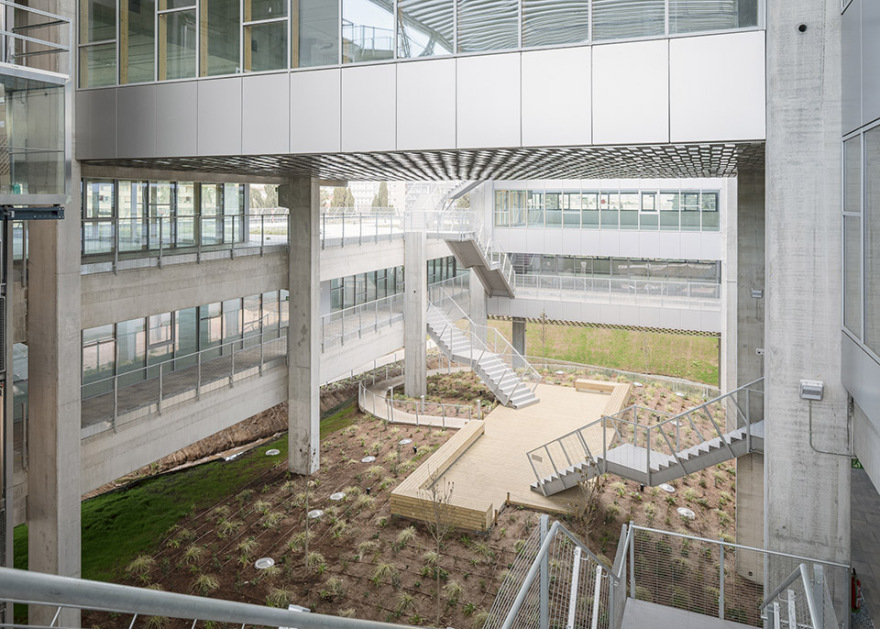
▼中央庭院空间,Central courtyard space ©Aldo Amoretti
自然舒适
Natural Comfort
自然舒适策略基于生物气候设计原则,通过利用建筑朝向、交叉通风以及太阳辐射控制来降低能源需求。借助材料的热惰性以及适当的遮阳措施,室内温度得以稳定,并有效防止过热现象,尤其适用于温暖湿润的气候环境。自然通风促进热量散逸并改善室内空气质量,在不过度依赖主动机械系统的情况下,创造更加健康与舒适的空间环境。在自然采光方面,项目实现了62%的空间日照自主率(Spatial Daylight Autonomy,SDA),意味着大量使用空间在全年大部分时间内能够获得充足的自然光。同时,年度日照暴露率(Annual Sunlight Exposure,ASE)为100%,表明通过遮阳与太阳控制系统有效避免了过度直射阳光,从而减少眩光和不必要的热量积聚。上述策略共同营造出高效、稳定且高品质的室内环境。
▼概念生成,Concept generation ©Delta Business Center
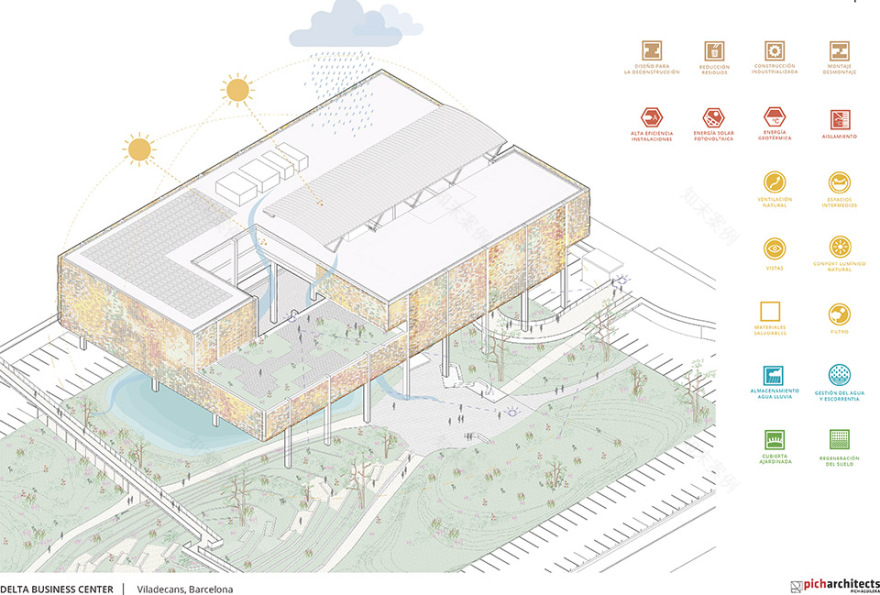
The natural comfort strategy is based on bioclimatic principles that take advantage of the building’s orientation, cross ventilation, and solar control to minimize energy demand. Through thermal inertia and appropriate solar protection, indoor temperature is stabilized and overheating is prevented, especially in a warm-humid climate. Natural ventilation promotes heat dissipation and improves indoor air quality, creating healthier and more comfortable spaces without excessive reliance on active systems. In terms of daylighting, the project achieves a Spatial Daylight Autonomy (SDA) of 62%, meaning that a significant portion of occupied areas receives adequate natural light levels for much of the year. Meanwhile, an Annual Sunlight Exposure (ASE) of 100% indicates the absence of excessive direct solar exposure, avoiding glare and unwanted heat gains thanks to shading and solar control elements that optimize the balance between daylight contribution and thermal comfort. Together, these strategies create an efficient, stable, and high-quality indoor environment.
▼建筑悬浮体量与景观环境,Suspended volumes above the landscaped terrain ©Aldo Amoretti
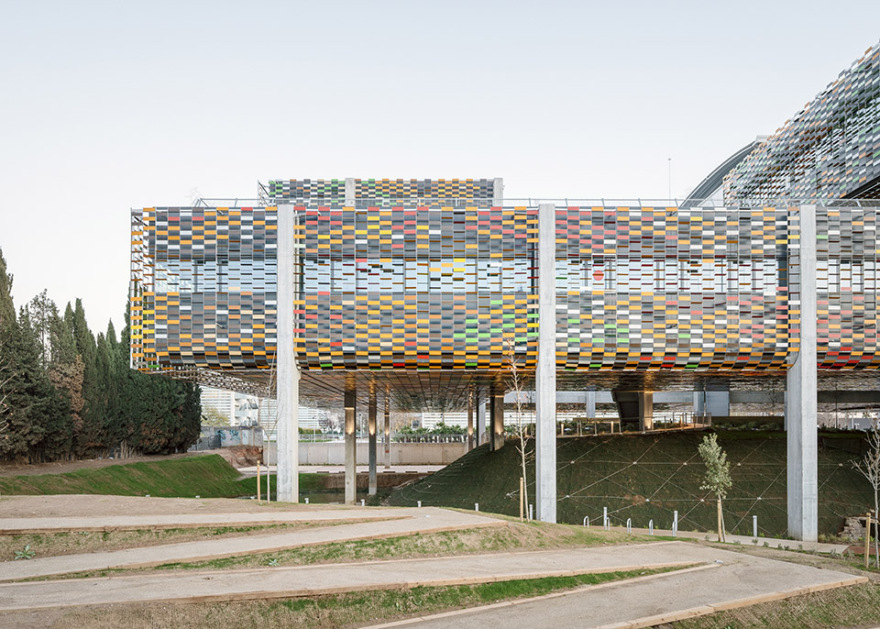
生物多样性
Biodiversity
生物多样性策略通过引入多种适应当地气候条件的地中海植物物种来实现,优先选择具有强适应性、低耗水与低维护需求的植物。建筑部分抬升,使植被能够在建筑下方连续生长,从而维持生态连通性并强化既有景观系统。这一策略增加了有效绿化面积,并通过蒸散作用与自然遮荫降低城市热岛效应。项目还设置了一处水池作为微气候调节元素,通过蒸发作用实现被动降温,在干旱时期增加环境湿度,同时作为可持续的灌溉水源。该水体也有助于吸引鸟类、授粉昆虫及其他小型本地物种,从而增强生物多样性。场地土壤的渗透性与雨水的自然管理能力得到提升,有助于维持水文平衡。植被与水体共同作用,形成更为凉爽的微气候环境,降低制冷能耗,并通过吸附二氧化碳与颗粒物改善空气质量。这些要素共同构建了一个具有韧性的城市生态系统,提高使用者福祉,并使建筑更好地融入自然环境。
The biodiversity strategy is based on integrating a wide variety of Mediterranean species adapted to the local climate, prioritizing resilient, low-water-consumption, and low-maintenance plants. The building is partially elevated to allow vegetation continuity underneath, maintaining ecological connectivity and reinforcing the existing landscape. This decision increases effective green surface and reduces the urban heat island effect through evapotranspiration and natural shading. A water pond is incorporated as a microclimatic regulatory element, promoting passive cooling through evaporation, increasing ambient humidity during dry periods, and acting as a sustainable irrigation reservoir. It also enhances biodiversity by attracting birds, pollinators, and small local species. Soil permeability and natural rainwater management are improved, reinforcing hydrological balance. Vegetation and water work together to create a cooler microclimate, reduce energy demand for cooling, and improve air quality by capturing CO₂ and particulate matter. Together, these elements create a resilient urban ecosystem, enhancing user well-being and integrating the building into its natural surroundings.
▼露台与外部步道系统,Terraces and exterior circulation paths ©Aldo Amoretti
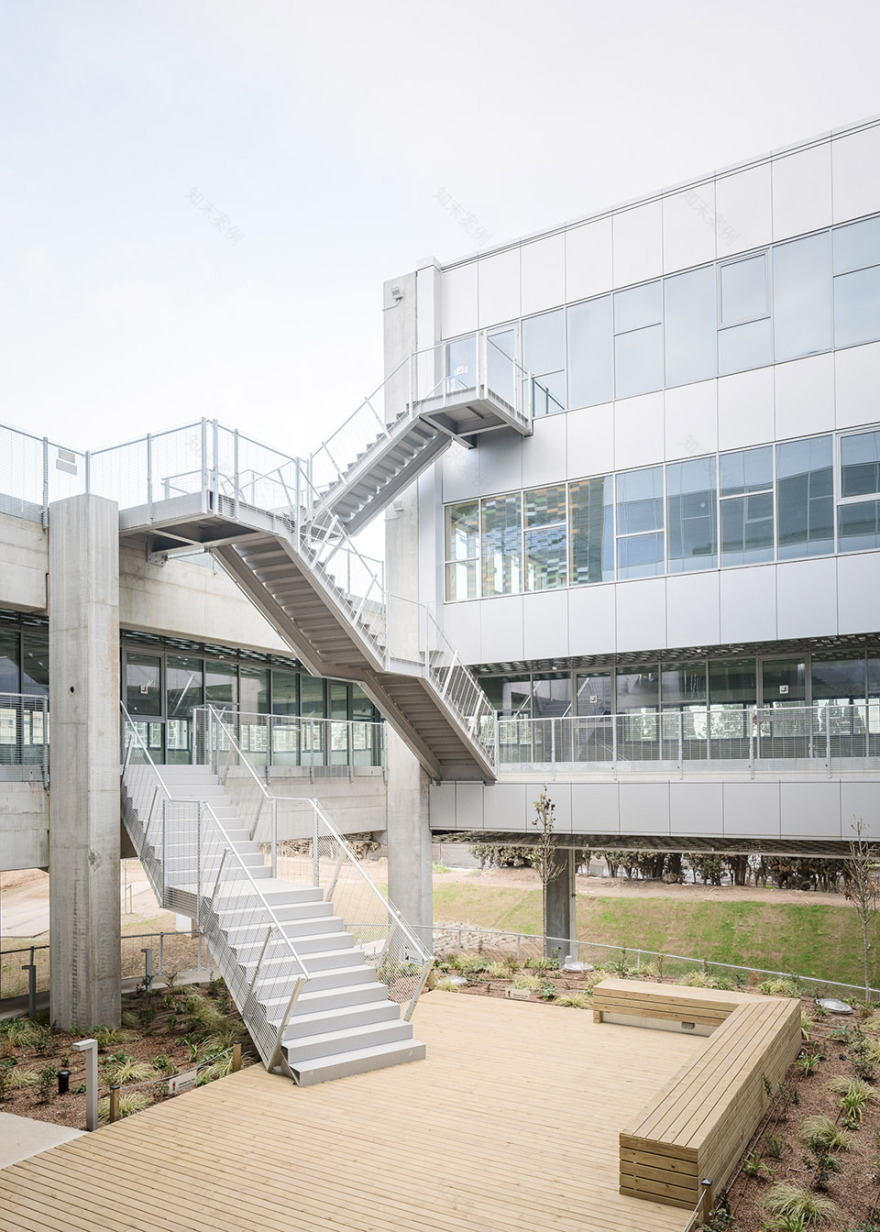
能源管理
Energy Management
项目的能源策略首先通过降低能源需求展开。设计团队建立了建筑的详细能源模型(数字孪生),以分析其全年热工性能,并识别建筑在不同季节中的热量得失情况。在此研究基础上,项目优化了建筑的热工围护结构,在立面与中央庭院中引入遮阳系统,并通过风环境模拟调整生物气候庭院的设计,以在夏季和冬季调节温度。所有设计决策均遵循当地法规与 ASHRAE 参考标准,使建筑的年度能源需求达到 55.39 kWh/m²,相较于参考建筑降低了 38%。在第二阶段,策略重点转向通过高效系统进一步降低能源消耗,包括高效照明系统、照明与二氧化碳传感器、光伏板的应用,以及地热与空气源热泵等高效能源系统的引入。最终,建筑整体能源消耗相较基础模型降低 53.1%,并相应实现年度能源成本 53.1% 的节约。通过被动策略与主动技术的结合,建筑在其全生命周期内显著降低了环境影响与运行成本。
The project’s energy strategy is based on reducing demand by developing a detailed energy model of the building (digital twin), which made it possible to analyse its thermal behaviour and identify heat losses and gains throughout the year. Based on this study, the thermal envelope was optimised, solar protection was incorporated into the façades and central courtyard, and the design of the bioclimatic courtyard was adjusted using wind simulations to regulate the temperature in summer and winter. All decisions were aligned with local regulations and ASHRAE reference criteria, achieving an annual energy demand of 55.39 kWh/m², representing a 38% reduction compared to a reference building. In a second phase, the strategy focused on reducing consumption through efficient lighting, lighting and CO₂ sensors, the incorporation of photovoltaic panels and high-efficiency systems such as geothermal and aerothermal energy. As a final result, the building achieves a 53.1% reduction in consumption compared to the base model. This translates into a 53.1% reduction in annual energy costs. Overall, the combination of passive and active strategies significantly reduces the environmental impact and operating costs throughout the building’s life cycle.
▼屋顶绿植,Roof green plants ©Aldo Amoretti
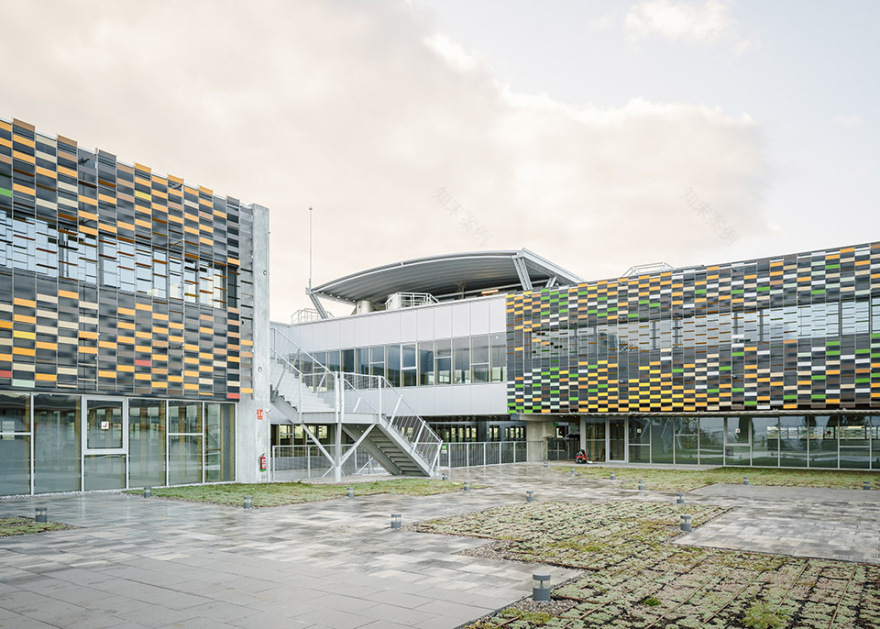
水资源管理
Water Management
项目的水资源策略通过设置具备储水能力的绿色露台以及可持续排水系统实现。在室外空间中,雨水被引导至一处可见的蓄水池,并被再利用于植被灌溉。该策略显著降低了户外绿化对饮用水的需求,并在场地内部建立了更加自然的水循环系统。此外,建筑还采用高效节水型卫生设备,以减少室内用水量,从而优化办公空间与公共区域中的水资源使用。项目的目标是打造一座能够以最低灌溉需求维持全部植被生长的建筑,尽可能降低整体用水量,并推动更加负责任的水资源使用方式。由此,水资源压力以及与水处理和输送相关的碳排放均得到降低,同时运营成本也随之减少。绿色屋顶与露台结合雨水收集系统,共同提升了雨水管理能力,并促进了周边环境的生态平衡。总体而言,该水资源策略在环境、经济与使用者福祉层面均带来了积极效益,使建筑成为高效、健康且具有韧性的空间环境。
The project’s water strategy is based on the incorporation of green terraces with water storage capacity and a sustainable drainage system in the outdoor space, where rainwater is directed to a visible reservoir that allows it to be reused for watering vegetation. This approach significantly reduces the demand for drinking water for outdoor use and promotes a more natural water cycle within the plot. In addition, the building incorporates high - efficiency sanitary fixtures to minimise indoor consumption, optimising the use of this resource in both offices and common areas. The aim was to design a building capable of sustaining all the planned vegetation with minimal irrigation requirements, reducing overall water consumption as much as possible and promoting responsible water use. As a result, pressure on water resources and emissions associated with treatment and pumping are reduced, while operating costs are lowered. Green roofs and terraces, together with rainwater harvesting, improve rainwater management and contribute to the environmental balance of the surroundings. Overall, the water strategy provides environmental, economic and well - being benefits, consolidating an efficient, healthy and resilient building.
▼建筑底部空间绿植,Green plants at the bottom of the building ©Aldo Amoretti
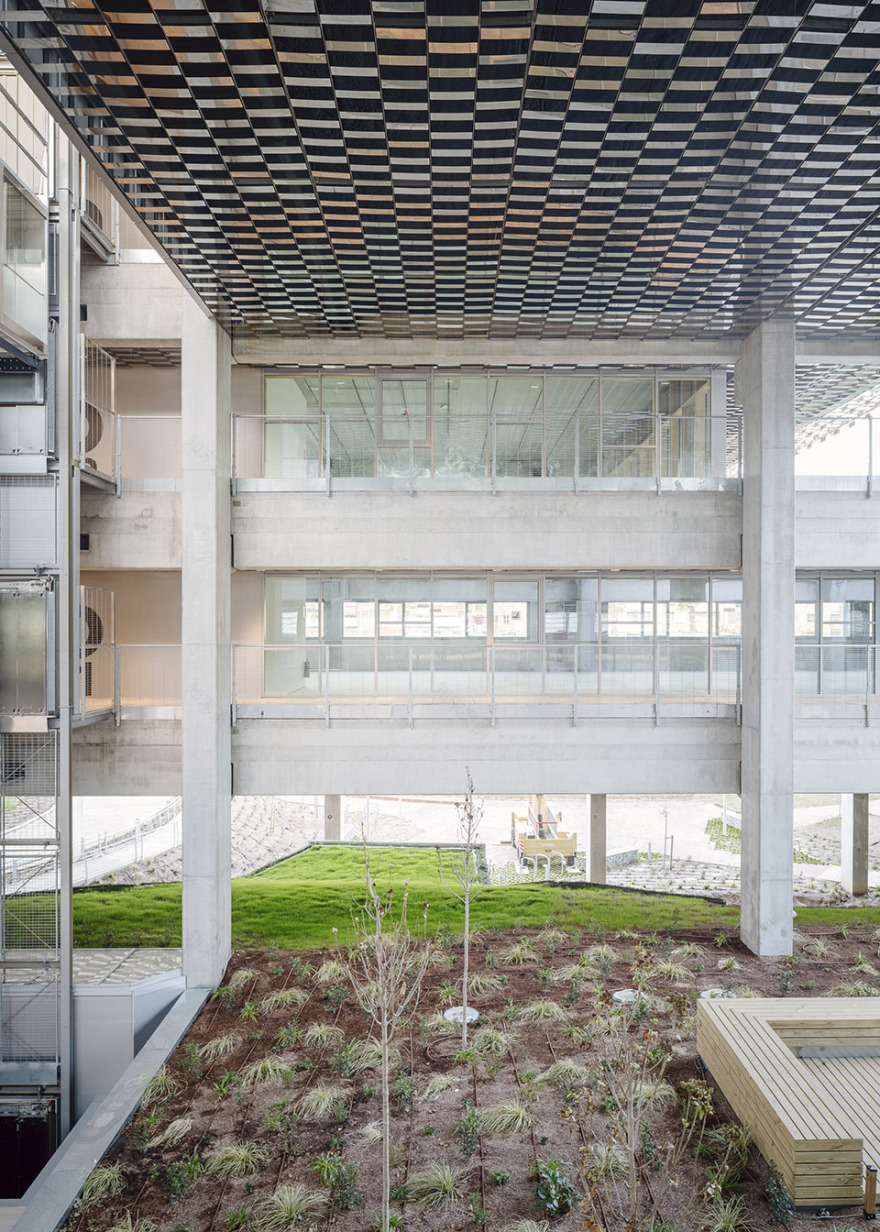
材料资源管理
Management of Material Resources
项目的材料策略旨在显著降低隐含碳排放、减少资源消耗,并确保建筑构件在其生命周期结束后能够被回收利用。这一策略与欧洲分类体系(European Taxonomy)、LEVEL(s) 框架以及 LEED 标准保持一致。建筑被构想为一套具有生命力、可逆且可持续演化的基础设施,每一项设计决策都遵循先进的循环经济逻辑。在这一框架下,建筑不再被理解为静态对象,而是一种能够被持续转化、拆解并重新编程的适应性系统,在这一过程中材料的价值得以保留。灵活性不仅体现在空间层面,也体现在材料层面:各类构件被设计为可装配、可拆卸并可重新组合,从而将工业化建造纳入循环与韧性策略之中。
The project’s materials strategy aims to significantly reduce embedded carbon, minimise resource consumption and ensure the recovery of components at the end of their useful life, in line with the European Taxonomy, LEVEL(s) and LEED. The building is conceived as a living, reversible and evolving infrastructure, where every design decision responds to an advanced circular economy logic. Architecture is no longer understood as a static object but rather as an adaptable system capable of being transformed, dismantled and reprogrammed without losing the value of its materials. Flexibility is not only spatial but also material: components are designed to be assembled, disassembled and reassembled, integrating industrialisation as a strategy for circularity and resilience.
▼立面构件过滤阳光形成漫射光,Façade elements filtering sunlight ©Aldo Amoretti
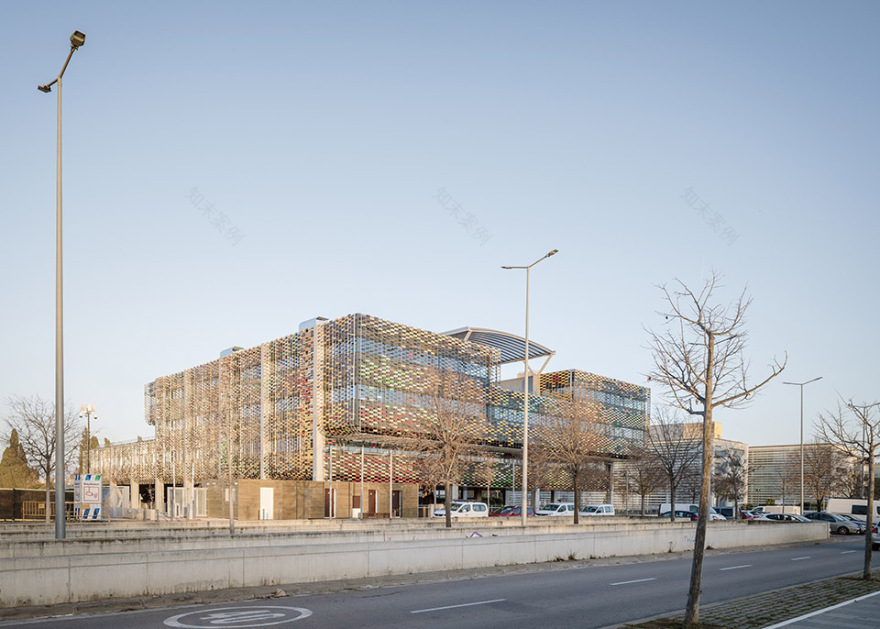
在设计过程中,团队采用基于生命周期评估(LCA,A1-A3阶段)的方法论,优先选择环境影响较低、含再生成分、具备可追溯性并具有再利用潜力的材料。同时,项目特别强调耐久性标准——尤其是在混凝土等结构材料方面——以延长建筑使用寿命并减少未来干预。-建筑由此被视为一座“城市材料银行”,与新型生产模式及未来法规要求相契合。最终,项目相较基准模型实现了 48% 的隐含碳排放减少,并具备 35% 的循环利用潜力,从而在长期维度上提升了其战略、环境与经济价值。
The design adopts a methodology based on Life Cycle Assessment (LCA, phases A1-A3), prioritising materials with low environmental impact, recycled content, traceability and potential for reuse. In this sense, it is key to incorporate durability criteria—especially in structural materials such as concrete— to ensure a longer service life and reduce future interventions. The building operates as an urban materials bank, aligned with new production models and future regulatory requirements. As a result, the project achieves a 48% reduction in embedded emissions compared to the baseline and 35% circularity potential, increasing its long-term strategic, environmental and economic value.
▼建筑与城市街道界面关系,Relationship between the building and the urban frontage ©Aldo Amoretti
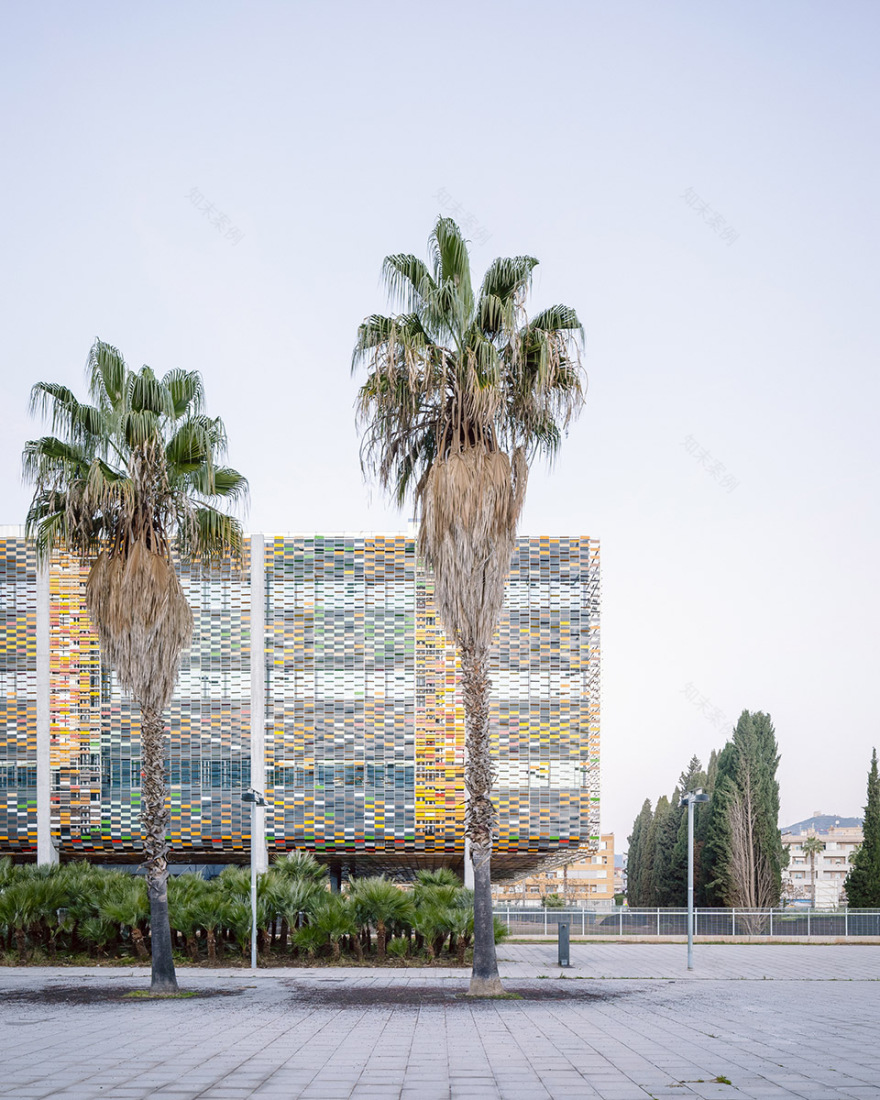
气候变化与韧性
Climate Change and Resilience
气候变化与韧性策略的核心在于设计一座能够同时应对当前环境条件与全球变暖未来情景的建筑。项目结合了减缓与适应两类措施:一方面通过降低碳足迹、运用被动策略减少能源需求,并通过控制系统优化能源使用;另一方面则通过明确的适应性策略来提升建筑面对气候变化的能力。这些适应性措施包括引入植被与绿色屋顶以缓解热岛效应、提升建筑围护结构的热工性能,以及通过高效水资源管理优先实现水资源的减少使用与再利用。这些决策增强了建筑应对热浪、极端温度变化以及日益频繁干旱时期的能力。
The climate change and resilience strategy is based on designing a building capable of responding to both current conditions and future scenarios resulting from global warming. The project combines mitigation measures—reducing the carbon footprint, decreasing energy demand through passive strategies, and optimising consumption through control systems—with clear adaptation actions. These include the incorporation of vegetation and green roofs to mitigate the heat island effect, improving the thermal performance of the building envelope, and efficient water management that prioritises reduction and reuse of the resource. These decisions reinforce the building’s ability to cope with heat waves, extreme temperature variations, and increasingly frequent periods of drought.
▼建筑底部停车空间,Parking space at the bottom of the building ©Aldo Amoretti
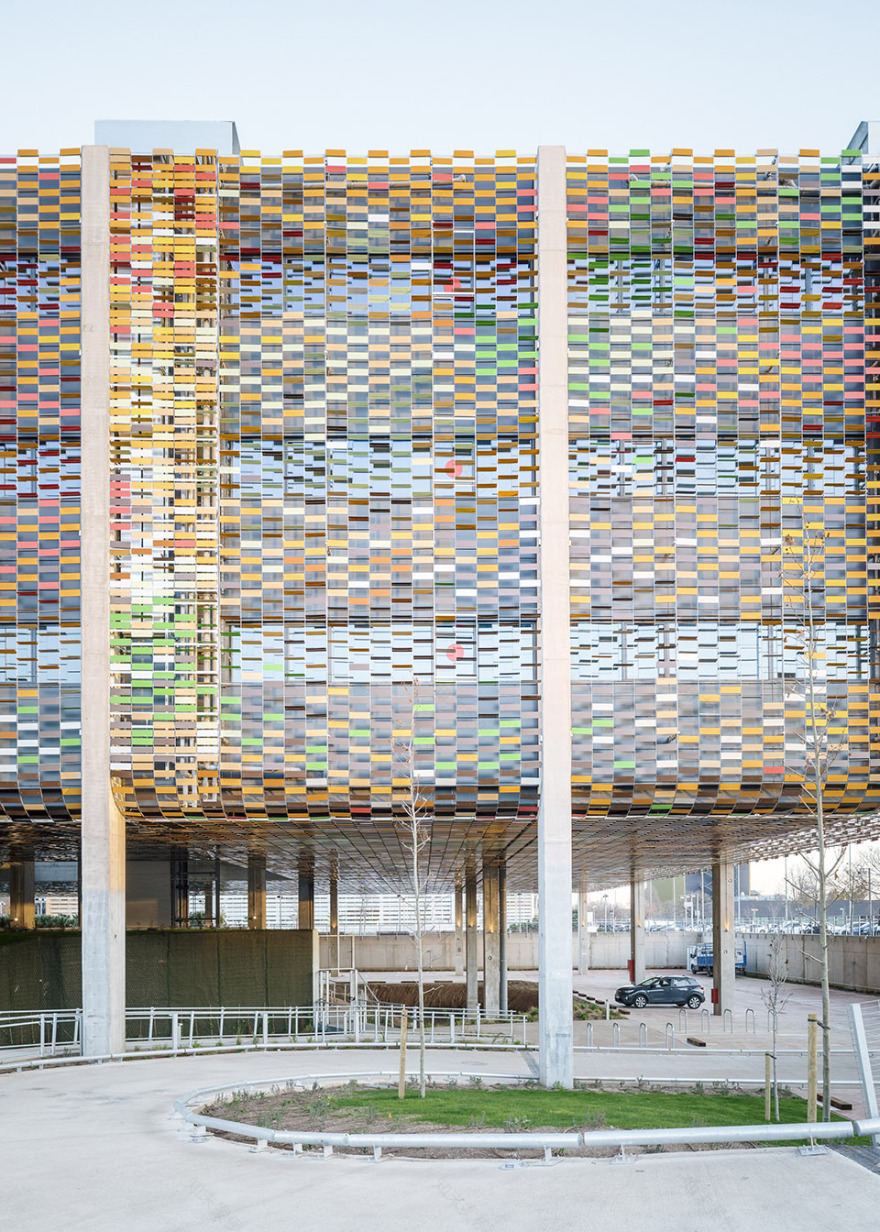
项目的目标是将建筑打造为同类开发项目中的标杆,在能源效率、负责任的水资源管理、可持续材料选择以及热环境、采光和整体环境舒适度方面展现卓越表现。该方案不仅满足当前标准,而且超越既有要求,提前回应未来几十年可能出现的法规与气候挑战。最终,建筑在降低运营成本与环境影响的同时,为使用者提供更稳定、更舒适的空间体验,使其成为一项面向未来、具有韧性、高效且对环境负责的基础设施。
The aim is to position the project as a benchmark against comparable developments, demonstrating excellence in energy efficiency, responsible water management, sustainable material selection and high levels of thermal, lighting and environmental comfort. The proposal not only meets current standards, but exceeds them, anticipating the regulatory and climate requirements of the coming decades. As a result, operating costs and environmental impact are significantly reduced, while greater stability and well - being for users is guaranteed. The building is consolidated as an infrastructure that is future - proof, resilient, efficient and environmentally responsible.
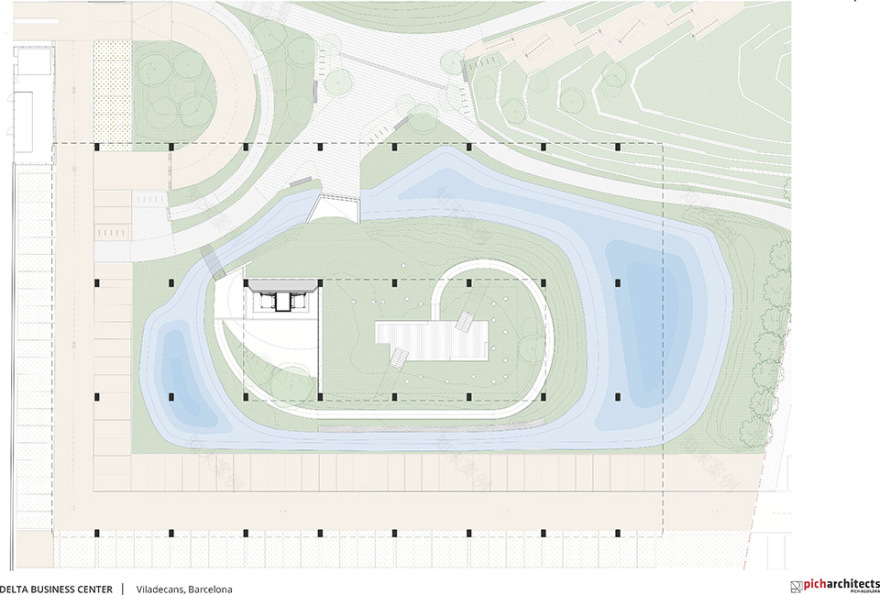
▼地下层平面图,Ground floor plan ©Delta Business Center
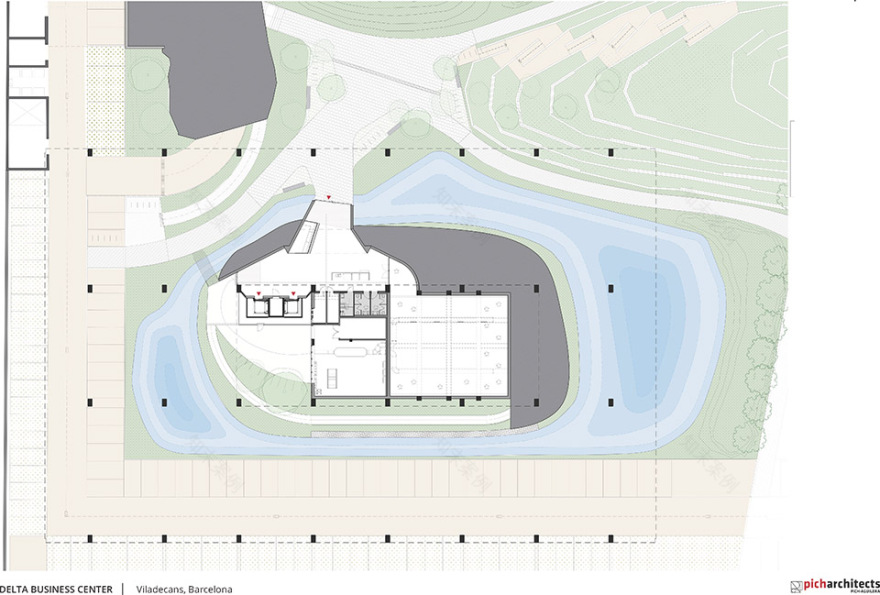
▼1层平面图,1F plan ©Delta Business Center
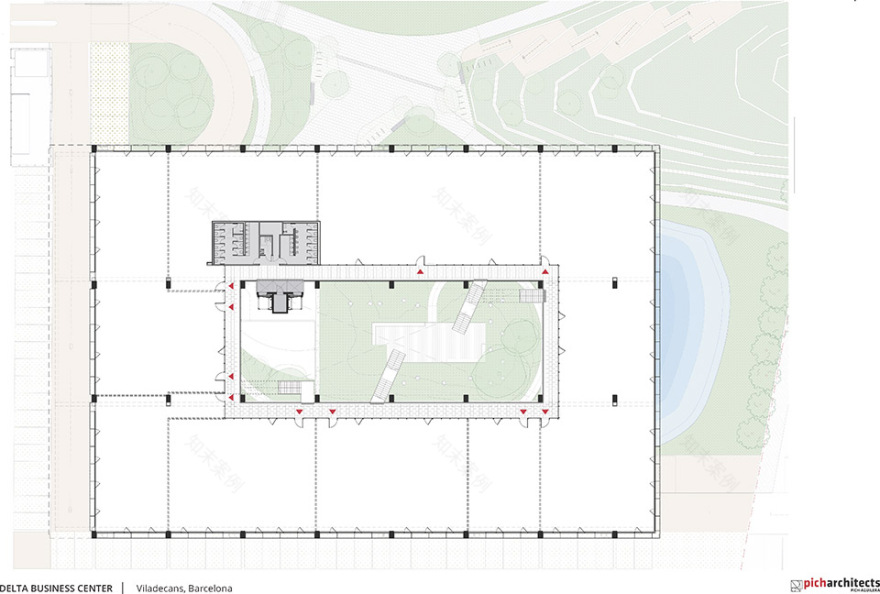
▼2层平面图,2F plan ©Delta Business Center
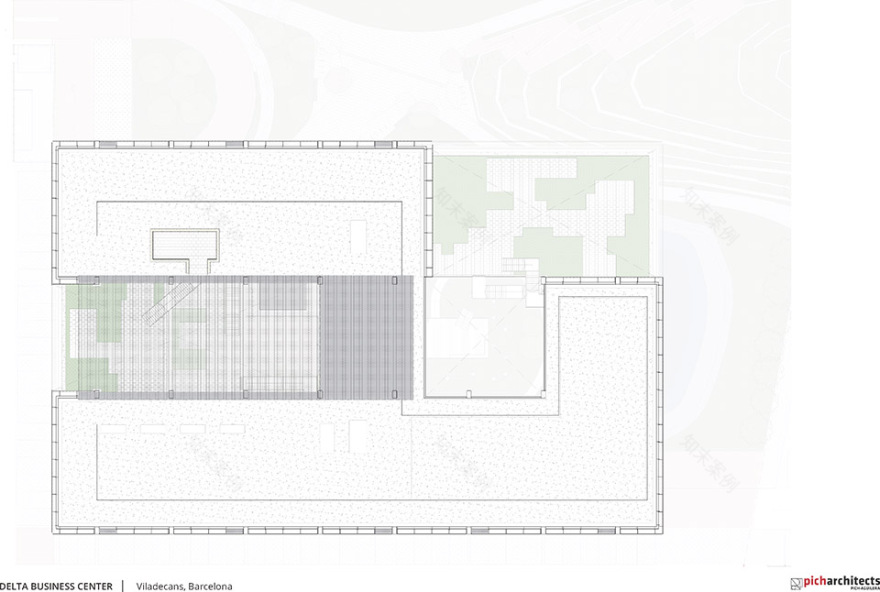
▼3层平面图,3F plan ©Delta Business Center
▼4层平面图,4F plan ©Delta Business Center
▼屋顶平面图,Roof plan ©Delta Business Center
▼剖面图,Section ©Delta Business Center
Location: Viladecans, Barcelona
Year: 2025
Surface: 11.326 m2
Tipology: Office Building
Project: PichArchitects
Project: Manager Dalmau+Morros
Construction: Calaf
Structural: calculation Precon
Construction Management: PichArchitects
Executive management: Dalmau+Morros
Urbanisation: Project Paris Camps Arquitectura
Utilities: Suris
Photography: Aldo Amoretti
Certifications: LEED Platinum + WELL Gold (en proceso)
Foundations: P14
Prefabricated structure: Precon
Facades: Garcia Faura
Exterior cladding and false ceilings: Denvelops
Pergola: Apimet
Metal structure, stairs and railings: Noisel
Infinity slabs: Breinco
Plant trays: Le Prieuré
Polyurea: Grupo Iraco
XPS: Soprema
Sprayed insulation: Plainsur
Porcelain tiles: Newker
Drywall: SpainDrywall
Facade fire compartmentalisation: Plasfoc
Flooring and gatehouse enclosure: Alberch
Lifts: Eninter
Phenolic cabins: Aluinter
Metal doors: Unic
Skylights: Sunlight
Counter and screen: Correcta
Signage: 47 Sendes
Lighting: LedsC4
Lake: Naturalea
南京喵熊网络科技有限公司 苏ICP备18050492号-4知末 © 2018—2020 . All photos and trademark graphics are copyrighted by their owners.增值电信业务经营许可证(ICP)苏B2-20201444 苏公网安备 32011302321234号
苏公网安备 32011302321234号客服
消息
收藏
下载
最近