

创作上传
VIP
收藏下载
登录 | 注册有礼
查看完整案例

收藏

下载

分享

翻译

Facebook | Instagram
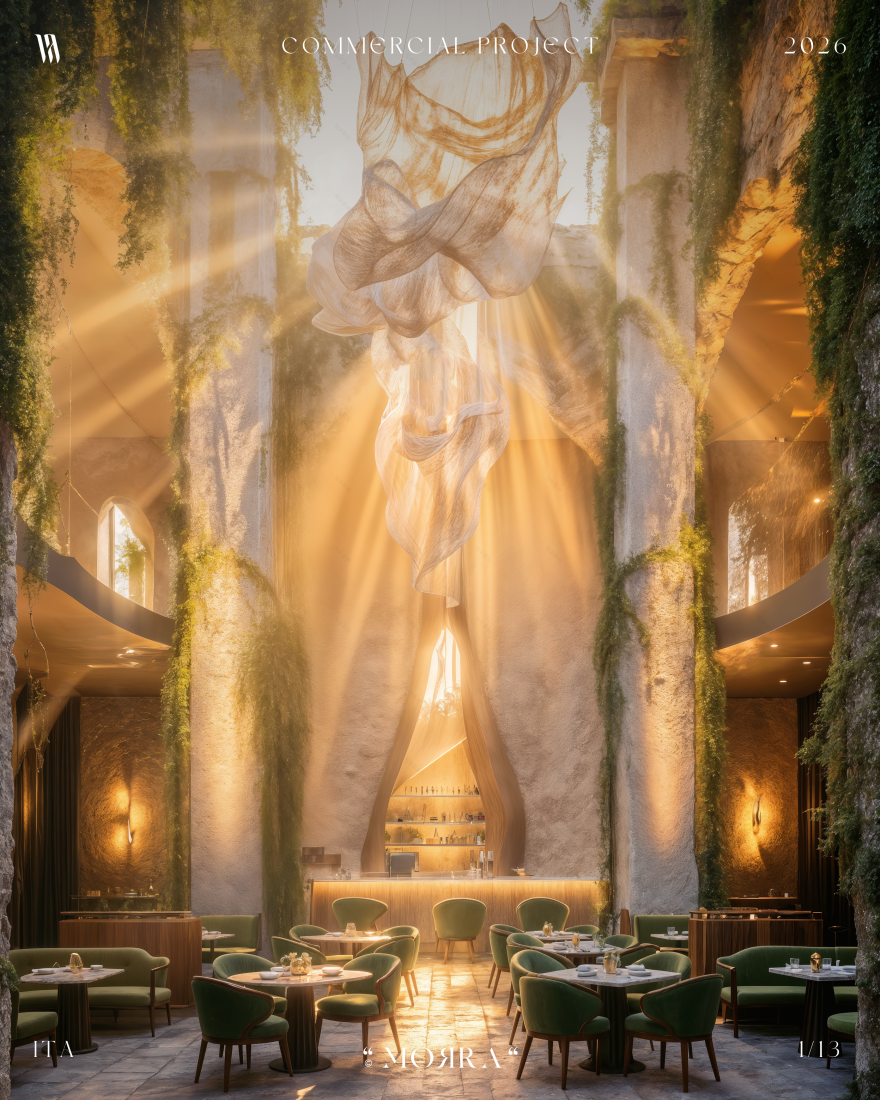
Organic Massing and Volumetric Composition
The design is anchored in the principle of architectural sculpting, where rough stone masses interlock seamlessly with the natural topography of the Italian coast.
The composition emerges as an intrinsic extension of the surrounding geology, achieving complete visual and structural integration between the interior space and the adjacent rocky cliffs.

Structural Arch Fenestrations
The towering stone arches reflect a shift towards cinematic luxury, serving as primary structural elements and visual definers of the space.
These apertures are designed with precise geometric proportions to maximize the panoramic view, creating powerful architectural frames that connect the seating areas directly to the maritime horizon.

Spatial Dynamics and Proportional Grading
The design relies on varying ceiling heights to create a graded architectural rhythm.
The transition from defined corridors to open, double-height lounges enhances the spatial value and achieves a visual expansiveness that serves the commercial function.
Suspended lighting elements are strategically employed to maintain a human scale that achieves geometric containment within the void.
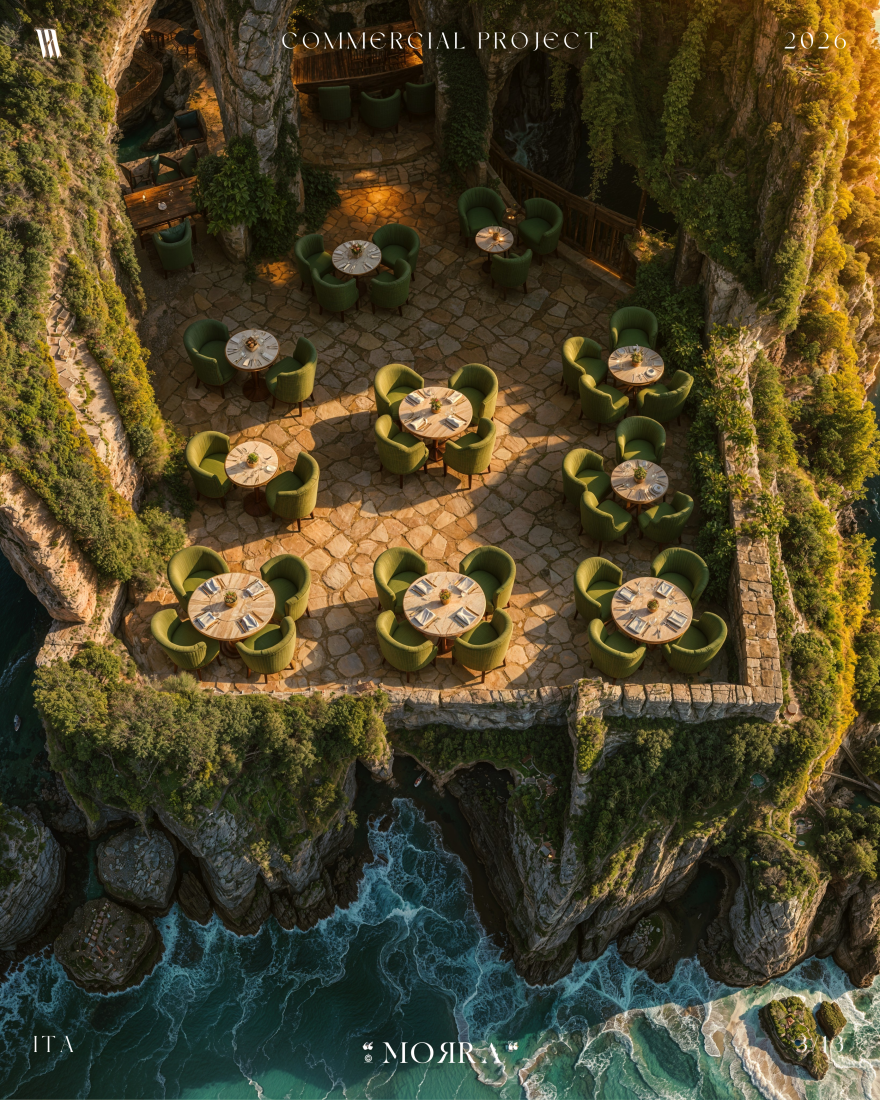
Geological Materiality and Finishes
The selection of finishes reflects a strict inclination towards raw, primary materials.
Exposed concrete, rough-hewn stones, and natural veined marble surfaces combine to form a strong visual identity that relies on material honesty and the deliberate absence of superficial cosmetic treatments.

Flexible Ceiling Articulation
Suspended organic woven meshes are utilized in the ceilings as both geometric and visual treatments.
This floating composition breaks the rigidity and solidity of the surrounding stone structures, adding a layer of fluidity that interacts dynamically with the natural air currents passing through the space.

Structural Biophilic Treatments
The dense integration of climbing vegetation is executed not merely as a decorative element, but as a vital part of the spatial environmental strategy. These green masses work to improve air quality, provide partial shading, and firmly tie the architectural composition to the surrounding ecosystem.

Textural Contrast in the Interior Space
The interior scheme is based on a careful study of textural juxtapositions.
The harshness of the unrefined rock walls sharply contrasts with the softness of velvet fabrics in deep burgundy and warm walnut tones, alongside the polished marble surfaces of the tables.
This enriches the aesthetic value of the design and creates a precise visual balance.

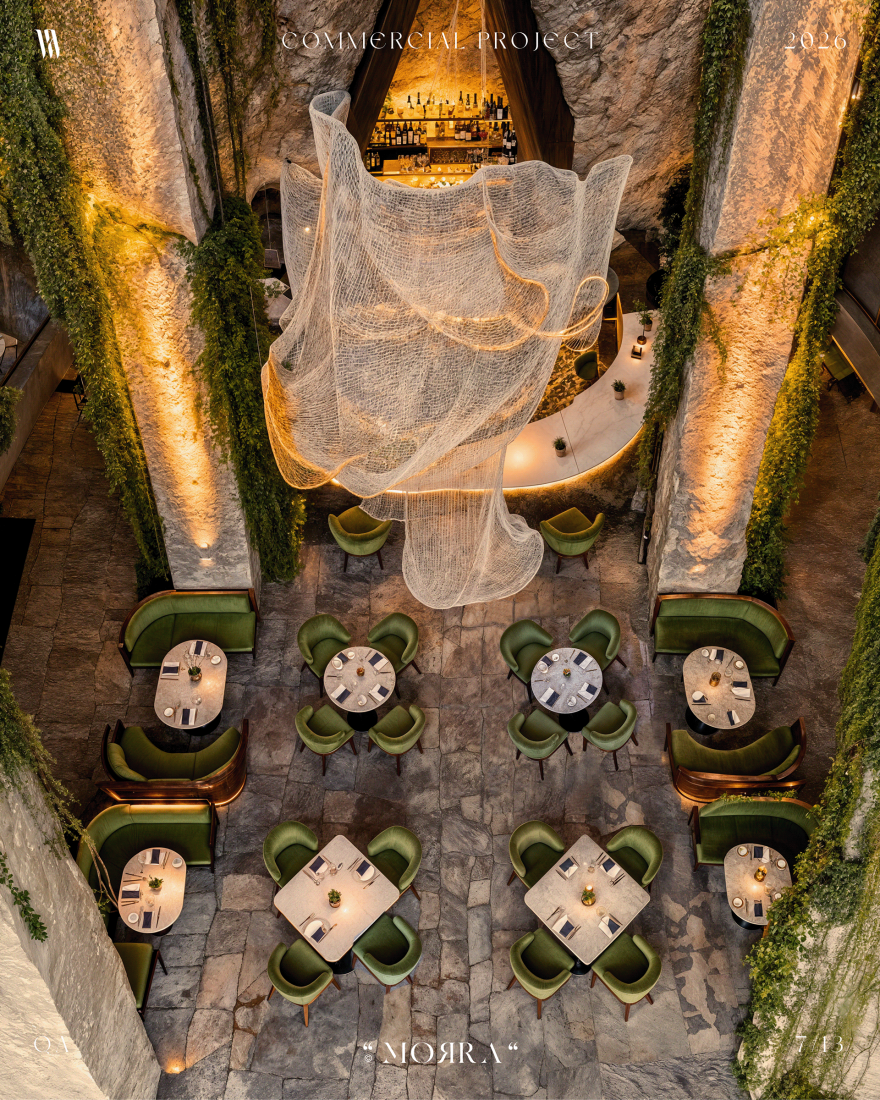
Directional Architectural Lighting
The lighting strategy focuses on accentuating the rock formations and creating a dramatic, moody atmosphere characterized by mystery and refinement. Concealed lighting units are integrated into the stone crevices to highlight the structural textures and create a calculated visual depth.

Shadows as a Sculptural Element
The masses and openings are designed to interact with the angles of solar incidence, utilizing sunlight as a spatial sculpting tool.
The continuous shift in the lengths and directions of shadows cast on the walls adds a kinetic dimension to the static architecture throughout the day.

Functional Focal Point
The central bar represents both a geometric and functional anchor.
It is designed as a recessed mass within the rock wall featuring a sharp triangular configuration and illuminated edges.
This breaks the circular pattern of the arches and creates a compelling visual center amidst the dark stone masses.

Graded Topographical Utilization for Circulation
The floor levels and circulation paths are designed to follow the natural slope of the coastal site.
This grading creates functional terraces that guarantee all sectors possess equal, unobstructed visual access to the sea, while maintaining the efficiency of movement lines for the operational staff.


Spatial Acoustic Integration
Given the highly reflective nature of hard materials like stone and marble, irregular architectural apertures, ceiling textiles, and dense foliage are utilized as natural sound diffusers and absorbers.
This achieves an optimal level of acoustic comfort within the open commercial spaces.
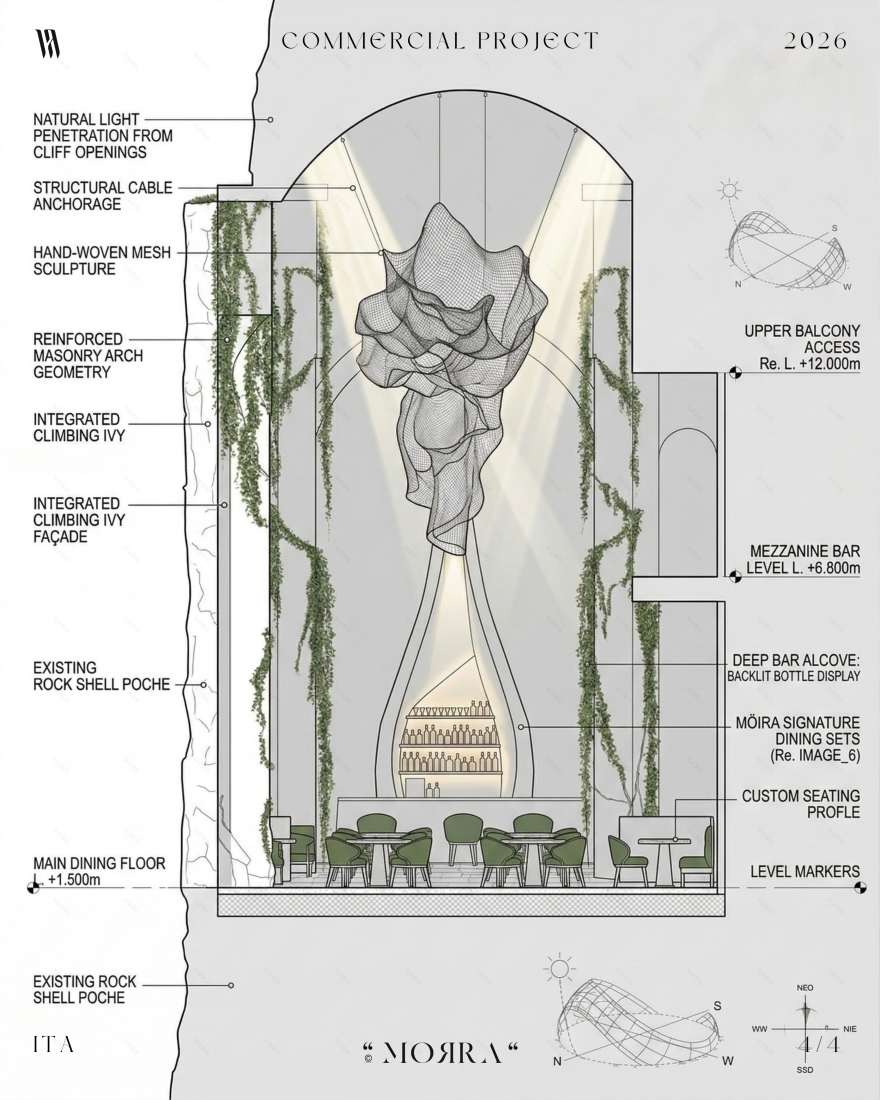
Material Interaction with the Environmental Context
Priority was given to the use of materials with a low carbon footprint, and certain rocky surfaces were deliberately left without weatherproofing treatments to allow the natural formation of a patina over time.
This engineering tactic allows the building to sustainably adapt to its coastal environment, with its character becoming more pronounced through moderate weathering.


Conclusion: Grounded Architectural Luxury
This project embodies the design vision of MORRA STUDIO, which is rooted in delivering pure architectural luxury. The scheme reflects a firm commitment to architecture that asserts its presence through bold massing, precise proportions, and complete integration with nature, offering a premium commercial environment that transcends superficial decoration to forge a strong, enduring sense of place.
南京喵熊网络科技有限公司 苏ICP备18050492号-4知末 © 2018—2020 . All photos and trademark graphics are copyrighted by their owners.增值电信业务经营许可证(ICP)苏B2-20201444 苏公网安备 32011302321234号
苏公网安备 32011302321234号客服
消息
收藏
下载
最近