

创作上传
VIP
收藏下载
登录 | 注册有礼
查看完整案例

收藏

下载

分享
在乡村振兴与文化传承的时代背景下,民宿产业成为盘活乡村经济、传承地域文化的关键力量,却也面临“千宿一面”的同质化困境与文化内涵缺失的难题。泾县小岭村作为国家级非物质文化遗产“宣纸制作技艺”的核心传承地,拥有独特的自然风貌与深厚的文化底蕴,“纸道山庄”民宿以其为载体,探索在地性视角下的民宿设计路径,实现文化传承、空间设计与产业融合的有机统一。
Against the backdrop of rural revitalization and cultural inheritance, the homestay industry has become a key force in invigorating rural economies and passing on regional cultures. However, it also faces the challenges of homogenization, where “thousands of homestays look identical,” and a lack of cultural connotations. Xiaoling Village in Jing County, as the core inheritance site of the national intangible cultural heritage “Xuan Paper Making Techniques,” boasts unique natural landscapes and profound cultural heritage. The “Zhidao Villa” homestay, taking this as its carrier, explores the path of homestay design from a local perspective, achieving the organic integration of cultural inheritance, spatial design, and industrial integration.
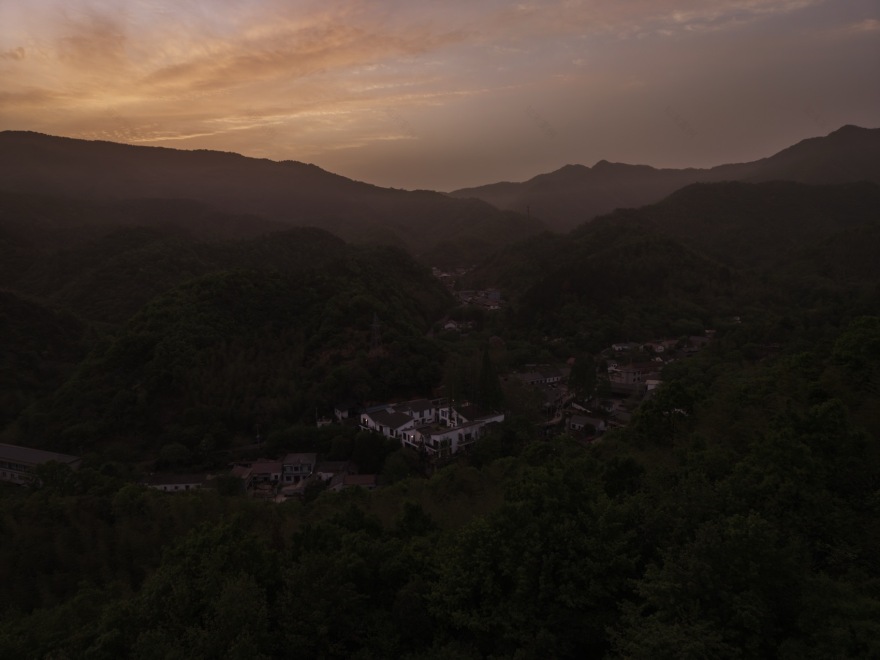
▼场地鸟瞰,Aerial-view of the site© 阿永项目
一、史地解读,因势而作
Interpretation of history and geography, acting according to the situation
泾县小岭村地处皖南山区,属于“九岭十三坑”的地貌,山峦叠嶂,溪水环绕,村内遍布水杉、梧桐及宣纸核心原料青檀树。设计场地平整开阔且无现存建筑,有20余棵50年以上树龄的高大树木,为整个空间增添了浓郁的自然气息和历史底蕴。
Xiaoling Village in Jing County is located in the mountainous area of southern Anhui Province, with a landform known as “nine ridges and thirteen pits”. It is surrounded by overlapping mountains and streams, and the village is full of metasequoias, phoenix trees, and sandalwood trees, which are the core raw materials for rice paper. The design site is flat and open with no existing buildings, and there are more than 20 tall trees over 50 years old, adding a strong natural atmosphere and historical heritage to the entire space.
▼建筑与邻里关系,Building and Contextual Relationship © 阿永项目

二、在地性解码,新旧共生
Decoding Locality, Coexistence of the Old and the New
挖掘地域文化基因,将传统元素与现代需求有机融合,实现“新旧共生”。
Excavate the genes of regional culture, organically integrate traditional elements with modern needs, and achieve “coexistence of the old and the new”.
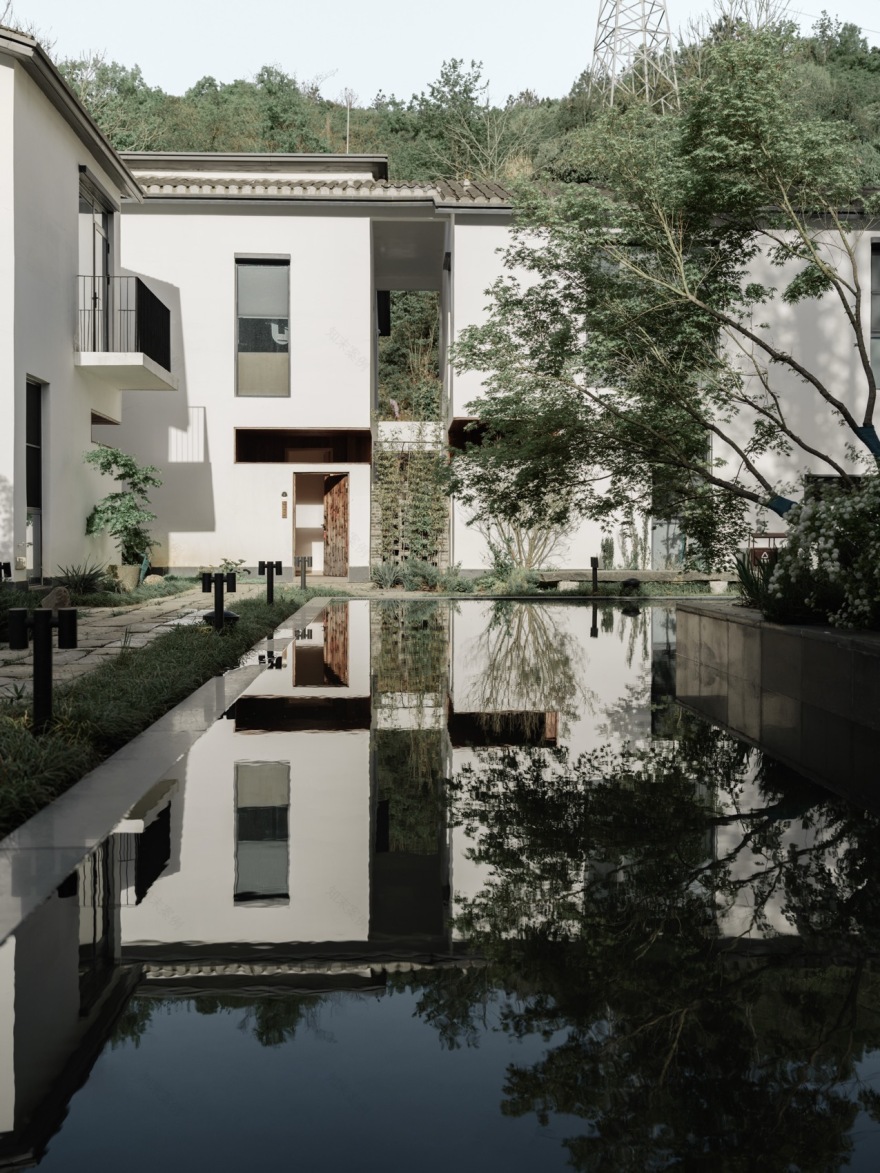
▼建筑外观,exterior view © 阿永项目


(一)在地性设计原则
Principle of Local Design
泾县小岭村民宿设计注重保护与利用自然资源,建筑顺应地形、融入山水,以 “与自然和谐共处” 为设计主旨,采用黑白灰色调与质朴肌理,实现建筑与自然共生。景观营造上,通过屋檐下宽窗引景入室,将自然景观融入民宿空间,强化人与自然的连接。
The design of the homestays in Xiaoling Village, Jing County, focuses on the protection and utilization of natural resources. The buildings adapt to the terrain, integrate into the mountains and rivers, and take “living in harmony with nature” as the design theme. They adopt black, white, and gray tones along with simple textures to achieve the coexistence of architecture and nature. In terms of landscape creation, wide windows under the eaves are used to bring the scenery indoors, integrating natural landscapes into the homestay spaces and strengthening the connection between humans and nature.
▼顶视俯瞰图-屋顶关系,Overhead View – Roof Layout © 阿永项目
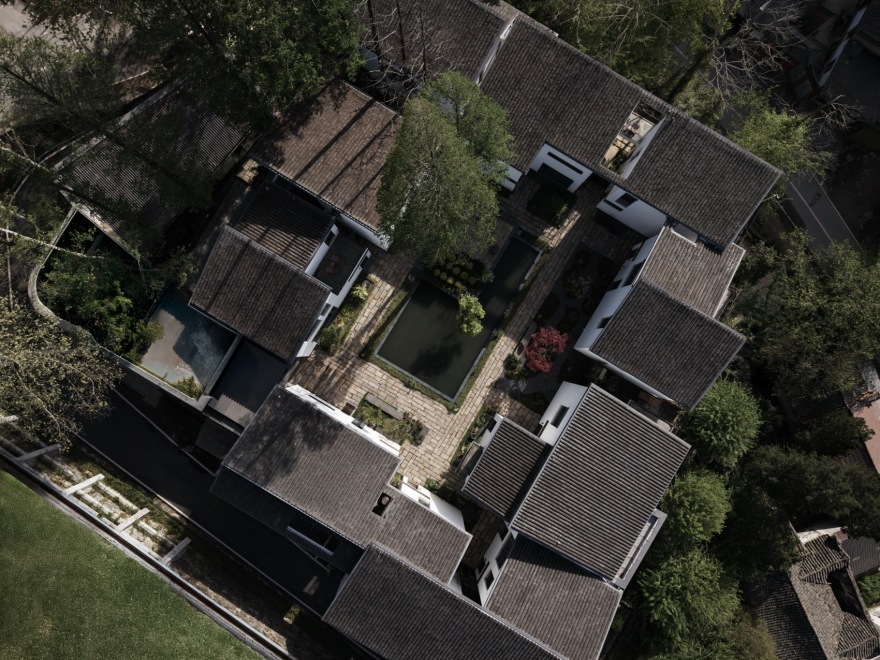
挖掘历史文化,传承地域特色。从本土文化中提取灵感,结合现代生活需求,实现文化内涵与实用性统一,为游客提供兼具文化深度与实用价值的居住体验。同时注重人文关怀与舒适体验,以游客需求为核心,营造温馨舒适的住宿环境,展现当地文化与生活方式。
Explore historical culture and inherit regional characteristics. Draw inspiration from local culture, integrate it with the needs of modern life, achieve the unity of cultural connotation and practicality, and provide tourists with a living experience that combines cultural depth and practical value. At the same time, focus on humanistic care and comfortable experience, take tourists’ needs as the core, create a warm and comfortable accommodation environment, and showcase the local culture and lifestyle.
▼客房庭院,Guest Room Courtyard © 阿永项目


▼局部场景,Local scene © 阿永项目
(二)形式重构:传统形制的现代表达
Formal Reconstruction: Modern Expression of Traditional Forms
小岭村传统建筑以“院落围合、坡顶青瓦、砖木构架”为特征,以尊重地域风貌为前提,用现代设计手段对传统元素进行提炼与重构。将传统双坡屋顶演变为连续不对称坡屋顶,采用“双层檐口”设计,内层手工小筒瓦就地取材,外层深灰色铝板折边处理,兼顾排水功能与轻盈视觉效果。
The traditional architecture of Xiaoling Village is characterized by “courtyard enclosures, sloped roofs with blue tiles, and brick-wood structures”. On the premise of respecting the regional style, modern design methods are used to extract and reconstruct traditional elements. The traditional double-sloped roof has been transformed into a continuous asymmetric sloped roof, with a “double-layered eave” design. The inner layer uses handcrafted small cylindrical tiles sourced locally, while the outer layer features dark gray aluminum panels with folded edges, achieving both drainage functionality and a lightweight visual effect.
▼建筑鸟瞰-屋顶关系,Aerial view of the building – roof relationship © 阿永项目
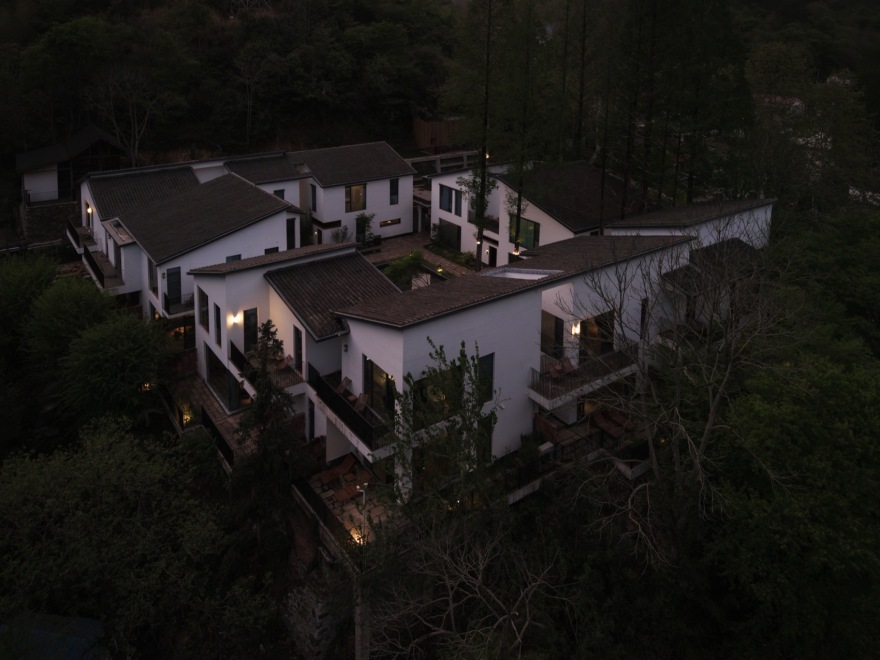
传统建筑立面形制“下实上虚”,以底部是1.2米高的青砖勒脚,上部是白灰抹面墙体,这种构成能契合防潮功能的需要,又能形成层次分明的美学效果。在建筑外立面设计采用石材踢脚与白灰色宣纸肌理涂料,借助深灰色压地与白色实墙的强烈对比,延续传统建筑那种层次分明的美学效果。
The traditional architectural facade follows the form of “solid at the bottom and void at the top”. The bottom consists of a 1.2-meter-high blue brick plinth, and the upper part is a wall plastered with white lime. This structure not only meets the need for moisture-proof functions but also creates a aesthetic effect with distinct layers. In the design of the building’s exterior facade, stone skirting and white-gray rice paper texture paint are used. By virtue of the strong contrast between the dark gray ground and the white solid wall, the aesthetic effect of distinct layers of traditional architecture is continued.
▼建筑墙体关系,Architectural Wall Layer Relationship © 阿永项目


提取传统民居3.6m开间模数,调整进深适配现代起居需求,设计两种基本单元模块,通过错动、镜像组合,形成12户独立单元交织的院落空间。创新性采用“屋宇共享”策略,实现“屋顶相连、庭院互通”,既延续“四水归堂”的空间意象,又打造出现代居住群落。
▼建筑图底关系图,Figure Ground Diagram © WUMICHI ARCHITECTS

Extract the 3.6-meter bay modulus of traditional dwellings, adjust the depth to meet modern living needs, design two basic unit modules, and form a courtyard space where 12 independent units are intertwined through staggered and mirrored combinations. Innovatively adopt the “shared buildings” strategy to achieve “connected roofs and interconnected courtyards”, which not only inherits the spatial imagery of “four waters returning to the hall” but also creates a modern residential community.
▼院落空间序列,Courtyard space sequence © 阿永项目

(三)材料应用:传统工艺的当代再生
Material Application: Contemporary Regeneration of Traditional Crafts
小岭村的宣纸、本土青砖等物质载体,是地域文脉的直接体现。我们创新研发以青檀树皮和当地土壤为原料的肌理复合墙面涂料,既满足现代空间的耐候性与可塑性,又保留传统材质的独特质感;采用手工砌筑的小筒瓦坡屋面,搭配铝板檐口收边,实现传统技艺与现代材料的互补。
The material carriers such as rice paper and local blue bricks in Xiaoling Village are the direct embodiment of the regional cultural context. We have innovatively developed a textured composite wall coating using sandalwood bark and local soil as raw materials, which not only meets the weather resistance and plasticity requirements of modern spaces but also retains the unique texture of traditional materials. We adopt hand-laid small cylindrical tile sloped roofs, paired with aluminum plate eaves edging, to achieve the complementarity of traditional craftsmanship and modern materials.
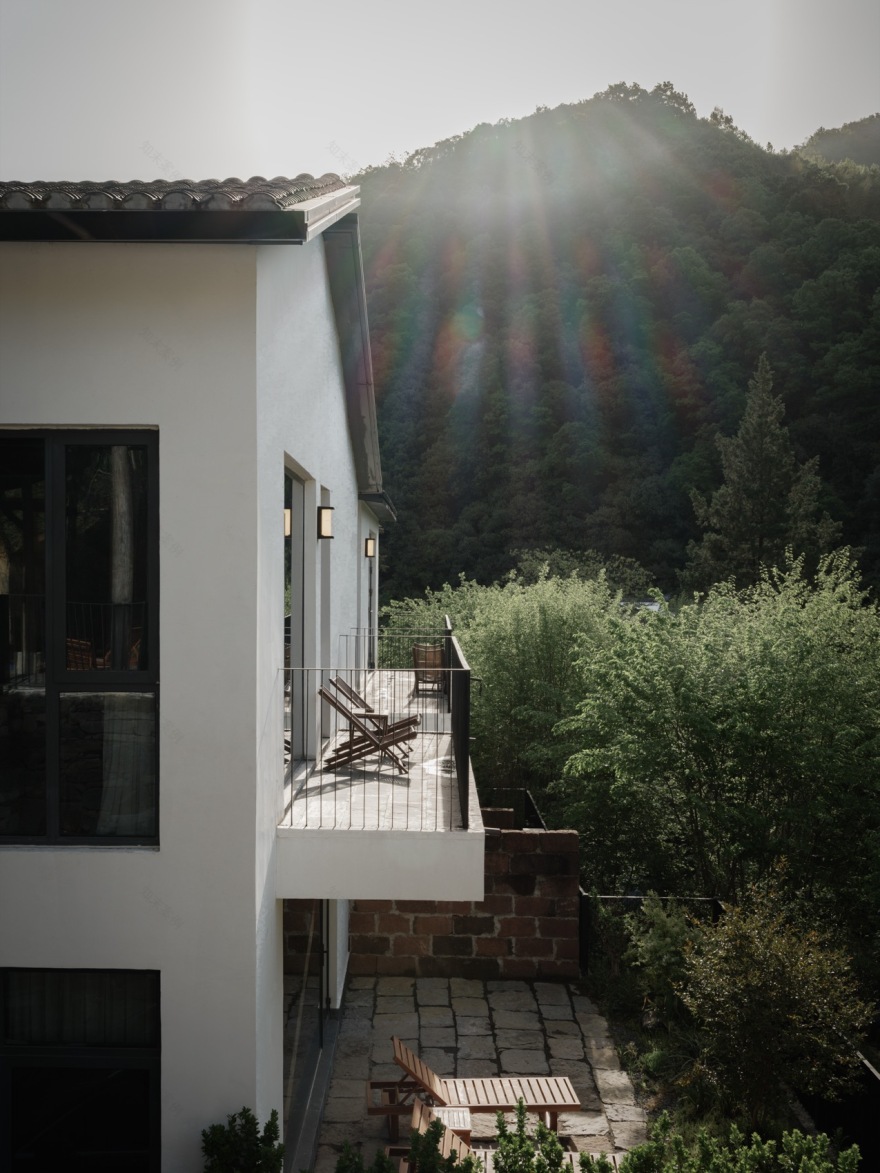
▼庭院与阳台,Courtyard & balcony © 阿永项目

材质对比美学贯穿设计始终:宣纸肌理涂料与青砖形成“柔质-刚质”的触觉反差,手工凿面老砖与玻璃幕墙呈现“粗粝-光洁”的视觉对比,碳化回收老木梁与竹制天花灯具搭配,木制家具与清水混凝土并置,既延续了工匠精神的温度,又回应了现代建筑的功能需求,实现传统工艺的当代再生。
The aesthetic of material contrast runs through the entire design: rice paper texture coating and blue bricks form a “soft-hard” tactile contrast; hand-chiseled old bricks and glass curtain walls present a “rough-smooth” visual contrast; carbonized recycled old wooden beams are paired with bamboo ceiling lamps; wooden furniture is juxtaposed with fair-faced concrete. This not only continues the warmth of craftsmanship spirit but also responds to the functional needs of modern architecture, achieving the contemporary regeneration of traditional craftsmanship.
▼透过连廊看建筑,View the building through the corridor © 阿永项目

三、空间设计,体验营造
Spatial Design and Experience Creation
空间设计的核心的是“体验营造”,“纸道山庄”以宣纸文化为线索,通过院落空间序列与室内空间设计,打造“可体验、可感知”的文化沉浸式民宿空间。
The core of spatial design lies in “creating experiences”. With the Xuan paper culture as the thread, “Zhidao Villa” has built a culturally immersive homestay space that is “experiencable and perceivable” through the sequence of courtyard spaces and interior space design.
▼白墙为纸,光影为画 ,Walls as canvas, light as art © 阿永项目


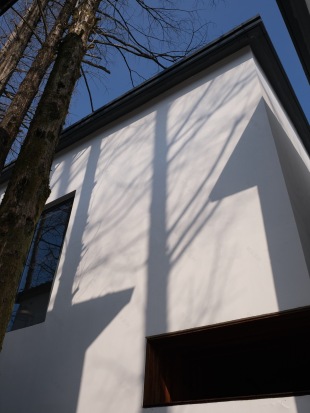
(一)院落空间序列与体验流线设计
Design of Courtyard Space Sequence and Experience Circulation
借鉴小岭村传统村落“散落布局、水系相连”的肌理,以“四水归堂”为核心空间范式,12户独立单元采用围合式布局,四栋屋宇相连形成“回”字形结构,呼应徽州“群山环抱”的地貌。
▼建筑轴测图,Axonometric View © 阿永项目

Drawing on the texture of Xiaoling Village, a traditional village with a “scattered layout and interconnected water systems”, and taking “four waters returning to the hall” as the core spatial paradigm, 12 independent units adopt an enclosed layout. Four buildings are connected to form a “hui” (return) -shaped structure, echoing the landform of Huizhou where “mountains surround on all sides”.
▼独立庭院的院落客房,courtyard-style guest rooms © 阿永项目


传统民居注重“三进两院”渐进式空间模式:由门屋、天井、厅堂至厢房形成递进序列。设计通过功能置换,将传统院落秩序转化为现代民宿公共空间体系,构建从公共—半公共—私密的空间序列。前院开敞,作为接待、大堂、餐饮、展示等综合公共区域;中院为核心,以镜面水池倒映折线屋顶,营造“虚实相生”的空间意境,隐喻“纸与水”地域文化;后院私密,布置客房区域。
Traditional dwellings emphasize the progressive spatial pattern of “three courtyards and two yards”: forming a progressive sequence from the gatehouse, patio, main hall to the wing rooms. Through functional replacement, the design transforms the traditional courtyard order into a modern homestay public space system, constructing a spatial sequence from public to semi-public to private. The front yard is open, serving as a comprehensive public area for reception, lobby, dining, and exhibition; the middle yard is the core, with a mirrored pool reflecting the folded-line roof, creating a spatial artistic conception of “the coexistence of virtual and real” and metaphorizing the regional culture of “paper and water”; the back yard is private, where guest rooms are arranged.
▼中院镜面水池夜景,Night View of Mirror Pool in the Central Courtyard © 阿永项目


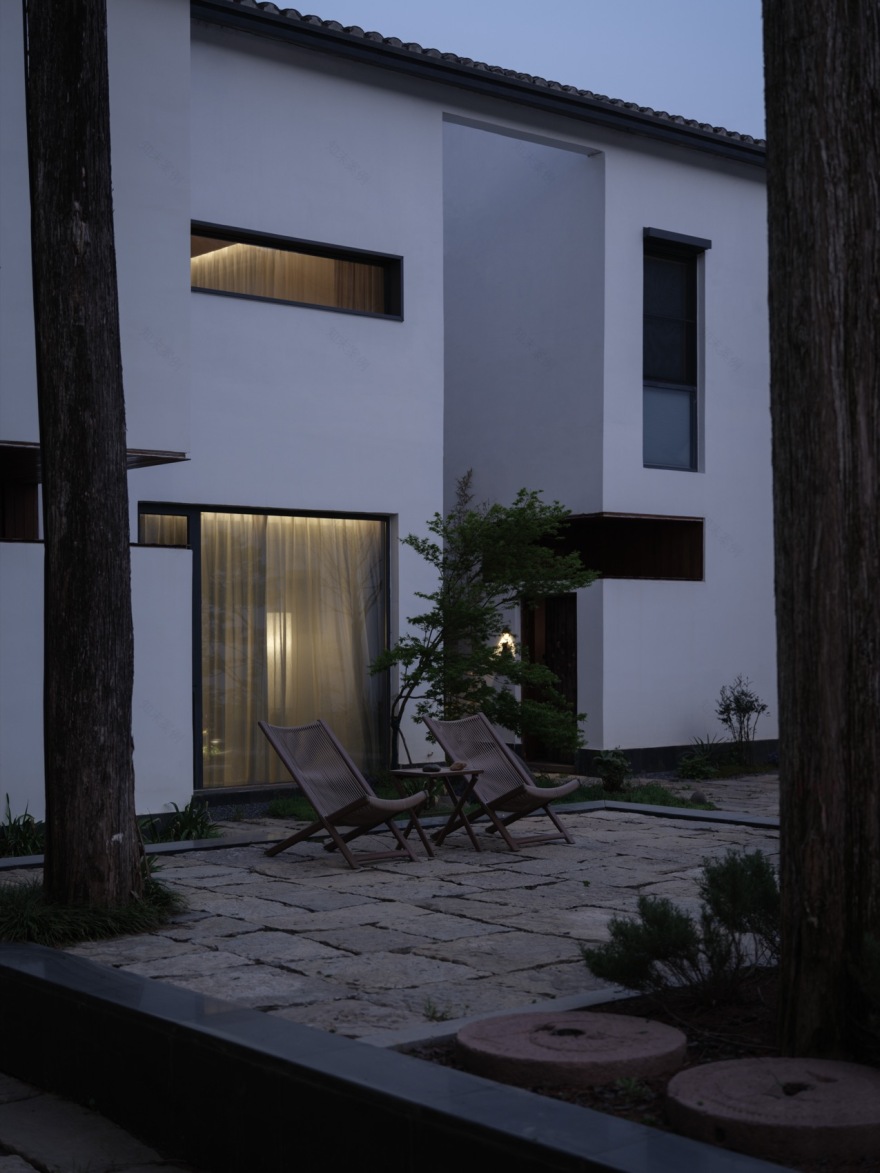
(二)室内空间功能与体验营造
Function and Experience Creation of Indoor Spaces
公共空间:文化感知与互动交流。民宿入口建筑为两层的公共区域空间,以“文化感知-工艺体验-自然沉浸”为主线,设置了民宿接待大堂、公共餐厅,非遗手工体验区等功能空间,为游客提供了一个交流互动的场所。
Public space: cultural perception and interactive communication. The entrance building of the homestay is a two-story public area space. With the main line of “cultural perception – craft experience – natural immersion”, it has set up functional spaces such as a homestay reception hall, a public restaurant, and an intangible cultural heritage handcraft experience area, providing a place for tourists to communicate and interact.
▼公共餐厅, Public Dining Area © 阿永项目

▼公共空间, Public Space © 阿永项目

▼公共空间近景, Public Space close view© 阿永项目

独栋客房区延续传统民居“内外有别”的空间观念,分层递进的空间序列的兼顾公共交流与私密居住,南北院落引导自然通风,提升居住舒适度。
The detached guest room area inherits the spatial concept of “distinction between inside and outside” from traditional dwellings. The layered and progressive spatial sequence takes into account both public communication and private living. The north and south courtyards guide natural ventilation, enhancing living comfort.
▼客房入口院落,Guest room entrance courtyard © 阿永项目

▼客房空间,Guest room space © 阿永项目
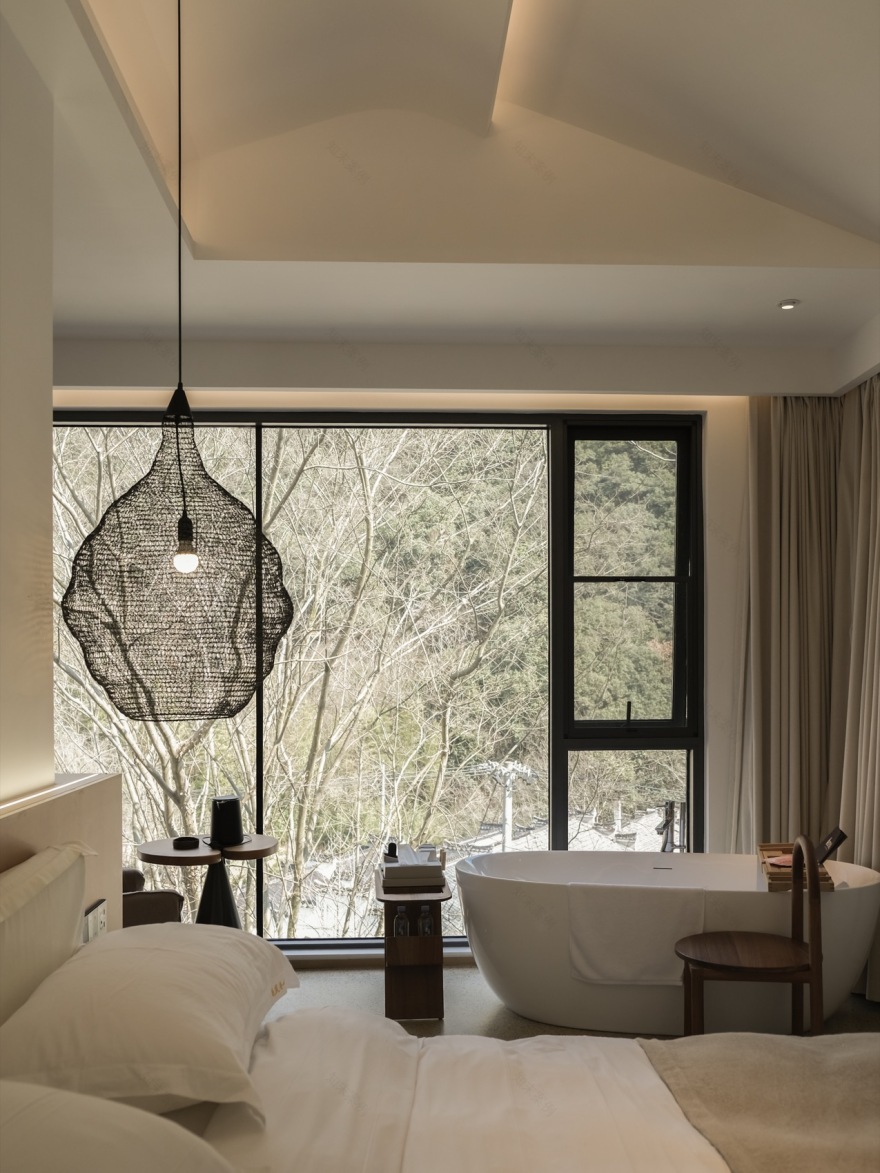
▼客房休闲区,Guest room leisure area © 阿永项目


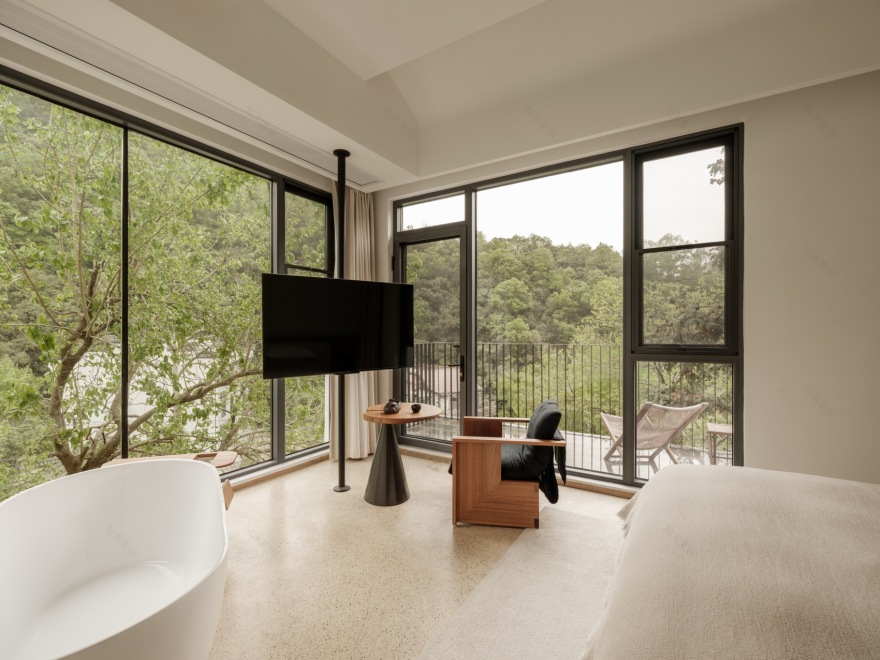
室内设计中还融入了一些带有地域特色的材料,像木质家具、陶瓷器皿等,丰富了空间的视觉效果以及触感体验。在客房内布置了宣纸艺术品,例如书画、雕塑等,营造出浓厚的文化氛围,强化了视觉体验。为游客营造出一个与环境协调、尺度适宜、采光通风良好的建筑,让游客在居住期间可深切感受到小岭村独特的宣纸文化,实现了文化传承与现代生活的有机融合。以通透的空间布局,将浴缸、休憩区与庭院景观相连。
In interior design, some materials with regional characteristics are also incorporated, such as wooden furniture and ceramic utensils, which enrich the visual effect and tactile experience of the space. Rice paper artworks, such as calligraphy, paintings, and sculptures, are arranged in the guest rooms to create a strong cultural atmosphere and enhance the visual experience. A building that is coordinated with the environment, has an appropriate scale, and has good lighting and ventilation is built for tourists, allowing them to deeply feel the unique rice paper culture of Xiaoling Village during their stay, thus realizing the organic integration of cultural inheritance and modern life. With a transparent spatial layout, the bathtub, resting area and courtyard landscape are connected.
▼开放式卫浴卧室,Open bathroom bedroom © 阿永项目

大窗框住四季山景,通透布局将浴缸、休憩区与露台相连,在开放空间中实现自然景致与现代起居的共生。
Large window frames the mountain scenery of the four seasons, and the transparent layout connects the bathtub, rest area and terrace, realizing the coexistence of natural scenery and modern living in the open space.
▼客房窗景,Guest room window view © 阿永项目

▼客房旋转楼梯,Guest room spiral staircase © 阿永项目


▼客房卫生间细节,Guest Room Bathroom Details © 阿永项目


“纸道山庄”以泾县小岭村为实践载体,通过在地性设计,解决了文化传承、空间设计与产业融合的三大难题,虽仍面临配套设施不完善、运营团队不成熟等挑战,但这种“文化解码-空间设计-体验营造”的范式,为民宿设计提供了创新思路,也为地域文化活态传承与乡村振兴协同发展提供了实践参考,为乡村文旅产业注入新活力。
“Zhidao Villa” takes Xiaoling Village in Jingxian County as its practice carrier. Through localized design, it has solved the three major problems of cultural inheritance, space design and industrial integration. Although it still faces challenges such as incomplete supporting facilities and immature operation teams, this paradigm of “cultural decoding – space design – experience creation” provides innovative ideas for homestay design, as well as practical references for the coordinated development of the dynamic inheritance of regional culture and rural revitalization, and injects new vitality into the rural cultural tourism industry.
▼总平面图,Master Plan © WUMICHI ARCHITECTS

▼建筑剖面图,Architectural Section Drawing © WUMICHI ARCHITECTS

项目名称:泾县小岭村”纸道山庄”民宿——在地性视角下民宿空间设计研究
项目类型:民宿酒店
设计方:伍米尺建筑设计事务所WUMICHI ARCHITECTS
项目设计:2021.8
完成年份:2025.10
设计团队:曹伟、李裕瑶、曹宇祥、李寅、郭凯玥
项目地址:安徽合肥
建筑面积:1900㎡
摄影版权:阿永项目
南京喵熊网络科技有限公司 苏ICP备18050492号-4知末 © 2018—2020 . All photos and trademark graphics are copyrighted by their owners.增值电信业务经营许可证(ICP)苏B2-20201444 苏公网安备 32011302321234号
苏公网安备 32011302321234号客服
消息
收藏
下载
最近