

创作上传
VIP
收藏下载
登录 | 注册有礼
查看完整案例

收藏

下载

分享
Huckleberry Perch | Matthew Cunningham Landscape Design
项目陈述
PROJECT STATEMENT
从一处裸露的山顶出发,业主希望重拾与玛莎葡萄园岛(Martha’s Vineyard)相关的情感记忆,由此促成了一项景观实验:在受扰动的陡峭沙质坡地上,构建一个具有生态多样性的花园系统。设计没有选择恢复已消失的森林,而是通过演替型植物群落——灌丛、草甸与蕨类覆盖的坡面——使住宅融入一个持续变化的自然环境,同时营造多样化的栖息地。干砌石墙与再利用的花岗岩步道顺应地形铺设,使建筑与场地形成紧密联系。这个层次丰富、维护需求较低的植物系统证明,通过有针对性的生态修复与持续管理,可以在恢复中实现韧性与美感,并承载个人记忆与家庭情感。
From a bare hilltop, a client’s desire to revive sentimental connections to Martha’s Vineyard invited the submitting firm to undertake an experiment: weaving an ecologically rich garden into the steep sandy slopes of a disturbed site. Rather than replant a lost forest, successional plant communities—shrub thickets, meadows, and fern-covered embankments—root the home to ever-evolving surroundings while creating diverse habitat. Dry-laid stone walls and reclaimed granite paths navigate terrain, grounding the architecture in place. This layered, low-maintenance plant community proves resilience and beauty can emerge through thoughtful rehabilitation and careful stewardship, honoring both personal memory and family history.

▲在玛莎葡萄园岛的山顶之上,该项目将一处荒芜场地转变为一个充满生机的动态景观,使其于记忆与再生中重新扎根于土地。Positioned upon a Martha’s Vineyard hilltop, this project transforms a barren site into a dynamic, thriving landscape rooted in memory and renewal. © M.C.L.D. LLC
项目说明
PROJECT NARRATIVE
被铭记并重塑的景观
越橘之家讲述的是一段更新与再生的故事——将童年的自然记忆转化为面向未来的景观。基地位于玛莎葡萄园岛的制高点之一,这里长久以来都是探索与体验自然的场所。业主最珍视的回忆,是与已故祖母一同采集沙梅、蓝莓和越橘的时光。
当景观团队介入时,场地已为住宅建设进行过大面积清理,仅剩一片裸露荒地,周边则环绕着形态优美的山毛榉、橡树和松树林。设计没有选择重建森林,而是采用本土演替型植物配置,构建由不同物种组合而成的生态拼合体。这些植物迅速形成致密的植被覆盖层,可随气候变化不断适应与更新。设计的核心挑战在于:通过空间体验引导人们在起伏地形中漫游,同时激活岛屿特有的生态系统,使其逐步回归曾经的林地环境。最终形成的景观兼具稳定性与观赏性,呈现出四季变化的动态景观效果,并显著提升了栖息地质量与生物多样性。
重建家的根基
新建立的植物系统以固氮与耐旱物种为主,能够适应酸性、贫瘠的沙质土壤。月桂莓、沙梅、稠李、香蕨与越橘形成密集灌丛,并逐渐过渡至大片草甸,其中包括小须芒草、印第安草、羊茅、铁线草与紫菀等物种。如今,整个场地生机盎然,复杂的食物链全年持续运作。蕨类群落与莎草丛通过发达的纤维根系稳定坡面,防止侵蚀,同时柔化开敞草地与林地之间的过渡。少量鹿角漆、桦树与甜月桂木形成小型林丛,在尺度上调节空间,并弱化建筑较为鲜明的几何形态。
精细的石作将建筑的几何逻辑延伸至景观之中,引导人们进入场地深处。回收花岗岩板被嵌入地面,形成路径与平台;手工加工的台阶嵌入起伏地形,在人工构筑与自然形态之间建立起富有质感的对话。
场地中央设置了一处活动草坪,作为整个景观的核心空间,可用于聚会、休闲与活动。周边种植喜阳植物群落,如黑心菊、泽兰、紫色观赏草、俄罗斯鼠尾草与一枝黄花,既强化开花景观效果,也为传粉昆虫提供生境。整体上,人工种植区域逐渐向更自然的边缘过渡,形成与周边森林相互渗透、持续演替的生态界面。
与土地建立连接
越橘之家的成功依赖于持续的协作与管理。业主作为场地的积极守护者,长期观察并回应生态变化。在早期阶段,通过人工除草与针对性修剪等管理措施,使草甸系统逐步稳定,并进入以自然更新为主的运行状态。后期仅进行适度补植,并对入侵物种进行监测与清除。曾经的裸露场地,如今已转变为一个层次丰富的生命系统,并在持续演化中不断完善。随着季节更替,场地与周边环境的联系日益紧密,逐渐恢复并延续了这片土地深层的生态记忆。

▲由耐性强的本土植物编织而成的复合群落能够有效防止水土流失;新增种植在空间尺度上起到调节作用,使附属建筑更自然地融入环境。A robust tapestry of resilient native plants prevent erosion; new plantings provide scale helping an outbuilding nestle into its surroundings. © Matthew Cunningham

▲漆树在场地中恣意生长,层叠起伏的观赏草柔化了建筑的硬朗边界。A sumac grove colonizes the site as swirls of textural grasses soften crisp architectural edges. © Matthew Cunningham

▲透水碎石车道穿行于茂密的月桂莓与香蕨群落之间;入口区域的草本与蕨类能够稳定地表,同时营造出自然的到达体验。A porous gravel drive slices through replete masses of bayberry and sweetfern; grasses and ferns stabilize the ground plane upon arrival to the home. © Matthew Cunningham

▲清晨的阳光照亮了一株黑胶木,精细的石作延续了建筑的几何关系,引导动线进入住宅空间。Morning sunlight illuminates a specimen black tupelo as impeccable masonry extends the building’s geometries to guide movement into the home. © Matthew Cunningham

▲从前门通往车行庭院的路径,可远眺场地边缘保留的橡树与山毛榉,形成富有雕塑感的林地界面。A stroll from the front door towards the auto court presents views of preserved oaks and beeches along the site’s sculptural woodland edge. © Matthew Cunningham

▲新形成的蕨类群落向下延展至一面整体式的回收花岗岩挡土墙,该结构既能稳固地形,又能保护后方的原有林地。New fern carpets cascade towards a monolithic salvaged granite block wall that retains and protects the existing woodland beyond. © Matthew Cunningham
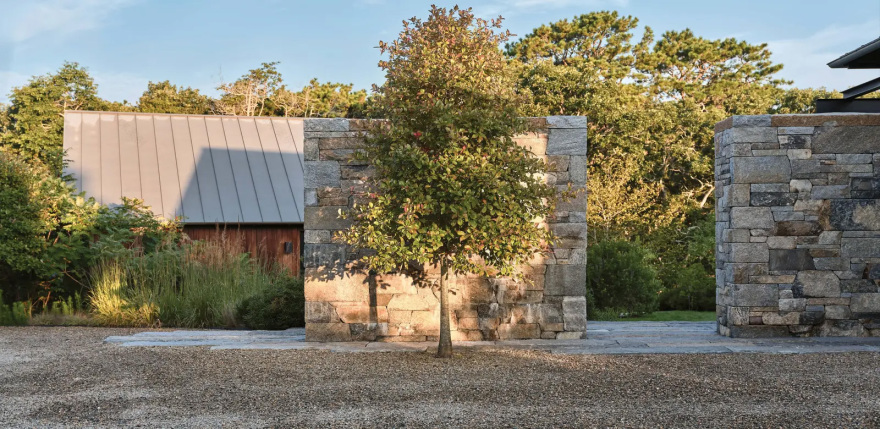
▲富有表现力的石作起到组织视线和引导行动的作用,并在不同功能空间之间形成清晰的过渡界面。Dramatic stonework channels views, directs movement, and forms thresholds between functional outdoor spaces. © Matthew Cunningham

▲台阶以经过二至三次回收的路缘石建造,顺应着陡峭的沙坡设置,与周边成片的香蕨和越橘形成自然融合。New stairs built from second and third generation reclaimed curbstone complement thick drifts of sweetfern and huckleberry upon steep, sandy slopes. © Matthew Cunningham

▲密集的灌丛提供了持续变化的层次与质感对比,场地中的大型石阶系统引导人们深入探索不同空间。Dense shrub thickets provide endless textural contrasts that evolve continuously. A dramatic stone staircase invites exploration throughout the site. © Matthew Cunningham

▲本土沙梅、夏香木与越橘带来可食用资源,也为传粉生物提供了重要生境。Native beach plum, summersweet, and huckleberry, nourish both people and pollinators. © Matthew Cunningham

▲经过精心配置的植物群落构成稳定而复杂的食物网络,全年呈现活跃的生态过程。Carefully considered plant combinations become foundational to complex food webs that are on full display every month of the year. © M.C.L.D. LLC

▲清晨时分的泳池花园面向开阔的地平线,前景中成片的印第安草与铁线草在晨光中闪耀着光泽。The pool garden as dawn breaks upon the island; colonies of Indian grass and ironweed glow in the foreground of a seemingly endless horizon. © Matthew Cunningham

▲修剪形成的草径在不同空间之间建立自然过渡,引导人们在野性与人工管理并存的生态环境中有序穿行。Mown paths offer seamless transitions between spaces, inviting intentional movement through the dynamic interplay of wild and cultivated ecologies. © Matthew Cunningham

▲秋季的场地色彩绚丽,与昔日的荒芜形成鲜明对比;随着季节更替,环境变得愈加丰富,并与周边语境建立起更深的联系。Fall bursts with color in stark contrast to its barren past. With each passing season, the site becomes richer and more deeply tied to context. © Matthew Cunningham
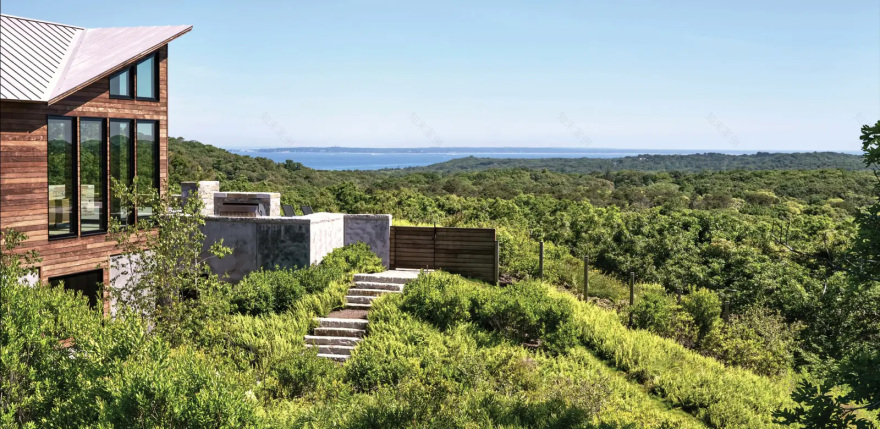
▲层次丰富的生命系统持续演化,不断强化着与土地生态记忆之间的关联。A layered, living system continues to evolve and becomes more attuned to the ecological memory of the land. © Matthew Cunningham
PROJECT NARRATIVE
A Landscape Remembered and Reimagined
Huckleberry Perch presents a story of renewal and childhood landscapes reimagined for the future. Sitting atop one of the highest points on Martha’s Vineyard, the property has long been a place of discovery, with the client recounting most fondly the gathering of beach plums, blueberries, and huckleberries with his late grandmother.
By the time the landscape architects joined the project, much of the land had already been cleared for house construction, leaving behind a barren, lifeless expanse surrounded by a sculptural beech, oak, and pine forest. Rather than replant the forest, the team embraced a successional native plant palette, crafting a mosaic of unique species assemblages that grew quickly into a thick vegetative armor that adapts to everchanging weather patterns. The challenge was to invite wanderlust through experiences that engage the site’s topography and to stimulate the island’s unique ecologies to return to the site where mature woodland once stood. The resulting landscape blends strength with beauty, offering dynamic multiseasonal interest, increased habitat, and expansive biodiversity.
Re-Rooting Home
The robust new plant community includes many nitrogen-fixing, drought-resistant species that thrive in acidic, nutrient-deficient soils. Dense thickets of bayberry, beach plum, chokecherry, sweetfern, and huckleberry transition into sweeping meadows of little bluestem, Indian grass, fescue, ironweed, and asters. The whole site now vibrates with life, and a complex food web is on full display year-round. Textural fern colonies and sedge clumps anchor embankments with fibrous root systems to prevent erosion while softening transitions between open and wooded areas. Small groves of staghorn sumac, birch, and sweetbay magnolia provide scale and tone down the structure’s crisp architectural forms.
Impeccable masonry extends the building’s geometries to guide movement out into the landscape. Salvaged granite slabs carefully embedded into the earth form paths and terraces. Hand-tooled staircases grip sculptural landforms, forging unique textural dialogues between built and natural forms.
A central activity lawn—the gravitational core of the landscape —provides flexible space for gathering, recreation, and movement. Sun-loving drifts of Black-eyed Susan, Joe-pye weed, purple love grass, Russian sage, and goldenrod surround the space to ensure floral impact and pollinator support near the home. Overall, intentional plantings quickly give way to wilder, more spontaneous edges, where evolving colonies overlap with the surrounding forest.
Connecting to the Land
Huckleberry Perch thrives through ongoing collaboration. The client is a passionate steward, observing and responding to the site’s needs. Early years of hands-on maintenance, from meadow weeding to strategic mowing, have allowed the garden to settle into a mostly self-sustaining rhythm. Periodic embellishments are made, and invasives species are carefully monitored and removed. What began as an open expanse has become a layered, living system—one that continues to evolve. With each season, the site becomes richer, more deeply tied to its context, and more attuned to the ecological memory of the land.
南京喵熊网络科技有限公司 苏ICP备18050492号-4知末 © 2018—2020 . All photos and trademark graphics are copyrighted by their owners.增值电信业务经营许可证(ICP)苏B2-20201444 苏公网安备 32011302321234号
苏公网安备 32011302321234号客服
消息
收藏
下载
最近