

创作上传
VIP
收藏下载
登录 | 注册有礼
查看完整案例

收藏

下载

分享
尼汝村位于世界自然遗产“三江并流”区域的核心腹地,是一个深藏于横断山脉褶皱中的藏族古村落,被联合国专家誉为”世界第一村”。作为香格里拉深处的秘境,尼汝北连稻城亚丁的圣洁雪山,南接普达措国家公园的湖光山色,东至丽江宁蒗泸沽湖的神秘风情,串联起雪山、森林、湖泊、草甸、牧场、溪流与古村。阿若康巴·尼汝庄园作为这片秘境中心的“尼仓”,希望为每一位徒步者打造出理想的身心度假空间,无需刻意寻觅,抬眼便是大自然中最原始的壮丽,闭目便能感受内心最纯粹的宁静。在绝美的画卷里,尼汝宛如一颗隐匿的明珠。阿若康巴・尼汝庄园,就静卧于这片秘境的中心,它曾承载着过往的故事,如今迎来建筑改造的新生契机。
Niru Village, nestled in the heart of the “Three Parallel Rivers” World Natural Heritage site, is an ancient Tibetan village hidden deep within the folds of the Hengduan Mountains. It has been hailed as the “World’s Premier Village” by United Nations experts. As a hidden gem deep in Shangri-La, Niru links the sacred snow-capped mountains of Daocheng Yading to the scenic lakes and mountains of Pudacuo National Park, and extends east to the mysterious ambiance of Lugu Lake in Ninglang, Lijiang. The ARRO KHANPA – NYEZUR, situated at the heart of this hidden paradise, aspires to create an ideal space for every hiker to relax both physically and mentally. Without seeking, one can behold the most pristine grandeur of nature at a glance, and close their eyes to experience the purest tranquility within. In this breathtaking tapestry, Niru resembles a hidden pearl. The ARRO KHANPA – NYEZUR, quietly nestled in the heart of this hidden paradise, once carried the stories of the past and now embraces a new opportunity for architectural transformation.
▼村子肌理,Village Texture © 扎西培楚

溯源:珍视原始底蕴
传统建筑是尼汝村适应自然、改造生活的智慧体现。以松木为骨、土石为为墙的民居,三层结构的民居首层与二层为夯土墙体围合木架而形成主体结构,三层为木质的“凳架”双坡屋顶结构,主要用于保护主体结构免受雨雪侵蚀及储存各类杂物,建筑兼具畜养、居住与储物功能,同时村民跟随季节在房屋、田地与高山牧场之间“逐时令而居”,这种半农半牧的方式恰似建筑与自然的默契,展现着当地与自然动态共生的生活生产智慧。
Traditional architecture in Niru Village embodies the wisdom of adapting to nature and transforming life. The residential houses, with pine as the framework and earth and stone as the walls, feature a three-story structure. The first and second floors are enclosed by rammed earth walls and wooden frames, forming the main structure. The third floor, with a wooden “stool frame” double-pitched roof structure, is primarily used to protect the main structure from rain and snow erosion and to store various miscellaneous items. The buildings serve multiple functions, including livestock breeding, living, and storage. Meanwhile, villagers follow the seasons, residing between houses, fields, and alpine pastures “according to the changing times.” This semi-agricultural and semi-pastoral lifestyle mirrors the harmony between architecture and nature, showcasing the local wisdom of dynamic symbiosis with nature in both life and production.
尼汝庄园的前身,是一座当地传统的民居建筑,拥有典型的传统结构形态,融合了当地传统与岁月痕迹。它的布局与构造,带着地域的独特印记,是当地居民生活智慧的结晶,也是尼汝历史文化的物质载体。在改造伊始,我们深入探寻其过往,研究建筑的历史脉络与文化意义,从传统建筑元素中提取精髓,比如当地特有的木构工艺、质朴的石砌技法,这些都将成为改造后新建筑独特气质的根基。
The predecessor of theARRO KHANPA – NYEZURwas a traditional local residential building, featuring a typical traditional structural form that blends local traditions with the traces of time. Its layout and construction bear the unique imprint of the region, embodying the wisdom of local residents and serving as a material carrier of Niru’s historical and cultural heritage. At the beginning of the renovation, we delved into its past, studying the historical context and cultural significance of the building. We extracted the essence from traditional architectural elements, such as the unique local wood construction techniques and rustic stone masonry techniques, which will become the foundation of the unique character of the newly renovated building.
▼场地原状,Original condition© 扎西培楚

▼场地内坍塌的石砌围墙,The collapsed stone masonry wall within the site © 扎西培楚

▼“凳架”双坡屋顶结构,Stool frame double-pitched roof structure© 扎西培楚

理念:生态与文化共融
尼汝的自然生态是其最为珍贵的财富。改造秉持生态共生理念,力求将建筑对环境的影响降至最低。选用当地废弃房屋拆解后的旧木材、石材,减少运输能耗与碳排放。在建筑布局上,依据场地的自然地形与风向,优化空间规划,提升自然通风与采光效果,降低能源消耗。同时,引入生态景观设计,利用本地植物打造庭院,营造与周边雪山、森林、溪流相呼应的生态小环境,让庄园成为自然的有机组成部分。
The natural ecology of Niru is its most precious treasure. The renovation adheres to the concept of ecological symbiosis, striving to minimize the impact of the building on the environment. Old wood and stone materials dismantled from local abandoned houses are selected to reduce transportation energy consumption and carbon emissions. In terms of building layout, based on the natural terrain and wind direction of the site, space planning is optimized to enhance natural ventilation and lighting effects, reducing energy consumption. At the same time, ecological landscape design is introduced, using local plants to create courtyards, creating an ecological micro-environment that echoes the surrounding snow mountains, forests, and streams, making the manor an organic part of nature.
▼项目鸟瞰,Project Overview © 扎西培楚

▼项目鸟瞰雪后,Aerial view of the project after snowfall © 扎西培楚

▼尼汝庄园立面,Facade of the ARRO KHANPA – NYEZUR© 扎西培楚

▼项目模型,Project Model © 扎西培楚

实践:空间重塑与功能升级
(一)院落
在院落整体布局方面,我们对院落的景观布局进行调整,保留一定程度的运营灵活性。考虑到尼汝村作为一个徒步旅行的目的地,而徒步活动本身正在日益成为一种生活方式与社交场景,我们希望场地内预留出休闲草坪能够容纳更多的活动,让整个院落空间具备包容与多功能属性,能够让到达尼汝的旅行者们能够在此进行休息与交流,使得众多旅行者更好地融入到当地文化生活中。同时,藏族村庄的院落从来不是以“高墙大院”的封闭形式出现,而是一种开放感,其院墙更多是为满足阻挡牲畜进入以及标定各自的属地范围,邻里之间的越过由夯土或当地石材垒筑而成的低矮院墙进行沟通是乡村生活的常态,低矮的院墙也使得村庄与院落与周边保持着和谐的场地关系没有被生硬切割,我们将这种传统的院落关系继续进行了保留,以延续其开放与融合的场地关系。值得一提的是,在项目建设中,我们把原来的一间结构不稳的旧房新建成为现在的接待厅。另外新建了木工坊作为旅客们了解尼汝当地建筑文化的传播场所,人、乡村文化、自然在这一刻得以融合。
In terms of the overall courtyard layout, we have adjusted the landscape design while retaining a certain degree of operational flexibility. Given that Niru Village is a hiking destination and hiking has increasingly become a lifestyle and social activity, we have reserved leisure lawns to accommodate more events. This makes the entire courtyard inclusive and multi-functional, allowing travelers to rest, interact, and better integrate into the local cultural life.
Meanwhile, courtyards in Tibetan villages have never been enclosed by high walls. Instead, they feature an open character. Courtyard walls mainly serve to keep livestock out and mark boundaries. It is common for neighbors to communicate across low walls made of rammed earth or local stone. Such low walls maintain a harmonious relationship between the village, the courtyards, and the surrounding environment without rigid separation. We have preserved this traditional courtyard relationship to continue its open and integrated spirit.
Notably, during construction, we rebuilt an old, structurally unstable house into the current reception hall. We also added a woodworking workshop as a space for travelers to learn about Niru’s local architectural culture. At this moment, people, rural culture, and nature are truly integrated.
▼尼汝庄园入口,Entrance of the ARRO KHANPA – NYEZUR© 扎西培楚
(二)外观重塑
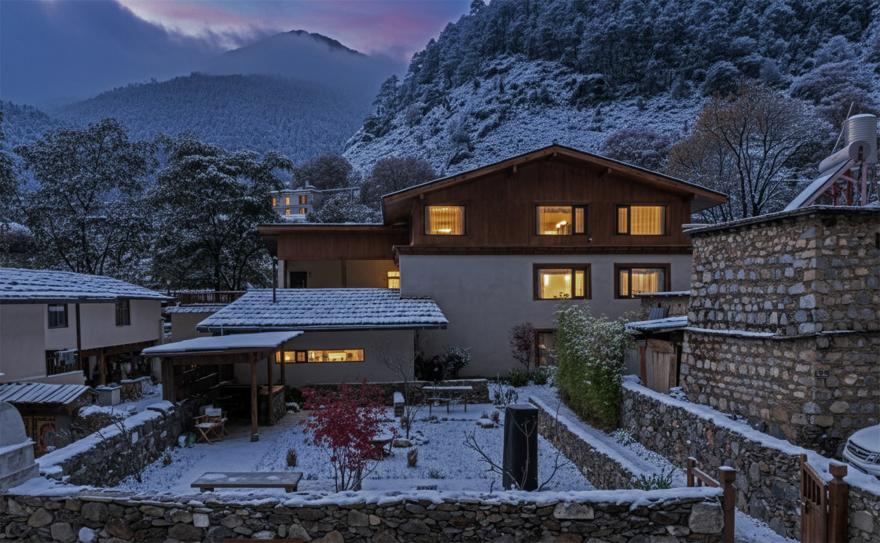
从外观上,保留传统建筑的坡屋顶形式,及传统的立面材料语言,适当调整比例与尺度,使其更符合现代审美与功能需求。在对原有建筑主体结构进行保留的基础上,我们对三层原有“凳架”双坡屋顶结构进行彻底重构,在回应传统材料体系的同时扩大了建筑的室内面积。三层的屋顶采用当地传统杉木瓦片铺设,既保证防雨功能,又增添古朴韵味。建筑立面运用传统木构框架与现代玻璃材质结合,木构展现当地特色,玻璃则引入充足自然光线,同时提供绝佳的观景视野,让雪山、森林的美景成为室内的天然画卷。面对中庭的立面一二层完全打开,同时将建筑立面的彩绘木架进行了保留,让徒步旅客能够更好的欣赏到中庭景观。
In terms of appearance, we have preserved the sloped roof form and traditional material language of the local architecture, while appropriately adjusting proportions and scales to better align with modern aesthetics and functional needs. On the basis of retaining the original main structure, we completely reconstructed the original “dengjia” double-sloped roof structure on the third floor. This respects the traditional material system while increasing the building’s indoor area. The third-floor roof is covered with traditional local fir tiles, which ensure waterproof performance and add a simple, antique charm. The building facade combines traditional wooden structures with modern glass. The wooden framework expresses local characteristics, while the glass brings in ample natural light and offers excellent views, turning the snow-capped mountains and forests into a natural picture indoors. The facades facing the central courtyard on the first and second floors are fully open. We have also preserved the painted wooden frames on the building elevations, allowing hiking travelers to better appreciate the courtyard landscape.
▼尼汝庄园前院,Front courtyard of The ARRO KHANPA – NYEZUR© 扎西培楚

▼前院用传统匠造工艺搭建的吧台和围墙,The bar counter and fence in the front yard are built using traditional craftsmanship © 扎西培楚

▼老建筑与新建部分围合的内庭院,The internal courtyard enclosed by old buildings and newly constructed parts © 扎西培楚

(三)室内空间优化
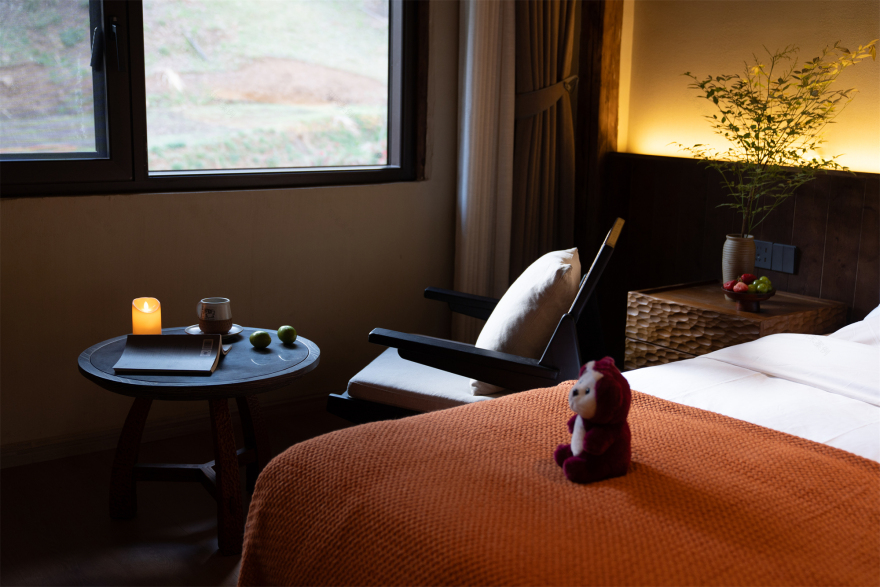
客房:我们对客房布局进行精细调整。在保证私密的同时,合理规划空间尺度,提升舒适度。墙面装饰融入尼汝当地的刺绣、唐卡等艺术形式,让住客在休憩时能深度感受地域文化魅力。
We have carefully refined the layout of the guest rooms to ensure privacy while rationally optimizing spatial scale and enhancing comfort.Local arts such as Niru embroidery and Thangka are integrated into the wall decorations, allowing guests to deeply experience the charm of regional culture during their stay.
公共空间:一层的餐厅与厨房区域,扩大餐厅空间,采用开放式布局,让住客在用餐时能欣赏户外景色。优化厨房操作流线,提升服务效率。二层、三层的公共区域,增设休闲阅读角、观景露台等功能。
On the first floor, we expanded the dining area and adopted an open layout, enabling guests to enjoy outdoor views while dining. The kitchen workflow has been optimized to improve service efficiency. On the second and third floors, we added functional spaces including leisure reading corners and viewing terraces.
▼接待厅火炉空间,Reception hall stove space © 扎西培楚

▼望向自然的客房,Aroom with a view of nature © 扎西培楚

▼手工艺体验与制作空间,Handicraft experience and production space © 扎西培楚

在雪山环抱的香格里拉秘境里,设计打造了一处不止于栖居的民宿——它是一个通往藏族文化与自然灵性的入口。作为洛克线秘境里的老藏房焕新,我们没丢当地木构石砌的老底子,又融了现代设计,肌理涂料配木构,开窗直接把雪山森林框成室内画。留了庭院草坪、造了木工坊,让建筑顺着自然来,人文和生态揉在一起,希望去普达措徒步的人喜欢。
Nestled in the secluded wonderland of Shangri‑La surrounded by snow‑capped mountains, we have designed a boutique retreat that goes beyond mere accommodation – it is a gateway to Tibetan culture and natural spirituality. As a renewal of an old Tibetan house along the ancient Rock Route, we have preserved the essence of the local timber and stone construction, while integrating modern design. Textured finishes complement the wooden structures, and the windows frame the snow‑mountains and forests as living indoor paintings. We have retained a courtyard lawn and built a woodworking workshop, allowing the architecture to grow in harmony with nature, blending humanity and ecology. We hope it will be loved by those hiking in and traveling to Pudacuo.
反思:设计之外的故事
▼主理人与马帮元素,The manager and the elements of the horse brigade ©阿若康巴

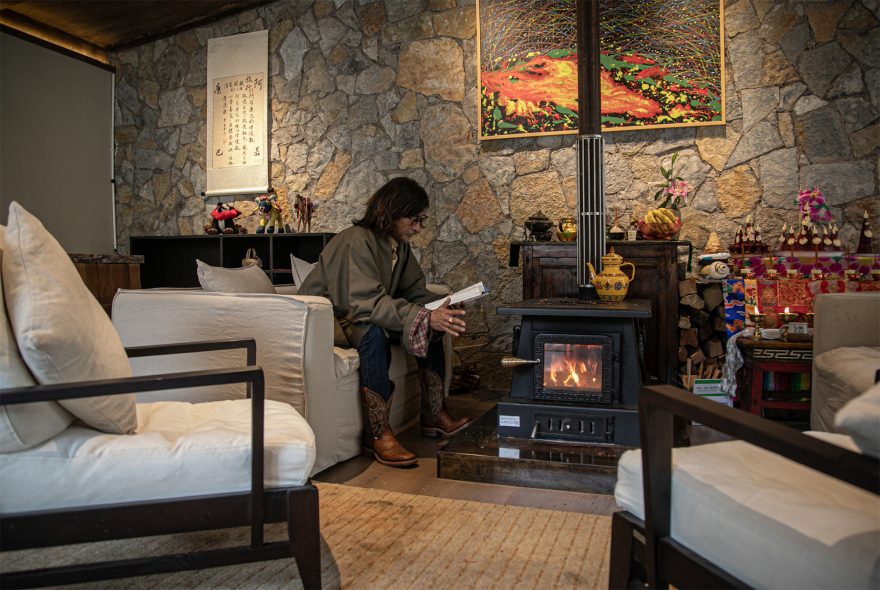


阿若康巴在藏语里意为“来吧,朋友”,希望通过这个独特的场所链接起游客、风景与当地文化。主理人扎巴格丹是一个传奇的康巴汉子,祖籍香格里拉,出生于印度,少年时出家做过7年喇嘛。扎巴的父亲是茶马古道的腊都(赶马人),在他小时候经常为他讲述家乡和茶马古道的故事。1997年,扎巴成立了香格里拉第一家生态旅游公司——康巴商道探险旅行社。2006年,他创办了“香格里拉民族文化多样性传承与保护协会”,致力于民族文化的传承和保护。协会中设立了唐卡中心,向贫困学生提供免费食宿和学习机会,让他们系统学习到藏文化,唐卡绘画,以及藏语、汉语和英语三种语言。而主理人的多元背景与所在地区的特色也成为项目中各种融合风格软装元素的灵感来源。
ARRO KHANPA means “Come on, friend” in Tibetan. It aims to connect travelers, scenery, and local culture through this unique space. Zhabag Dain, the founder, is a legendary Khampa man. His ancestral home is Shangri‑La, and he was born in India. In his youth, he became a lama and practiced for seven years. Zhabag’s father was a Ladu (horse caravan leader) on the Ancient Tea Horse Road, who often told him stories about his hometown and the caravan route during his childhood. In 1997, Zhabag established Shangri‑La’s first ecotourism company: Khampa 商道探险旅行社 (Khampa Caravan Adventure Travel Service). In 2006, he founded the Shangri‑La Association for the Inheritance and Preservation of Ethnic Cultural Diversity, dedicated to the inheritance and protection of ethnic culture. The association set up a Thangka Center, providing free accommodation and education to underprivileged students, allowing them to systematically study Tibetan culture, Thangka painting, as well as three languages: Tibetan, Chinese, and English. The founder’s diverse background and the distinctive character of the region have also become the inspirational source for the various fusion-style soft furnishing elements in the project.
▼夏天小溪边看向庄园,Looking towards the manor from the side of the stream in summer © 扎西培楚

▼后院不同民族围火跳舞活动,Backyard bonfire dance event with different ethnic groups © 扎西培楚
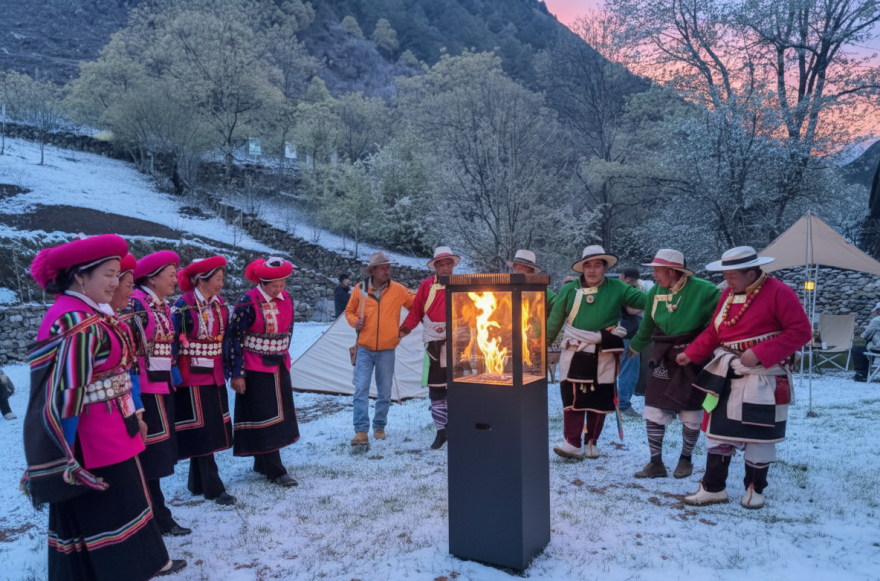
项目建成后获得了江苏省土木建筑学会一等奖与科学技术(建筑设计)三等奖、云南省“好村寨”设计大赛三等奖,一定程度上证明了设计成功延续了藏族村落传统民居的风貌。这里远不止是一间客房,更是一座活的民族体验馆。围拢在篝火旁跳锅庄,火光映照着一张张真挚的笑脸,无需语言也能心意相通。
After completion, the project won the First Prize of the Jiangsu Civil Engineering and Architectural Society and the Third Prize for Science and Technology (Architectural Design), as well as the Third Prize in Yunnan’s “Excellent Villages” Design Competition. This to some extent proves that the design has successfully preserved the style and features of the traditional dwellings in Tibetan villages. This place is far more than just a guest room; it is a living ethnic experience center. Gathering around the bonfire to perform the Guozhuang dance, the flames shine upon sincere smiling faces. Hearts connect without the need for words.

首层平面图 Ground Floor Plan© 平介设计

二层平面图 First Floor Plan© 平介设计

三层平面图 Second Floor Plan© 平介设计

剖面图 Section© 平介设计

轴测图 Axonometric© 平介设计
项目信息:
项目名称:阿若康巴·尼汝庄园改造
设计方:平介设计
项目设计&完成年份:2024.04-2025.05
设计团队:
平介设计:张莹,扎西培楚,张文轩
苏州大学:杨楠,肖湘东
项目地址:云南省迪庆藏族自治州香格里拉市尼汝村
建筑面积:400.㎡
摄影版权:扎西培楚
客户:阿若康巴民宿
材料:毛石、涂料、木材
Project Name: Renovation of the ARRO KHANPA – NYEZUR
Designer: Pingjie Design
Project design & completion year: April 2024 – May 2025
Design team:
Pingjie Design: Zhang Ying, Zhaxi Peichu, Zhang Wenxuan
Soochow University: Yang Nan, Xiao Xiangdong
Project address: Niru Village, Shangri-La City, Diqing Tibetan Autonomous Prefecture, Yunnan Province
Building area: 400.㎡
Photography copyright: Zhaxi Peichu
Client: Aruokangba Homestay
Materials: rubble, paint, wood
南京喵熊网络科技有限公司 苏ICP备18050492号-4知末 © 2018—2020 . All photos and trademark graphics are copyrighted by their owners.增值电信业务经营许可证(ICP)苏B2-20201444 苏公网安备 32011302321234号
苏公网安备 32011302321234号客服
消息
收藏
下载
最近