

创作上传
VIP
收藏下载
登录 | 注册有礼
查看完整案例

收藏

下载

分享

翻译
Architects:Wallmakers
Area:4720ft²
Year:2026
Photographs:Studio IKSHA
Manufacturers:Jaguar,PERSA GLASS
Lead Architects:Vinu Daniel, Oshin Mariam Varughese
Civil Works:Aviyon Constructions
Construction of mud walls:J. K. Contracting
Category:Restaurant
Junior Architect:Rajesh Khanna
Fabrication:J. K. Engineering
City:Tamil Nadu
Country:India

Text description provided by the architects. Tuticorin, a port city, has been the center of maritime trade for the last 2000 years. The sheer number of shipping containers discarded in the city made us combine two materials that are usually not combined: steel and mud.

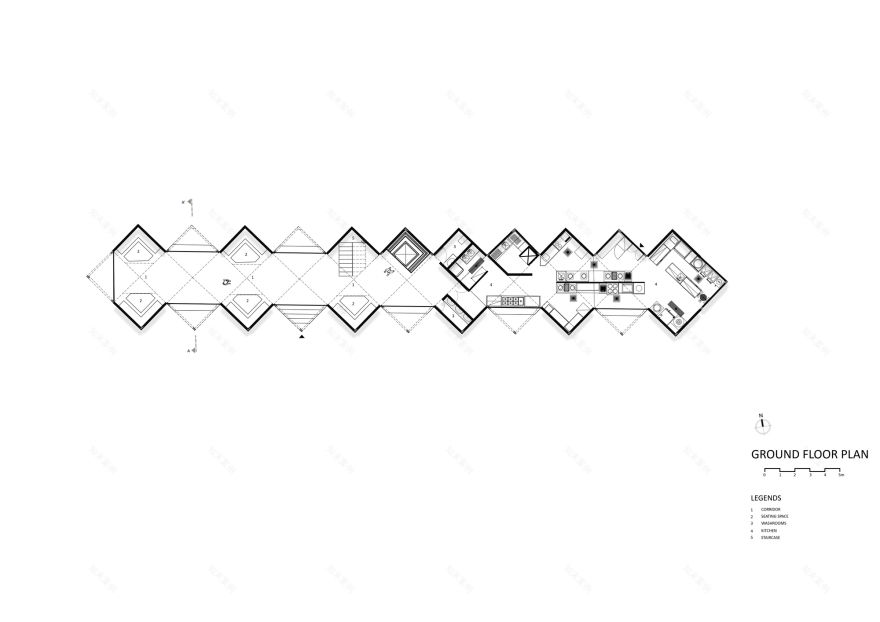


The site, in Tuticorin, for building a 200-person capacity restaurant was a very narrow and linear plot of land. We wanted to utilise one of the most abandoned marine wastes: shipping containers, and also explore modular construction. Each container was set vertically, as we wanted better room heights, as opposed to the 2.4m dimensions that are generally available when containers are set horizontally. The 12 cut containers were placed using a crane in a span of 1 week and then welded together to form the basic structure of the building, along with a few RCC slabs that were added to connect at the floor levels.


Being situated in an open site in a region that was hot throughout the year, we added a layer of poured earth on the external surface of the containers to reduce the heat gain and provide insulation. The pattern was further worked out to make it an alternatively recessed one for better thermal efficiency and to reduce the load on the air conditioning systems by 38%. Every alternate container was staggered, and we designed the south-facing first floor without any wall openings so that the floating containers allowed for better ventilation ( In the case of a passively ventilated scenario ).


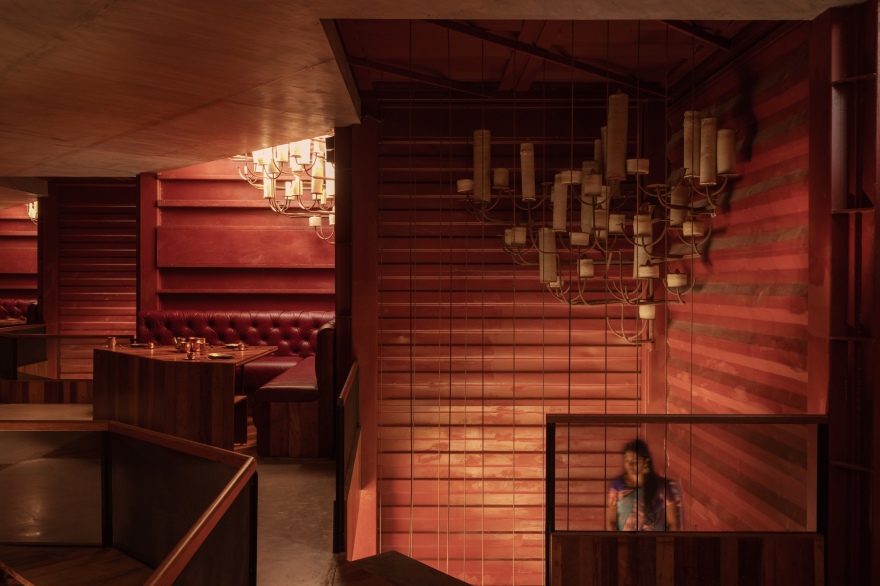
The interiors were designed keeping up with the raw and natural texture of the container to create cozy seating areas in the corners. The layout was planned in a way that it allowed each group of guests to have their own private niche, even within such a narrow plot. Each seating space is naturally lit during the day with a skylight and by a chandelier in the evenings, which has been custom-designed with old wax and pipes. Discarded deck wood and oxide form the flooring of the project. "PETTI" Restaurant, meaning 'box' in Tamil, is a prime example that with the right facade treatment, shipping containers, which are a major marine waste, can be used extensively as a thermally efficient material in Tropical urban areas.

Project gallery




南京喵熊网络科技有限公司 苏ICP备18050492号-4知末 © 2018—2020 . All photos and trademark graphics are copyrighted by their owners.增值电信业务经营许可证(ICP)苏B2-20201444 苏公网安备 32011302321234号
苏公网安备 32011302321234号客服
消息
收藏
下载
最近