

创作上传
VIP
收藏下载
登录 | 注册有礼
查看完整案例

收藏

下载

分享

翻译
Architects:alchitekt
Area:85m²
Year:2025
Photographs:Matej Hakár
Category:Refurbishment,Interior Design,Cowork Interiors
Lead Team:Andrea Lizáková
Design Team:alchitekt
City:Bratislava
Country:Slovakia

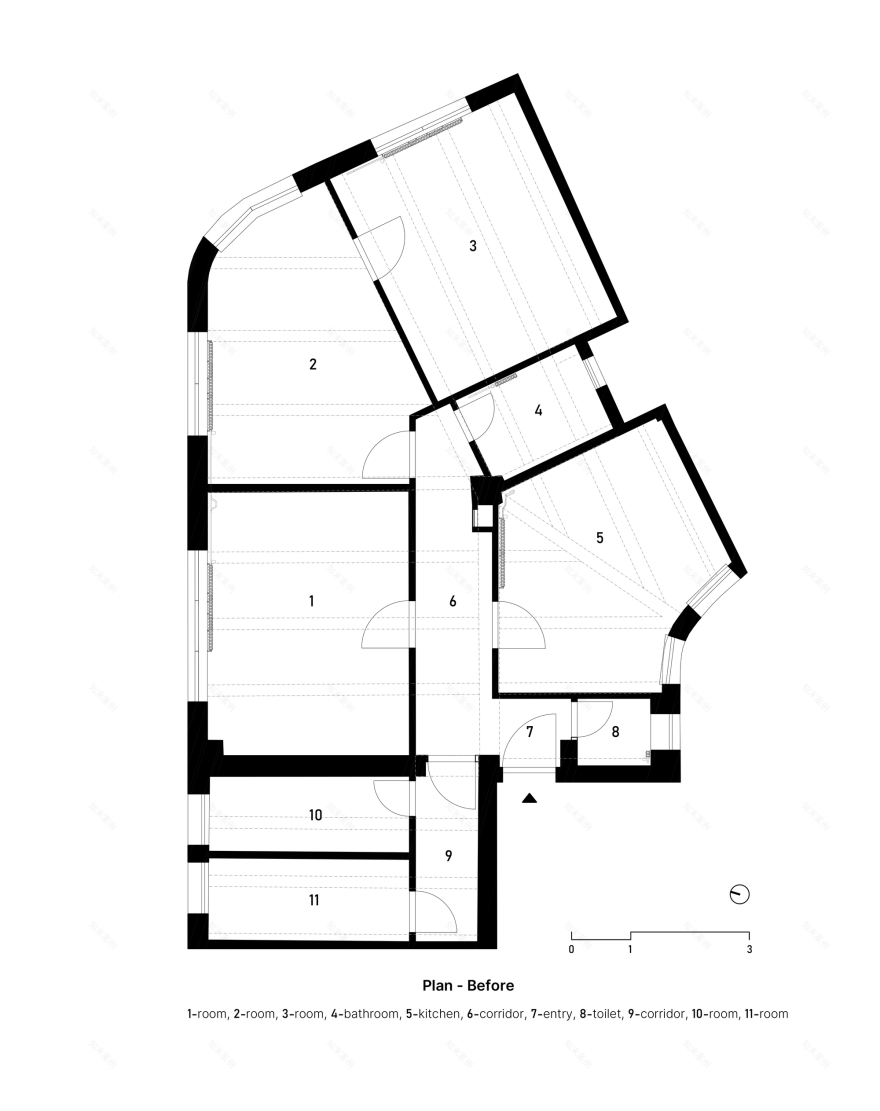
Text description provided by the architects. Located in a former apartment, this project transforms a residential interior into a flexible creative studio for architectural practice and hands-on artistic production. The renovation honors the building's past while introducing a new spatial framework.

The studio occupies the top floor of a historic building in Bratislava, completed in 1928 and designed by renowned Slovak architect Juraj Tvarožek. The project's aim was to create a space for creative freedom while respecting the intrinsic qualities of the building.

On the ceiling, branching reinforced concrete beams extend across the entire interior. Originally covered in layers of plaster from previous renovations, restoring them to their exposed state was probably the most arduous task of this renovation. The beams are not horizontal - along with the ceiling, they follow a slight upward slope toward the facade. Designing with them, not against them, proved beneficial.
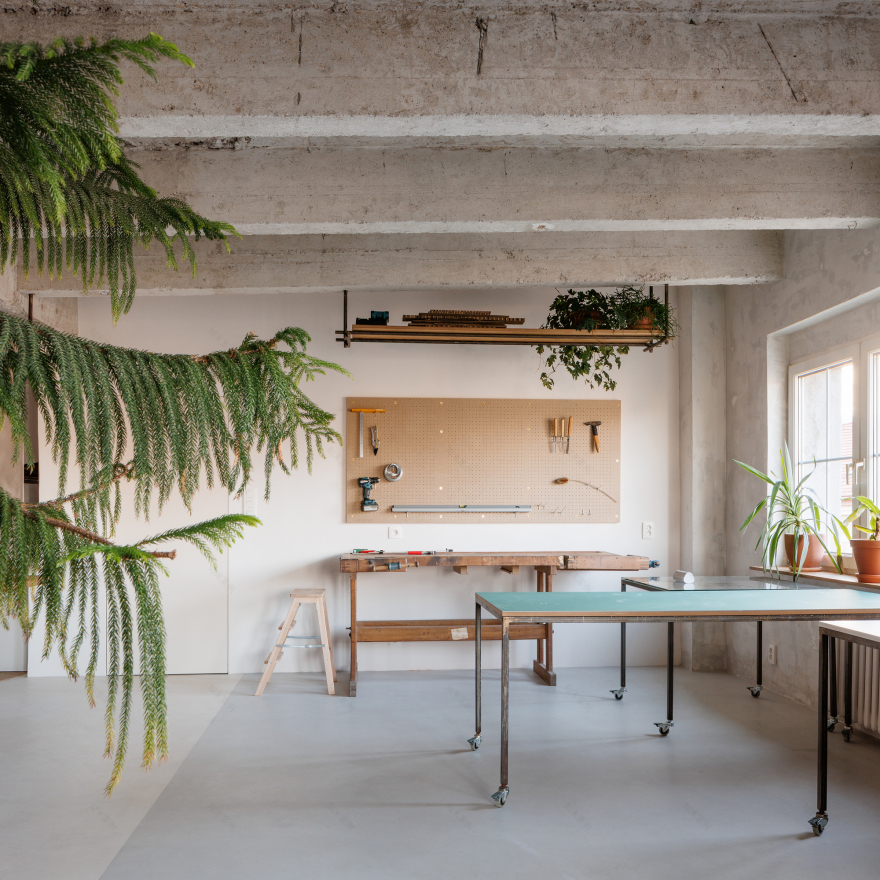
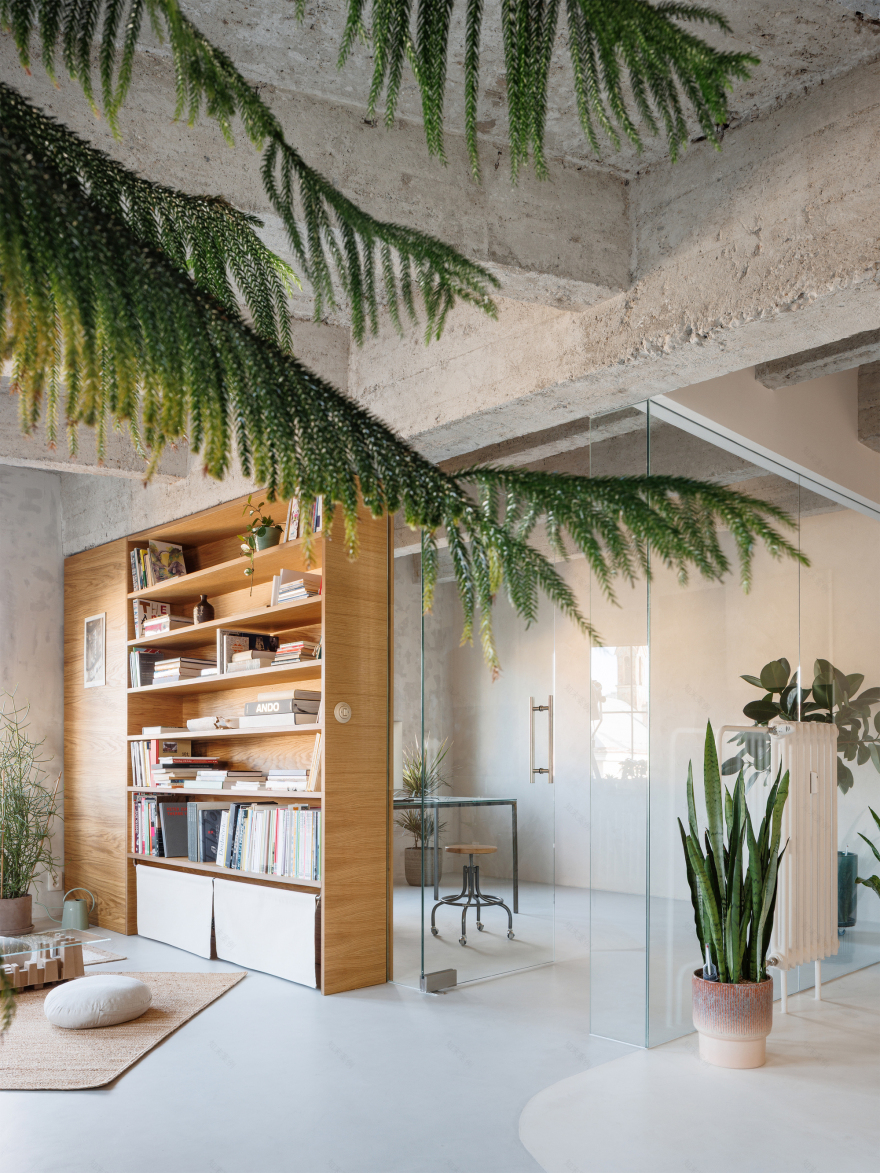
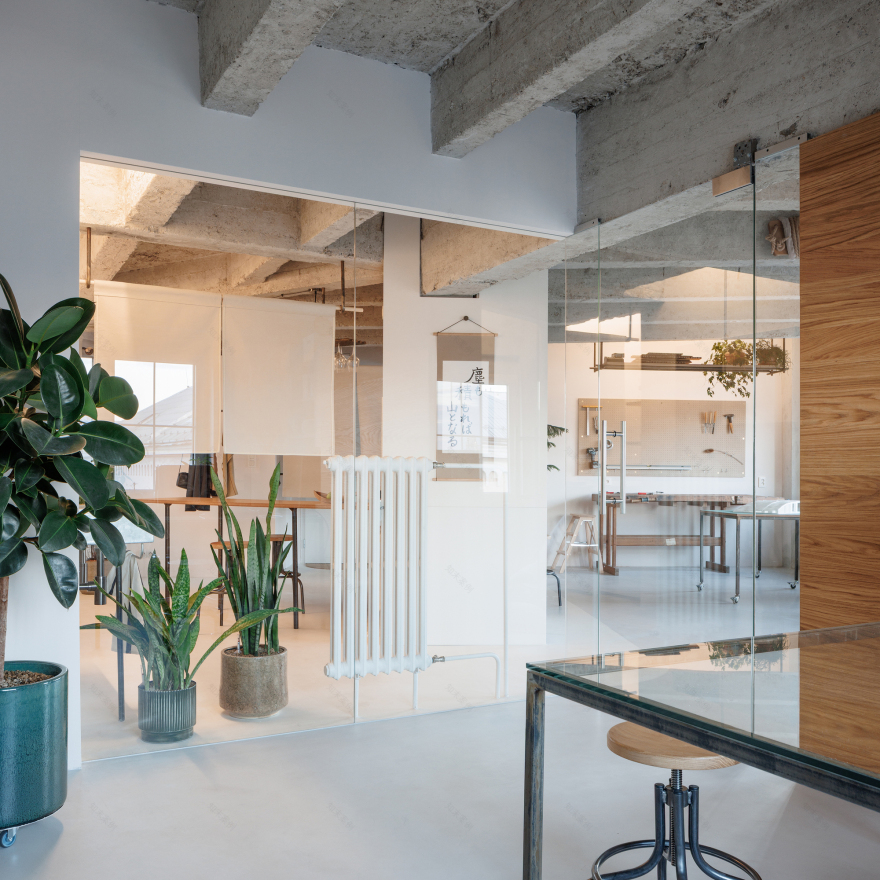
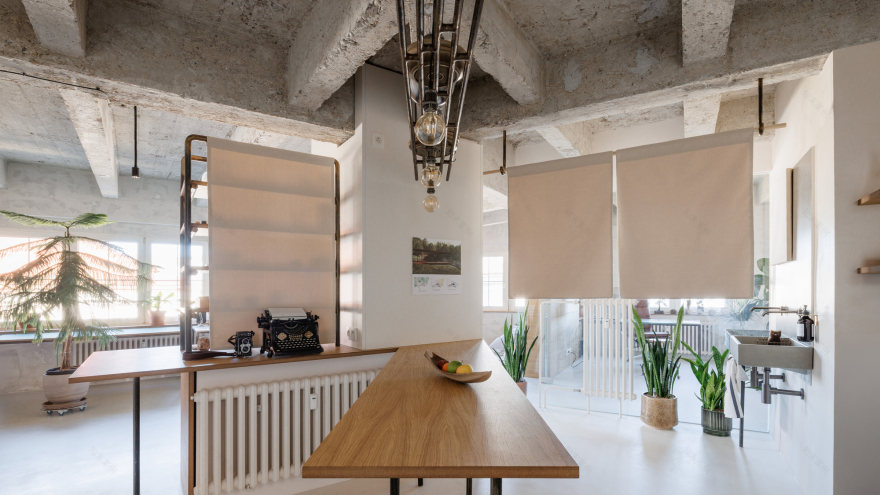
The beams provided an ideal opportunity to integrate lighting. LED strips are mounted along the sides of the outer beams, creating concealed niches in which the light source remains hidden, producing indirect reflected light dispersed across the walls. Because the ceiling is visually complex and weighty, all newly inserted elements were conceived as light, transparent, and adaptable, including glass partitions, tubular steel furniture, and suspended canvas screens.
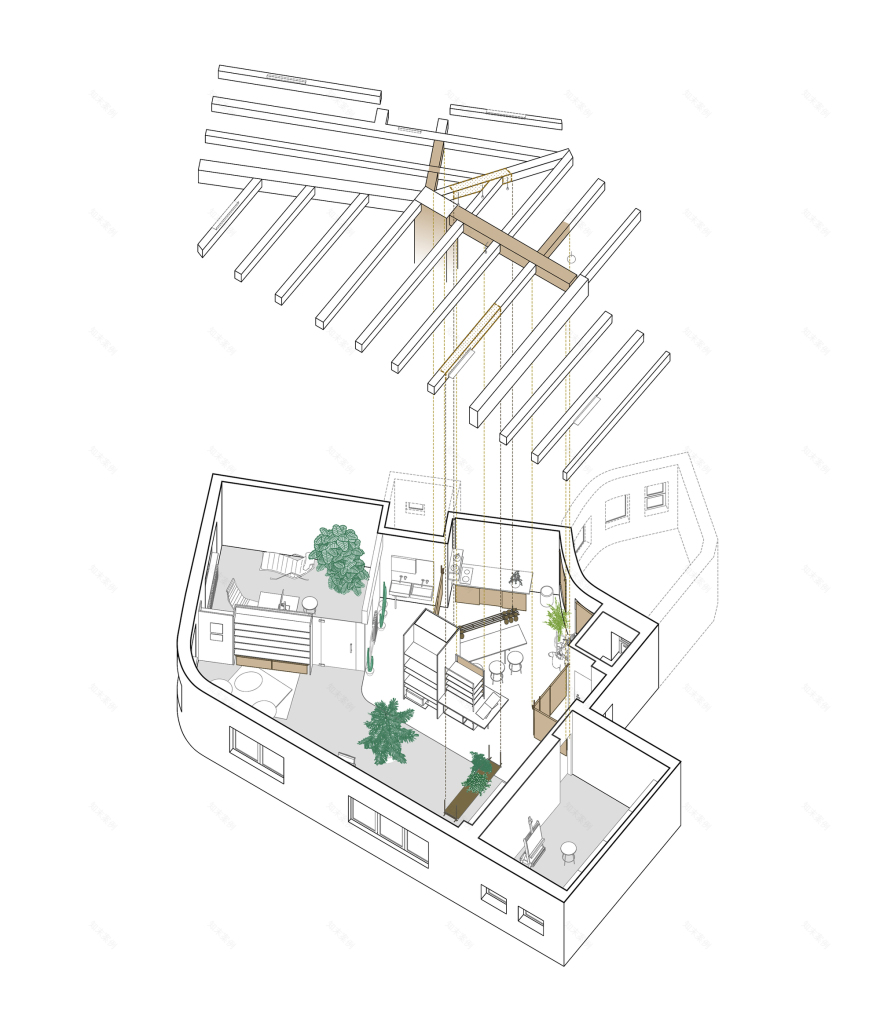
The spatial organization follows the beam structure. Bookcases, counters, and hanging elements are positioned in relation to the existing ceiling grid, allowing the space to remain open while creating smaller nooks for concentration and privacy. The studio is divided into two primary zones distinguished by floor color: a white "clean" zone for meetings, presentations, and a compact kitchen, and a gray work zone designed for more intensive creative production. The layout of the work zone is flexible, with desks on wheels, allowing the arrangement to be adapted to the task at hand.

Three enclosed rooms are set apart from the open plan: a storage room, a toilet, and a private office. A glass partition separates and connects the office with the rest of the space. Thanks to it, the continuity of the beams remains legible throughout the interior.

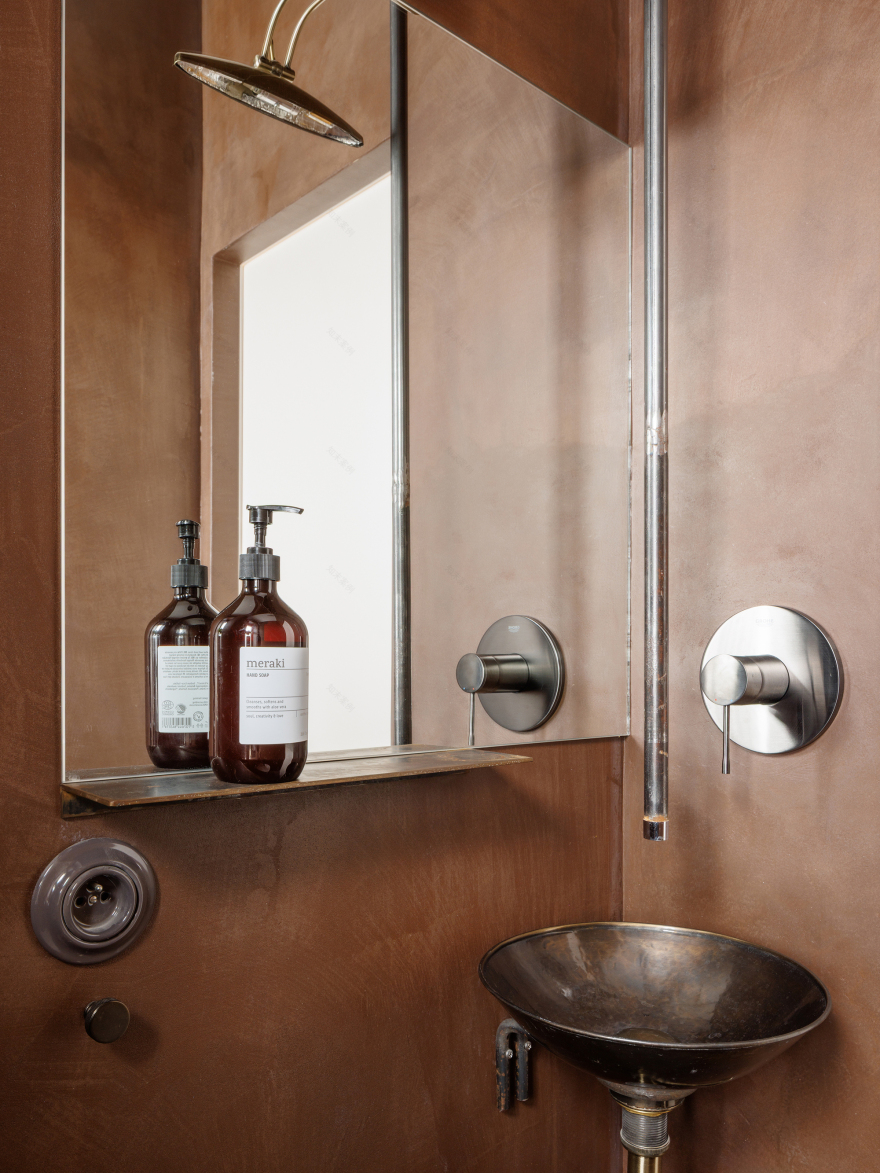
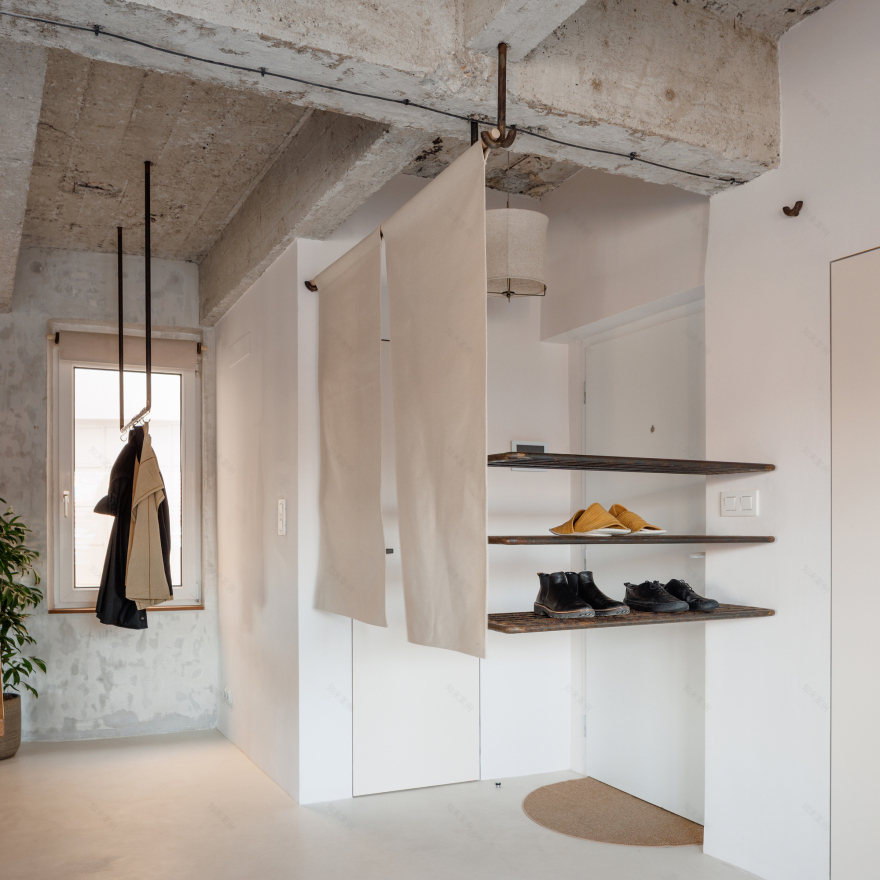
Wood and metal are the primary materials used for the furniture. They are intrinsic to the space – steel reinforcements in the ceiling and pieces of wood left encased in concrete hint at both the past and the future of the space. Raw steel elements are intentionally weathered to engage with the existing material context. This weathered tubular material also recalls old gas pipes discovered during the renovation. No longer needed for their original purpose, they were welded together to form a faucet for the washroom sink – a long pipe extending from the ceiling.


Raw painter's canvases are used instead of solid partitions and cabinet doors, subtly dividing the space into main functional zones. Suspended on wooden rods fixed to metal hooks on the wall or ceiling, they can be easily taken down and rehung when needed. The interior remains open and connected, while privacy and functional clarity are preserved. Full-grown indoor plants on wheeled platforms are a vital part of the design, conceived as movable partitions within the open-plan space.

Project gallery









南京喵熊网络科技有限公司 苏ICP备18050492号-4知末 © 2018—2020 . All photos and trademark graphics are copyrighted by their owners.增值电信业务经营许可证(ICP)苏B2-20201444 苏公网安备 32011302321234号
苏公网安备 32011302321234号客服
消息
收藏
下载
最近