

创作上传
VIP
收藏下载
登录 | 注册有礼
查看完整案例

收藏

下载

分享
并非人人都需要一栋大房子、一座宽阔的花园,或是那些永远不会使用的房间。有一对夫妇的情况正是如此,他们希望继续住在自己熟悉的社区,又不想被高昂的能源账单所累。他们拥有的是一处破败、狭长且进深很大的老屋宅基地,宽度仅有二十拃——这是加泰罗尼亚地区的传统度量单位(约合四米),历史上正是这个尺度定义了联排房屋的宽度和城市街道的节奏。
Not everyone needs a large house, a vast garden, or rooms that will never be used. This was the case of a couple who wanted to remain in their neighbourhood without being burdened by energy bills. Their plot was a ruined, narrow and deep house, just twenty palms wide—a traditional Catalan measure (around four metres) that has historically defined the width of the row houses and the rhythm of the city’s streets.
▼项目概览,aerial view of the site © Marta Vidal
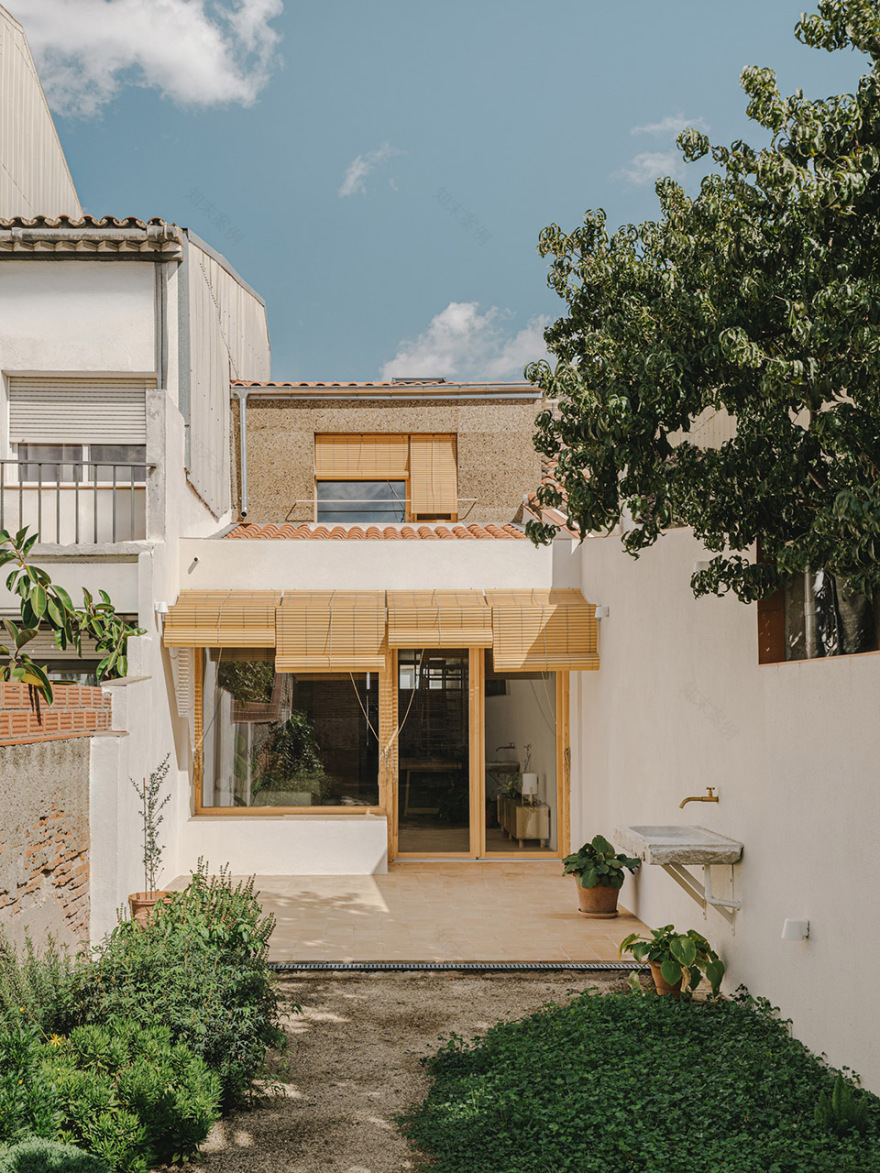
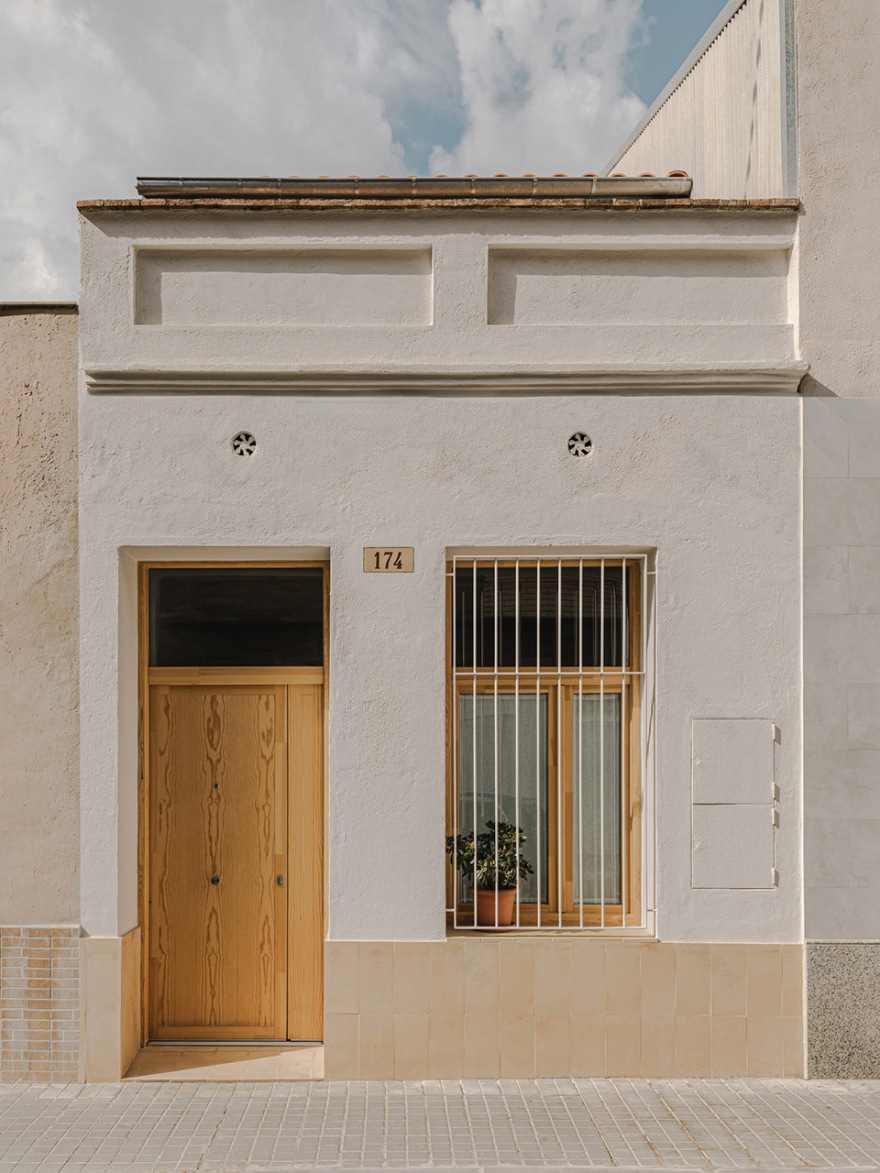
在这片小巧的城市肌理中,我们开启了一个从一开始就根植于理性利用所有可用资源——材料、能源和预算——的项目。我们对旧屋进行了分解拆除,小心翼翼地回收并分类材料,赋予它们第二次生命,并减少废弃物对环境的影响。
In this small piece of city fabric, we began a project rooted from the outset in the rational use of all available resources—materials, energy and budget. The old house was deconstructed, carefully recovering and separating materials to give them a second life and reduce the environmental impact associated with waste.
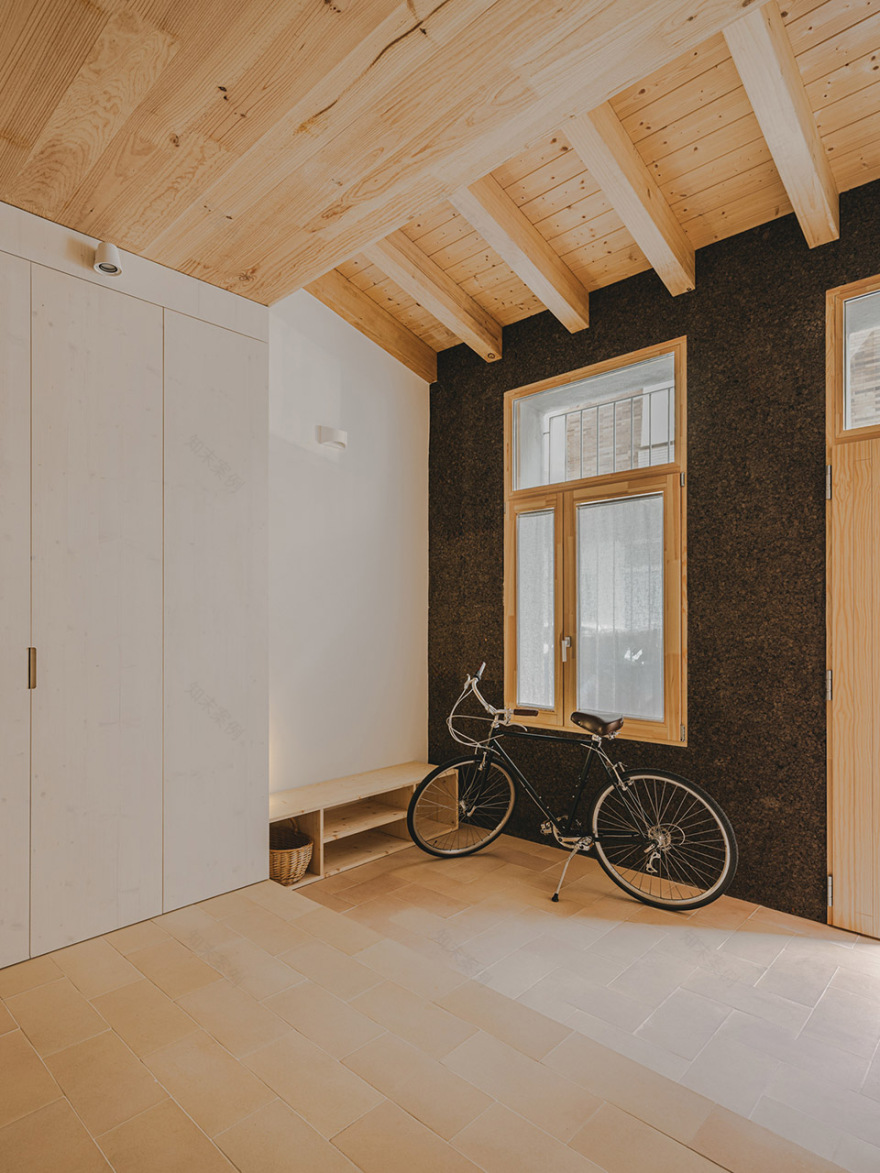
▼入口门厅,Entrance © Marta Vidal
▼入口望向客厅,View form entrance to living room © Marta Vidal
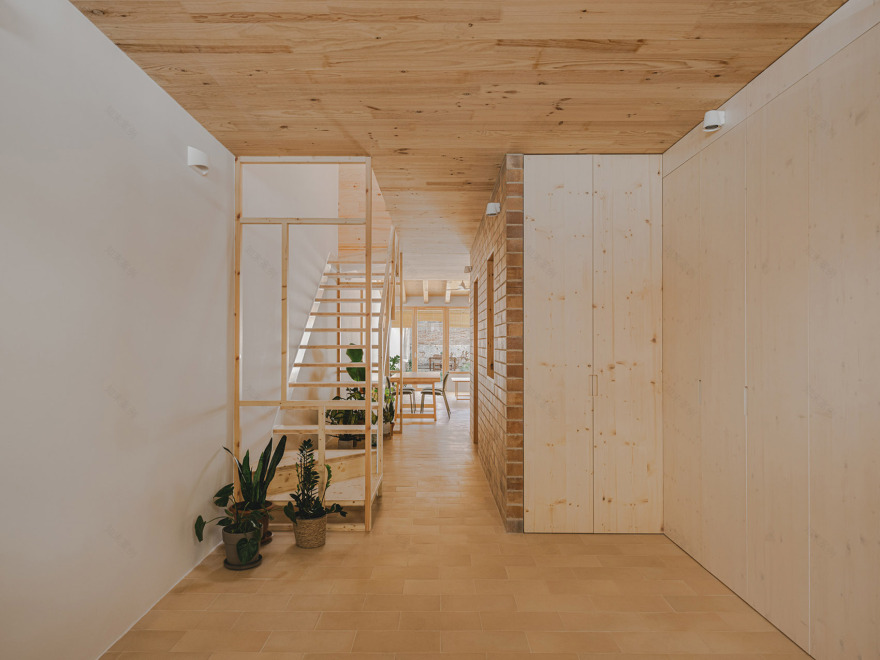
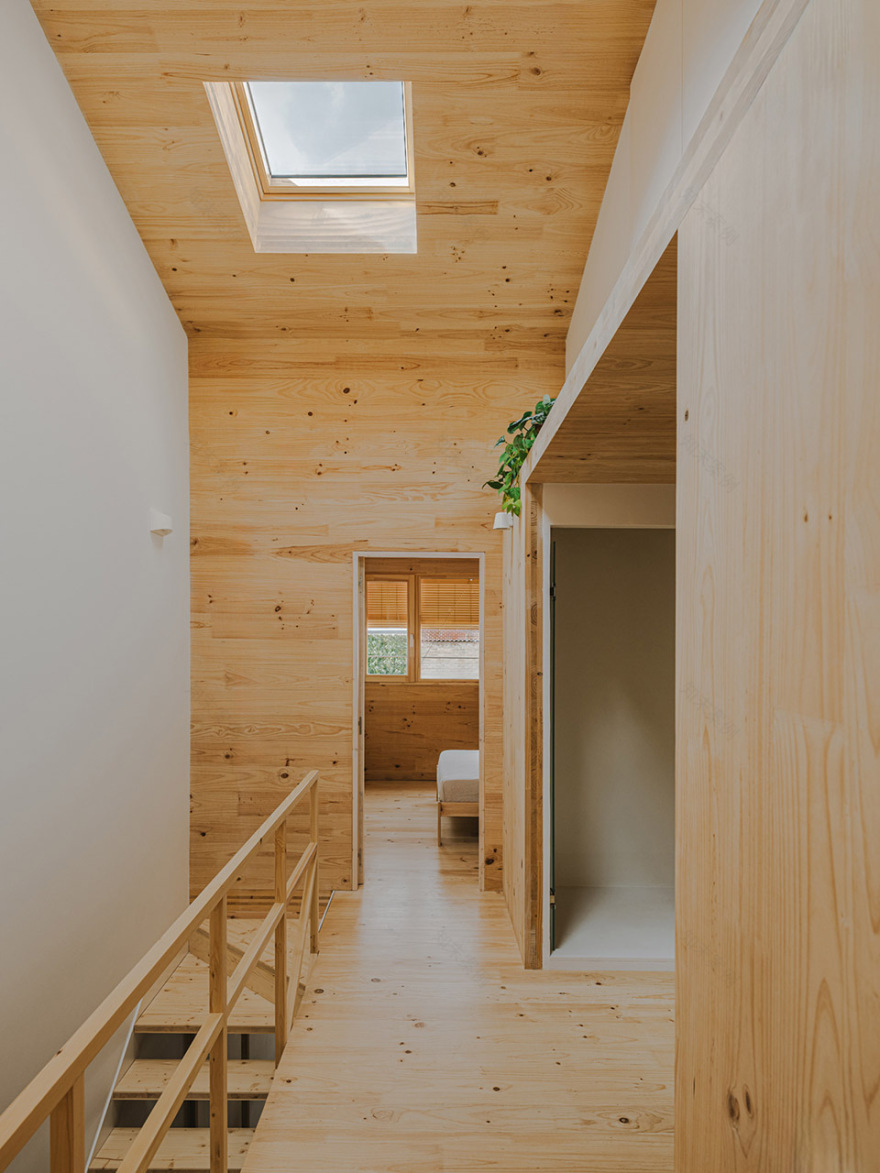
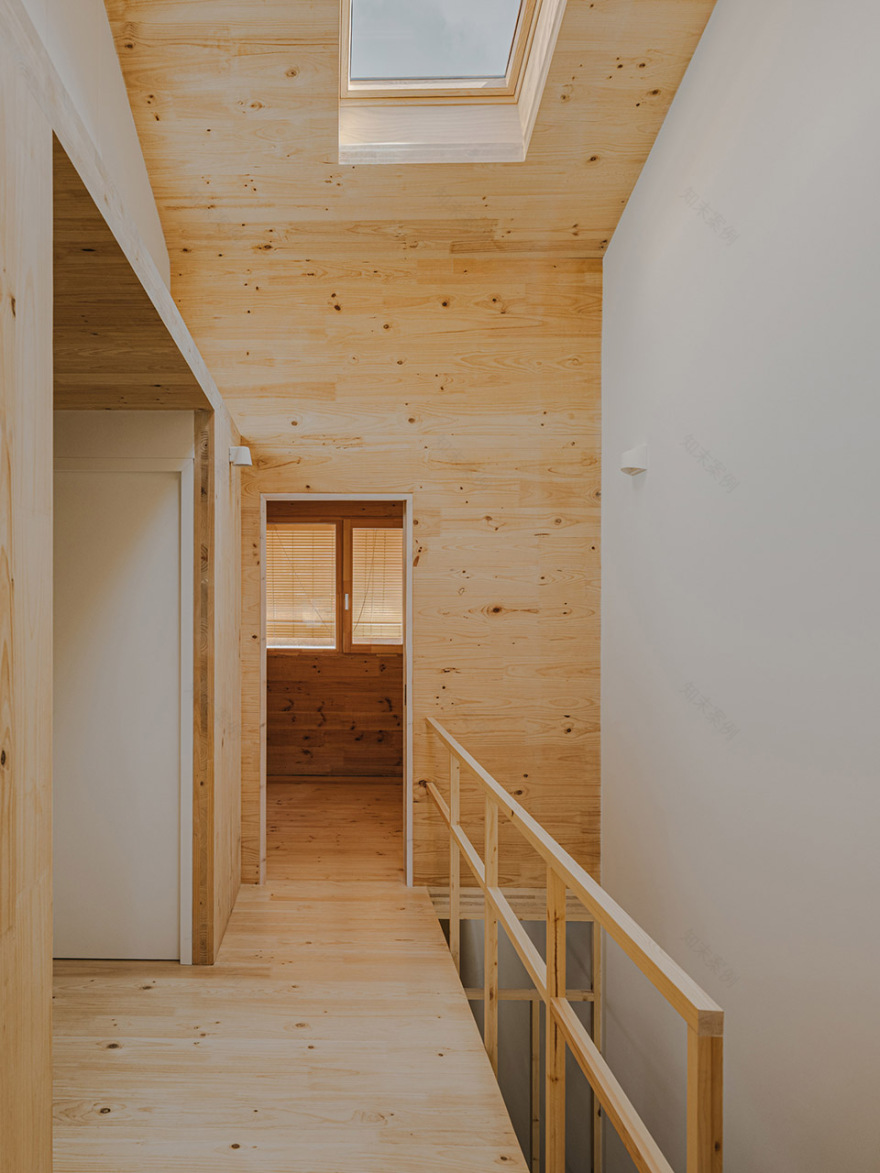
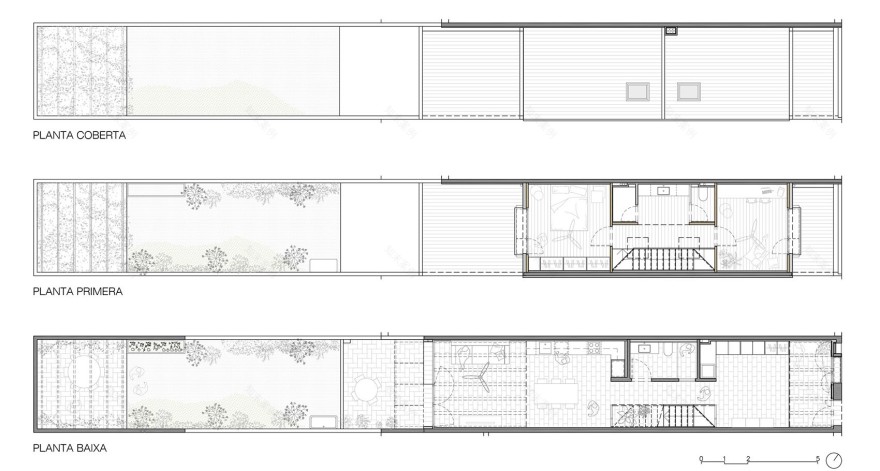
新房子共两层。底层是一个集厨房、起居、餐厅于一体的单一空间,向庭院敞开;而通常用来停车的地方,现在则被用作门厅,可以停放自行车,并容纳洗衣和储物功能。房屋的中心位置,是一个浴室和一部完全开敞的楼梯,它们将自然光引入室内深处,并在所有空间之间创造了视觉上的连续性。楼上则是一间卧室、一间书房和一个卫生间,都朝向楼梯间——仅此而已,再无多余。
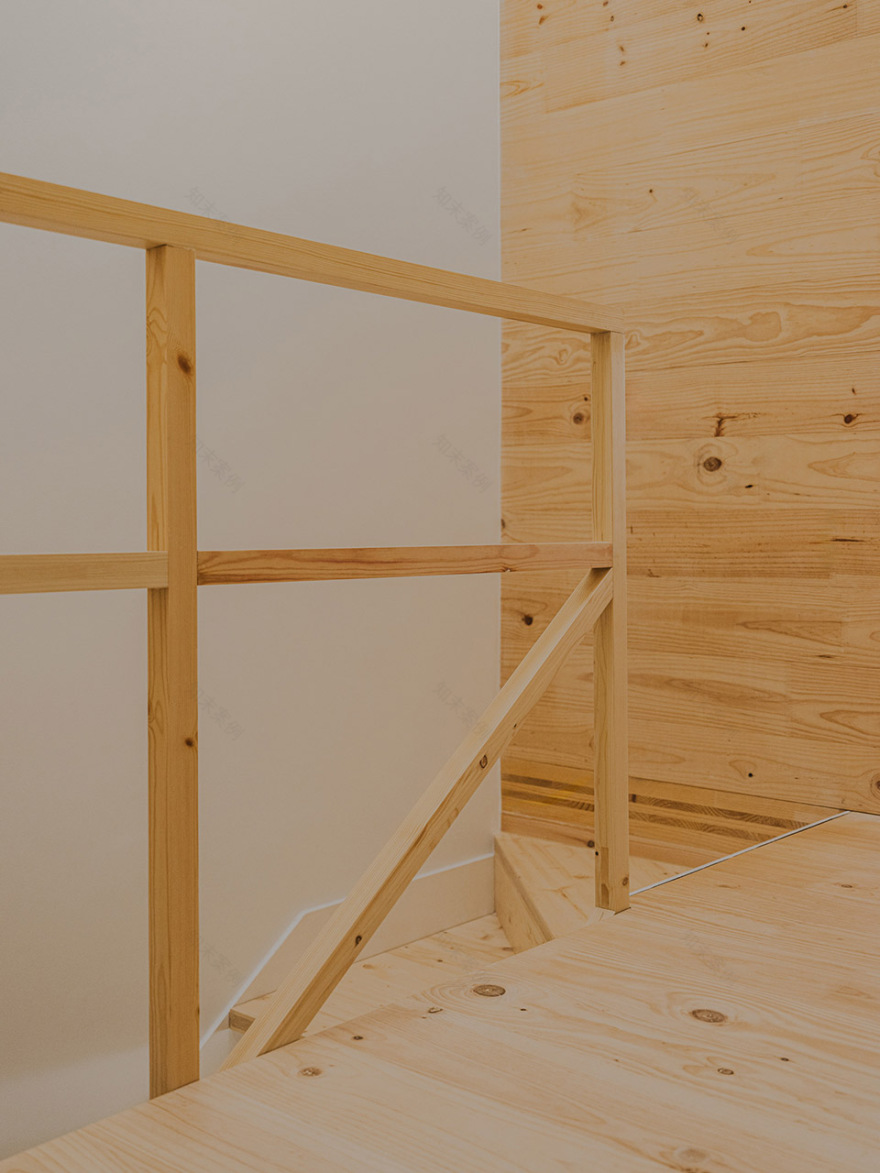
The new house is organised over two floors. On the ground floor, a single kitchen–living–dining space opens onto the courtyard, while the area typically reserved for a car is instead used as an entrance hall with bicycle parking, laundry and storage. At the centre of the house, a bathroom and a completely open staircase bring natural light deep into the interior and create visual continuity between all spaces. On the first floor, a bedroom, a study and a bathroom open to the stairwell—nothing more is needed.
▼集厨房、起居、餐厅于一体,Kitchen–living–dining space © Marta Vidal
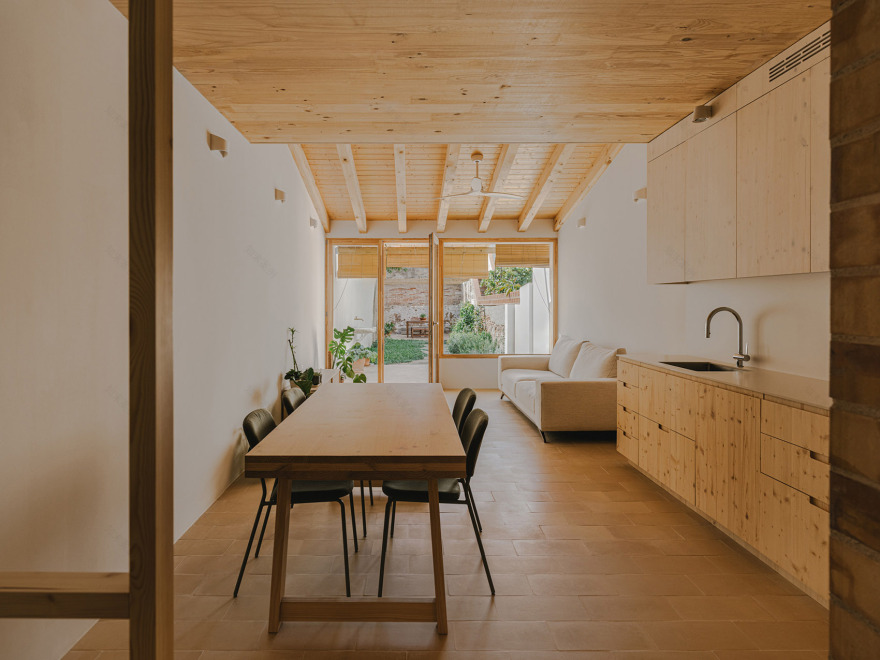
▼厨房,Kitchen © Marta Vidal
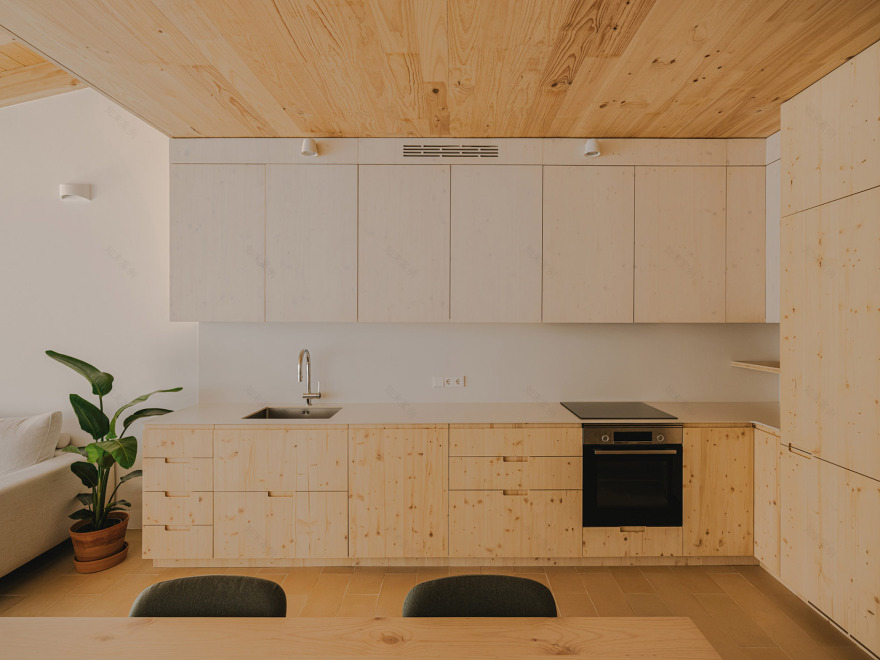
▼开敞的空间,Open sapce © Marta Vidal
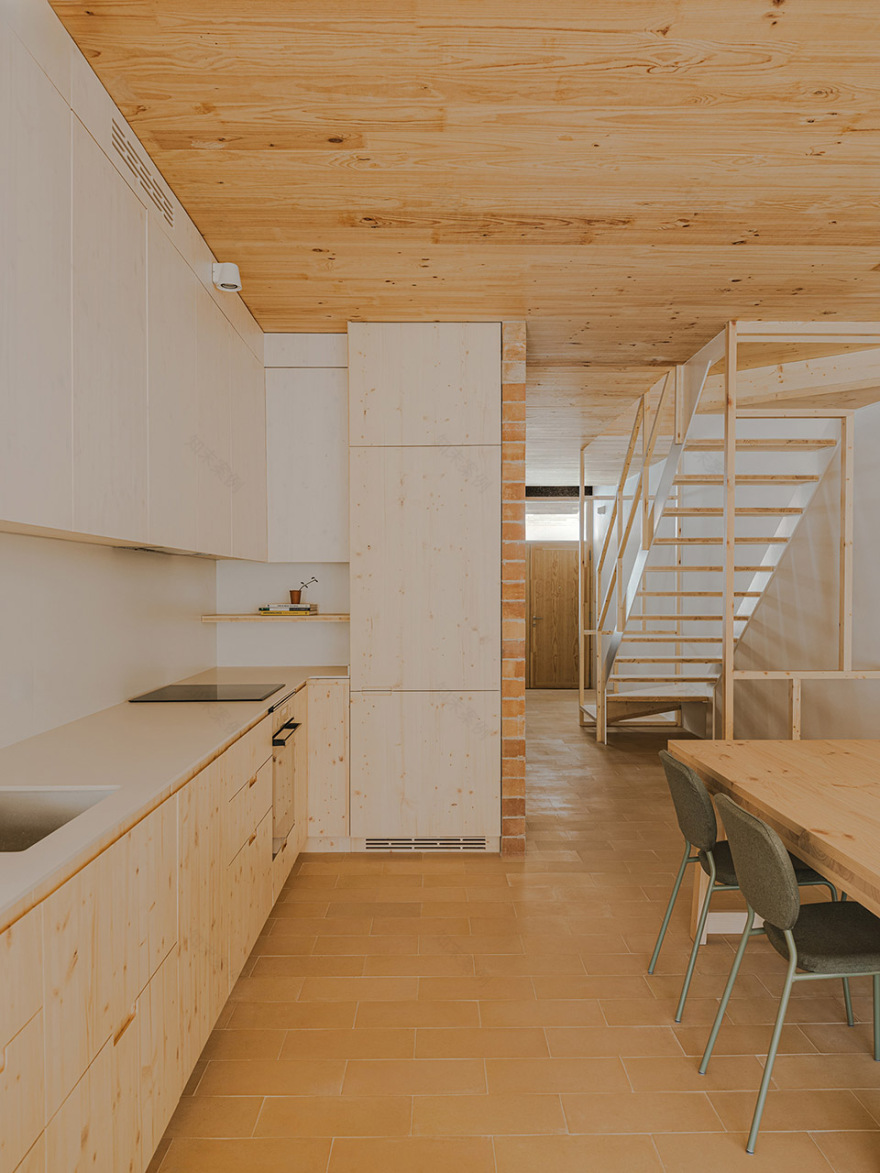
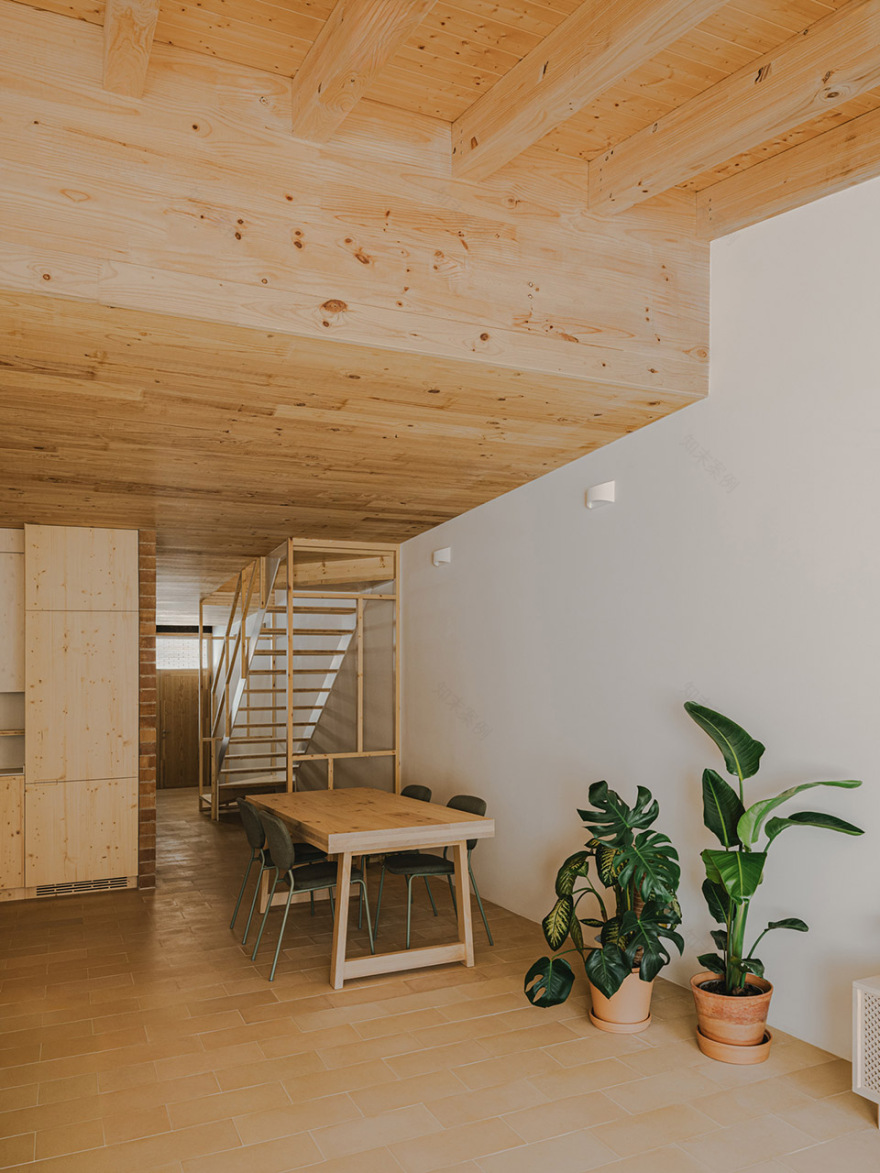
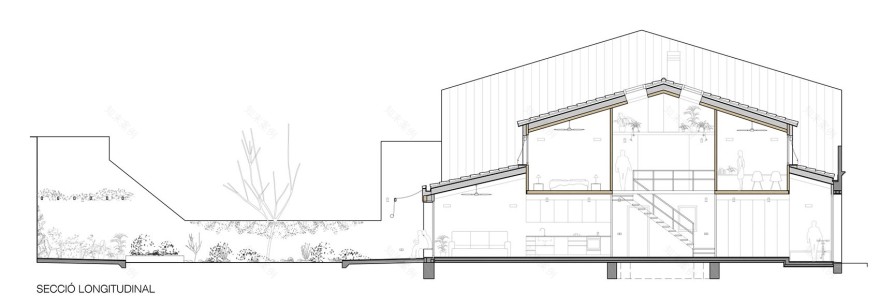
结构设计直接回应了房屋的布局。整个上层被构想为一个由交叉层压木(CLT)制成的封闭箱体,坐落在原有的共用墙体上。底层两个屋顶部分则采用木梁和木条建造,横跨在木制箱体和底层立面之间。沿街立面得到了修复,重现了房屋最初的模样。
The structure responds directly to the layout of the house. The entire first floor is conceived as a closed box of cross-laminated timber (CLT), resting on the existing party walls. The two ground-floor roof sections are built with timber beams and slats, spanning between the timber box and the ground-floor façades. The street façade is restored, recovering the original appearance of the house.
▼庭院,Garden © Marta Vidal
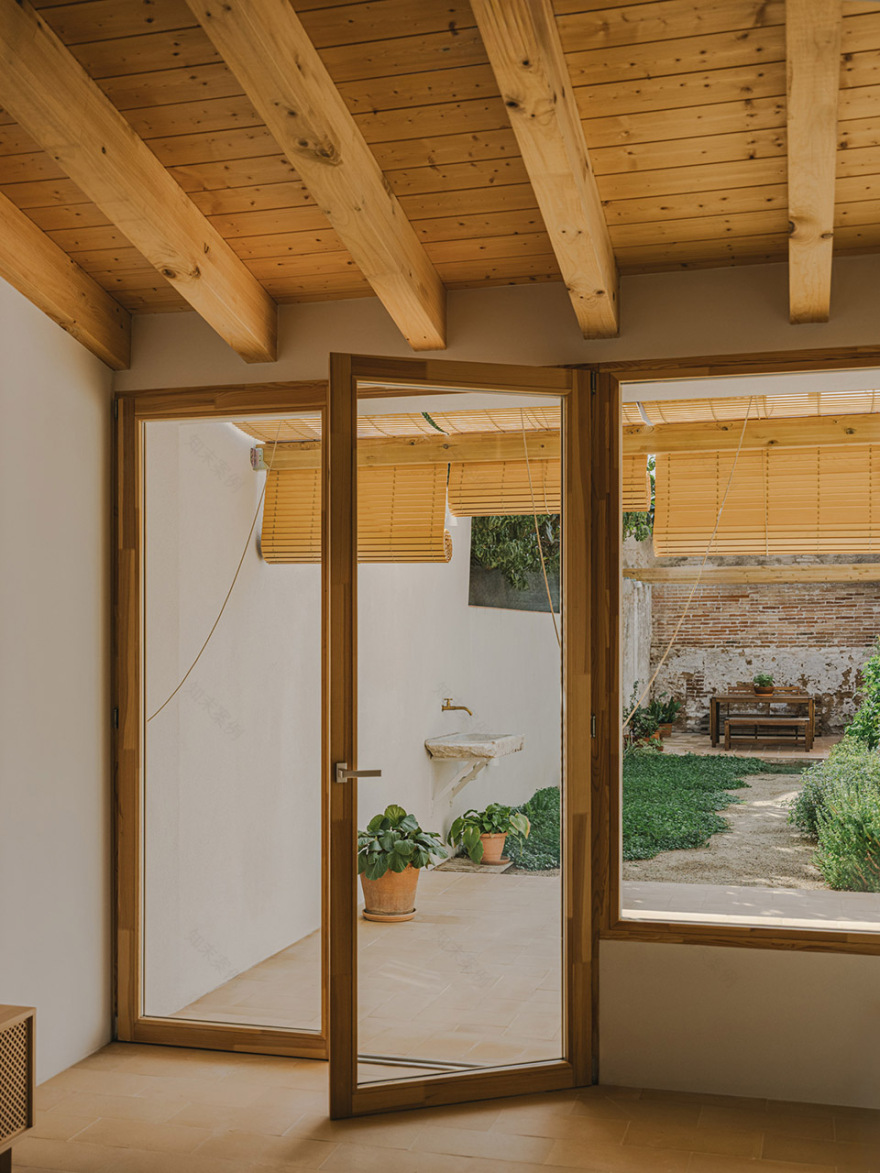
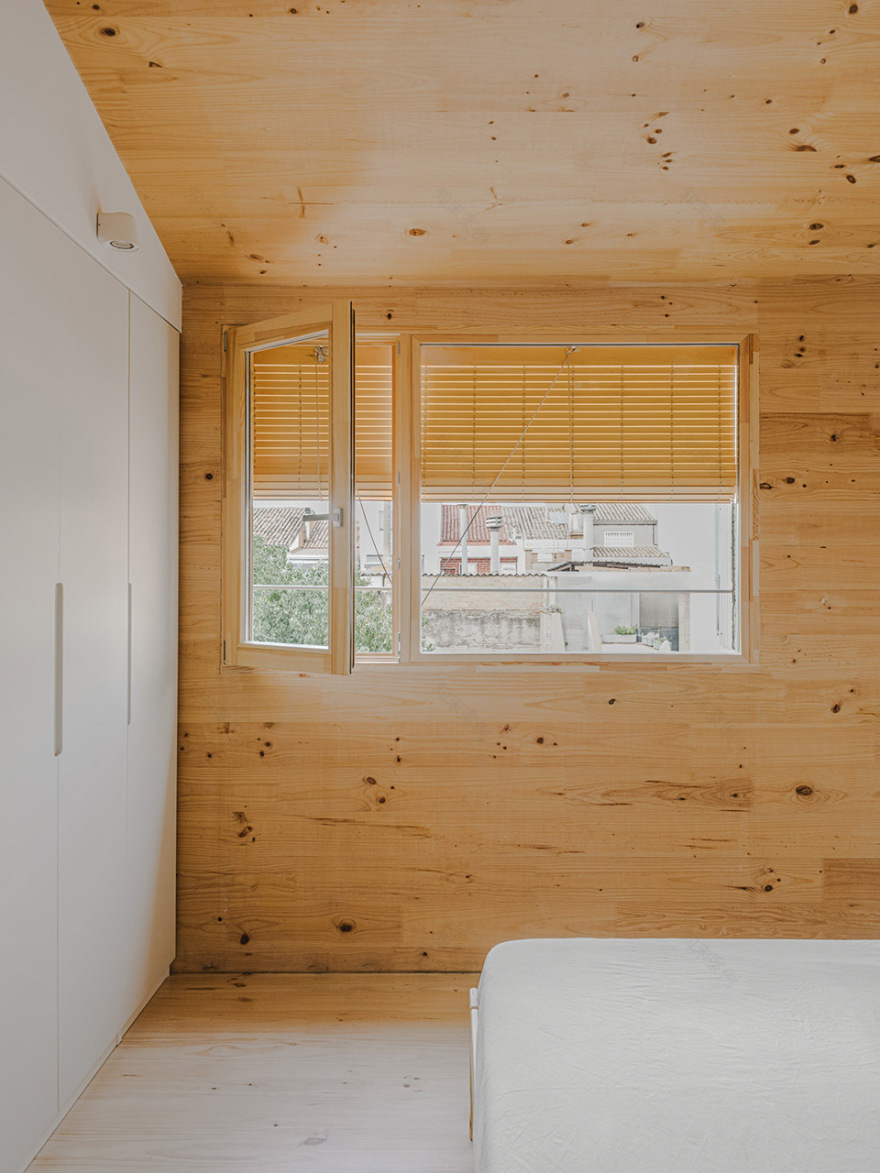
我们刻意避免了使用吊顶和不必要的装饰面层,转而偏爱自然和可持续的材料。结构、窗户、百叶窗、家具和门全部由木材制成。保温材料采用木纤维,外墙则覆盖着软木板。室内,上层空间受益于裸露木材带来的温暖感。底层空间则采用来自El Bruc的陶瓷砖和来自El Segrià的砖砌体,带来清凉之感,这些精心挑选的材料搭配有助于调节整栋房屋的温度和湿度。
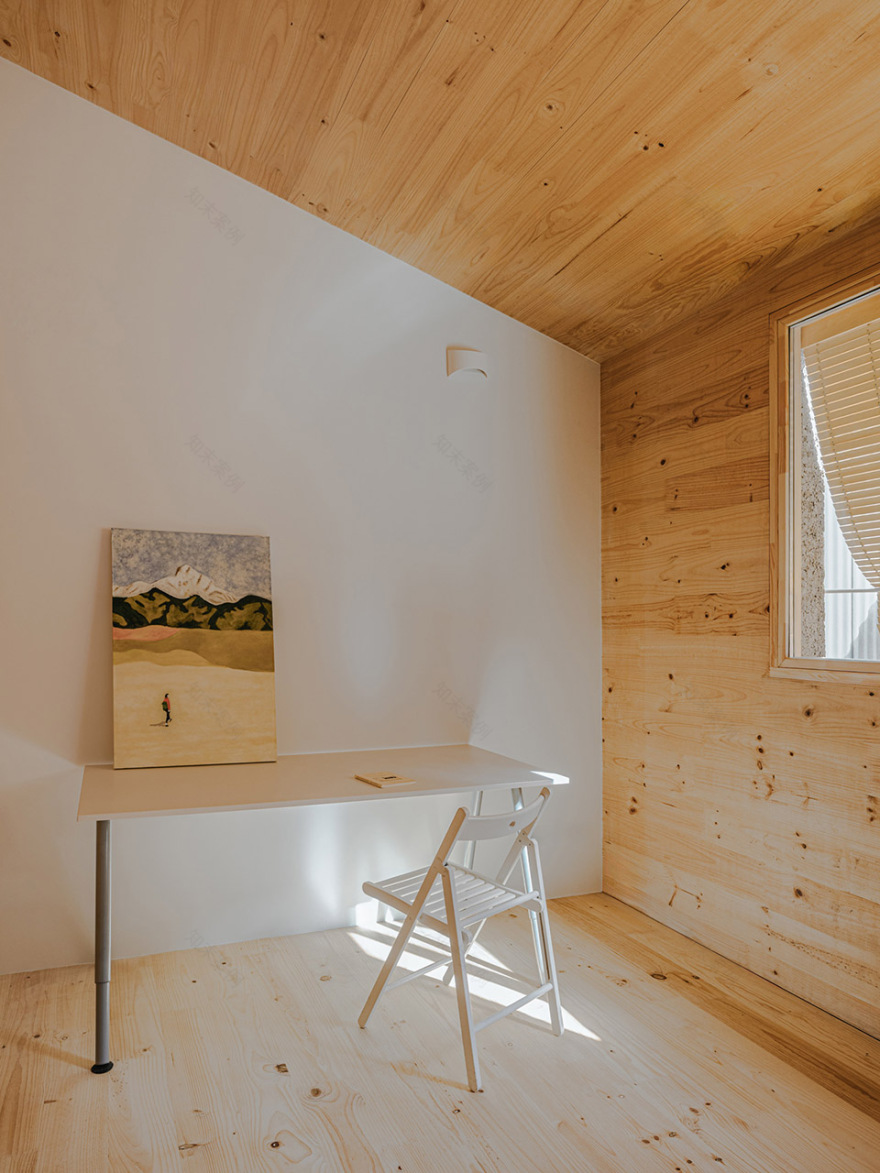
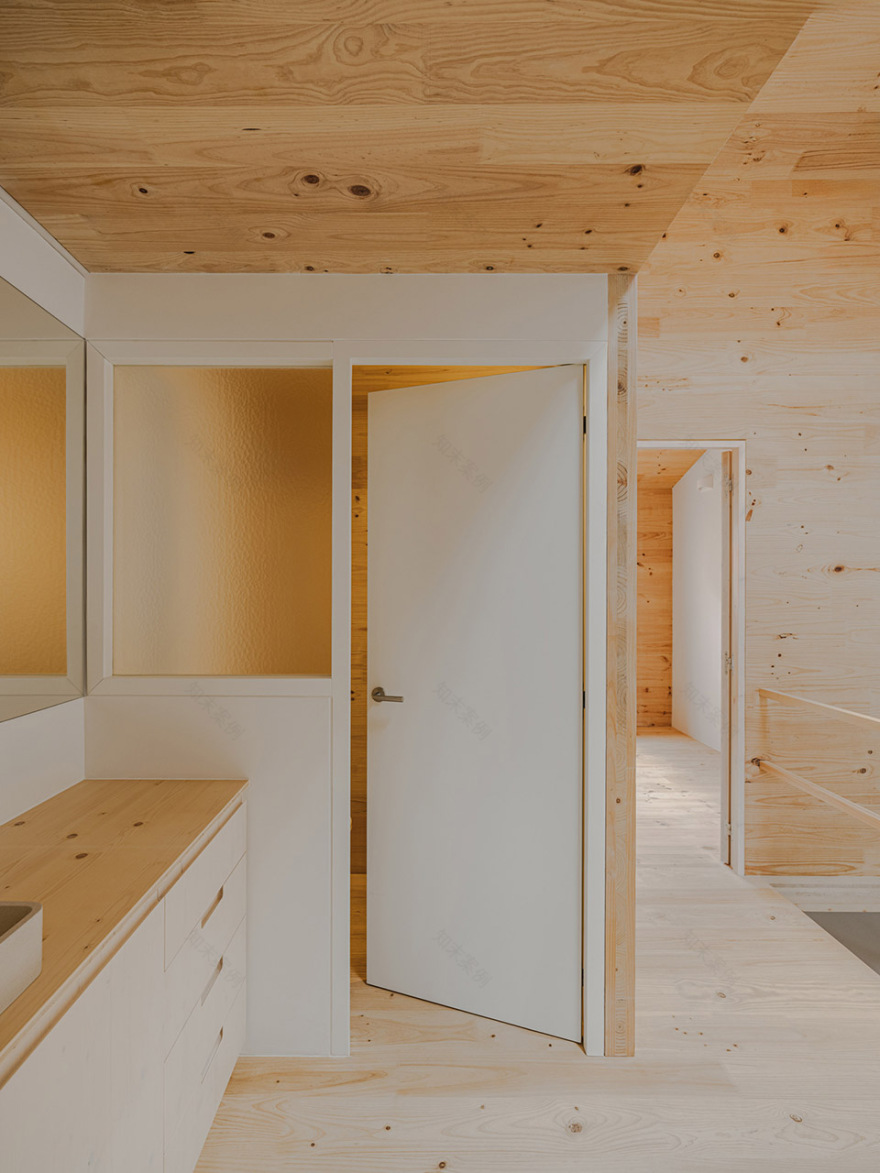
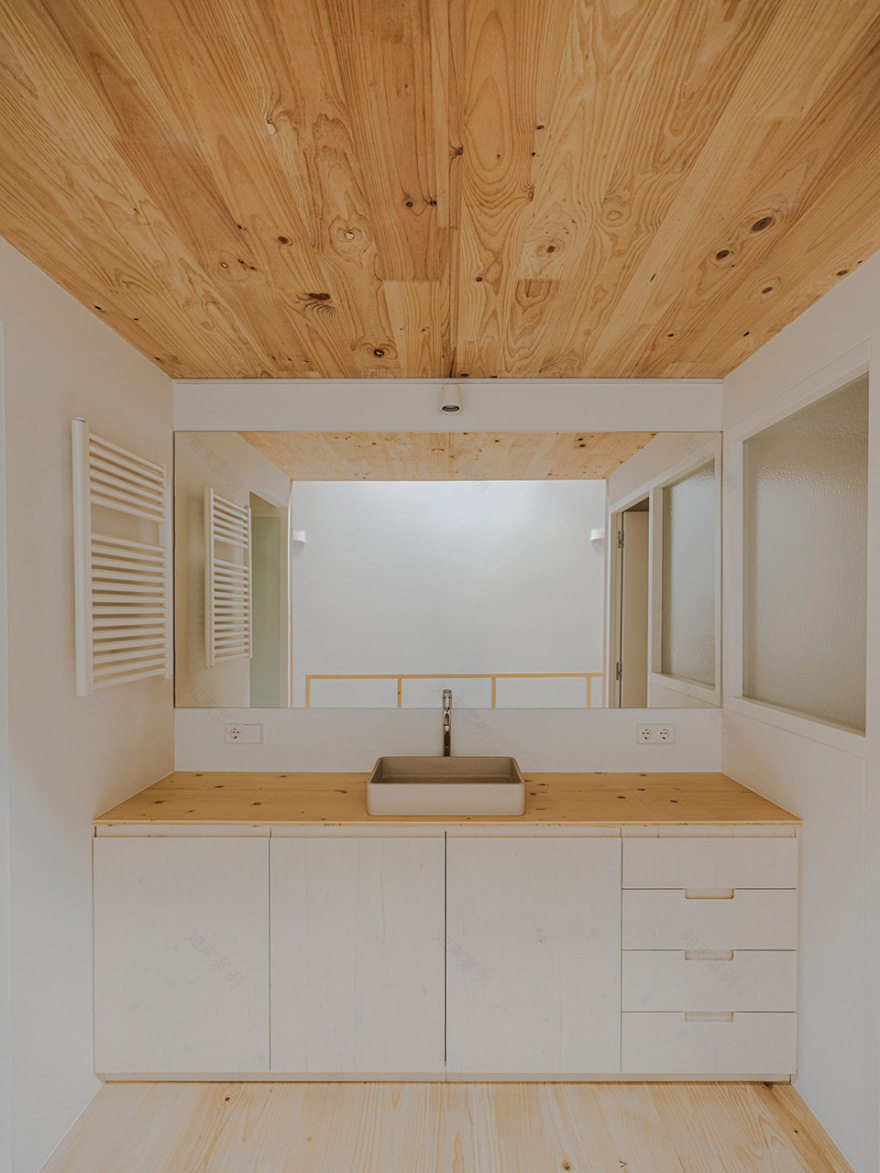
False ceilings and unnecessary finishes were deliberately avoided, favouring natural and sustainable materials. The structure, windows, shutters, furniture and doors are all made of wood. Insulation is provided by wood fibre, and the façades are clad with cork panels. Inside, the upper floor benefits from the warmth of exposed timber. On the ground floor, ceramic tiles from El Bruc and brickwork from El Segrià bring freshness, forming a carefully chosen palette that helps regulate temperature and humidity throughout the house.
▼二层空间,Second floor space © Marta Vidal
▼卧室,Bedroom © Marta Vidal
放弃安装机械供暖和制冷设备的决定,依赖于一个经过高度优化的建筑外围护结构以及对生物气候学策略的运用。夏季,通过屋顶窗户增强烟囱效应,强化交叉通风,在夜间为房屋降温。白天,传统的百叶窗遮挡直射阳光,吊扇则增加舒适度。庭院里,一个藤架和植物提供了荫凉,并有助于减少热岛效应。冬季,凭借高效的保温,每一缕阳光都被捕捉,温暖得以留存。
The decision to dispense with mechanical heating and cooling relies on a highly optimised envelope and the use of bioclimatic strategies. In summer, cross ventilation is reinforced by roof windows that enhance the stack effect, cooling the house at night. During the day, traditional shutters protect from direct sunlight and ceiling fans add comfort. In the courtyard, a pergola and vegetation provide shade and help reduce the heat island effect. In winter, every ray of sunlight is captured and warmth is retained thanks to effective insulation.
▼洗手间,Restroom © Marta Vidal
▼楼梯,Stairs © Marta Vidal
如今,这对夫妇拥有的正是他们所需要的:没有空调系统,没有冗余的房间,也没有高昂的能源账单。作为回报,他们享有了这栋价值为“二十拃”的房子——它会呼吸,尊重气候,并能适应他们的所有需求。
Today, this couple lives with exactly what they need. No air-conditioning systems, no redundant rooms and no soaring energy bills. In return, they enjoy twenty palms’ worth of a house that breathes, respects the climate and adapts to all their needs.
▼模型,Model © Vallribera Arquitectes
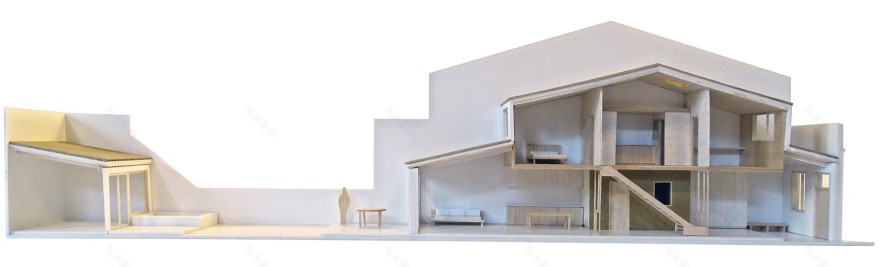
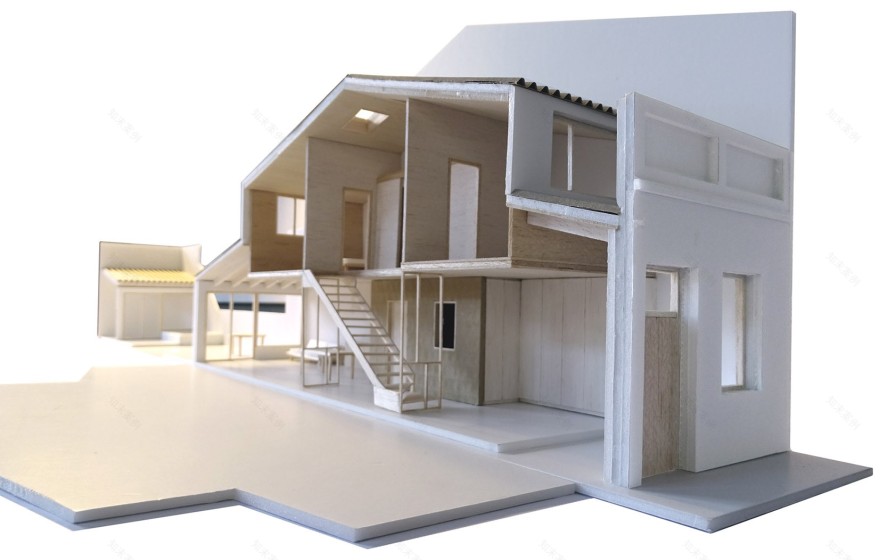
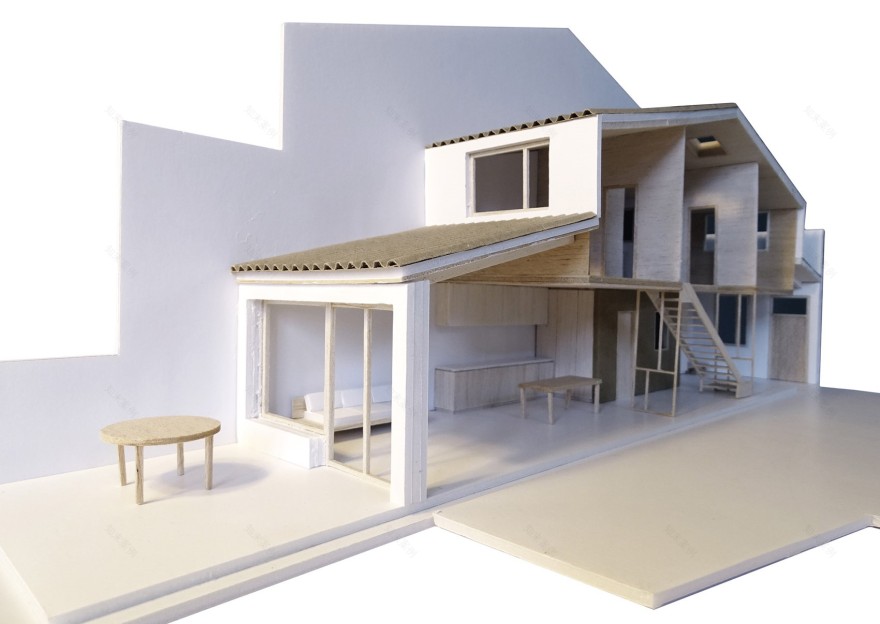
▼场地图,Site plan © Vallribera Arquitectes
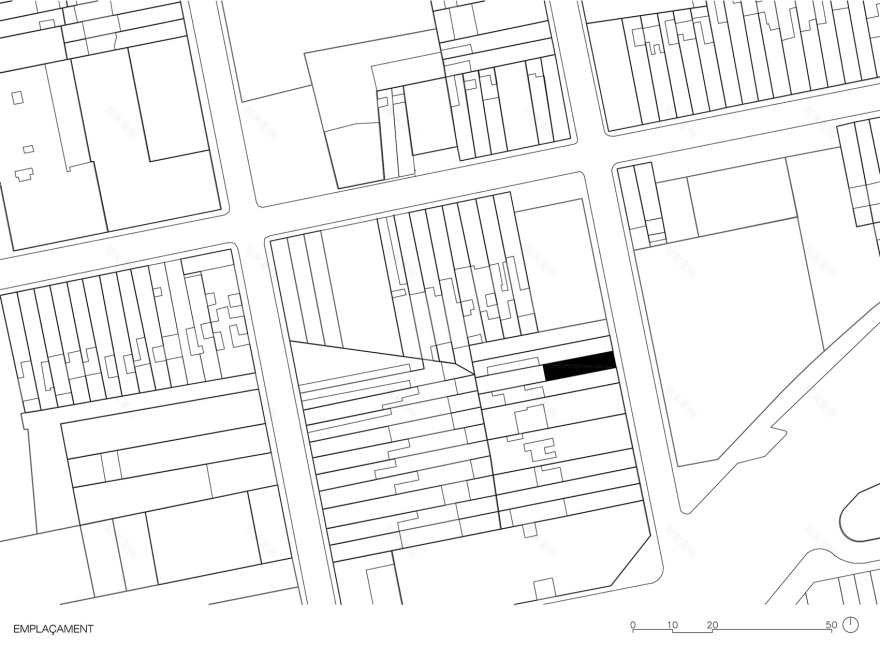
▼平面图,Plan © Vallribera Arquitectes
▼剖面图,Section © Vallribera Arquitectes
Project: 130AUS New row house in Sabadell
Location: Sabadell, Barcelona
Stage: Completed
Total project area: 115 m²
Project year: 2023
Construction year: 2024
Client: Private
Architects: Aleix Gil Noray, Alba Robles Ezquerro, Llorenç Vallribera Farriol
Collaborators: Josep Maria Fosalba (Oftècnics), energy consultant and technical architect; Míriam Molina (MVA), structural consultant; Pol Miret (Recursos Urbans), reuse consultant
Non-renewable primary energy consumption: 21.80 kWh/m²·year
Total CO₂ emissions: 4.10 kgCO₂/m²·year
Heating demand: 7.40 kWh/m²·year
Cooling demand: 0.10 kWh/m²·year
Energy rating: A
Photography: © Marta Vidal
南京喵熊网络科技有限公司 苏ICP备18050492号-4知末 © 2018—2020 . All photos and trademark graphics are copyrighted by their owners.增值电信业务经营许可证(ICP)苏B2-20201444 苏公网安备 32011302321234号
苏公网安备 32011302321234号客服
消息
收藏
下载
最近