

创作上传
VIP
收藏下载
登录 | 注册有礼
查看完整案例

收藏

下载

分享

翻译
Architects:Nidus
Area:330m²
Year:2025
Photographs:Volker Conradus
Manufacturers:JUNG,Bocci,Lacanche,Vallone,Wastberg
Category:Houses,Interior Design
Lead Team:Annelen Vollenbroich, Ana Vollenbroich
Technical Team:Paula Averbeck
Design Team:Anna Vöck
City:Düsseldorf
Country:Germany
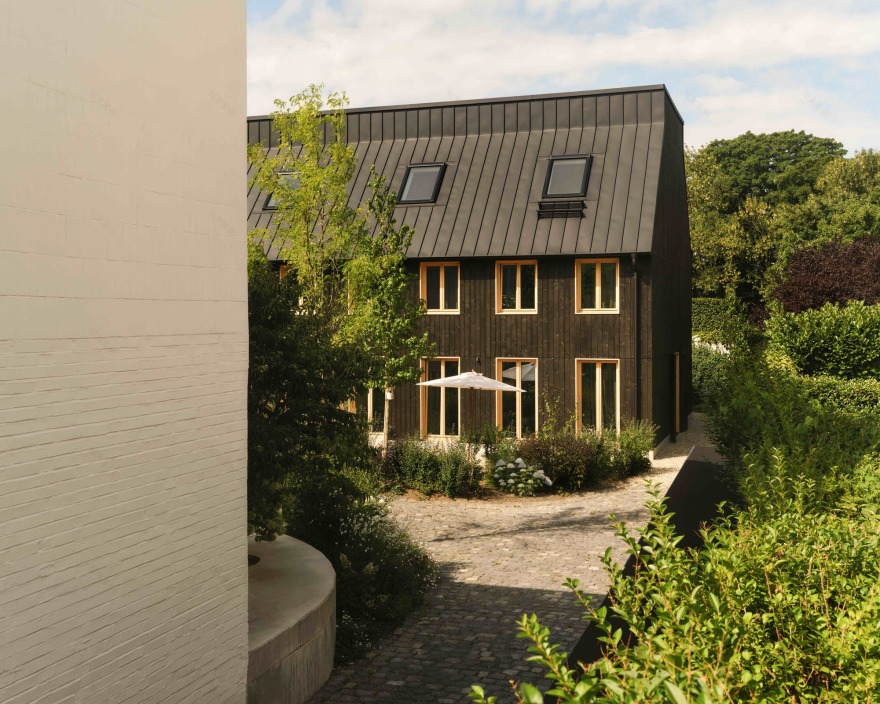
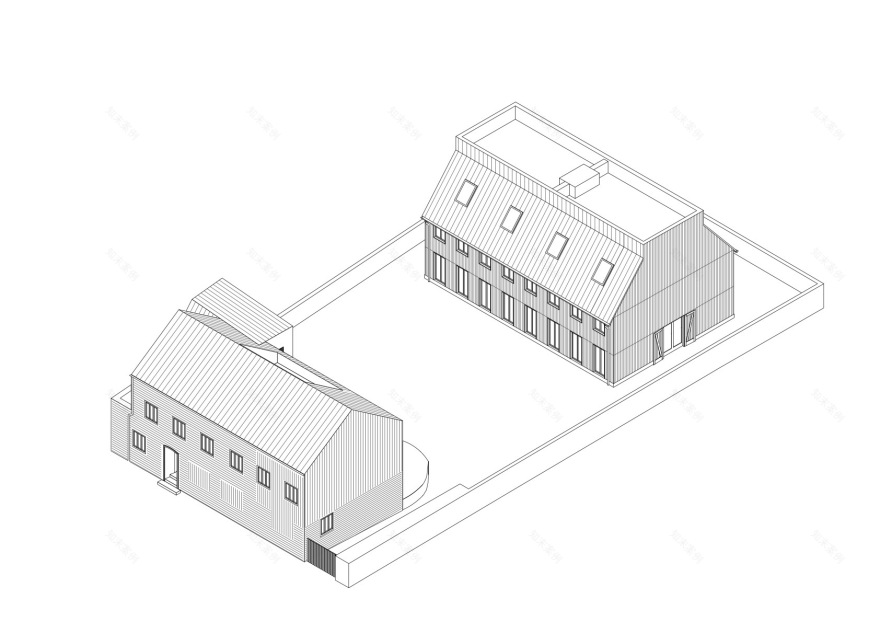
Text description provided by the architects. In Kaiserswerth, where courtyards have shaped the character of the town for centuries, the Kreuzberghof does not present itself as a solitary object but as a continuation of a typology. Between street and garden, an ensemble unfolds: the front house from the 1920s opposite the new timber courtyard house – in between a shared courtyard planted with perennials and covered in ivy, forming its own microclimate in summer, almost a small biotope.

Working with the building revealed that the house had been repeatedly altered, extended and adapted over decades. It was never a singular design but rather a structure that grew over time – almost a patchwork of moments, needs and decisions. Yet precisely this patchwork became its defining character.
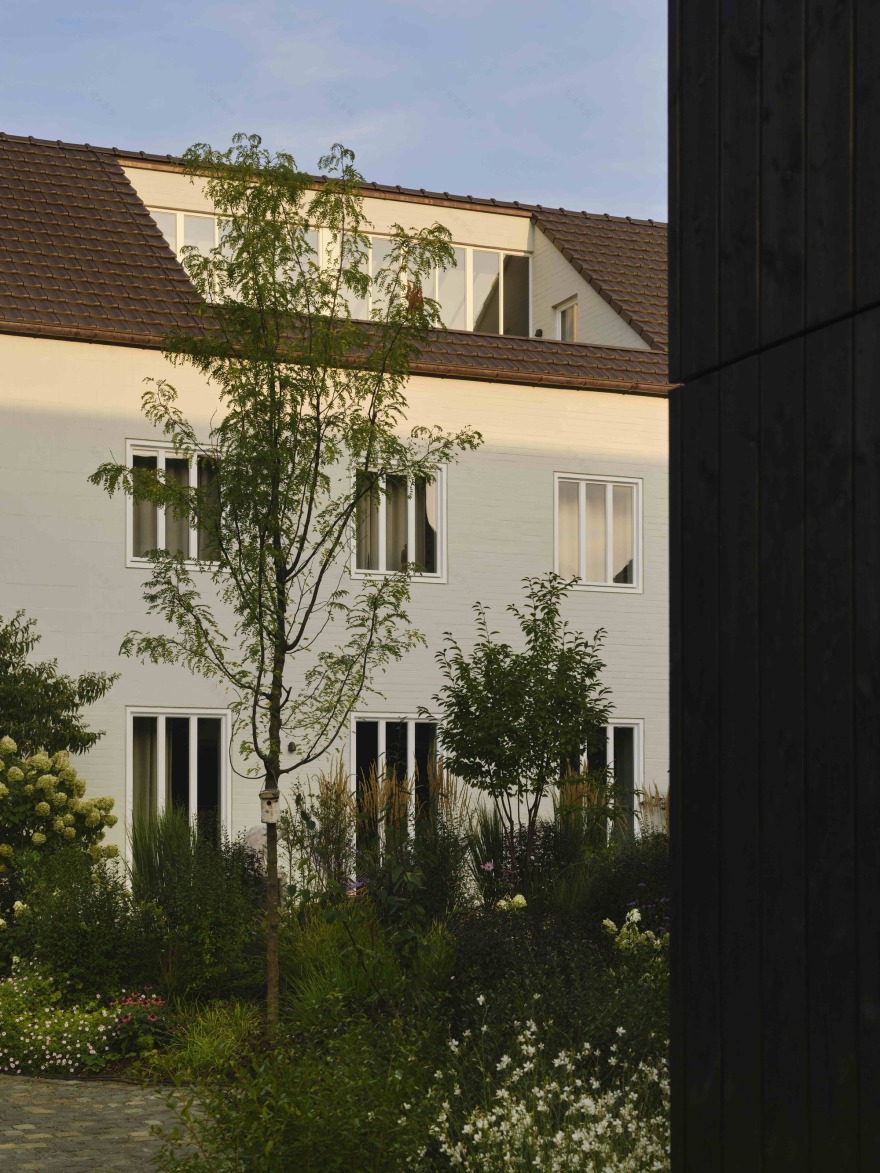
When Nidus acquired the building, the front house had been overlaid and obstructed by layers of later interventions. Instead of replacing it, the project sought to reveal and repair what was already there. The light lime-washed clinker façade faces the street with composure: calm, almost reserved. Newly added sections are laid in a cross bond – a subtle mark of continued building. White, vertically divided timber windows placed on the exterior lend the façade a quiet sculptural precision.

Towards the courtyard, however, the house opens up. A clearly ordered window grid enters into dialogue with the dark timber façade of the new building opposite – light and dark, mass and lightness balancing across the planted courtyard space.

The new architecture does not attempt to smooth over the building's layered past. Instead, it gently binds the fragments together, holding them in a new order while allowing the traces of growth to remain visible. The house still reveals itself as something that has evolved over time rather than as a finished object.
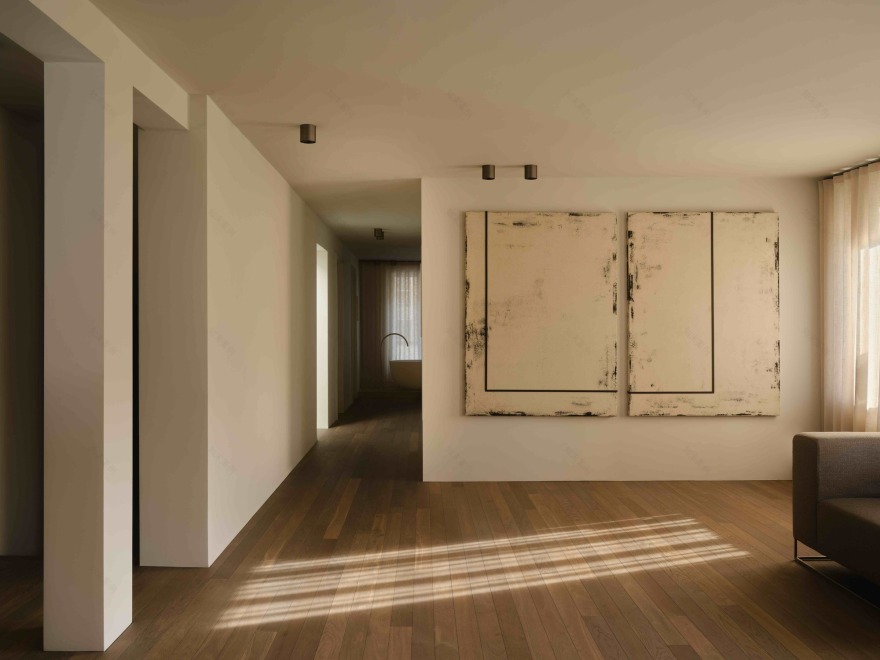
Inside, the basic structure was preserved but the spatial dramaturgy was rethought. Inspired by Josef Frank's essay "The House as Path and Place", the plan connects horizontal and vertical relationships through a sequence of spaces. A path leads through the house, passing more public places such as kitchen and living areas before moving towards quieter rooms.
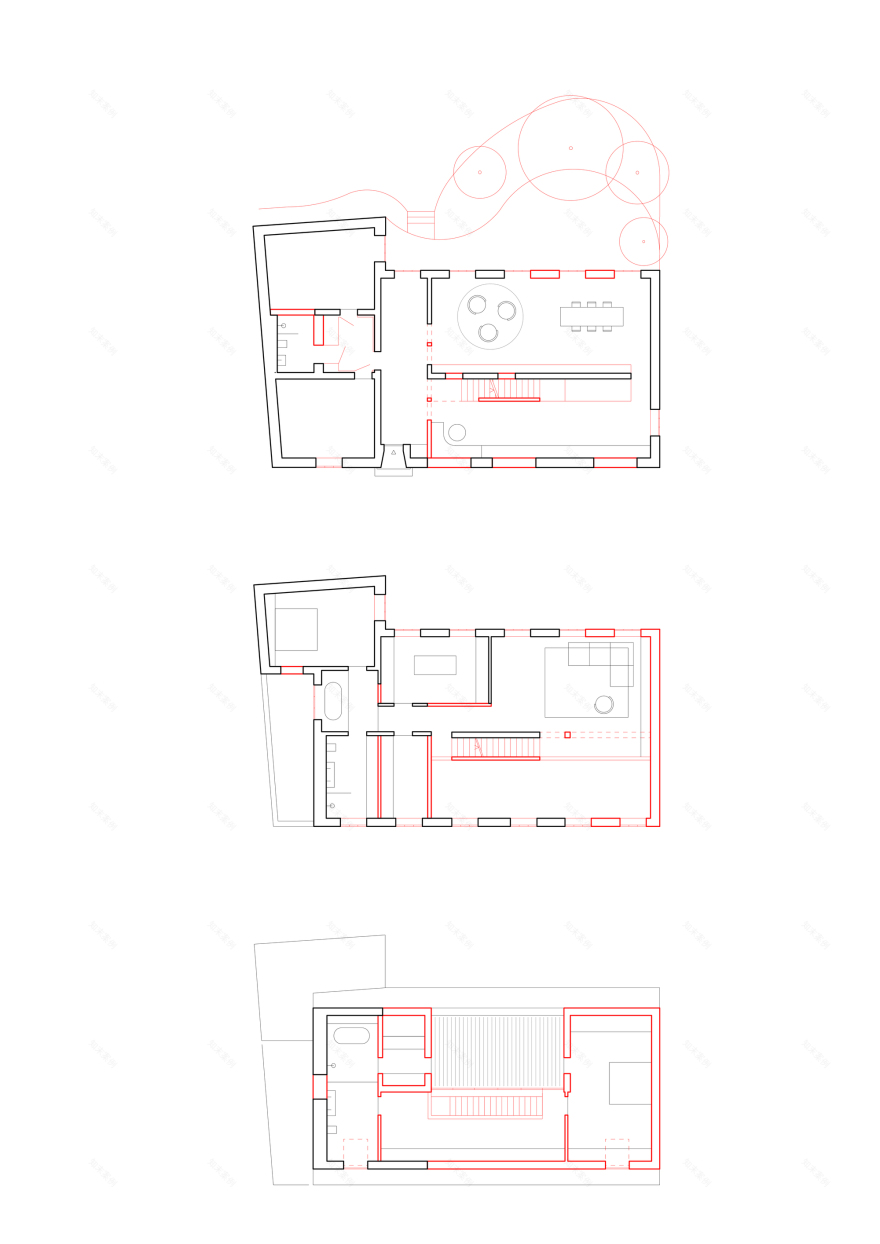
Light becomes the guiding element: brighter and darker zones create changing atmospheres while openings frame views towards the courtyard, into greenery and deeper into the interior. At the centre lies the kitchen – a heightened space created by removing a ceiling. Light now enters deliberately from above and from the courtyard, giving the room a concentrated presence as the heart of the house.
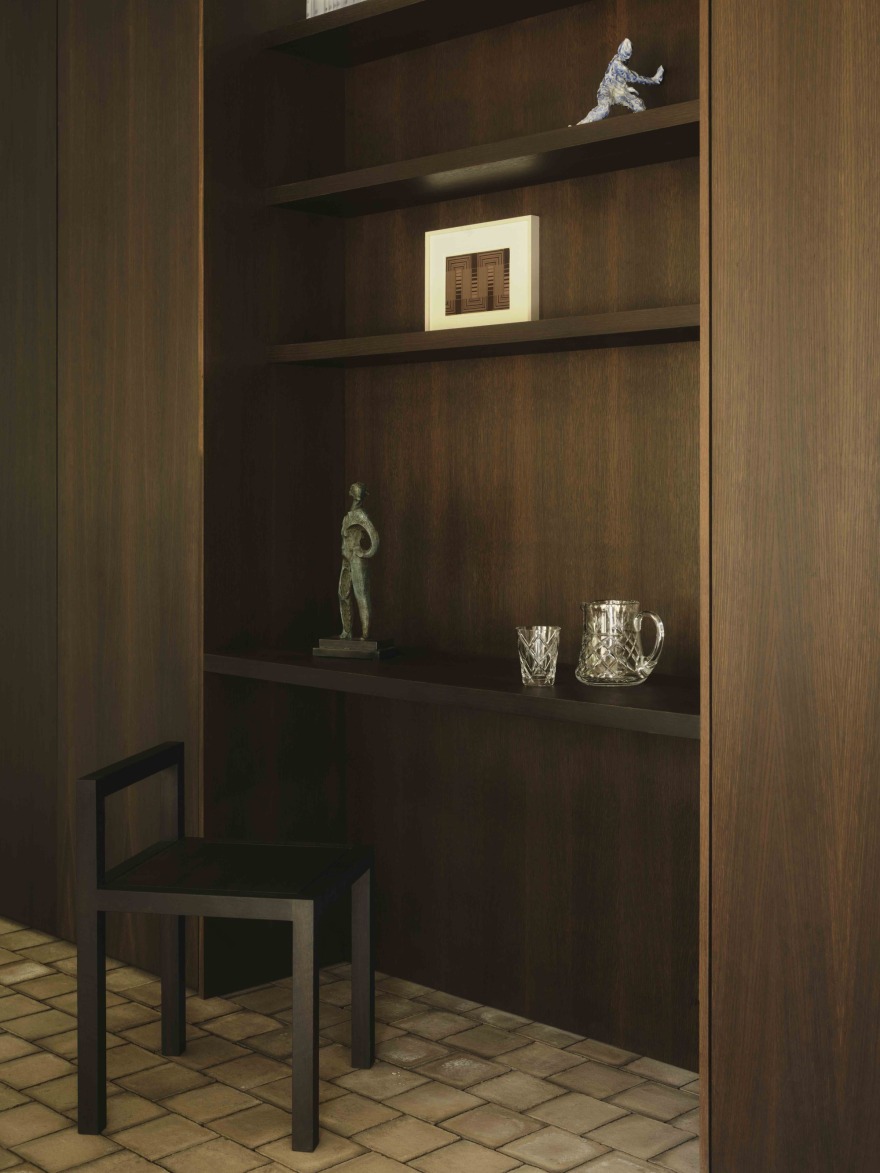
The material palette follows a quiet discipline. Brown clay tiles on the ground floor provide a robust, grounding surface, while narrow dark-stained oak floorboards define the upper levels. Built-in elements in smoked oak meet grey-white painted walls. Few materials, precisely placed – reinforcing the calm spatial order of the house.

Project gallery


南京喵熊网络科技有限公司 苏ICP备18050492号-4知末 © 2018—2020 . All photos and trademark graphics are copyrighted by their owners.增值电信业务经营许可证(ICP)苏B2-20201444 苏公网安备 32011302321234号
苏公网安备 32011302321234号客服
消息
收藏
下载
最近