

创作上传
VIP
收藏下载
登录 | 注册有礼
查看完整案例

收藏

下载

分享
“失落的什特特尔犹太博物馆”的概念源自立陶宛Šeduva一座已被毁灭的村庄及其文化——这一切在1941年8月的一夜之间消失殆尽。村中664名犹太人在附近森林中被处决。随着生命一同消逝的,还有Šeduva悠久而丰富的历史。博物馆的建造旨在纪念这些逝去的生命与文化,这不仅属于犹太文化,也属于欧洲文化的一部分。
The concept behind The Lost Shtetl Jewish Museum is based on a destroyed village of Šeduva and its culture, which vanished overnight in August 1941. 664 Jews from the village were executed in the nearby forests. Along with human lives, Šeduva’s long and rich history was also lost. The museum was built to commemorate the lost lives and culture, which represented not only Jewish but also European culture.
▼项目鸟瞰,aerial view of the project© Kuvatoimisto Kuvio
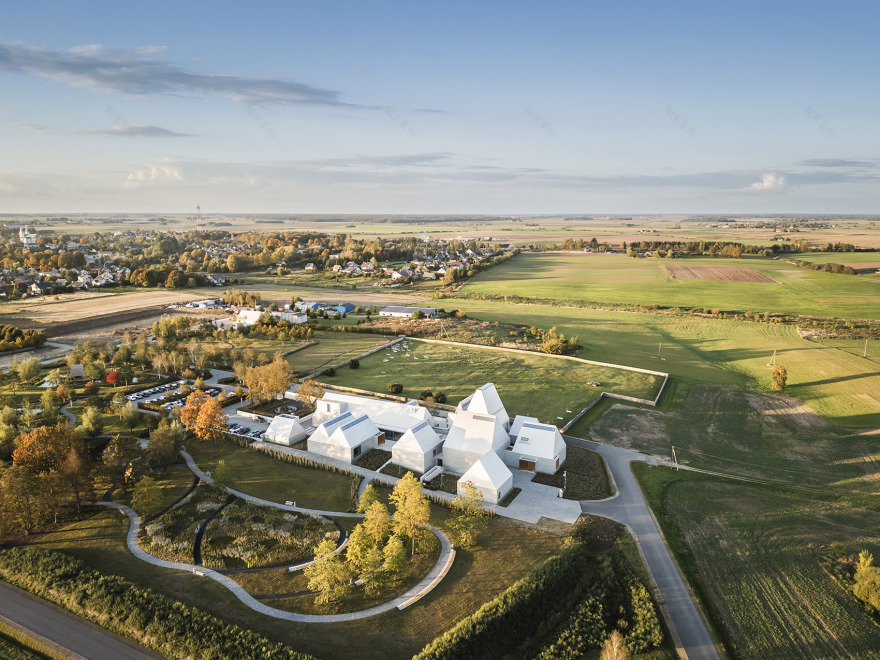

博物馆由一组极简、抽象的“房屋”构成,屋顶为四坡顶形式。它们共同营造出一种如梦似幻的聚落景观——一个村庄,一个“shtetl”。建筑本身成为失落村庄的象征。
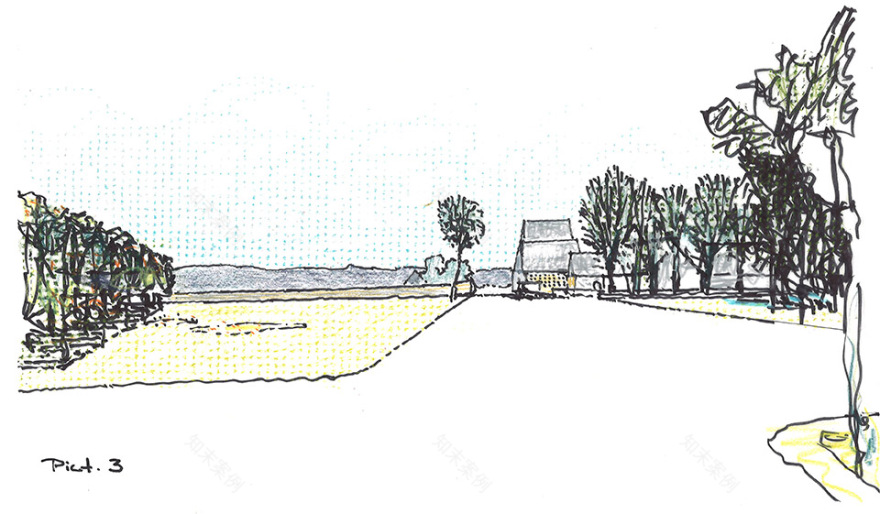
▼概念草图,concept sketch©Lahdelma & Mahlamaki Architects

The museum consists of minimalist, abstract ‘houses’ with hip roofs. They form a dreamscape of a group of houses, a village – a shtetl. The building is a symbol of the lost village.
▼如梦似幻的聚落景观,a dreamscape of a group of houses© Kuvatoimisto Kuvio


▼建筑本身成为失落村庄的象征,The building is a symbol of the lost village©Aiste Rakauskaite

展厅的建筑与功能概念体现在屋顶设计之中:展厅上部呼应外部体量的形态,屋脊上的天窗使自然光得以被控制地引入室内。展厅上部营造出开敞的空间感,而下部则以展览的集中与沉浸为特征。入口层的展厅遵循同样的原则,同时提供经过精心设计的对外景观视野。一层的员工空间亦是如此,可眺望历史墓地。空间设计遵循通用性与长期使用性的原则:展厅具备高度灵活性,即使在数十年后也能够更新展览内容。▼结构剖面,structure section©Lahdelma & Mahlamaki Architects

The architectural and functional concept of the galleries is reflected in their roof design. The upper part of the gallery echoes the shape of the outer shell. Skylights in the roof ridge allow natural light to enter the space in a controlled manner. The upper part of the gallery creates a sense of open space, while the lower part is characterized by the intensity of the exhibition. The galleries on the entrance floor follow the same principle, but they offer carefully considered views of the open landscape outside. This also applies to the staff facilities on the first floor, which have a view of the historic cemetery. The design of the spaces has been guided by the principle of general applicability and long - term usability: the gallery spaces allow for the renewal of exhibitions even decades later.
▼屋脊上的天窗,skylights in the roof ridge©Andrew Lee

▼希望峡谷,canyon of hope©Andrew Lee

▼入口画廊,entrance gallery©Andrew Lee
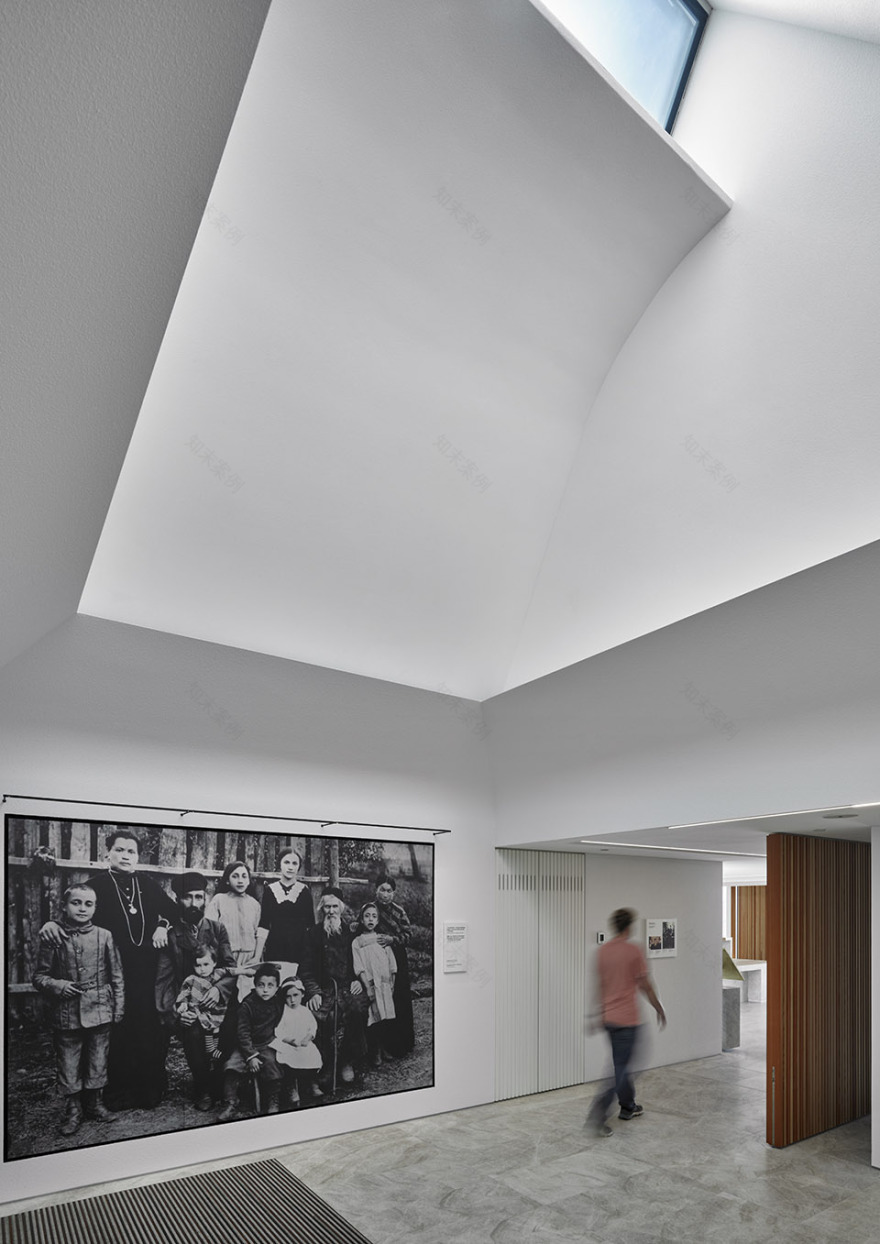
▼人民之书,People of the Book©Andrew Lee

▼走廊,lobby©Aiste Rakauskaite

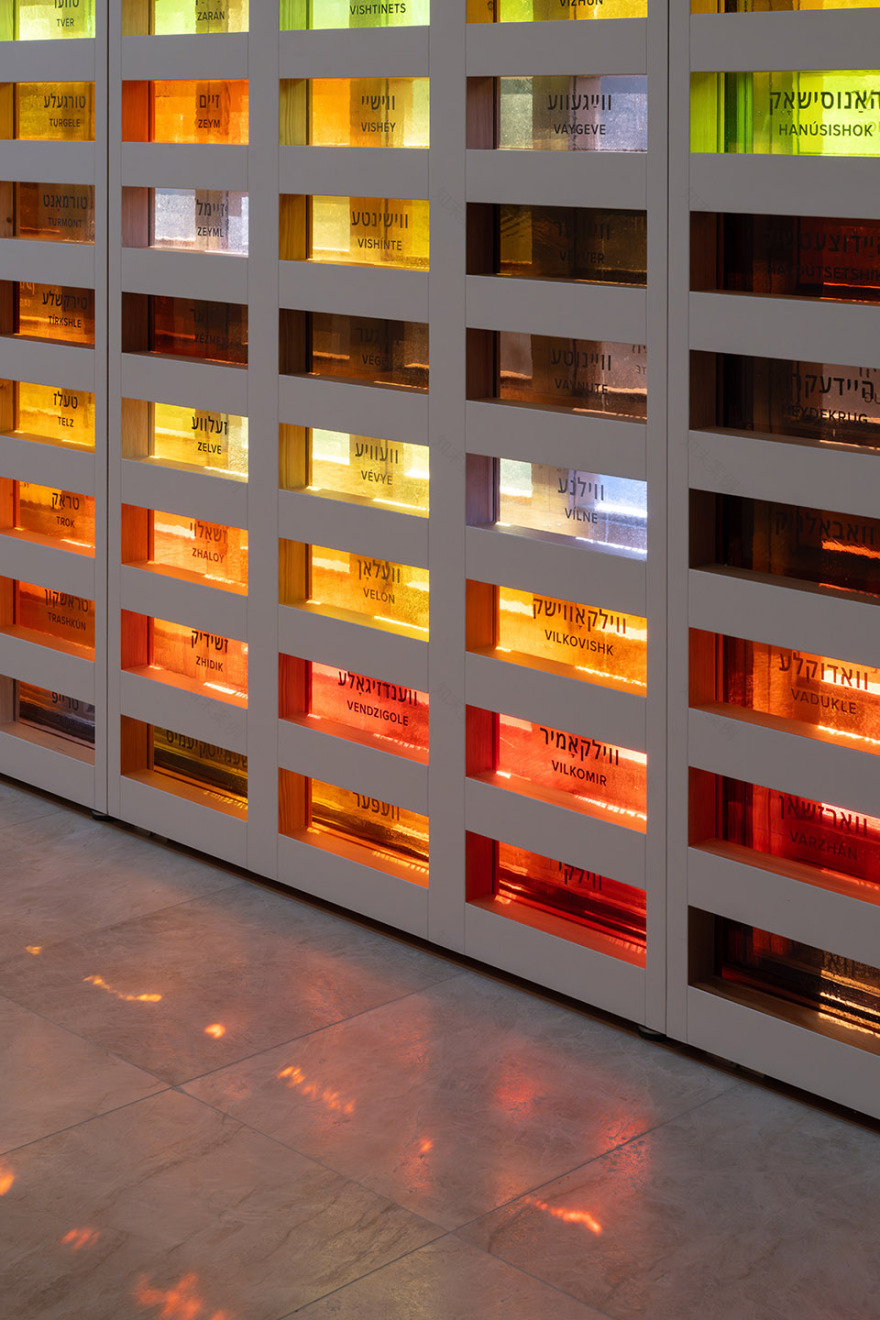
▼纪念墙阶梯,Memorial wall staircase©Aiste Rakauskaite

▼立陶宛大屠杀纪念墙,Lithuanian holocaust and remembrance©Kuvatoimisto Kuvio

博物馆立面采用海洋级铝材,这是一种耐久且可回收、寿命长的材料。铝板的形态让人联想到木瓦,通过排列形成如鳞片般的表皮,在一天与四季的光线变化中呈现出不同的反射效果。近看时,铝板表面可见压制形成的点状纹理:有时显得平滑,有时则纹理更加突出;色彩在白色、银灰色之间变化,有时柔和,有时鲜明。该材料使建筑与周围景观及天空相融合,同时也呼应了立陶宛乡村常见的风化农舍。屋脊方向与坡度的变化则营造出一种有意识的雕塑性“随机感”。除海洋级铝材与木材外,室内外还可见温暖色调的浅色石英岩。
The museum’s facades are made of marine aluminium, a durable and recyclable material with a long life span. The aluminium sheets, reminiscent of wooden shingles, are arranged to form a scale-like surface that lives and reflects light according to the cycle of the day and the seasons. Up close, the surface of the sheets reveals a dotted texture pressed into it. The surface appears smooth at times, while at other times its texture becomes more prominent. It appears sometimes white, sometimes silver-grey, sometimes muted and sometimes vibrant. The chosen material blends the building into the landscape and the sky. This choice was also a reference to the weathered farm buildings typical of the Lithuanian countryside. The directions of the roof ridges and their varying steepness create a deliberate, sculptural randomness. In addition to marine aluminium and wood, warm-toned light quartzite stone is visible in both the interior and exterior.
▼博物馆立面,the museum facade©Aiste Rakauskaite


▼排列形成如鳞片般的表皮,form a scale-like surface©Aiste Rakauskaite


建筑的承重结构采用现场浇筑混凝土完成,这在立陶宛公共建筑法规框架下几乎是唯一可行的方案。同时,复杂多样的机电系统、建筑安全等级要求以及相关法规,也使得在设计与施工过程中需要投入大量精力,以将技术设施尽可能隐藏于视线之外。
The load-bearing structures of the building were cast on site using concrete. This solution was practically the only one possible within the framework of Lithuanian legislation governing public construction. The versatile technical equipment, the building’s security classification, and Lithuanian building regulations also required time and effort in the design and construction work to keep the technical installations out of sight.
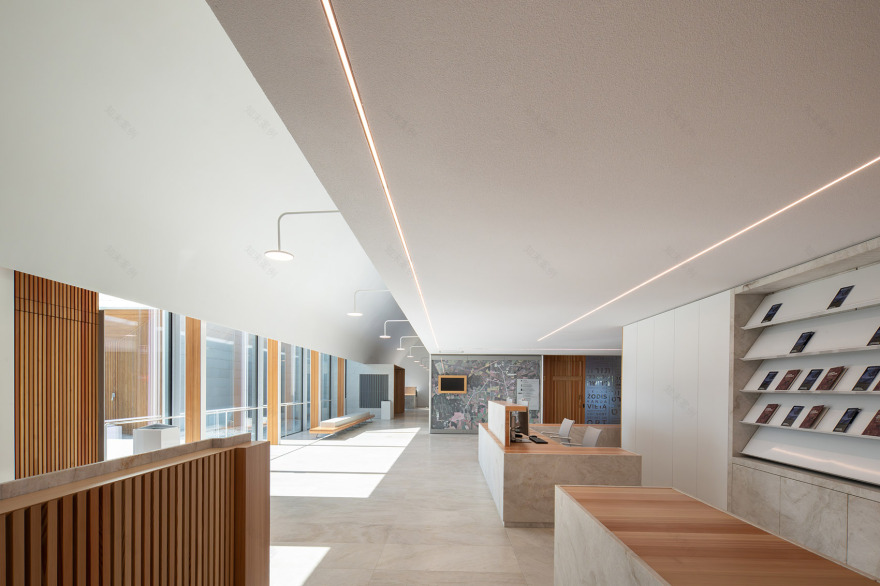
▼走廊,lobby©Aiste Rakauskaite

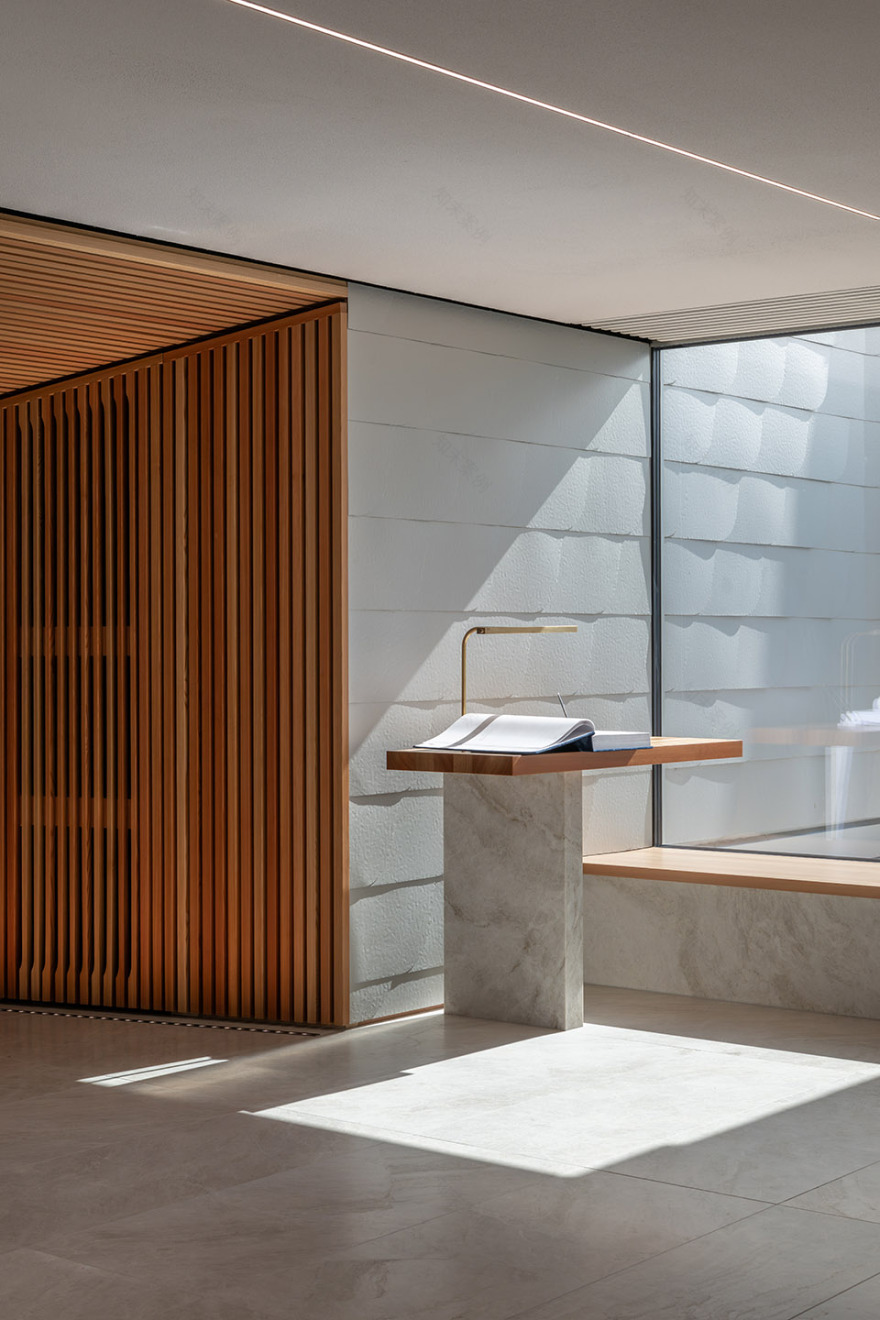
▼入口处到访者签名簿,Visitor guestbook©Aiste Rakauskaite

▼入口处到访者签名簿,Visitor guestbook©Aiste Rakauskaite
▼楼梯细部,staircase detail©Aiste Rakauskaite

▼楼梯细部,staircase detail©Kuvatoimisto Kuvio

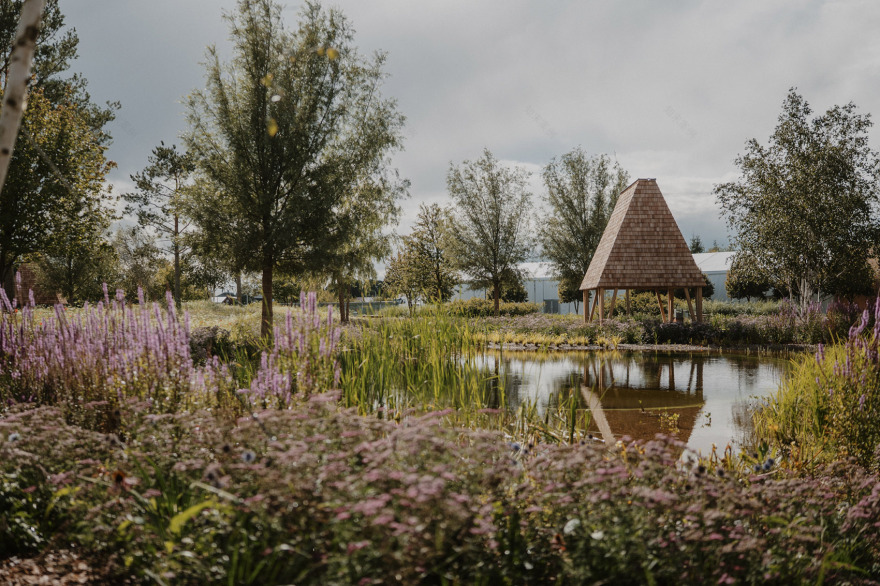
博物馆周边被设计为纪念公园,其核心理念是“最后的旅程”。公园通过一系列景观场景再现Šeduva的犹太人在被押往处决地——附近森林——途中可能经历的环境:白桦林大道、开花草甸、湿地以及果园。园内还设置了若干落叶松庇护构筑物,其屋顶将随着时间逐渐呈现自然的灰色。
The museum’s surroundings have been designed to serve as a memorial park. The guiding principle has been the idea of the last journey. The park features a series of landscapes that the Jews of Šeduva might have encountered on their way to the nearby forests, where they were executed: a birch alley, flowering meadows, wetlands, and an orchard. A few larch shelters have been erected in the park, whose roofs are gradually taking on their own grey colour.
▼纪念公园,a memorial park©The Lost Shtetl Museum
▼通往主入口的道路,Route to the main entrance©The Lost Shtetl Museum
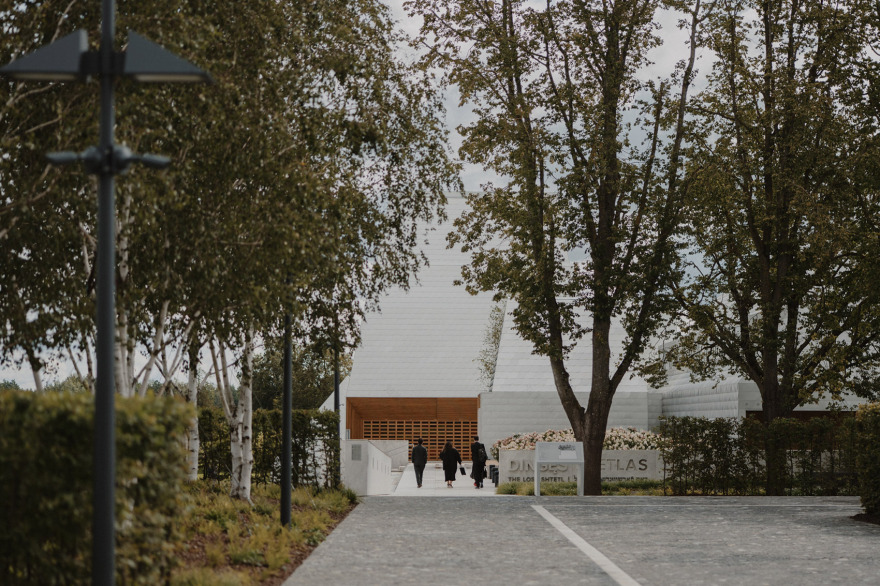
▼通往主入口的道路,Route to the main entrance©Kuvatoimisto Kuvio

该项目是一项重要的国际合作成果,汇集了设计师、建造方与业主机构的共同努力,可谓独一无二。来自美国、瑞士、意大利、英国、荷兰、爱沙尼亚、芬兰以及立陶宛的多家公司参与了博物馆的设计与建造。
The construction project has been a major international collaboration between designers, builders, and the client organization. It can rightly be described as a unique project. Companies from the USA, Switzerland, Italy, the UK, the Netherlands, Estonia, Finland, and Lithuania have participated in the design and construction of the museum.
▼纪念墙外观,Memorial wall outside© Aiste Rakauskaite
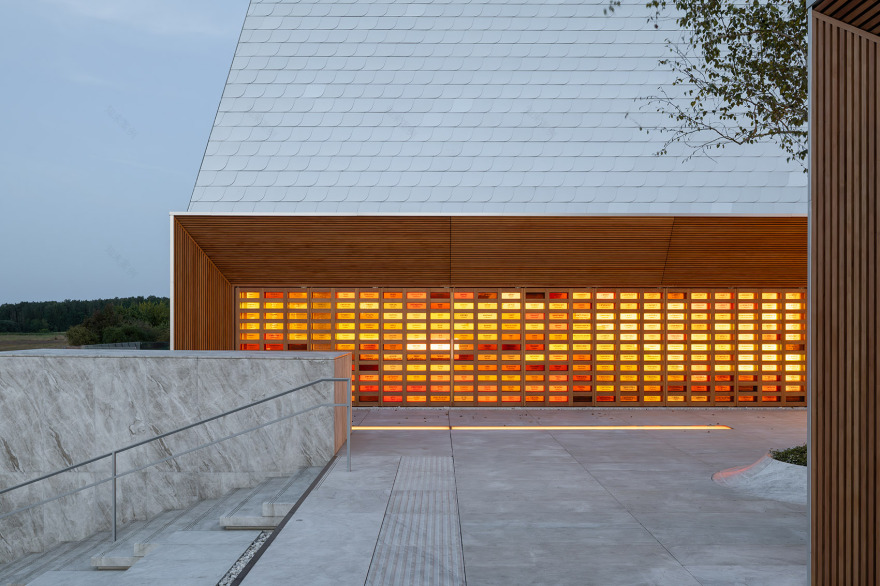
▼傍晚景象,view at dusk©Kuvatoimisto Kuvio


▼傍晚景象,view at dusk©Kuvatoimisto Kuvio

▼夜景,night view©Kuvatoimisto Kuvio

▼一层平面图,ground floor plan©Lahdelma & Mahlamaki Architects

▼二层平面图,first floor plan©Lahdelma & Mahlamaki Architects

▼三层平面图,third floor plan©Lahdelma & Mahlamaki Architects

▼剖面图,section©Lahdelma & Mahlamaki Architects


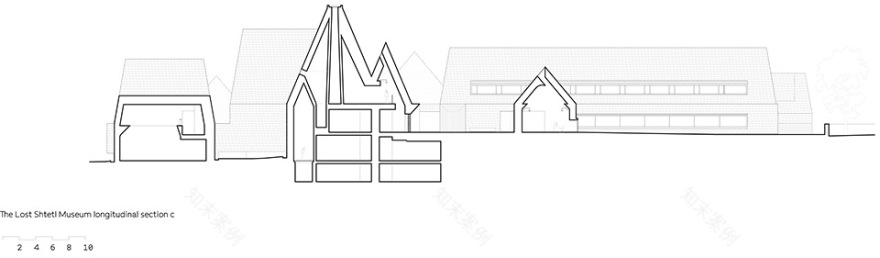

▼细部,detail©Lahdelma & Mahlamaki Architects

Location: Šeduva, Lithuania
Year: 2025
Size: 4,900 m2
Client: The Lost Shtetl Jewish Museum
Programme: Exhibition spaces, multipurpose hall, administration spaces, library, café



南京喵熊网络科技有限公司 苏ICP备18050492号-4知末 © 2018—2020 . All photos and trademark graphics are copyrighted by their owners.增值电信业务经营许可证(ICP)苏B2-20201444 苏公网安备 32011302321234号
苏公网安备 32011302321234号客服
消息
收藏
下载
最近