

创作上传
VIP
收藏下载
登录 | 注册有礼
查看完整案例

收藏

下载

分享

翻译
Architects:Rever & Drage Architects
Area:450m²
Year:2025
Photographs:Tom Auger
Manufacturers:Aanesland Limtre AS,Svenneby Sag og Høvleri
Category:Houses
Lead Team:Tom Auger
Design Team:Rever & Drage Architects
General Contractor:Ansnes Entprenør
City:Raelingen
Country:Norway

Text description provided by the architects. The project in Chr. Tomter's veg in Rælingen represents a careful and deliberate expansion of a modest traditional home into a rich and spatially complex residence for a large and active family. The original house, a small red-painted wooden dwelling with white-framed windows in a popular and romantic vernacular style, was cherished by the owners for its character and familiarity. Their ambition was to preserve that charm while increasing the living area and creating a variety of new spaces suited to contemporary family life.

The plot is long and narrow, wedged between two roads. To the east lies the street and the local neighbourhood, while to the west, the ground falls away towards a less interesting road and a beautiful forested landscape. The topography and spatial constraints became key drivers in shaping the architectural response.
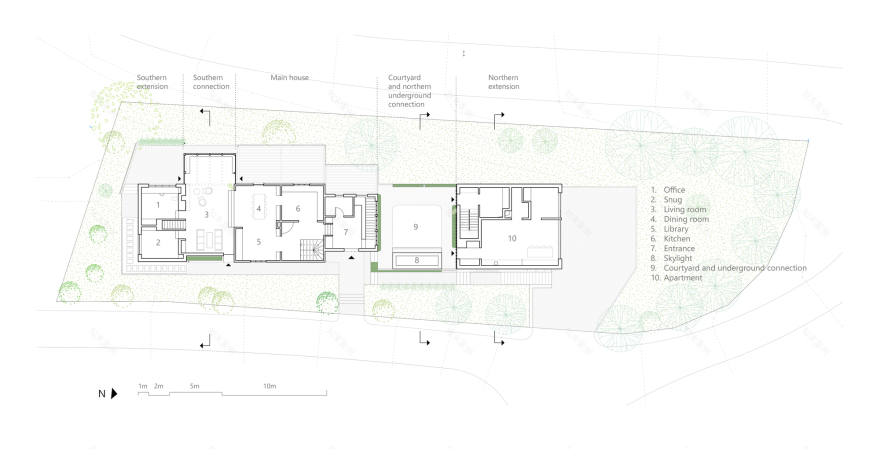

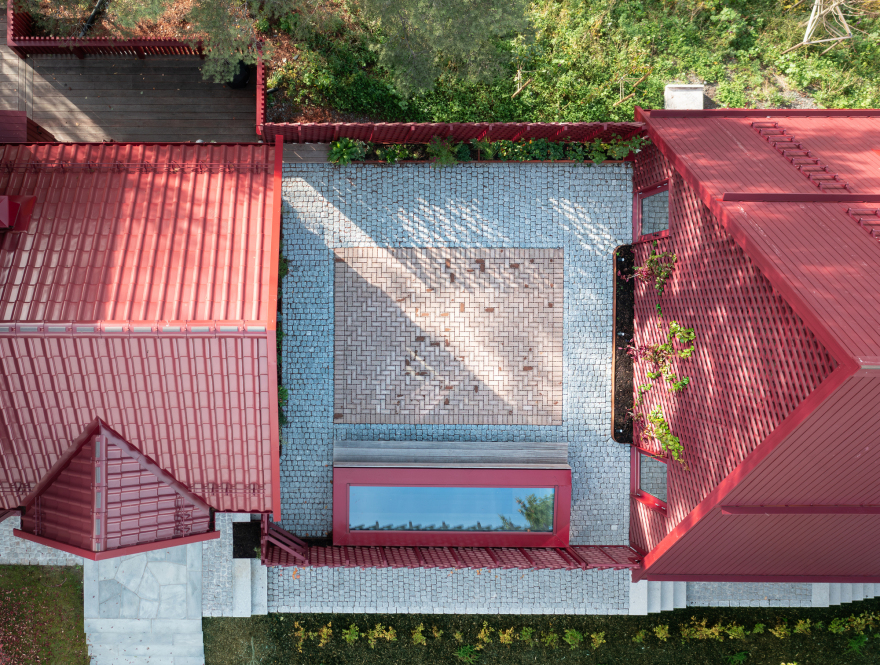
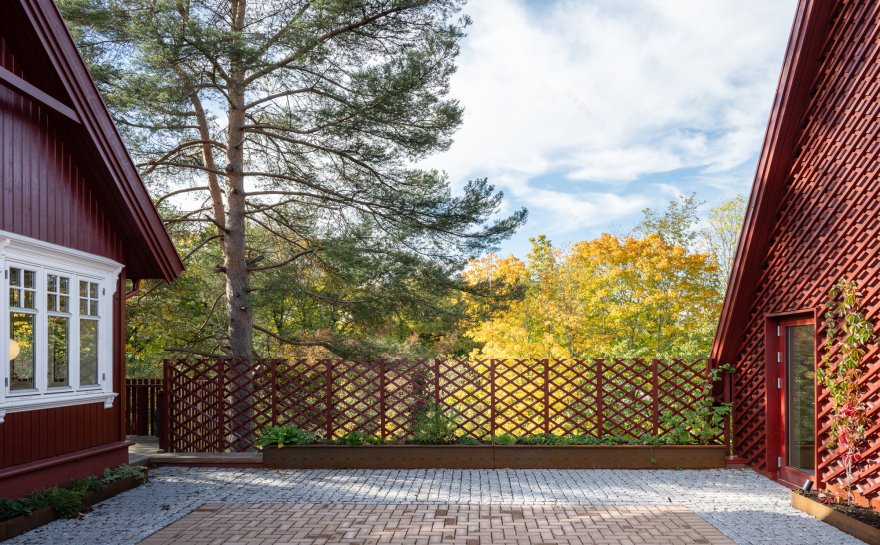
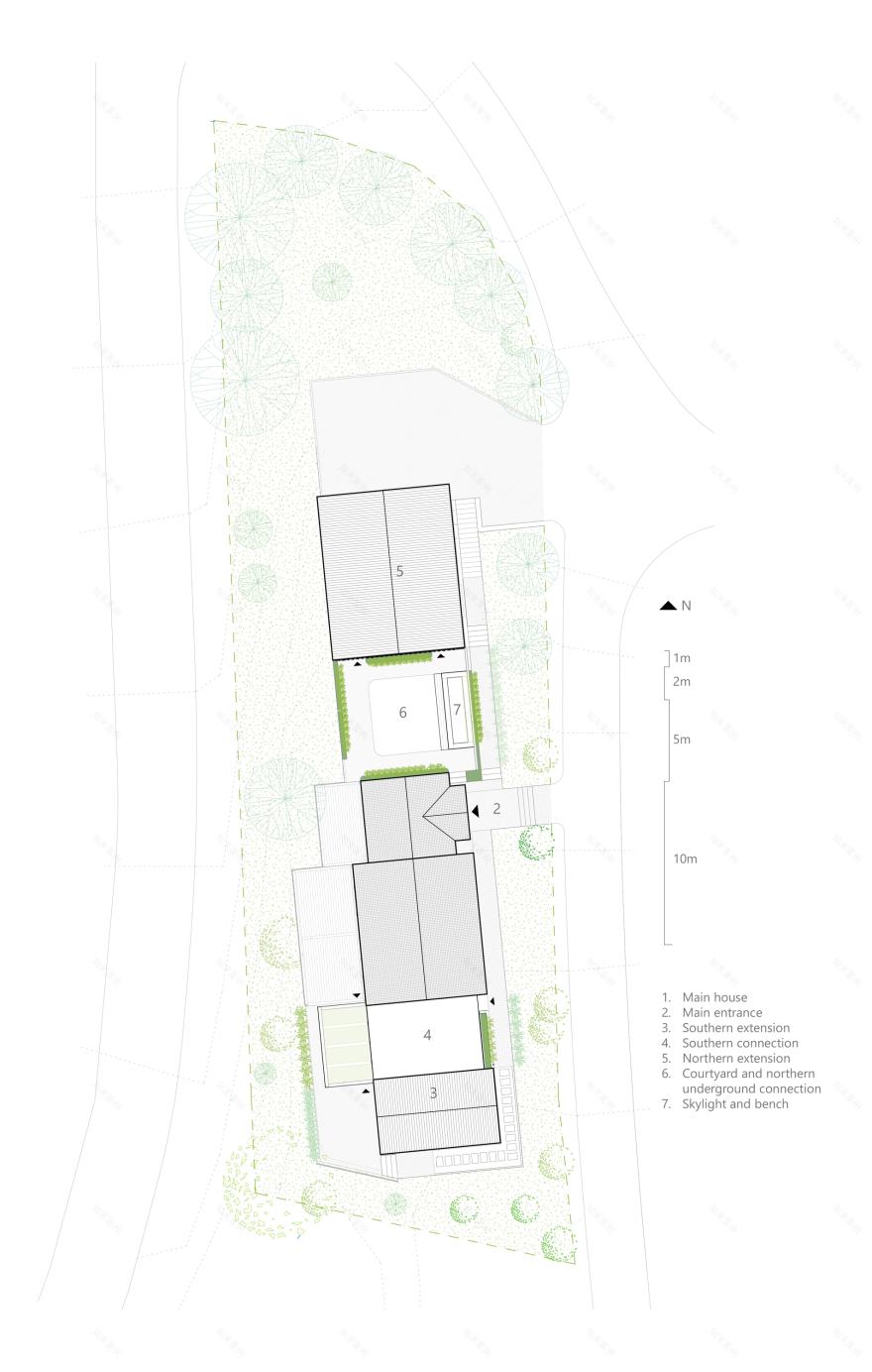
The design solution was to add two new volumes—one to the north and one to the south—linked to the existing house through open or semi-enclosed transitions. Conceptually, the project can be read as three red houses in a row, separated by two green, open spaces. These spaces, one outdoors—planted and paved—and one indoors facing the forest to the west, are integral to the experience of the house, bringing light, greenery, and seasonal change close to the interiors.


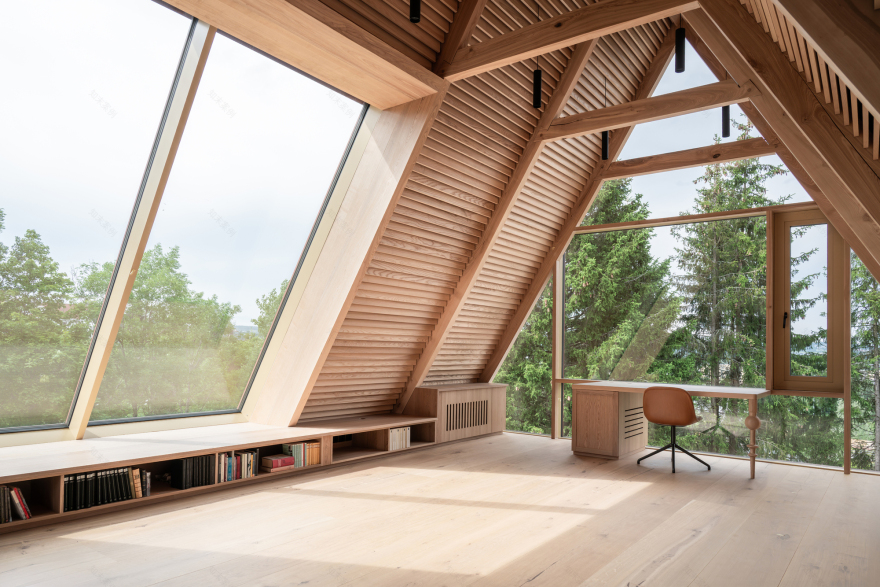
The southern building rises two storeys and contains a bedroom, bathroom, a home office, and a snug. Between this volume and the original house sits a glazed winter garden and a fireplace lounge oriented towards the sunset and the leafy forest beyond. The northern building is organised across three levels: a garage and technical spaces on the lower floor, a self-contained rental unit above, and an atelier-like study tucked under the sloping roof at the top. Between the buildings lies a passageway and a larger multi-purpose space located in a partially sunken basement level.

The result is an intricate collection of interconnected places—each with its own character, scale, and atmosphere. The architecture enables both togetherness and retreat, accommodating the dynamics of family life through tailored solutions and subtle spatial transitions.

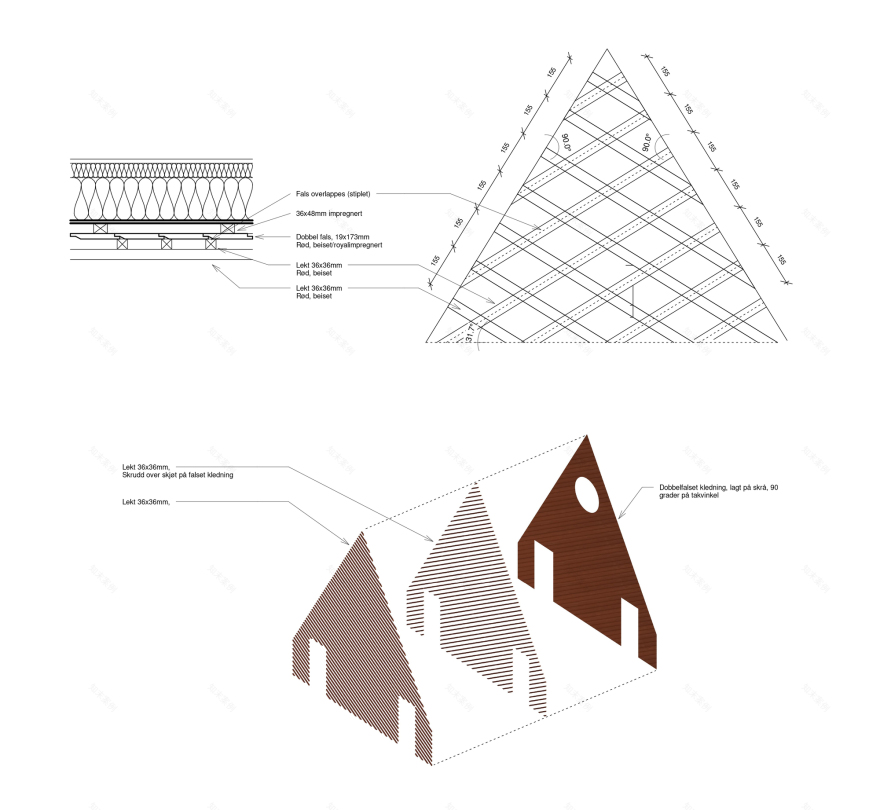
Externally, the material palette explores a nuanced spectrum of reds: painted timber cladding, brick, tiles, and steel surfaces all share a chromatic kinship without uniformity. To avoid monotony and maintain a link to the original building, a single blue door and a patch of white window frames have been preserved as a gentle reminder of the house's earlier life. The dialogue between the red buildings and the surrounding greenery evokes timeless Nordic associations—the red house in the forest, the cultivated and the wild, the domestic and the natural.


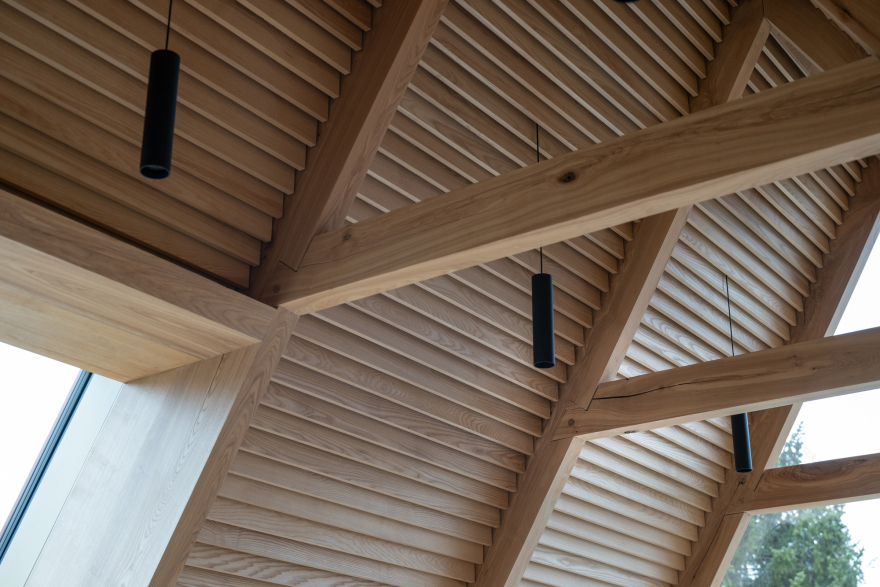
Inside, light ash wood, painted surfaces, patterned wallpapers, brick, and exposed concrete coexist in a tactile interplay. Refined brass and timber details meet raw structural materials in a manner that recalls modernist craftsmanship. Together, these contrasts create a living environment that is both warm and contemporary—rooted in tradition yet confidently forward-looking.
Project gallery











南京喵熊网络科技有限公司 苏ICP备18050492号-4知末 © 2018—2020 . All photos and trademark graphics are copyrighted by their owners.增值电信业务经营许可证(ICP)苏B2-20201444 苏公网安备 32011302321234号
苏公网安备 32011302321234号客服
消息
收藏
下载
最近