

创作上传
VIP
收藏下载
登录 | 注册有礼
查看完整案例

收藏

下载

分享

翻译
Architects:Guča arch.
Area:71m²
Year:2025
Photographs:Matej Hakár
Manufacturers:Santa & Cole,4B,Davide Groppi,HAY,Hirnholz,Ingo Maurer,Lando,Ligne Roset,Motostack
Category:Cabins & Lodges,Houses
Design Team:Peter Čurlej, Matej Fekiač, Simona Kolimárová
Landscape Architecture:Mils_studio
General Contractor:Strüby
City:Ingenbohl
Country:Switzerland

Text description provided by the architects. The Swiss Alpine Cabin Reconstruction is situated in the demanding context of Central Switzerland, within the Canton of Schwyz, on a steep slope overlooking the town of Brunnen. Located on the shores of Lake Uri within a protected bird sanctuary and adjacent to the Stockflue climbing cliff, the project represents a sensitive dialogue between the built form and the rugged Alpine landscape.


A significant setback occurred early in the process when the technical condition of the original stone and log structure was assessed. While the project was initially conceived as a less extensive renovation, demolition works revealed that the log portion was structurally unsound and required complete removal. Furthermore, the design had to navigate rigorous local building codes that mandated the preservation of the original footprint, height, and overall character, including strict limits on glazing ratios for facades visible from public areas to respect the local genius loci.

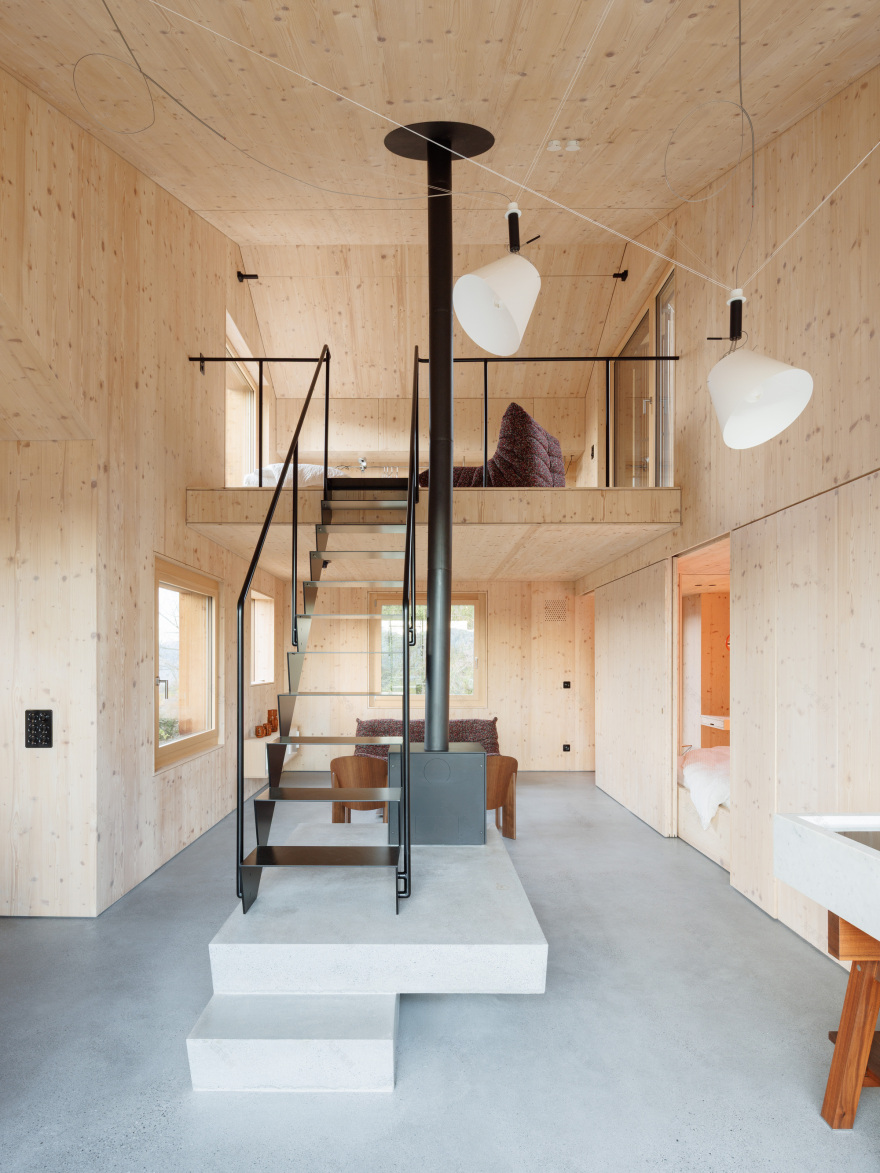

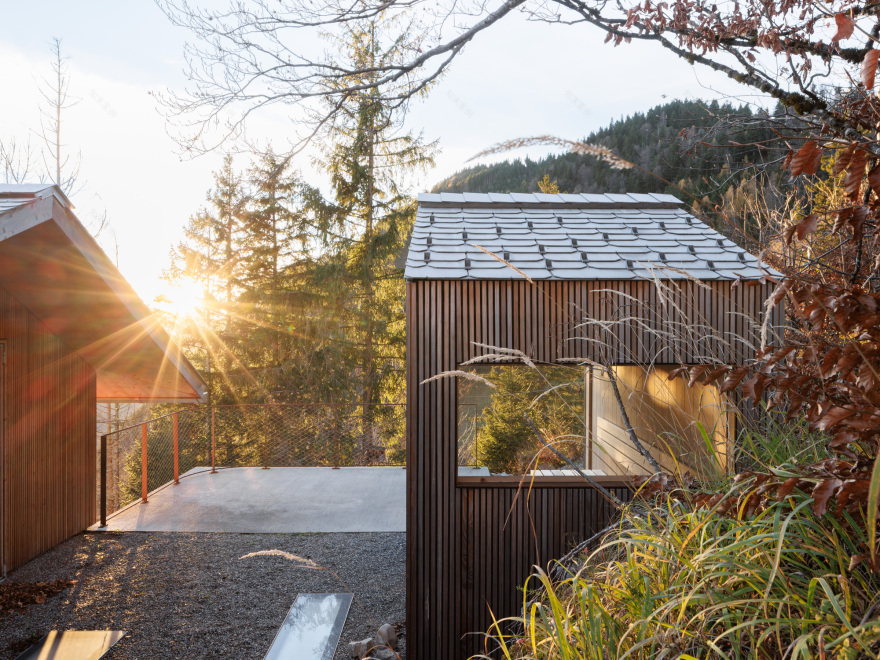
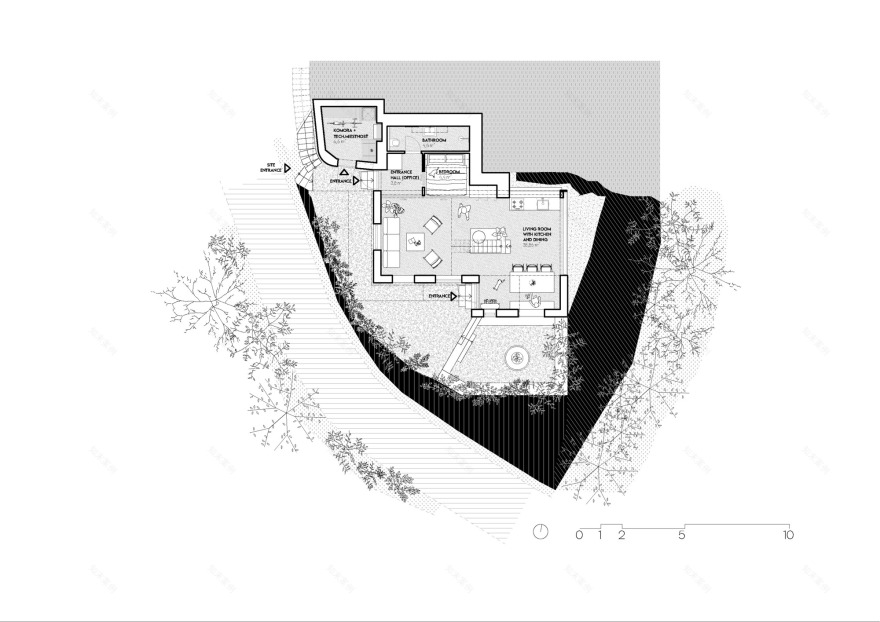
Spatially, the cabin plot is configured into three zones determined by the natural morphology of the terrain, which was carefully modeled to create distinct functional areas. A central entry zone connects to a south-facing social area recessed into the slope that features an exterior terrace with a raw concrete fireplace, while a northern differentiated zone features a standalone exterior sauna whose geometry mirrors the main house.
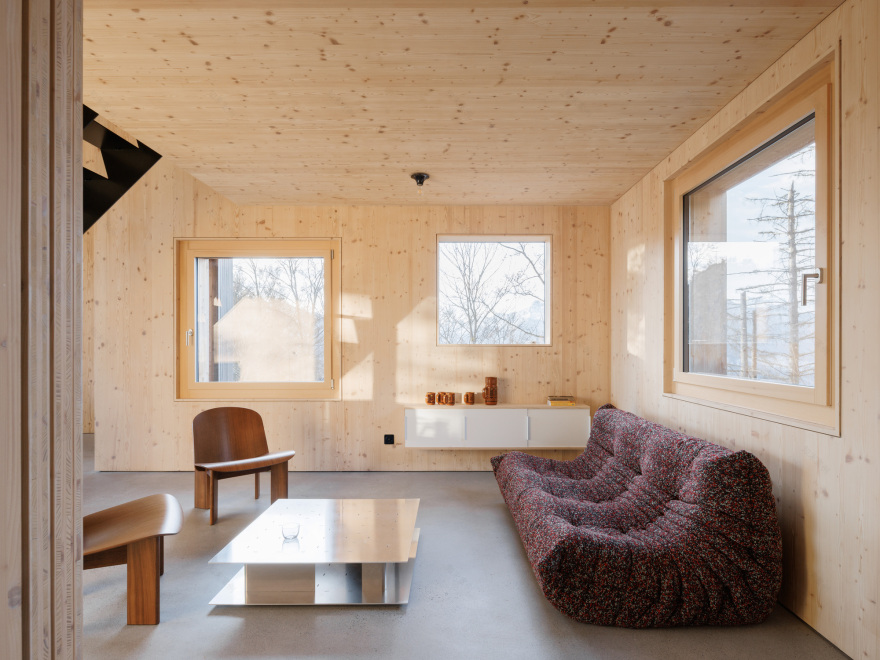

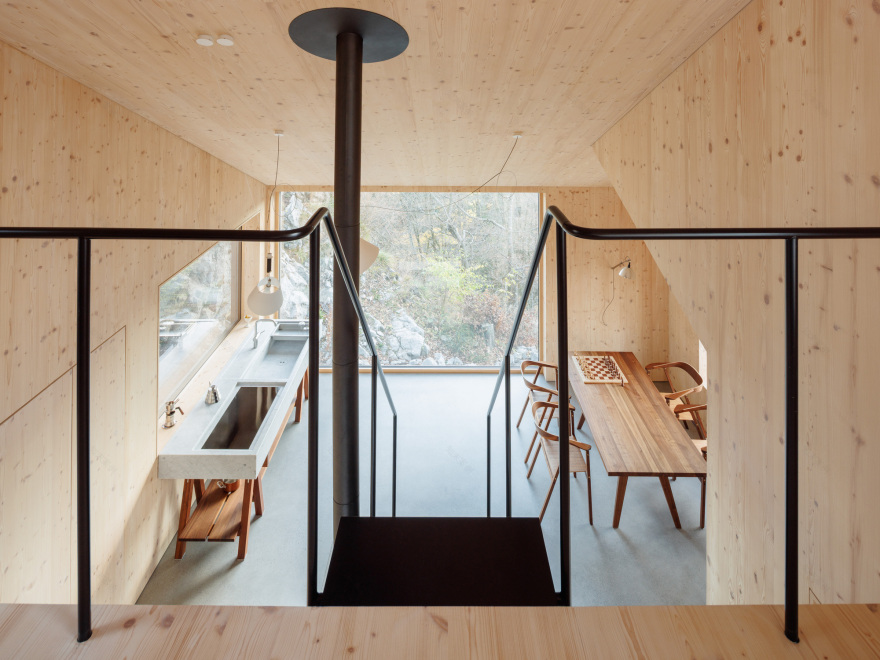
The interior is defined by maximum flexibility within an open plan featuring minimal fixed elements. The space is dominated by a central concrete "sculpture" that houses a fireplace and supports a subtle steel staircase serving as the only stationary vertical anchor. This fluidity is enhanced by sliding walls that allow the sleeping quarters—partially recessed into the hillside and illuminated by walk-on skylights—to be either isolated or integrated into the living space. The largest glass surfaces open toward a steep slope inaccessible to the public, ensuring privacy while providing unique views into the tree canopies, thereby transforming the cabin into a quiet observatory of the Alpine landscape.

Project gallery







南京喵熊网络科技有限公司 苏ICP备18050492号-4知末 © 2018—2020 . All photos and trademark graphics are copyrighted by their owners.增值电信业务经营许可证(ICP)苏B2-20201444 苏公网安备 32011302321234号
苏公网安备 32011302321234号客服
消息
收藏
下载
最近