

创作上传
VIP
收藏下载
登录 | 注册有礼
查看完整案例

收藏

下载

分享
当我开始设计自己在奄美大岛中心的住宅时,从未想过它最终会与电网断开连接。然而,随着环境加速恶化、极端天气成为常态,这一选择变得不可避免。这一决定的催化剂是三年前我购入的一座山——在那里,我开始发展自己的微型基础设施以实现独立生活,在为不可预见的危机做准备的同时,也为老龄化、人口减少地区探索新的韧性模式。
When I began designing my own house in the center of Amami Island, I never imagined it would eventually be disconnected from the power grid. Yet, as environmental degradation accelerates and extreme weather becomes the norm, that choice became inevitable. The decision was catalyzed by a mountain I purchased three years earlier—a place where I began developing my own micro-infrastructure to live independently, preparing for unforeseen crises while envisioning new forms of resilience in aging, depopulated regions.
▼住宅外观,Overall view © Toshihisa Ishii

▼室内概览,Overall view © Toshihisa Ishii
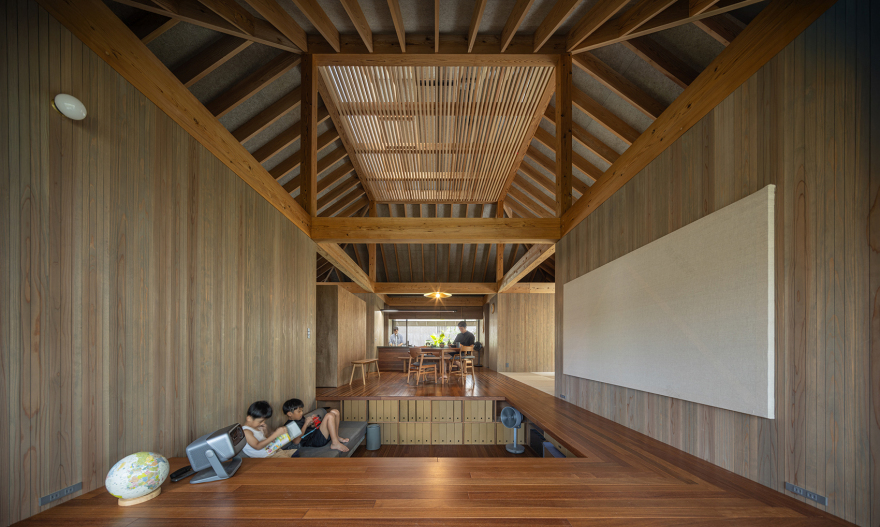

事实证明,在山林深处实现完全的自给自足十分困难。主要挑战在于该岛出乎意料的低太阳辐射量——竟与日本北部相当。在评估了风能、水能和地热能之后,太阳能仍是最实用的选择。为了测试其可行性,我选择自己在城区的住宅作为实验场地。在奠基仪式前十天,我决定切断与国家电网的连接。
Implementing full self-sufficiency deep in the mountains proved difficult. The main challenge was the island’s surprisingly low solar irradiation—comparable to northern Japan. After evaluating wind, hydro, and geothermal power, solar energy remained the most practical option. To test its feasibility, I chose my own urban residence as an experimental site. Ten days before the groundbreaking ceremony, I decided to sever the connection to the national grid.
▼玄关,Entrance © Toshihisa Ishii

▼厨房,Kitchen © Toshihisa Ishii

▼用餐区,Dining area © Toshihisa Ishii


其结果是一座自主循环的住宅,即便在奄美潮湿炎热、日照有限的严苛亚热带条件下,也能让一个四口之家在不依赖外部电力或空调的情况下舒适生活。该设计植根于岛屿的乡土记忆,重新诠释了传统空间逻辑,并创造了一种与自然共生的当代生活方式。
The result is an autonomous, self-circulating house that allows a family of four to live comfortably without external electricity or air conditioning, even under Amami’s harsh subtropical conditions of high humidity and limited sunlight. Rooted in the island’s vernacular memory, the design reinterprets traditional spatial logics and crafts a contemporary way of coexisting with nature.
▼下沉阅读区,Reading area © Toshihisa Ishii

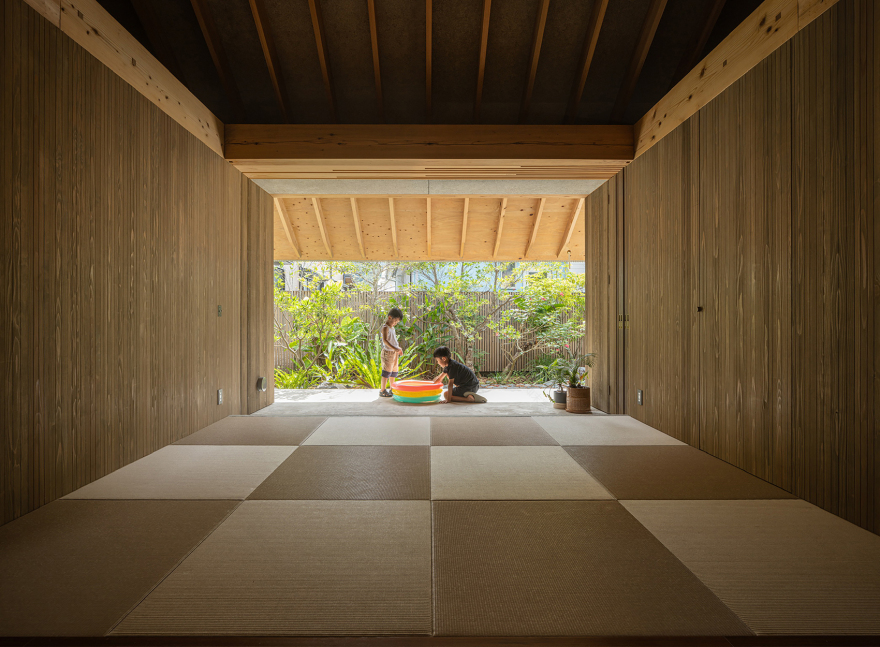
▼榻榻米区,Tatami area © Toshihisa Ishii
▼阁楼望向一层,View from loft to first floor © Toshihisa Ishii
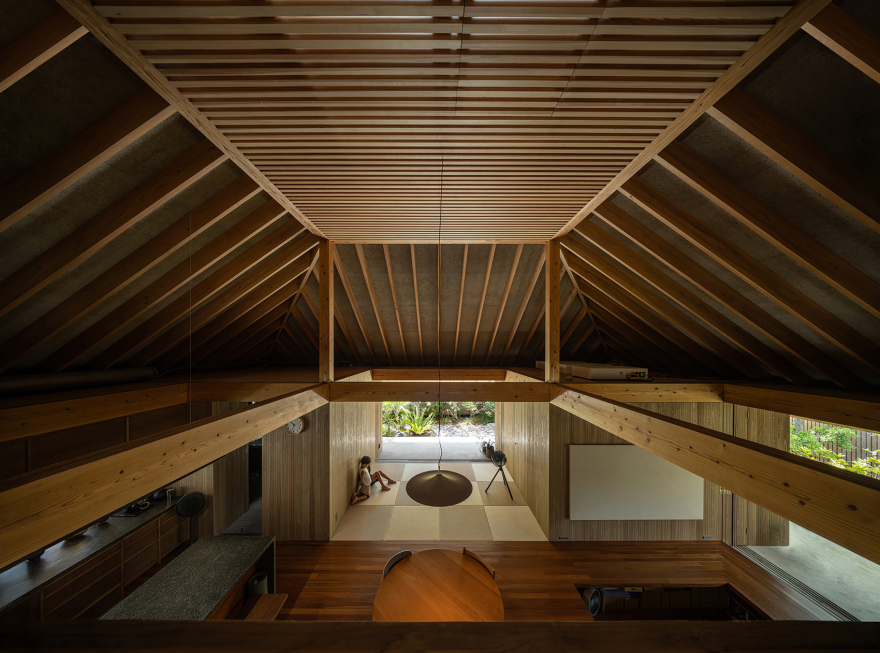
受该地区历史上”分栋”式布局的启发,住宅由五个独立体块构成——各自承担浴室、卧室、储藏室等明确功能——并以几何形式排列,其间形成的过渡空间成为共享的生活区域。这些空间与走廊和花园流畅衔接,模糊了室内与室外、家庭与社区、人与自然之间的界限。▼剖面图,Section © SAKAI ARCHITECTS

Inspired by the region’s historical buntō (multi-volume) layout, the house consists of five independent volumes—each serving a distinct function such as bath, bedroom, and storage—arranged geometrically to create in-between spaces that serve as shared living areas. These connect fluidly to verandas and gardens, blurring the boundaries between inside and outside, family and community, human and nature.
▼洗漱区,Wash Area © Toshihisa Ishii

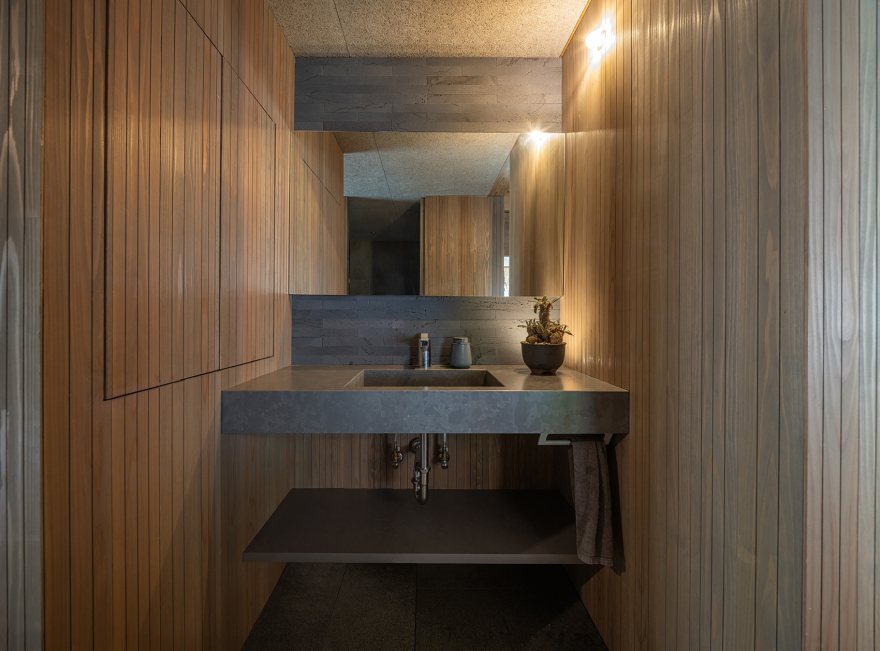
▼浴室,Bathroom © Toshihisa Ishii

屋顶形式重新诠释了当地常见的波纹金属板与入母屋造轮廓,整合了隔热、通风与采光控制等多层构造,以回应奄美的气候特征。建筑参照了抬高的”高仓”谷仓,使风能自由地从各个方向穿过,而深远的挑檐则调节了强烈的日照与突如其来的热带骤雨。
The roof form reinterprets the local corrugated-metal and irimoya (hip-and-gable roof) profiles, integrating layers of insulation, ventilation, and light control to respond to Amami’s climate. Referencing the elevated takakura (raised granary) granaries, the structure allows wind to pass freely in all directions, while deep eaves moderate intense sunlight and sudden tropical downpours.
▼花园与走廊,Garden corridor © Toshihisa Ishii


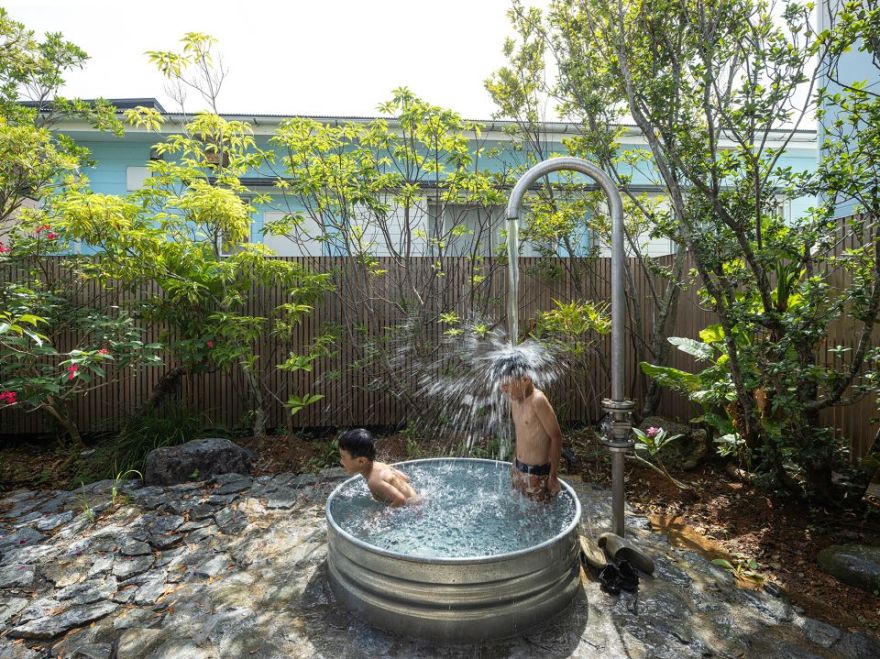
▼户外水池,Outdoor pool © Toshihisa Ishii
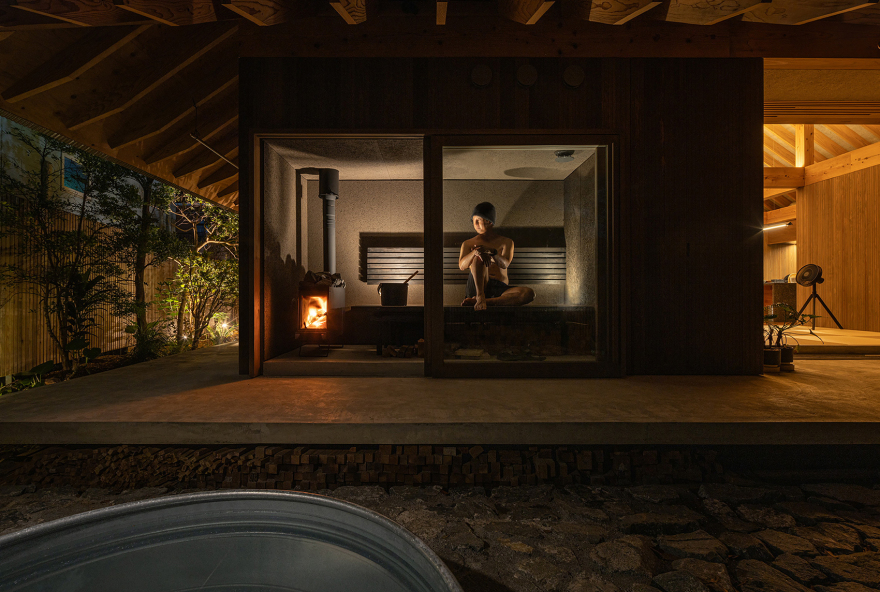
一座小型柴火桑拿浴室使用建筑废料中回收的燃料,在建造者与场地之间形成了一种封闭的资源循环。厨余垃圾被制成堆肥,回归菜园,收获的农产品重新进入家庭的日常餐食——在家中形成了一个循环共生的鲜活生态系统。
A small wood-fired sauna uses fuel recycled from construction offcuts, creating a closed resource loop between builder and site. Food waste is composted and returned to the vegetable garden, where harvested produce re-enters the family’s daily meals—forming a living ecosystem of circular sustainability within the household.
▼火桑拿浴室,Wood-fired sauna © Toshihisa Ishii

▼夜间用餐场景,Night dining time © Toshihisa Ishii


奄美被称为”结之岛”,社群性仪式至今仍是生活的核心。家庭庆典时常会聚集八十多位亲友与邻居,欢聚至深夜。尽管此类传统在城市化与隔阂中日渐式微,这座住宅却重塑了这种文化节奏。开放、包容的空间自然而然地吸引人们聚集、共度时光,模糊了私宅与公共场域的界限。
Amami is known as the “Island of Ties,” where communal rituals remain central to life. Family celebrations often gather over eighty relatives and neighbors, continuing late into the night. While such traditions have faded with urbanization and isolation, this house restores that cultural rhythm. The open, tolerant spaces naturally invite people to gather and share time together, blurring the distinction between private dwelling and communal place.
▼夜览,Night view © Toshihisa Ishii


▼夜间花园,Garden night view © Toshihisa Ishii


▼室内灯光,Interior lighting © Toshihisa Ishii


该项目重新定义了当代住宅——既是居所,也是文化平台;是一种脱离电网维系生活,同时继承”结”(集体合作)精神的建筑。通过回应南方岛屿独特的气候与文化生态,它静静地反思了在环境不确定性时代,”居住”究竟意味着什么。
This project redefines the contemporary home as both shelter and cultural platform—an architecture that sustains life beyond the grid while inheriting the spirit of yui (collective cooperation). By responding to the unique climate and cultural ecology of the southern islands, it quietly reexamines what it means to “inhabit” in the age of environmental uncertainty.
▼场地图,Site plan © SAKAI ARCHITECTS

▼首层平面图,First floor plan © SAKAI ARCHITECTS

▼阁楼平面图,Loft floor plan © SAKAI ARCHITECTS

▼屋顶平面图,Roof floor plan © SAKAI ARCHITECTS

Name: AMAMI HOUSE
Type: Residence
Location/Building Site: AMAMI ISLAND, Kagoshima, JAPAN
Completion Year: 2024
Gross Built Area: 119.24㎡
Client: Kazunori Sakai
Architecture Firm: SAKAI ARCHITECTS
Architecture Firm’s Location: Kagoshima , JAPAN
Lead Architects: KAZUNORI SAKAI
Photography: Toshihisa Ishii
Photographer’s Website / IG / FB:
Video Credits: R production
Link Video:
南京喵熊网络科技有限公司 苏ICP备18050492号-4知末 © 2018—2020 . All photos and trademark graphics are copyrighted by their owners.增值电信业务经营许可证(ICP)苏B2-20201444 苏公网安备 32011302321234号
苏公网安备 32011302321234号客服
消息
收藏
下载
最近