

创作上传
VIP
收藏下载
登录 | 注册有礼
查看完整案例

收藏

下载

分享
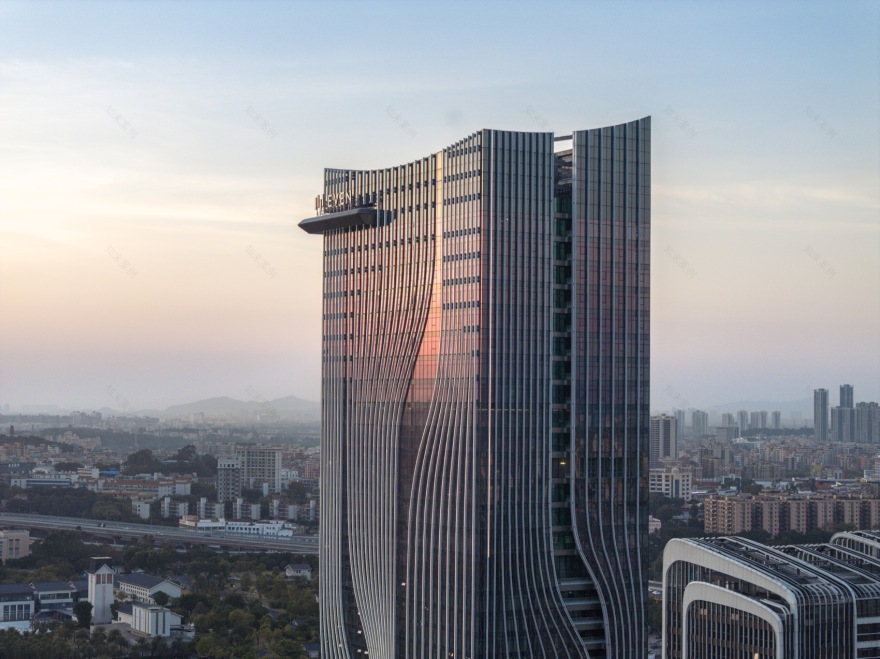
广州白云站为亚洲规模最大 TOD之一,其上盖建筑群是广州 “北进” 战略核心载体、白云区城市更新标杆,更是粤港澳大湾区空间格局构建的重要支点。
© 邹林(阿尔法摄影)
As one of the largest TOD projects in Asia, the superstructure complex of Guangzhou Baiyun Station serves as a core carrier of Guangzhou’s “Northward Advancement” strategy, a benchmark for urban renewal in Baiyun District, and an important fulcrum for shaping the spatial pattern of the Guangdong-Hong Kong-Macao Greater Bay Area.
▼项目概览,overview of the project © 邹林(阿尔法摄影)

▼顶视,top view© 邹林(阿尔法摄影)

▼西南塔鸟瞰,aerial view of the southwest tower© 邹林(阿尔法摄影)

▼东北塔鸟瞰,aerial view of the northeast tower© 邹林(阿尔法摄影)


一、微缩城市:立体叠合的山水城市盆景
A Miniature City: A Three-Dimensionally Integrated Landscape City Bonsai
项目基于原规划方案“站城一体”理念的基础上,重新整合上部建筑,将上部建筑群重新统一规划设计,提出“城市盆景”概念。白云站位于中间,四座超高层塔楼分置车站四隅,南北中间各七座副塔错落其间,围合出山水格局的微缩城市。这座微缩城市涵盖办公、公寓、酒店等业态,建筑群落在四层共享平台上,实现功能闭环。盖上建筑群形体吸取高铁轨道以及附近的山水环境特征,让综合体成为自然、人文与基础设施交融的立体城市山水画卷。▼区位分析,Location Analysis© 华南理工大学建筑设计研究院有限公司

▼山水盆景意向分析,Landscape Bonsai Intention Analysis © 华南理工大学建筑设计研究院有限公司

Based on the original planning concept of Station-City Integration, this project has reorganized and uniformly redesigned the upper buildings, putting forward the concept of “Urban Bonsai”. Baiyun Station is situated at the center, with four super high-rise towers at its four corners and seven auxiliary towers arranged alternately in the north and south, enclosing a miniature city with a landscape pattern. This miniature city integrates diverse functions including office, apartment and hotel. The entire building complex is elevated on a four-story shared platform, realizing a closed functional loop. The form of the over-station development draws on the characteristics of high-speed rail tracks and the surrounding natural landscape, making the complex a three-dimensional urban landscape painting that integrates nature, humanity and infrastructure.
▼东北塔街景,Street view of the northeast tower© 邹林(阿尔法摄影)

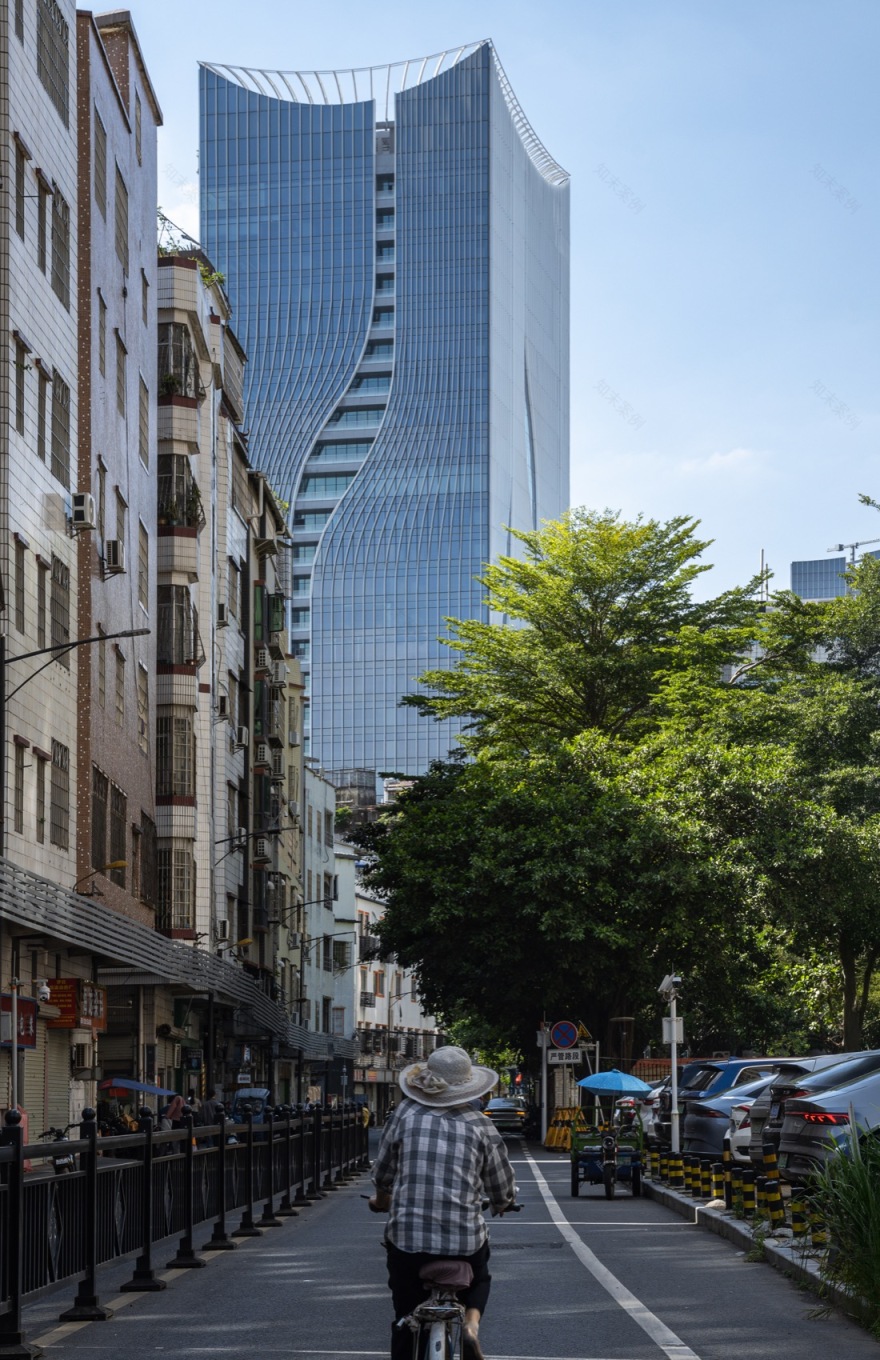

▼西南塔街景,Street view of the southwest tower© 邹林(阿尔法摄影)
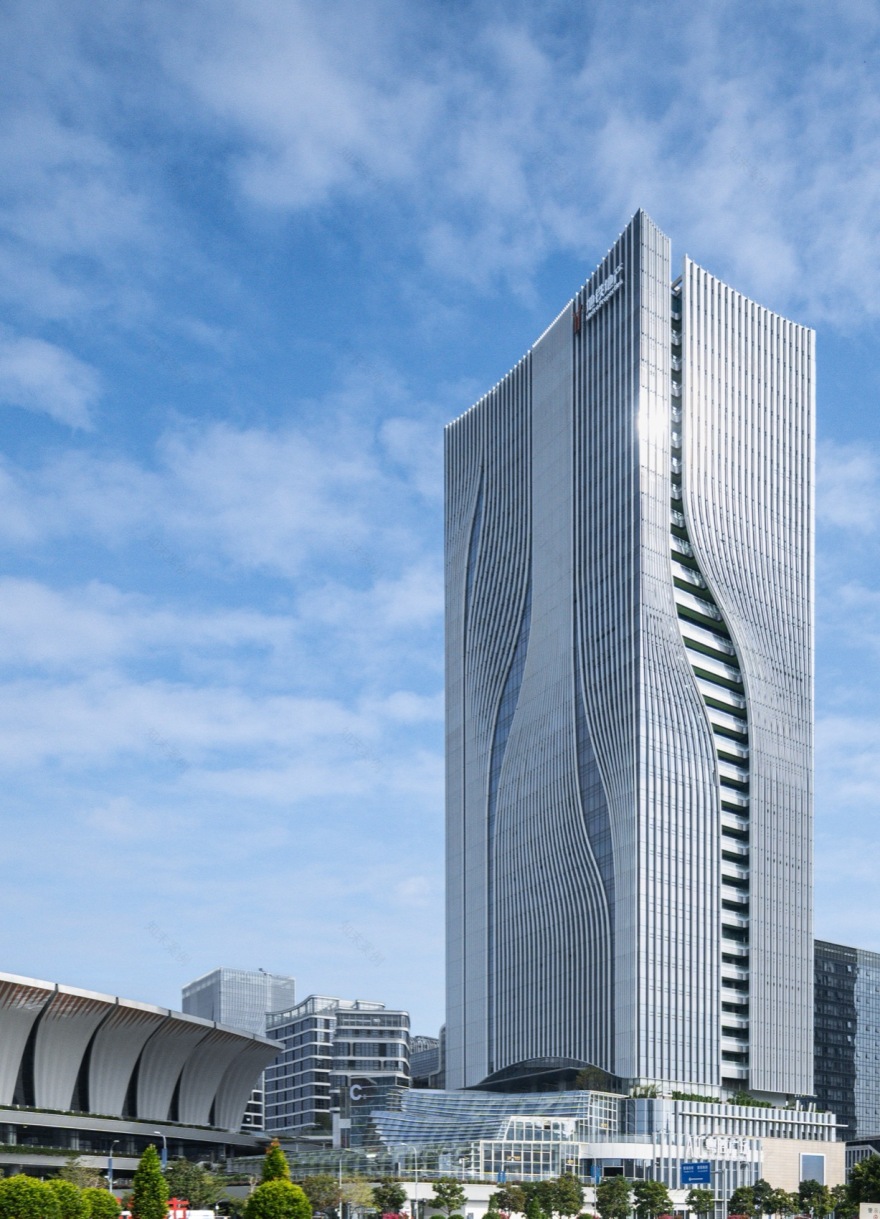

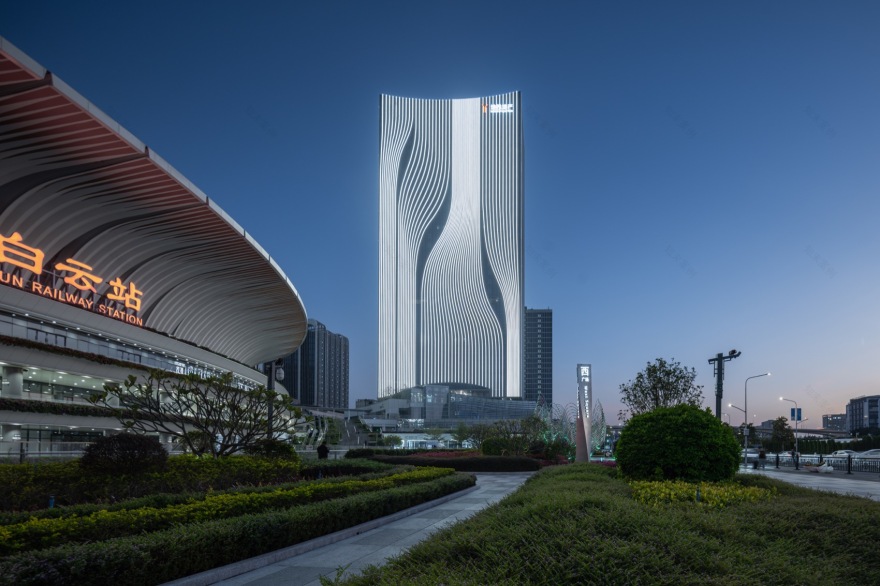
二、叙事性形体:城市更新新范式——轨道肌理与山水的结合
Narrative Form: The Symbiosis of Rail Texture and Landscape
塔楼以建筑语言诠释交通枢纽与城市环境的关联,打造动态视觉叙事体系。建筑以 “水润木棉・轨韵生形” 为设计内核,萃取高铁轨道曲线、白云山的自然山水,凝练自然、交通与地域文化的建筑设计语言,重塑交通枢纽上盖建筑的叙事逻辑。通过竖向金属构件模拟铁轨动感轨迹,赋予建筑速度感与流动感。设计整体的格局与肌理在片区城市更新中形成独特标识,成为片区未来设计方向的标杆。▼体块生成分析GIF,Block Generation Analysis© 华南理工大学建筑设计研究院有限公司
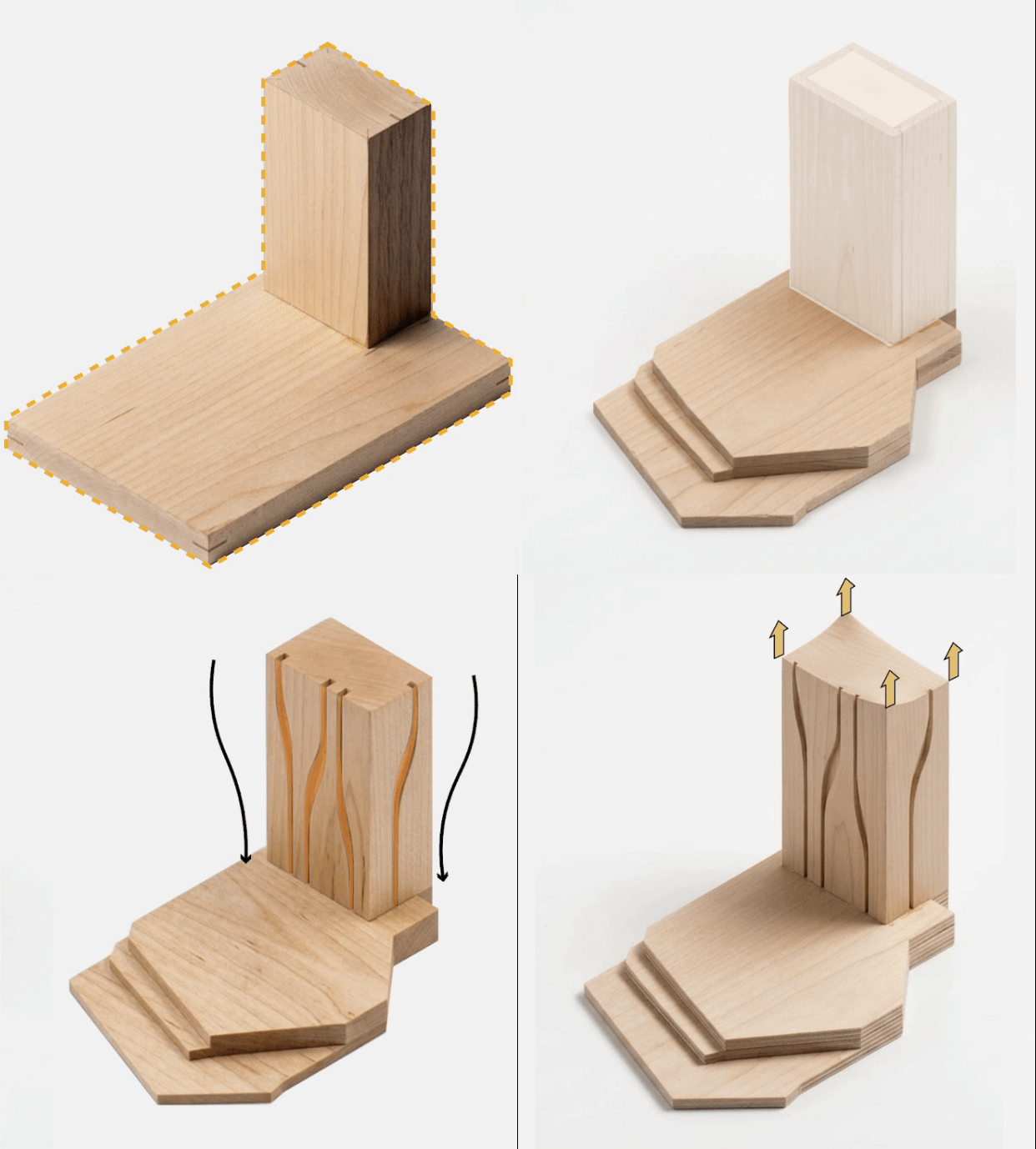
▼铁轨意向提取,Railway Track Intention Extraction© 华南理工大学建筑设计研究院有限公司

The towers interpret the relationship between the transportation hub and the urban context through architectural language, establishing a dynamic visual narrative system. With Water Nourishes Kapok, Rail Charm Shapes Form as its design core, the project extracts the curved lines of high-speed rail tracks and the natural landscape of Baiyun Mountain, condensing an architectural design language that integrates nature, transportation and regional culture, and reshapes the narrative logic of buildings above transportation hubs. Vertical metal elements are employed to simulate the dynamic trajectories of railway tracks, endowing the architecture with a strong sense of speed and fluidity. The overall layout and texture form a unique identity in the regional urban renewal, establishing a benchmark for the future design direction of the area.
▼东北塔局部,part of the northeast tower© 邹林(阿尔法摄影)

▼西南塔局部,part of the southwest tower© 邹林(阿尔法摄影)


三、和而不同的冠顶和雨棚:城市入户的可识别地标
Harmonious yet Distinctive Crowns and Canopies: Identifiable Landmarks for the Urban Gateway
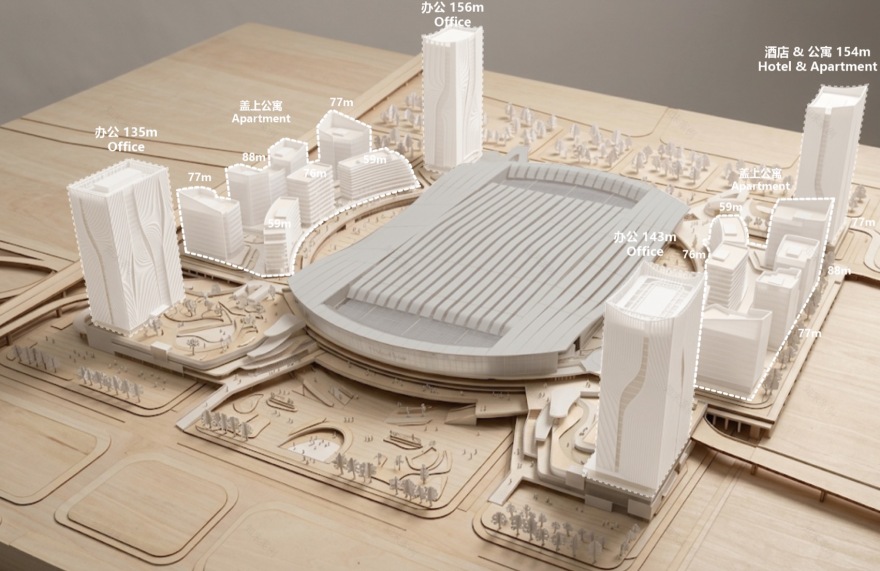
建筑群冠顶设计和而不同,冠顶以弧形为主,呼应附近的白云山天际线,具体设计上四栋互有区别。西南塔156米高,西北塔154米高,东北塔142米高,东南塔135米高,其余副塔楼约50 - 75米,整体冠顶形成不同弧度的曲线,整个TOD建筑群顶部形成弧形冠顶天际线,使其形成一组可识别、可阅读、可记忆的文化地标。▼模型分析,Model Analysis© 华南理工大学建筑设计研究院有限公司

The crown design of the building complex is harmonious yet distinctive, dominated by curved forms that echo the skyline of nearby Baiyun Mountain. Each of the four towers features a unique design. Southwest Tower: 156 m in height; Northwest Tower: 154 m in height; Northeast Tower: 142 m in height; Southeast Tower: 135 m in height. The remaining auxiliary towers range approximately from 50 m to 75 m. With curved crowns of varying radii, the entire TOD complex forms an arched skyline at the top, creating a set of legible, recognizable and memorable cultural landmarks.
▼冬南塔雨棚,canopy of the southeast tower© 邹林(阿尔法摄影)

▼西北塔雨棚,canopy of the northwest tower© 邹林(阿尔法摄影)

塔楼主入口作为城市门户第一界面,是建筑立面叙事向地面的自然延伸,方案采用雨棚 — 立面 — 泛光一体化设计策略,以连续曲面形成导向性与欢迎感兼具的入口序列。四座塔楼的雨棚在统一语言下呈现差异化表达:入口门把手线条提炼建筑立面的流动元素,与雨棚曲线相呼应。▼雨棚剖透视图,Canopy Section Perspective © 华南理工大学建筑设计研究院有限公司

▼外立面线条节点大样图,Facade Line Detail Drawing© 华南理工大学建筑设计研究院有限公司

As the primary interface of the urban gateway, the main entrances of the towers serve as a natural extension of the façade narrative toward the ground. The proposal adopts an integrated design strategy for canopy–façade–ambient lighting, using continuous curved surfaces to form an entrance sequence that is both directional and welcoming. The canopies of the four towers express differentiation under a unified architectural language: the lines of the entrance door handles are derived from the flowing elements of the building façade, echoing the curves of the canopies.
▼东北塔雨棚,canopy of the northeast tower© 邹林(阿尔法摄影)


四、可呼吸的立体绿化阳台:生态与功能的共生
Breathable 3D Green Balconies: Symbiosis of Ecology and Function
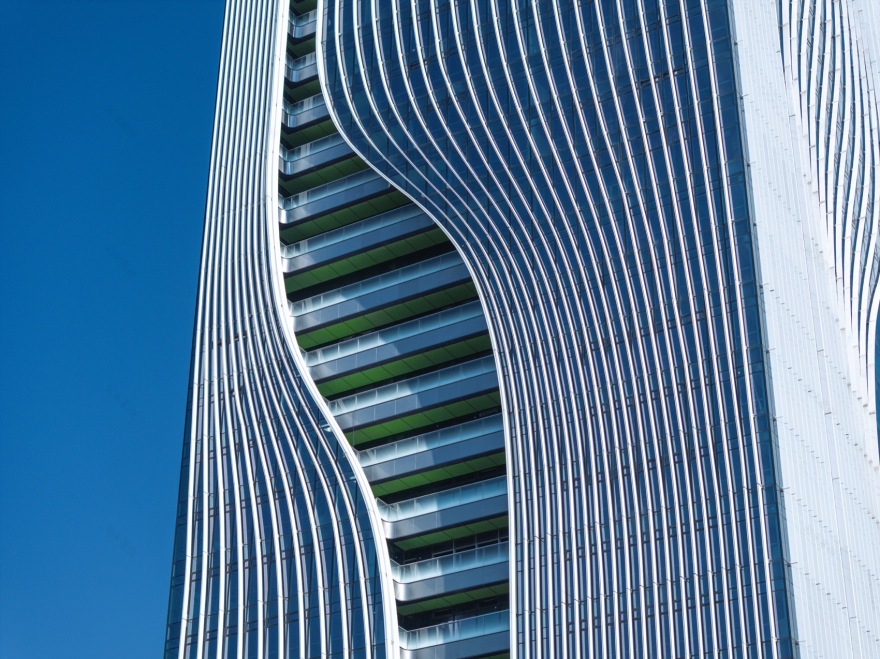
项目将生态融入建筑本体,于四座塔楼侧立面嵌入错落的立体绿化阳台,打造连续攀升的 “空中绿廊”。绿化槽避让主立面,既保留建筑立面的叙事与视觉完整性,又为次要界面注入自然活力。
▼立面手绘分析,Facade Hand-drawn Analysis © 华南理工大学建筑设计研究院有限公司

Integrating ecology into the architecture itself, the project embeds scattered three-dimensional green balconies on the side facades of the four towers, creating a continuous ascending “Sky Green Corridor”. The green planting recesses are set back from the main facades, which not only preserves the narrative and visual integrity of the building facades but also infuses natural vitality into the secondary interfaces.
▼立面细部,facade details© 邹林(阿尔法摄影)


五、品控一体化策略与整体性设计
Integrated Quality Control and Holistic Design
项目实施全维度品控一体化策略,对建筑、景观、室内、灯光、幕墙整体效果进行一体化控制。通过精细化设计把控建筑细节,对技术工艺进行严格要求和控制,如塔楼立面转折与收边节点采用高精度压弯金属构件,实现流畅的曲面过渡。因构件转折参数各异,且金属冷弯存在回弹效应,常规工艺易导致线条断裂、曲面失真。设计团队与制造方协同研发预反变形控制工艺,通过模拟回弹量、并设置多向调节构件等方式,最终实现数百块异形单元的无缝拼接。
This project adopts a comprehensive strategy of integrated quality control to unify the overall performance of architecture, landscape, interior, lighting, and curtain wall systems. Through refined design, strict requirements and controls are imposed on construction details and technical craftsmanship. For instance, high-precision bent metal components are applied at the folding and edge-closing joints of the tower facades to achieve smooth curved transitions. Given the varying folding parameters of components and the spring-back effect inherent in metal cold bending, conventional techniques often result in discontinuous lines and distorted curved surfaces. The design team collaborated with manufacturers to co-develop a pre-deformation control technology, by simulating spring-back values and installing multi-directional adjustable components. This ultimately enabled seamless assembly of hundreds of special-shaped units.
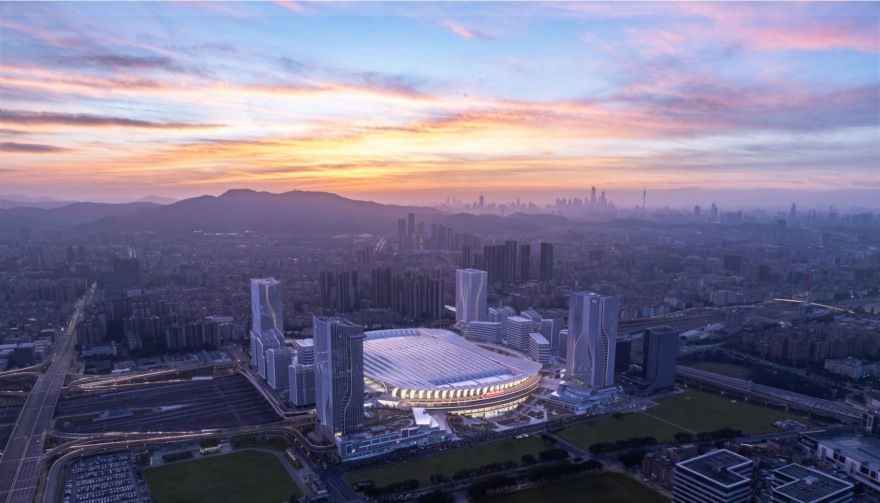
▼鸟瞰,aerial view © 邹林(阿尔法摄影)

结语
Conclusion
广州白云站上盖建筑群深度整合 “站 — 城 — 山 — 水” 关系,将自然意象与交通元素融入建筑群体设计,形成“山水盆景”的微缩城市格局,构建起兼具结构理性与地域诗意的 TOD 新范式。
▼天际线分析,Skyline Analysis© 华南理工大学建筑设计研究院有限公司

The over-station building complex of Guangzhou Baiyun Station deeply integrates the relationships among station, city, mountain and water. By incorporating natural imagery and transportation elements into the holistic design, it forms a miniature urban pattern of a “Landscape Bonsai”, establishing a new TOD paradigm that features both structural rationality and regional poeticism.
▼整体模型分析,Model Analysis© 华南理工大学建筑设计研究院有限公司
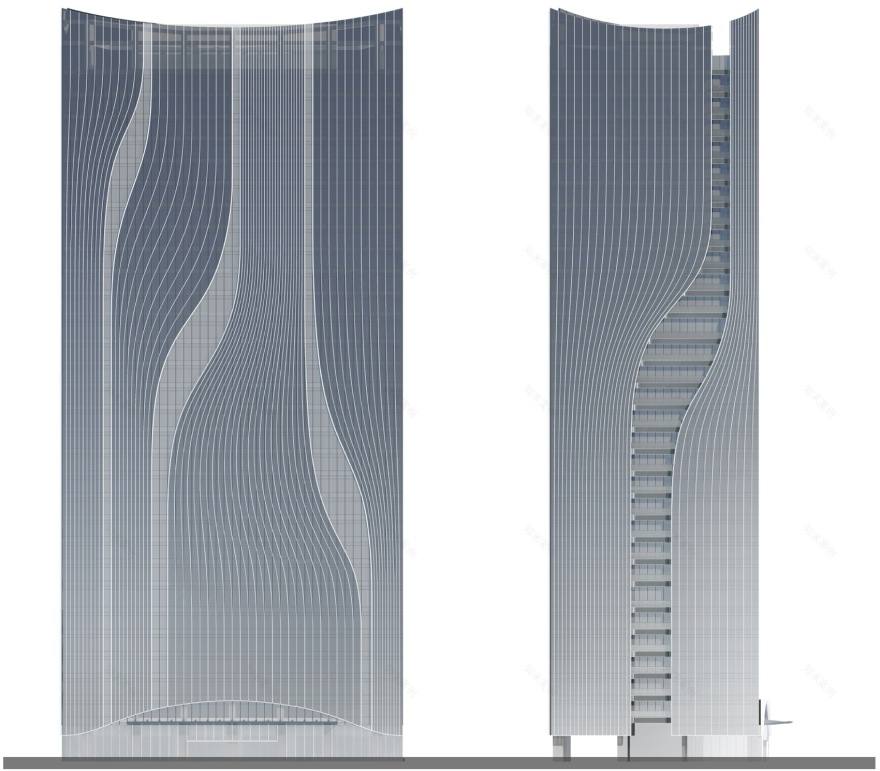
▼东北塔立面图,Elevation drawing of the Northeast Tower © 华南理工大学建筑设计研究院有限公司

▼东南塔立面图,Elevation drawing of the Southeast Tower© 华南理工大学建筑设计研究院有限公司

▼西北塔立面图,Elevation Drawing of the Northwest Tower© 华南理工大学建筑设计研究院有限公司

▼西南塔立面图,Elevation Drawing of Southwest Tower© 华南理工大学建筑设计研究院有限公司
▼外立面线条单元剖切平面大样图,Unit Section Plan Detail of Facade Lines © 华南理工大学建筑设计研究院有限公司

▼墙身剖透视图,Wall Section Detail Perspective© 华南理工大学建筑设计研究院有限公司

项目名称:广州白云站TOD上盖建筑群
项目类型:公共建筑
建成时间:2025年9月
建筑造型及效果总控单位:华南理工大学建筑设计研究院有限公司
主持建筑师:何镜堂、盘育丹、陈思翰
执行负责人:盘育丹、郑常波
华工院设计团队:曾宪策、姜禹、张贤杰、刘霄、郭菁儿、钟语、陈勇、张春意、吴国明、李嘉伟、余均青、黄建韬、章敏敏、王人玉、陈桂涛、陆仪伟、杨满思、梁兆锴
项目地址:广州市白云区
建筑面积:主塔约22万㎡,副塔约24万㎡
设计牵头及设计总包单位:广州地铁设计研究院股份有限公司
其他参与单位:广州市设计院集团有限公司、汉森伯盛国际设计集团
建设单位:广州市云胜房地产开发有限公司、广州市鸿胜房地产开发有限公司
幕墙顾问单位:广东宏科建设股份有限公司
泛光顾问单位:BIP
室内设计单位:CCD、上海都设营造建筑设计事务所有限公司、矩阵纵横设计股份有限公司等
景观设计单位:深圳市雅涛景观建筑设计有限公司
标识设计单位:深圳市瑞海标识设计有限公司
施工单位:中铁建工集团有限公司、中建深圳装饰有限公司(幕墙施工)
材料:蜂窝铝板、铝板、玻璃
摄影:邹林(阿尔法摄影)
Project Name: TOD Over-Station Building Complex of Guangzhou Baiyun Station
Project Type: Public Architecture
Completion Time: 2025.10
General Contractor for Architectural Form and Effect Control: Architectural Design & Research Institute of SCUT Co., Ltd.
Chief Architects: He Jingtang, Pan Yudan, Chen Sihan
Executive Director: Pan Yudan, Zheng Changbo
Design Team: Zeng Xiance, Jiang Yu, Zhang Xianjie, Liu Xiao, Guo Jinger, Zhong Yu, Chen Yong, Zhang Chunyi, Wu Guoming, Li Jiawei, Yu Junqing, Huang Jiantao, Zhang Minmin, Wang Renyu, Chen Guitao, Lu Yiwei, Yang Mansi, Liang Zhaokai
Project Location: Baiyun District of Guangzhou
Building Area: The main tower covers an area of approximately 220,000 square meters, while the auxiliary tower spans about 240,000 square meters
Design Leader & General Design Contractor: Guangzhou Metro Design & Research Institute Co., Ltd.
Other Design Companies: Guangzhou Design Institute Group Co., Ltd, Hansen & Boesen International Design Group
Project Developers:
Guangzhou Yunsheng Real Estate Development Co., Ltd.
Guangzhou Hongsheng Real Estate Development Co., Ltd.
Curtain Wall Consultant: Guangdong Hongke Construction Co., Ltd.
Ambient Lighting Consultant: BIP
Interior Design Companies:
CCD
Shanghai Dushe Creation Architectural Design Co., Ltd.
Matrix Design Co., Ltd., etc.
Landscape Design Company: Shenzhen Yatao Landscape Architecture Design Co., Ltd.
Signage Design Company: Shenzhen Ruihai Signage Design Co., Ltd.
Construction Contractors:
China Railway Construction Group Co., Ltd.
China State Construction Shenzhen Decoration Co., Ltd. (Curtain Wall Construction)
Materials: Honeycomb aluminum panels, aluminum panels, glass
Photographer: Zou Lin (Alpha Photography)

南京喵熊网络科技有限公司 苏ICP备18050492号-4知末 © 2018—2020 . All photos and trademark graphics are copyrighted by their owners.增值电信业务经营许可证(ICP)苏B2-20201444 苏公网安备 32011302321234号
苏公网安备 32011302321234号客服
消息
收藏
下载
最近