

创作上传
VIP
收藏下载
登录 | 注册有礼
查看完整案例

收藏

下载

分享
今年普利兹克奖授予了智利建筑师 Smiljan Radić。结果出乎意料,建筑圈的反应却异常平淡。这种平淡绝非冷静,而是一种复杂情绪的外化。在当下建筑行业项目锐减、事务所收缩、岗位流失、青年建筑师普遍焦虑的背景下,一个远在智利、从事小体量实验性建筑实践的建筑师,很难引发从业者共鸣。Radić 所追问的建筑问题,与大多数从业者眼下面临最迫切的问题并不重合。
This year’s Pritzker Architecture Prize has been awarded to the Chilean architect Smiljan Radić. The result was unexpected, yet the architectural community’s response has been strikingly subdued. This quietness is not quite composure; it feels more like a muted expression of something more complicated.At a time when projects are dwindling, practices are downsizing, positions are disappearing, and younger architects are increasingly anxious, it is perhaps unsurprising that an architect working on small-scale, experimental projects in Chile struggles to resonate with the profession at large. The questions Radić asks of architecture simply do not align with the most immediate concerns facing most practitioners today.
▼智利建筑师 Smiljan Radić设计的2014年蛇形画廊,the 2014 serpentine gallery designed by Chilean architect Smiljan Radić ©杨天周


这正是 Radić 获奖引发复杂态度的起点。一方面,他的实践提醒着人们,建筑即便在今日仍可摆脱效率逻辑,保留某种诗性;另一方面,这种价值又显得不合时宜。建筑师当下真正关心的并非建筑的边界如何变动,而是在下行的周期中如何生存,以及在高度制度化、市场化、虚拟化的现实中,建筑如何与真实世界发生关系。Radić 提供的是一种极为个人化、艺术家化的回答,但建筑行业渴求的,却是集体性的、可推广的生存方法。
This mismatch lies at the heart of the ambivalence surrounding his award.On the one hand, his work reminds us that architecture, even now, might still slip free from the logic of efficiency and retain a certain poetic quality. On the other, that very possibility feels somewhat out of step. What architects are truly concerned with today is not how the boundaries of the discipline might shift, but how to survive within a downturn—and how architecture might meaningfully engage with reality within an increasingly institutionalised, market-driven and mediated world. Radić offers a deeply personal, almost artistic response; the profession, however, tends to be searching for something more collective, more transferable.
▼智利建筑师 Smiljan Radić设计的2014年蛇形画廊,the 2014 serpentine gallery designed by Chilean architect Smiljan Radić ©杨天周

这种错位,在我第一次置身于Radić的建筑时显得格外清晰。前年夏天,我曾程前往英国小镇Bruton,探访他2014年设计的蛇形画廊展亭。当年展亭在伦敦展期的结束后,被Hauser & Wirth收藏,迁移到画廊位于英国Somerset的农场之中。
This sense of disjunction became particularly clear to me when I first encountered his work in person. Two summers ago, I travelled to the small town of Bruton in England to visit his 2014 Serpentine Pavilion. After its London exhibition, the pavilion was acquired by Hauser & Wirth and relocated to the gallery’s Somerset farm.
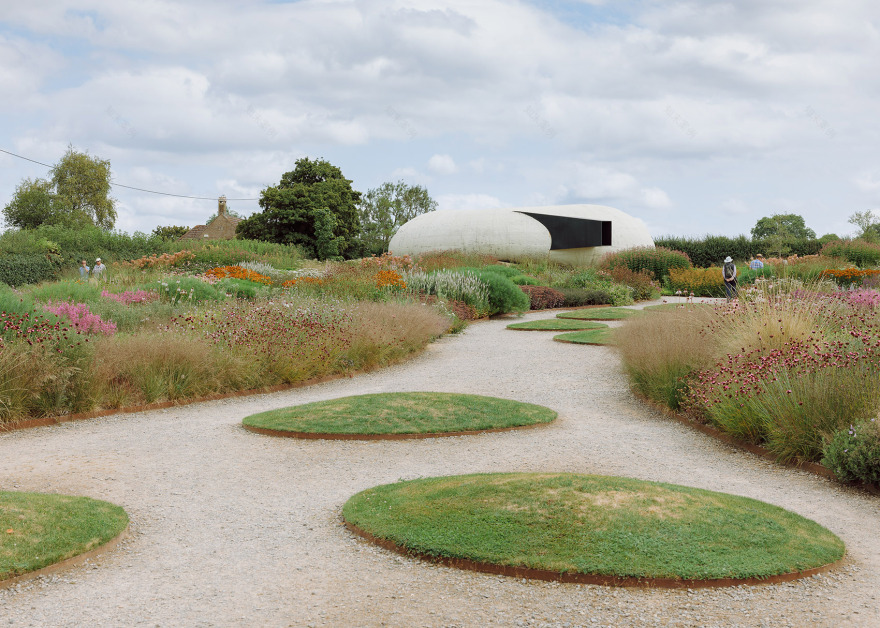
▼位于Somerset农场的蛇形画廊,the serpentine gallery located in Somerset farm ©杨天周
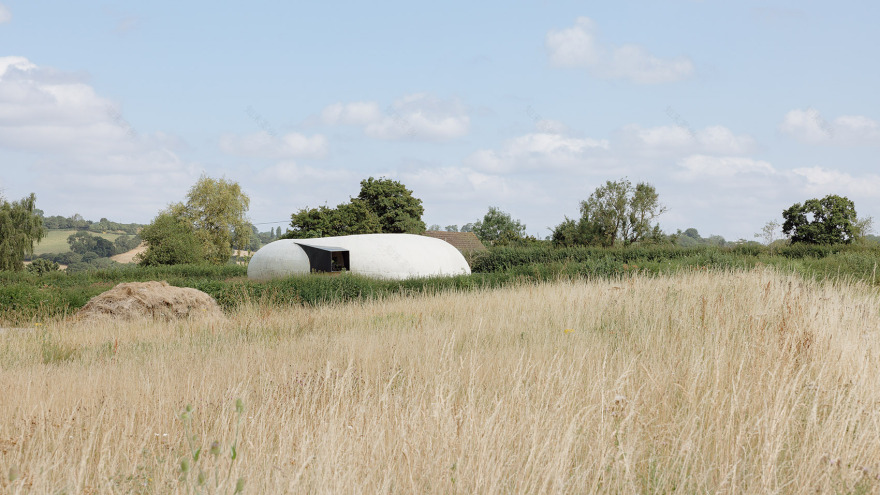


相比伦敦,乡野反而更适合这座展亭。这里脱离了城市中心的文化语境,呈现一种更缓慢、更接近地景本身的状态。远远望去,展亭如同卧于乡野边缘的生物,通过黑色的空隙窥探远处的山坡上的遗迹。它似乎刚刚抵达,又似乎驻足多时。
Curiously, the rural setting suits the pavilion better than London ever did. Removed from the cultural intensity of the city, it settles into a slower, more landscape-bound condition. From a distance, it appears almost like a creature resting at the edge of the countryside, peering through its dark apertures towards the ruins on the hillside beyond. It seems at once newly arrived and long since settled.
▼展亭如同卧于乡野边缘的生物,appears almost like a creature resting at the edge of the countryside ©杨天周

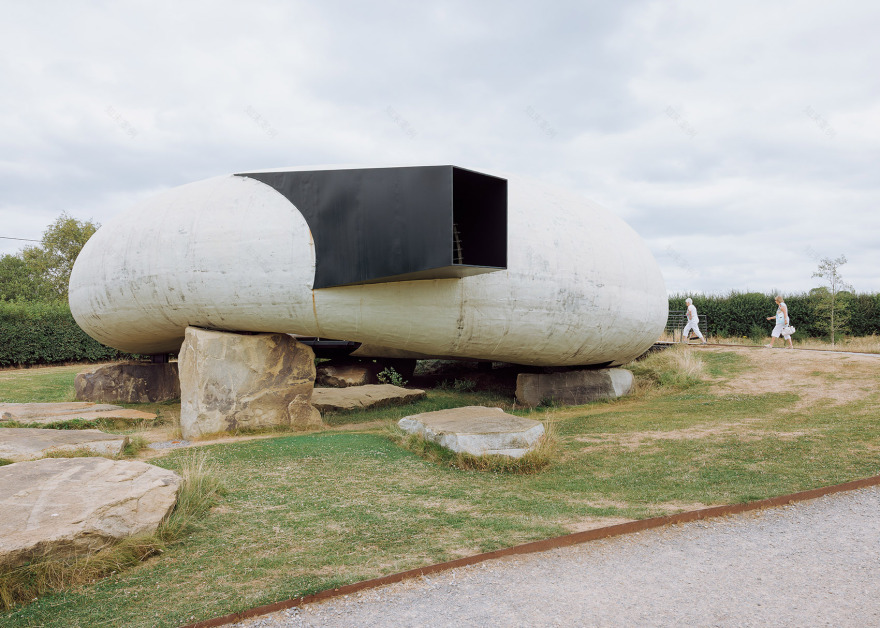
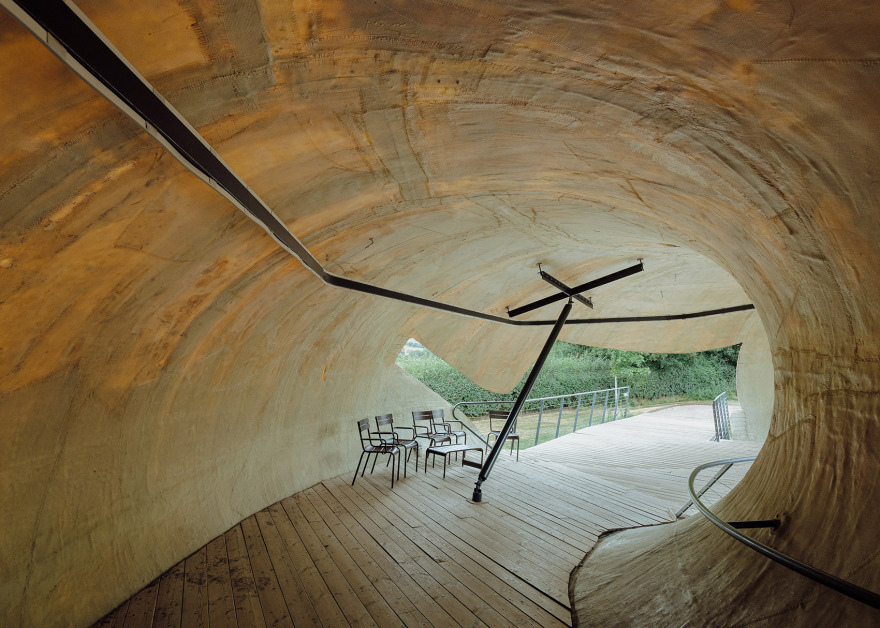
通过农场花园走近展亭,我的感受与图像经验大相径庭。展亭比Iwan Baan照片中更安静,也更普通。建筑师与媒体当年不断强调的“漂浮”与“半透明”,现场感受并不明显,玻璃纤维外壳也不如 照片中通透动人。它不算轻盈,也不算透明,反而有一种钝重的质感。那不是材料天然的厚重,而是人工介入后的粗粝。材料上带有明显的人工痕迹,却毫无精确可言。沿坡道进入展亭,这种感受更强。黑色开口、斜柱、木平台都十分直接,空间也谈不上灵动。身处其中,我并没未获得建筑师叙事中那种神秘体验,反而感到某种迟滞。它并不容易让人展开想象,更像一个略显笨拙的壳。
Yet as I approached it through the garden, the image I had in mind quickly fell apart. The pavilion felt quieter—and more ordinary—than in the photographs by Iwan Baan. The much-discussed qualities of “lightness” and “translucency” were barely perceptible on site. The fibreglass shell was neither particularly light nor especially transparent; instead, it carried a certain dull heaviness. Not the inherent weight of the material, but the coarseness introduced through its making. The surfaces bore clear traces of fabrication, yet without any sense of precision.This impression intensified as I moved inside. The black openings, slanted columns and timber platform were all rather direct. The space itself was not especially agile. Rather than entering the kind of mysterious atmosphere described in architectural narratives, I found myself experiencing a slight sense of hesitation. It was not a space that readily invited projection; if anything, it felt like a somewhat awkward shell, still undecided about what it wanted to be.
▼人工介入后的粗粝,the coarseness introduced through its making ©杨天周

我很难说自己喜欢它。真正让我记住的,是几个孩子在其中竞相追逐的瞬间。那一刻,建筑短暂地摆脱了被解读的负担,成为了一种与身体真切发生关联的场所。从那一刻起,我似乎明白了Radić 的建筑并不依赖精确的节点和工艺,它试图触及的,仍然是人与空间某种原始的联系,只是这种联系并不总能有效且稳定地呈现。
I cannot honestly say that I liked it. What stayed with me, instead, was a fleeting moment: a group of children running and chasing one another inside. For a brief instant, the pavilion seemed to shed its burden of interpretation and became something immediate—something bodily. It was then that I began to understand that Radić’s architecture does not rely on refined detailing or precise craft. What it seeks to touch is a more elementary relationship between body and space—though this relationship does not always present itself clearly, nor consistently.
▼孩子在其中竞相追逐,a group of children running and chasing one another inside ©杨天周


这座展亭恰好展现出Radić建筑中最值得讨论的一面。以战后意大利建筑为参照有两条路径,一条以斯卡帕为代表,通过细部与材料关系让建筑产生意义;另一条由阿尔多·罗西推动,将建筑转向类型与城市记忆的延续。Radić显然游离于两者之外。
In this sense, the pavilion reveals a key aspect of Radić’s work. If we take post-war Italian architecture as a reference, two distinct trajectories emerge: one, exemplified by Carlo Scarpa, in which meaning is generated through detail and material relationships; the other, advanced by Aldo Rossi, in which architecture turns towards typology and the continuity of urban memory. Radić, evidently, belongs to neither.
▼内部空间,indoor space ©杨天周


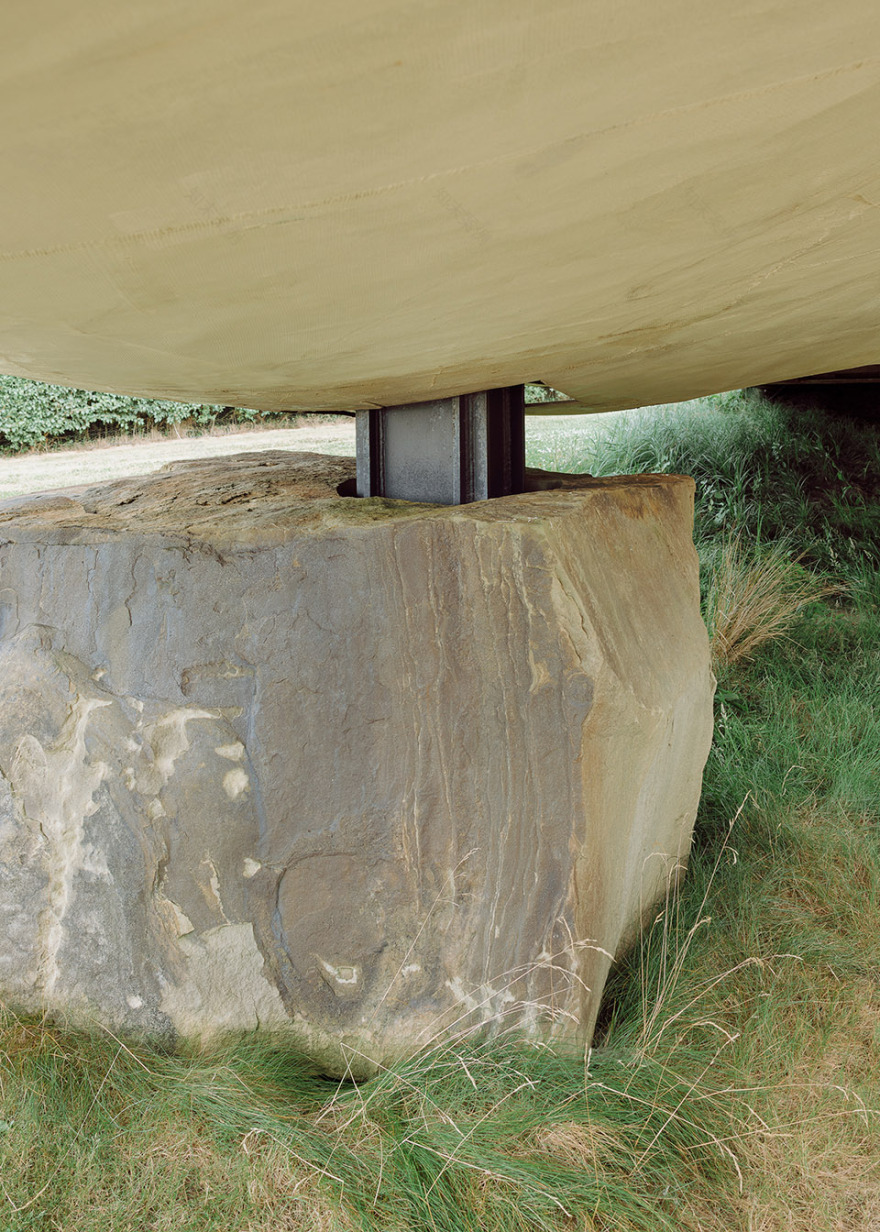
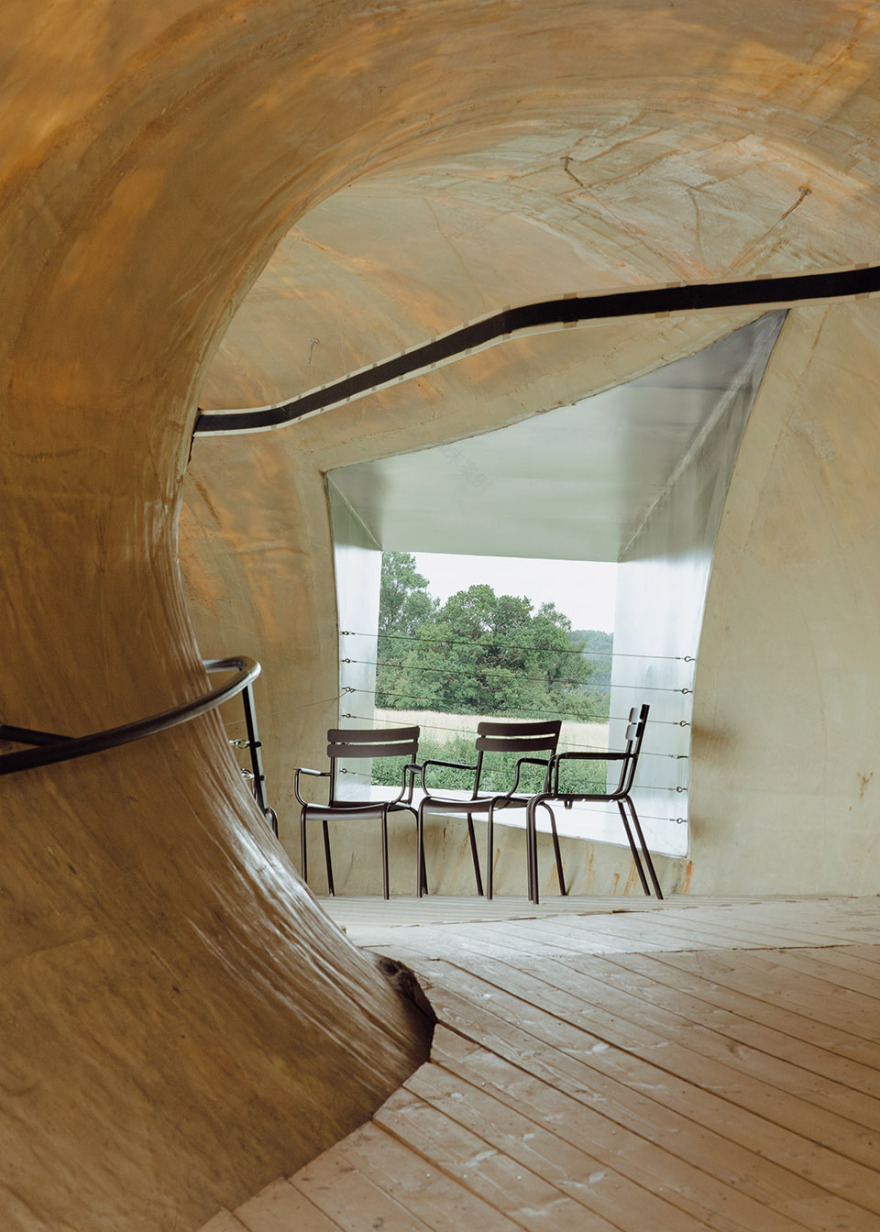
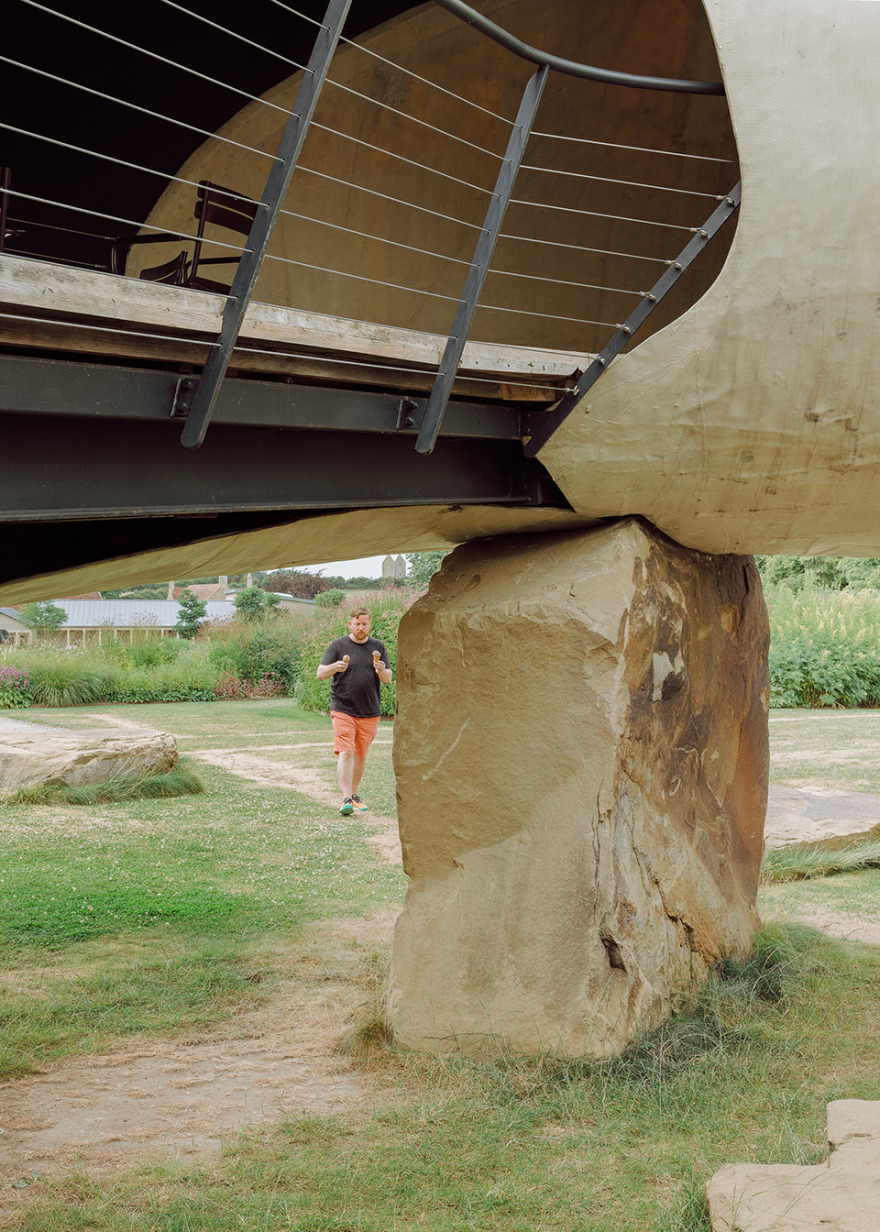
威尼斯的学习经历并未使他走向上述任一“传统”,反而强化了他对遗迹、残留与未完成状态的敏感。他的建筑并不通过“完成”建立力量,而是刻意停留在未收束的时刻以强化张力:石材接近自然模样,混凝土保留将凝未凝的形态,玻璃纤维也保留着粗糙模板的印记。他所追求的从不是工艺的精致,而是一种“材料尚在过程中”的状态。
His time in Venice did not draw him into either of these traditions. Instead, it seems to have sharpened his sensitivity to ruins, residues and states of incompletion. His architecture does not derive its force from resolution, but from deliberately lingering in a moment before resolution: stone remains close to its natural state, concrete hovers at the point of setting, fibreglass retains the imprint of its mould. What he pursues is not refinement, but a condition in which materials appear still in the process of becoming.
▼混凝土保留将凝未凝的形态,concrete hovers at the point of setting ©杨天周

▼追求一种“材料尚在过程中”的状态,a condition in which materials appear still in the process of becoming ©杨天周
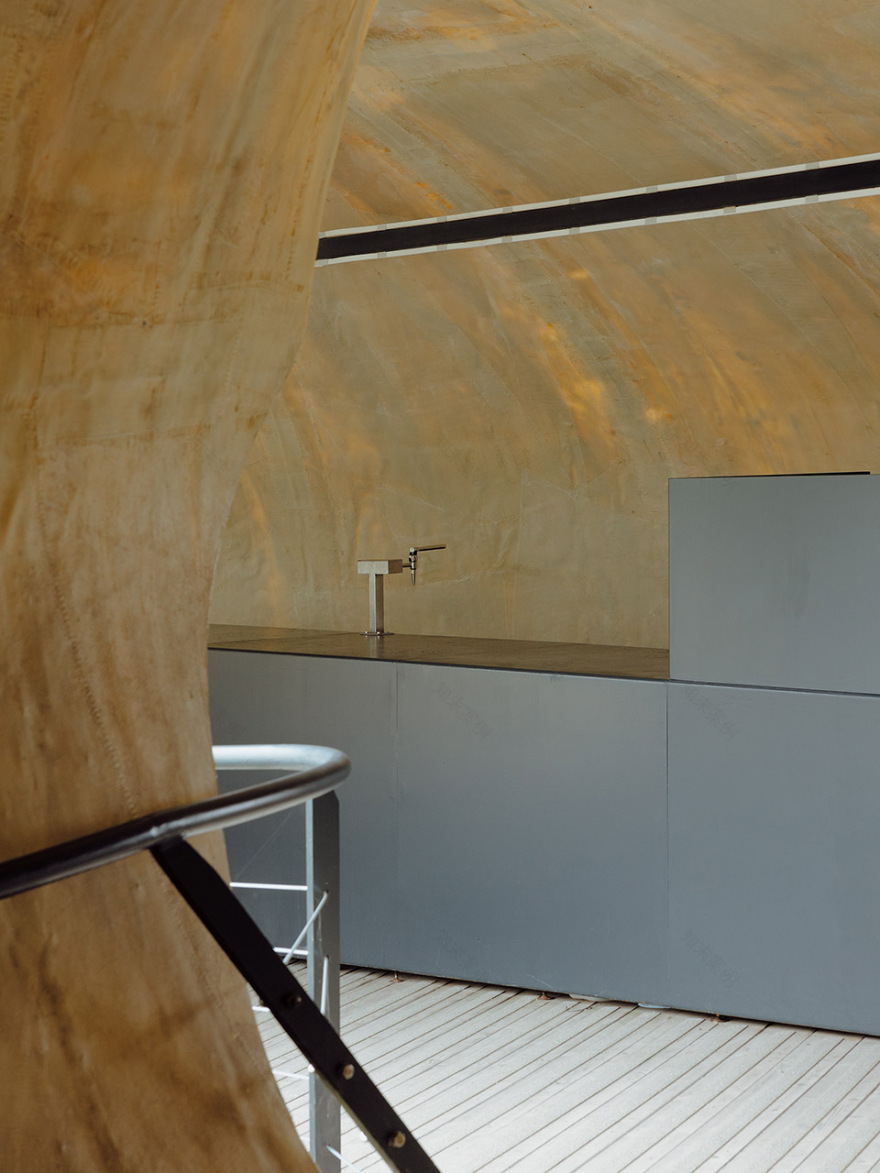
这种设计方法在理论上颇具吸引力。它远离当代建筑中“过度完成”与“过度修饰”的倾向,使建筑不至于成为完全封闭的工业产品,仍保留着与自然及时间对话的空间。但这种“未完成”的粗粝,也容易与 Radic的南美背景、小尺度实践与其建筑原始气质叠加,被全球文化体系转译为一种可识别的“他者”,落入供人消费的“边缘美学”。
The appeal of such an approach is evident. It resists the prevailing tendency towards over-completion and over-determination, allowing architecture to remain open—capable of sustaining a dialogue with time and nature, rather than closing itself off as a perfected industrial object. Yet this same roughness can easily be overlaid with Radić’s South American background, his small-scale practice, and a certain sense of the “primitive”, and subsequently reframed within the global cultural economy as a legible “other”—what one might call a consumable edge aesthetic.
▼追求一种“材料尚在过程中”的状态,a condition in which materials appear still in the process of becoming ©杨天周

Radić的实践显然不能归为此类。塔夫里曾指出,建筑无法脱离其所嵌入的经济与权力结构独立运作。在这一前提下,Radić并不试图对抗体系,而是身处其中,却保持距离。既不寄望建筑改变现实,也未滑入形式的自我循环。他进入当代体系之中,却始终维持某种未被完全吸纳的状态。
Radić’s work cannot simply be reduced to that. Manfredo Tafuri once argued that architecture cannot operate independently of the economic and power structures in which it is embedded. In this light, Radić does not seek to oppose the system, but to remain within it while keeping a certain distance. He neither expects architecture to transform reality, nor retreats into purely formal autonomy. Instead, he occupies a position that is never fully absorbed.
▼田野中的蛇形画廊,the serpentine gallery in the fields ©杨天周
因此,他的实践并不构成一种全新的方向,而更像是一种微调,在建筑难以产生实质介入的现实条件下,重新校正它的位置。其意义不在于对现实进行改造,而在于避免建筑被彻底还原为技术产品。
His work therefore does not propose a new direction so much as a subtle recalibration—an adjustment of architectural posture under conditions in which meaningful intervention has become increasingly difficult. Its significance lies not in transforming reality, but in preventing architecture from being reduced entirely to a technical instrument.
▼田野中的蛇形画廊,the serpentine gallery in the fields ©杨天周

▼一种钝重的质感,a certain dull heaviness ©杨天周

当下的建筑行业愈发倾向于以性能、成本与交付为核心标准。这些固然重要,也构成了大多数项目的基础。这个世界并不需要太多Radić,而是需要更多能提供稳定、可靠空间的建筑师。医院、学校与住房的价值,从来不依赖其诗性。可建筑如果完全退化为对现实条件的被动响应,也会逐渐失去其作为文化媒介的能力——变得越来越“没错误”,却也越来越难以引发持续的讨论与记忆。
Today, the profession is ever more oriented towards performance, cost, and deliverability. These are, of course, essential, and form the basis of most projects. The world does not require a proliferation of Radićs; it requires architects capable of providing stable and reliable spaces. The value of hospitals, schools and housing has never depended on their poetic qualities. And yet, if architecture becomes nothing more than a passive response to such conditions, it risks losing its capacity as a cultural medium. It may become increasingly correct—and increasingly forgettable.
▼蛇形画廊周边的花园,the garden near the serpentine gallery ©杨天周
Radić获奖恰恰提醒了从业者们,建筑仍可以在某种范围内,保留不确定与不可解释的部分。他自然无法指明未来,也无法回答当下建筑师最现实的问题。他的价值在于证明了即便在最现实的条件下,建筑也不应彻底放弃对空间经验与存在方式的思考。这是理想的火种,也是专业存在的意义。普奖的意义也在悄然变化。曾几何时,它是明确的方向标,如今则更像一个普通文化事件。人们关注、评价,却再难相信某一个名字能够代表未来。
Radić’s award, then, serves as a reminder that architecture may still, within certain limits, retain elements of uncertainty and opacity. He cannot point towards the future, nor resolve the most pressing problems architects face today. What he does demonstrate, however, is that even under the most pragmatic conditions, architecture need not abandon its engagement with spatial experience and modes of being. This is perhaps a modest ambition—but not an insignificant one. The meaning of the Pritzker Architecture Prize itself has also shifted. Once regarded as a clear indicator of direction, it now feels more like an annual cultural event: noted, discussed, evaluated—yet rarely believed to define the future.
▼远望蛇形画廊,the serpentine gallery at distance ©杨天周

在这样背景下,建筑师真正需要的核心能力是什么?不再是可识别的风格或图像,而是更基础也更困难的能力——即在现实约束中保持判断,在效率压力下维持敏感,在复杂协作中明确立场,区分什么必须回应,什么不能放弃。
In such a context, the question may no longer be who represents the future, but what architects must actually be capable of. It is no longer a matter of recognisable style or image-making, but of something more fundamental—and more demanding: the ability to maintain judgement under constraint, to retain sensitivity under pressure, to articulate a position within complex collaborations, and to distinguish between what must be addressed and what must not be relinquished.
▼材料的粗粝,the roughness of the material ©杨天周
Radić 的建筑未必令人信服,但他提醒着建筑师,如果建筑只剩下解决问题的能力,而不再提出问题,那么这个行业存在的理由也将不复存在了。
Radić’s architecture may not entirely convince. But it offers a necessary reminder: if architects are left only with the capacity to solve problems, and no longer to pose them, then the very reason for the profession’s existence begins to erode.
▼周边乡村环境,the surrounding village ©杨天周


南京喵熊网络科技有限公司 苏ICP备18050492号-4知末 © 2018—2020 . All photos and trademark graphics are copyrighted by their owners.增值电信业务经营许可证(ICP)苏B2-20201444 苏公网安备 32011302321234号
苏公网安备 32011302321234号客服
消息
收藏
下载
最近