

创作上传
VIP
收藏下载
登录 | 注册有礼
查看完整案例

收藏

下载

分享

翻译
Architects:TT Architecture
Area:6770m²
Year:2023
Photographs:Loris Gazut
Manufacturers:Fibres,Krugell,ONDULIT
Lead Architects:Pascal Marcé, Éric Hugel
Category:Research Center,University
Lead Team:TT Architecture
Engineering & Consulting > Quantity Surveying:CiEA
Engineering & Consulting > Structural:A3 Structures
Engineering & Consulting > Civil:ALTER Ingénierie
Engineering & Consulting > Other:INSET Sud
Engineering & Consulting > Environmental Sustainability:IMAGEEN
Project Management:KEOPS Engineering
Landscape Architecture:Sébastien Clément
Collaborators:Université de La Réunion, SODIAC, DIDES, Bureau Veritas, LACQ Geotec, GTOI, La Mare Espaces Verts, Adequat OI, Bioclimatik, Sunzil, Millet Travaux Océan Indien, S2R, EIMR Cordier, ALTIS / SECAB, Cegelec, EPSC, Tunzini, Athena, Les Constructeurs Réunionnais, Offital, Triaxe
City:Saint-Paul
Country:Réunion

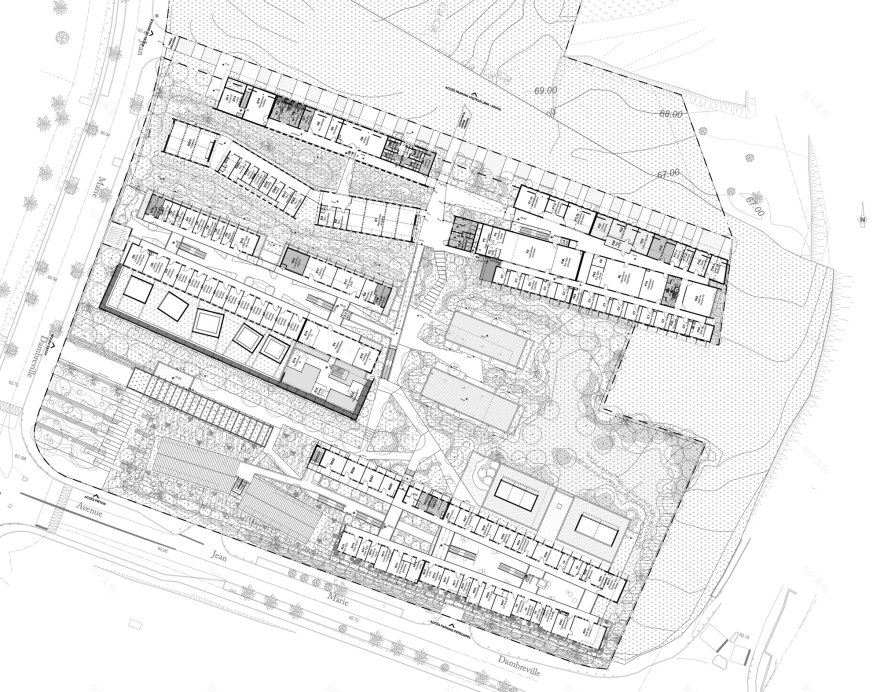
Text description provided by the architects. The Health Sciences Training and Research Unit in Saint-Pierre (Université de La Réunion) is conceived as an inhabited park. Built volumes and landscaped areas engage in dialogue with the broader campus, reflecting the synergies of academic life.


At the entrance, a thick façade expresses a distinct tropical identity through depth, layered planes, shadows, and permeable screens. Cryptomeria timber, guava fascines, and basalt stone anchor the project in its local context.


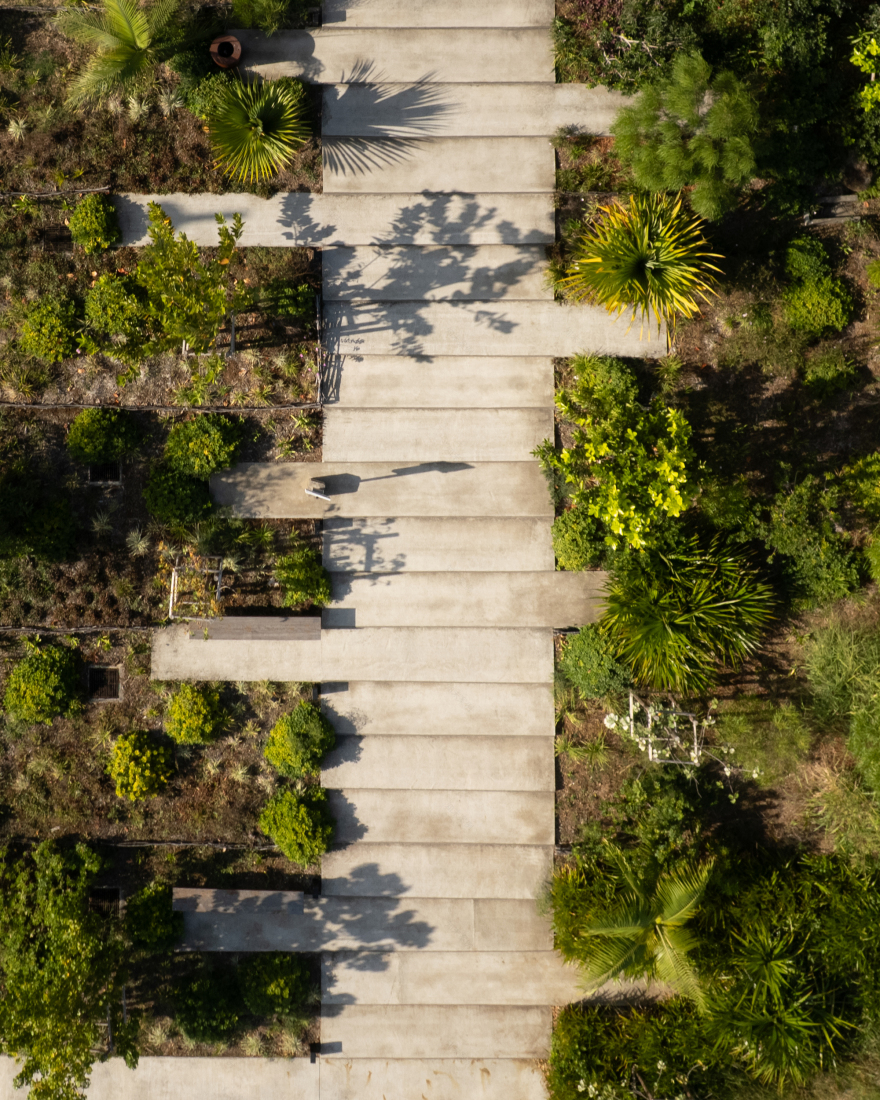
Further into the site, two timber pavilions clad in corrugated metal appear almost overtaken by vegetation. Slightly misaligned, they open visual breaches toward the campus core and initiate the main forecourt. This "estuary" marks the beginning of an ascending spatial sequence, experienced both at ground level and through elevated walkways. Circulation unfolds beneath, within, and above planted areas, connecting each programmatic unit.
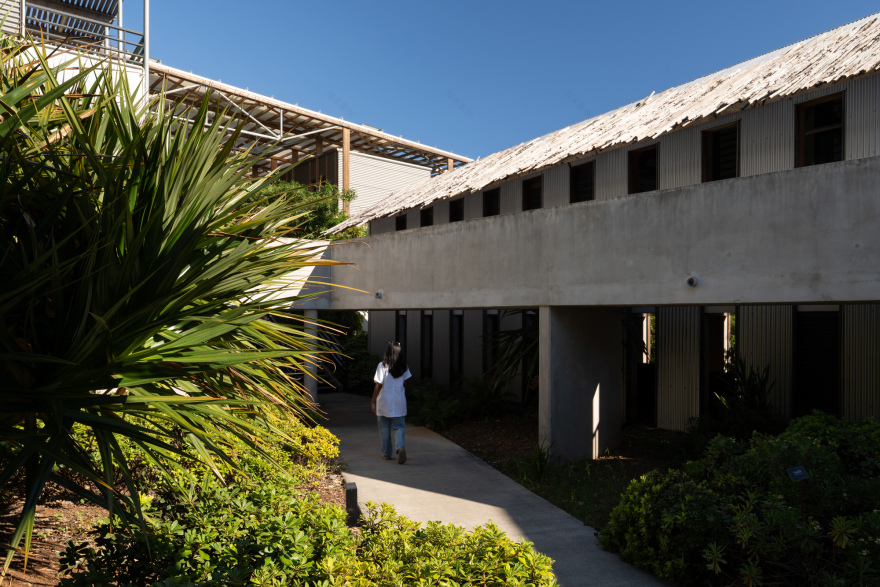

Between teaching buildings and the learning center, circulation expands into shaded, semi-open gardens. These intermediate spaces — neither fully inside nor outside — act as antechambers to workspaces, encouraging encounter and exchange. The buildings operate with an "open heart," generating microclimates through sheltered gardens protected by photovoltaic canopies.

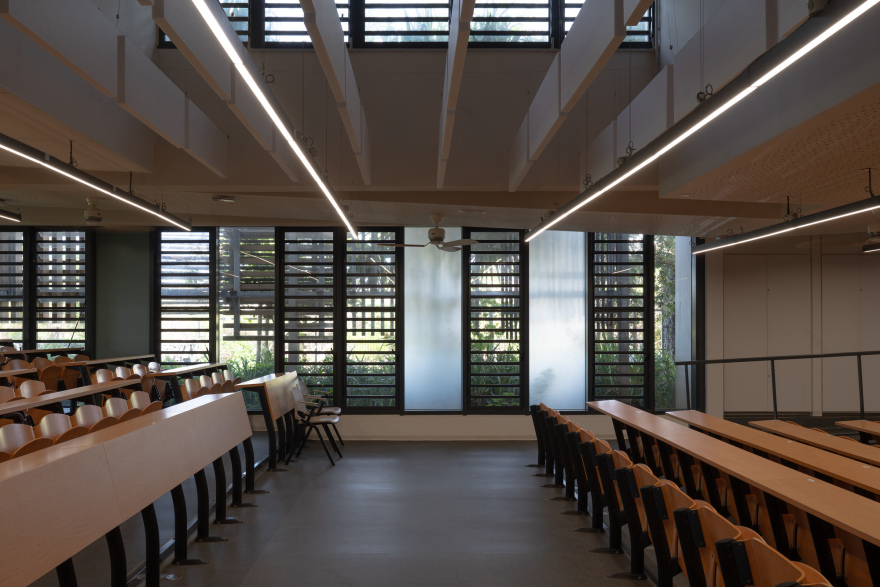
Inside, full-height openings frame planted environments with varied botanical atmospheres. Aromatic edges at ground level introduce subtle olfactory variations throughout the day, reinforcing the continuity between interior and exterior.


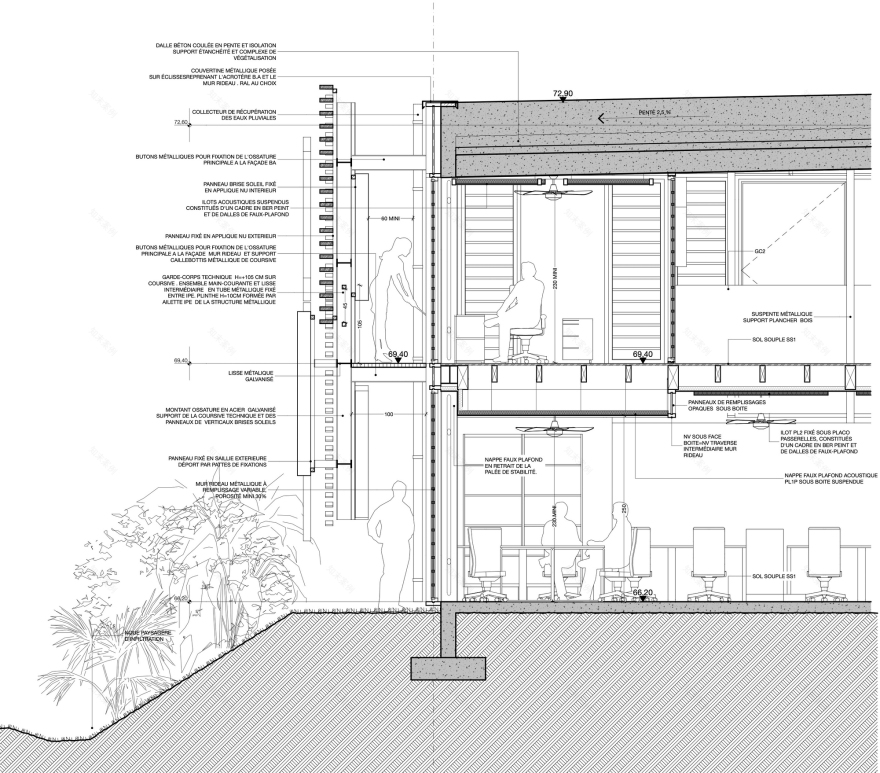
Construction remains straightforward: reinforced concrete provides structural stability, while timber volumes offer lightness and climatic responsiveness. The environmental strategy is based on three principles: creating shade, generating microclimates, and maximizing porosity.
Project gallery












南京喵熊网络科技有限公司 苏ICP备18050492号-4知末 © 2018—2020 . All photos and trademark graphics are copyrighted by their owners.增值电信业务经营许可证(ICP)苏B2-20201444 苏公网安备 32011302321234号
苏公网安备 32011302321234号客服
消息
收藏
下载
最近