

创作上传
VIP
收藏下载
登录 | 注册有礼
查看完整案例

收藏

下载

分享

翻译
Architects:404 Arquitectura
Area:750m²
Year:2024
Photographs:Renzo Rebagliati
Lead Architects:Diego Hernández Escribens, Israel Ascarruz
Category:Houses
Design Team:Claudia Romero, Gustavo Ontaneda, Ana Lucia Diaz, Franco Ferraro
Technical Team:Carol Quispe, María Fernanda Cornejo
Engineering & Consulting > Structural:Impacta Design & Building
Engineering & Consulting > Services:Planea Ingeniería y Construcción
Landscape Architecture:Titi Laurie
City:La Molina
Country:Peru

Text description provided by the architects. A concrete body crosses the site as an inhabited beam, structuring the house through shadow, thresholds, and a carefully choreographed relationship between mass and patio.

Trama House is located inside a private condominium in La Molina, Lima, an inland district defined by a more mountainous landscape and a warmer, drier atmosphere than the coastal city. The commission asked for a home that could feel intimate and protected—quiet toward the street and neighbors—while remaining generous and human on the inside. The main challenge was to secure privacy without sacrificing continuity: the project needed to preserve the experience of a large, usable courtyard as the social heart of daily life.


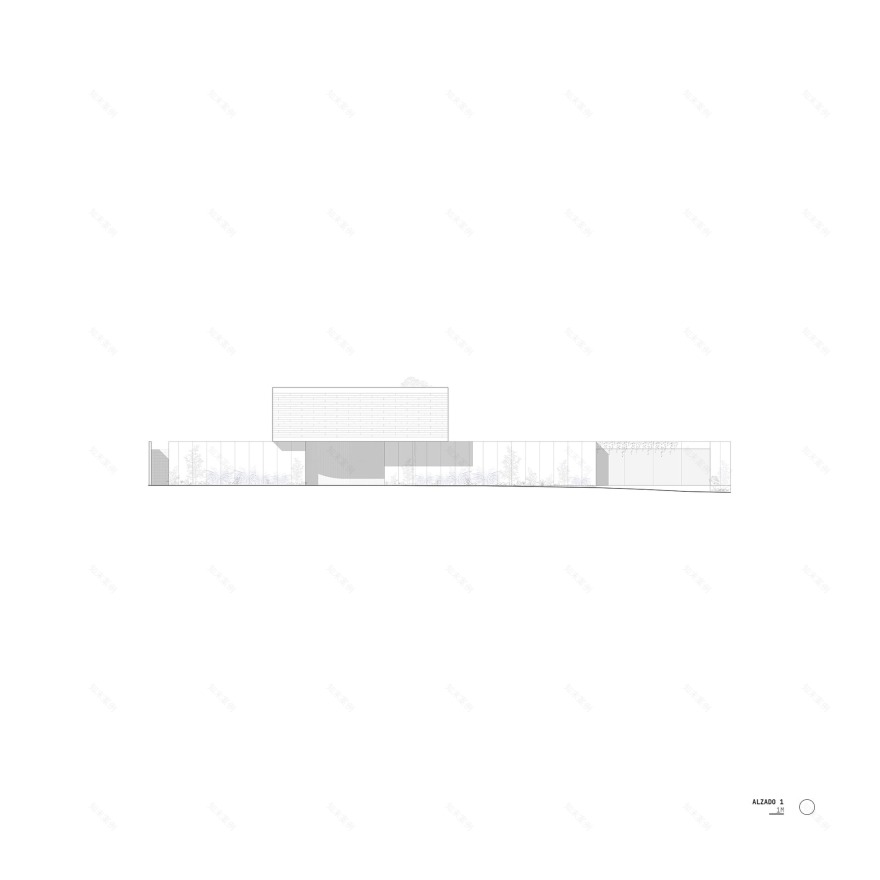
The design begins with a low, continuous, and heavy black bar placed along the front edge of the plot. This first volume gathers the public-daytime spaces—entry, kitchen, service areas, gym, and parking—while acting as a deliberate boundary that turns the remaining open area into a sheltered inner patio. Alongside this courtyard, the bar gradually opens through a stoa-like strip that receives the primary circulation of the ground floor and frames the approach without exposing the interior.


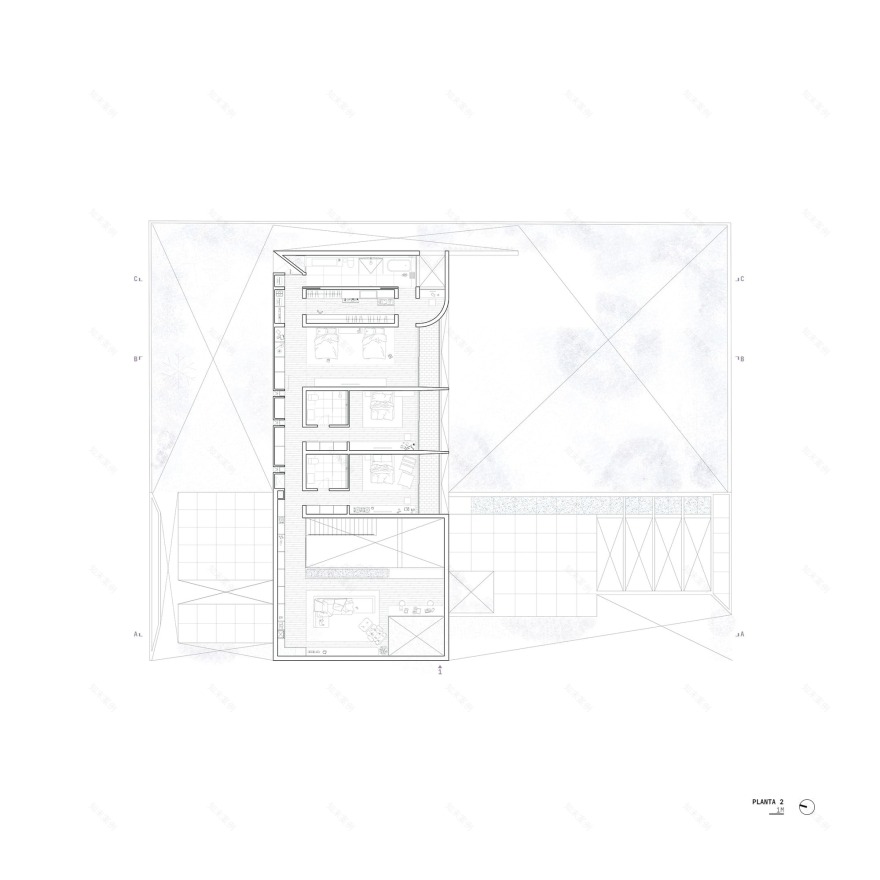
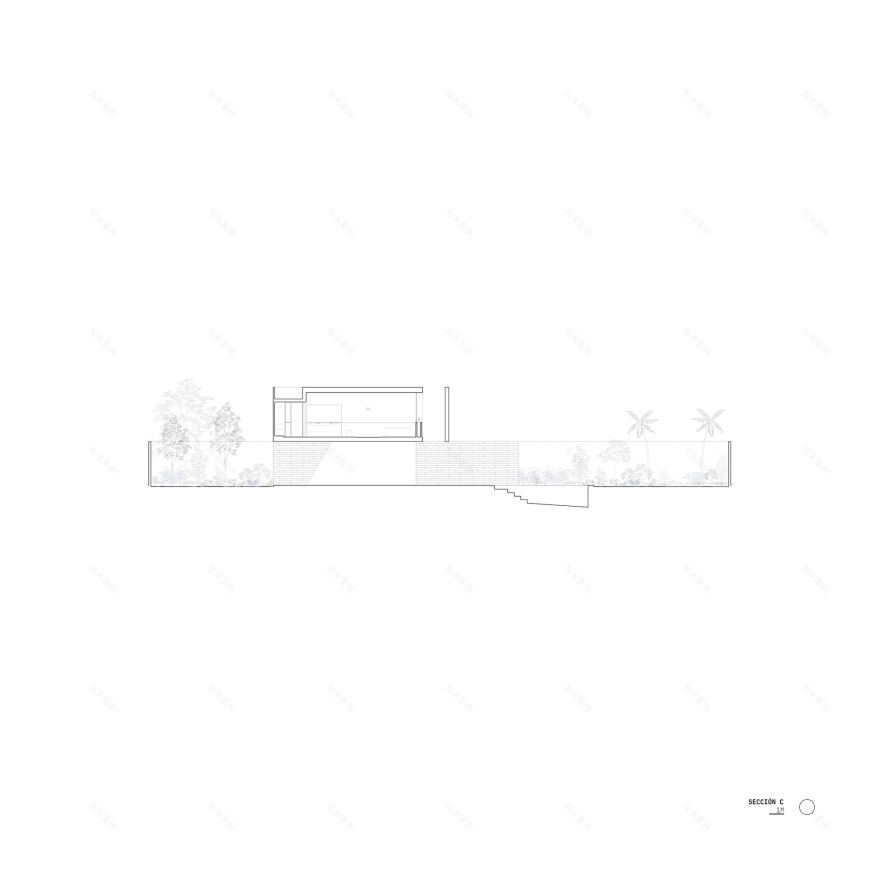
Perpendicular to this base, a second volume—an exposed-concrete element detached from the perimeter—traverses the site as a structural and spatial spine. It contains the private-nighttime spaces (living room and bedrooms on the upper level) and, at the same time, shapes the social life below: it extends into a protective entry canopy, makes room for a tree through a carved void, and defines a double-height vestibule upon arrival. Under its suspended "belly," the dining room and living room unfold as a shaded, permeable space supported by black-base extensions—columns and an elongated fireplace that anchors the social area.
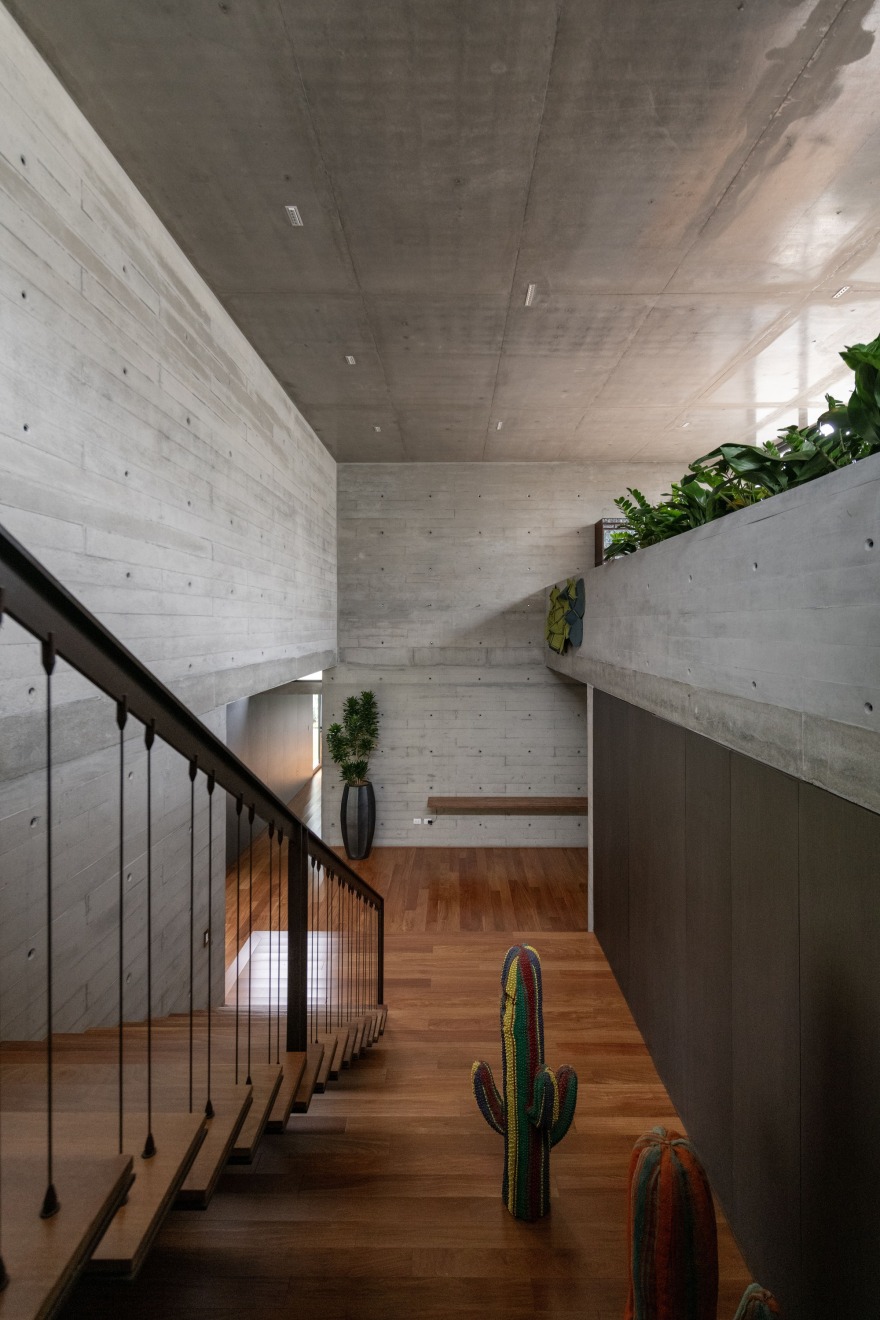

Two courtyards on either side of the concrete body guide its openings: toward the more contained family patio, the upper corridor is buffered by a linear wardrobe that filters light through deep vertical slots; toward the pool garden, the bedrooms open onto private balconies. Further along, the volume stretches to cover the outdoor grill area, lands on two sculptural supports—a truncated inverted pyramid and a plate that defines the pool edge—and introduces two cuts that bring indirect light into the main bedroom.

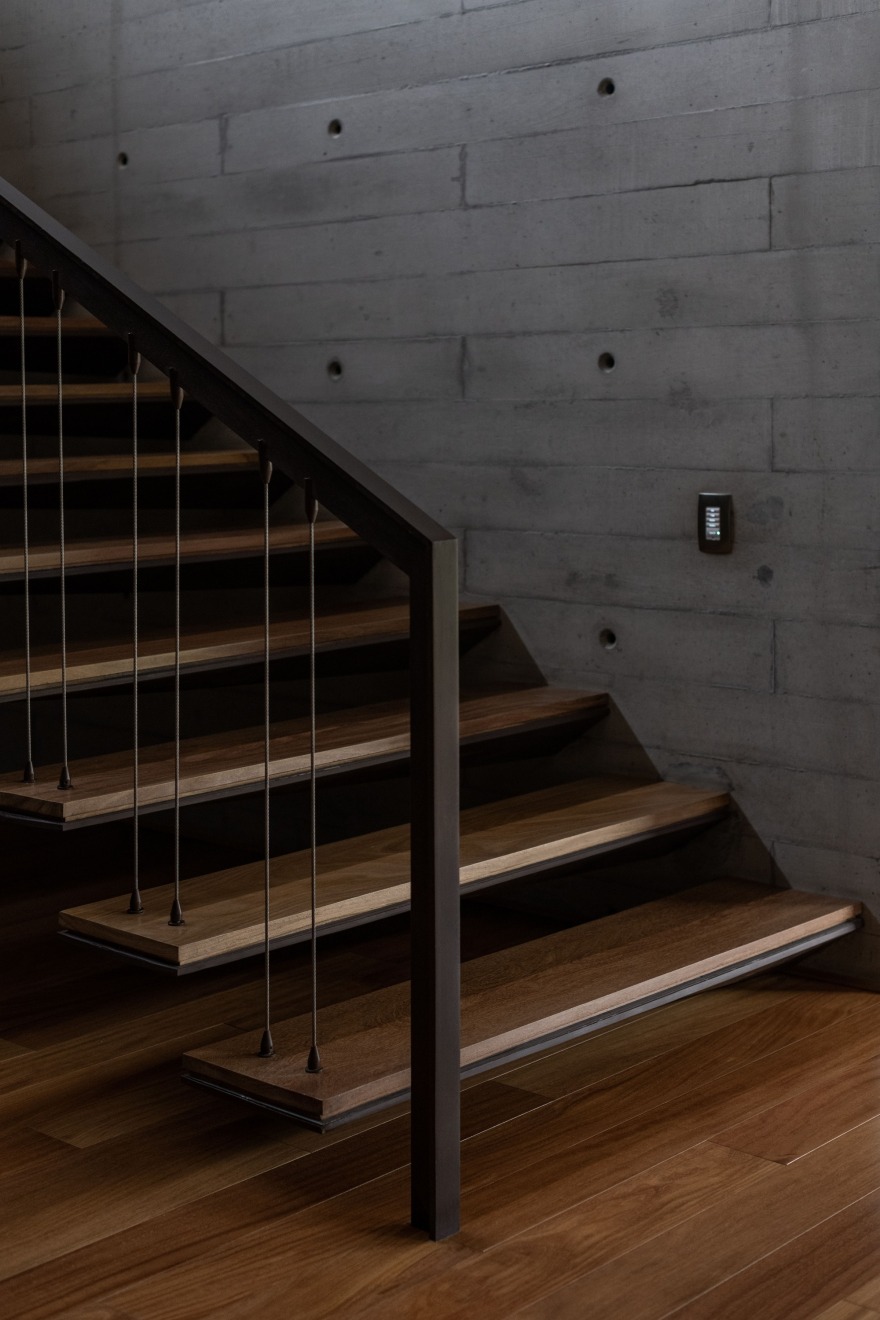
Material choices reinforce the project's character. Concrete remains exposed, retaining the imprint of formwork as an honest texture. The dark mineral finish of the base visually lifts the concrete volume and helps temper heat, while continuous wood flooring warms the interior and supports a barefoot domestic routine. A wide, floating staircase—self-supporting corten steel brackets anchored to a vertical concrete plate, with wood-clad treads—connects both levels as an autonomous object.

By turning structure into spatial narrative, Trama House transforms a privacy-driven brief into a sequence of lived thresholds—where the house finds its identity less in what it displays than in what it shelters.

Project gallery




南京喵熊网络科技有限公司 苏ICP备18050492号-4知末 © 2018—2020 . All photos and trademark graphics are copyrighted by their owners.增值电信业务经营许可证(ICP)苏B2-20201444 苏公网安备 32011302321234号
苏公网安备 32011302321234号客服
消息
收藏
下载
最近