

创作上传
VIP
收藏下载
登录 | 注册有礼
查看完整案例

收藏

下载

分享

翻译
Architects:Kraft Architects
Area:151m²
Year:2025
Photographs:Takuya Seki
Lead Architects:Atsushi Nakamura, Hirari Sato
Category:Houses
Lead Team:Atsushi Nakamura, Hirari Sato
General Contractor:Tadayoshi Ishikura (client and carpenter)
Engineering & Consulting > Structural:Asamitsu Structural Engineers (Takuya Asamitsu)
City:Isesaki
Country:Japan

Text description provided by the architects. The project is located on the suburban outskirts of Isesaki City, Gunma Prefecture, on a parcel of land left behind during suburban development. As surrounding plots were subdivided and sold, the site became landlocked and excluded from the formal market. Rather than resolving these constraints, the project reinterprets them as latent potential.

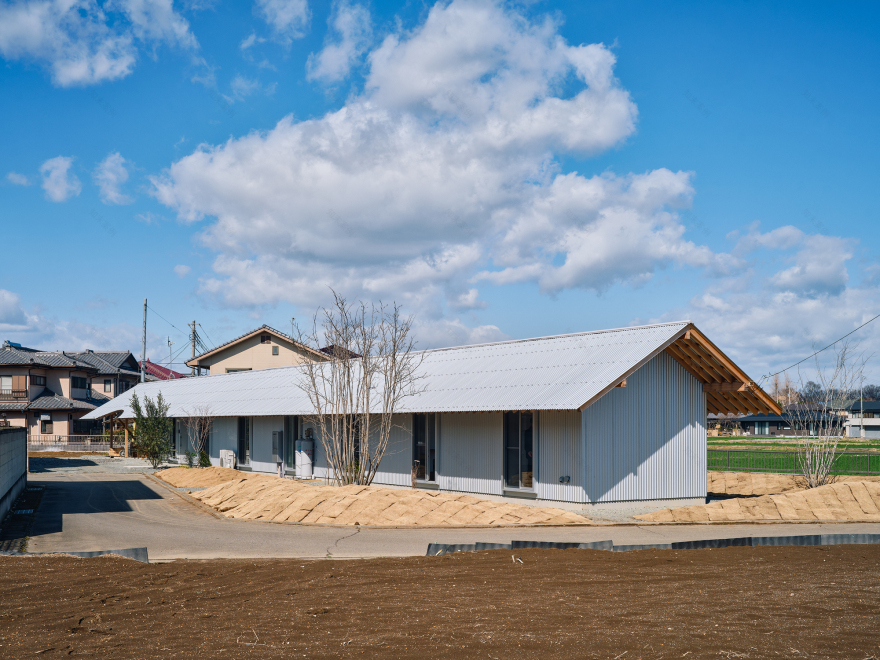
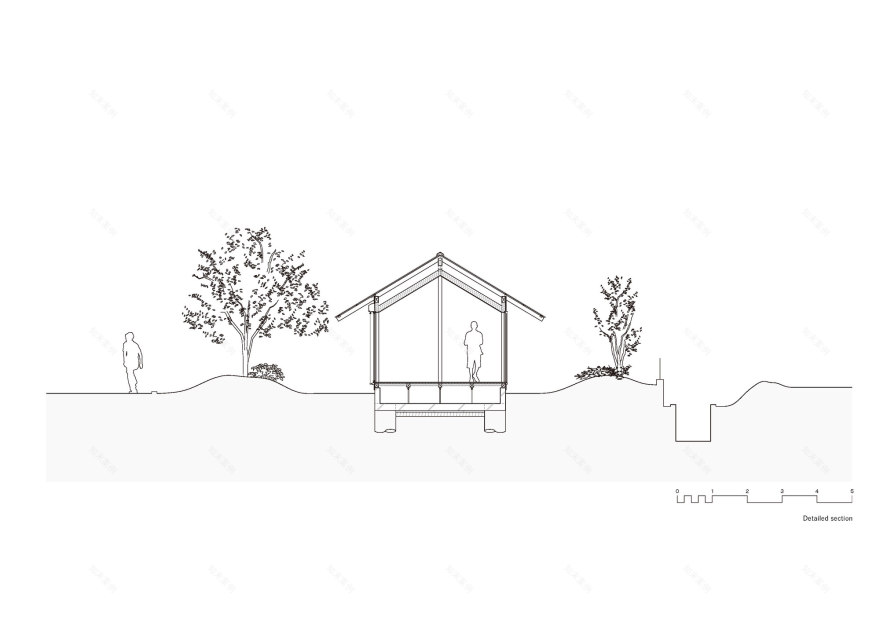
The house is conceived not as a finished object, but as an open condition that can evolve over time. The surrounding context—where residential neighbourhoods, agricultural fields, and distant views of Mount Akagi coexist without a clear hierarchy—provides the conceptual framework. The project engages this condition by embedding the architecture within overlapping layers of landscape.

The primary challenge was the site itself: a landlocked and irregular parcel outside conventional development logic. Instead of overcoming these limitations, the project accepts them as a given condition. The process also posed challenges. Developed with minimal drawings, the project relied on continuous on-site dialogue with the client, who is also a carpenter. This approach blurred the boundary between design and construction and made outcomes difficult to fully predetermine. Rather than eliminating discrepancies between intention and execution, they were incorporated as opportunities to produce new forms of rationality.


Material selection follows the rationality of local construction practices while engaging the reflective properties of materials to register changes in the surrounding environment. The corrugated galvalume steel exterior reflects light from both residential plots and adjacent farmland, positioning the house between contrasting contexts.

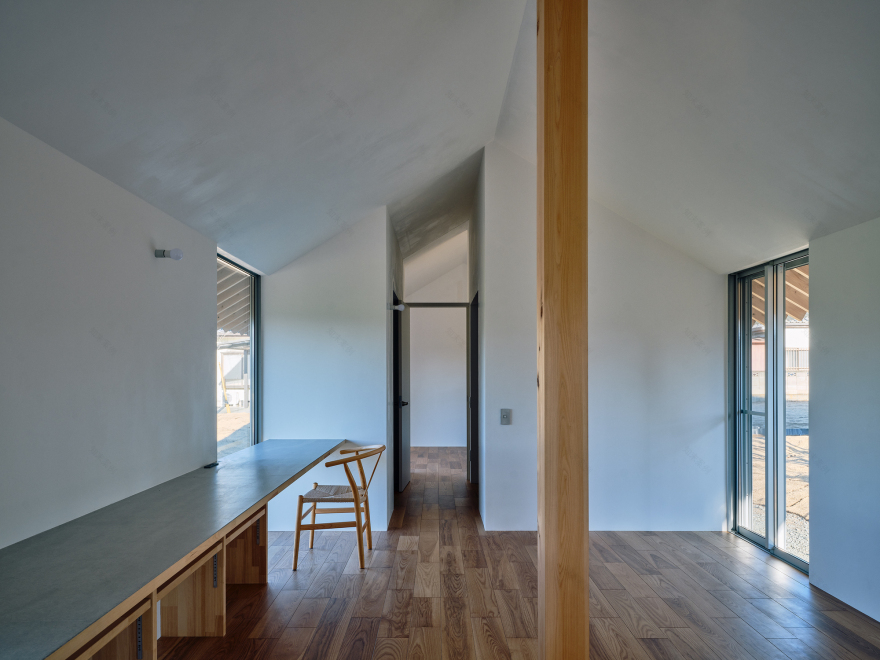


Internally, lime plaster introduces subtle variations in reflection, producing surfaces that register shifting layers of light and shadow over time. Through these changes, abstraction emerges not as a fixed intention, but as a condition shaped by time.


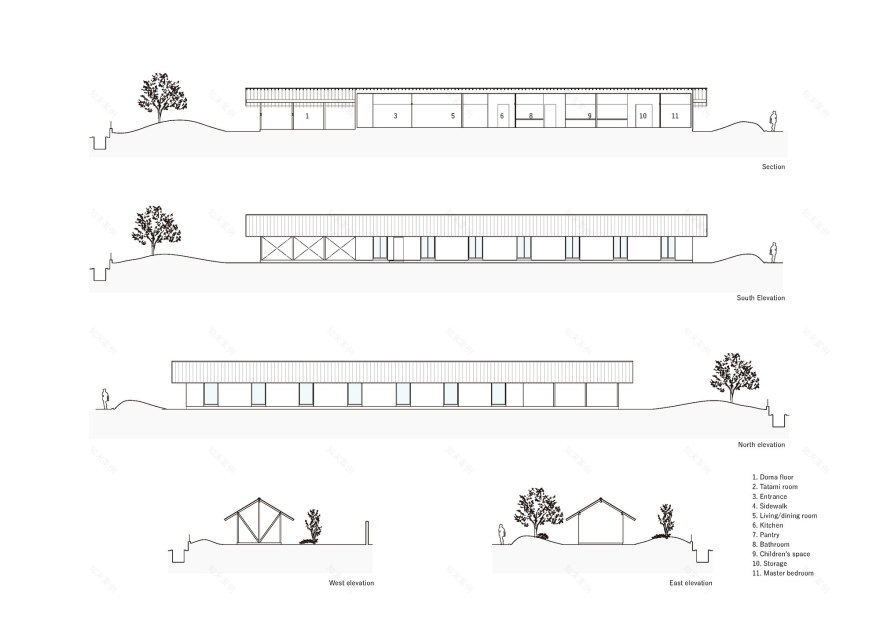
The spatial configuration is organised along the site's east–west axis, drawing the north–south landscape into the interior. Openings are evenly distributed, not as framed views but as fragments of the surrounding environment. Differences in scale—from distant mountains to nearby vegetation—produce a continuously shifting perception of the landscape.
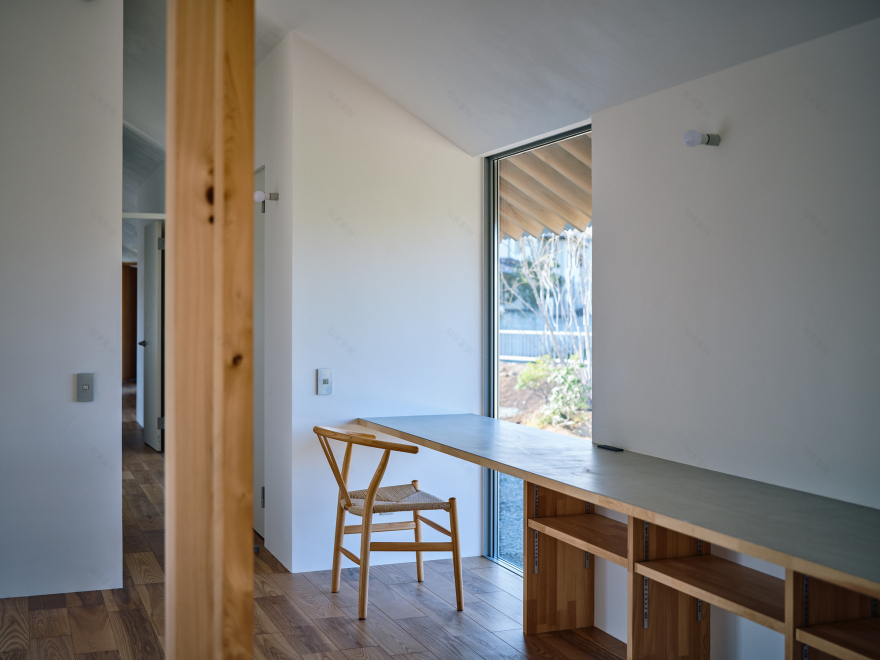
The interior avoids clearly defined rooms, instead forming a sequence of loosely articulated spaces. Boundaries between circulation and stillness, interior and exterior, and light and shadow remain ambiguous, allowing inhabitation to define spatial relationships. This organisation reflects a contemporary family structure that balances independence and continuity.


At the intersection of the axes, a single structural column acts as a spatial anchor, stabilising multiple centres of gravity rather than establishing a fixed hierarchy. Through reduction and abstraction, the architecture becomes a neutral field capable of accommodating changing patterns of life over time.

Project gallery



南京喵熊网络科技有限公司 苏ICP备18050492号-4知末 © 2018—2020 . All photos and trademark graphics are copyrighted by their owners.增值电信业务经营许可证(ICP)苏B2-20201444 苏公网安备 32011302321234号
苏公网安备 32011302321234号客服
消息
收藏
下载
最近