

创作上传
VIP
收藏下载
登录 | 注册有礼
查看完整案例

收藏

下载

分享
这是一个位于大理古城内的酒店改造项目。©楷素设计 This is a hotel renovation project located within the ancient city of Dali.
▼项目概览,overview of the project © Wakwon

第一次去大理,已是二十一年前。后来虽数不清去过多少次,但最初的印象,总在记忆里最清晰。
My first visit to Dali was twenty-one years ago. Though I have returned countless times since, that initial impression remains the clearest in my memory.
▼从二楼廊道看内院与苍山,viewing the inner courtyard and Cangshan Mountain from the second-floor corridor© Wakwon

那是2004年,大学期间,老师带我们去大理写生。第一站是双廊,那时还没有什么游客,更像一个“待开发”的小渔村。与其说是写生,不如说是一段原汁原味的渔村生活体验。那时的民宿多是房东自家经营,也谈不上什么设计,却有一种朴素的亲切感。村里有棵很老很大的古榕树,每天傍晚,村里的娃娃们跳进洱海捞菱角,煮熟了就到榕树下卖给我们。我们坐在树根上,剥着菱角,看天色渐暗,感受着在当时并不觉得珍贵的宁静。▼原场地照片,original site photo©楷素设计

It was 2004, during my university years, when my instructor took us to Dali for sketching. Our first stop was Shuanglang, which at the time had few tourists and felt more like a “pre-development” fishing village. It was less a sketching trip and more an authentic experience of village life by the lake. The guesthouses back then were mostly run by the homeowners themselves, with no real design to speak of, yet they possessed a simple, unpretentious warmth. In the village stood an ancient, massive banyan tree. Each evening, the local children would leap into Erhai Lake to harvest water caltrops, boil them, and sell them to us by the tree. We would sit on its exposed roots, shelling the caltrops, watching the sky darken, and soaking in a tranquility that, at the time, we didn’t realize was so precious.
▼远眺洱海,Looking out over Erhai Lake from a distance©黄凡

后来我们是坐船到的对岸——喜洲和大理古城。那时候的船还不是游船,是正儿八经的交通工具。大理也远没有现在这么商业化,游客不多,走在街上,空气都是清甜的。初见古城的感觉,很像当时我们二十岁左右的年轻人,有些青涩,却阳光、清澈。古城里的植物比现在多,印象最深的是柳荫下的溪流,水清见底,偶尔生出些水生花卉。不像现在,大部分溪水被钢板封起来,看不见了。那时候的水是流动的,让人觉得这座古城虽有年岁,却依然鲜活、惬意。可以随处走,也可以随便找块石凳坐下歇脚——不像现在,仿佛不消费点什么,就找不到一个可以停下来的地方。这个大理的印象,一直断断续续地浮现在脑海里。直到2024年,接到了这个古城内酒店项目的设计邀约。
Later, we took a boat to the opposite shore—to Xizhou and the ancient city of Dali. The boats back then weren’t tourist vessels, but proper means of transport. Dali was far less commercialized than it is now; there were few visitors, and walking down the streets, the air felt fresh and sweet. My first impression of the ancient city was much like us young people in our twenties—somewhat inexperienced, yet sunny and clear. There were more plants in the city then; what I remember most vividly were the streams beneath the willows, their water so clear you could see the bottom, with aquatic flowers occasionally emerging. Unlike today, where most of the streams are covered with steel plates, invisible. Back then, the water flowed, giving the ancient city a sense of being aged yet still vibrant and pleasant. You could wander anywhere and simply find a stone bench to rest on—unlike now, where it feels like you can’t find a place to pause without spending money. This impression of Dali has lingered in my mind, surfacing intermittently. Until 2024, when I received the design invitation for this hotel project within the ancient city.
▼从三楼露台看建筑与古城,Viewing the buildings and the ancient city from the third-floor terrace©黄凡


项目由七栋房子组成,建于不同时期,原来有不同用途——店铺、住宅、还有像宿舍的砖房,建造材料也各不相同。它们围出一个相对规整的内庭院,后面还有一个小院连通。站在场地中的那一刻,“连接与迴游”这个概念便自然而然地冒了出来。于是我们定下了几条设计原则:不宏大叙事,不哗众取宠,因地制宜,融入古城。▼原场地照片,original site photo©楷素设计

The project comprises seven buildings, constructed in different periods, originally serving various purposes—shops, residences, and even a brick building resembling a dormitory—with diverse construction materials. They enclose a relatively orderly inner courtyard, with a smaller courtyard connecting at the rear. Standing on the site, the concept of “connection and circulation” emerged naturally. Hence, we established several design principles: no grand narratives, no sensationalism, adapt to local conditions, and integrate into the ancient city.
▼保留传统建筑形式的门楼,Retaining the traditional architectural form of the gatehouse©黄凡
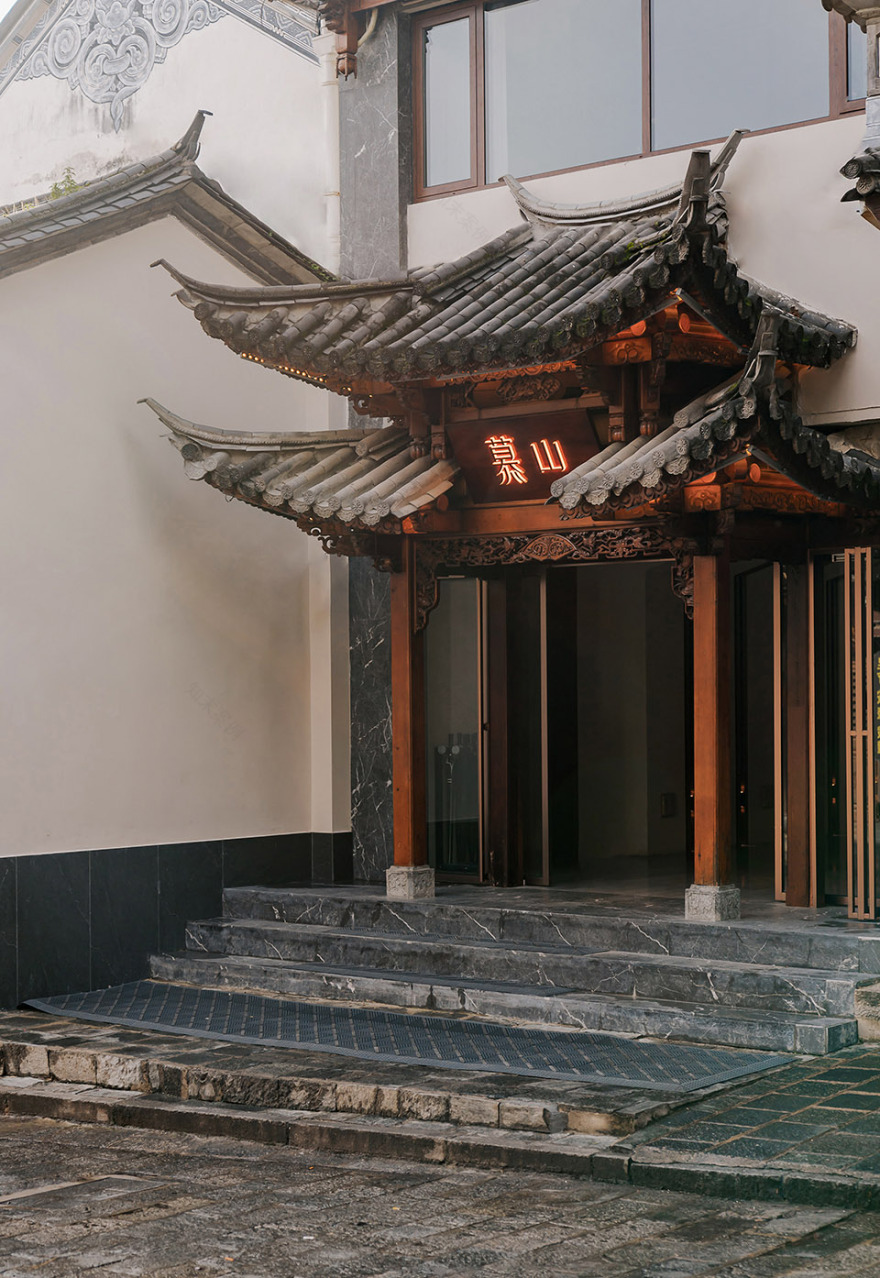
▼保留传统建筑形式的门楼,
Retaining the traditional architectural form of the gatehouse©Wakwon

古城里的房子,总是挨挨挤挤的。能有这样两个连通的内院,已属不易,哪里还敢奢望窗外的开阔景致?除了大门,整个酒店都被邻居的墙壁包围着。如何利用横向的庭院创造迴游的动线,如何将古城的屋顶景观、开阔的洱海和苍山引入视野,就成了设计的关键——既要向内经营庭院,也要向外拓展视线。
Buildings in the ancient city are always tightly clustered. Having two such interconnected inner courtyards is already a rarity, so we dared not hope for expansive views from the windows. Aside from the main entrance, the entire hotel is surrounded by neighboring walls. The key, therefore, became how to utilize the horizontal courtyards to create circulation pathways, and how to introduce views of the ancient city’s rooftops, the expansive Erhai Lake, and the Cangshan Mountains—necessitating a focus on cultivating the inner courtyards while simultaneously reaching outward for vistas.
▼入口,entrance©Wakwon

▼从庭院看向回廊,look towards the courtyard from the corridor©Wakwon

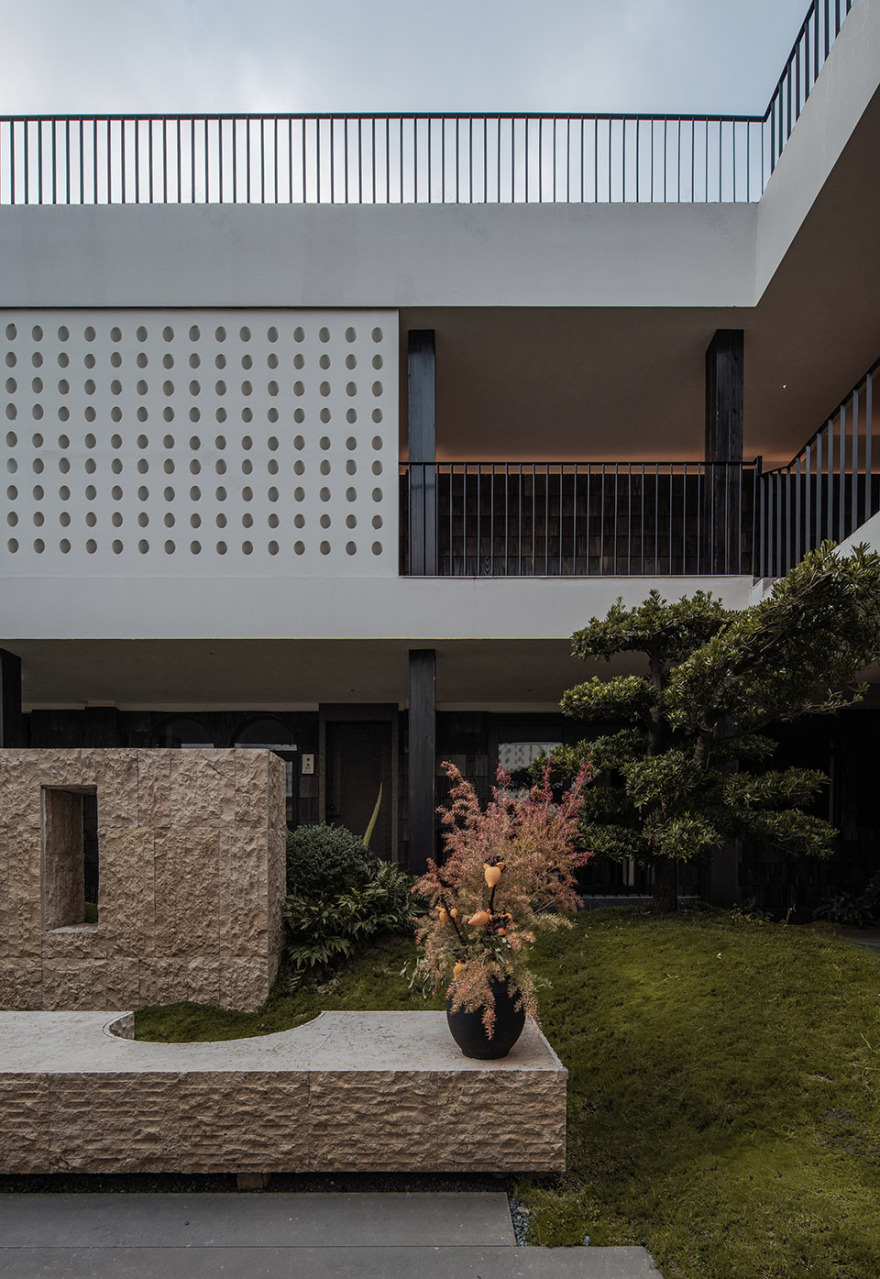
▼连通的内院,interconnected inner courtyards©Wakwon

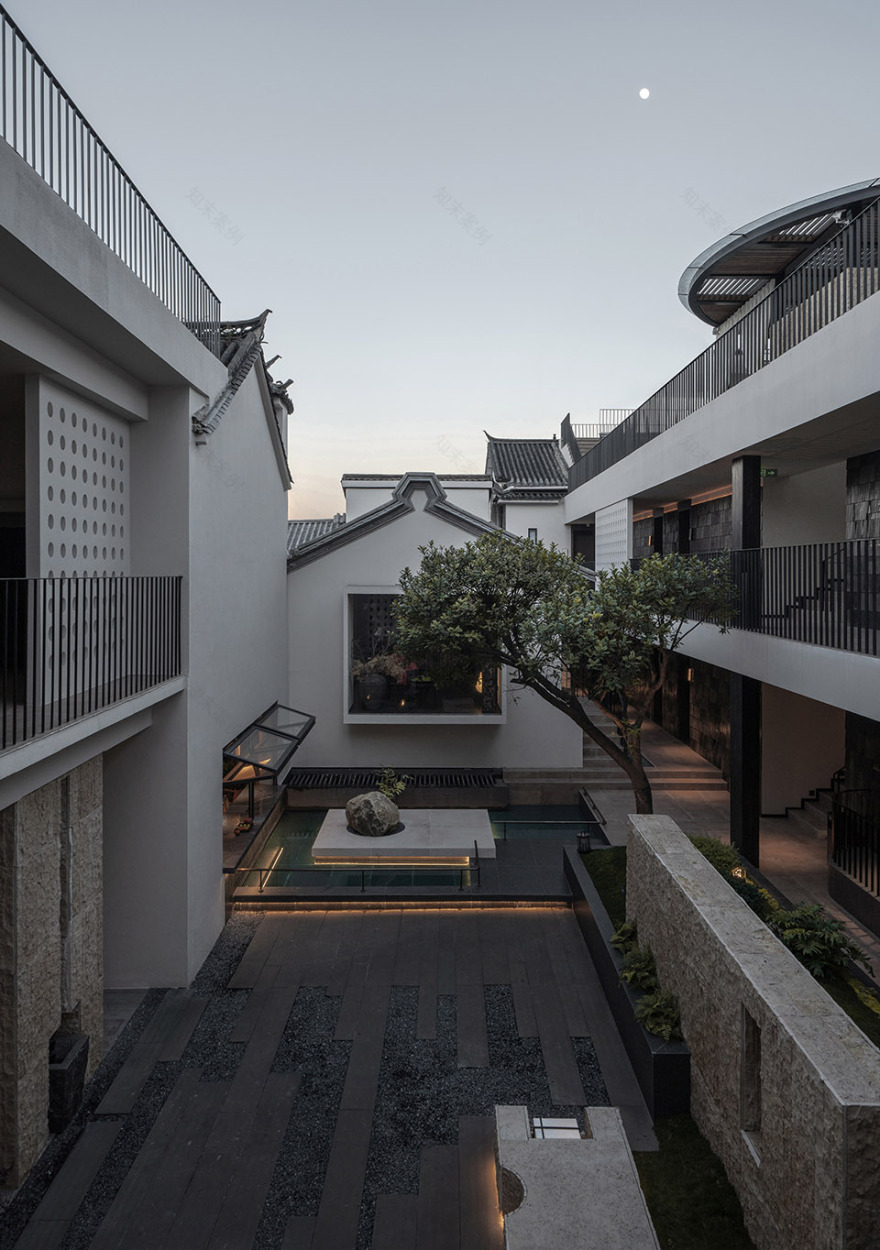
▼从二楼廊道看庭院与西面休息区,View of the courtyard and the western rest area from the corridor on the second floor©黄凡

串联起这些散乱的房子,成了首先要解决的问题。我们设计了一座“游廊”——一、二层的观景廊桥,连通每一栋楼,同时兼具遮雨功能。各栋楼地面的高差,用最简单的踏步过渡,廊桥也随之有了错落的节奏。客人在游走的过程中,用脚步丈量庭院,体验内院的层次感。带椭圆洞口的片墙,为空间带来了屏风式的隔断作用,同时也成为了收集光线的容器,光影投射、隔断与节奏的变化为室内带来微妙、丰富细腻的光影变化。
▼轴测图,axonometric©楷素设计

Connecting these disparate buildings became the primary issue to resolve. We designed a “wandering gallery”—a two-story viewing corridor connecting each building, also serving a rain-sheltering function. The ground-level height differences between the buildings were managed with simple steps, giving the gallery a staggered rhythm. As guests traverse the space, they measure the courtyard with their steps, experiencing the layered nature of the inner yard. Walls with elliptical openings serve a screening function, akin to room dividers, while also becoming vessels that collect light, casting shadows that bring subtle, rich, and finely textured variations to the interior spaces.
▼内院的层次感,giving the gallery a staggered rhythm© 黄凡
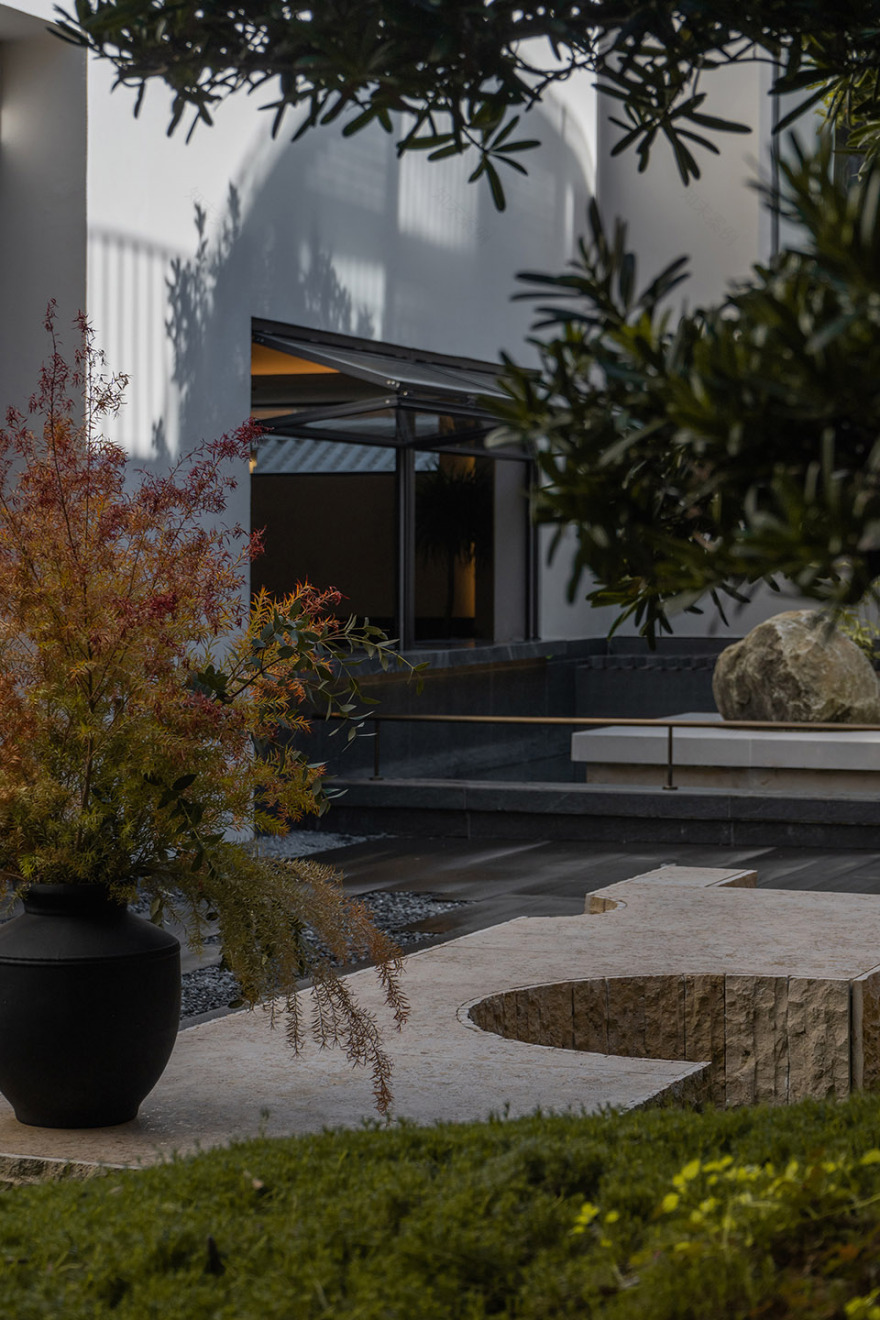
二层北面,正对茶室和内院花园的位置,我们设置了一个休闲区。没有把它做成需要测算商业回报的功利空间,而是像从前大理古城里随处可见的石凳、水景、歇脚处一样,起到调节冗长走廊的作用。人可以随意进出,小坐、阅读、品茶,或者围炉夜话。
On the north side of the second floor, facing the tea house and the inner garden, we placed a lounge area. Instead of making it a profit-driven space requiring commercial returns, we intended it to serve as a regulating pause within the long corridor—much like the stone benches, water features, and resting spots once commonly found throughout the ancient city of Dali. People can freely enter this area to sit briefly, read, enjoy tea, or gather around a fireplace for conversation.
▼休闲区,a lounge area© 黄凡


穿过飞檐式的门楼,便是带有“照壁”的接待大厅。柱列与人字形斜屋顶,保留了传统的影子与仪式感。接待厅左侧,是其中最低矮的一栋房子,我们用它的底层做了早餐厅和水吧,西面向内庭院开窗,把庭院景色框了进来。原本通往二楼的旋转楼梯太狭小,拆掉了,二层房间便通过“游廊”进入。二层与狭窄的三层阁楼打通,成了面向洱海的亲子房。▼建筑模型分析,building model analysis©楷素设计
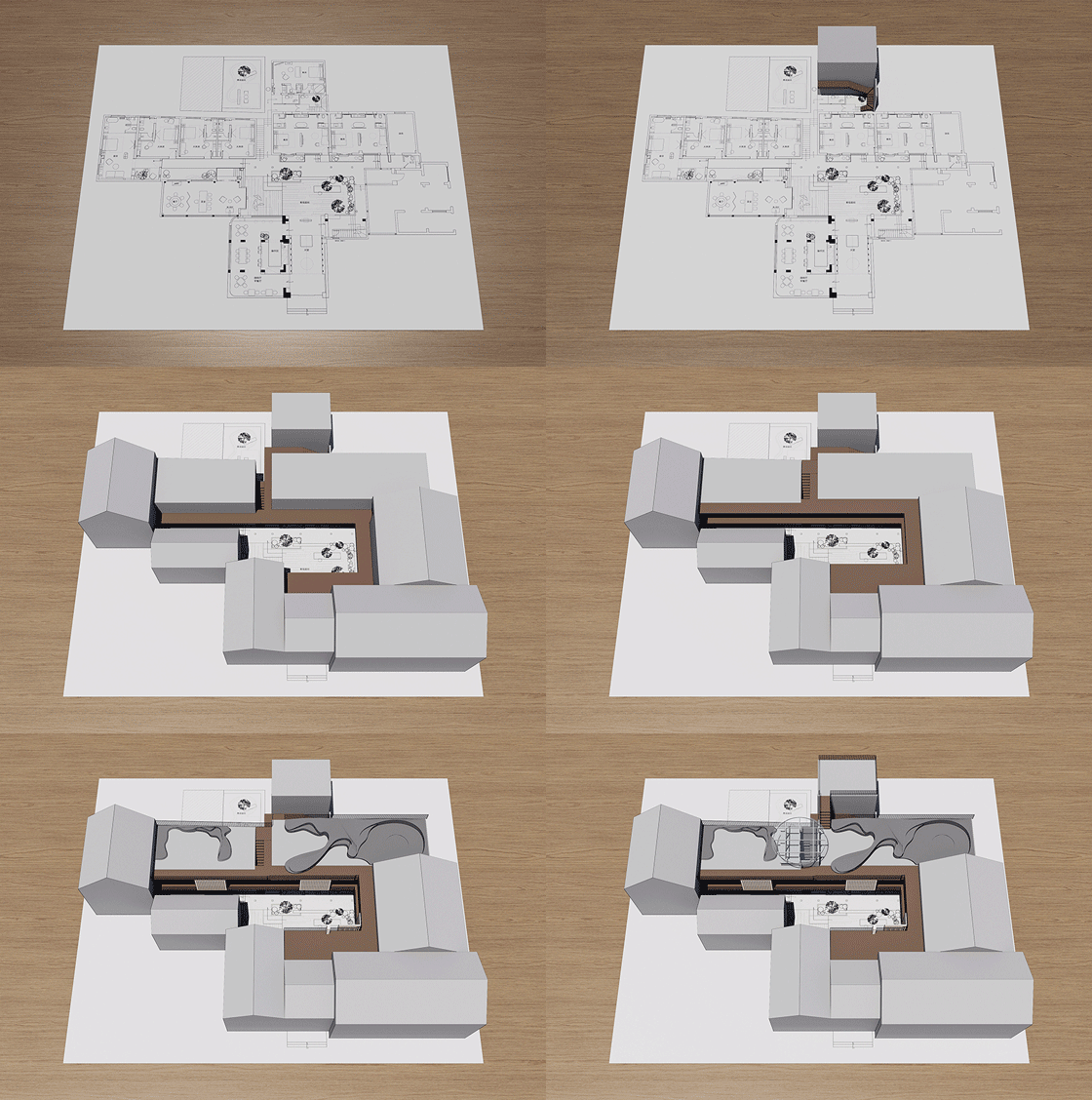
Passing through a gateway with an upturned eaves structure, you arrive at the reception hall, which features a “screen wall” (zhaobi). The colonnade and pitched roof retain a sense of traditional formality and ceremony. To the left of the reception hall is the lowest of the seven buildings. We utilized its ground floor for a breakfast room and a coffee bar, with west-facing windows that frame the scenery of the inner courtyard. The original spiral staircase leading to the second floor was too cramped and was removed; access to the second-floor room is now via the “wandering gallery.” The second floor was then connected to the narrow third-floor attic to create a family room facing Erhai Lake.
▼带有“照壁”的接待大厅,
the reception hall, which features a “screen wall” ©Wakwon
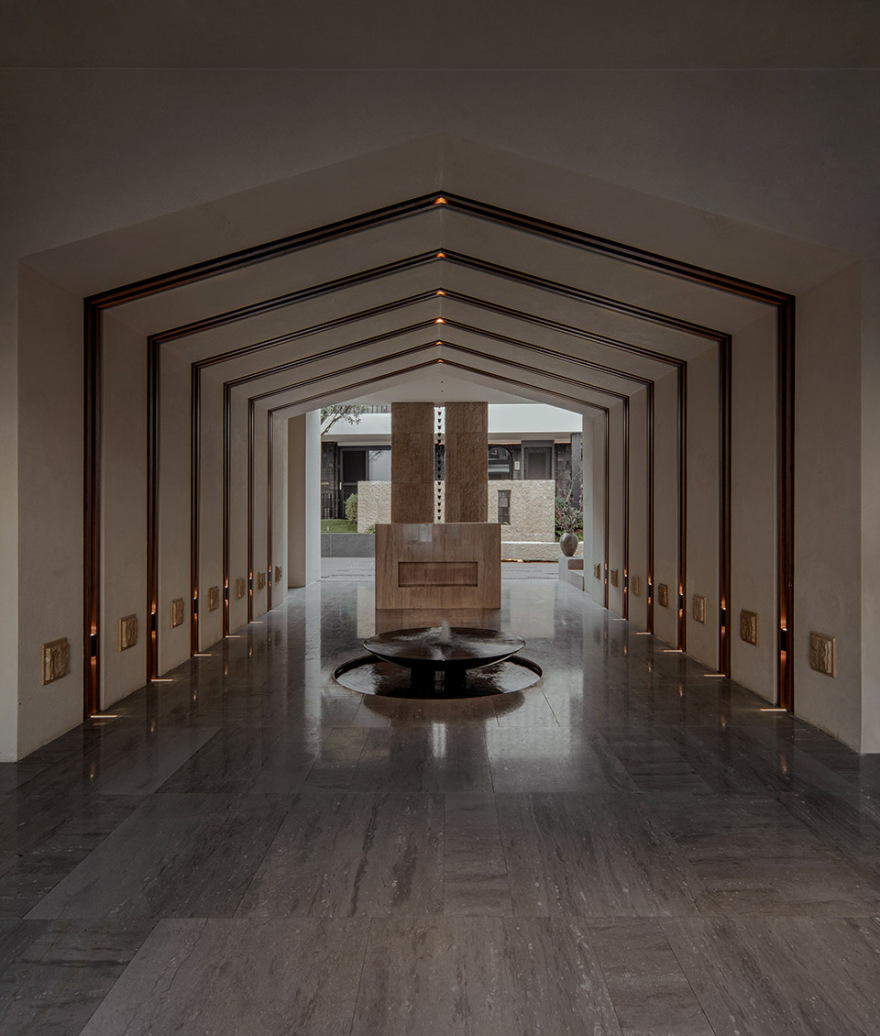

▼带有“照壁”的接待大厅,the reception hall, which features a “screen wall” ©Wakwon

有了“游廊”,楼梯的位置就成了关键——它决定了横向与垂直交通的汇合点。南侧两栋“宿舍楼”之间的空白地带,恰好是整个地块的中心,又与接待厅的楼梯形成呼应,满足消防需求。这把楼梯的设置,让核心位置的两栋楼真正连成了整体。也正是这一系列调整,重新组织了交通,把几栋大大小小的房子串联起来,原本凌乱的布局,终于有了整体的模样。
With the “wandering gallery” in place, the staircase location became crucial—it determined the convergence point for horizontal and vertical circulation. The blank space between the two “dormitory” buildings on the south side happened to be the site’s central point, while also aligning with the staircase in the reception hall to meet fire safety requirements. Placing the stairs here truly unified the two core buildings. This series of adjustments reorganized the traffic flow, linking buildings of various sizes, transforming the previously fragmented layout into a cohesive whole.
▼楼梯区域,staircase©Wakwon

▼光斑的投影,The projection of the light spot© 黄凡
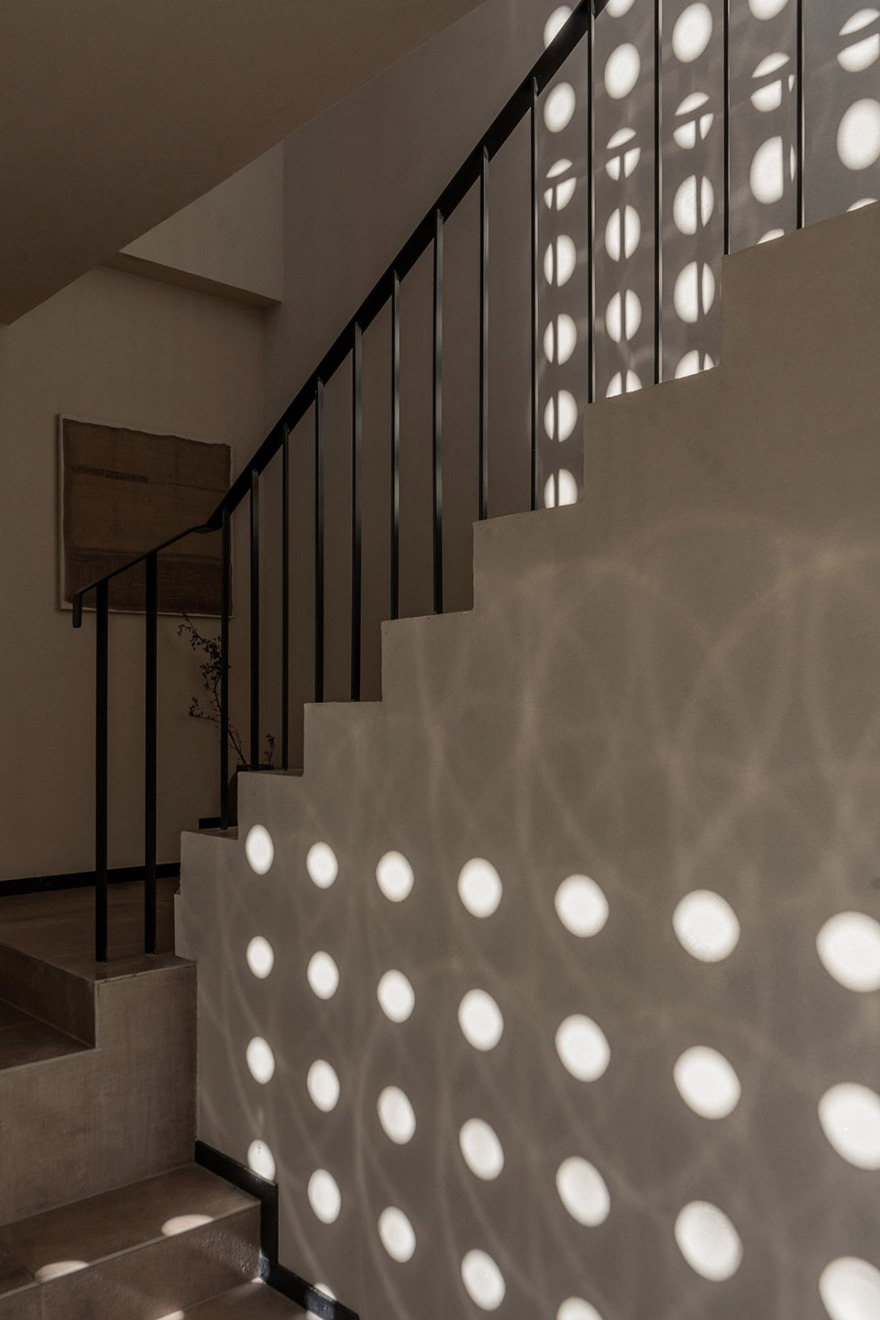
▼二楼廊道,the corridor on the upper level© 黄凡


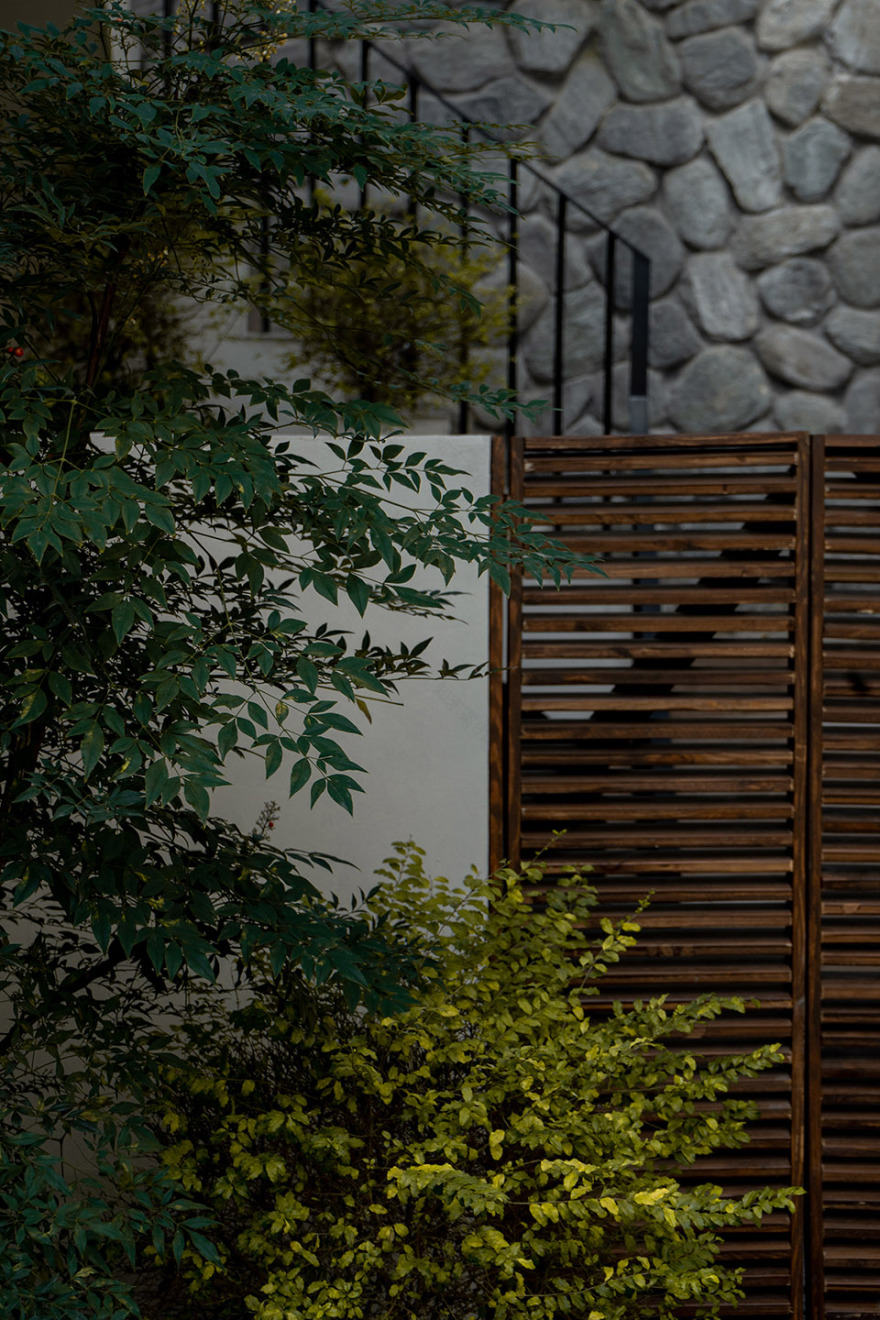
有意思的是,看到重新组织起来的小“建筑群”,一向精打细算的房东,竟然主动花“巨资”换掉了院里一棵不太好看的树,改种了更有观赏性的清香木——原本因为造价,是不打算换的。
Interestingly, upon seeing the newly organized small “architectural cluster,” the client—typically budget-conscious—voluntarily spent a significant amount to replace a less aesthetically pleasing tree in the courtyard with a more visually appealing fragrant pepperwood (Pistacia weinmannifolia), a change initially deemed too costly.
▼更有观赏性的清香木,a more visually appealing fragrant pepperwood© 黄凡

前面讲过,这是由七栋不同功能的房子组合的庭院酒店,结构的改造是必不可少的,当然限制也很多。原先普遍3.5米乘4.5米的房间,自然不能满足客房的使用需求。我们通过重新合并、调整,形成了套房、标准房、亲子房等几种房型。房间虽不能说非常差大,但通过门厅的设置、简洁的布置、合理的分隔,也算达到了预想的效果。我们更在意的是,客人能在这里体会到一种静谧、自在、闲适的大理古城院子生活。
As mentioned, this is a courtyard hotel composed of seven buildings with different functions. Structural modifications were inevitable and came with many constraints. The original rooms, typically measuring 3.5 by 4.5 meters, were naturally unsuitable for guest room requirements. Through reconfiguration and merging, we created several room types: suites, standard rooms, and family rooms. While the rooms are not exceptionally spacious, the inclusion of entrance vestibules, simple layouts, and logical divisions achieved the desired effect. Our primary concern was ensuring guests could experience a tranquil, relaxed, and leisurely courtyard lifestyle unique to Dali’s ancient city.
▼茶室,tearoom© 黄凡
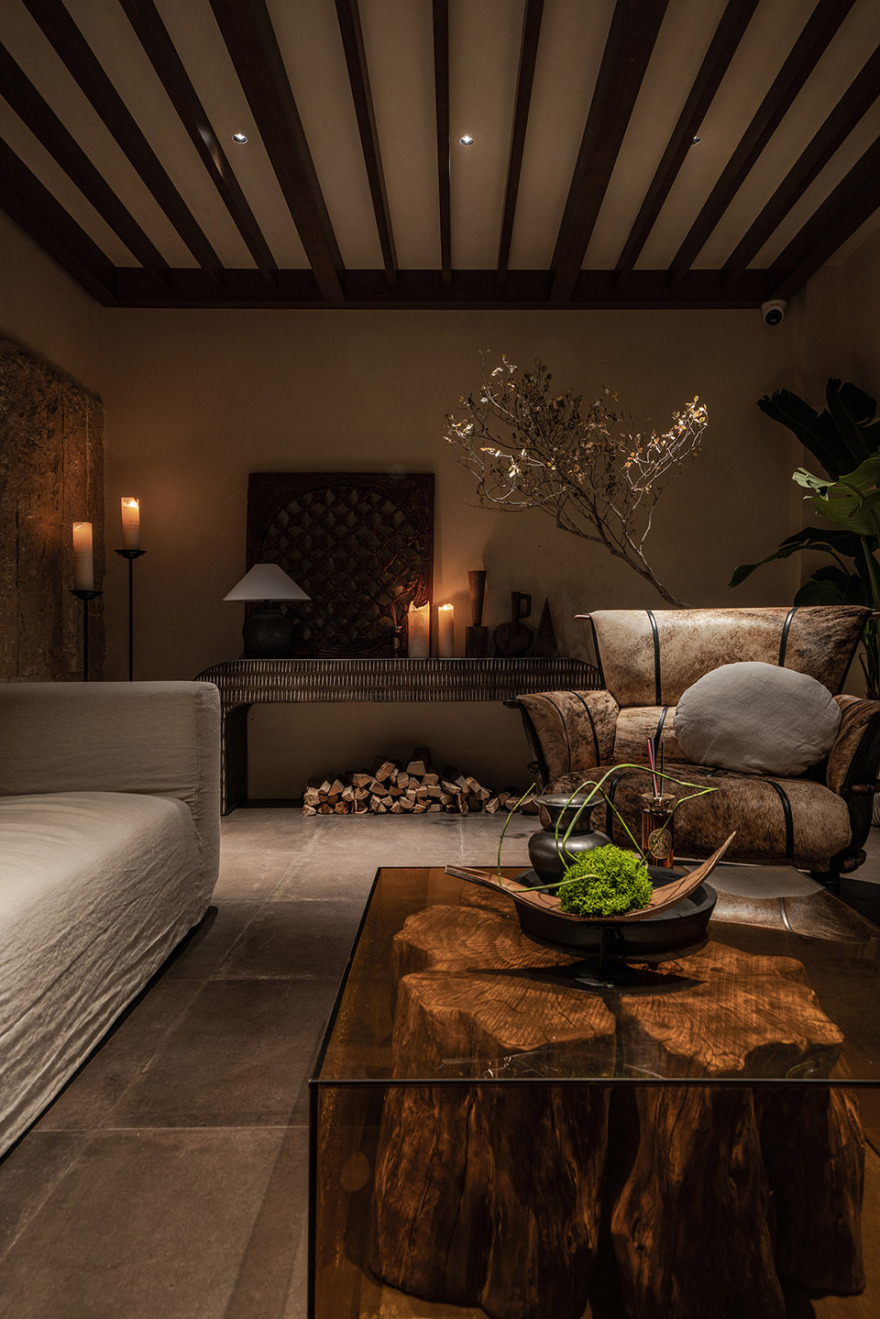


▼保留原有窗格的茶室,The tea room that retains the original partitions© 黄凡

▼客房区域,guest room© 黄凡
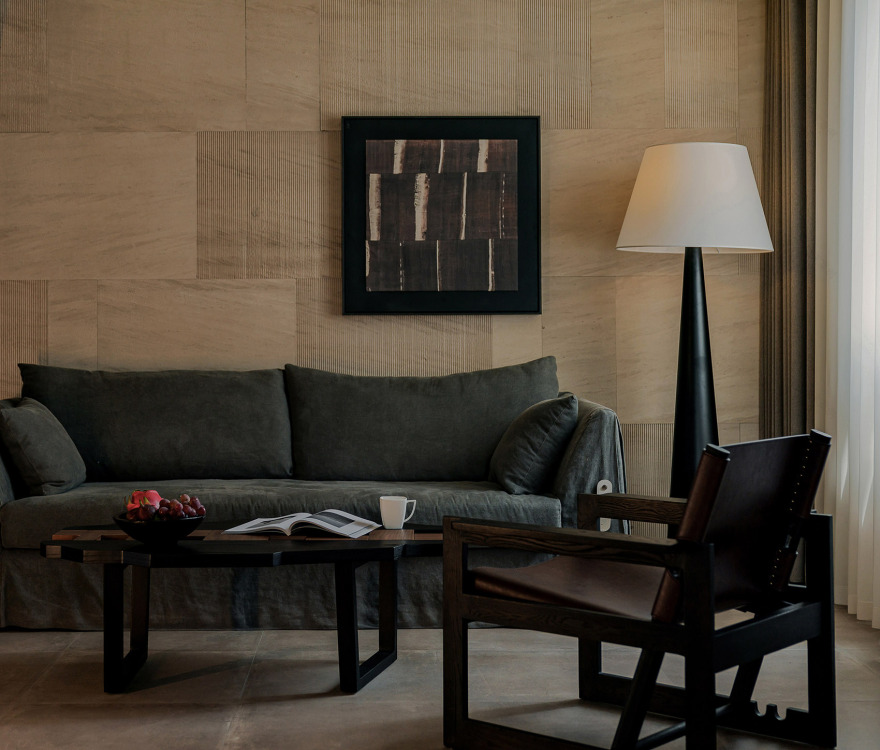

▼客房区域,guest room©Wakwon


▼浴室区域,bathroom©Wakwon

原建筑中的卷棚、白墙、青瓦等大理民居元素,尽量保留下来——这是让新项目融入古城并节省开支的有效手段。
Where possible, we preserved elements of traditional Dali vernacular architecture, such as the rolled ridges, whitewashed walls, and green tiles—an effective approach for integrating the new project into the ancient city while managing costs.
▼尽量保留白墙等大理民居元素,preserved elements of traditional Dali vernacular architecture, whitewashed walls© 黄凡
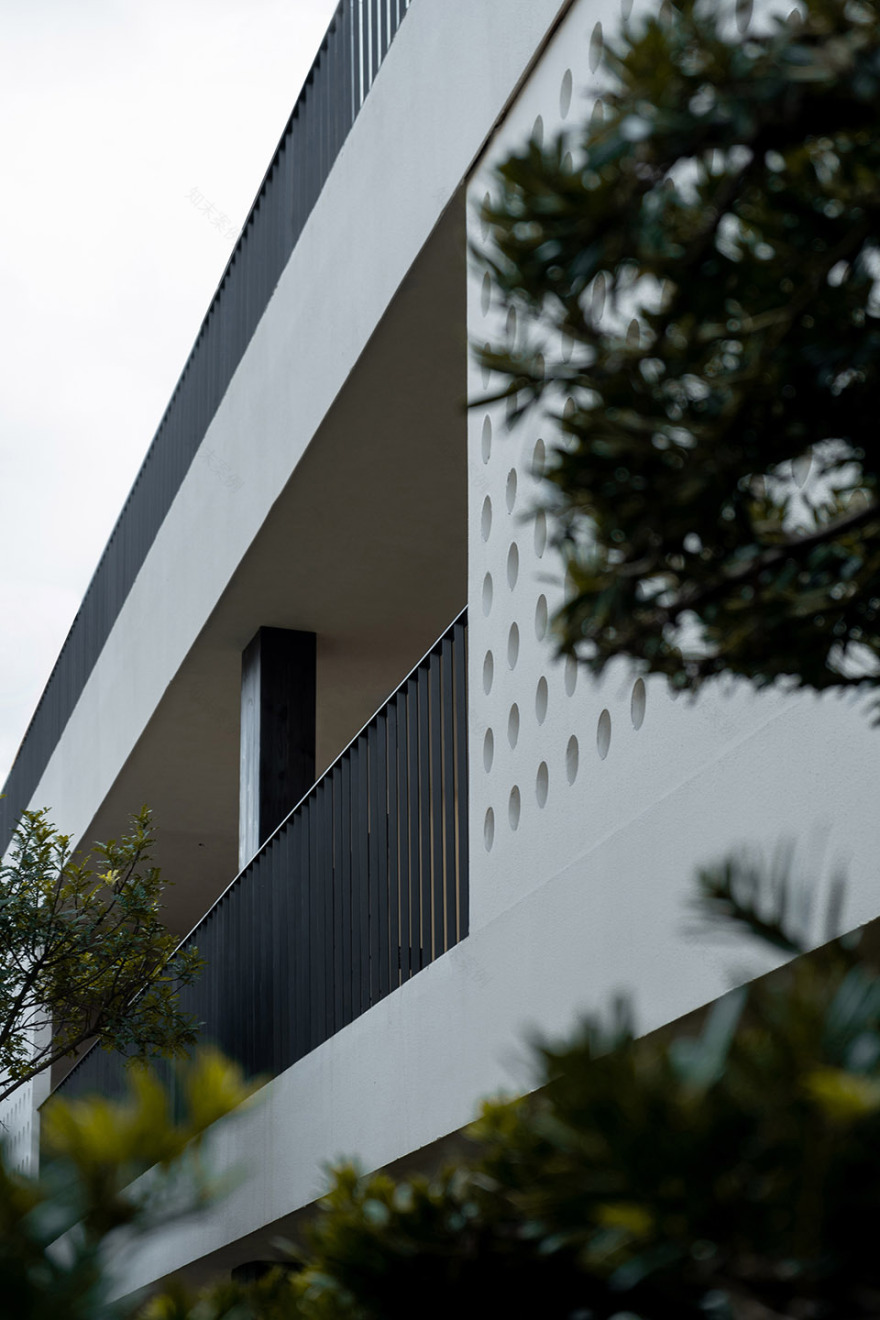
▼屋顶局部,roof detail© 黄凡

穿过“游廊”,沿楼梯上到屋顶。庆幸的是,尽管整个酒店除了大门,几乎被三面围合,但原先那两栋类似宿舍的主要建筑,留下了平整的屋顶。我们自然而然打起了这片平顶的主意。西面正对古城里那两棵有名的“夫妻树”,再远些,是苍山;东面是洱海。站在屋顶,整个古城的青瓦屋顶错落有致地铺展在眼前。苍山、屋顶、洱海,就这样成了酒店独有的景观。于是我们在屋顶设置了吧台、书吧、观景台,成了客人观景、喝咖啡的好去处——在封闭的庭院里,也算找到一个通往开阔的出口。
Passing through the “wandering gallery” and ascending the stairs to the rooftop, we counted our blessings. Although the hotel is almost entirely enclosed by neighboring structures except for the main entrance, the two main buildings—the former dormitory-like structures—had flat rooftops. Naturally, we set our sights on these. To the west, the view encompasses the famous “couple trees” within the ancient city, with the Cangshan Mountains beyond. To the east lies Erhai Lake. From the rooftop, the patchwork of green-tiled roofs from the ancient city spreads out in a picturesque arrangement. The mountains, rooftops, and lake thus became the hotel’s unique scenic assets. Consequently, we set up a bar, a reading area, and viewing terraces on the rooftop—creating sought-after spots for guests to enjoy the scenery and coffee, offering an “outlet” to openness within the enclosed courtyard.
▼从三楼露台咖啡区远眺屋顶与苍山,From the coffee area on the third-floor terrace, one can overlook the roof and the Cangshan Mountain© 黄凡

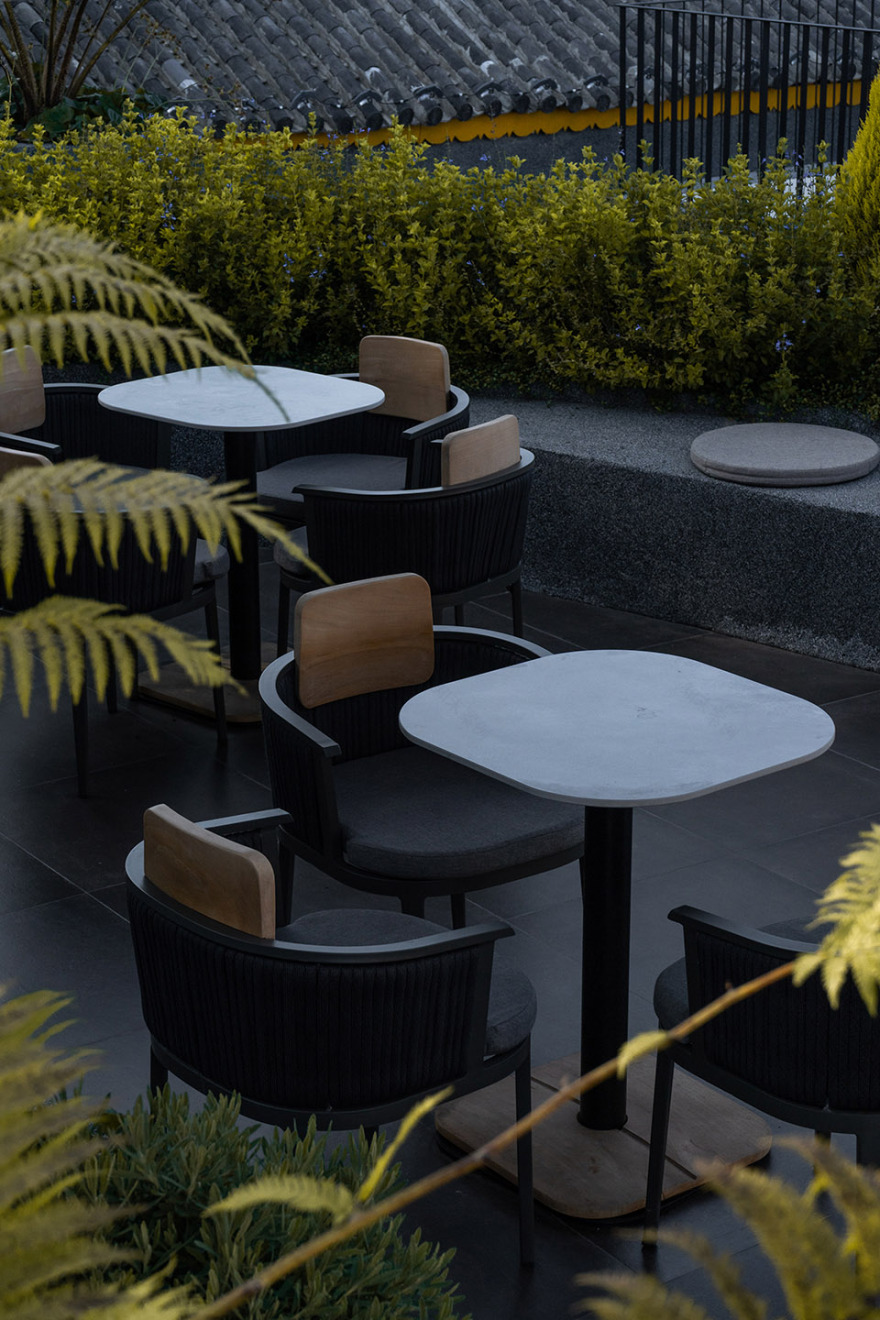
内有庭院,外有古城街巷,屋顶有苍山洱海——我们尽力营造一个静谧、可游、可观景的立体化空间。
With inner courtyards, connectivity to the ancient city’s lanes and streets, and rooftop views of Cangshan and Erhai, we endeavored to create a tranquil, three-dimensional space conducive to wandering and sightseeing, where one can pause and rest at any moment.
▼从三楼露台咖啡区远眺屋顶与苍山,From the coffee area on the third-floor terrace, one can overlook the roof and the Cangshan Mountain© 黄凡

▼屋顶与苍山,the roof and the Cangshan Mountain© 黄凡

▼夜晚从水池看向休息区,
Looking from the pool towards the lounge area at night©Wakwon

尽管因为各种原因,材料的使用没有做到完美,但最终呈现的结果,还是回应了我们当初的设想:“弱介入”,安静,可游,随时可憩。就像二十一年前初见大理时的感受——青涩,阳光,如沐春风。站在这个院子里,偶尔会想起双廊那棵古榕树,想起跳进洱海的孩子们,想起第一次走在古城石板路上,听见溪水的声音。这座酒店,或许就是我们对那个大理的一次回望——以它自己的方式,安静地坐落在古城里,等着与某个人的第一次相遇。
Although material choices did not achieve perfection due to various constraints, the final outcome still reflects our initial intentions: a “light touch,” tranquility, walkability, and spaces for repose at every turn. It echoes the feeling of encountering Dali for the first time twenty-one years ago—somewhat unpolished, yet bathed in sunlight and refreshing as a gentle breeze. Standing in this courtyard, I sometimes think of the ancient banyan tree in Shuanglang, the children jumping into Erhai Lake, and the first time I walked the ancient city’s stone-paved paths, hearing the sound of flowing streams. Perhaps this hotel represents our retrospective glance towards that Dali—quietly settled within the ancient city, in its own way, awaiting its first encounter with someone new.
▼平面图,plan©楷素设计

▼立面图,elevation©楷素设计


▼剖面图,section©楷素设计


项目名称:慕山度假酒店
项目地点:大理
设计机构:楷素设计(KES Design Office)
主创设计:黄华君
设计团队:赵健、林祖朝、黄凡、徐晓梵、黄发军、童乐康
项目面积:2000㎡
设计时间:2024.9
完工时间:2025.12
项目摄影:Wakwon Wong,黄凡
Project Name: Mushan Resort Hotel
Project Location: Dali
Design Firm: KES Design Office
Lead Designer: Wakwon Wong
Design Team: Zhao Jian, Lin Zuchao, Huang Fan, Xu Xiaofan, Huang Fajun, Tong Lekang
Project Area: 2000㎡
Design Period: September 2024
Completion Date: December 2025
Photography: Wakwon Wong, Huang Fan


南京喵熊网络科技有限公司 苏ICP备18050492号-4知末 © 2018—2020 . All photos and trademark graphics are copyrighted by their owners.增值电信业务经营许可证(ICP)苏B2-20201444 苏公网安备 32011302321234号
苏公网安备 32011302321234号客服
消息
收藏
下载
最近