

创作上传
VIP
收藏下载
登录 | 注册有礼
查看完整案例

收藏

下载

分享

翻译


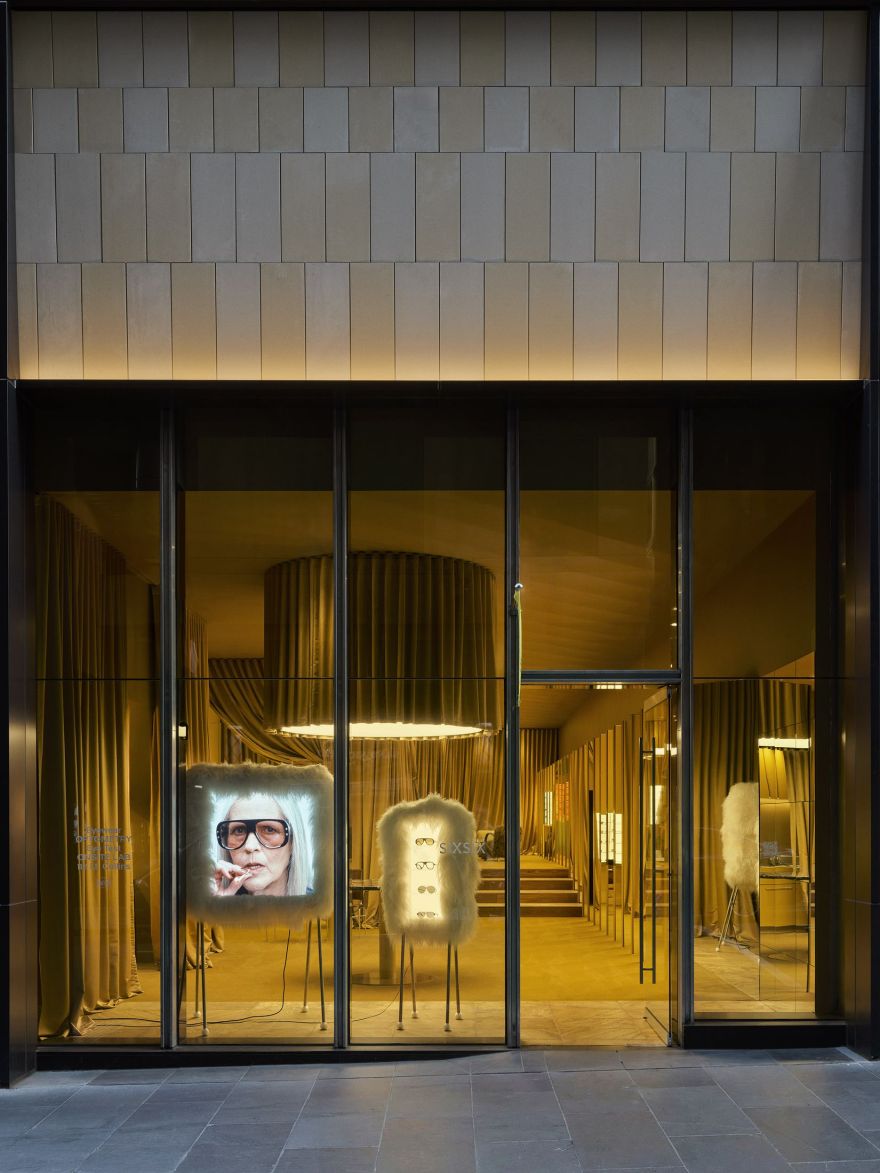
There’s a particular challenge baked into retail design that most people never consciously register. As Patrick Kennedy of Kennedy Nolan puts it: “Retail design has to do a lot of things at once, but like a duck, despite manically paddling below the water, the appearance should always be calm and serene.” That statement tells you almost everything you need to know about Six Six, a new optical retail concept that opened earlier this year on Little Collins Street in Melbourne’s CBD—and one of the coolest commercial interiors I’ve recently come across.
Six Six is the brainchild of Emma Buckley and Dr Natalie Boffa, whose combined 25-plus years of experience across wholesale, retail, and clinical optometry in the APAC region has produced something distinct: an end-to-end eyewear and eye-care destination that treats the entire experience—consultation, fitting, diagnostics, and aftercare—as a single, seamless journey rather than a sequence of disconnected transactions. “This is not simply an optical store—it is a brand temple,” says Buckley. Kennedy Nolan’s design brief was a good one.
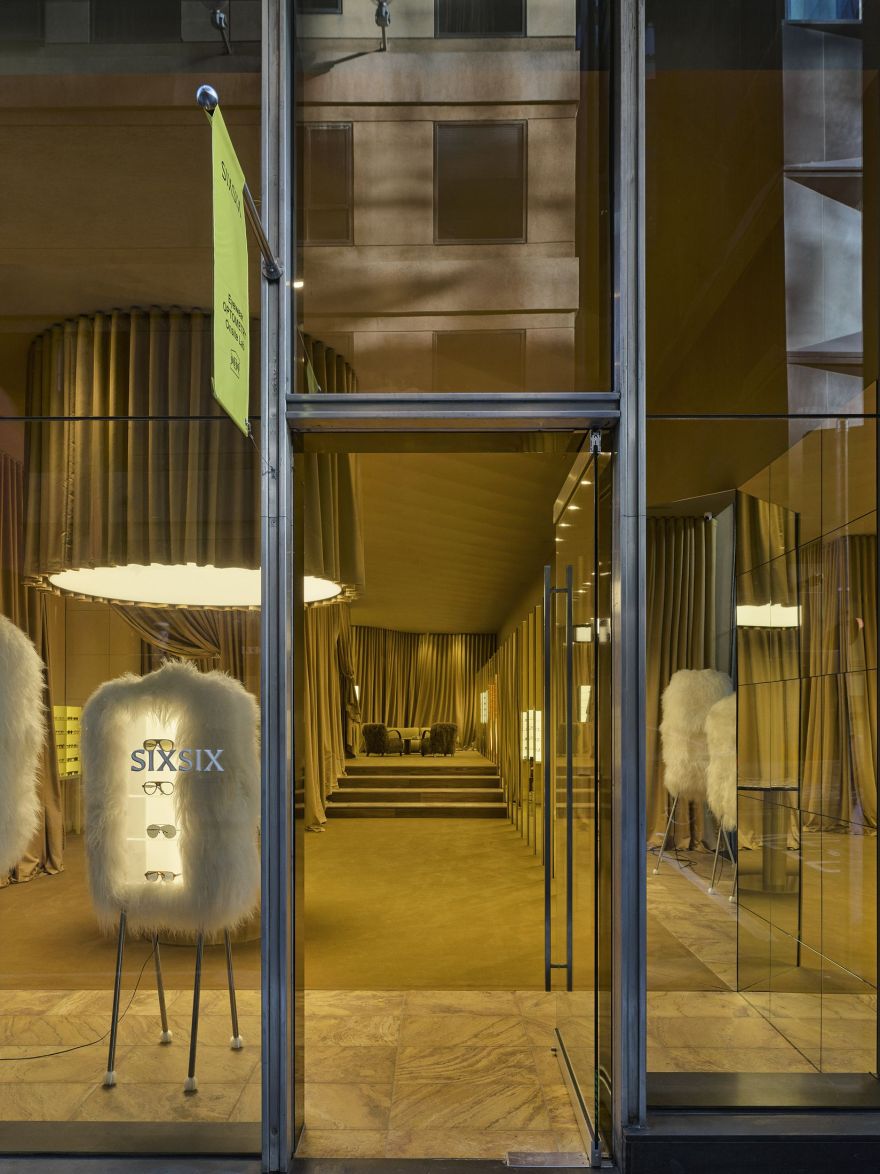
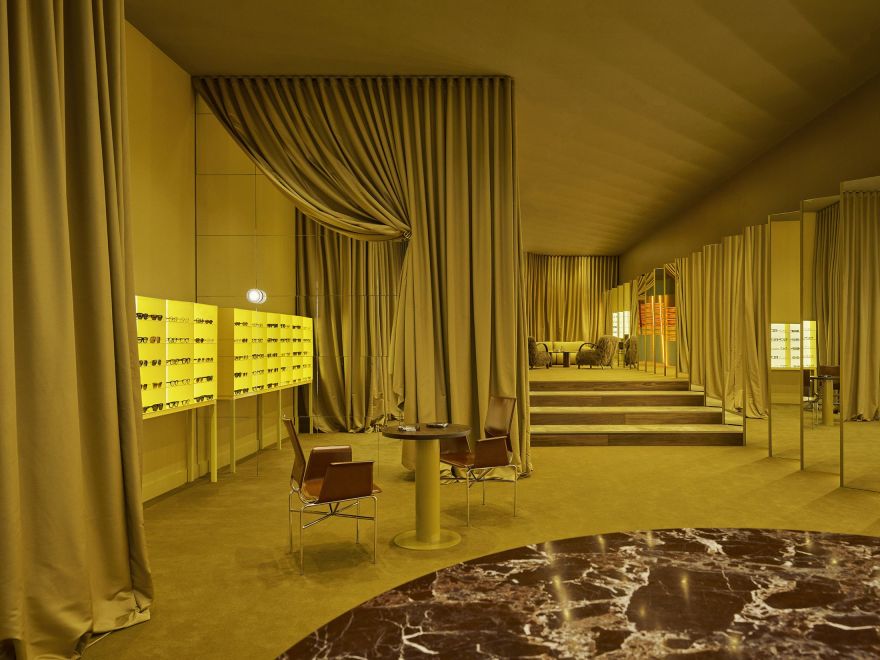
New concepts invite first-principles thinking, and the practice leaned into that hard. Traditional optical environments tend to fall into two camps: clinical and efficient, or fashion-retail-adjacent, both presenting dense banks of products that demand forensic browsing. Kennedy Nolan dismantled that convention entirely. At Six Six, most of the product actually faces away from the street, arranged along a zig-zagging display wall that presents a series of narrow mirrors to the shopfront. The first encounter inside is with a table and a welcoming person—a deliberate reorientation that slows discovery and shifts the register from task to experience.


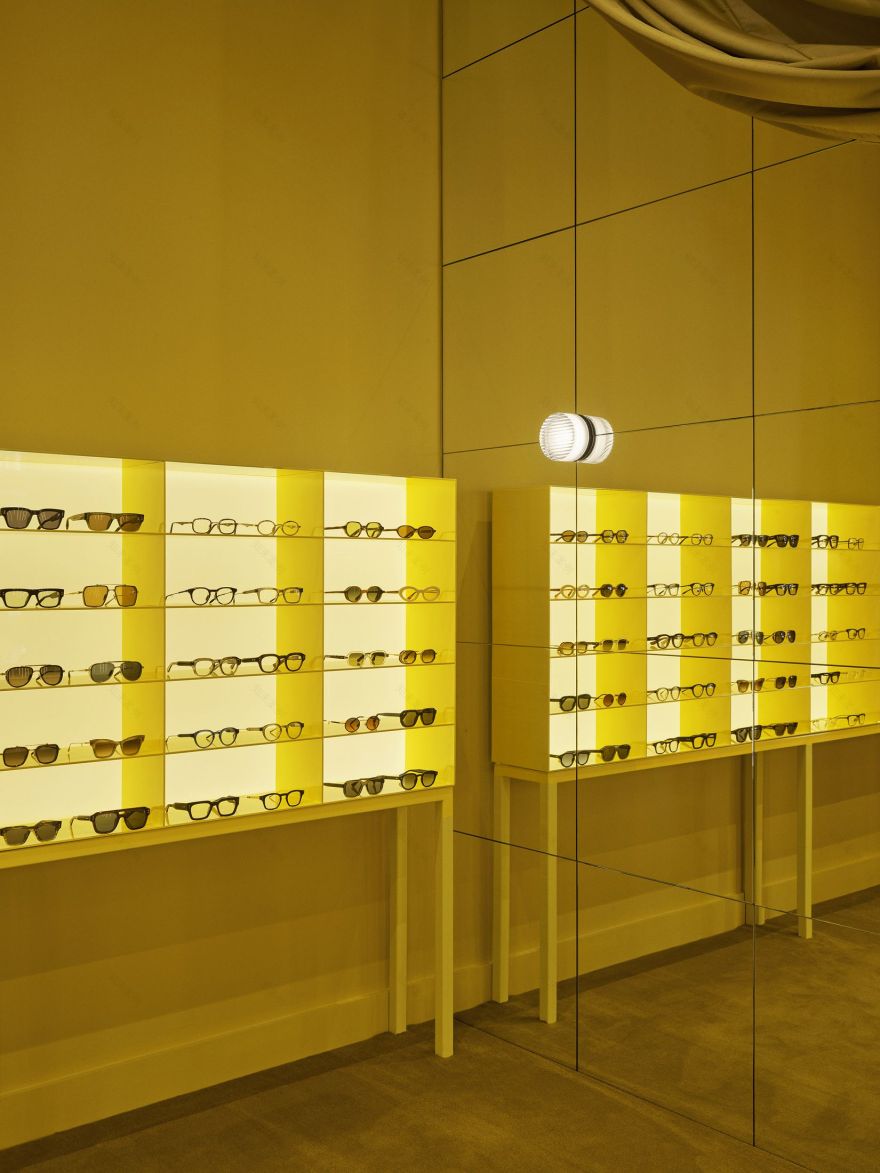


The zig-zag arrangement does more than disrupt the browsing convention. Each column offers a discrete, curated display, with mirrors positioned immediately adjacent to the product—a considered move given the intimacy of choosing eyewear. “There is a self-consciousness that goes with trying on spectacles,” Kennedy notes (and, as a spectacles wearer, he should know), “so the ability to find a literal niche as you try the product feels like a comfortable way to navigate this experience.” The space accommodates that self-consciousness gently, without drawing attention to it.
Colour is a lead character here. Kennedy Nolan chose a tawny gold as the dominant hue—applied largely monochromatically across walls, joinery, and surfaces—on the basis that it works as an energising neutral, flattering to a range of skin tones, and ultimately a complementary backdrop for the hundreds of individual frame designs on show. Texture and warmth come from voluminous theatrical drapes lining the walls (which also serve an acoustic function, alongside thick carpet and Acoufelt-lined display joinery), yellow travertine, jarrah, and brass details that hold back the swathes of fabric. Steel vitrines punctuate the space with a sunny, graphic confidence.


The technical side of the offering—on-site testing, diagnostics, and a mini lab for same-day lenses and custom tinting—is visible through a dichroic glass wall that simultaneously obscures and fetishises the equipment behind it. “The technology works quietly in the background,” says Dr Boffa, “supporting a calmer, more considered way of looking after long-term eye health.” It’s a detail that captures the Six Six ethos precisely: advanced capability, without clinical anxiety.
What Kennedy Nolan has produced is a space that feels theatrical and elevated, gentle and nurturing, technically assured and quietly innovative—and one that has clearly been designed from the inside out, with the customer’s experience as the primary organising principle.
The duck paddles hard. But you’d never know.
[Images courtesy of Kennedy Nolan. Photography by Anson Smart.]




南京喵熊网络科技有限公司 苏ICP备18050492号-4知末 © 2018—2020 . All photos and trademark graphics are copyrighted by their owners.增值电信业务经营许可证(ICP)苏B2-20201444 苏公网安备 32011302321234号
苏公网安备 32011302321234号客服
消息
收藏
下载
最近