

创作上传
VIP
收藏下载
登录 | 注册有礼
查看完整案例

收藏

下载

分享

翻译
The Warm Studio A Contemporary Wooden Workspace Interior

Project Overview
This project presents a contemporary interior design concept for a compact creative studio that combines functionality, warmth, and visual comfort. The design focuses on creating a productive environment while maintaining a cozy residential atmosphere.
The interior integrates natural materials, warm lighting, and modern architectural elements to achieve a balanced workspace that feels both inspiring and relaxing. Large openings allow natural light to flood the space, creating a strong connection between the interior and the surrounding landscape.
The concept explores the relationship between work and relaxation by organizing the space into distinct zones while maintaining a seamless visual flow throughout the interior.


Design Style Analysis
The project reflects a fusion of multiple contemporary interior styles.
Modern Contemporary
The overall design follows a modern contemporary approach characterized by: Clean architectural lines, Functional furniture layout, Minimal decorative elements, Open visual connections between spaces.
The furniture and cabinetry emphasize simplicity and efficiency, allowing the materials and lighting to play a primary visual role.
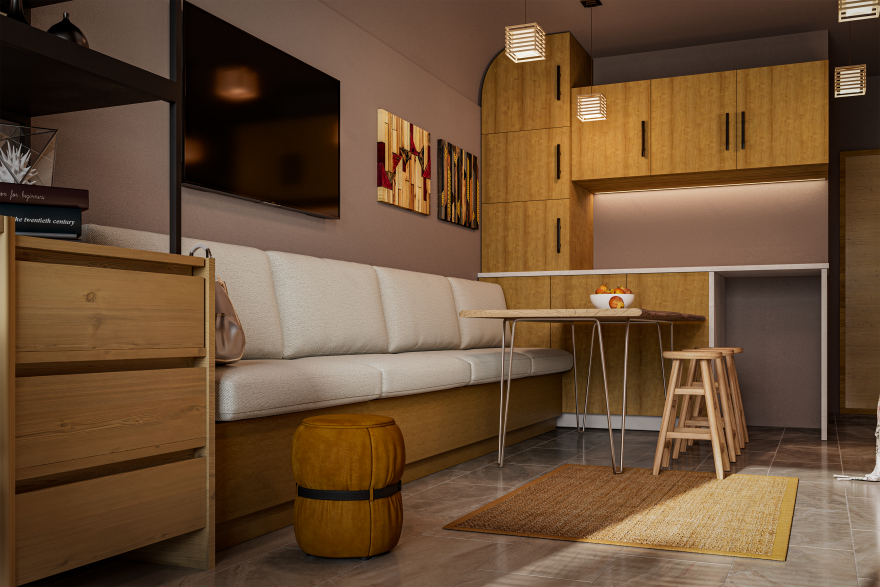
Scandinavian Warm Style
The project strongly reflects Scandinavian design principles, particularly through: Light and warm wood tones, Neutral color palettes, Minimalist furniture forms, Emphasis on comfort and simplicity. These elements create a calm and welcoming atmosphere that supports both productivity and relaxation.
Natural / Biophilic Influence
The presence of large windows and greenery outside the space introduces a biophilic aspect to the design. Natural views and indoor plants help strengthen the connection between the built environment and nature. This approach enhances: Well-being, Visual comfort, Psychological relaxation within the workspace


Lighting Design Analysis
Lighting plays a critical role in shaping the atmosphere and functionality of the space.
Natural Lighting
A large window allows abundant daylight to enter the interior, becoming the main visual focal point of the project. Natural light enhances spatial perception, highlights material textures, and improves overall user comfort. The connection with the exterior landscape creates a more open and refreshing working environment.
Ambient Lighting
Suspended pendant lights are evenly distributed across the ceiling, providing balanced ambient illumination throughout the space. These fixtures introduce a warm tone that complements the wooden surfaces and soft materials. This layer of lighting establishes the overall mood of the interior.
Task Lighting
Integrated lighting beneath cabinetry and above work surfaces provides focused illumination for functional activities such as reading, working, or studying. Task lighting ensures that the workspace remains practical without disturbing the overall visual harmony.

Material Palette
The material selection focuses on warmth, natural texture, and visual balance.
Natural Wood
Wood is the dominant material in the project, used in: Cabinetry, Work desks, Shelving units, Architectural surfaces. Its warm tone introduces a sense of comfort and natural authenticity while maintaining a modern aesthetic.


Metal Structures
Black metal frames used in shelving systems create a strong visual contrast against the wooden elements. This combination adds a contemporary industrial character while maintaining structural lightness and openness.
Fabric Materials
Soft fabrics are used in seating areas and cushions, featuring neutral tones such as beige and off - white. These materials soften the overall interior composition and enhance the comfort of the living area.

Rattan and Cane Elements
Natural rattan furniture adds texture and a handcrafted character to the design. These elements introduce a subtle bohemian influence that complements the natural material palette.


Architectural Space Analysis
The spatial organization of the project focuses on efficiency and visual clarity.
Functional Zoning
The interior is divided into three main zones:
Living Area A comfortable seating area designed for relaxation and informal meetings.
Workspace A long desk area positioned near the window to maximize natural lighting and productivity.
Storage and Service Area Integrated cabinetry and shelving systems provide functional storage without overcrowding the space.

Space Optimization
Despite the compact size of the interior, the design maximizes usability through: Vertical storage systems, Open shelving structures, Multi-functional furniture arrangements.
This strategy enhances spatial efficiency while maintaining an open visual environment.


Visual Axis
The primary visual axis of the interior is directed toward the large window. This architectural move anchors the entire design composition and draws the user’s attention toward natural light and outdoor greenery.
The visual flow throughout the space creates a sense of openness and depth, making the interior appear larger than its actual dimensions.


南京喵熊网络科技有限公司 苏ICP备18050492号-4知末 © 2018—2020 . All photos and trademark graphics are copyrighted by their owners.增值电信业务经营许可证(ICP)苏B2-20201444 苏公网安备 32011302321234号
苏公网安备 32011302321234号客服
消息
收藏
下载
最近