

创作上传
VIP
收藏下载
登录 | 注册有礼
查看完整案例

收藏

下载

分享

翻译
Architects:DUHA Architects
Area:245m²
Year:2025
Lead Architects:Ha Xuan Du
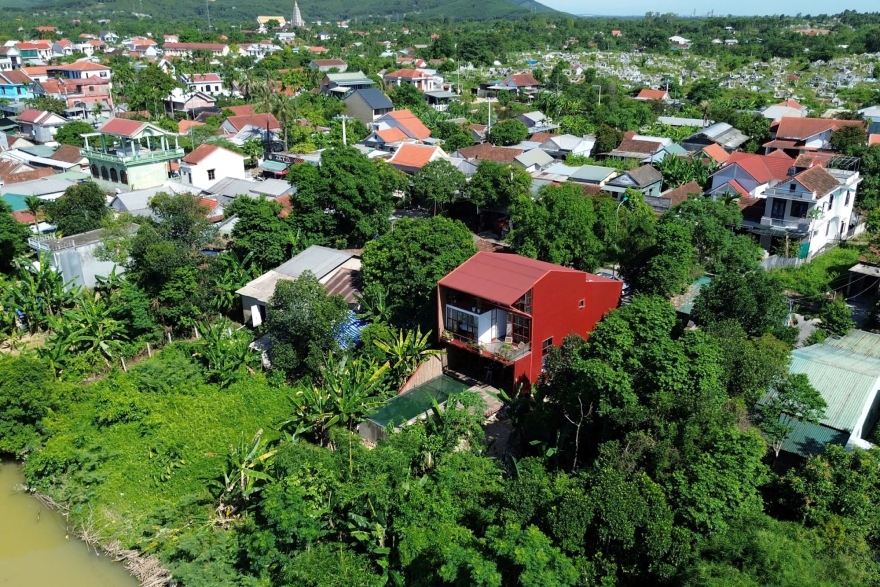
Text description provided by the architects. Scarlet Pavilion is a lightweight, reversible hospitality project situated within the protected riverside corridor of the Perfume River in Hue, where strict regulations preserve the natural landscape. In this context, the project embraces these constraints as the foundation of its architectural identity. Designed as a second home and a boutique retreat for a young couple, the pavilion adopts a reversible system that can be assembled, disassembled, and returned to its original state, minimizing long-term impact on the site.

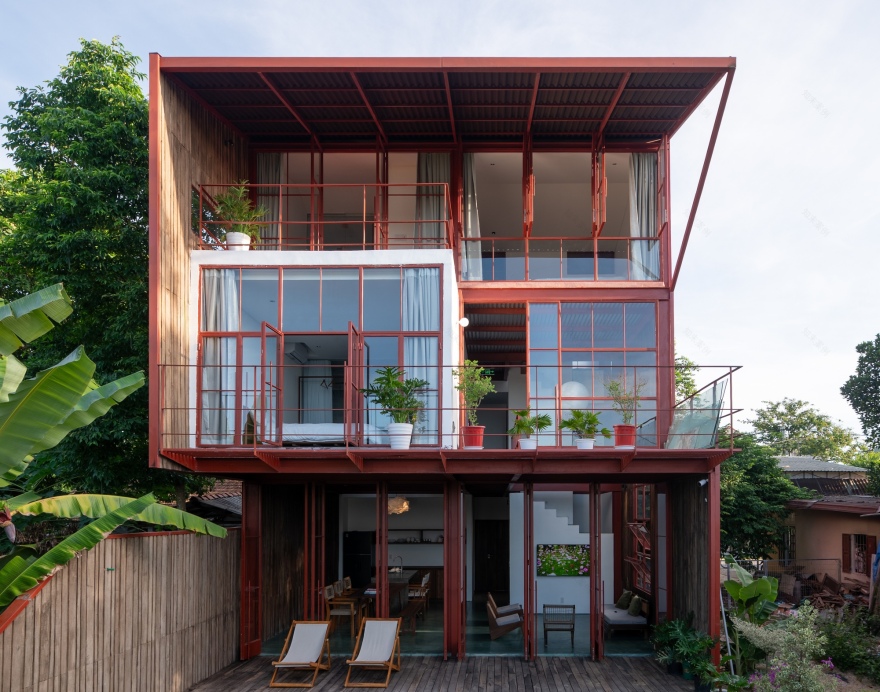
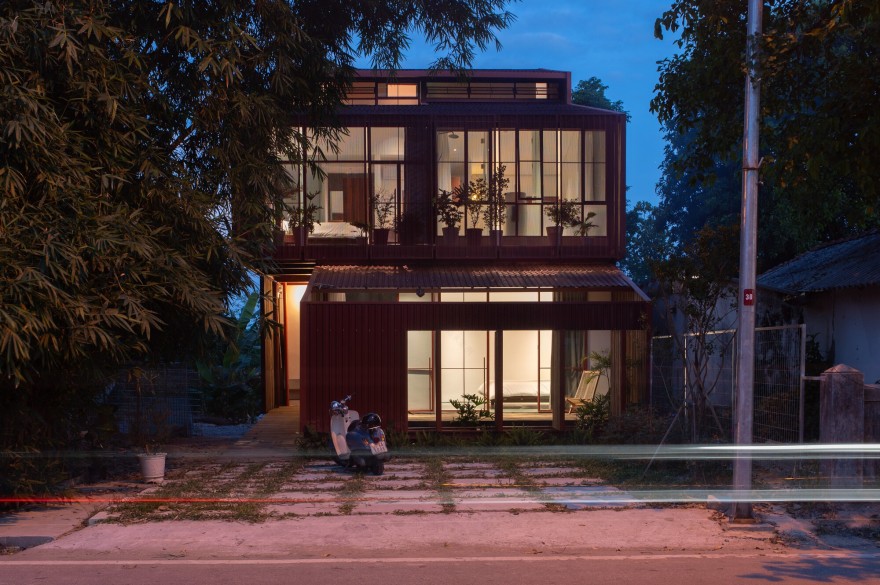
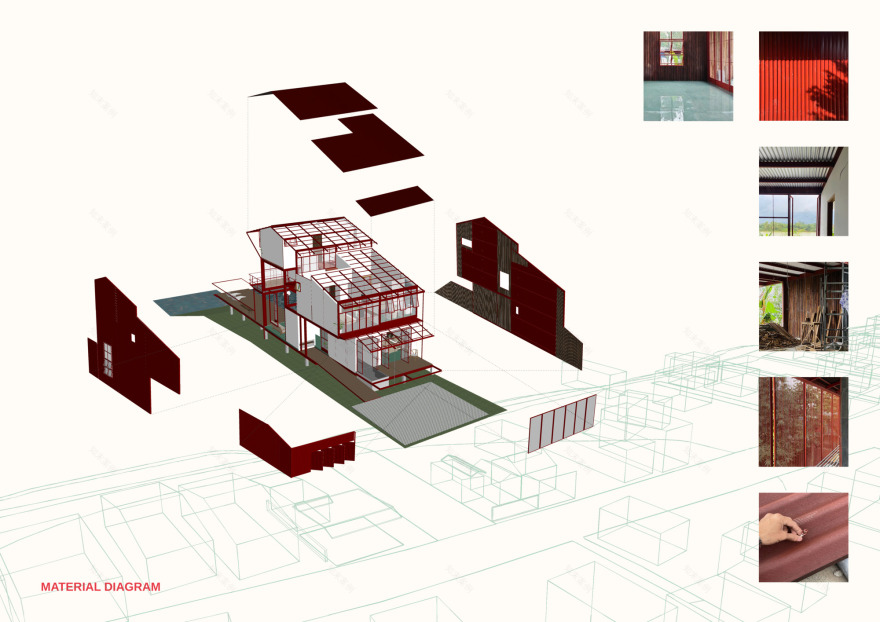
The structure is based on a modular prefabricated steel frame. Components are manufactured off-site and assembled with precision, reducing construction time and site disturbance. Slightly elevated above the ground, the pavilion avoids deep foundations, allowing the existing topography and natural water flow to remain largely undisturbed. This approach defines the building as a light and adaptable intervention within a sensitive riverside setting.


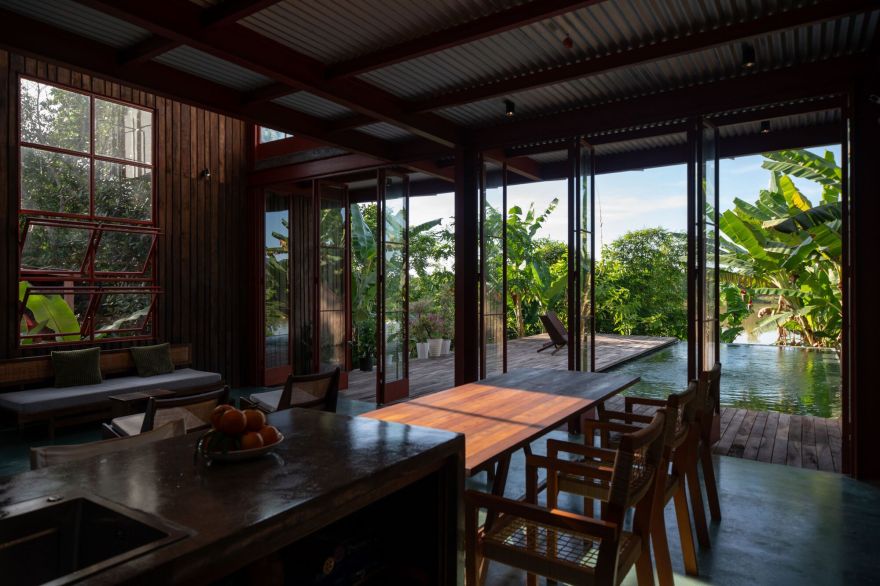
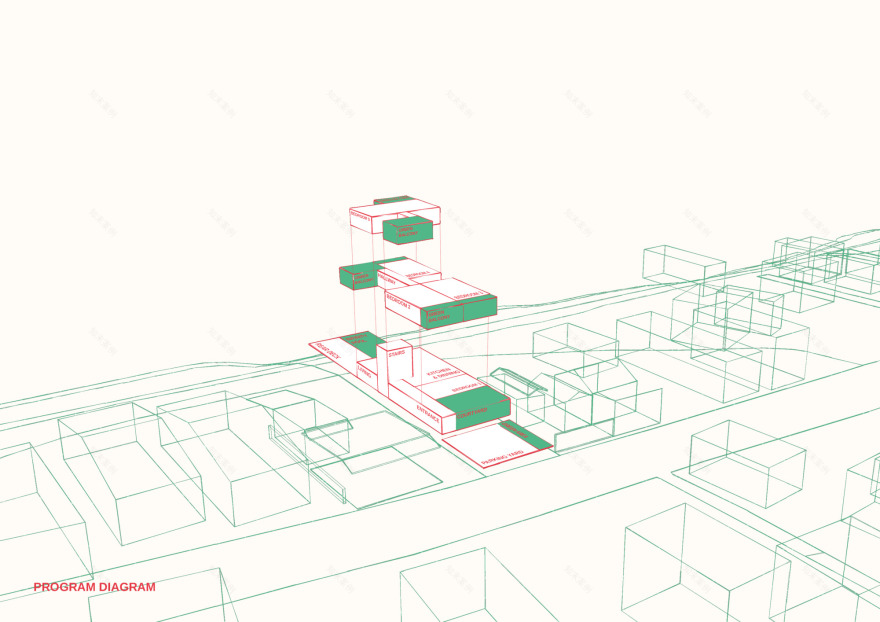
The site measures 7 by 35 meters, characterized by a clear contrast between the urban street at the front and the quiet river landscape at the rear. This condition informs a longitudinal spatial strategy, where spaces transition gradually from enclosed to open. A sequence of compressed zones, courtyards, and semi-outdoor thresholds filters this shift, guiding occupants away from urban intensity toward a state of calm.


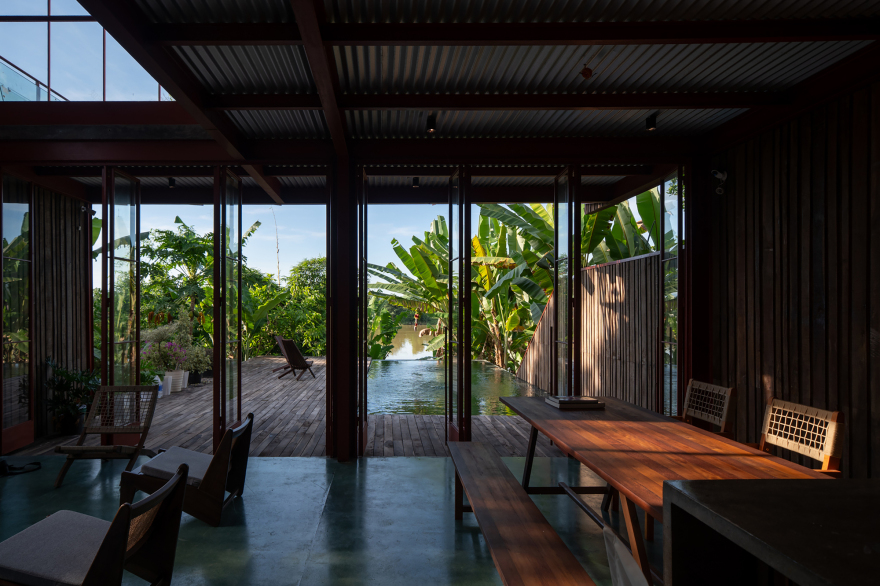
These intermediate spaces, including timber decks, voids, and outdoor corridors, also function as passive climatic devices. They enhance cross-ventilation, reduce heat gain, and improve air circulation in Hue's tropical monsoon climate. Deep overhangs and layered shading further protect the structure from heavy rainfall while reducing reliance on mechanical cooling.

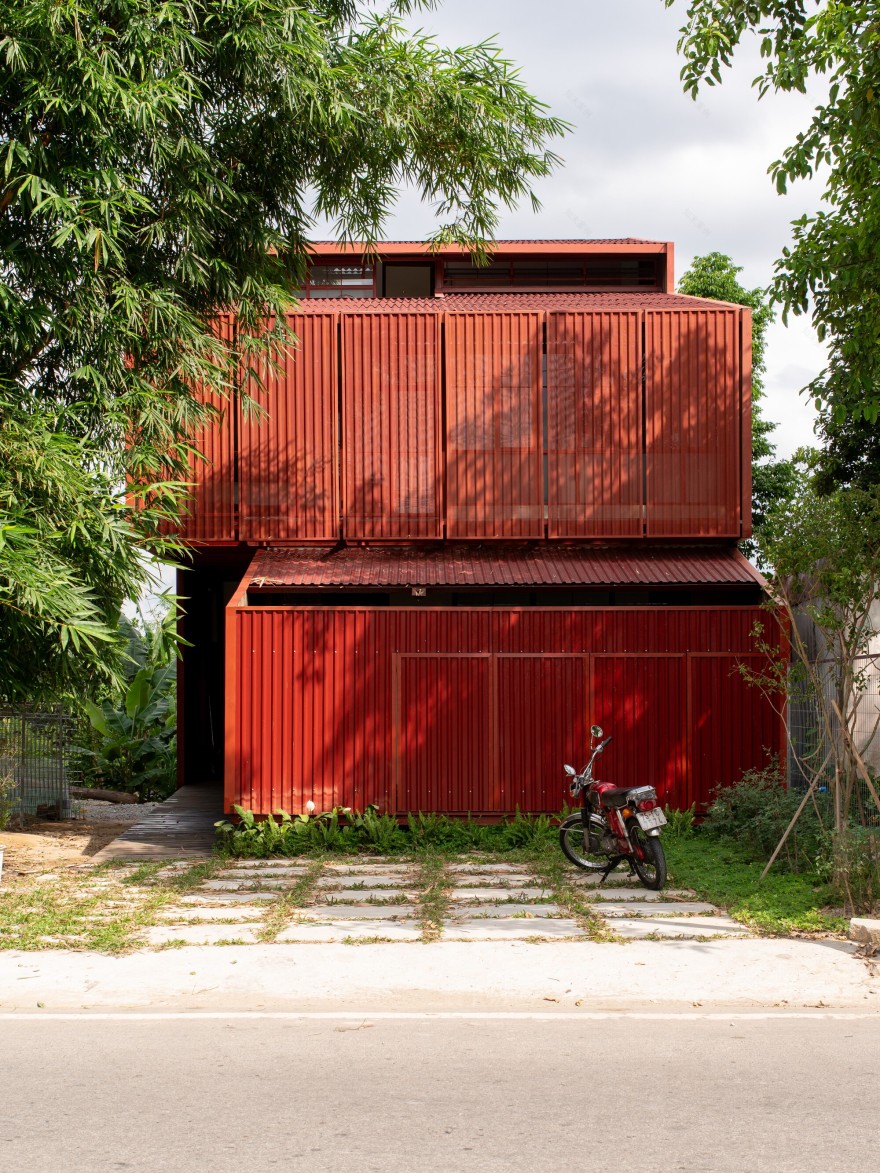
The material palette emphasizes honesty and restraint. Steel, concrete, wood, and corrugated metal are used in their raw expressions. The red corrugated roof, from which the project derives its name, creates a controlled visual presence while subtly referencing the chromatic identity of Hue's traditional architecture in a contemporary manner. Scarlet Pavilion does not seek to become an iconic object. Instead, it exists as a quiet architectural layer within the landscape—temporary, adaptable, and unobtrusive—where spatial experience is shaped by light, air, and the continuous flow of time.
Project gallery








南京喵熊网络科技有限公司 苏ICP备18050492号-4知末 © 2018—2020 . All photos and trademark graphics are copyrighted by their owners.增值电信业务经营许可证(ICP)苏B2-20201444 苏公网安备 32011302321234号
苏公网安备 32011302321234号客服
消息
收藏
下载
最近