

创作上传
VIP
收藏下载
登录 | 注册有礼
查看完整案例

收藏

下载

分享
UNS为都灵全新地铁2号线提出的愿景,将交通基础设施重新定义为城市中具有辨识度的地标。在三大设计原则的引导下,这一中标方案将都灵丰富的历史转译为一个当代且友好的公共交通系统。该方案由UNS联合Settanta7、Mijksenaar、Frigorosso、3BA及WSP共同完成,并由以多米尼克·佩罗为主席的国际专家评审团评选胜出。评审团认可其将地铁重新理解为“城市建构行为”的视角,强调该设计强化了交通流动、公共空间与城市语境之间的联系。同时,他们指出,该方案通过优雅且周密的设计,将深刻影响人们的出行、工作与生活方式,并具备经受时间考验的能力。
UNS’s vision for Turin’s new Metro Line 2 recasts transportation infrastructure as a recognisable urban landmark for the city. Guided by three distinct design principles, the winning proposal translates Turin’s rich history into a contemporary and welcoming transit system. UNS’s design proposal, in collaboration with Settanta7, Mijksenaar, Frigorosso, 3BA and WSP, was selected by an international jury of experts, chaired by Dominique Perrault. Recognised for its reimagination of the subway as an act of city making, the jury emphasised how the design strengthens the link between mobility, public space, and the urban context. They also emphasised how the proposal is set to shape how users move, work, and live through an elegant, carefully considered design that will stand the test of time.
▼圣乔瓦尼·博斯科站,San Giovanni Bosco Station. Produced by HISM ©Extraordinary Commissioner Chiaia

都灵既有的城市肌理是设计的核心基础。这座城市在历史上由“流动”塑造——从波河与多拉河,到绵延18公里的拱廊系统,这些都影响着市民与访客的行走方式。因此,2号线被构想为一条新的“城市之河”:既透明又充满活力,连接不同的社区、历史与世代。为实现这一“流动”,设计提出了三个相互补充的核心支柱——品牌识别原则、出行体验以及多尺度的身份体系。这些理念共同将基础设施转化为公共空间与社会催化剂,强化导向系统、社区认同以及人们对城市的感知方式。
Turin’s existing urban fabric is central to the consortium’s design. The city is historically shaped by flow — from the Po and Dora rivers to the 18 kilometers of arcaded porticoes that inform how locals and visitors move. As such, Line 2 interprets this legacy as a new “urban river,” transparent yet vital, connecting neighborhoods, histories, and generations. Three complimentary pillars were developed to facilitate this flow – the branding principles, transit experience, and scales of identity. Together, these ideas position infrastructure as public space and a social catalyst, strengthening wayfinding, neighbourhood identity, and how users experience the city.
▼莫莱·贾尔迪尼站,Mole Giardini Station. Produced by HISM ©Extraordinary Commissioner Chiaia

UNS创始人兼主持建筑师 Ben van Berkel 表示:“对于都灵地铁2号线,我们希望创造的不仅是一个交通系统,更是一种新的城市公共连接,让都灵的历史与未来展开直接对话。尤为重要的是,这条地铁在精神上真正属于公众:它开放、安全、富有亲和力,其车站与入口延展了公共空间,使公园与地铁在某些位置相互交融,让基础设施成为城市共享社会空间的一部分。”
Ben van Berkel, Founder and Principal Architect at UNS: “For Turin’s new Metro Line 2, we wanted to create more than a transport system. We wanted to design a new civic connection for the whole city, one that brings Turin’s history and its future into direct conversation. What is especially important is that this metro is truly public in spirit: it feels open, safe, and welcoming, with stations and entrances that extend the public realm so that, in places, the park meets the metro and infrastructure becomes part of the city’s shared social space.”
与历史对话的当代建筑
Contemporary architecture in dialogue with heritage
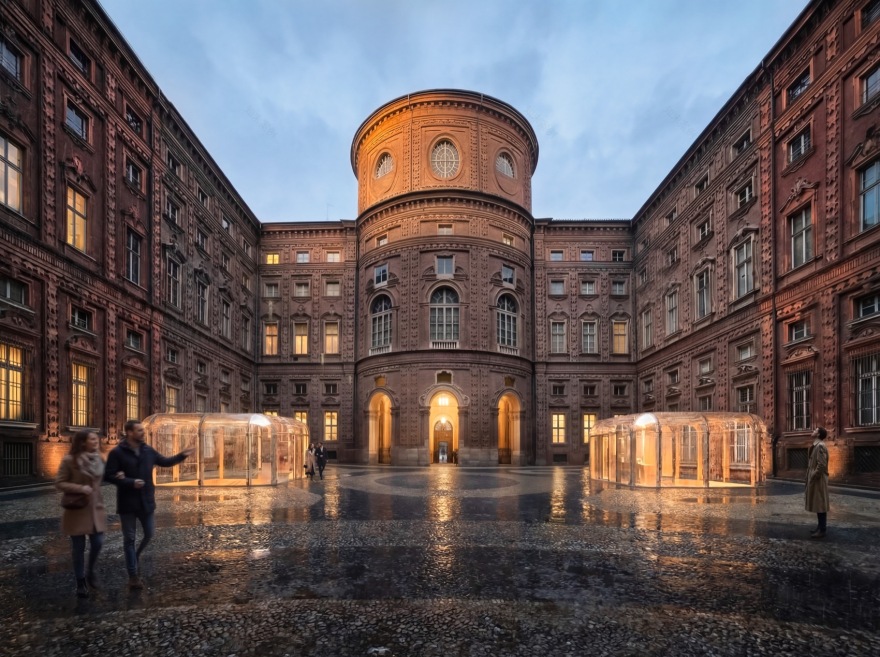
都灵是一座不断演进的城市,其形态既由历史塑造,也由氛围所定义。城市绵延的柱廊、工业时代的遗产,以及近年来向文化、创意与美食领域的转型,共同构成了项目的核心概念——“过渡”。地铁2号线正是这一叙事的体现:作为一种从一个点移动至另一个点的设计原则,它被转译为简洁的建筑语言——从拱券到柱廊,从曲线到方形的转换。设计方法同样回应了都灵的建成环境。城市以克制的立面与清晰的几何秩序为特征,而其内部空间往往更为丰富与细腻。新地铁线路正是基于这种对比展开:从简约的外部过渡到更具亲和力与识别性的内部空间,使传统与当代建筑在城市历史中形成清晰的对话关系。
Turin is a city of evolution, shaped as much by atmosphere as by history. The city’s long porticoes, its industrial past, and its more recent shift toward culture, creativity, and gastronomy shaped the project’s main concept: transition. Metro Line 2 very much reflects this story; it is a design principle defined by movement from one point to another and translated into a simple architectural language that moves from the arch to the portico, from the curve to the square. The design approach also responds to Turin’s built environment. The city is marked by its sober facades and clear geometries, while interiors often reveal a richer and more detailed spatial experience. The new metro line draws on this contrast, moving from a restrained exterior to more welcoming and distinctive interior spaces, so that traditional and contemporary architecture relate clearly to the history of the city.
▼卡洛·阿尔贝托站,Carlo Alberto Station. Produced by Settanta7 ©Extraordinary Commissioner Chiaia
面向日常的灵活模块体系
Flexible modules for everyday moments
都灵地铁2号线采用了一种灵活的设计策略,以适应沿线多样化的城市条件。项目共规划32座车站,其中首阶段设计涵盖10座车站,因此需要在保持整体清晰性的同时具备高度适应性。为此,设计团队发展出一种模块化的建筑语言,使其能够根据不同场地——包括莫莱·贾尔迪尼站、圣乔瓦尼·博斯科站和卡洛·阿尔贝托站——调整尺度、比例与功能,同时在整条线路中维持一致的视觉与空间逻辑。
为支撑这种灵活性,UNS将系统识别划分为三个层级。首先是“网络识别”(Network Identity),由UNS与Frigorosso紧密合作,通过完整的品牌手册构建,将“城市流动体验”的概念转译为统一的标识、几何、材料、色彩与信息语言,使品牌成为贯穿整个地铁系统的基础设施性身份表达。其次是“系统识别”(System Identity),用于协调延伸至周边街区的城市要素,使整条线路作为一个整体系统具备清晰且可识别的存在。第三是“站点识别”(Station Identity),允许每一座车站通过艺术、景观设计与在地文化回应具体语境,并围绕“自然、历史、创新、文化”等九大主题原则展开。
A flexible design approach was taken for Turin’s new Metro Line 2, ensuring that it could work across various conditions along the line. With 32 stations planned in total, the initial design phase encompasses 10 stations and needs to be able to adapt without losing clarity. In response, a modular architectural language was developed that made it possible to adjust scale, proportion, and programme to the different sites – including the Mole Giardini, San Giovanni Bosco and Carlo Alberto stations – while maintaining a consistent visual and spatial logic across the line.
To support this flexibility, UNS defined identity at three levels. The first is Network Identity, developed in close collaboration with Frigorosso and through a comprehensive brand manual. This layer translates the concept of the Urban Flow Experience into a unified language of signs, geometries, materials, colours, and messaging, allowing the brand to operate as a form of identity infrastructure across the entire metro network. Next is System Identity, which coordinates urban elements that extend into the surrounding neighbourhoods. This gives the line a clear and legible presence as a single system. The third is Station Identity, which allows each location to respond to its specific context through art, landscape design, and local references shaped by nine thematic principles, including Nature, History, Innovation, and Culture.
▼莫莱·贾尔迪尼站内部,Mole Giardini Station interior. Produced by UNS ©Extraordinary Commissioner Chiaia

系统的品牌语言源于都灵山地、柱廊与水流之间的关系,并将这些元素转化为2号线可识别的图形与空间逻辑。色彩从温暖的黄色与赭石色过渡至绿色与蓝色,回应地形、景观与氛围。同时,这一品牌体系贯穿乘客的完整出行路径及所有公共界面,不仅体现在站内标识与空间信息传达中,也延伸至宣传活动、文创产品、数字应用以及项目长期传播的语言体系。尤其在施工阶段,这一识别系统有助于清晰传达施工带来的影响,并使市民在建设过程中持续与项目保持联系,而非将其视为阻碍。
这三重识别体系共同作用,使地铁网络在整体上保持连贯,同时赋予每个站点独特个性,并为整条线路建立清晰的公共形象。这一结构也提升了导向效率与使用舒适度:统一的系统与网络识别帮助乘客识别入口、理解空间流线并更轻松地完成导航;而站点层级的差异化则形成明确的记忆节点,使每一站更易辨认与定位。最终呈现的是一个清晰、平静且易于使用的地铁环境,在高效流动之外,也强化了场所感。
The system’s brand language draws on the relationship between Turin’s mountains, porticoes, and flows of water, turning these elements into a recognisable graphic and spatial logic for Line 2. The colour palette moves from warm yellows and ochres to greens and blues, reflecting terrain, landscape, and atmosphere, while the branding extends across the full passenger journey and across all public-facing platforms. It informs not only signage and spatial communication within the stations, but also campaigns, stationery, merchandise, digital applications, and the tone of voice used to communicate the project over time. This was especially important in relation to the construction phase, where the identity helps to explain disruption clearly and invites locals to stay connected to the project as it develops, rather than experiencing it as a barrier.
Together, these three layers of identity allow the metro to remain coherent as a network while giving each station its own character and giving the line a distinct public presence. This structure also supports effective wayfinding and user comfort as a consistent system and network identity helps passengers recognise entrances, understand movement through the station, and navigate the line more easily. At the same time, station-specific identity creates distinct points of reference, making each stop easier to remember and orient within. The result is a metro environment that is clear, calm, and easy to use, with spaces that support both efficient movement and a stronger sense of place.
▼莫莱·贾尔迪尼站内部,Mole Giardini Station interior. Produced by HISM ©Extraordinary Commissioner Chiaia

新的城市门槛
A new urban threshold
UNS在车站室内设计上的策略,将地铁系统视为不仅仅是一系列交通空间的组合,而是一种由流动、导向、材料品质与在地性共同塑造的连续公共体验。基于都灵的建筑语境,系统在城市层面呈现出清晰且可识别的形象,而地下空间则展开为精心构成的室内场所,拥有更温暖、更具氛围感的空间特质。车站由此成为当代的“珠宝盒”,将通勤转化为一种感官体验。
UNS在体验设计方面的专长,将这一理念延展至完整的乘客旅程:从在线购票与行程规划,到接近车站、进入空间、在内部做出路径选择、抵达正确站台直至登车的全过程。通过将这一过程视为由数字与实体触点串联而成的连续系统进行分析与设计,使出行从起点开始即具备清晰、直观且更低压力的体验。
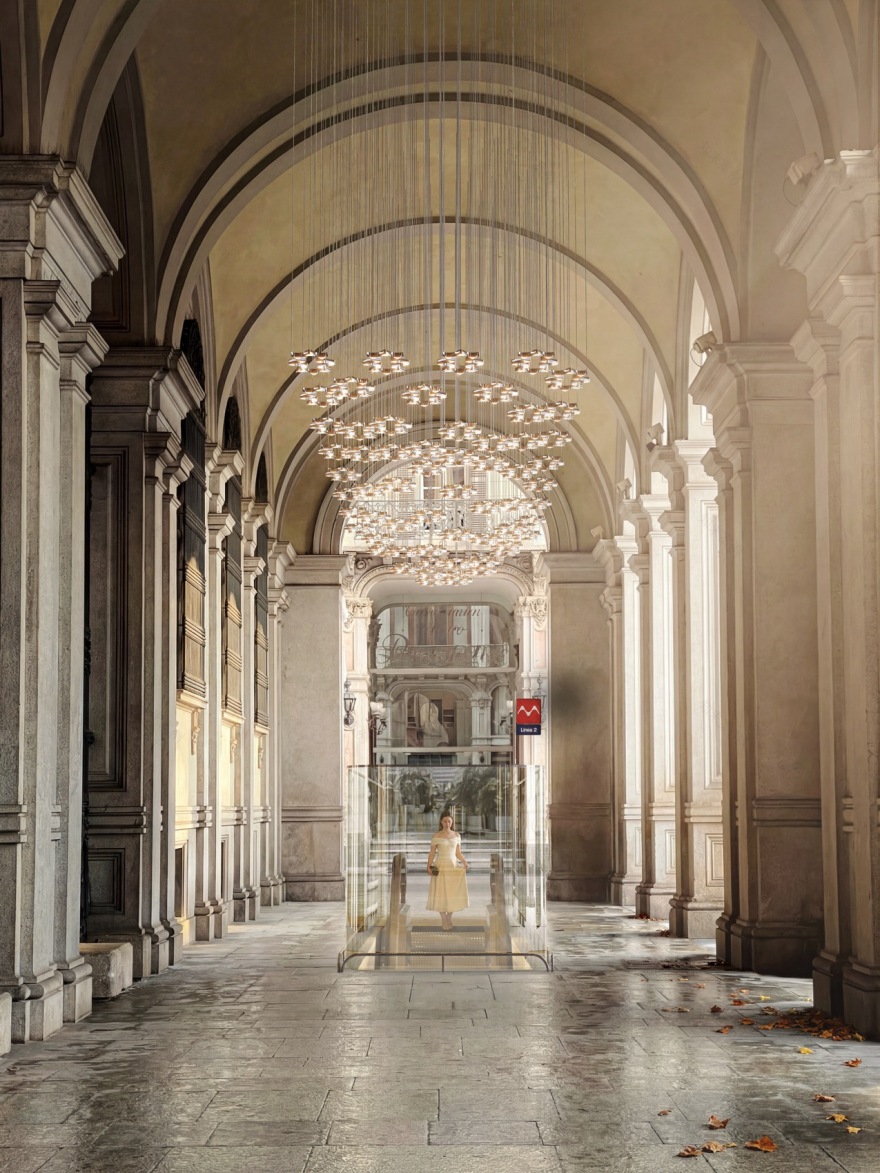
在整个网络中,设计语言融入了在地性的线索,使各个车站与其周边环境建立联系,也更易被识别与记忆。铝材与瓷质石材等耐久材料确保了性能与使用寿命,漫射照明则减少眩光、提升舒适度。导向系统与水磨石风格地面,将历史记忆与当代基础设施联系在一起。
这些策略共同构建出一个轻松、直观且富有亲和力的地铁环境,使设计在提升导向效率的同时强化空间识别,并整体提升日常出行的品质。
UNS’s approach to the stations’ interior design treats the metro system as more than a sequence of transit spaces. It is conceived as a continuous public experience shaped by movement, orientation, material quality, and locality. Drawing on Turin’s architectural context, the system presents a clear and legible presence at city level, while underground spaces unfold as carefully composed interiors with a warmer, more atmospheric identity. Stations become contemporary “jewel boxes,” transforming transit into a sensory experience.
UNS’s experience design expertise extends this thinking across the full passenger journey, considering each step from ticket purchase and trip planning online to approaching the station, entering it, making decisions within it, reaching the correct platform, and boarding the train. By analysing the journey as a connected sequence of digital and physical touchpoints, the design supports a travel experience that is clear, intuitive, and less stressful from the moment a trip begins.
Across the network, local references are embedded in the design language so that stations feel connected to their surroundings and easier to remember. Durable materials such as aluminum and porcelain stoneware ensure performance and longevity, while diffused lighting reduces glare and enhances comfort. Wayfinding elements and terrazzo-inspired flooring link historical memory with contemporary infrastructure.
Together, these strategies support a metro environment that is relaxed, intuitive, and welcoming, where design improves orientation, strengthens identity, and elevates the quality of everyday travel.
▼卡洛·阿尔贝托站,Carlo Alberto Station. Produced by Settanta7 © Extraordinary Commissioner Chiaia
Project Credits
Client: Extraordinary Commissioner for the construction of Line 2 of the Turin Metro; Infratrasporti.To S.r.l
UNS Team: Ben van Berkel, Marianthi Tatari, Raul Forsoni, Michele De Simone, Melinda Matuz,
Saba Navabi, Leon Hansmann, Aigul Sadrtdinova, Ren Yee, Cristina Garriga, Huey Chan
Advisors:
Local Architect: Settanta7
Branding company: Frigorosso
Wayfinding: Mijksenaar
Structure & MEP: 3BA
Sustainability, People flow, Façade: WSP
Visualisations by:
Produced by HISM, Settanta7, UNS, ©Extraordinary Commissioner Chiaia
南京喵熊网络科技有限公司 苏ICP备18050492号-4知末 © 2018—2020 . All photos and trademark graphics are copyrighted by their owners.增值电信业务经营许可证(ICP)苏B2-20201444 苏公网安备 32011302321234号
苏公网安备 32011302321234号客服
消息
收藏
下载
最近