

创作上传
VIP
收藏下载
登录 | 注册有礼
查看完整案例

收藏

下载

分享

翻译
Architects:Teleno Studio
Area:56m²
Year:2025
Photographs:Germán Saiz
Manufacturers:Painting Chus García Fraile,“Doughnuts” stools — Rud Thygesen & Johny Sorensen for Magnus Olesen, 1960s
Lead Architects:Antonio Cordero Castro, Cristian Álvarez Blanco
Category:Apartment Interiors
Architecture Offices:Teleno Studio
City:Madrid
Country:Spain

Text description provided by the architects. Casa en Penumbra is the renovation of a 56 m² apartment located in a 19th-century building in the center of Madrid, conceived as a domestic environment shaped by soft, filtered light where shadow becomes a defining architectural element.

The original apartment presented a fragmented layout and a deteriorated timber structure, requiring a comprehensive intervention that included the partial reconstruction of floors and load-bearing walls. The project is organized around a single architectural gesture: a compact oak volume that contains the bedroom and bathroom. This central element defines the spatial logic of the dwelling, allowing the rest of the program — kitchen, dining, living, and storage — to unfold as a continuous space around it.
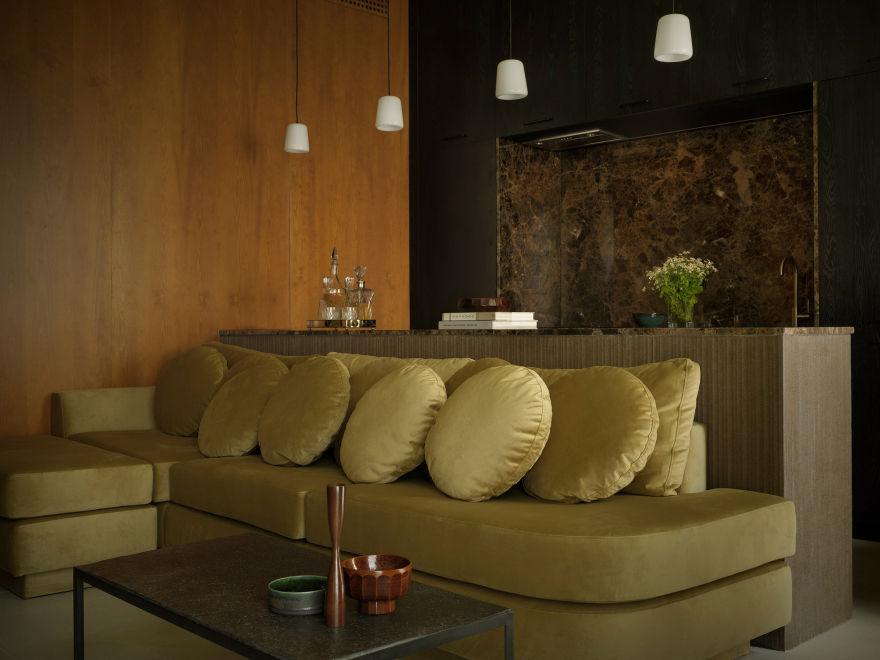
The nearly rectangular plan features two balconies facing the street and a smaller opening toward the inner courtyard. Existing ceiling heights are preserved and emphasized to enhance spatial perception and integrate storage within the architecture. The resulting layout promotes an open and fluid domestic environment, where functions overlap and boundaries remain intentionally diffuse.

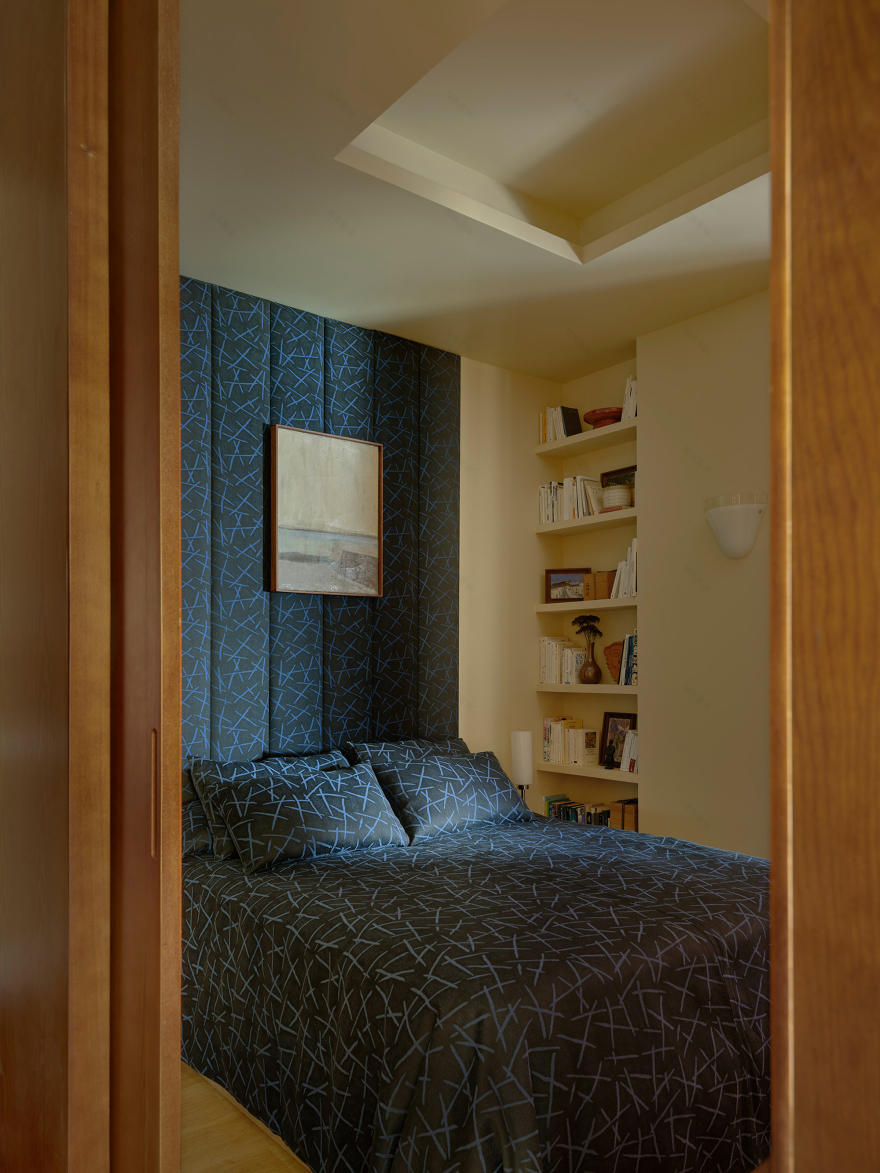
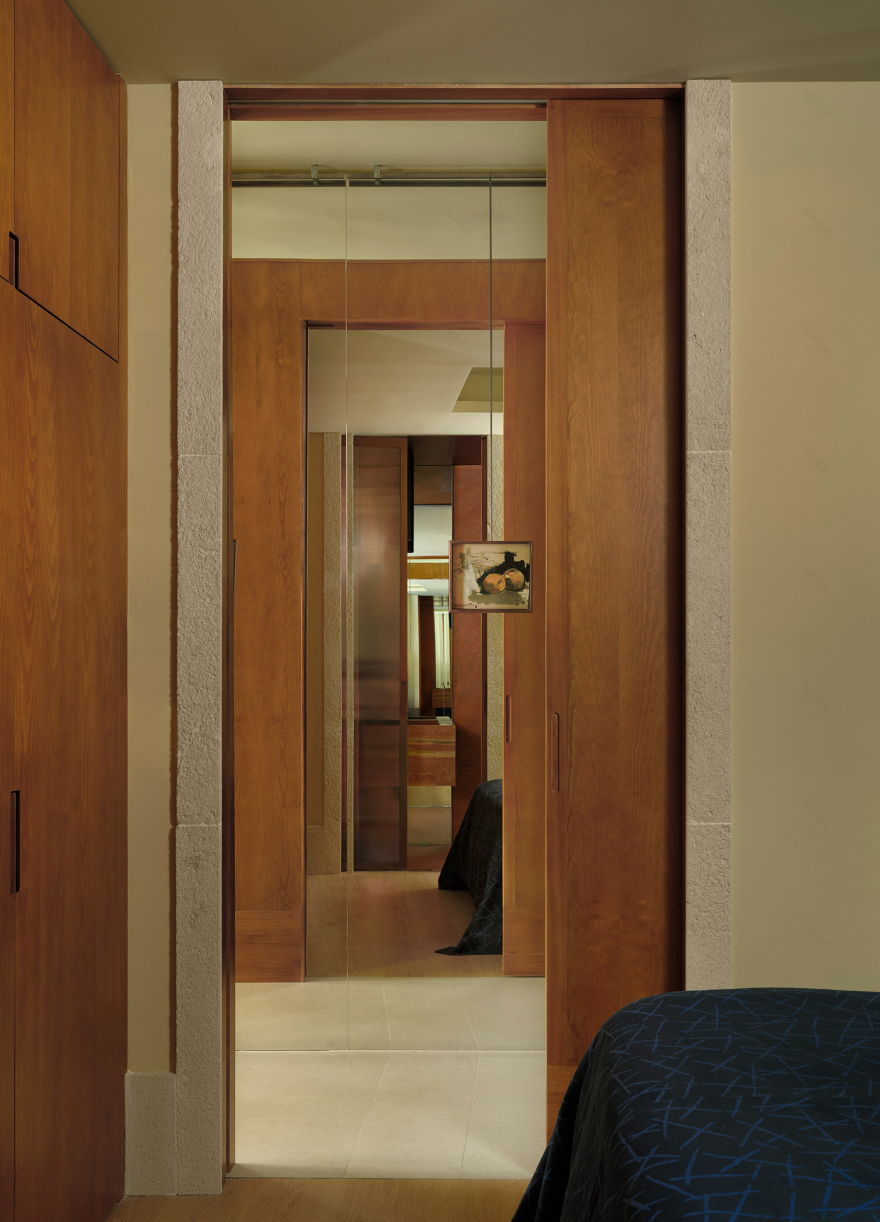
Materiality plays a key role in constructing the atmosphere of the project. Natural light is filtered through linen curtains and layered textiles, softening the intensity of the exterior and generating a controlled penumbra. Surfaces with satin finishes and muted reflections interact with this light, while floor-to-ceiling mirrors amplify depth and extend spatial perception.

The kitchen is conceived as a dark wood volume integrated into the main living space, with a central marble opening that highlights its presence while maintaining visual continuity. Within the oak core, the bedroom and bathroom form a more intimate domain, accessed through a large sliding door that intensifies the transition between spaces.

The project explores how light, material, and spatial organization can construct a domestic atmosphere where shadow is not a residual condition, but an active and deliberate architectural tool.
Project gallery



南京喵熊网络科技有限公司 苏ICP备18050492号-4知末 © 2018—2020 . All photos and trademark graphics are copyrighted by their owners.增值电信业务经营许可证(ICP)苏B2-20201444 苏公网安备 32011302321234号
苏公网安备 32011302321234号客服
消息
收藏
下载
最近