

创作上传
VIP
收藏下载
登录 | 注册有礼
查看完整案例

收藏

下载

分享

翻译
Architects:Wright Inspires
Area:3581ft²
Year:2025
Photographs:Studio f/8 - Mr. Dinesh
Manufacturers:Jaquar,Kohler,Weinerberger Bricks
Lead Architects:Prathima Seethur
Category:Houses
Design Team:Atchaya Gopalsamy
General Contractor:Srinivas L V
Engineering & Consulting > Other:Srinivas
City:Bengaluru
Country:India
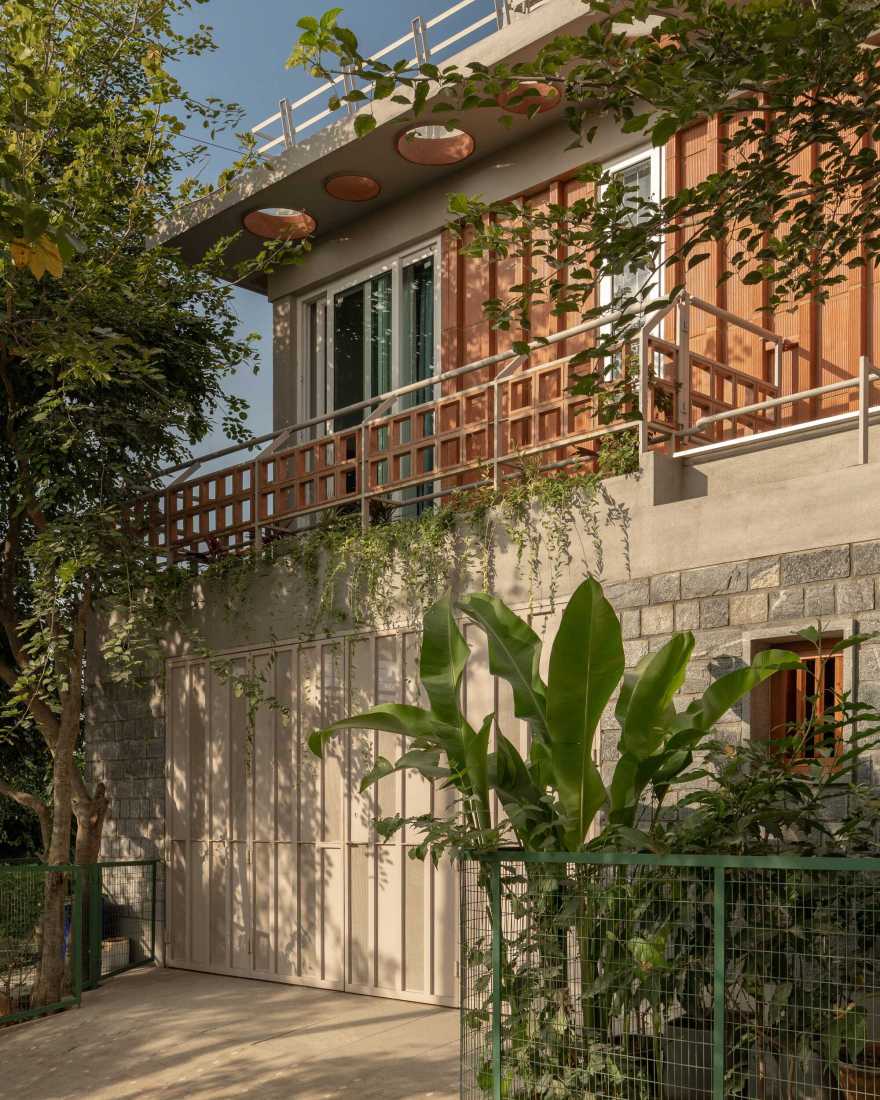
Text description provided by the architects. Taliru is a multigenerational residence designed for a family of five, grandparents, parents, and a teenage son who envisioned a home rooted in simplicity, continuity, and everyday comfort. Drawing inspiration from traditional courtyard houses, the project explores how light, ventilation, greenery, and water can become integral components of daily living rather than ornamental features. The design process evolved through close dialogue with the family, prioritizing lifestyle, cultural memory, and long-term adaptability over stylistic trends.

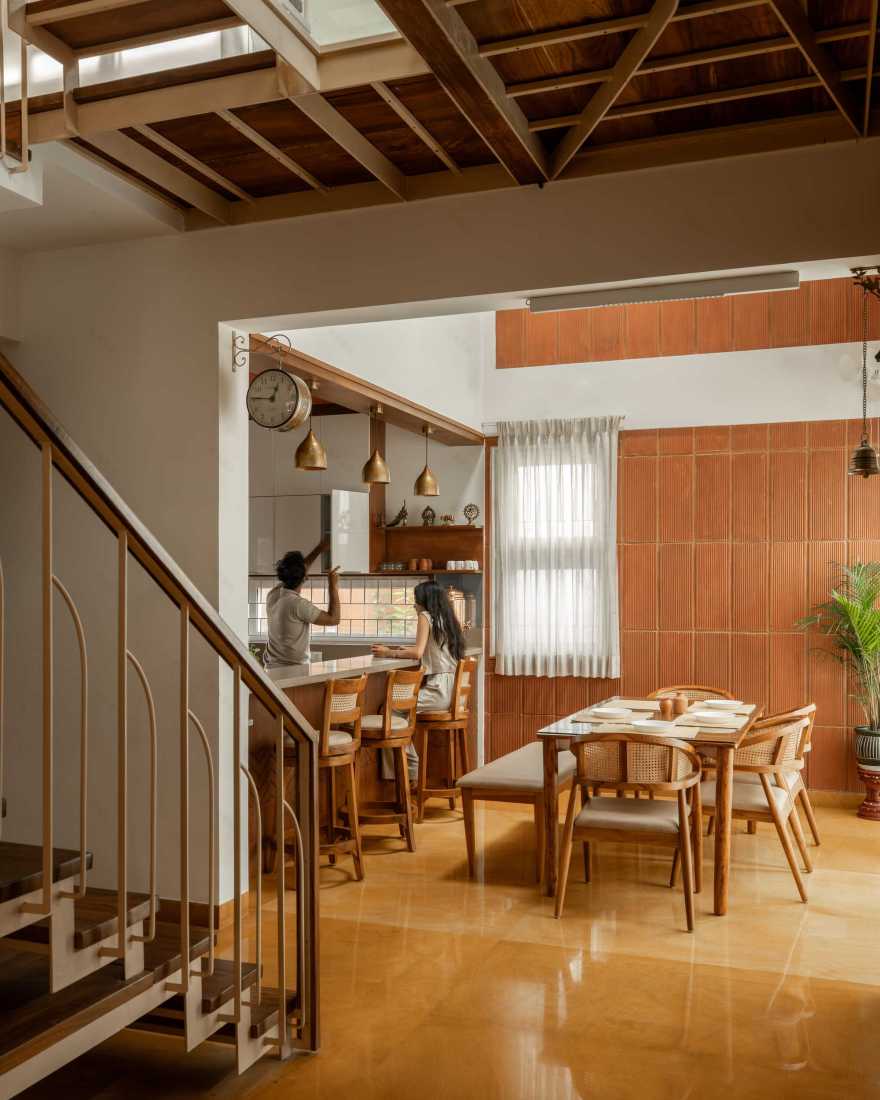
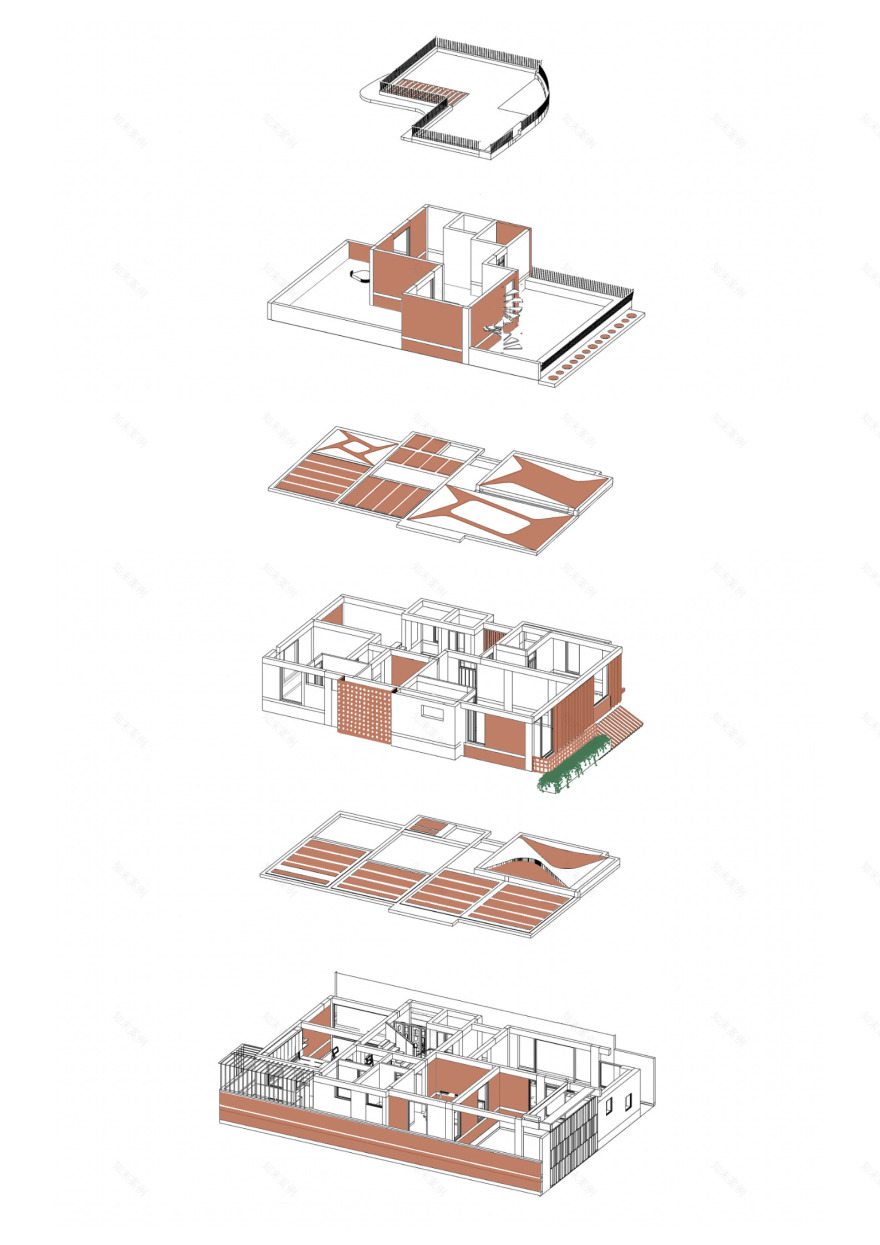
The house is conceived as a series of interconnected volumes organized around transitional spaces and open-to-sky courts. These spatial insertions allow daylight, air movement, and visual connections to permeate the interiors, creating a porous architectural environment responsive to climate. Shaded passages and layered openings moderate heat gain while establishing gradual transitions between inside and outside. The ground floor accommodates the collective functions of the home. Living, dining, and kitchen areas flow into one another to form a continuous social core that supports everyday interaction across generations. A pooja room is positioned in a quiet, naturally lit corner, providing a contemplative space embedded within daily routines. The parents' bedroom is located on this level to ensure accessibility and comfort over time. Service areas and a two-car parking space are integrated within the planning framework, allowing functional requirements to remain discreet and unobtrusive.


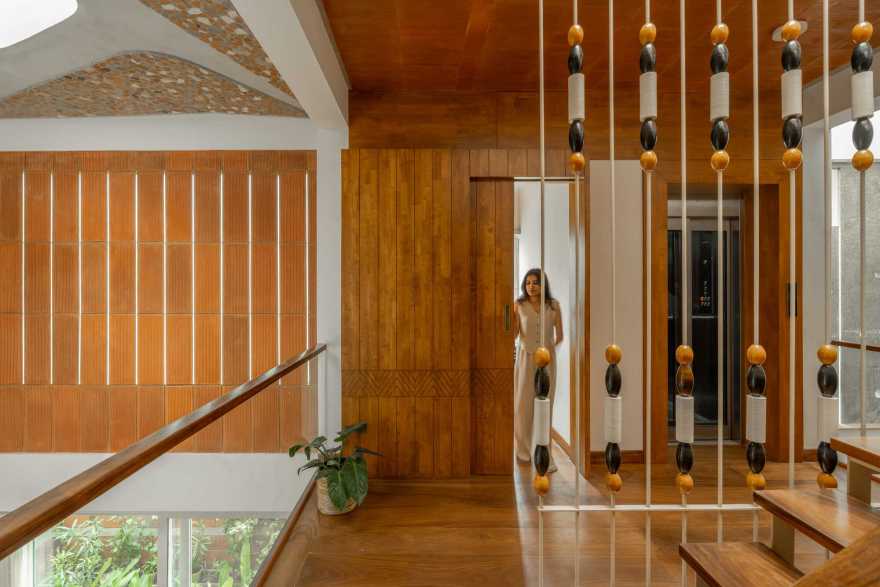
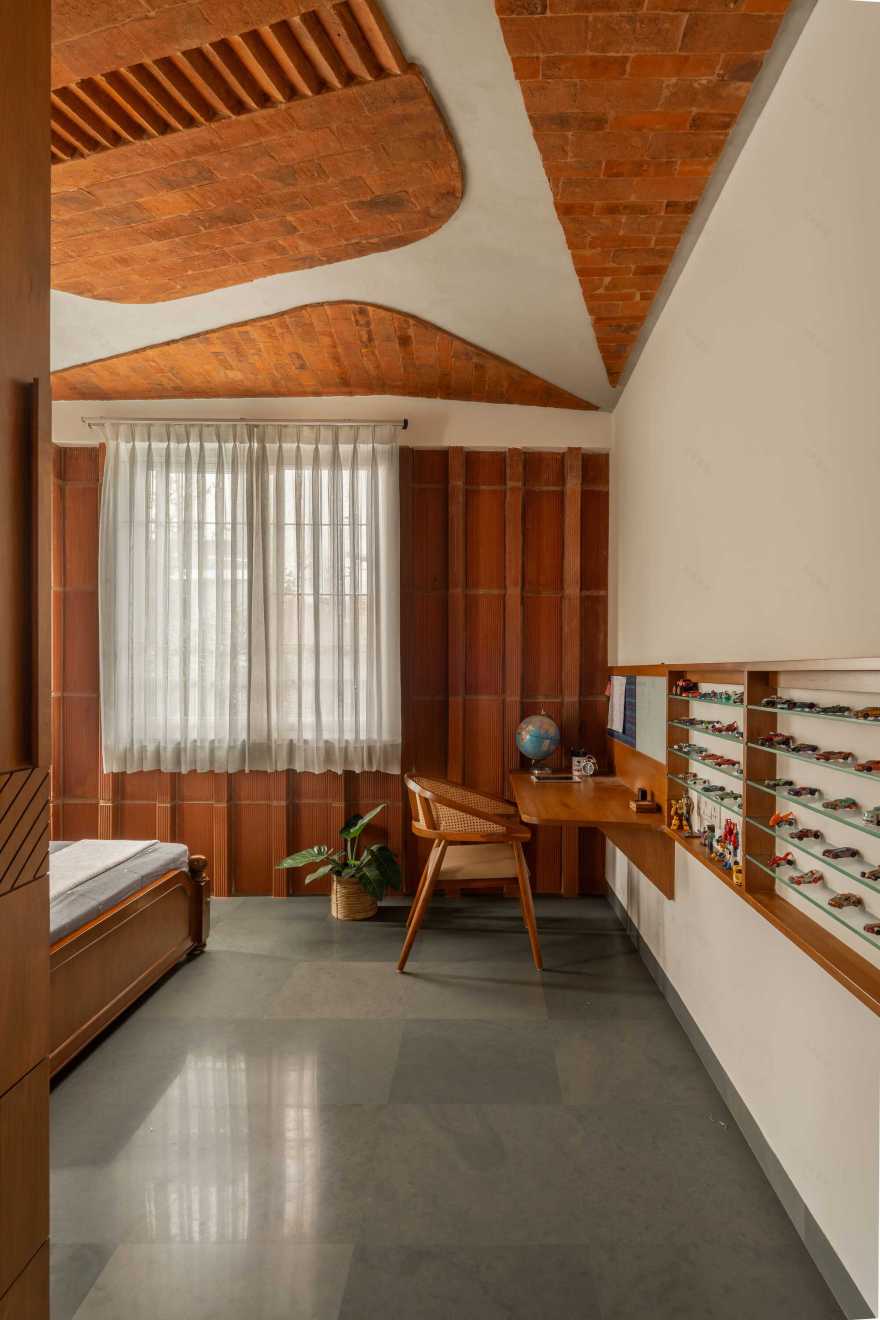
The first floor shifts toward privacy, housing three bedrooms designed as individual retreats. Each room is oriented to receive balanced daylight and cross ventilation while maintaining visual calm. A double-height volume introduces vertical continuity within the house, connecting levels spatially and visually while enhancing natural light penetration. A dedicated laundry utility is positioned discreetly to support daily functioning without interrupting the spatial experience. The second floor accommodates storage and a gym, extending the house's program toward wellness and flexibility. Provision for a future lift has been seamlessly incorporated, ensuring long-term accessibility and adaptability as the family's needs evolve. Circulation throughout the house is conceived as an experiential sequence rather than a purely functional connector.

Climate responsiveness informed the project from inception. Building orientation, wall thickness, sun-shading strategies, and calibrated openings work collectively to achieve thermal comfort throughout the year. Natural ventilation and daylight reduce dependence on mechanical systems, reinforcing a passive environmental approach suited to the local context. Materiality is expressed through a restrained palette of brick, clay blocks, stone, and terracotta, allowing natural textures and aging processes to define the architectural character. Muted pastel tones soften interior atmospheres, while built-in furniture, lighting, and detailing are conceived as extensions of the architectural framework rather than applied elements.

Taliru is conceived not as a static object but as an evolving domestic environment. Through its spatial openness, climatic responsiveness, and material honesty, the house supports shared rituals, everyday routines, and intergenerational living, allowing architecture to quietly frame the rhythms of family life over time.

Project gallery








南京喵熊网络科技有限公司 苏ICP备18050492号-4知末 © 2018—2020 . All photos and trademark graphics are copyrighted by their owners.增值电信业务经营许可证(ICP)苏B2-20201444 苏公网安备 32011302321234号
苏公网安备 32011302321234号客服
消息
收藏
下载
最近