

创作上传
VIP
收藏下载
登录 | 注册有礼
查看完整案例

收藏

下载

分享

翻译
Architects:PSA Studio
Area:280m²
Year:2025
Photographs:Mario Wibowo
Lead Architects:Ario Wirastomo, Ditta Astrini Wijayanti
Category:Hospitality Architecture,Extension
Lead Team:Sukma Harwanti
Design Team:Riezky Meina, Aghni Hauna, Sasqia Nurul Azmi
Technical Team:Muchammad Sjahroni, Heri Setyawan
Landscape Architecture:Desain Padu
City:Kecamatan Beji
Country:Indonesia

Text description provided by the architects. The process of designing this building began with the challenge of creating an extension to a structure that had been in place for nearly two decades since its initial construction. The original building was completed in 2008, while the expansion was carried out in 2025. This time gap is not merely a matter of changing spatial needs, but also involves bridging two distinct design eras—connecting the context of the old building with the requirements of the new one.

The design process began with a review of the original concept of the existing building, which was designed as a women-only boarding house with a family-oriented approach. Located in a densely populated area, the presence of a women's boarding house at that time was a rather sensitive issue. This was addressed by placing the reception area at the front and using transparent materials to provide visual access to the surroundings. Material exploration was carried out through the use of vertically arranged corrugated GRC, allowing for a visual connection between the interior and exterior without completely blocking the view. In terms of massing, the building is divided into several units, with the reception area, communal spaces, and the landlady's room at the front, while the dormitory rooms are located in the central area, ensuring that all activities can be monitored in accordance with the concept of supervision within a family environment.


In addition to examining the concept, a functional analysis was also conducted to understand and accommodate the shift in function that has occurred. The building's primary function remains as a residence, differing only in the duration of stay. In its previous function as a boarding house, the duration of stay was typically longer, whereas for a guesthouse, the duration tends to be shorter, such as for weekend getaways or staycations. In light of this, several adjustments were made to the interior layout, particularly regarding which parts needed to be retained and which parts would be demolished or renovated.

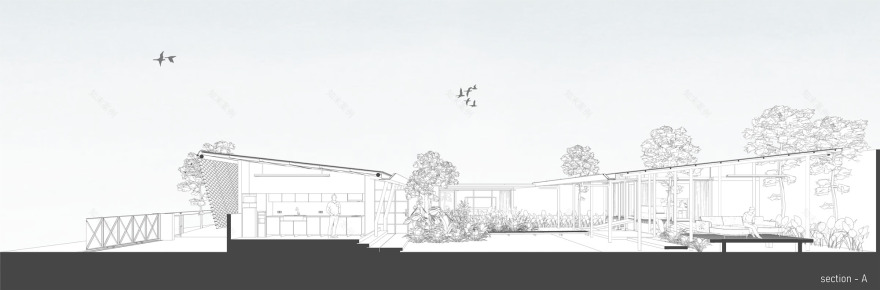
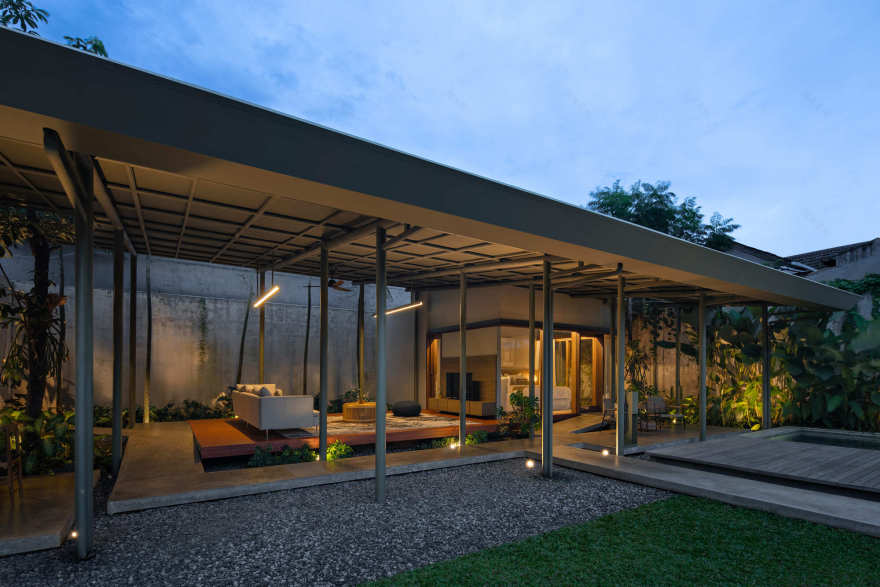
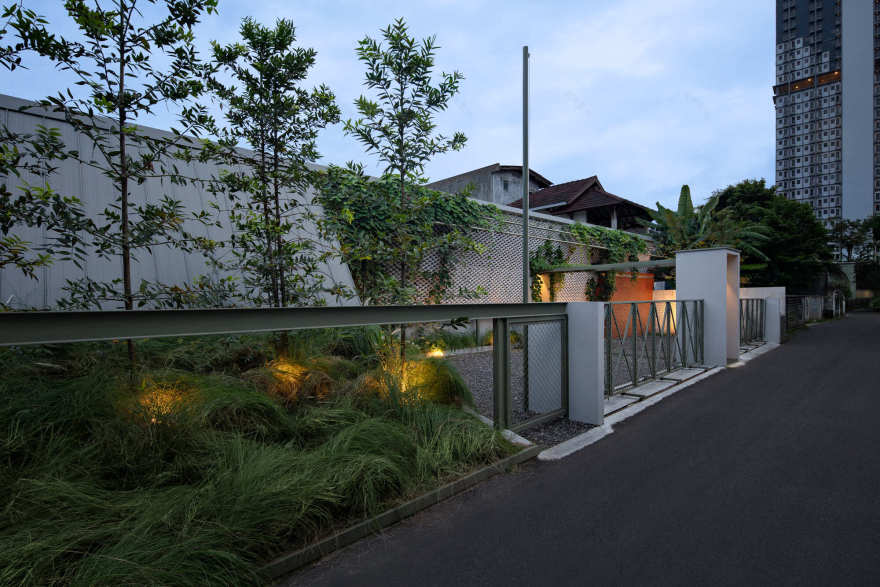
The front building area has been mostly preserved with minimal changes, particularly regarding the facade materials, which have been left as-is due to their unique details that define the architectural identity. The previously spacious garden area has also undergone only a slight reduction to accommodate additional functions, including the addition of a swimming pool as an extra recreational facility that enriches shared activities, especially for families. The design focus shifted to the rear area, with adjustments made to accommodate new space requirements without compromising the quality of the existing open spaces. The new building was designed to continue the existing design language but in a mirrored version, ensuring continuity between the old and new structures.

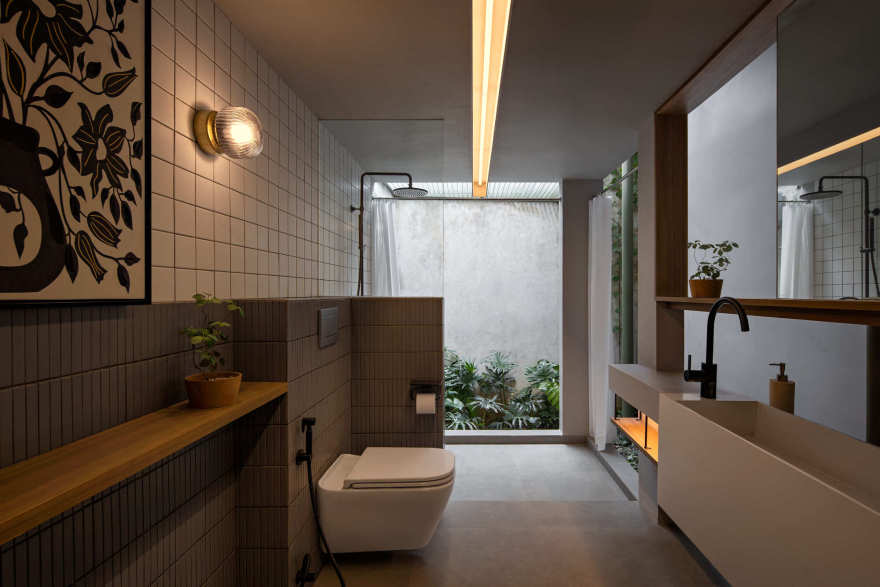
The mirrored form of this building serves as an architectural metaphor for reflection on the past—how existing forms and characteristics are not merely preserved, but also reinterpreted to better respond to current needs. This reflection is realized through improved material quality, natural lighting, and more optimal air circulation, making the spaces feel more alive and encouraging more dynamic interactions. While the old building featured denser details, the new building adopts a more open approach through the reduction of wall elements and the use of more transparent materials.

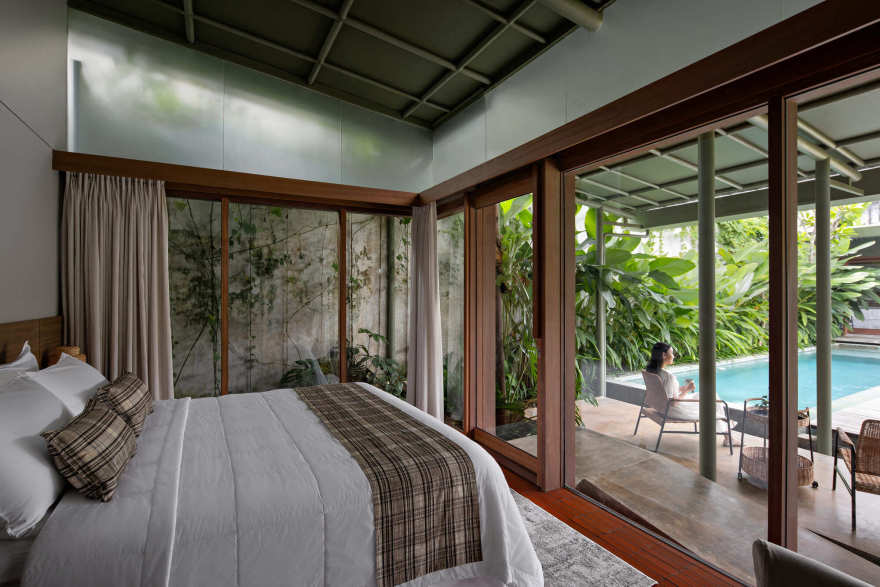
Through this approach, the relationship between interior and exterior spaces remains a key element of the building's spatial experience. The outdoor areas are designed to remain shaded and comfortable despite being in an open space, while from inside the rooms, residents can still feel a sense of connection to the surrounding landscape and activities. As a result, the boundary between interior and exterior becomes more seamless, creating a living experience that blends with the environment while fostering a warm and relaxing vacation atmosphere.
Project gallery






南京喵熊网络科技有限公司 苏ICP备18050492号-4知末 © 2018—2020 . All photos and trademark graphics are copyrighted by their owners.增值电信业务经营许可证(ICP)苏B2-20201444 苏公网安备 32011302321234号
苏公网安备 32011302321234号客服
消息
收藏
下载
最近