

创作上传
VIP
收藏下载
登录 | 注册有礼
查看完整案例

收藏

下载

分享

翻译
Architects:Guá Arquitetura
Area:52m²
Year:2025
Photographs:Manuel Sá
Manufacturers:Artluz,La mapa,Maxcolor,Stella Iluminação,Unknown (Removed),Vedac
Lead Architects:Luís Guedes, Pablo do Vale
Category:Cultural Architecture,Exhibition Center
Coordination:Andressa Macedo
Project Team:Almir Quaresma
Technical Team:Cleverson Velasco
General Construction:Mestre Isac Monteiro
Engineering & Consulting > Lighting:Guá Arquitetura
Letter Opener:Mestre Luís Júnior
City:Guamá
Country:Brazil
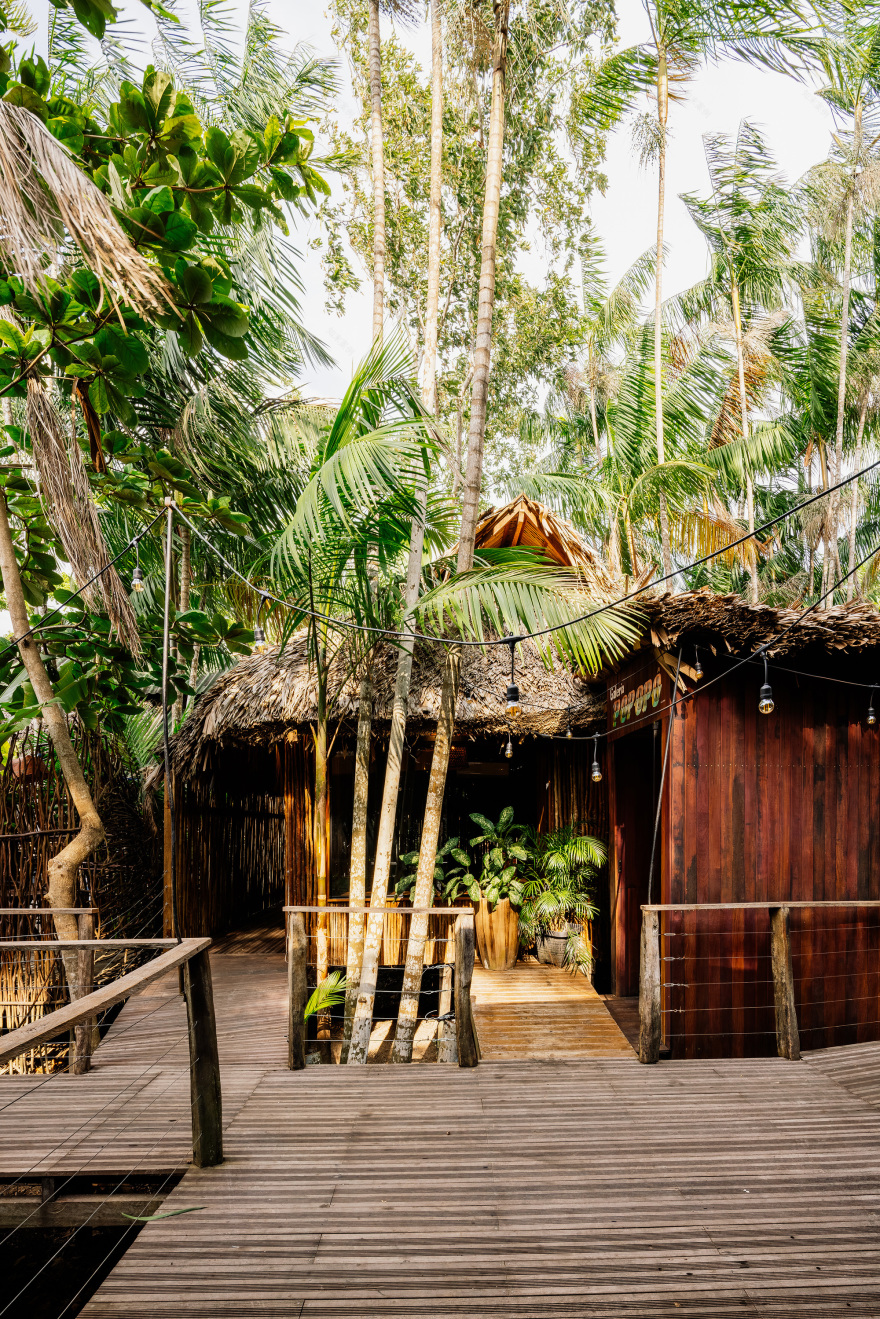
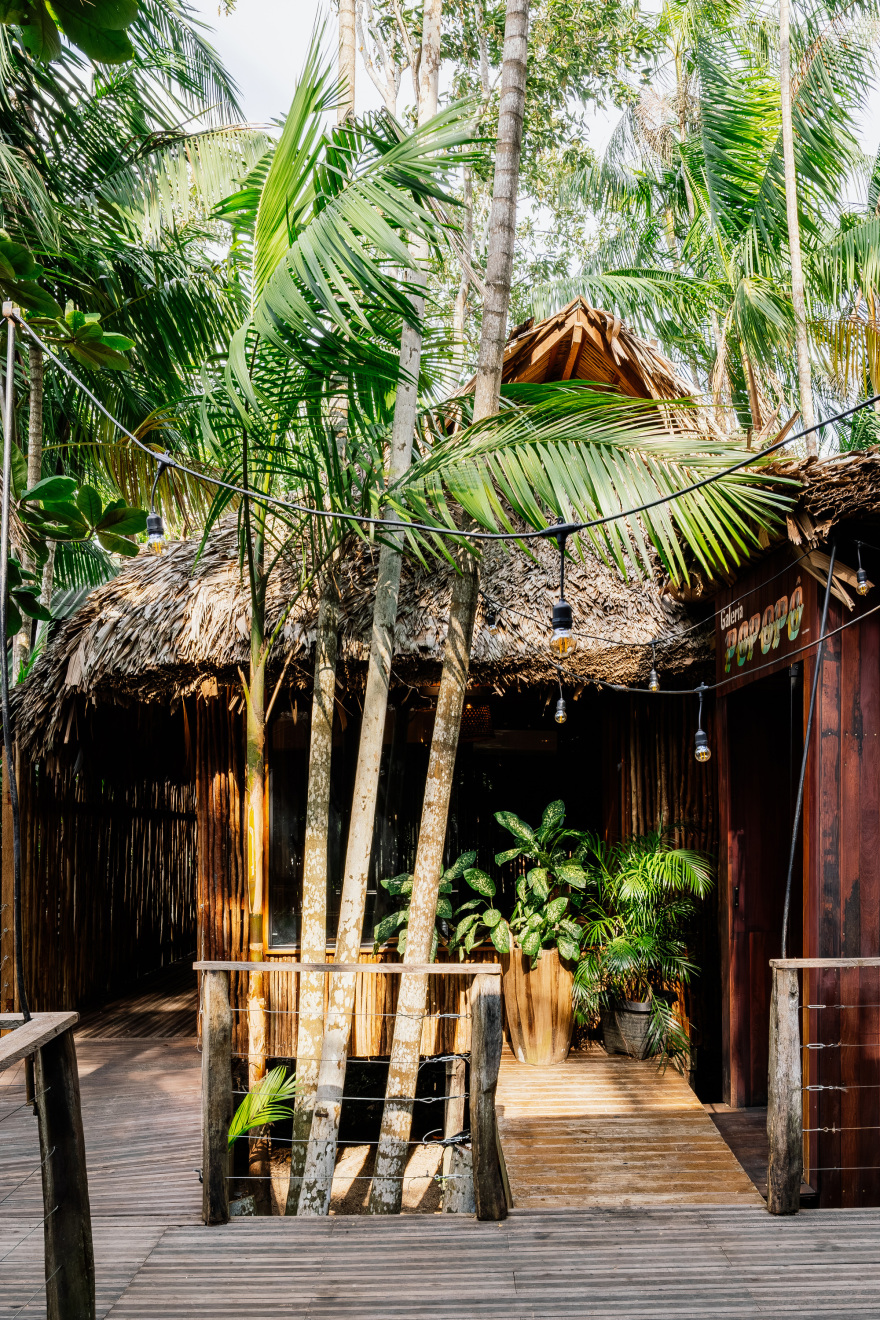
Text description provided by the architects. On the Island of Combu, about 15 minutes by boat from Belém, the Popopô Gallery transforms the riverside crossing into architecture. Located in the Combu Island Environmental Protection Area, amidst the forest and water, the project arises from listening to the territory and its ways of life, converting the everyday memory of river crossings into built space. More than just hosting exhibitions, the gallery inaugurates a symbolic landmark for the territory by asserting itself as the first art gallery on the island—a place where artistic production meets the social and emotional repertoire of riverside life.

Designed by Guá Architecture, the gallery was conceived as an immersive path made of purpleheart wood, an Amazonian species with intense and unique coloration, which gives the environment a dense, warm, and deeply sensory atmosphere. Contrary to the aseptic neutrality of many galleries, here the materiality actively participates in the experience. The wood envelops the visitor and creates a welcoming spatiality, almost cinematic, where light, shadow, texture, and color become part of the exhibition narrative.
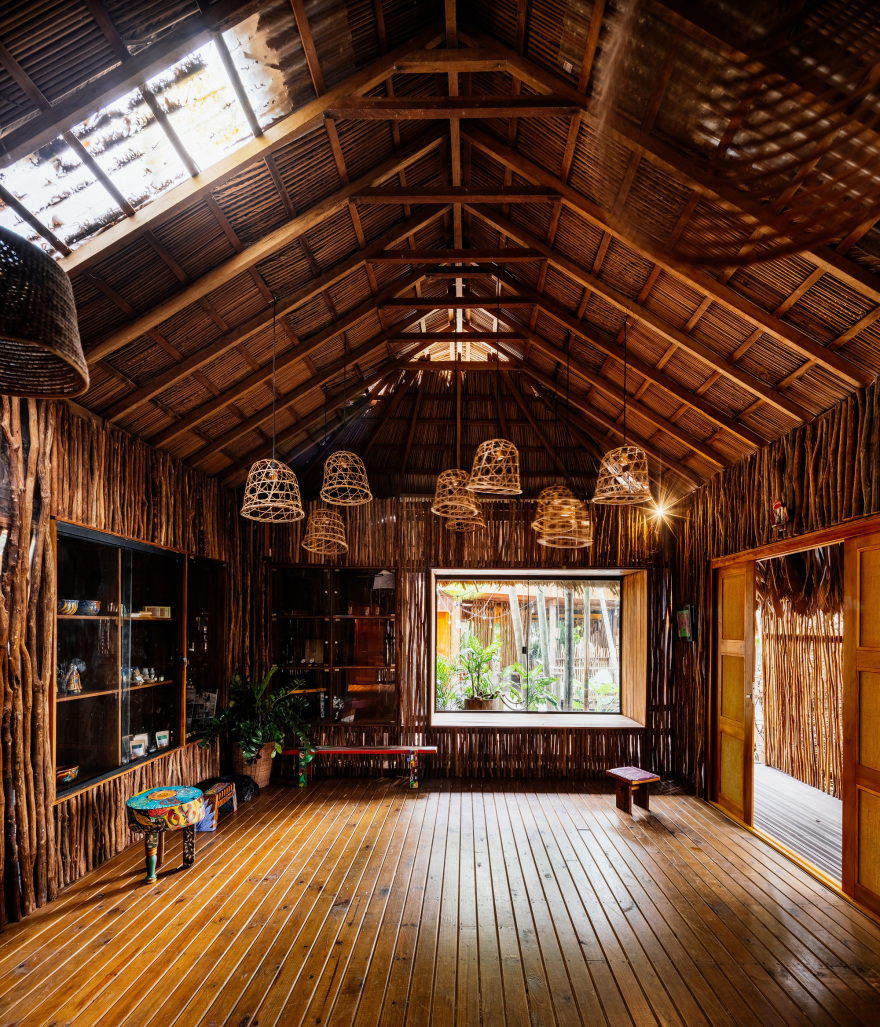
The openings evoke the windows of traditional boats in the region, framing the landscape as part of the exhibition experience, as if the visitor were observing the artworks from the boat, between the movement of the river and the forest's banks. The roof made of tucum palm, in turn, updates an ancestral solution of great climatic intelligence, favoring thermal comfort and reaffirming the value of Amazonian vernacular technologies.
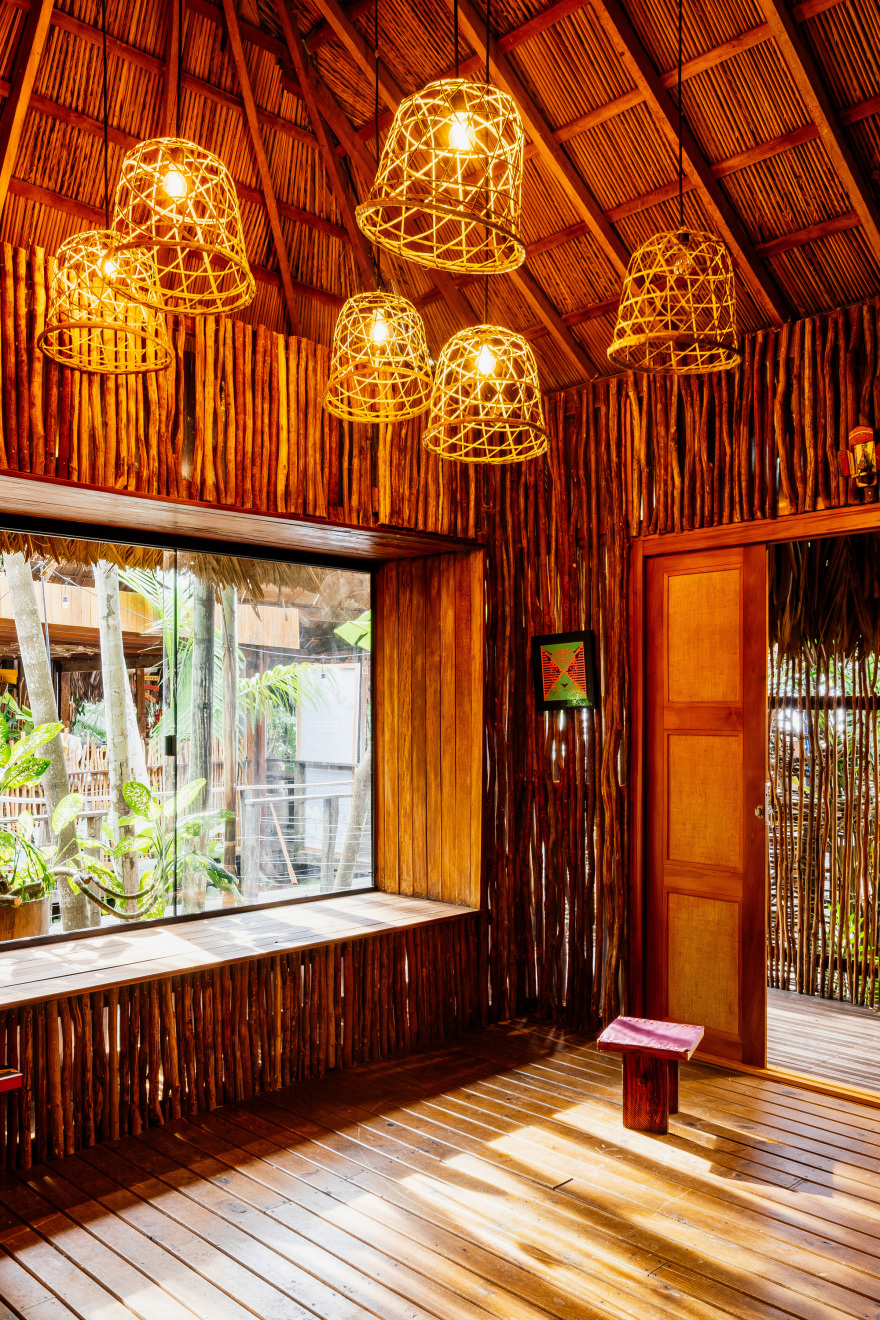


After the exhibition space, the project opens up to a meeting room aimed at conversations, workshops, and small cultural programs. In this second environment, the mangrove wood walls from the region, the welcoming lighting, and the exhibition elements of local productions extend the narrative of the first space and enhance the public vocation of the work. This environment reinforces the idea of the gallery as a platform for community and cultural diffusion.

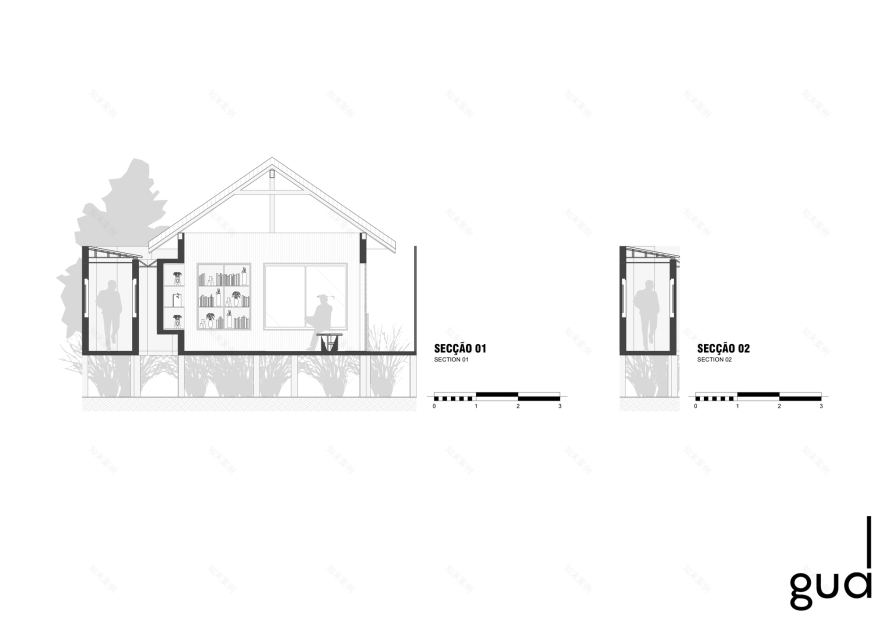
The entire work was executed with local labor, using vernacular Amazonian carpentry techniques, under the leadership of master carpenter Isaac. By building with local carpenters and employing the region's technical repertoires, Guá reaffirms a stance that permeates its trajectory: Amazonian carpentry is not just a construction method, but a living heritage, sophisticated knowledge, and a design language. The Popopô Gallery thus fits into a broader research agenda of the office dedicated to cataloging, disseminating, and valuing this knowledge, demonstrating that tradition and innovation are not opposing poles, but complementary dimensions of the same architecture.

The implementation also follows this logic of respect. Instead of imposing a geometry indifferent to the terrain, the project adjusts to the existing landscape, preserving as many trees and native species as possible. Açaí palms, aningas, and other vegetation were not treated as obstacles but as integral parts of the design. The Popopô Gallery proposes an architecture that does not impose itself on the landscape: it allows itself to be traversed by it. The result is an architecture with a low environmental footprint and high symbolic density, where contemporaneity, ancestry, and the forest operate in full harmony.

Project gallery




南京喵熊网络科技有限公司 苏ICP备18050492号-4知末 © 2018—2020 . All photos and trademark graphics are copyrighted by their owners.增值电信业务经营许可证(ICP)苏B2-20201444 苏公网安备 32011302321234号
苏公网安备 32011302321234号客服
消息
收藏
下载
最近