

创作上传
VIP
收藏下载
登录 | 注册有礼
查看完整案例

收藏

下载

分享
Meishe River Greenway and Fengxiang Park |Turenscape
项目陈述
PROJECT STATEMENT
海口长期面临季风性洪涝与城市水污染问题,曾经被混凝土硬化的河道生态退化严重,几乎失去生命力与自我修复能力。针对这一状况,景观设计团队以自然为基础的解决方案为核心,对城市水系进行系统性更新,将其重塑为兼具生态功能与公共活力的绿色社会 - 生态系统。
通过改造,水体水质显著改善,生物多样性得到恢复,滨水景观重新焕发生机,并为周边社区注入新的公共活力。项目以生态友好且具备防洪韧性的河道体系取代传统混凝土防洪墙,恢复红树林生境,并通过人工湿地对水体进行自然净化,同时融入休闲与活动空间。这一可持续且可复制的实施模式,不仅提升了区域生态健康水平,也有效回应了城市公共与社会发展的需求。
Haikou City, long plagued by monsoon flooding and urban water pollution, saw its concrete-lined waterways bereft of life and ecological resilience. Addressing this, the landscape architect led the charge in implementing nature-based solutions, revitalizing these waterways into thriving green, social-ecological systems. This transformation brought back clean water, rich biodiversity, and lush landscapes, injecting social vibrancy into the community. Eco-friendly, flood-resilient waterways and mangrove habitats replaced concrete flood walls, with constructed wetlands filtering water and incorporating recreational spaces. This sustainable and scalable approach not only improved ecological health but also met the city’s social needs.
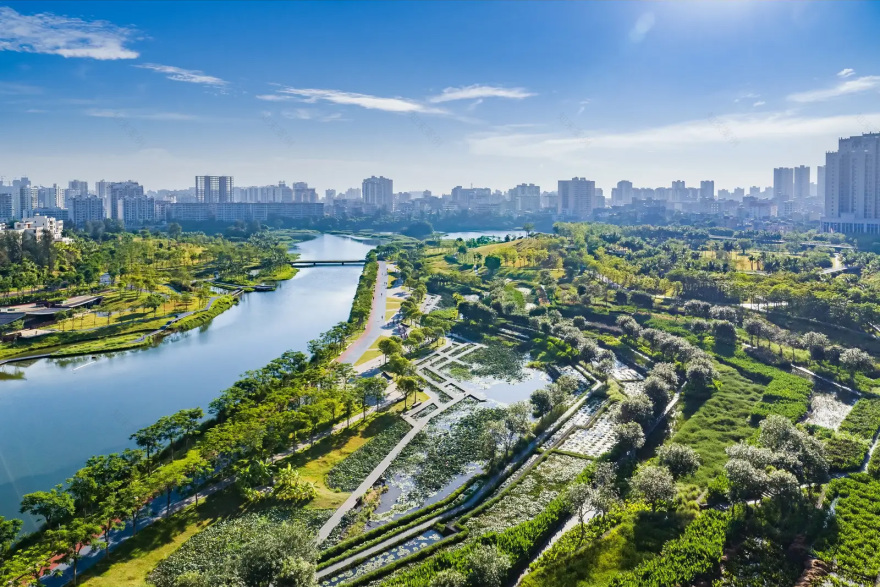
▲从灰色基础设施到葱郁景观的转变,标志着“最美母亲河”的重生。The transformation from a gray infrastructure to a lush landscape marks the return of the Beautiful Mother River. © 土人设计
项目说明
PROJECT NARRATIVE
1. 场地与挑战
中国热带城市海口在快速城市化的过程中人口激增,自然水系却长期被忽视。全长23公里的美舍河曾经是一条充满污水的混凝土水渠,成为典型问题的集中体现。过去零散、局部的治理方式未能奏效,河道生态环境持续恶化。2016年,景观设计团队受委托,对美舍河及沿岸约80公顷的凤翔公园进行整体更新。项目不仅恢复了河流生态系统,也回应了城市人口增长带来的公共空间需求。
2. 设计策略
项目以工程措施与生态设计相结合为总体思路,通过构建以自然过程为基础的综合水管理体系,应对水污染与城市内涝问题,将河道廊道重塑为面向公众开放的社会 - 生态基础设施。主要策略包括:
2.1 生态基础设施规划
构建以雨洪管理为核心的绿色基础设施体系,实现雨水与污水分流处理。通过整合主河道、支流、湿地与沿岸绿地,形成连续的水生态网络,并结合贯通的步行与休闲系统,提升整体可达性与使用体验。
2.2 去渠道化改造
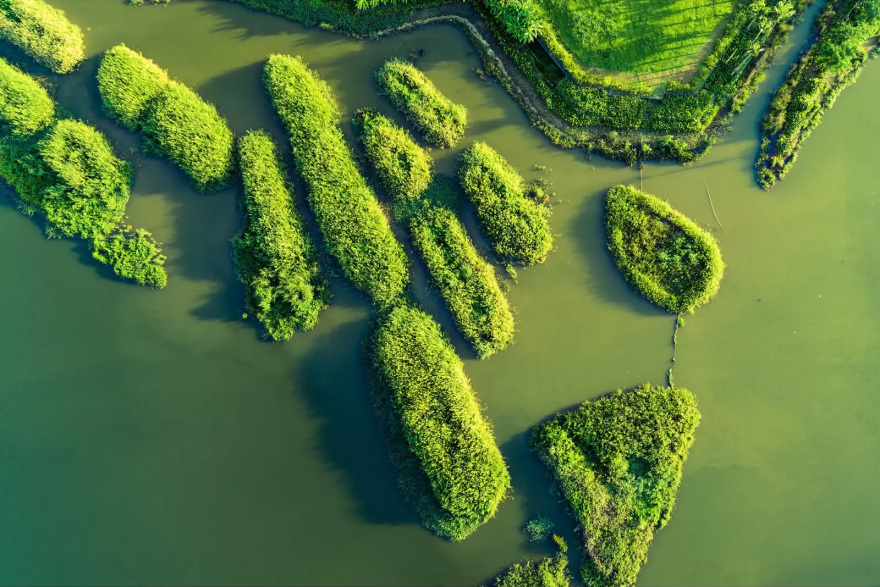
拆除原有混凝土防洪墙,恢复生态化河岸形态,并重新打通入海通道,使潮汐能够再次进入城市水系。沿河重建湿地与浅滩,为红树林恢复提供适宜生境。同时设置连续抬升的滨水步道,增强公众亲水体验。拆除的混凝土及开挖土方被再利用,在河道中构筑生态岛屿,增强水陆交互,促进热带动植物栖息与生境多样性。
2.3 生态生物过滤系统
在凤翔公园原有的防洪墙和垃圾堆场区域,沿岸建设人工湿地,作为水质净化设施。系统主要处理两类水源:一是富含营养物的面源污染径流,二是周边城中村未接入集中处理系统的生活污水。该生态系统每日可净化约6000吨污染水体,使水质达到可亲水标准。同时,在湿地入口设置移动式预处理设备,对污水进行除臭与消毒处理,每日可预处理约3500吨生活污水后再进入湿地系统。水流调度灵活,可根据需要进行分流或合流,并通过定期监测确保水质安全。
2.4 社会功能整合
绿色廊道内配置多样化公共设施,包括自然教育中心、儿童活动空间、太极与广场舞场地以及充足的休憩座椅。这些设施优先布局在交通便利、使用频率高的区域,使滨河绿道成为服务全年龄群体的城市公共空间,增强社区参与与社会活力。
3. 成效
该项目助力海口于2018年获得国际湿地城市认证,并于2023年使美舍河入选“中国最美母亲河”。项目展示了一套具有可推广性和成本可控的城市水环境治理模式,在改善水质、提升防洪能力的同时,创造了兼具文化与社会价值的高品质公共空间。
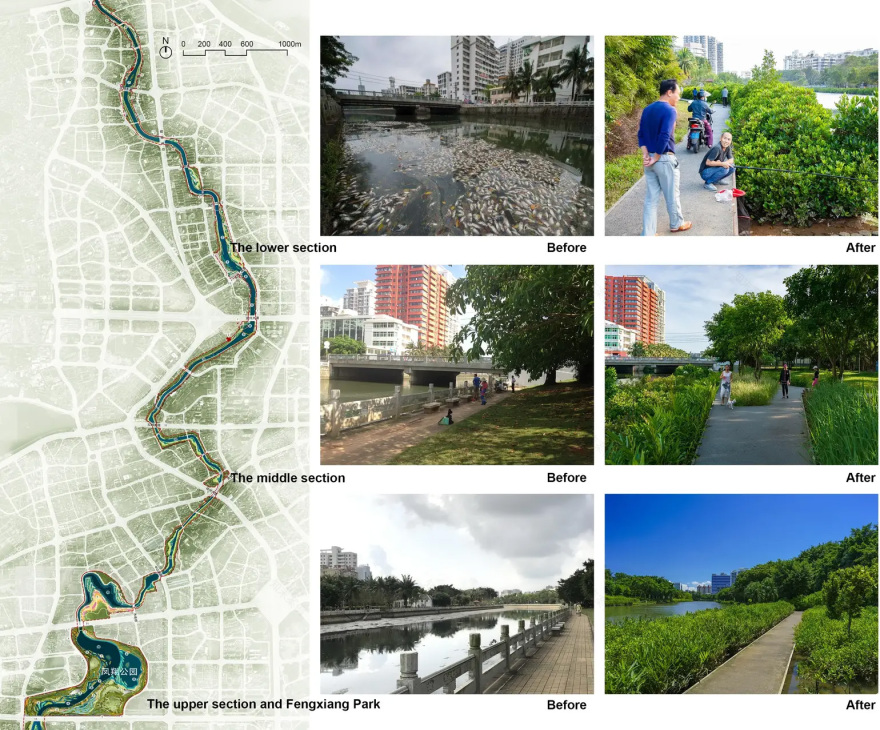
▲一条长达13公里、受污染的混凝土河道被重新塑造为兼具生态与公共功能的活力空间基础设施。A 13-kilometer contaminated concrate river has been reimagined into vibrant ecological and social infrastructure.© 土人设计

▲沿岸坡地设置的梯田式人工湿地可拦截城市径流、净化水质,并提供多重生态系统服务。Constructed terraced wetlands on embankment slopes capture urban runoff, purify water, and offer extensive ecosystem services.© 土人设计

▲拆除混凝土防洪墙后,腾出空间用于红树林恢复与滨水栈道建设,增强公众与自然的互动体验。Removed concrete floodwalls make way for mangrove restoration and board walks, enriching visitor engagement with nature.© 土人设计
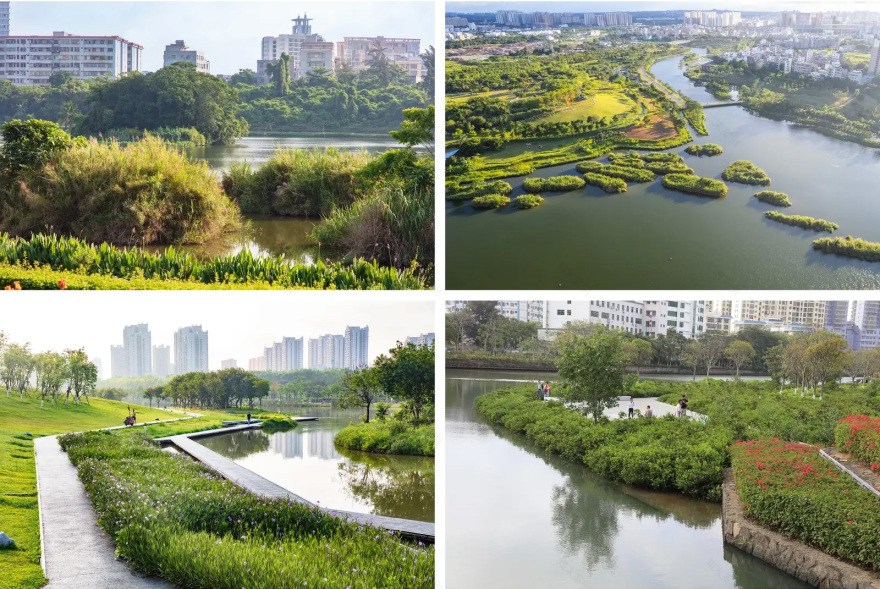
▲利用拆除防洪墙产生的再生材料构建河中生态岛,形成水岸缓冲带,促进水体修复与生态恢复。Recycled materials from demolished floodwalls create isles, forming a gentle remediation buffer at the water’s edge.© 土人设计
▲沿河布置多样化湿地生境与无障碍步行系统,营造沉浸式的滨水空间体验。Along the river, diverse wetland habitats and accessible pedestrian paths foster immersive waterfront experiences.© 土人设计

▲滨河绿道两侧设置线性生态植草沟,有效过滤雨水径流,防止污染物进入河道。Linear bioswales along the riverside greenway effectively filter stormwater, preventing pollution from entering the river.© 土人设计

▲向西远眺凤翔公园及其人工湿地系统,凸显其作为城市绿色地标的重要作用。Westward view of Fengxiang Park and its constructed wetland highlights its role as an urban green attraction.© 土人设计

▲人工湿地处理后的水质稳定达到地表水Ⅲ类标准以上,能够满足公众亲水活动的安全要求。The constructed wetland ensures bio-treated water quality exceeds grade III standards, safe for public interaction.© 土人设计
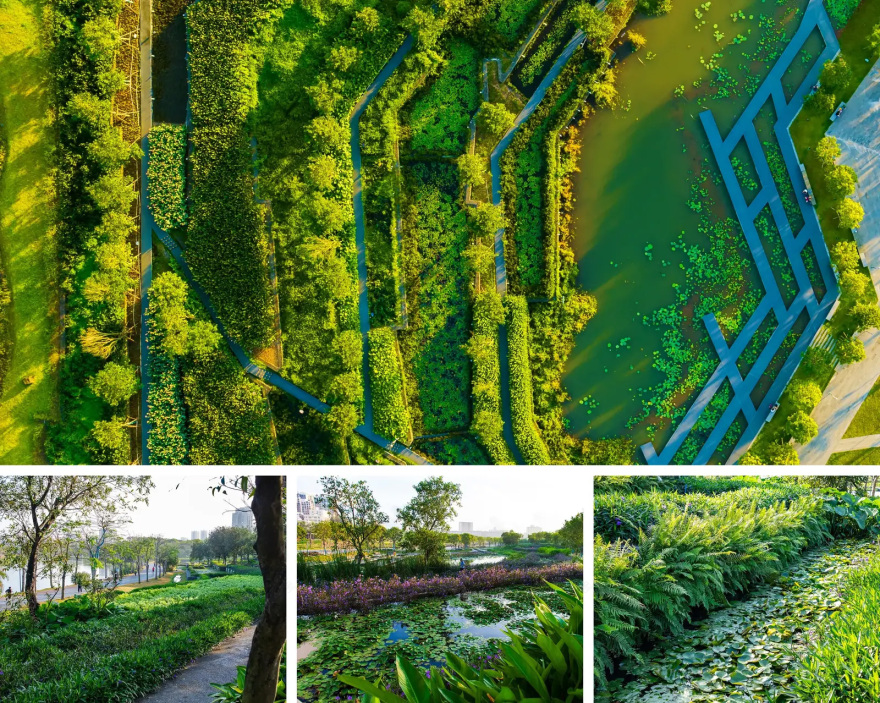
▲设计在确保公众与污染源保持安全距离的同时,营造可近距离感受自然的空间体验。The design safeguards public health by distance from contamination while allows immersive natural experience.© 土人设计
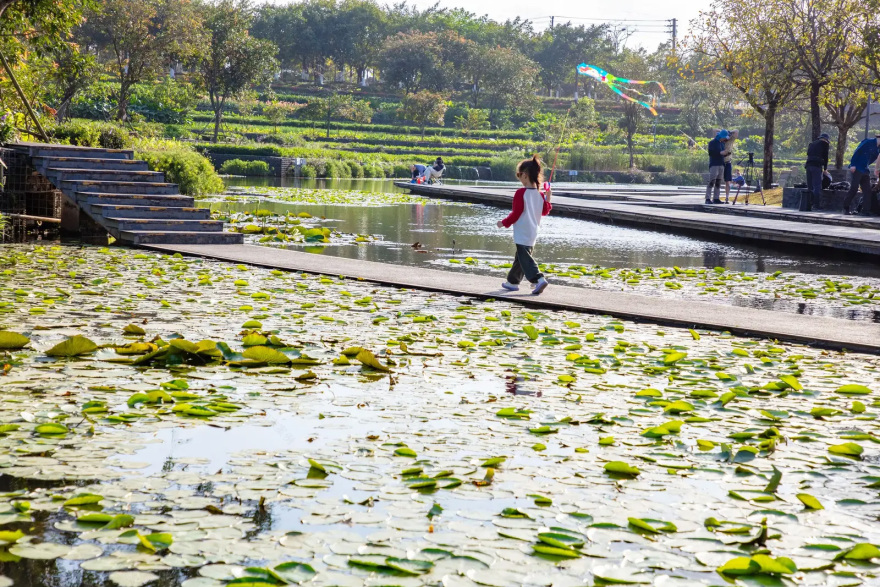
▲经净化后的水体形成景观水景,成为场地视觉焦点,并通过精心组织的步道系统引导游览动线。An inviting water feature, born from cleansed water, becomes a focal point for visitors, with carefully designed paths.© 土人设计
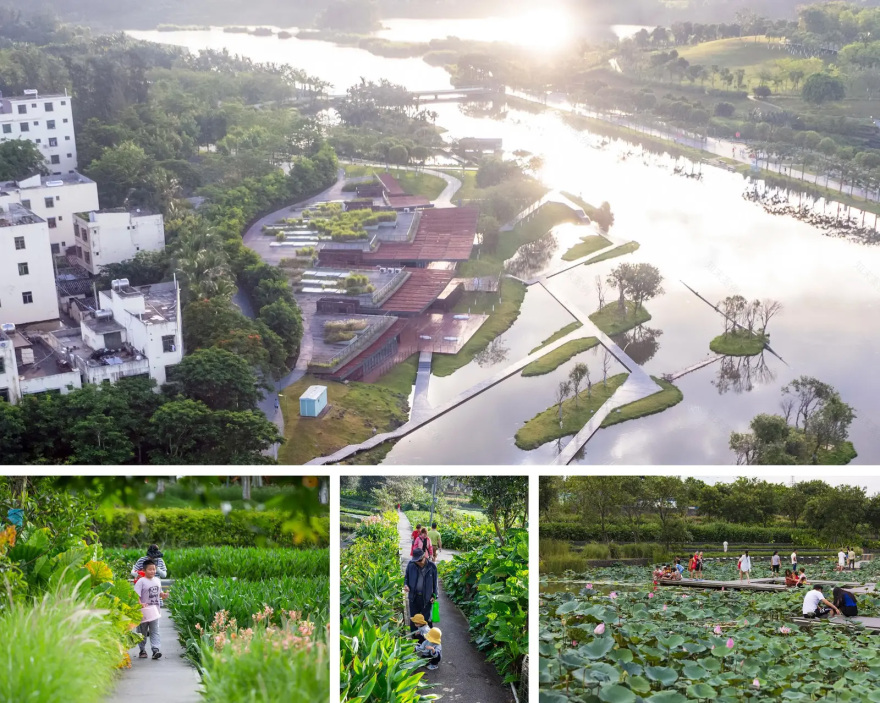
▲更新后的绿地系统设置了环境教育功能区,自然教育中心与滨水景观有机融合。The reimagined green spaces now feature areas for environmental education, with a Nature Center seamlessly blended into the riverbank.© 土人设计

▲焕新的绿色基础设施成为周边居民日常休闲与活动的重要场所,服务全年龄人群。The rejuvenated green infrastructure serves as a daily recreational spot for community members of all ages.© 土人设计

▲这一生态更新修复了原有排水工程造成的空间割裂,重新连接了城市与水系的关系。The revitalized green infrastructure has mended the disconnect caused by the previously hostile drainage.© 土人设计

▲儿童模仿太极练习者的动作,生动体现绿道已融入社区日常生活。Depicts children playfully emulating a Taiji practitioner, illustrating the greenway’s role in daily life.© 土人设计

▲沿绿道设置的儿童活动空间吸引家庭参与,促进代际互动与社区凝聚。Playgrounds along the greenway draw children, uniting families and bridging generations.© 土人设计
PROJECT NARRATIVE
1. Site and Challenges:
Rapid urbanization in Haikou, a tropical city in China, led to a population boom and neglect of natural water systems. The 23-kilometer Meishe River, previously a sewage-filled concrete canal, exemplified these challenges. Fragmented solutions had failed, worsening the condition. In 2016, the landscape architect was commissioned to revitalize the river and the 80-hectare Fengxiang Park at the river bank. This redevelopment enhanced the ecological landscape and addressed the growing population’s social needs.
2. Design Strategies
The design strategy involves integrating civil engineering with ecological design. They focused on a comprehensive system combining water management with natural processes to address pollution and flooding. The river corridor was re-envisioned as an inclusive social-ecological infrastructure. Key strategies included:
Ecological Infrastructure Planning: Developing a stormwater-focused green infrastructure to manage stormwater separately from sewage, integrating the river, tributaries, wetlands, and green spaces, complemented by an interconnected network for pedestrians and recreation.
Dechannelizing: The concrete flood walls were removed and replaced with an eco-friendly river bank. The blocked waterway is reconnected to the ocean to allow tides to again enter the city; wetlands and shallow shores along the river were reconstructed so that mangroves could rehabilitate them. Continuously elevated pedestrian paths were designed to create waterfront access. The demolished concrete and excavated materials were recycled to build isles along the river to further rewild the waterway and enhance the interaction between water and earth and create habitats for diverse tropical fauna and flora.
Bio-filtration: In Fengxiang Park, where concrete flood walls and garbage dumps once stood, constructed wetlands now line the riverbank, serving as water purification facilities. These wetlands treat two types of water: nutrient-rich non-point source pollution runoff and sewage from local urban villages lacking access to centralized sewage treatment. This natural system can clean 6000 tons of polluted water daily, improving it to swimmable quality. Additionally, mobile pre-treatment equipment at wetland inlets handles sewage, removing odors and pathogens before channeling grey water into the wetlands, and cleaning 3,500 tons of domestic sewage daily. Water flow management is flexible, with options to switch or combine flows as needed. Regular testing ensures water quality remains safe for public use.
Social Function Integration: The green corridors are enriched with diverse amenities, including a nature center for education, playgrounds for children, a plaza for Taiji and group dancing, and plentiful seating. These amenities are allocated where most accessible which transforms the greenway into a communal hub for the city, catering to all ages and fostering community engagement.
3. Achievement
This project gained Haikou International Wetland City status by Ramsar in 2018 and in 2023, Meishe River was named one of China’s Most Beautiful Mother Rivers. It showcases scalable, cost - effective solutions for urban water challenges, enhancing water quality, flood mitigation, and creating public spaces with cultural and social value.
南京喵熊网络科技有限公司 苏ICP备18050492号-4知末 © 2018—2020 . All photos and trademark graphics are copyrighted by their owners.增值电信业务经营许可证(ICP)苏B2-20201444 苏公网安备 32011302321234号
苏公网安备 32011302321234号客服
消息
收藏
下载
最近