

创作上传
VIP
收藏下载
登录 | 注册有礼
查看完整案例

收藏

下载

分享

翻译
Architects:Studio VDGA
Area:4500m²
Year:2025
Photographs:Edmund Sumner
Manufacturers:Grohe,Bharat flooring and tiles,Daikin,Dtale Modern,Fenesta,G M Veneers and Ply,Jaipur Rugs,Jay Jalaram Brick Works,Lamp shaper, Harshita Jhamtani Designs,Parrees
Lead Architects:Deepak Gugarii, Rashi Saanson
Category:Houses
Project Architects:Viplav Paithankar
Structural Consultant:G A Bhilare Consultants Private Limited, Pune
Contractor:Rahul Khivansara
City:Pune
Country:India

Text description provided by the architects. Brick House is a recently completed private residence located in the heart of Pune's dense urban fabric. Occupying a compact footprint of 4500 square feet, the design is a considered response to the spatial constraints and climatic challenges of its context. The project is rooted in a conscious reinterpretation of traditional Indian architectural principles while integrating a restrained material palette and passive design strategies suited for contemporary urban living.
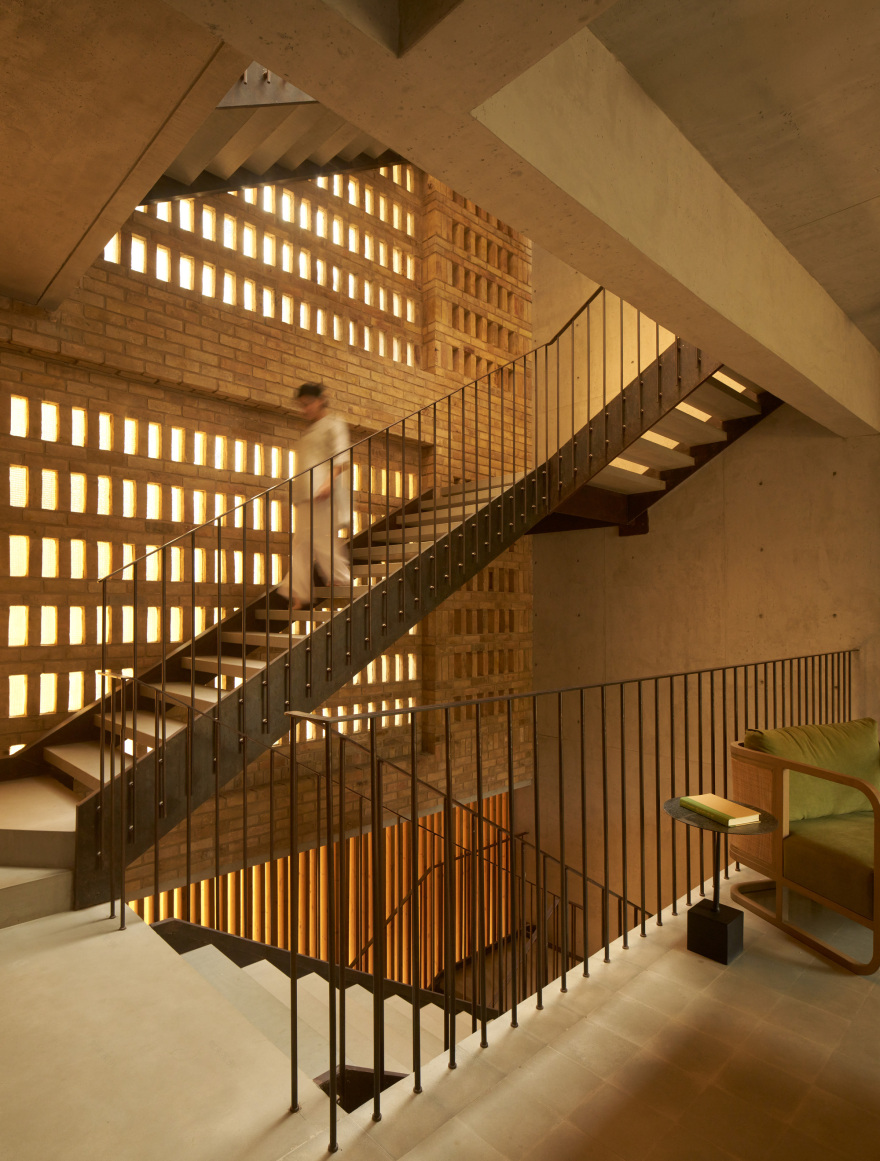
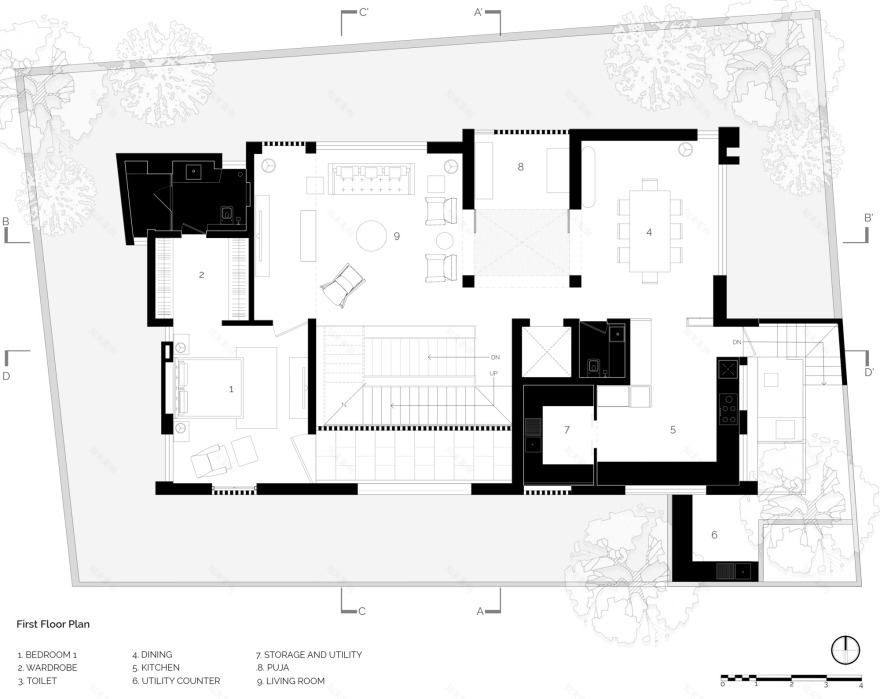
Site and Planning Context – Situated in a bustling neighbourhood, the site is surrounded by a tight cluster of adjacent buildings, necessitating an inward-looking architectural response. The primary design challenge lay in optimizing spatial quality and natural light without compromising privacy. The solution was to develop the residence vertically, spreading across four levels, with interspersed micro-courtyards that act as light wells and thermal buffers. The vertical stacking of volumes allowed us to create a layered spatial experience, where each floor reveals a different interaction with light, material, and proportion. These courtyard voids are not merely architectural devices but integral to the environmental and experiential quality of the home. They facilitate cross-ventilation, encourage stack effect cooling, and bring a rhythmic flow of natural light deep into the interior.



Materiality and Façade Strategy – Brick is the protagonist of the project, both structurally and visually. Inspired by vernacular architecture yet crafted with a contemporary sensibility, the entire house is wrapped in brick jali screens (Jali screen meaning Lattice screen), which serve both performative and aesthetic functions. The south-facing façade, which is most exposed to solar gain, is articulated with dense brick screens that filter harsh sunlight, reduce heat ingress, and frame filtered views of the outside. These porous envelopes transform the house into a climatic buffer zone while creating an ever-changing play of light and shadow on the interiors. The material palette is deliberately minimal and honest—comprising exposed concrete, natural cement tiles, mild steel (MS) elements, and brick in its raw, unplastered form. This restrained selection fosters a tactile palette that emphasizes the textures of the built environment and resists unnecessary ornamentation. Here, light becomes the primary decorative element, animating the interiors throughout the day as it dances across the textured surfaces.

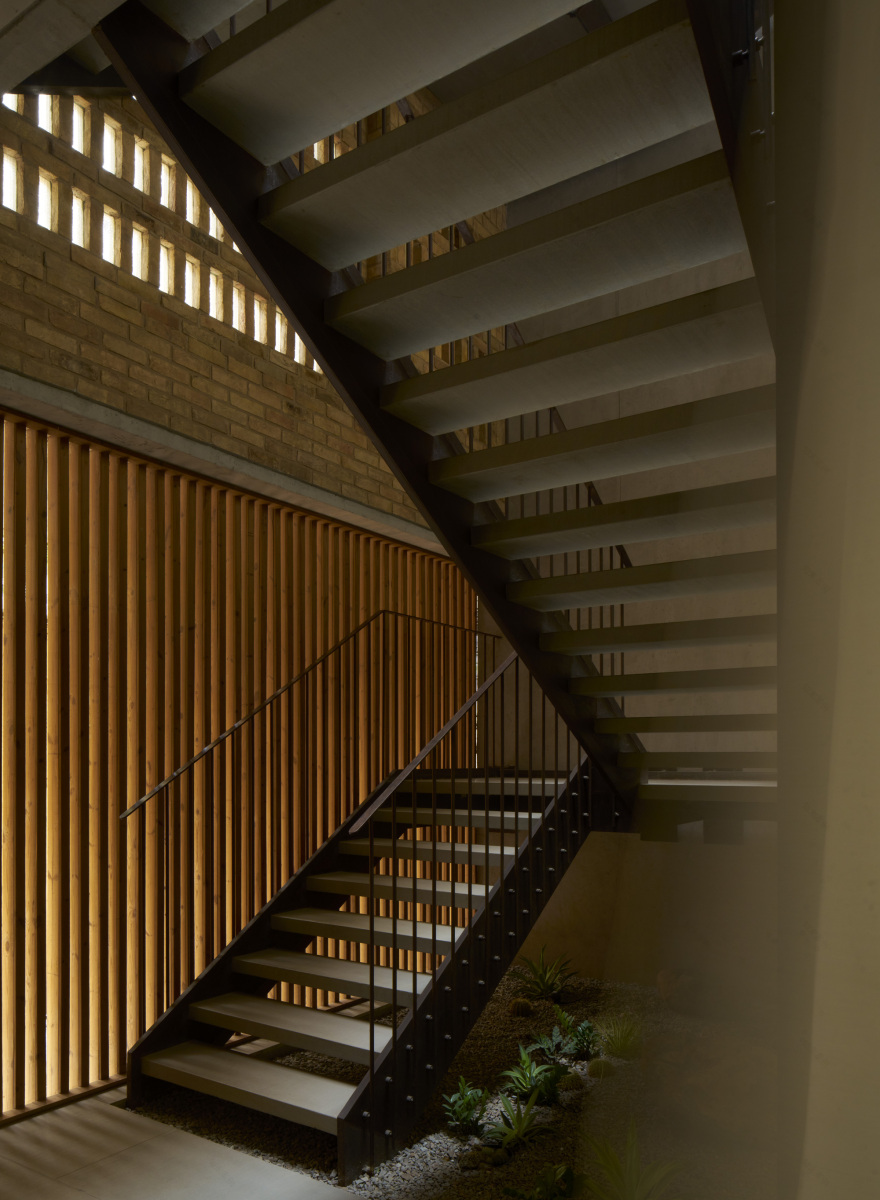
Spatial Organization and Experience – The spatial arrangement is introverted by design. The home's public and private zones are carefully choreographed around courtyards, each visually and functionally connecting different levels. From the living areas to the bedrooms and even transitional spaces like corridors and staircases, the layout encourages layered sightlines and spatial overlap. This interlocking of volumes not only multiplies the perception of space but fosters a deeper sense of connection between inhabitants across floors. One of the key spatial highlights is the main staircase, made in raw-finished mild steel and appearing as a sculptural, floating element. Positioned against the backdrop of the brick jali, the stair becomes a dynamic visual anchor in the house. As daylight filters through the screen, the silhouette of the stairschanges character across the day, echoing the house's quiet celebration of time, material, and shadow.


Light, Shadow, and Sustainability – Light is not merely functional in Brick House; it is poetic. Through a careful orchestration of brick jalis, skylights, and courtyards, the architecture allows sunlight to enter in a manner that's diffused, dappled, and ever-evolving. Seasonal sun paths were studied meticulously during the design process to ensure that internal spaces remain comfortable throughout the year. In summers, the jalis mitigate heat gain, while in winters, they allow for gentle warming. The passive cooling system, enabled by the stack effect from vertically arranged voids, significantly reduces the need for mechanical air conditioning. With views often blocked in the city, looking inward made more sense. By turning inward, the home cultivates a serene and controlled internal environment—an urban oasis where one experiences the tactile richness of materials, the serenity of filtered light, and the gentle breeze moving through porous surfaces.
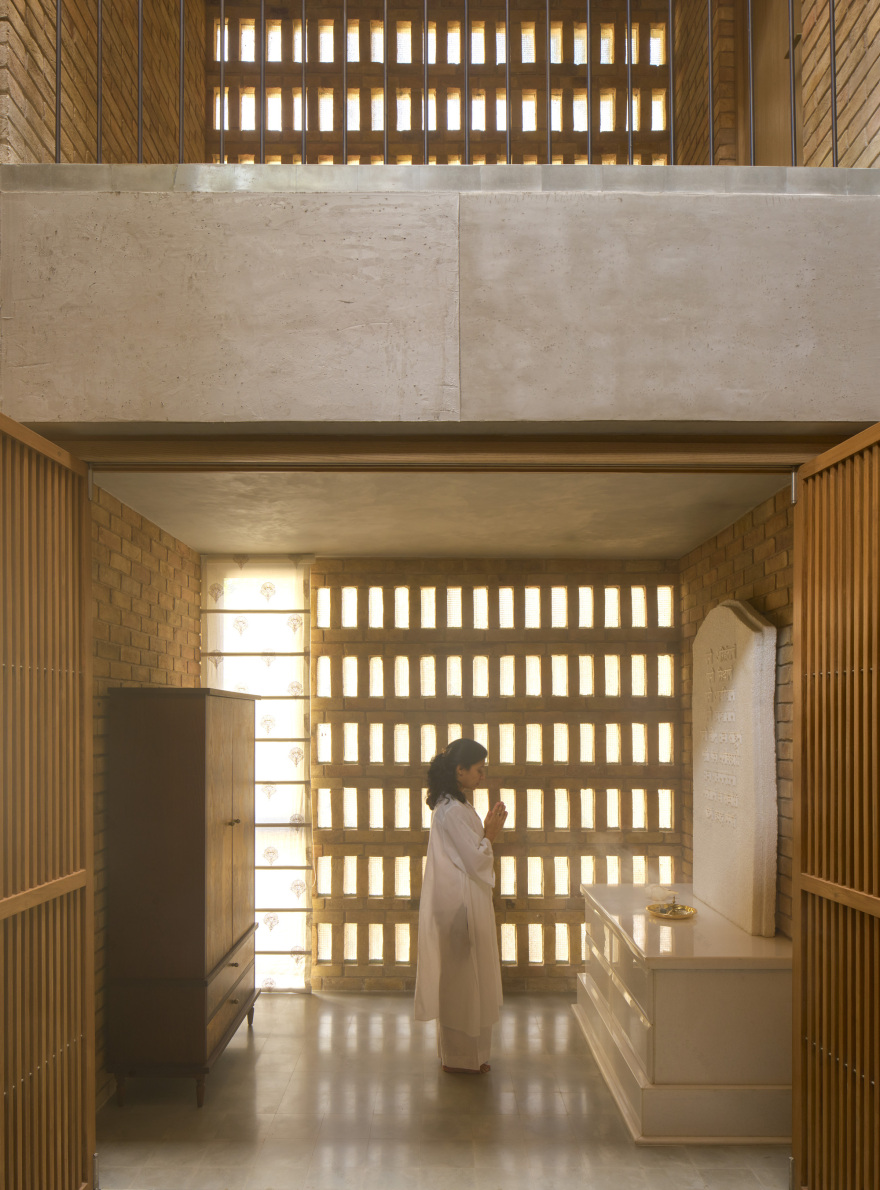
Brick House is not an attempt to impose design onto a site but a sensitive dialogue between form, function, and context. It demonstrates how traditional materials and spatial principles can be harnessed innovatively to address contemporary needs—creating a home that is sustainable, sensory, and soulful. In celebrating brick not just as a building material but as an architectural language, the project reaffirms that good design lies in restraint, responsiveness, and respect for light and space.

Project gallery






南京喵熊网络科技有限公司 苏ICP备18050492号-4知末 © 2018—2020 . All photos and trademark graphics are copyrighted by their owners.增值电信业务经营许可证(ICP)苏B2-20201444 苏公网安备 32011302321234号
苏公网安备 32011302321234号客服
消息
收藏
下载
最近